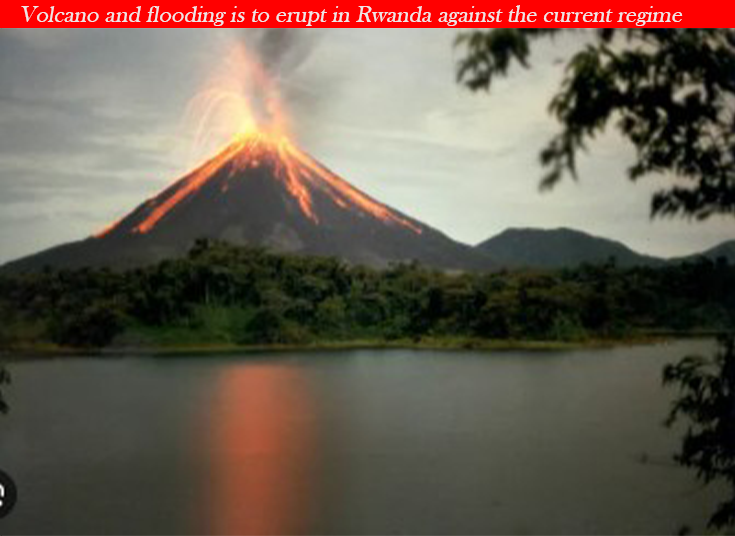


Mu Rwanda agatara katse, ibintu bimeze nabi cyane ubanza ibyo Ubuhanuzi bwavuze noneho batakibijyaho impaka!!!

Mu Rwanda agatara katse, ibintu bimeze nabi cyane ubanza ibyo Ubuhanuzi bwavuze noneho batakibijyaho impaka!!!

MINALOC, minisitiri y’ubutegetsi bw’igihugu, yasabye Abaturarwanda kugabanya inshuro bateka ku munsi mu rwego rwo kugabanya no gukoresha neza ibicanwa. Mu butumwa bwagenewe abaturage ku wa Gatandatu tariki 25 Mata 2026, ku muganda More »

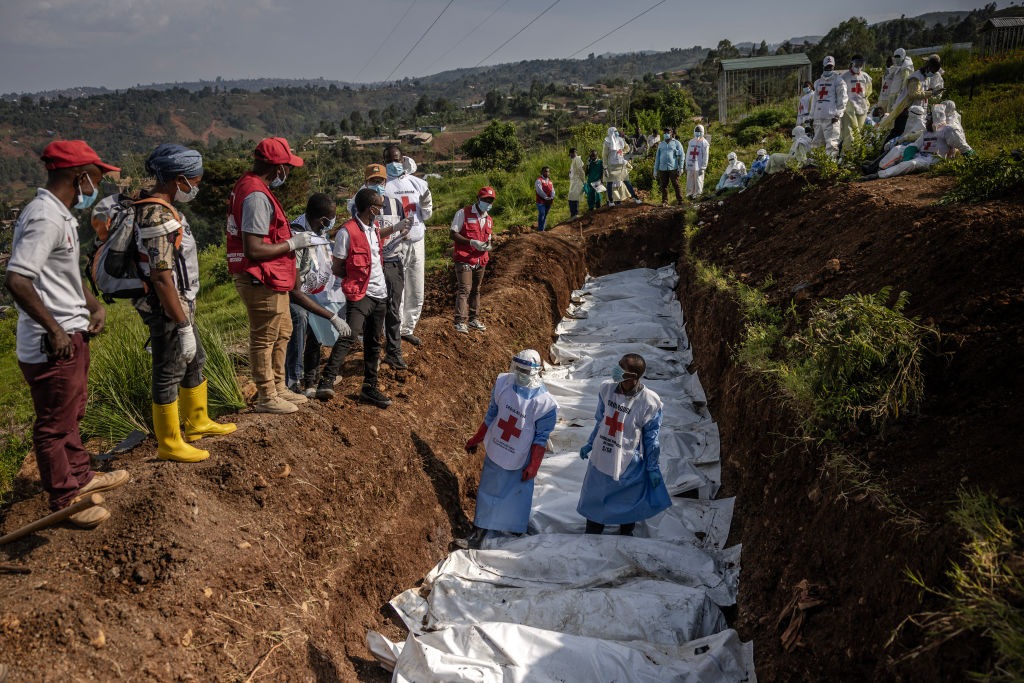
‘Persecuting Christians Is a Booming Business’: The Extremist Persecution of Christians, January 2026

‘Persecuting Christians Is a Booming Business’: The Extremist Persecution of Christians, January 2026

“They want everyone to learn Islam, and… there are those who refuse, and they get killed.” A survivor, persecution.org, January 22, 2026, Democratic Republic of the Congo. “How can we understand that More »

Ikiganiro cya Bwenge na Buhanga batugezaho uyumunsi

Ikiganiro cya Bwenge na Buhanga batugezaho uyumunsi

Bwenge: Maze iminsi nsoma amakuru atandukanye ateye kwibaza ejo hazaza ha abanyarwanda cyane abana bacu bavukiye mu mahanga batazi icyatsi nururo, uwahamagara Buhanga njya mbona andusha kumenya utuntu n’utundi nubwo ndi professor More »

Inzigo zabyaye inzika muri RNC

Inzigo zabyaye inzika muri RNC

Ibiro ntaramakuru byo mu ijuru (Heaven News Media Agency) biratangaza ko inzika zazikutse bikomeye cyane nyuma yo kugaragaza ko umunyamakuru Agnes Uwimana Nkusi watangiye gukorera muri Uganda nyuma yo guhunga aho abantu More »


Palestinians: The ‘Wall of Shame’ by Khaled Abu Toameh

  • “The equation facing the Palestinian factions is clear: Hand over the terrorists and there will be no wall. The Palestinians have proven that they are unable to take security matters into their own hands in this camp.” — Lebanese security official.

  • These anti-Palestinian practices are regularly ignored by the international community, including mainstream media and human rights organizations, whose obsession with Israel blinds them to Arab injustice. A story without an anti-Israel angle is not a story, as far as they are concerned
  • Typically, Western journalists and human rights activists do not even bother to report or document cases of Arab mistreatment of Arabs. This abandonment of professional standards is why apartheid laws targeting Palestinians in several Arab countries are still unknown to the international community.
  • The Lebanese authorities also say that they decided to build the wall after discovering several tunnels in the vicinity of Ain al-Hilweh, used to smuggle weapons and terrorists into and out of the camp.
  • The new wall will not solve the real problem — namely the failure to absorb the refugees and grant them citizenship. Palestinians living in Arab countries are denied citizenship (with the exception of Jordan) and a host of basic rights.
  • Now is the time for the international community to apply pressure to the Arab countries to start helping their Palestinian brothers by improving their living conditions and incorporating them into these countries.
  • The refugee problem will end the day their leaders stop lying to them and confront them with the truth, basically that there will be no “right of return” and that the time has come for them to move on with their lives.

It is no secret that Arab countries have long mistreated their Palestinian brothers and sisters, governing them with inhumane laws and imposing severe restrictions on their public freedoms and basic rights. Building a wall around a Palestinian community to prevent terrorists from entering or leaving, however, has raised the bar on such infringements.

This is precisely what is happening in Lebanon these days. The construction of a security wall around Ain al-Hilweh, the largest Palestinian refugee camp (with a population of nearly 120,000), has drawn sharp criticism from Palestinians and revived memories of the abuse they regularly receive at the hands of their Arab brethren.

The Lebanese authorities say the Palestinians have left them no choice but to build the controversial concrete wall. The Palestinians, they say, refuse to cooperate against terrorists who have established bases within their camps. Yet that problem raises the question: “What has Lebanon done in the past half-century or so to help the Palestinians who fled to that country?” The answer: “Nothing.”

In fact, among all Arab countries, Lebanon has been arguably the worst in its treatment of the Palestinians. Palestinian refugees in Lebanon are denied access to adequate housing and certain categories of employment. According to Amnesty International: “Over half of Palestinian refugees live in decaying and chronically overcrowded camps and discriminatory practices are permitted under personal status laws and nationality laws.”

These anti-Palestinian practices are regularly ignored by the international community, including the mainstream media and human rights organizations, whose obsession with Israel blinds them to Arab injustice. While, every now and then, an organization does publish a report on the misery endured by Palestinians in Arab countries, these bodies rarely follow up on their work, thus creating the impression that they are doing so only for the sake of protocol.

As such, the plight of the Palestinians in many Arab countries continues to be a taboo, as far as the international community is concerned. Typically, Western journalists and human rights activists do not even bother to report or document cases of Arab mistreatment of Arabs. This abandonment of professional standards is why apartheid laws targeting Palestinians in several Arab countries are still unknown to the international community. Even when Western journalists and human rights advocates do hear about these violations, they prefer to look the other way. A story without an anti-Israel angle is not a story, as far as they are concerned.

So what is going on in Lebanon, and why are so many Palestinians furious with the Lebanese authorities?

Until a few years ago, the population of Ain al-Hilweh camp was 70,000. But the influx of refugees fleeing the civil war in Syria, since 2011, has increased the camp population to nearly 120,000. It turns out that many of these new “refugees” are actually terrorists fleeing from Syria and Iraq.
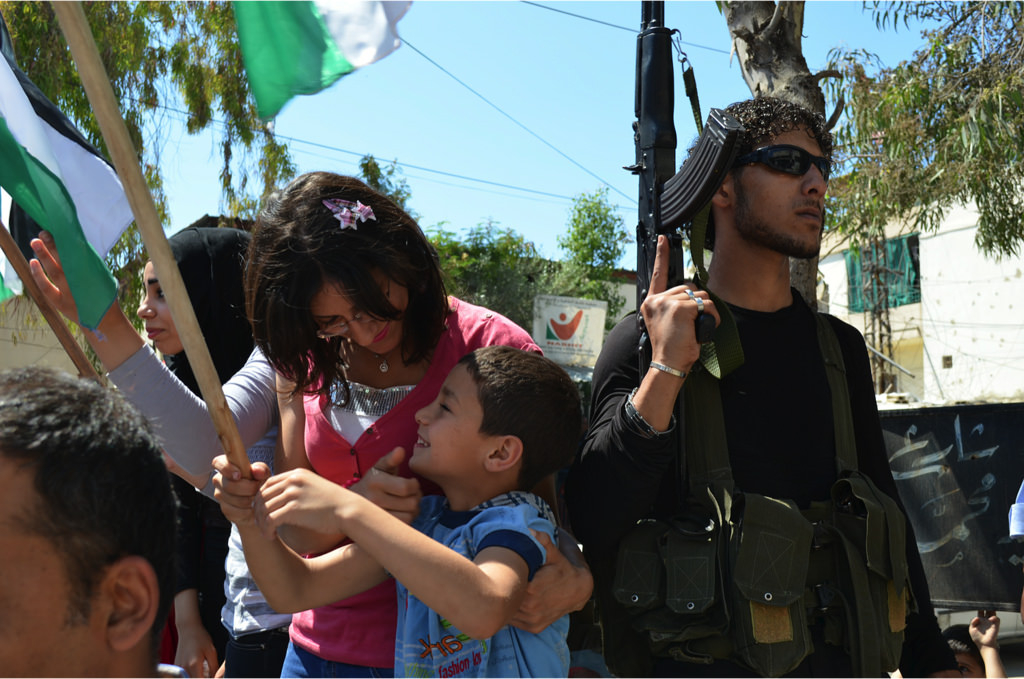
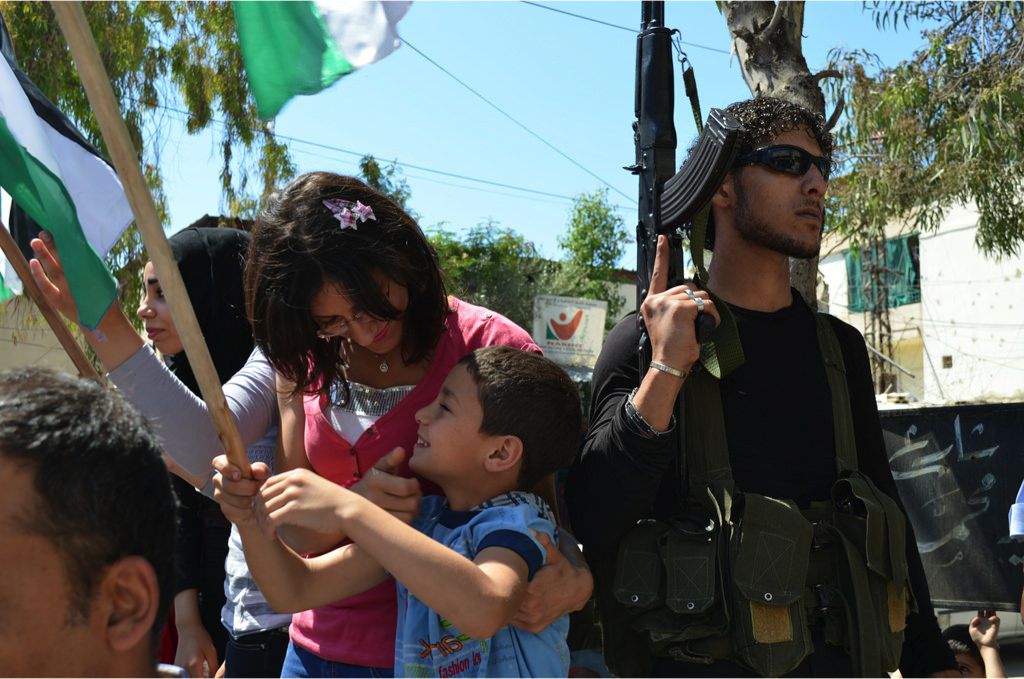
A street celebration in Lebanon’s Ain al-Hilweh camp, July 2015. (Image source: Geneva Call/Flickr)

Ain al-Hilweh, like most of the camps in Lebanon, has always been a major headache for the Lebanon. It seems, however, that the Lebanese government has had enough.

For years, the Lebanese authorities, for whom the camp is “off-limits,” have been trying, unsuccessfully, to clean the camp of its hundreds of terrorists.

Lebanese security forces steer clear of the refugee camps in an attempt to avoid friction with the Palestinians living there. This evasion has allowed the camps to become hotbeds for various jihadi groups and terrorists who pose a threat not only to the national security of Lebanon, but to Palestinians themselves and neighboring Arab countries such as Jordan, Egypt and Syria (not to mention Israel).

Alarmed by this heightened threat, the Lebanese authorities recently began building a concrete wall around Ain al-Hilweh, sparking a wave of denunciations from Palestinians. The Palestinians claim that the new wall, which will be completed in 15 months, will turn the camp into a big open-air prison. They refer to it as the “Wall of Shame.” Their main argument is that it is disgraceful that any Arab country would build a wall surrounding a refugee camp at a time when Palestinians are asking the world to condemn Israel for building a security fence to prevent terror attacks against Israelis from the West Bank.

Camp residents claim that the Lebanese authorities have misled them concerning the construction of the wall. According to the residents, the authorities led them to believe that it was to be a small fence on the outskirts of parts of the camp and not a massive concrete wall surrounding the camp.

The Lebanese security authorities have chosen to call the new barrier the “Wall of Protection” — stressing that it is mainly intended to prevent terror attacks against Lebanon and stop the camps from becoming bases for terrorists and criminals. The authorities say that if anyone is to blame for the construction of the wall, it is the Palestinians themselves, who have refused to cooperate with the Lebanese government against the terrorists. “The goal is to prevent terrorists from infiltrating the camp,” explained a Lebanese security official. “The equation facing the Palestinian factions is clear: Hand over the terrorists and there will be no wall. The Palestinians have proven that they are unable to take security matters into their own hands in this camp.”

The Lebanese authorities also say that they decided to build the wall after discovering several smuggling tunnels in the vicinity of Ain al-Hilweh. These tunnels, they say, are being used to smuggle weapons and terrorists into and out of the camp.

Representatives of Ain al-Hilweh and other Palestinians have been holding marathon meetings with Lebanese government officials in the past few weeks to persuade them to halt the construction of the wall. The Palestinians in Ain al-Hilweh are now threatening that if the Lebanese government does not cancel the project, they will seek the intervention of other Arab, and also Western, countries, as well as the United Nations.

Notably, the Palestinian Authority (PA) leadership in the West Bank has not joined in the efforts to persuade the Lebanese government to drop the idea of building a wall around the camp. This avoidance probably springs from the PA leadership and its president, Mahmoud Abbas, being well aware that Ain al-Hilweh and other refugee camps in Lebanon have fallen into the hands of their enemies, namely Hamas, Islamic Jihad, Islamic State and Al-Qaeda.

The “Wall of Shame” appears particularly to bother Hamas leader Khaled Mashaal. Last week, he telephoned a number of Lebanese officials, including Prime Minister Tammam Salam and Parliament Speaker Nabih Berri, to warn about the consequences of the construction of the wall. Mashaal, who is based in Qatar and enjoys a luxurious life most Palestinians can barely dream of, urged the Lebanese government to halt construction if the wall and said that the wall jeopardized the lives of Palestinian refugees and would have “negative repercussions.”

Hamas’s spokesman in Lebanon, Ra’fat Murra, dismissed Lebanon’s security concerns for building the wall. He warned that the wall would turn the camp into an isolated enclave and exacerbate tensions between Palestinians and Lebanese. Murra, however, expressed readiness to cooperate with the Lebanese authorities in apprehending and handing over wanted terrorists who had found shelter inside Ain al-Hilweh.

Protests against the wall reached their peak when hundreds of Palestinians (and some Lebanese) took to the streets of the nearby city Sidon, in southern Lebanon, calling on the government to stop construction immediately. The protesters warned that the wall would further increase tensions between Palestinians and Lebanese, and further reduce the quality of life for the camp residents.

Lebanon may be justified in building a security wall around the Palestinian refugee camp. Without a doubt, Ain al-Hilweh and other camps have become hubs for terror groups and criminals, and Lebanon has every right to combat terrorism. Yet, Lebanon needs to come up with ways to assimilate, rather than alienate, the Palestinians. Furthermore, this is a problem that extends beyond Lebanon’s borders. The same applies to the camps in the West Bank, Gaza Strip and Syria and Jordan.

The continued mistreatment of Palestinians at the hands of Lebanon and other Arab countries is totally unjustified. The new wall, complete with watchtowers, that is being erected around Ain al-Hilweh may stop some terrorists from infiltrating the camp, but it will not solve the real problem — namely the failure to absorb the refugees and grant them citizenship. In point of fact, Palestinians living in Arab countries are denied citizenship (with the exception of Jordan) and a host of basic rights.

Now is the time for the international community to apply pressure to the Arab countries to start helping their Palestinian brothers by improving their living conditions and incorporating them into these countries. Holding Palestinians in refugee camps for more than six decades is deadly counterproductive. The camps become sanctuaries for terrorists who pose a threat to the national security and stability in these Arab countries. There is no reason why a Palestinian living in Lebanon or Egypt or Kuwait should be banned from purchasing his or her own home.

Moreover, Arab states’ lies concerning the return of refugees to former homes inside of Israel, so long a staple fed to the refugees, have far outlived their usefulness. The refugee problem will end on the day their leaders stop lying to them and confront them with the truth, basically that there will be no “right of return” and that the time has come for them to move on with their lives.

If the lies do not end, the day will come when these countries will be forced to place all the refugees behind walls and fences — a move not likely to enhance stability in these countries. Ain al-Hilweh should serve as a wake-up call to all those Arabs who continue to subject Palestinians to apartheid laws and practices.

Khaled Abu Toameh, an award-winning journalist, is based in Jerusalem.
Palestinians: The “Battle for Succession” Who Will Succeed Mahmoud Abbas and Does It Really Matter? by Khaled Abu Toameh

  • Hamas is convinced that the Palestinian Authority (PA) will never allow elections to take place in the West Bank because of the likelihood that Hamas would win. The PA argues that Hamas will never allow a free election in the Gaza Strip because it does not tolerate any competition.

  • After Arafat died, Arafatism lived on. The same applies to Mahmoud Abbas. No real changes, if ever, should be expected in the Palestinian attitude towards the conflict with Israel after his departure.
  • In the Gaza Strip, the Palestinians will continue to be ruled by Hamas, an Islamist movement that has brought nothing but destruction and disaster to Palestinians.
  • The question of Abbas’s successor is thus rather unimportant. The Palestinians will continue to be ruled by dictatorships that do not give a damn about their people.

On his last visit to Cairo, Palestinian Authority (PA) President Mahmoud Abbas reportedly told Egyptian President Abdel Fattah el-Sisi that he does not intend to run in any future election.

Palestinian officials who accompanied Abbas to Cairo quoted him as saying that he does not want to be a “president for life” and that he is eager to see new presidential elections take place in the Palestinian territories as soon as possible.

“My age and health don’t allow me to remain in power,” the 81-year-old Abbas explained. “My term in office expired several years ago and I’m still in power only because of the Hamas, which staged a coup and is controlling the Gaza Strip and refusing to allow new elections.”

Abbas’s remarks came amid increased talk about a “battle for succession” that has been raging for weeks among the top brass of the Palestinian Authority leadership in the West Bank.

For now, it seems that there is no shortage of Palestinians who consider themselves “natural” and “worthy” successors to Abbas, who recently celebrated the 11th year of his four-year-term in office.

Abbas’s refusal to appoint a vice president, choose a possible successor, or share power, as well as his insistence on managing the PA as a one-man show, has left the door wide open for speculation as to what will happen the day he is gone.

Some Palestinians expect a smooth transition of power, while many fear that the “battle for succession” will lead to anarchy and violence.

Palestinian journalist Munir Abu Rizek recently sounded an alarm bell when he disclosed that some senior Palestinian officials and their supporters in the West Bank have been purchasing weapons in preparation for the post-Abbas era. He predicted that the anarchy that could erupt in the West Bank would be similar to what happened in the Gaza Strip before Hamas expelled the Palestinian Authority nearly a decade ago. Abu Rizek did not rule out the possibility that Palestinian cities in the West Bank would be turned into cantons ruled by rival Fatah officials and warlords.

However, the question is not which Palestinian official will succeed Abbas, so much as who will elect the next president and how? Besides, does it really matter who will be the next president?

Clearly, Abbas’s successor will not be elected through the ballot box. There are no free and democratic elections in the West Bank and the Gaza Strip. Hamas and the PA, however, disagree why this is so.

Hamas is convinced that the Palestinian Authority will never allow elections in the West Bank because of the likelihood that Hamas would win, as it did in the 2006 parliamentary elections.

The PA, for its part, argues that Hamas will never allow a free election in the Gaza Strip because it does not tolerate any competition.

In any event, since Hamas and the Palestinian Authority crack down on each other’s supporters in the Gaza Strip and West Bank, no free elections will emerge. So it is clear that an election to choose a successor for Abbas is off the table, at least for the foreseeable future. That is, of course, unless the PA leadership decides to hold separate elections for the West Bank — an option that seems to be highly unlikely. Holding a separate vote in the West Bank would result in Palestinians accusing the PA of “solidifying” the split between the Gaza Strip and West Bank, thus destroying the effort to establish a unified Palestinian state in these two areas.

Therefore, it is up to the ruling Fatah’s Central Committee to elect a new president. This body, established in 1963, is the most senior decision-making body of the PLO and consists of twenty-one Fatah officials, all known to be Abbas loyalists. But in recent years, the make-up of the Committee has changed a bit.

One of its members, Othman Abu Gharbiyeh, died a few weeks ago during open-heart surgery in an Indian hospital. Another member, Marwan Barghouti, is currently serving a prison term of five-life sentences for his role in terror attacks against Israelis during the Second Intifada. A third member, Mohamed Dahlan, was expelled from Fatah five years ago after falling out with Abbas and his sons.

Yet the Fatah leadership will not hand over the presidency to anyone who is not from its ranks, not even an independent and widely-respected figure such as former Palestinian Authority Prime Minister Salam Fayyad.

So the decision as to who will replace Abbas will be in the hands of 18 senior Fatah officials — all members of the faction’s Central Committee. The last time this committee held internal elections was in July 2009, when Abbas was elected as chairman.

More than half of the Committee members have announced their lack of interest in succeeding Abbas. But that may change the day after Abbas’s departure. Indeed, Abbas’s presence seems to discourage any such ambition. The PA president has expelled any Fatah official suspected of setting his eyes on the presidency. Mohamed Dahlan is the best example of how Abbas is quick to get rid of any official who may pose a threat to his throne. Since his expulsion from Fatah, Dahlan has been forced to relocate to the United Arab Emirates, after Abbas accused him of corruption and murder.

Six of the Committee members are over the age of 70, while most are in their 60s. Only two of them are in their 50s: Marwan Barghouti and Hussein Sheikh. But those two are not considered serious successors, although some public opinion polls have shown that many Palestinians would vote for Barghouti.

Today, Palestinians point to at least three candidates whose chances of succeeding Abbas are strong: Saeb Erekat, Mohammed Shtayyeh and Majed Faraj.

Erekat and Shtayyeh are members of the Fatah Central Committee, while Faraj, who is also a senior Fatah official, heads the Palestinian Authority’s General Intelligence Force in the West Bank.

Last year, Abbas promoted Erekat to the position of PLO Secretary-General, a move that was interpreted by many Palestinians as a sign that Abbas sees him as his successor. But Faraj is also very close to Abbas, who relies on him blindly when it comes to protecting the PA regime against Hamas and other political rivals.

Regarding Barghouti, Fatah officials said this week that it would make no sense to have a president who is in prison and thus not able to perform his duties.

Prime Minister Rami Hamdallah, who previously headed An-Najah University in Nablus, regards himself as a potential successor. One of his aides said that there is “no reason why such a widely-respected man should not become the next president.” Hamdallah, however, holds no official position in Fatah and has no power base there.

In this regard, Hamdallah is not different from his predecessor, Salam Fayyad. The two men do not have enough “credentials” among Palestinians, because they did not serve time in Israeli prisons and were never active members of the Palestinian “resistance.”

Because of the power struggle between members of the Fatah Central Committee, there is a chance that they could elect a veteran Fatah figure who is not a Committee member. Faraj is one of the “outsiders,” but there is no shortage of such people.

Another scenario that could take place, in wake of the internal squabbling and sharp differences within Fatah, sees its leaders forming a “collective leadership” to manage the affairs of the Palestinians. Tawfik Tirawi, a Fatah Central Committee member and a former head of the PA’s General Intelligence Force in the West Bank, lately hinted at this option when he said that, “President Abbas will be the last president of the Palestinians.”

Finally, a last question needs to be addressed: Does it really matter who replaces Abbas? In other words, will the next leader be able to deviate from the policies and strategy that have already been drawn by Abbas and his Fatah leadership? More importantly, will the next president be able to accept any peace deal with Israel that has already been rejected by Abbas and Yasser Arafat?

After Arafat died, Arafatism lived on. The same applies to Mahmoud Abbas. No real changes, if ever, should be expected in the Palestinian attitude towards the conflict with Israel after his departure.

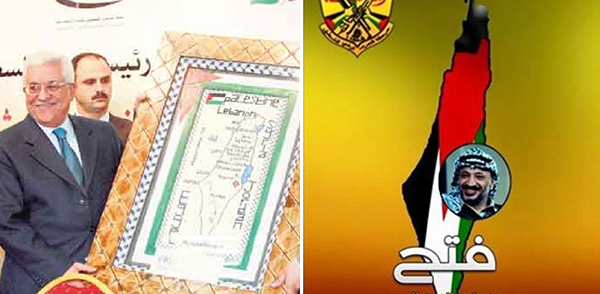
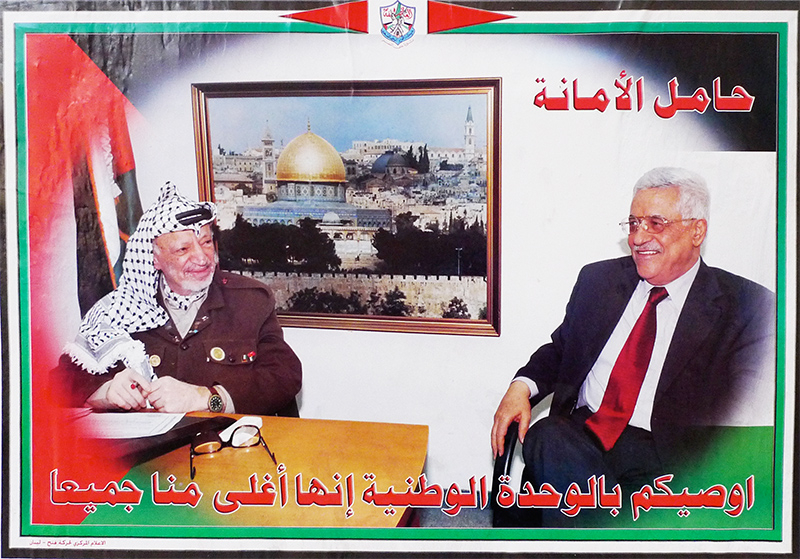
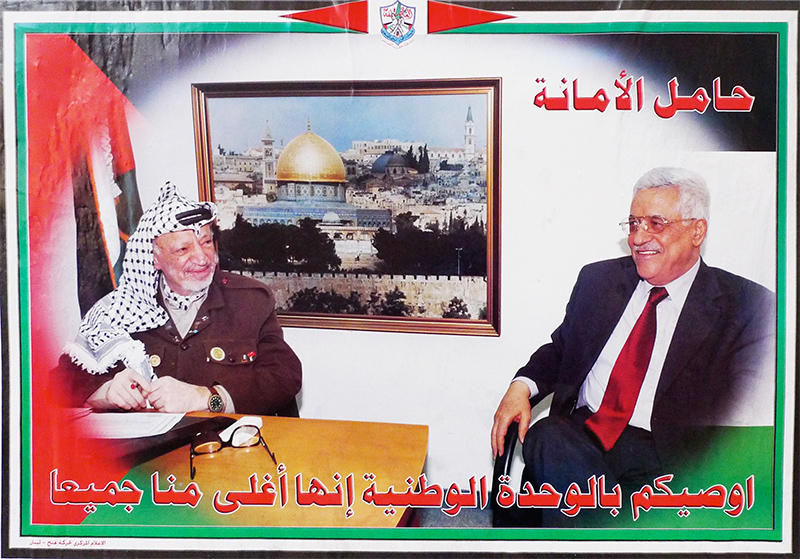
After Yasser Arafat died, Arafatism lived on. The same applies to Mahmoud Abbas. No real changes, if ever, should be expected in the Palestinian attitude towards the conflict with Israel after his departure. Pictured above: Yasser Arafat (L) and Mahmoud Abbas (R) in a Fatah propaganda poster.

Once again, the Palestinians will be the big losers. No one is going to ask their opinion about the next president and they will not be given the opportunity to cast their ballots in a presidential election.

Fatah’s Central Committee in the West Bank brings to mind the Politburo of a Communist Party, which made decisions on behalf of the people, though not with their best interests in mind. In the Gaza Strip, the Palestinians will continue to be ruled by Hamas, an Islamist movement that has brought nothing but destruction and disaster to Palestinians.

So, in the end, the question of Abbas’s successor is rather unimportant. The Palestinians will continue to be ruled by dictatorships that do not give a damn about their people.

Khaled Abu Toameh, an award-winning journalist is based in Jerusalem.

Palestinians: Sex in Gaza City by Khaled Abu Toameh

  • A 27-year-old female journalist recounted that a Palestinian official working for the UN Relief and Works Agency (UNRWA) in Gaza invited her for a job interview. The official “tried to approach and touch her, but she walked away and left the office… The following day… he offered her the job in return for having sexual intercourse with him.”
  • The victim noted that under Palestinian law, UNRWA officials enjoy immunity from being prosecuted.

  • Palestinian journalist Amjad Yaghi found that the Palestinian Basic Law does not tackle the issue of sexual harassment in Palestinian society. Meanwhile, the Hamas connections of these criminals will keep them out of jail and in positions of power.
  • Where are the women’s rights organizations now? Where are the European and American overseers of the international human rights organizations in the Gaza Strip? Do they only awaken from their slumber when they smell fresh Israeli meat? How many women will be sexually assaulted while these watchdogs sleep?

Sex is a taboo topic in the conservative Palestinian society. So it came as a nasty surprise to many when the rampant sexual harassment in the Hamas-controlled Gaza Strip was recently brought to public attention.

A damning report, entitled “Gaza: Sexual Harassment and Bribery Chase Job-Seekers,” was published in the Beirut-based, Hezbollah-affiliated newspaper Al-Akhbar. Amjad Yaghi, the young Palestinian journalist who wrote the exposé, showed extraordinary courage in doing so.

Hamas, needless to say, was not amused.

Yaghi wrote that

“[some] public personalities in the Gaza Strip are no longer abiding by the professional standards of their moral work after being overcome by their sexual instincts and professional duties. They are exploiting their status, especially their decision-making regarding employment, appointments and providing services and funds to projects in light of the absence of working opportunities for women.”

According to Yaghi, the report was published in a Lebanese newspaper because the Palestinian media forbids stories that might enrage the public and “harm” Palestinian traditions and morals.

Yaghi sets out clearly the Catch-22:

“The victims do not have the freedom to talk about their experiences and that is why most of the women who are subjected to sexual harassment remain silent. … They are afraid that they could be deprived of new employment or that their reputation would be affected.”

The report found at least 36 Palestinian women working in various fields who had fallen victim to sexual harassment and exploitation. Reflecting Yaghi’s description of their dilemma, 25 of the victims refused to provide full details about their experiences, and the remaining 11 agreed to talk openly about the problem only on condition of anonymity.

Sexual crimes of various sorts were reported. Twenty of the women reported experiencing sexual harassment at their workplaces, while ten others said they were asked to provide “sexual bribes.” Six of the women told Yaghi that they had been sexually assaulted at work.

A 27-year-old female journalist told the Yaghi that a Palestinian official working for the United Nations Relief and Works Agency for Palestinian Refugees (UNRWA) invited her to his office for a job interview:

“When she came to his office, the official tried to approach and touch her, but she walked away and left the office… The following day, the official was more honest with her; he offered her the job in return for having sexual intercourse with him. She was shocked and stopped talking to him.”

The woman believes that the senior status of the official who sexually harassed her will protect him from being held accountable for his behavior. She also alluded to a larger and deeper problem in the Arab and Islamic world: “Our society doubts the integrity of a woman who talks about honor.” As a third obstacle to prosecution, she noted that under Palestinian law, UNRWA officials enjoy immunity from being prosecuted.

Immunity from prosecution for sexual crimes, however, apparently does not apply to the top echelons of internationally funded organizations. For example, the director of an international aid organization in the Gaza Strip, who purportedly offered a 28-year-old job applicant a highly-paid position in return for sex.

Lawyers in the Gaza Strip would seem to have enough to do without sexually harassing their employees. But a 23-year-old female legal trainee told the investigative journalist that her boss, a 45-year-old male attorney, made sexual advances to her and to three of her female colleagues. Another male lawyer offered a female colleague 50 shekels ($12) if she allowed him to touch her body.

According to the report, 13 female journalists in the Gaza Strip have also faced sexual harassment and assault in recent years.

Yaghi found that the Palestinian Basic Law does not tackle the issue of sexual harassment in Palestinian society. While the law does refer to corruption in the workplace, sexual harassment is not detailed as a form of corruption.

Much has been written recently about the widespread increase in child abuse in the Hamas-controlled Gaza Strip, where children are exposed to constant brainwashing by armed groups. Last week, a new video surfaced of how the radical Islamist groups in the Gaza Strip incite Palestinian children. The video features children dressed as Islamic Jihad militiamen, play-acting the detonation of a bomb near an Israeli tank. The audience, the parents of these child actors, can be heard cheering and applauding.

In a society where children are indoctrinated to murder Jews, it comes as no surprise that women are victims of different kinds of exploitation as well.

Yaghi keeps the identities of the male offenders out of the public eye. Yet these are clearly senior officials working in the private and public sectors. Just as clearly, the sexual harassment victim of the UNRWA official was right: the Hamas connections of these criminals will no doubt keep them out of jail and in positions of power.

Where are the women’s rights organizations now? And where are the European and American overseers of the international human rights organizations in the Gaza Strip? Could it be that these worthy watchdogs only awaken from their slumber when they smell fresh Israeli meat? Meanwhile, how many women will be sexually assaulted and harassed while these watchdogs sleep?

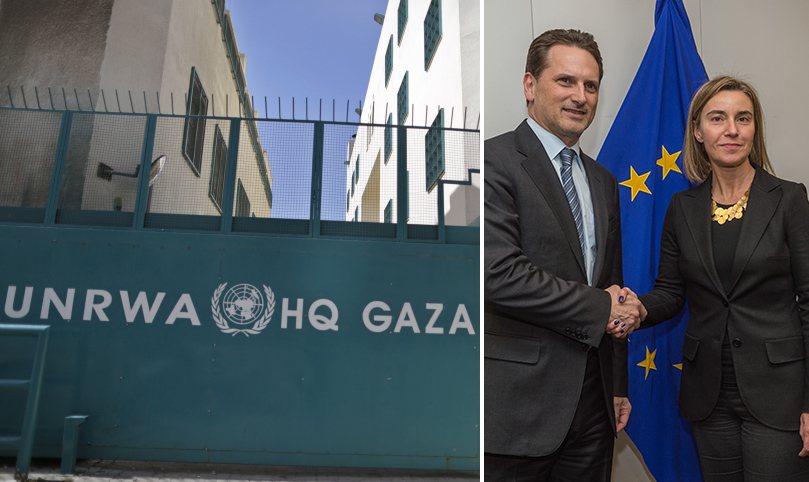
When it comes to sexual harassment, where are the European and American overseers of the international human rights organizations in the Gaza Strip? Under Palestinian law, UNRWA officials enjoy immunity from being prosecuted, and the Hamas connections of officials that engage in sexual harassment will no doubt keep them out of jail and in positions of power. Pictured at right: Pierre Krähenbühl, Commissioner-General of UNRWA, meets with Federica Mogherini, the EU’s High Representative for Foreign Affairs.

Khaled Abu Toameh is an award-winning journalist based in Jerusalem.

Palestinians: Laughing Their Heads Off by Khaled Abu Toameh

  • As in any comedy, there is a clown, and Biden was played for a fool by a Palestinian Authority leadership that finds that it pays to point its finger at Israel.

  • Here is a dirty little secret: the Palestinian attackers were not driven to murder Jews because of “settlements” and “checkpoints.”
  • Check their Facebook accounts: what fueled their hatred were the lies they had been fed for the past few years by President Abbas and other Palestinian leaders. Palestinian media outlets and spokesmen vomit poison against Israel.
  • And so the curtain rises on another act of the ceremonial, make-believe theater of the Middle East. In Abbas’s sneaky script, it is about settlements. In reality, it is about the refusal of the Americans to read, speak or even translate Arabic.

U.S. Vice President Joe Biden visited Ramallah last week, and Palestinian Authority (PA) President Mahmoud Abbas and his top officials are laughing their heads off.

Why not laugh? Biden arrived in the region hoping to persuade the Palestinian leaders to issue a “condemnation” of the reign of terror, which they continue to describe as a “popular and peaceful uprising.” This in itself reeks of gallows humor.

But what Biden got was even funnier, from the point of view of Abbas and his friends.

The Palestinian president offered “condolences” over the killing of a U.S. citizen in Jaffa the previous day: “The President [Abbas] offered his condolences over the killing of the US citizen, while stressing at the same time that the occupation authorities have killed 200 Palestinians over the past five months,” according to a statement released by the PA leadership in Ramallah.

Abbas’s crocodile tears were shed for Taylor Force, a West Point graduate from Texas who was stabbed to death by a Palestinian during a rampage on the Jaffa beachfront promenade. Abbas is doubtless also upset because Israel has killed Palestinian stabbers and shooters.

Just before Biden arrived in Ramallah, Abbas’s Fatah faction praised the murderer of Force, calling him a “martyr.” But Fatah was quick to delete the posts to avoid embarrassing the Palestinian leadership during Biden’s visit.

It seems that the murder of an American visitor is condemnable, but the murder of some 34 Israelis since last October, including a pregnant woman and civilians, is somewhat less so.

Where was the condemnation of the wounding of nine Israelis in the attack that killed Taylor Force? Where was the condemnation of the attacks the took place on that very day in Jerusalem and Petah Tikva?

But Abbas explained everything to Biden: Israel was in fact fully responsible for the “violence and bloodshed” because of the “occupation” and “settlements.”

Here is a dirty little secret: the Palestinian attackers were not driven to murder Jews because of “settlements” and “checkpoints.”

Check their Facebook accounts: what fueled their hatred were the lies they had been fed for the past few years by President Abbas and other Palestinian leaders, concerning Jews “desecrating” Islamic holy sites and plotting to destroy them. No checkpoint snags, no settlement issues, no protests against construction of new apartments in Jerusalem for Jewish families.

Many of these Palestinians went for Israeli blood because they have been taught — by Mahmoud Abbas, the Palestinian Authority, Hamas and other Palestinian groups — to hate Israel. And they do not give a damn whether that Jew lives in Jaffa or in the West Bank. They also do not give a damn if some of their victims are Arabs.

Yet the comedy continues. Biden is reported to have urged Abbas and the Palestinian leadership to stop the anti-Israel incitement in their official media and on social media. Abbas vehemently denied that this incitement was taking place, and indeed, explained that the US leader had gotten things mixed up entirely: it was Israel that was guilty of incitement against the Palestinians.

While Abbas was busy offering his condolences for the killing of the U.S. citizen, his ruling Fatah faction was busy glorifying Palestinian assailants who killed Israelis.

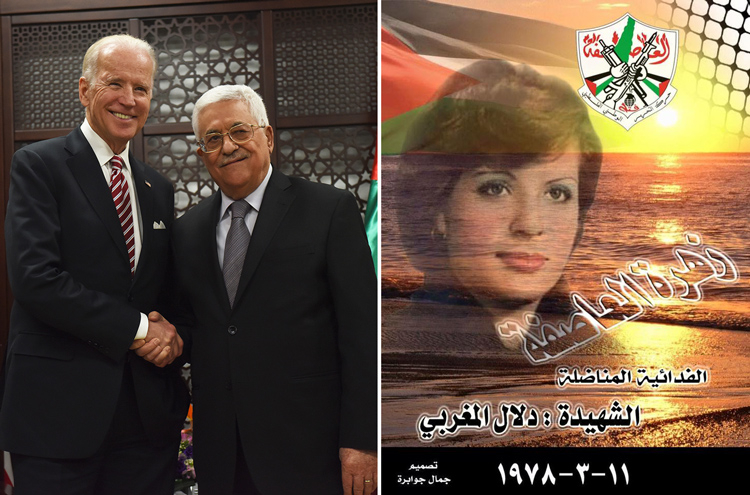
In one instance, Fatah published an announcement inviting Palestinians to mark the 38th anniversary of the “martyrdom” of Dalal Al-Mughrabi.

Al-Mughrabi was a Fatah member who participated in the 1978 Coastal Road massacre in Israel, in which 38 civilians were killed, including 13 children.

U.S. Vice President Joe Biden visited Palestinian Authority President Mahmoud Abbas in Ramallah on March 10, hoping to persuade Abbas to issue a “condemnation” of the wave of terror attacks against Israelis. The next day, Abbas’s Fatah party invited Palestinians to commemorate the 38th anniversary of the “martyrdom” of Dalal Al-Mughrabi. Al-Mughrabi was a Fatah member who participated in the 1978 Coastal Road massacre in Israel, in which 38 civilians were killed, including 13 children.

The condolence message was also long enough for Fatah to praise Palestinian assailants, including Abdel Malek Abu Kharoub, who carried out a recent shooting attack in Jerusalem. In a post on its official Facebook account, Fatah hailed Abu Kharoub as a “hero and martyr.”

Of course neither Biden nor any of his advisors and aides saw these posts. They prefer to continue burying their heads in the sand and pretending that once the “peace process” is revived, everything will be fine.

So it is business as usual for Abbas and crew. As in any comedy, there is a clown, and Biden was played for a fool by a PA leadership that finds that it pays to point its finger at Israel.

In Arabic, a language in which Western leaders are perhaps not fluent, Palestinian media outlets and spokesmen vomit poison against Israel. Condemnation of attacks on Israelis would be rather unlikely in such a drama.

And so the curtain rises on another act of the ceremonial, make-believe theater of the Middle East. In Abbas’s sneaky script, it is about settlements. In reality, it is about the refusal of the Americans to read, speak or even translate Arabic.

Khaled Abu Toameh, an award-winning journalist, is based in Jerusalem.
Palestinians: Kerry and the Game of Obfuscation by Khaled Abu Toameh

  • This “intifada” is simply a further phase in a larger plan to destroy Israel. When the plan began officially, with the establishment of the PLO in 1964, there were no “settlements” — not until after the June 1967 War — so what exactly were the Palestinians planning to “liberate”?

  • The current conflict is not about “defending” any mosque from being contaminated by the “filthy feet” of Jews: it is about seeing Israel forced to its knees. Abbas and others seek to reap delicious political fruits from this “intifada.”
  • Here is a novel idea: Kerry could put pressure on the Palestinian and Jordanian leadership to cease anti-Israeli incitement and indoctrination. Now that would be pressure well applied.
  • Abbas is expected to become a partner in the fight against ISIS and radical Islamist groups. All well and good. Why then is he not expected to stop cheering on and glorifying young Palestinians who attack Jewish Israelis?

U.S. Secretary of State John Kerry is back in town. This time he is meeting with Jordanian and Palestinian leaders about “ongoing security issues in the region and continued tensions between Israel and the Palestinians.”

For those not involved in political newspeak, here is a translation:

“Ongoing security issues” = the Islamic State terror group (ISIS).

“Tensions between Israel and the Palestinians” = the ongoing wave of Palestinian stabbing, car-ramming and shooting attacks that began in October 2015.

Jordan and the Palestinian Authority (PA) fighting ISIS? Now that’s an idea! Jordanian King Abdullah and PA President Mahmoud Abbas ending “tensions” between Israel and the Palestinians? Let’s think about that.

Kerry comes back, but never calls a spade a spade. The “tensions” to which he deceptively alludes are knifings and car-rammings. And what is the biggest spade that Kerry avoids calling by its name? The new generation of Palestinians brainwashed to believe that Israel can be defeated with knives and car-attacks.

This “intifada” is simply a further phase in a larger plan to humiliate and destroy Israel. This plan began officially, with the establishment of the Palestine Liberation Organization (PLO), in May 1964. At that time there were no “settlements” — not until after the June 1967 War — so what exactly were the Palestinians planning to “liberate”?

The plan continued in 1974, at the twelfth session of the Palestinian National Council in Cairo, with the 10-point “Phased Plan” (see Appendix below for full text of the Phased Plan). Article 2 called for “armed struggle” (terrorism) to establish “an independent combatant national authority” that is “liberated” from Israeli rule.

Contrary to Palestinian leaders’ pap, the current conflict is not about “defending” any mosque from being contaminated by the “filthy feet” of Jews: it is about seeing Israel forced to its knees. Abbas and others seek to reap delicious political fruits from this “intifada.”

That is why, in his meeting with Kerry, Abbas made it clear that he intends to pursue unilateral moves to impose a solution on Israel, with the help of the international community.

Abbas also told Kerry that he intends to continue with his efforts to seek a UN Security Council resolution condemning Israel over “settlement construction.”

Never mind that on Palestinian maps, all of Israel is regarded as one big “settlement.”

Palestinian Authority leaders, official television, schools and media outlets often display maps showing Palestine stretching from the River Jordan to the Mediterranean Sea. The maps do not show the existence of Israel.

But back to Kerry. His “tensions” imply two sides engaged in some kind of a dispute that has aggravated a situation and strained relations between them, instead of what it really is: Palestinians openly trying to supplant Israelis — the entire state.

So the game of obfuscation continues. No doubt, we will witness more pressure on Israel to make concessions that will supposedly ease the “tensions.”

Kerry and his friends either do not “get it” or do not want to “get it.” Palestinians are waging an out-and-out war against Israel with the goal of making Israelis suffer to a point at which they will beg their leaders to capitulate. In the Palestinian view, such behavior pays off royally.

It is a Palestinian commonplace that the two previous uprisings — in 1987 and 2000 — brought major achievements to the Palestinians.

The first “intifada” led to Israel’s recognition of the PLO as the “sole legitimate representative of the Palestinians” — a move that was followed by the signing of the Oslo Accords and the creation of the Palestinian Authority.

The second “intifada,” the Palestinians argue, led to Israel’s full withdrawal from the Gaza Strip in the summer of 2005.

And so we arrive at the newest wave of attacks. As the saying goes: Step-by-step.

Kerry would like to see an end to the Palestinian attacks on Israeli Jews. The only problem is that his vacuous rhetoric prevents him from having a snowball’s chance in a Middle Eastern summer from attaining that goal.

Let us also not underestimate Palestinian Authority rejectionism. On the eve of the Kerry-Abbas meeting, Palestinian Authority officials were quoted as saying that they did not expect anything positive to come out of the talks “because the U.S. remains biased in favor of Israel.”

As always, the Palestinian stance is, “My way or the highway.”

Moreover, Kerry is dreaming if he thinks that President Mahmoud Abbas or King Abdullah are able to stop the attacks on Israelis. Neither has the mandate or the credibility to do so. In any case, they and their media outlets are too busy with their anti-Israeli ranting to do much on that score.

Thus far, not a word has been uttered by either of the two Arab leaders that could be even vaguely interpreted by their people as “stop killing Israelis.” In the Palestinian Looking Glass, it is Israel that is responsible for the deadly attacks. After all, claims that are untrue about Israelis “storming and desecrating the Al-Aqsa Mosque and other Islamic holy sites” are provocative, to say the least.

Here is a novel idea: Kerry could put pressure on the Palestinian and Jordanian leadership to cease anti-Israeli incitement and indoctrination. Now that would be pressure well applied. And it does not even require funding.

President Abbas is expected to become a partner in the fight against ISIS and radical Islamist groups. All well and good. Why then is he not expected to stop cheering on and glorifying young Palestinians who attack Jewish Israelis?

When Kerry and his crew finally wake up to the fact that it is precisely this incitement that is driving Palestinians into the open arms of ISIS, Hamas and other terror groups, perhaps, finally, we will be able to hope for “easing tensions in the region.”

Meanwhile, Kerry is back blathering about peace in the Middle East. Unfortunately, he seems incapable of calling a spade a spade — especially when that spade’s name is Palestinian prevarication.

Khaled Abu Toameh, an award-winning journalist, is based in Jerusalem.
Translate »
Skip to toolbar