



Mu Rwanda agatara katse, ibintu bimeze nabi cyane ubanza ibyo Ubuhanuzi bwavuze noneho batakibijyaho impaka!!!

Mu Rwanda agatara katse, ibintu bimeze nabi cyane ubanza ibyo Ubuhanuzi bwavuze noneho batakibijyaho impaka!!!

MINALOC, minisitiri y’ubutegetsi bw’igihugu, yasabye Abaturarwanda kugabanya inshuro bateka ku munsi mu rwego rwo kugabanya no gukoresha neza ibicanwa. Mu butumwa bwagenewe abaturage ku wa Gatandatu tariki 25 Mata 2026, ku muganda More »

‘Persecuting Christians Is a Booming Business’: The Extremist Persecution of Christians, January 2026

‘Persecuting Christians Is a Booming Business’: The Extremist Persecution of Christians, January 2026

“They want everyone to learn Islam, and… there are those who refuse, and they get killed.” A survivor, persecution.org, January 22, 2026, Democratic Republic of the Congo. “How can we understand that More »

Ikiganiro cya Bwenge na Buhanga batugezaho uyumunsi

Ikiganiro cya Bwenge na Buhanga batugezaho uyumunsi

Bwenge: Maze iminsi nsoma amakuru atandukanye ateye kwibaza ejo hazaza ha abanyarwanda cyane abana bacu bavukiye mu mahanga batazi icyatsi nururo, uwahamagara Buhanga njya mbona andusha kumenya utuntu n’utundi nubwo ndi professor More »

Inzigo zabyaye inzika muri RNC

Inzigo zabyaye inzika muri RNC

Ibiro ntaramakuru byo mu ijuru (Heaven News Media Agency) biratangaza ko inzika zazikutse bikomeye cyane nyuma yo kugaragaza ko umunyamakuru Agnes Uwimana Nkusi watangiye gukorera muri Uganda nyuma yo guhunga aho abantu More »


Palestinians: The Secret West Bank by Bassam Tawil

  • As Abbas and his advisors prepare for the May 3 meeting with Trump, thousands of Palestinians gathered in Ramallah to call on Arab armies to “liberate Palestine, from the (Jordan) river to the (Mediterranean) sea.” The Palestinians also called for replacing Israel with an Islamic Caliphate.

  • It is possible that deep inside, Abbas and many of his top aides identify with the goals of Hizb ut Tahrir, namely the elimination of Israel. Abbas also wishes to use these Islamic extremists to depict himself as the “good guy” versus the “bad guys.” This is a ploy intended to dupe Westerners into giving him more funds “out of fear that the Islamists may take over.”
  • Abbas’s claim that he seeks a just and comprehensive peace with Israel is refuted by fact after fact on the ground. His sweet-talk about peace and the two-state solution will have far less impact on Palestinians than the voices of Hizb ut Tahrir and its sister groups, which strive to “liberate Palestine, from the river to the sea.”

Westerners often refer to Ramallah as a modern and liberal city dominated by Palestinian leader Mahmoud Abbas’s Fatah faction. The city boasts fancy restaurants and bars where alcohol is served freely to men and women in Western dress, who sit together to eat and to smoke water pipes (nargilas).

But the scenes on the streets of Ramallah, headquarters of Abbas’s Palestinian Authority (PA) last week broadcast a rather different message — one that calls for the elimination of Israel. The message came on the eve of Abbas’s visit to the White House for his first meeting with US President Donald Trump.

According to PA officials, Abbas is scheduled to affirm during the meeting with Trump his commitment to the two-state solution and a “comprehensive and just peace” with Israel.

As Abbas and his advisors prepare for the May 3 meeting with Trump, however, thousands of Palestinians gathered in Ramallah to call on Arab armies to “liberate Palestine, from the (Jordan) river to the (Mediterranean) sea.” The Palestinians also called for replacing Israel with an Islamic Caliphate.

The call for the elimination of Israel was made in the center of Ramallah, only a few hundred meters away from Abbas’s office. It came during a rally organized by Hizb ut Tahrir (Party of Liberation), a radical pan-Islamic political organization whose goal is the re-establishment of the Islamic Caliphate, or Islamic state. Like the terrorist group ISIS, Hizb ut Tahrir seeks to establish a state to enforce Islamic sharia law and carrying the da’wah (preaching) of Islam to the rest of the world.

The rally was organized to mark the 96th anniversary of the abolition of the Islamic Caliphate in 1924. It was held with the permission of the Palestinian Authority leadership, even though Hizb ut Tahrir is vehemently opposed both to Abbas’s policies and Israel’s right to exist, which it rejects. PA officials claim that despite its radical ideology, Hizb ut Tahrir does not pose a threat to stability in the region, because, unlike Hamas, its influence is limited and it does not resort to violence.

One after the other, leaders of Hizb ut Tahrir stood up in Ramallah this week to proclaim the need to “liberate all Palestine” and to restore the Islamic Caliphate. Dr. Maher Ja’bari, a Hizb ut Tahrir leader, said:

“The Islamic Caliphate will be restored only when Palestine is fully liberated. Palestine was occupied because of the collapse of the Islamic Caliphate. The issue of the caliphate has united the [Islamic] nation and it is the basic case for the liberation of Palestine and the implementation of Sharia for all Muslims under one [Muslim] ruler.”

Once the Muslim extremists come to power, Abbas and most of his officials would be the first to be beheaded or hanged in public squares for “selling out to the Jews.” Still, Abbas’s leadership did not see a need to prevent the Hizb ut Tahrir supporters from holding their rally in Ramallah to voice their extremist views, which also included an appeal for the “mobilization of Arab and Islamic armies to liberate Palestine and the Aqsa Mosque.”
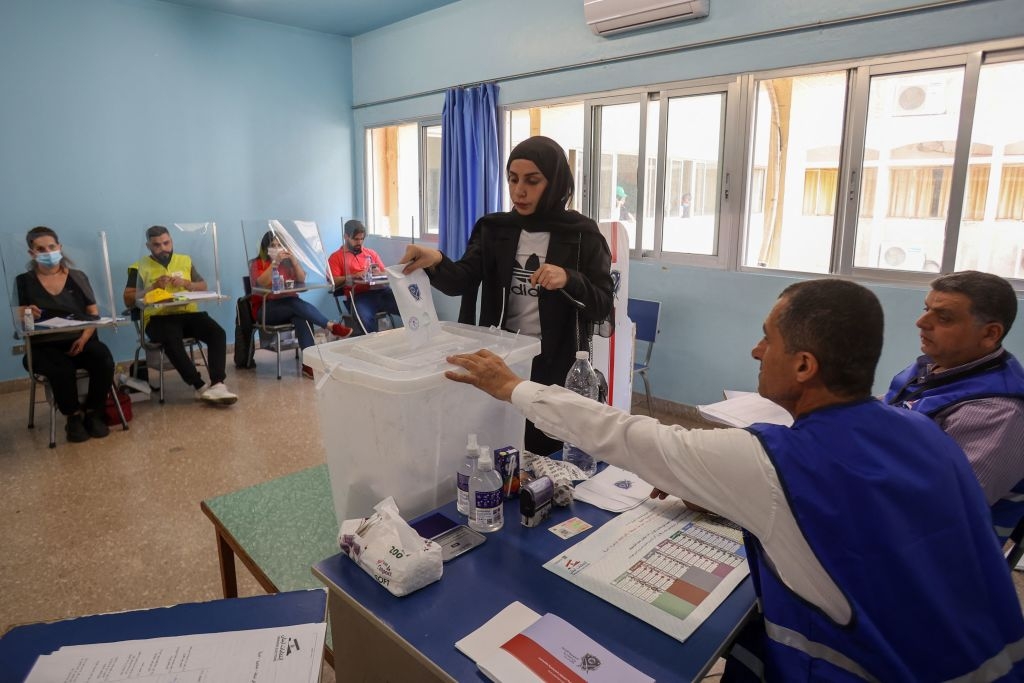
Thousands of supporters of Hizb ut Tahrir, a radical pan-Islamic political organization, participate in a rally in Ramallah, on April 22, 2017. (Image source: Hizb ut Tahrir video screenshot)

Many of the extremist groups hoping to take over the West Bank despise Abbas and his PA leadership, who for them are arch-infidels. A brief statement, recently issued, again, by Hizb ut Tahrir concerning the transfer of ownership of land in Hebron to a Russian church, is telling:

“For more than a month, the Palestinian Authority and its most brutal criminals are practicing repression, arrests and intimidation, lies and misinformation in order to close the chapter of the land of the companion Tamim bin Aws Ad-Dari; the PA gave away 72 dunams of land in the heart of Hebron to the hateful and criminal Russians.”

Referring to the PA’s crackdown on supporters of Hizb ut Tahrir and similar groups that have also been protesting the transfer of the land to Russians, the statement added:

“The PA commits one evil crime after another, with no shame or bashfulness; from surrendering of endowment land to the arrest of the sincere people of the country to the spreading of lies and fabrications – all to reward the crimes of the Russians against the Ummah in Palestine, ignoring the rules of Islam. The PA gives no weight to the sanctities of Islam.”

In addition to the rally, Hizb ut Tahrir and similar groups have also been organizing a series of lectures and seminars throughout the PA-controlled territories in a bid to rally supporters behind their plan to “liberate all Palestine” and establish an Islamic state that governs according to sharia.

The annual Hizb ut Tahrir rally, which draws thousands of Palestinians, is yet another reminder of the growing influence of radical Islamic groups among Palestinians. In many ways, it is hard to tell the difference between Hamas, ISIS, Islamic Jihad and Hizb ut Tahrir. They all share the same goal: the elimination of Israel and the establishment of an Islamic regime where non-Muslims (dhmmis) would live as minorities and pay jizya, the tax levied by Islamic states on non-Muslims residing in Muslim countries.

Why, then, do Abbas and his PA allow these extremists to send their poisonous messages towards Israel? Some Palestinians argue that fear is what drives them to refrain from stopping Hizb ut Tahrir from issuing calls for the annihilation of Israel. Others claim that Abbas already has huge problems with Hamas and does not want to add to his list of enemies another radical Islamic group, which, they explain, does not engage in violence and terrorism as does Hamas. It is also possible that deep inside, Abbas and many of his top aides identify with the goals of Hizb ut Tahrir, namely the elimination of Israel. Abbas also wishes to use these Islamic extremists to depict himself as the “good guy” versus the “bad guys.” This is a ploy intended to dupe Westerners into giving him more funds “out of fear that the Islamists may take over.”

This stance may work for Abbas. However, Israel, and secular Palestinians who are not eager to live under an Iranian-style or Saudi-style Islamic regime, are the big losers here.

Meanwhile, such rallies in the center of Ramallah will only help raise another generation of Palestinians on the glorification of jihad and will further incite them against Israel.

Abbas’s claim that he seeks a just and comprehensive peace with Israel is refuted by fact after fact on the ground. His sweet-talk about peace and the two-state solution will have far less impact on Palestinians than the voices of Hizb ut Tahrir and its sister groups, which strive to “liberate Palestine, from the river to the sea.” One wonders on whose behalf Abbas is speaking when he talks about coexistence with Israel. Indeed, one wonders if he is even speaking on behalf of himself, with the center of Ramallah the stage for Hizb ut Tahrir and its jihadi friends?

Bassam Tawil, an Arab Muslim, is based in the Middle East.
Palestinians: The Right Time to Take Big Steps? by Bassam Tawil

  • Despite the “official” surveys taken among Palestinians, which show support for Hamas, the residents of the West Bank are terrified that Hamas will gain control and destroy our lives and property, the way they did in the Gaza Strip.

  • The BDS organizations are trying to boycott products made in the West Bank, which only throws masses of Palestinians out of good jobs in an effort to force Israel into a hasty withdrawal that has no chance of taking place. The Israelis and everyone else remember all too well that the last Israeli withdrawals — from southern Lebanon and the Gaza Strip — led to the terrorist takeover of the vacuums created.

  • Ikrima Sabri, the former Mufti of Jerusalem, often said that Palestinians were better off with the Jews in charge of Al-Aqsa mosque and Jerusalem, because in the future they could be removed and killed off, but if the Crusaders returned to Jerusalem — such as an international commission headed by the French — it would be harder to get rid of them.

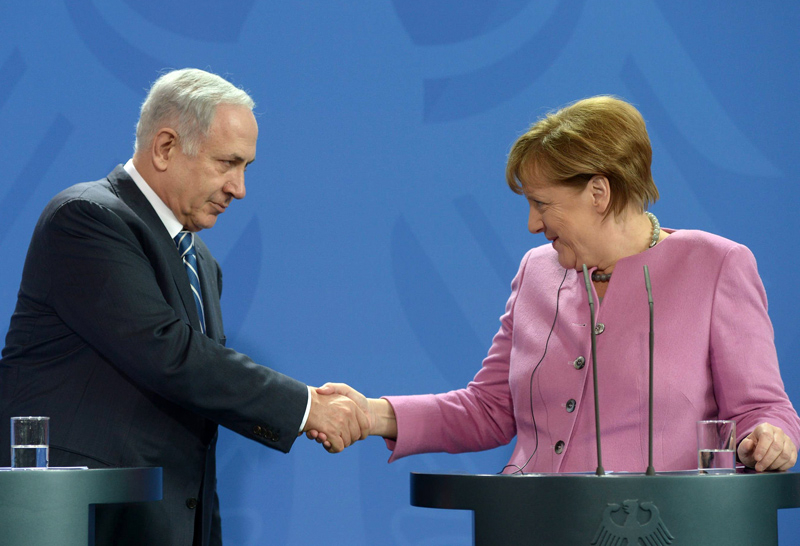
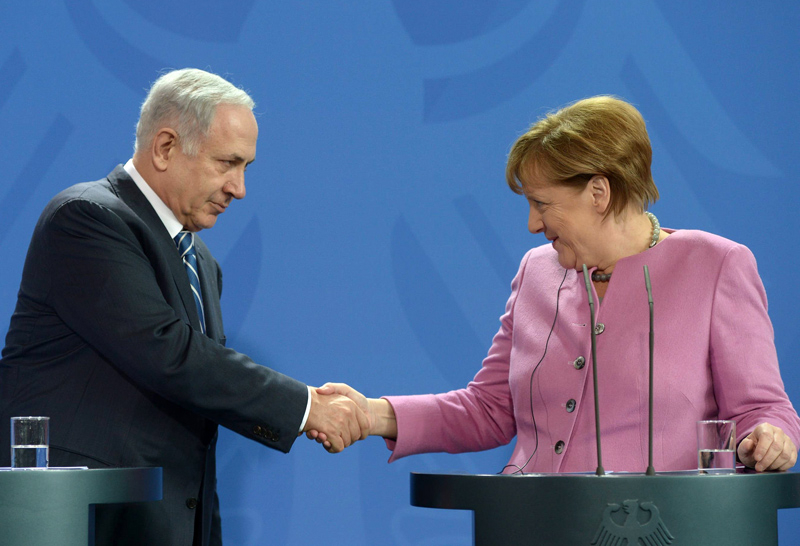
During a visit to Berlin, German Chancellor Angela Merkel told Israel’s Prime Minister Benyamin Netanyahu that now is not time to move forward with the “two-state solution” and the establishment of a Palestinian state.

Merkel, evidently seeing Israel as a dam protecting Europe from Islamist extremists, told Netanyahu that while the Germans recognized the terrorist threat faced by Israel, and that a peace process had to be advanced based on two states for two peoples, now was not the right time to take big steps.

Agreed: It’s not a good time to establish a Palestinian state. Pictured: Israeli Prime Minister Benjamin Netanyahu and German Chancellor Angela Merkel address a press conference in Berlin, Germany, on February 16, 2016. (Image source: Israel Government Press Office)

The Palestinians living in the Gaza Strip are well aware that they are hostages of the terrorist organizations, in particular Hamas. Jibril Rajoub, a senior official in the Palestinian Authority (PA), told Al-Jazeera TV the same thing just last week.

The Palestinians in the West Bank, regardless of public declarations, also secretly support security collaboration with Israel, which protects us from radical Islamist terrorism. Therefore, despite the “official” surveys taken among Palestinians, which show support for Hamas, the residents of the West Bank are terrified that Hamas will gain control and destroy our lives and property the way they did in the Gaza Strip. We do want a Palestinian state, but one that will preserve the lifestyle and accomplishments we have built over the years — not a state that will have them fall to the horrors of Hamas and ISIS.

In light of the quiet, passive public support for the regime of Mahmoud Abbas, Hamas is inciting Palestinians against it. Hamas, in an attempt to overthrow the Palestinian Authority, is portraying Abbas’s security forces as traitors who transmit information to Israel.

Like Germany — and unlike Sweden and France — Britain has recently instituted a more balanced policy. The UK has begun to fight the anti-Israel BDS (Boycott, Divestment and Sanctions) organizations. Matthew Hancock, Britain’s Minister for the Cabinet Office, who coordinates activities between various government ministries, is advancing protocols to prevent the ongoing boycotts by the British establishment.

These BDS organizations are trying to boycott products made in the West Bank, but the boycott only throws masses of Palestinians out of good jobs and great benefits in an effort to force Israel into a hasty withdrawal that has no chance of taking place. The Israelis and everyone else remember all too well that the last Israeli withdrawals — from southern Lebanon and the Gaza Strip — were nothing more than case-studies for the terrorist takeover of the vacuums created, exactly the same way as the U.S. withdrawal from Iraq made room for the Islamic State (ISIS).

As Palestinians we know that the BDS may or may not harm Israel, but it does untold damage to the Palestinians who support their families by working in the settlement factories and would otherwise be unemployed and then, as a scarcity of jobs will have been created, hired by various terrorists. When the SodaStream factory moved out of the West Bank, 500 Palestinians lost their well-paid jobs.

In view of the current U.S. helplessness in dealing with the Russians, Iranians and Syrians, the Obama administration has now chosen to bare its fangs at Israel. Despite what are apparently his predictable personal objections, U.S. President Barack Obama is expected to sign into law the Trade Facilitation and Trade Enforcement Act, which includes anti-BDS provisions. It introduces new policy language by including all “Israeli-controlled territories” as part of Israel. Meanwhile, the American customs authority is still continuing to enforce a 20-year-old law, marking products made in the West Bank and hurting Palestinians. Labeling products hurts the Palestinians, who then are driven look for work in the eager arms of the terrorist organizations radicalizing the region.

The French, as usual, slither and shift. A number of months ago, they tried to build up steam for an international commission of inquiry into the Al-Aqsa mosque. Both the Israelis and the Palestinians objected.

Ikrima Sabri, the former Mufti of Jerusalem, often said that Palestinians were better off with the Jews in charge of Al-Aqsa mosque and Jerusalem, because in the future they could be removed and killed off, but if the Crusaders returned to Jerusalem through the back door — such as an international commission headed by the French — it would be harder to get rid of them.

The French, fearing for their lives at the hands of their own local Islamist enclaves, are in dire straits and doggedly try one maneuver after another to appease them. In desperation, they have proposed peace negotiations for the Palestinians and Israel “with international mediation.” They even brazenly suggested that if the negotiations failed, they would recognize the Palestinian state. The outcome is written on the wall: the Palestinians, who will have no reason to negotiate, will fall over themselves rushing to the conference, then automatically veto every proposal or possible compromise, and then receive the promised recognition of Palestine.

The French are masters of diplomatic flimflam: on the one hand, they will do anything to appease their own Islamists at the expense of Israel, and on the other, they know full well neither Israel nor any other Western country will accept their self-serving suggestion. The French keep revealing their duplicity again and again. They refuse to designate Iranian-backed Hezbollah as a terrorist organization; they instead call it a “political party,” despite its full participation in slaughtering Sunni Muslims in Syria. Hezbollah is also one of the main actors pushing the countless asylum-seekers (and occasional ISIS operative) flooding Europe, Turkey and Jordan.

The atrocities committed today in the Middle East are the direct result of the refusal of Europe (including France) and the United States to intervene, and the stunning silence of the Arab states. Unwilling to fight ISIS, they are more than willing to condemn, slander and criticize Israel, while the Middle East slips into anarchy.

The result for us Palestinians will be bloodletting, either in the Hamas-Fatah rivalry, or as collateral damage in the Israelis’ war against Islamist terrorism, or, when the Palestinian Authority falls, at the hands of ISIS and Al-Qaeda and the Al-Nusra Front as they sweep through the Jordan Valley on their way to attack Israel.

Al-Jazeera TV is also trying to serve its master, Qatar, radicalize the Palestinians by saying that the Palestinian Authority’s security coordination with Israel, which benefits everyone here by keeping out Islamic terrorists, is betraying the Palestinian cause. In addition, Israeli intelligence, by saying that a seaport for Hamas should be built is, for some mysterious reason, trying to kill off the Palestinian Authority by strengthening Hamas. Both the Egyptians and we Palestinians — and even the Israelis — do not need Hamas strengthened at our expense. Hamas and the many other extremist organizations that have infiltrated the Gaza Strip, including ISIS, are what enable Israelis to justify their security concerns as well as those regarding peace negotiations with the Palestinians, and that prevent a withdrawal from the West Bank. Given the current situation in the Middle East, Angela Merkel was correct. It is not the right time now to take big steps.

Bassam Tawil is a scholar based in the Middle East.

Palestinians: The Real Goal of the Intifada by Bassam Tawil

  • Abbas seems intentionally to ignore that he and his Palestinian Authority are responsible for the violence, as a result of their daily incitement against Israel.


  • A recent poll found that 48% of Palestinians interviewed believe that the real goal of the “intifada” is to “liberate all of Palestine.” In other words, approximately half of Palestinians believe that the “intifada” should lead to the destruction of Israel, which would be replaced with a Palestinian state — one that now would be ruled by Hamas and jihadi organizations such as Islamic State and Al-Qaeda.

  • It is notable that only 11% of respondents said the goal of the “intifada” should be to “liberate” only those territories captured by Israel in 1967.

  • The Palestinians do not, according to the poll, have a problem with “settlements” or “poor living conditions.” They have a problem with Israel’s existence. Palestinians do not see a difference between a West Bank “settlement” and cities inside Israel — or differentiate between Jews living there. They are all depicted as “settlers” and “colonialists.”

  • This contradicts Abbas’s claim that the Palestinians want a “peaceful and popular” uprising. The Palestinians are not, as their leaders claim, seeking a two-state solution.

As the current Palestinian campaign of terrorism against Israel is about to enter its third month, it is still not clear to many what the Palestinians are trying to achieve. The Palestinians cannot even agree on a name for their campaign. Some are referring to it as an “intifada,” while others are describing it as a “Habba Jamahiriya” [“popular puff,” or “flurry”].

The Palestinians also have not been able to agree on the motives behind the stabbing, shooting, firebombing and car-ramming attacks. Palestinian Authority (PA) leader Mahmoud Abbas has repeatedly claimed during the past few weeks that the terrorists are setting out to kill Jews out of “despair and frustration” and the lack of a “political horizon.” But Abbas seems intentionally to be ignoring that it is he and his Palestinian Authority who are responsible — together with Hamas, Islamic Jihad and other Palestinian factions — for the violence, as a result of their daily incitement against Israel.

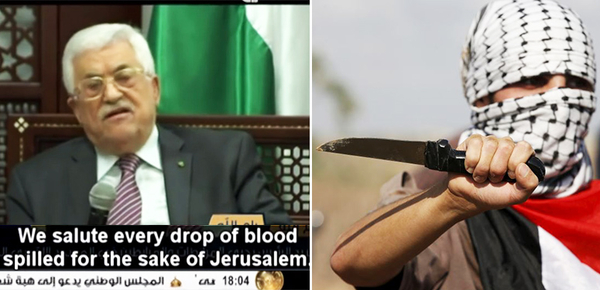
This is yet another instance in which anyone could have predicted what was going to happen. Throughout the past year, Abbas has been telling his people that Israel was planning to destroy the Al-Aqsa Mosque and “change the Arab and Islamic character and identity” of Jerusalem. He condemned Jews for “defiling the Aqsa Mosque with their filthy feet.” Abbas, his spokesmen and PA-controlled media outlets also have also repeatedly been telling Palestinians that Israel is committing “war crimes” and “summary executions” of innocent Palestinians.

This is, as Abbas knows, exactly the type of incitement that prompts Palestinian teenagers to grab a knife, run out into the street and murder the first Jew they see. Those young Palestinians are also tragic victims of the poisonous campaign of the inflammatory anti-Israeli language emanating from Palestinian leaders such as Abbas, mosque preachers, news outlets and social media.

Contrary to Abbas’s outrage, no one has yet found even one terrorist who claimed to have attacked a Jew out of “despair and frustration” at the “lack of a political horizon.” If you look through the social media accounts of these young terrorists, many have said that they set out to kill Jews to “defend” Al-Aqsa Mosque. They seem to have been influenced by the romantic notion of Abbas’s repeated fictitious claims that Jews were plotting to destroy the mosque, followed by high-flown fantasies of themselves as heroes charging forth to rescue it.

A public opinion poll published last week refutes Abbas’s claim that Palestinians are committing terrorist attacks out of “despair and frustration.” The poll, conducted by the Watan Center for Studies and Research, found that 48% of the Palestinians interviewed believe that the real goal of the “intifada” is to “liberate all of Palestine.” In other words, approximately half of Palestinians believe that the goal of the “intifada” should lead to the destruction of Israel.

What is notable, is that only 11% of respondents said that the true goal of the “intifada” should be to “liberate” only those territories captured by Israel in 1967. Another 12% of Palestinians said they believe that the goal of the “intifada” was to release prisoners held by Israel.

The results of the poll, which covered 1,167 Palestinians above the age of 18, show that a majority of Palestinians continue to seek the destruction of Israel. The poll shows that only a few Palestinians see only the West Bank, Gaza Strip and east Jerusalem as the future Palestinian state. They want the “intifada” to replace Israel with a Palestinian state — preferably, one that now would be ruled by Hamas and jihadi organizations such as Islamic State and Al-Qaeda.

These Palestinians do not see a difference between, say, Ma’aleh Adumim, a “settlement” on the outskirts of Jerusalem, and any city inside Israel. One only needs to look at reports in the Palestinian media to see that Tel Aviv, Rishon Lezion, Kiryat Gat and Ra’anana are all considered “settlements.” These reports also show that Palestinians do not see a difference between a Jew living in the West Bank and Israel — instead, they are all depicted as “settlers” and “colonialists.”

None of the Palestinians interviewed for the poll complained about “despair and frustration,” or the lack of a “political horizon.” Obviously, they are driven by hatred for Jews and Israel. They do not, however, have a problem with “settlements” or “poor living conditions.” They have a problem with Israel’s existence. A majority believes that Israel can — and should — be destroyed. They are not, as Palestinian leaders claim, seeking a two-state solution.

According to the poll, more than 75% of Palestinians support the use of violence against Israel. More than 44% of respondents support the use of firearms against Israel; 18% are in favor of using knives to kill Jews, and another 14% would like to see Palestinians use stones. This contradicts Abbas’s claim that the Palestinians want a “peaceful and popular” uprising.

Another noteworthy finding of the poll is that 72% of Palestinians want the current “intifada” to continue. In other words, an overwhelming majority of Palestinians would like to see their youths carry out more terror attacks against Israeli civilians and soldiers. They want to see more terror attacks because their leaders and journalists are telling them that those who kill Jews are “heroes” and “martyrs” who will have streets, squares, schools and tournaments named after them.

U.S. Secretary of State John Kerry, who visited Israel and Ramallah last week in a bid to end the Palestinian terror attacks, was unable to make any progress. Even before he arrived in Ramallah to meet with President Abbas, Kerry was strongly condemned for referring to the Palestinian violence as “terrorism.” Palestinians who demonstrated not far from Abbas’s office shouted slogans condemning the U.S. Administration for its attempt to stop the terror attacks against Israelis and called for boycotting Kerry. The protesters also declared Kerry persona non grata in Ramallah.

Kerry and the U.S. Administration should know by now that the Palestinians are waging war on Israel not because of “despair and frustration,” but because they aspire to destroy Israel, as the results of the recent poll show.

The goal of the Palestinians is the destruction of Israel. This fact is something that other Western parties need to understand — that the Palestinian “struggle” is mainly aimed at eliminating Israel, and not “the establishment of a Palestinian state that would live in peace and security alongside Israel.” The recent poll should be translated into English and distributed among all those “pro-Palestinian” groups that continue to shout about the conflict being the result of Israeli “occupation” of the West Bank, Gaza Strip and east Jerusalem.

Today, it is clear that the Israeli-Palestinian conflict is not really about the “occupation” that began with the creation of Israel in 1948. The last three Palestinian “intifadas” and previous Israeli-Arab wars had (and still have) one goal: to see Israel removed off the map.

Bassam Tawil is a scholar based in the Middle East.

Palestinians: The Power Struggle between Young Guard and Old Guard by Khaled Abu Toameh

  • Who is supplying Mohamed Dahlan with money? The United Arab Emirates (UAE). It is their cash that has enabled Palestinians in refugee camps in the West Bank and Gaza Strip to purchase weapons and buy loyalty for Dahlan in preparation for the post-Abbas era — especially disgruntled young Fatah activists in the West Bank who feel that Abbas and the PA leadership have turned their backs on them.

  • This power struggle will not end with the departure of Mahmoud Abbas. The next Palestinian president will surely be one of Abbas’s current loyalists. This in itself will drive Dahlan and his ilk to continue railing against the old guard.

Palestinian Authority (PA) President Mahmoud Abbas faces a real threat; its name is Mohamed Dahlan.

Abbas has become obsessed with Dahlan, according to insiders. The PA president, they report, spends hours each day discussing ways to deal with the man and his supporters. And, it is rumored, Abbas’s nights are not much better.

Backed by at least three Arab countries, Dahlan, a former Palestinian security commander from the Gaza Strip, seems to have unofficially joined the battle for succession in the PA.

The 54-year-old Dahlan, young enough to be Abbas’s son, continues to deny any ambition to succeed Mahmoud Abbas as president of the PA. Yet Dahlan’s continued efforts to establish bases of power in both the West Bank and Gaza Strip belie his claims.

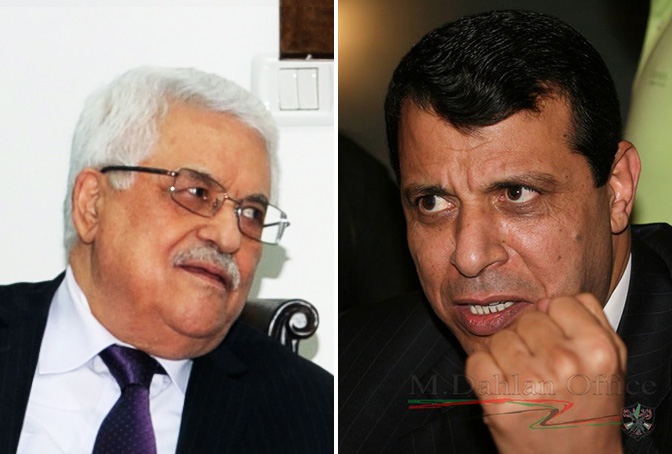
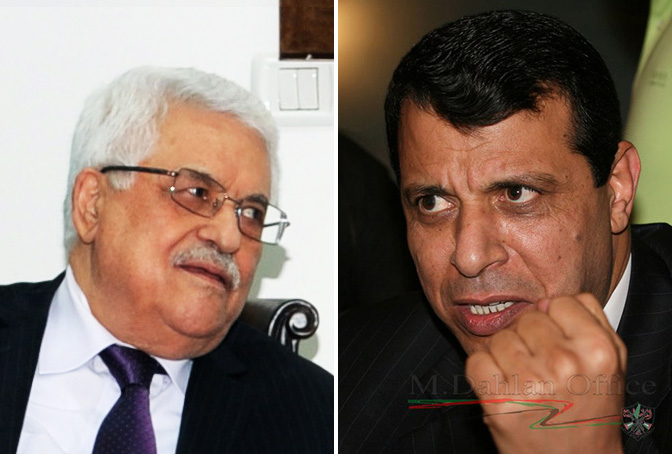
Palestinian Authority President Mahmoud Abbas (left) and Mohamed Dahlan (right), a former Fatah security commander, have, for the past five years, been at each other’s throats. The two were once close allies and had worked together to undermine the former PA president, Yasser Arafat. (Image sources: U.S. State Dept., M. Dahlan Office)

Abbas’s top aides talk about the cash that Dahlan has lavished on many Palestinians, thereby winning their support. Any Palestinian activist whose request for financial aid is turned down by Abbas’s office can always turn to Dahlan, who is not inclined to disappoint those who seek his help.

Who is supplying Dahlan with money? The United Arab Emirates. It is their cash that has enabled Palestinians in refugee camps in the West Bank and Gaza Strip to purchase weapons and buy loyalty for Dahlan in preparation for the post-Abbas era.

Unsurprisingly, Abbas and the PA leadership are less than enthusiastic about this turn of events. Since 2011, they have taken a series of measures to stop Dahlan, but to no avail.

First, Abbas ordered his security forces to raid Dahlan’s home in Ramallah and confiscate documents and equipment. Second, the Fatah Central Committee, a body dominated by Abbas loyalists, voted in favor of expelling Dahlan from its ranks. Third, the PA, at the behest of Abbas, filed charges in absentia against Dahlan, accusing him of financial corruption and embezzlement.

As part of a smear campaign, Abbas and the PA have claimed that Dahlan is a murderer who has Palestinian blood on his hands. They have also been saying that Dahlan stole hundreds of millions of dollars and is in collusion with the Palestinians’ enemies.

Still, Dahlan appears to be far from vanishing from the Palestinian political scene. In fact, the campaign against him seems to have increased Dahlan’s resolve to continue and even step up his efforts to bring down Abbas and his veteran loyalists in the Palestinian Authority.

So what is fueling Dahlan’s success? Abbas and some of his top aides point a finger at the United Arab Emirates (UAE), the wealthy Gulf country that has been harboring and funding Dahlan for the past five years. Dahlan’s ties with the ruling family in the UAE are so strong that he has been appointed as a “special advisor” to Sheikh Mohamed bin Zayed Al Nahyan, the Crown Prince of Abu Dhabi and Deputy Supreme Commander of the UAE Forces. Palestinian Authority officials in Ramallah call Dahlan the “spoiled lad” of Sheikh Al Nahyan.

United Arab Emirates money has helped Dahlan and his supporters buy loyalty among Palestinians, especially disgruntled young Fatah activists in the West Bank who feel that Abbas and the PA leadership have turned their backs on them.

But while the influential Gulf country provides Dahlan with shelter and funds, two other Arab countries — Egypt and Jordan — grant him a certain degree of legitimacy and a platform for his public activities, including those directed against Abbas and some of his top advisors and aides in Ramallah. Dahlan maintains a close friendship with Egyptian President Abdel Fattah el-Sisi, with whom he has met a number of times in Cairo over the past two years. Recently, Dahlan visited Amman and met with several Jordanians and Palestinians, much to the dismay of Abbas and the Palestinian Authority leadership.

Dahlan’s close ties with the Egyptians and Jordanians are the force driving the tensions that have erupted between Abbas and both Sisi and Jordan’s King Abdullah.

According to Palestinian sources in Ramallah, Abbas has expressed outrage over the way the Egyptians and Jordanians have openly embraced and endorsed the man he considers his greatest threat. Upon learning of Dahlan’s visit to Jordan, Abbas refrained from meeting with government officials in Amman (where he has a private house) on his way to visit other countries. (Abbas routinely travels around the world through Jordan). Abbas was particularly enraged when he learned that King Abdullah had given Dahlan and his family members Jordanian citizenship.

Dahlan’s visit to Jordan last April is believed to be in the context of his effort to establish bases of power among Palestinians living in the kingdom. According to some reports, Dahlan has already succeeded in rallying dozens of Palestinians from refugee camps in Jordan behind him.

“Dahlan is President Abbas’s worst nightmare,” remarked a senior Palestinian official in Ramallah who has been closely following the complicated ties between the two men over the past two decades. “You can be fired or punished in various ways if the president suspects that you are in touch with Dahlan.”

Dahlan founded and headed the Palestinian Preventive Security Force in the Gaza Strip shortly after the signing of the Oslo Accords. After the death of Yasser Arafat in 2004, he became one of Abbas’s closest confidants, later appointed by Abbas as National Security Advisor to the Palestinian Authority leadership. In 2006, he was elected as a Fatah member of the Palestinian Legislative Council for the Khan Yunis district in the southern Gaza Strip.

How Abbas and Dahlan came to be at one another’s throats is food for speculation. Some Palestinians believe that the ill-will between the two is purely personal, and began when Dahlan was overheard belittling Abbas’s two sons, Yasser and Tareq. Others say that Abbas decided to get rid of Dahlan because he suspected that Dahlan was plotting to stage a coup against him.

Then again, 81-year-old Abbas is highly suspicious of Palestinians such as Dahlan who have too much ambition and charisma. Abbas is also very overprotective of his family, particularly his two sons. Other Palestinian officials, such as Salam Fayyad and Yasser Abed Rabbo, who have dared to challenge Abbas in various ways have found themselves stripped of power and money. Abbas’s campaign against his critics has been notably successful so far, with the exception, of course, of Dahlan. Those officials who continue to live in the West Bank now keep their mouths shut. Dahlan, of course, does not.

Based in Abu Dhabi, Dahlan is beyond Abbas’s long arm. Dahlan’s close ties with the leaders of the United Arab Emirates, Egypt and, to some degree, Jordan, has given him immunity against Abbas, who is keen to pacify these three important Arab countries. Besides, Abbas is well aware that he is surrounded by too many wolves, and that opening a new front with Dahlan and his friends/patrons in the Arab countries could put him over the edge.

Buoyed by impressive political and financial aid, Dahlan pulls no punches when it comes to Abbas.

Last year, Dahlan chose a Jordanian online newspaper to launch a scathing attack on his former boss. In the eyes of some Palestinian political analysts, Dahlan’s platform was far from random. They argue that the online newspaper could not have published Dahlan’s statements had it not received permission from the highest echelons in the royal palace in Amman. Some Jordanian writers and journalists have in the past been imprisoned for insulting some Arab leaders or countries. Not in this case, where Dahlan made the charges against Abbas.

So what did Dahlan share in the interview with the Ammon News website, which described him as a charismatic leader and the number one enemy of Abbas?

Dahlan accused Abbas of “hiding” $600 million following the death of Yasser Arafat. According to Dahlan, former Prime Minister Salam Fayyad gave Abbas a total of $1.4 billion, but when Abbas was asked about the sum he claimed he had only received $800 million. He accused Abbas’s sons of corruption, claiming their fortune was estimated at over $300 million. He also reminded that Abbas was no longer a legitimate president because his term in office had expired in January 2009.

“What kind of a president is this who lives in Amman and rules in Ramallah?” Dahlan asked in the interview. “Abbas’s problem is that when the he sits with me he doesn’t feel he’s a president. No one respects him, not in Palestine and not abroad.”

Abbas’s aides have dismissed the charges as “lies and fabrications,” saying they are in the context of Dahlan’s ongoing effort to undermine the Palestinian Authority leadership and “serve the agenda of regional powers and foreign parties.”

Sources close to Abbas have also claimed that the Jordanian news website that gave Dahlan a platform for his attacks on the PA was on the payroll of Dahlan’s patrons in the United Arab Emirates. They also claim that Dahlan has similarly used UAE funds to purchase a popular Egyptian online newspaper.

The rivalry between Abbas and Dahlan is emblematic of the power struggle between the old guard and young guard in Fatah, the largest Palestinian faction that dominates the Palestinian Authority and the Palestine Liberation Organization (PLO).

This is a power struggle that has been raging for the past three decades. Dahlan is a representative of the young guard, whose members are strongly opposed to the continued hegemony and monopoly of the old guard over the decision-making process. Dahlan and the young guard are mostly from the West Bank and Gaza Strip, grassroots leaders who have long been complaining that they have been marginalized by the veteran leaders of the Palestinians who came from Lebanon and Tunisia after the signing of the Oslo Accords and who continue to block the emergence of new and younger leaders.

This power struggle will not end with Abbas’s departure. The next Palestinian president will surely be one of Abbas’s current loyalists. This in itself will drive Dahlan and his ilk to continue railing against the old guard. Dahlan’s ghost will continue to haunt not only any future Palestinian president, but also Abbas in his grave.

Who, then, one might ask, will step up and lead the Palestinians away from the edge of their own abyss? For now, it does not seem that there is a Palestinian leader who has the power or credentials to stop the deterioration.

Khaled Abu Toameh, an award-winning journalist, is based in Jerusalem.

Palestinians: The Diploma for Terror by Bassam Tawil

  • A glance at their leaders and senior officials tells them that Palestinian Authority jobs go to “graduates” of Israeli prisons.

  • Besides sending a message to Palestinians about who is valued in Palestinian society, the Fatah leader is also making it clear that the path to leadership and employment passes through Israeli prisons. Abbas’s senior representative is telling Palestinians that there is no need for them to pursue actual education: Israeli prisons are the best “universities.”
  • The longer the time spent in prison, the higher the military rank. Ten years will earn them the rank of Colonel. More than that will earn them General. The path to winning a job with a PA ministry also passes through Israeli prisons. These are the leaders touted as role models to young Palestinians.

Palestinians who are being held in Israeli prisons are “a model for sensibility and national culture and constitute a pillar for the establishment of a Palestinian state.” This glorification of Palestinian prisoners, many of whom are behind bars for murdering Jews, was issued last week by Fayez Abu Aitah, a senior representative of President Mahmoud Abbas’s ruling Fatah faction.

Abu Aitah’s words of appreciation for murderers of Jews came during a visit he paid to Hatem al-Maghari, a Palestinian Authority (PA) policeman who was released last week after serving 17 years in prison for his role in the lynching of two Israeli reserve soldiers who mistakenly entered Ramallah. Upon his arrival at his home in the town of Rafah in the southern Gaza Strip, Al-Maghari received a hero’s welcome. Hundreds of Palestinians have since converged on his home to congratulate him on his release from prison and heap praise him on for his “contribution” to the Palestinian cause.

Abbas’s Fatah was quick to embrace al-Maghari as “one of our sons” in order to send a message to Palestinians that the Fatah faction is also involved in terror attacks against Israel. For years, Fatah’s opponents have been accusing it of abandoning the “armed struggle” in favor of a peace process with Israel. Groups such as Hamas, Popular Front for the Liberation of Palestine (PFLP) and Palestinian Islamic Jihad continue to criticize Fatah for not being sufficiently active in the terror campaign against Israel.

The release of al-Maghari provided an opportunity for Fatah to remind its Palestinian enemies of its “contribution” to the war against Israel. The lynching of the two soldiers inside a Palestinian Authority police station in Ramallah was one of the most brutal crimes perpetrated by Palestinians. The PA leadership has never accepted responsibility for the lynching of the two soldiers, who were being held by PA policemen inside the station after taking a wrong turn into the city as they were on their way to their base.

The hero’s welcome that al-Maghari received and the words of praise from Fatah leaders serve as a reminder of how murderers of Jews continue to be hailed as role models for Palestinians. President Abbas and his PA and Fatah representatives have long lauded Palestinian prisoners held by Israel as “heroes” and future leaders of a Palestinian state.

As Abu Aitah explained during his well-wishing visit to the released terrorist:

“The prisoners are the pillar of our national movement. They have sacrificed the best of our committed and responsible national cadres that are leading the struggle of our people. Our prisoners have turned (Israeli) prisons into universities from where the future leaders graduate.”

Besides sending a message to Palestinians about who is valued in Palestinian society, the Fatah leader is also making it clear that the path to leadership and employment passes through Israeli prisons. In no uncertain terms, he is saying to young Palestinians: “If you want to become a leader, you need to prove your qualifications by following the example of those Palestinians who carried out terror attacks against Israel and spent time in Israeli prison.” Again: Abbas’s senior representative is telling Palestinians that there is no need for them to pursue actual education: Israeli prisons are the best “universities.”

Palestinians have every reason to believe Abu Aitah; he is the top Fatah official. Just a glance at their leaders and senior officials tells them that Palestinian Authority jobs go to “graduates” of Israeli prisons. There is no shortage of such leaders who rose to power thanks to their involvement in terror attacks against Israel.

In the world of the Palestinians, terror is indeed the diploma of currency. Serving time in Israeli prison can even earn one a military rank without having to go to any military or security academy.

The PA, according to Palestinian sources, has one of the largest numbers of Generals and Colonels in the Arab world. Most of these high-ranking officers earned their titles thanks to the time they served in Israeli prison, not because they studied at any military academy.

Take, for example, Jibril Rajoub, the former commander of the Palestinian Authority’s notorious Preventive Security Force, who holds the rank of Major-General. Rajoub’s rank is largely the result of the 17 years he spent in Israeli prison for his role in terrorism. Rajoub is only one of dozens, if not hundreds, of former prisoners who hold such high-ranking titles but do not have any real military background.

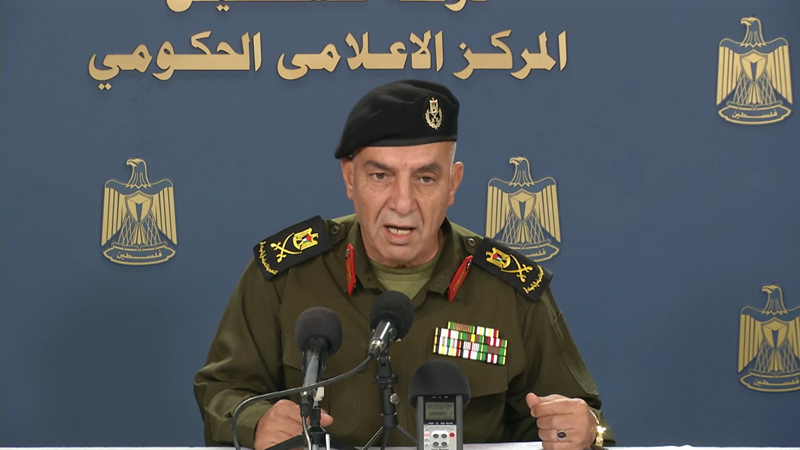
Many high-ranking PA security officials, such as Major-General Adnan Damiri, spokesman for the PA security forces, wear medals and decorations on their military uniforms even though they have not participated in any war. Damiri spent 10 years in Israeli prison for security-related offenses.

Many high-ranking Palestinian Authority (PA) security officials, such as Major-General Adnan Damiri, spokesman for the PA security forces, wear medals and decorations on their military uniforms even though they have not participated in any war. (Image source: PA video screenshot)

These are the leaders touted as role models to young Palestinians. No small number of Palestinian senior “officers” failed even to complete their high school education. But that should not bother any Palestinian who is dreaming of assuming a senior job in a Palestinian state.

On April 17, the Palestinians will again mark “Palestinian Prisoners’ Day” by holding as series of rallies in solidarity with prisoners who carried out terror attacks against Israel. This event is marked every year by Palestinians to honor the “heroes” who made “huge sacrifices” on behalf of the Palestinians.

These “sacrifices” include the maiming and murder of Jews. The annual event in the West Bank is sponsored and funded by Abbas’s Fatah, in turn funded by Europe and the West, in the context of glorifying terrorists and encouraging Palestinian youths to follow their presumably heroic example.

A Palestinian teenager who wishes to become a “general” under Abbas need not apply to any sort of academy. The shortest route to achieve rank is by carrying out a terror attack against Israel and doing time in Israeli prison. The longer the time spent in prison, the higher the military rank. Ten years will earn them the rank of Colonel. More than that will earn them General. The path to winning a job with a Palestinian Authority ministry also passes through Israeli prisons. Former prisoners are treated as the “good boys of the revolution” and granted the plum jobs. Meanwhile, those Palestinians who actually choose to become educated once again lose out.

It would be no surprise, then, if al-Maghari finds himself awarded the rank of General in Abbas’s Fatah-controlled security forces.

And so it continues: the unashamed glorification of murderers; terrorists paraded as role models and paragons of virtue to yet another generation of Palestinians. Under these conditions of unremitting incitement, no Palestinian can talk about peace with Israel.

When President Abbas visits the White House, it will be interesting to see if his “peace” stance includes a discussion of the Diploma for Terror.

Bassam Tawil is a scholar based in the Middle East.
Translate »
Skip to toolbar