Europe’s Jew-Hate with a Vengeance

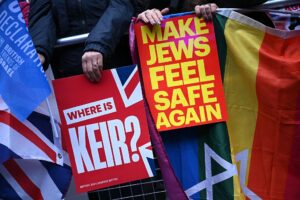
Europe’s Jew-Hate with a Vengeance

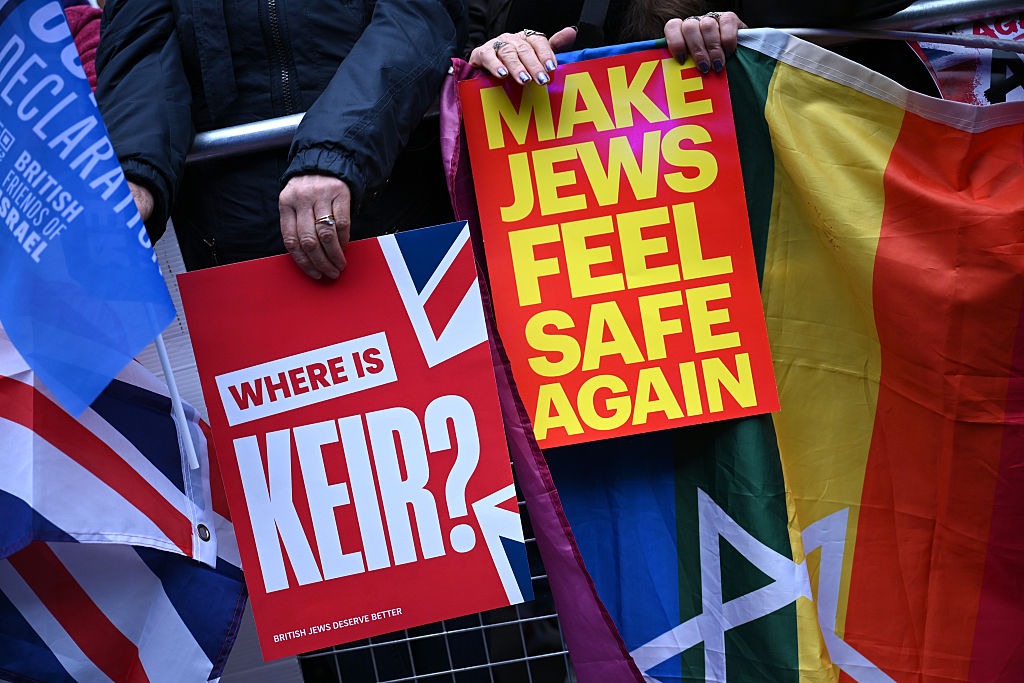
[M]any in the West who sympathize with Islamic terrorists were, within hours, trying to justify Hamas’s atrocities by blaming Israel. The allegations against Israel were that it was denying supposed rights of More »

Ijuru rikomeje kwibasira Kayumba Nyamwasa!!!

Ijuru rikomeje kwibasira Kayumba Nyamwasa!!!

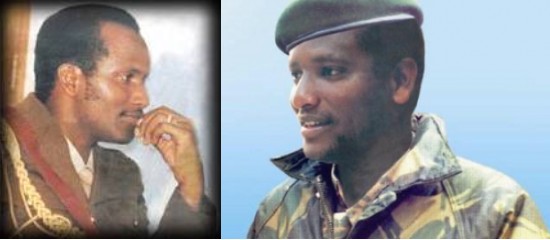
Ibiro ntaramakuru bikomeje kwibasira Kayumba Nyamwasa bivuga ko atari umuntu mwiza mu gihe yararimo yifuza kuba ya kwandikira Umwami Kigeli Ndoli akaba n’umucamanza uca imanza zitabera z’Uhoraho Uwiteka Imana Nyiringabo. Bikomeza bivuga More »

abanyamadini banze kwemera ubutabera bw’Uwiteka Nyiringabo, none covid19 pandemic iragarutse!!!

abanyamadini banze kwemera ubutabera bw’Uwiteka Nyiringabo, none covid19 pandemic iragarutse!!!

Uwiteka Imana Nyiringabo yabwiye abanyamadini ngo bafunge insengero zabo baranga, none batumye covid19 yongera kugaruka. Amakuru avuga ko covid19 pandemic ubu yamaze kugera mu bihugu bigera 23 harimo US, UK, Canada, Australia More »

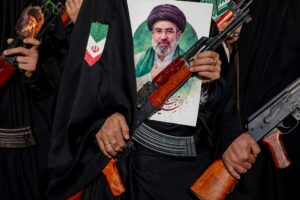
Iran: Complete Regime Change for Permanent Peace

Iran: Complete Regime Change for Permanent Peace

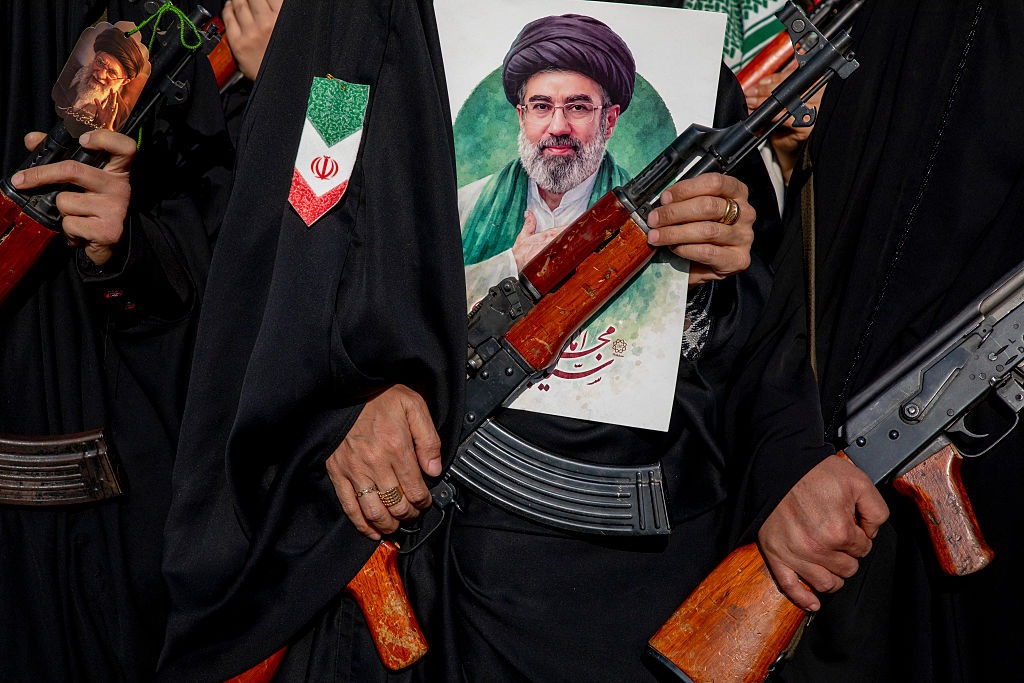
The enduring barbarity of the clerical regime’s attempts to subjugate the Iranian people to its will demonstrates why the Trump administration’s decision to launch fresh military action was justified. It also exposes More »

Fusion Energy: Why America Needs to Own Its Technology

Fusion Energy: Why America Needs to Own Its Technology

For decades, fusion energy has been the great scientific pursuit — clean, limitless power drawn from the same physics that powers the sun. Enormous progress has been made in the technology required More »


Turkey-Russia Pact Threatens Western Interests in the Middle East by Con Coughlin

  • In recent months the Kremlin has hinted that keeping Assad in power is not its primary concern. Rather its main objective in Syria is to keep its strategically-important bases in the country.

  • This has led to suggestions that, in return for building closer relations with Turkey, Moscow might be prepared to do a deal whereby Assad is removed from power and Russia’s military interests in the country are safeguarded.
  • If that outcome could be achieved, then Russia and Turkey would be able to forge a powerful partnership, one that would pose a serious threat to Western interests in the Middle East and beyond.

The deepening diplomatic pact between Turkey and Russia represents yet another damning indictment of the Obama Administration’s ability to maintain relations with Washington’s traditional allies in the Middle East.

Western diplomats regard the decision by Turkish President Recep Tayyip Erdogan to restore relations with Moscow last month as part of a carefully-coordinated attempt by Ankara to build a new power base in the region.

For decades Turkey, a key NATO member, has said that it wants to forge closer ties with the West, to the extent that Turkish diplomats insist that Ankara is still serious about joining the European Union.

But the increasingly hard-line Islamist approach taken by Mr Erdogan in the wake of the failed military coup, which has seen tens of thousands of judges, academics and journalists forced from their jobs, has caused the Turkish government to realise the prospects of maintaining relations with its Western allies are remote so long as it continues with the current crack-down.

This had led Mr Erdogan to embark on a campaign to reach out to countries such as Russia, which he regards as a viable alternative to the U.S. in protecting Turkey’s interests in the region.

Turkish President Recep Tayyip Erdogan has embarked on a campaign to reach out to countries such as Russia, which he regards as a viable alternative to the U.S. in protecting Turkey’s interests in the region. Pictured: Russian President Vladimir Putin with Turkish President Erdogan (then prime minister), meeting in Istanbul on December 3, 2012. (Image source: kremlin.ru)

The Turkish leader’s disillusionment with U.S. President Barack Obama predates the tensions caused by the military coup and Turkey’s demand that Washington extradites the exiled Turkish cleric Fethullah Gulen, whom Ankara accuses of orchestrating the failed military coup.

The fall-out between Mr Erdogan and Mr Obama dates back to the American president’s failure to follow up on his threat to launch military action against Syrian President Bashar al-Assad if he used chemical weapons against his own people in Syria’s brutal civil war.

From the outset of the conflict, Mr Erdogan has been committed to the overthrow of the Assad regime, which is accused of supporting Kurdish separatist groups. It is for this reason that the U.S. has accused Turkey of turning a blind eye to the activities of Islamic State of Iraq and Syria (ISIS) terrorists on its lengthy border with Syria.

Indeed, the big stumbling block preventing Turkey from having better relations with Russia was that Moscow was helping to keep the Assad regime in power through the military intervention by Russian forces that began last year.

But in recent months the Kremlin has hinted that keeping Assad in power is not its primary concern. Rather its main objective in Syria is to protect its strategically-important military bases in the country.

This has led to suggestions that, in return for building closer relations with Turkey, Moscow might be prepared to do a deal whereby Assad is removed from power and Russia’s military interests in the country are safeguarded.

And if that outcome could be achieved, then Turkey and Russia would be able to forge a powerful partnership, one that would pose a serious threat to Western interests in the Middle East and beyond.

Mr Coughlin is Defence and Foreign Affairs Editor of London’s Daily Telegraph.

Turkey-Israel Rapprochement by Shoshana Bryen

  • Israeli policy (assisted by U.S. Vice President Joe Biden) produced perhaps the best possible outcome.The UN Secretary General’s Report on the Gaza Flotilla concluded that Israel was within its rights to use force, and found the blockade of Gaza to be legal.

  • Turkey agreed to Israel’s original condition to the flotilla ships — aid bound for Gaza will offload in Ashdod.
  • Israel had also wanted to oust Hamas from Turkey — something that may not have been accomplished. But Turkey, by agreeing to a number of humanitarian projects in Gaza, will increase its leverage over Hamas in ways that might benefit Israel.

The announcement of Turkish-Israeli rapprochement was touted first as an economic achievement for Israel. It should be noted, however, that Turkey-Israel civilian trade, as distinct from military trade, was already robust, rising from $1.5 billion in the first half of 2010 to $5.6 billion in 2015. Israel has an interest in Turkey as a customer for Israeli natural gas fields, but a number of countries — including Russia — also seek partnerships in natural gas.

The deal has also been linked to the resolution of three Turkish conditions arising from the “Gaza Flotilla” of 2010. Turkish President Recep Tayyip Erdogan (who was prime minister at the time of the Gaza flotilla) had demanded an Israeli apology for the deaths of Turkish citizens on one of the flotilla ships, financial compensation, and the lifting of the Israel’s naval blockade on Gaza. The first two were agreed to by Israel years ago. The resolution — or non-resolution — of the third is a window into what is really going on, which is both more, and less, than the news reports.

Critics of Israeli Prime Minister Benjamin Netanyahu naturally blame Israel for delaying the restoration of political and presumably military ties, but, in fact, Israeli policy (assisted by U.S. Vice President Joe Biden) produced perhaps the best possible outcome.

Israel has had some success working with Sunni governments in the region — including Saudi Arabia — on the basis of shared opposition to ISIS and to Iranian plans for regional hegemony. Both are better done with Turkey than without. And Israel’s political and military interlocutors, Russia and Egypt, needed some assurance that would ameliorate their displeasure with Turkish-Israeli reconciliation.

For Russia, there was a public apology from Erdogan for shooting down a Russian plane over Turkey, which resulted in the death of the pilot — an act that Russian President Vladimir Putin called “a stab in the back.” In an obsequious letter, Erdogan wrote,

“The Turkish side… made a great effort to recover the body of the Russian pilot… The organization of the pre-burial procedures was conducted in accordance with all religious and military procedures… Ankara has treated the family of the dead Russian pilot as if it were a Turkish family… and is ready for any initiatives to relieve the pain and severity of the damage done.”

Erdogan called Russia a “friend and strategic partner.”

For Egypt, there is assurance that the naval blockade of Gaza, important to Egypt’s fight against ISIS and Hamas (the Palestinian branch of the Muslim Brotherhood), would not be lifted. The 2010 flotilla was organized by the Hamas-related IHH “charitable group” and supported by the Erdogan government. A CIA report had linked the organization with “Iran and Algerian groups,” and the IHH office in Bosnia “has been linked to Iranian operatives.” As the flotilla neared the waters off Gaza, Israel broadcast orders for the ships to land in the Israeli port of Ashdod where the “humanitarian aid” for Gaza would be offloaded. Six of the seven ships did so; the Mavi Marmara did not and was boarded by Israeli commandos. In the ensuing melee, nine Turks were killed and ten Israeli commandos wounded.

The UN Secretary General’s Report on the Gaza Flotilla, while criticizing the IDF for “excessive” force, nevertheless found that IDF troops faced an “organized and violent” assault from a group on the ship. It concluded that Israel was within its rights to use force and found the blockade of Gaza to be legal. Israel, therefore and in consideration of its relations with Egypt, steadfastly declined to lift the blockade.

Israel’s determination resulted in Turkey agreeing to Israel’s original condition to the flotilla ships: aid bound for Gaza will offload in Ashdod. As Al Jazeera reported:

“One of the interesting things that we’ve come to find out recently is that the material Turkey will be sending to Gaza will first land in the Israeli port of Ashdod. Obviously the third condition has not been met because if this deal stipulates that Turkey must send in materials to Ashdod, it means that the siege is still in place. Anything that is reaching Gaza must still get there via the Israeli port, meaning it requires Israel’s approval.”

That should mollify Egypt.

Israel had also wanted to oust Hamas from Turkey — something that may not have been accomplished — but Israel and Turkey will have diplomatic avenues for Israel to try to influence Turkey’s support of Hamas. At the same time, Turkey, by agreeing to a number of humanitarian projects in Gaza — through Ashdod — will increase its leverage over Hamas in ways that might benefit Israel.

Israel had wanted to oust Hamas from Turkey — something that may not have been accomplished in this week’s deal. Pictured above: Turkish President (then Prime Minister) Recep Tayyip Erdogan (right) meeting with Hamas leaders Khaled Mashaal (center) and Ismail Haniyeh on June 18, 2013, in Ankara, Turkey. (Image source: Turkey Prime Minister’s Press Office)

And the regional elephant in the room — Israel’s support for Kurdish separatism, in Iraq and Syria if not directly in Turkey — was not addressed in the new arrangement.

What cannot be judged at this moment is the degree of commitment to the elements of the deal on the Turkish side. Israel has made its apology and agreed to the sum it will pay in damages to Turkish citizens. But Turkey has been moving toward a more stridently Islamist political and ideological posture since Erdogan’s first election in 2003, offering encouragement to Islamists and jihadists of various stripes.

It may be that the combination of economic advancement and an easing of regional isolation will modify Turkey’s behavior — and Erdogan’s mouth. That remains to be seen. But from Israel’s point of view, its basic requirements have been met, no unacceptable conditions have been imposed, and the deal so far can be considered a diplomatic success.

Shoshana Bryen is Senior Director of the Jewish Policy Center.

Turkey, Europe’s Little Problem by Burak Bekdil

  • Europe is giving signals, albeit slowly, that it may be waking up from the “Turkey-the-bridge” dream. Germany’s Foreign Minister Frank-Walter Steinmaier said that his country’s relations with Turkey have grown so bad the two countries have virtually “no basis” for talks.

  • “Italy should be attending to the mafia, not my son,” said Turkish President Recep Tayyip Erdogan. Typically, he does not understand the existence of independent judiciary in a European country. He thinks, as in an Arab sheikdom, prosecutors are liable to drop charges on orders from the prime minister.
  • “We know that the democratic standards are clearly not sufficient to justify [Turkey’s] accession [to the European Union].” — Austrian Chancellor Christian Kern.

Nations do not have the luxury, as people often do, of choosing their neighbors. Turkey, under the 14-year rule of Recep Tayyip Erdogan’s Islamist governments, and neighboring both Europe and the Middle East, was once praised as a “bridge” between Western and Islamic civilizations. Its accession into the European Union (EU) was encouraged by most EU and American leaders. Nearly three decades after its official bid to join the European club, Turkey is not yet European but has become one of Europe’s problems.

Europe’s “Turkish problem” is not only about the fact that in a fortnight a bomb attack wrecked a terminal of the country’s biggest airport and a coup attempt killed nearly 250 people; nor is it about who rules the country. It is about the undeniable democratic deficit both in governance and popular culture.

In only the past couple of weeks, Turkey was in the headlines with jaw-dropping news. In Istanbul, a secretary at a daily newspaper was attacked by a group of people who accused her of “wearing revealing clothes and supporting the July 15 failed coup.” She was six months pregnant.

Also in Istanbul, a Syrian gay refugee was murdered: he had been beheaded and mutilated. One social worker helping LGBT groups said: “Police are doing nothing because he is Syrian and because he is gay.”

Turkey is dangerous not only for gays and refugees. A French tourist was left bloodied and beaten by Turkish nationalists after he refused to hold a Turkish flag. Grisly footage shows the gang, encouraged by Erdogan to patrol the streets on “democracy watch,” telling the man “You will be punched if you don’t hold the flag.” The tourist is alone and does not appear to speak Turkish.

Meanwhile Europe is giving signals, albeit slowly, that it may be waking up from the “Turkey-the-bridge” dream. Germany’s Foreign Minister Frank-Walter Steinmaier said that his country’s relations with Turkey have grown so bad the two countries have virtually “no basis” for talks. He said that Germany has serious concerns about mass arrests carried out by Turkish officials. According to Steinmaier, Turkey and Germany are like “emissaries from two different planets.” Steinmaier is right. He is also not the only European statesman who sees Turkey as alien.

Germany’s Foreign Minister Frank-Walter Steinmaier (right) said that his country’s relations with Turkey under Recep Tayyip Erdogan have grown so bad the two countries have virtually “no basis” for talks.

Erdogan recently threatened Italy that its bilateral relations with Turkey could deteriorate if Italian prosecutors investigating Erdogan’s son, Bilal, for money laundering, proceeded with their probe. “Italy should be attending to the mafia, not my son,” Erdogan said. Typically, he does not understand the existence of independent judiciary in a European country. He thinks, as in an Arab sheikdom, prosecutors are liable to drop charges on orders from the prime minister.

Italy’s prime minister, Matteo Renzi, answered Erdogan in language Erdogan will probably will not understand: “Italy has an independent legal system and judges answer to the Italian constitution and not the Turkish president.”

In unusual European realism, Austrian Chancellor Christian Kern said that he would start a discussion among European heads of government to end EU membership talks with Turkey. He rightly called the accession talks “diplomatic fiction.” Kern said: “We know that the democratic standards are clearly not sufficient to justify [Turkey’s] accession.”

Even Turkish Cypriots on the divided island fear that Erdogan’s Islamization campaign may target their tiny statelet. On August 3, about 1,500 people from 80 groups spanning the political spectrum took to the streets in Nicosia to protest against “Turkey’s attempt to mold their secular culture into one that’s more in tune with Islamic norms.”

All of that inevitably makes Turkey an alien candidate waiting at Europe’s gates to join the club. According to a European survey, Turkey is the least-wanted potential EU member — even less wanted than Russia. Opposition to Turkish membership ranges from 54% (Norway) to 81% (Germany).

Celal Yaliniz, a little-known Turkish philosopher, likened Turks in the 1950s to “members of a ship’s crew who are running toward the west as their ship travelled east.” The Turks were not alone. Erdogan’s “liberal” Western supporters have been no different.

Burak Bekdil, based in Ankara, is a Turkish columnist for the Hürriyet Daily and a Fellow at the Middle East Forum.

Turkey’s Tradition of Murdering Christians by Robert Jones

  • Turkey’s countless agreements with Western organizations do not seem to have reduced the hatred for Christians there.In Turkey, it is “ordinary people” who murder or attack Christians, then the judiciary or political system somehow find a way of enabling the perpetrators to get away with the crimes. Most of these crimes are not covered by the international media and Turkey is never held responsible.

  • While Muslims are pretty much free to practice their religion and express their views on other religions anywhere in the world, Christians and other non-Muslims can be killed in Turkey and other Muslim-majority countries just for attempting peacefully to practice their religion or openly express their views.
  • “Multiculturalism,” which is passionately defended by many liberals in the West, could have worked wonders in multi-ethnic and multi-religious places such as Anatolia. But unfortunately, Islamic ideology allows only one culture, one religion, and one way of thinking under their rule: Islam. Ironically, this is the central fact these liberals do not want to see.

On 26 July, the northern French town of Saint-Étienne-du-Rouvray witnessed a horrific Islamist attack: Two Islamic State (ISIS) terrorists killed an 85-year-old priest, Jacques Hamel, in his church during Mass. Two nuns and two churchgoers were taken hostage.

The terrorists, who had pledged allegiance to ISIS and, shouting “Allahu Akbar”, slit the throat of the priest and captured the bloody episode on video, according to a nun who escaped the assault.

Such Islamist attacks might be new to EU member countries but not to Turkey. For decades, so many innocent, defenseless Christians in Turkey have been slaughtered by Muslim assailants.

Christians in Turkey are still attacked, murdered or threatened daily; the assailants usually get away with their crimes.

In Malatya, in 2007, during the Zirve Bible Publishing House massacre, three Christian employees were attacked, severely tortured, then had their hands and feet tied and their throats cut by five Muslims on April 18, 2007.

Nine years have passed, but there still has been no justice for the families of the three men who were murdered so savagely.

First, the five suspects who were still in detention were released from their high-security prison by a Turkish court, which ruled that their detention exceeded newly-adopted legal limits.

The trial is still ongoing. The prosecutor claims that the act “was not a terrorist act because the perpetrators did not have a hierarchic bond, their act was not continuous and the knives they used in the massacre did not technically suffice to make the act be regarded as a terrorist act.”

If the court accepts this legal opinion of the prosecutor, it could pave the way for an acquittal. However, given the many “mysterious” rulings of the Turkish judiciary system to acquit criminals, these killers could also be acquitted by a “surprise” ruling any time.

Ironically, Turkey’s President Recep Tayyip Erdogan said in March that it is necessary to redefine terrorism to include those who support such acts, adding that they could be journalists, lawmakers or activists. There was no difference, he said, between “a terrorist holding a gun or a bomb and those who use their position and pen to serve the aims” of terrorists.

In a country where state authorities are outspokenly so “sensitive” about “terrorism” and “people holding guns,” why are the murderers of Christians not in jail, and why is the prosecutor trying to portray the murders of Christians as “non-terroristic acts”?

Sadly, the three Christians in Malatya were neither the first nor the last Christians to be murdered in Turkey.

On February 5, 2006, Father Andrea Santoro, a 61-year-old Roman Catholic priest, was murdered in the Santa Maria Church in the province of Trabzon. He was shot while kneeling in prayer at his church. Witnesses heard the 16-year-old murderer shout “Allahu Akbar” (“Allah is the Greatest”) during the murder.

After the murder, a 74-year-old priest, Father Pierre François René Brunissen, from Samsun, led the next church service in Santoro’s church, which boasted barely a dozen members. Because no one volunteered to replace Santoro, Father Pierre was instructed to travel from Samsun to Trabzon each month to care for the city’s small congregation.

“This is a terrible incident,” Father Pierre said. “It is a sin to kill a person. After all of these incidents, I am worried about my life here.”

In July, 2006, he was stabbed and wounded by a Muslim in Samsun. The perpetrator, 53, said that he stabbed the priest to oppose “his missionary activities.”[1]

The attacks against the Christian culture in Anatolia continue in modern times — even after Turkey joined the Council of Europe in 1949 and NATO in 1952.

Turkey’s countless agreements with Western organizations do not seem to have reduced the hatred for Christians there. In March, 2007, as the Christian community of Mersin was preparing for the Easter, a young Muslim man with a kebab knife entered the church and attacked the priests, Roberto Ferrari and Henry Leylek.

Mersin, in southern Turkey, is home to Tarsus, the birthplace of Saint Paul, and to several churches dating from the earliest Christian era.

As the Christian roots of Anatolia weakened, so did its bonds with Western civilization. “The attack against the priest is an indicator that Ankara is not ready for Europe,” a Roman Catholic Cardinal and theologian, Walter Kasper, told the Italian newspaper, Corriere della Sera. “There is some amount of tolerance but there is not real freedom. Turkey has to change many things. This change is not about laws. A change of mentality is needed. But you cannot change mentality in one day.”

Bishop Luigi Padovese, Apostolic Vicar of Anatolia, said: “We do not feel safe. I am very worried. Fanaticism is developing in some groups. Some people want to poison the atmosphere and catholic priests are targeted. Anti-missionary films are broadcast on TV channels.”

At a commemorative ceremony for Father Santoro in February, Bishop Padovese said:

“Today, we are asking the question we asked four years ago: Why? We are also asking the same question for all other victims so unjustly murdered even though they were innocent. Why? What was it that they tried to destroy by murdering Father Andrea? Just a person or what that person represented? The aim of shooting Father Andrea was definitely to shoot a Catholic cleric. His being a Father became the reason of his martyrdom.

“The message of Christ on the cross is clear. ‘Father, forgive them, for they do not know what they do.’ Had they known, they would not have done that. It is wrong to extinguish a life to uphold an idea. It is wrong to think that a person who disagrees with us is at fault and should be destroyed. This is the fundamentalism that crumbles a society. For it wrecks coexistence. This fundamentalism — regardless of what religion or political view it belongs to — might win a few battles but it is doomed to lose the war. This is what history teaches us. I hope that this city and this country will turn into a place where people can live as brothers and sisters and unite for the common good for all. Is the Allah of all of us not the same?”

No, unfortunately, the Allah of all of us is not the same.

Just four months later, in June, 2010, it was Padovese’s turn to be murdered. This time the murderer was the Bishop’s own driver for the previous four years. The driver first stabbed the bishop, then cut his throat, while shouting “Allahu Akbar” during the attack.

At the trial, the driver said that the bishop was “Masih ad-Dajjal” (“the false messiah”), then twice in the courtroom he loudly recited the adhan (Islamic call to worship).

Father Andrea Santoro (left), a 61-year-old Roman Catholic priest, and 63-year-old Bishop Luigi Padovese (right), Apostolic Vicar of Anatolia, were two Christian priests murdered in Turkey in recent years.

In the territory where Christians once thrived, even converting to Christianity now creates serious problems.

“New Christians coming from Muslim families are often isolated and ostracized,” writes Carnes. “Turgay Ucal, a pastor of an independent church in Istanbul, who converted from Islam to Christianity said: “Buddhism is okay, but not Christianity. There was a history.”

And this history includes how indigenous Christians in Anatolia have been slaughtered by Muslims. [2]

The total population of Turkey is about 80 million; believers of non-Muslim faiths — mostly Christians and Jews — comprise 0.2%. Nevertheless, anti-Christian sentiment is still prevalent in much of the Turkish society. [3]

There seems to be a pattern: Murders of Christians are committed stealthily in Turkey: It is “ordinary people” who murder or attack Christians, then the judiciary or political system somehow finds a way of enabling the murderers or attackers to get away with what they have done. Sadly, most of these crimes are not covered by the international media, and Turkey is never held responsible.

Turkey, however, signed a Customs Union agreement with the European Union in 1995 and was officially recognized as a candidate for full membership in 1999. Negotiations for the accession of Turkey to the EU are still ongoing.

How come a nation that has murdered or attacked so many Christians throughout history, and which has not even apologized for these crimes, is considered even a suitable candidate for EU membership? Because of the threat of blackmail to flood Europe with Muslims? Turkey will flood Europe with them anyway. There is even a name for it: Hijrah, spreading Islam (jihad) by emigration. Exactly as Muslims have done inside Turkey.

And what kind of a culture and civilization have many Muslims built for the most part in the lands that they have conquered? When one observes the historical and current situation in Muslim-majority countries, what one mostly sees are murders, attacks and hatred: Hatred of non-Muslims, hatred of women, hatred of free thought and an extremely deep hatred of everything that is not Islamic. Many Muslims that have moved to the West have been trying to import political Islam to the free world, as well.

Muslim regimes including Turkey have not achieved civilized democratization that would enable all of their citizens — Muslims and non-Muslims — to live free and safe lives.

While Muslims are pretty much free to practice their religion and express their views on other religions or on atheism anywhere in the world, Christians and other non-Muslims can be killed in Turkey and other Muslim-majority countries just for attempting peacefully to practice their religion or openly express their views.

“Multiculturalism,” which is passionately defended by many liberals in the West, could have worked wonders in multi-ethnic and multi-religious places such as Anatolia. But unfortunately, Islamic ideology allows only one culture, one religion, and one way of thinking under their rule: Islam. Ironically, this is the central fact these liberals do not want to see.

Much of the history of Islam shows that the nature of Islamic ideology is to invade or infiltrate, and then to dominate non-Muslims.

In general, Muslims have never shown the slightest interest in peaceful coexistence with non-Muslims. Even if most Muslims are not jihadis, most do not speak out against jihadist attacks. Many thus appear quietly to support jihadis. That there are also peaceful Muslim individuals who respect other faiths does not change this tragic fact.

That is why non-Muslims in the West have every right to fear one day being exposed to the same treatment at the hands of Muslims. The fear non-Muslims have of Islamic attacks is, based on recent evidence, both rational and justified.

Given how unspeakably non-Muslims are treated in majority Muslim countries, including Turkey, who can blame them for being concerned about the possible Islamization of their own free societies?

Why does Turkey, which seems to hate its own Christians, want to have visa-free access to Christian Europe, anyway?

Robert Jones, an expert on Turkey, is currently based in the UK.


[1] Christianity has a long history in Samsun – as in all other Anatolian towns. As Amisos, in Greek, it was one of the centers of the ancient Greek Pontos region, and helped spread the Christian influence in the region.

“After 1914 the Greek and Armenian populations were to dwindle considerably due to the organized death marches and other methods used by the Turks during the Greek and Armenian Genocides,” according to “Pontos World.”

Decades later, attacks against Christians are still commonplace. In December 2007, another Catholic priest, Adriano Franchini, 65, of Izmir was also stabbed and wounded during the Sunday church service by a 19-year-old Muslim.

Izmir, or Smyrna, was an ecclesiastical territory of the Ecumenical Patriarchate of Constantinople, and one of the Seven Churches of Asia mentioned by Apostle John in the Book of Revelation.

During the Ottoman era, Smyrna hosted one of the largest populations of Greeks and Armenians. Today, there is only a tiny Christian minority in the city. The devastation of the Greek culture in the city peaked during what is commonly known as the “Catastrophe of Smyrna.” The Turkish army destroyed the city in 1922, after the Great Fire of Smyrna. Turkish soldiers murdered many non-Muslim civilians, including dozens of priests and bishops, and forced countless Greek men to join labor battalions. Most Greeks fled their homes in the city to seek shelter in Greece and other states.

“The Great Fire of Smyrna,” wrote the author Ioanna Zikakou, “was the peak of the Asia Minor Catastrophe, bringing an end to the 3,000-year Greek presence on Anatolia’s Aegean shore and shifting the population ratio between Muslims and non-Muslims.”

According to the journalist Tony Carnes:

“Few nations have as rich a Christian history as Turkey. This is where Paul founded some of the earliest churches, including the church at Ephesus. Seven churches in this region were addressed in the Book of Revelation. Those in the early monastic movement found the caves of Cappadocia a near-perfect place to live out lives of prayer.

“But Christianity came under Islamic rule in Turkey in 1453 and steadily declined for centuries; the last 100 years have been the worst. In 1900, the Christian population was 22 percent. Now most experts estimate that there are fewer than 200,000 Christians nationwide, comprising less than 0.3 percent of the population.”

Today, in Islamized Anatolia, the members of the diminutive Christian minority are daily exposed to verbal or physical attacks. Kamil Kiroglu was born and raised in Turkey as a Muslim. At the age of 24, he became a Christian and served in the Turkish Church until 2009. After he became Christian, he was rejected by his family.

On January 8, 2006, Kiroglu was beaten unconscious by five young Muslim men.

“The attack followed church services,” writes the scholar John L. Allen Jr. in his book, The Global War on Christians. “Kiroglu later reported that one of the young men, wielding a knife, had shouted, ‘Deny Jesus or I will kill you now!’ Another reportedly shouted, ‘We do not want Christians in this country!’ As the attackers left, they told a friend of Kiroglu’s that they had left a gift for him. It turned out to be a three-foot-long curved knife, left behind as a further warning against Christian activity.”

“Turkey may be an officially secular state, but sociologically it’s an Islamic society. In general, the greatest threat facing Christians comes not from religiously zealous forms of Islam but from ultranationalists who see Christians as agents of the West, often accusing them of being in league with Kurdish separatists.”

In 2009, Bartholomew I of Constantinople, the Orthodox Christian Church’s Patriarch, said in an interview with CBS that Turkey’s Christians were second-class citizens and that he felt “crucified” at the hands of Turkish state authorities.

[2] “The annihilation of the non-Turk/non-Muslim peoples from Anatolia started on April 24, 1915, with the arrest of 250 Armenian intellectuals in Istanbul,” wrote the columnist Raffi Bedrosyan.

“Within a few months, 1.5 million Armenians had been wiped out from their historic homeland of 4,000 years in what is now eastern Turkey, as well as from the northern, southern, central, and western parts of Turkey. About 250,000 Assyrians were also massacred in southeastern Turkey during the same period. Then, it was the Pontic Greeks’ turn to be eliminated from northern Turkey on the Black Sea coast, sporadically from 1916 onward.”

Orhan Picaklar, the pastor of the Samsun Agape Church, was kidnapped and threatened by Muslim locals in 2007. He said that people also tried to kidnap his 11-year-old son from his school. His church has been stoned countless times. Ahmet Guvener, the pastor of the Diyarbakir Protestant Church, said he received so many threats that he was awaiting death: “I will give a letter of attorney to a friend of mine. If I die, I want him to take care of my children.”

[3] See the yearly reports of the Association of Protestant Churches about rights abuses against Christians in Turkey.

Turkey’s Thugocracy by Burak Bekdil

  • As in 1908-1912, journalists are at the center of the government’s rage.”They [journalists from Turkey’s leading newspaper, Hurriyet] had never had a beating before. Our mistake was that we never beat them in the past. If we had beaten them…” — Abdurrahim Boynukalin, Member of Parliament from the governing AKP Party.

  • Last week, Ahmet Hakan, Hurriyet’s popular columnist, who has 3.6 million Twitter followers, was beaten by four men, three of whom happened to be AKP members. Hakan had to undergo surgery. Of the seven men involved in allegedly planning and carrying out the attack, six were immediately released.
  • The mob confessed to the police that they had been commissioned to beat Hakan on orders from important men in the state establishment, including the intelligence agency and “the chief.”
  • Hundreds of Turkish and Western politicians have publicly condemned the attack on Hakan. Except President Erdogan. Hardly surprising.

In 1908, the Ottoman Empire, under the new name of The Committee of Union and Progress (CUP), transformed into an autocratic establishment openly threatening its critics, especially journalists. In 1910, three prominent journalists, Hasan Fehmi, Ahmet Samim and Zeki Bey, who were leading opponents of the regime, were murdered. Several other journalists were beaten by thugs commissioned by the CUP.

In the election three years later, when the party lost its parliamentary majority, its leaders declared that election null and void. Soon mobs, often holding batons in their hands, “guarded” ballot boxes. Miraculously, the CUP vote rose to 94 percent! Victory, however, did not bring good fortune to the party. Its leaders would eventually have to flee the country.

More than a century later, in 2015, Turkey’s new autocratic regime, the ruling Justice and Development Party (AKP), lost its parliamentary majority for the first time since it came to power in 2002. Turkey’s President Recep Tayyip Erdogan practically declared the polls null and void, as in 1911, and called for renewed elections on Nov. 1. And just as in 1908-1912, journalists are at the center of the government’s rage.

On September 6 and 8, 2015, the offices and printing works of Turkey’s biggest daily, Hurriyet, were pelted with stones by hundreds of club-wielding fans of Erdogan. Video footage from the September 6 attack shows a Member of Parliament from the governing AKP Party, Abdurrahim Boynukalin, leading the mob. In a fierce speech in front of the newspaper’s building, Boynukalin vowed that the Dogan media company [which owns Hurriyet] will “get the hell out of Turkey” when Erdogan will have additional executive powers “whatever the electoral outcome on November 1 will be.”

Abdurrahim Boynukalin (center of left image), a Turkish Member of Parliament from the ruling AKP Party, leads a mob in front of the offices of Hurriyet newspaper, September 6, 2015. At right, the shattered windows of the building’s lobby, after the mob hurled stones.

Other video footage showed Boynukalin speaking to the same mob that attacked Hurriyet. Referring to Hurriyet columnist Ahmet Hakan [and to Hurriyet’s editor-in-chief, Sedat Ergin], Boynukalin says: “They had never had a beating before. Our mistake was that we never beat them in the past. If we had beaten them…”

Well, last week, Hakan was beaten by four men, three of whom happened to be AKP members. The popular columnist, who has 3.6 million followers on Twitter, had to undergo surgery for his broken nose and ribs. Members of the group confessed to the police that they had been commissioned by a former police officer to beat Hakan on orders from important men in the state establishment, including the intelligence agency and “the chief.” Of the seven men involved in plotting and carrying out the attack on Hakan, six were immediately released.

It remains a mystery who “the chief” is. It is highly unlikely that police will find any evidence that the attack was ordered by the AKP or by any of its senior members. Nor will any police or intelligence officer be indicted for ordering it.

Pro-Erdogan and pro-AKP vigilantism is increasingly popular among the party’s thuggish Islamist loyalists. Columnist Mustafa Akyol writes:

“[I]t is already worrying that the culture of political violence, which has dark precedents in Turkish history, is once again showing its ugly face … the campaign of hate that is going on in the pro-government media (and social media) inevitably calls for it. Deep down, the problem is that the AKP era, which began as a modest initiative for reform, has recently recast its mission as a historic ‘revolution.’ Just as in the French Revolution, it demonized the ‘ancien régime’ and the ‘reactionaries’ that supposedly hearken back to it. And now, just as in French Revolution, we see these ‘Jacobin’ ideas taking form in the streets in the hands of the vulgar ‘sans-culottes.'”

Since the beginning of the 20th century, Turkey has seen a collapsed empire, the birth of a modern state, a one-party administration, multi-party electoral system, several elections, three military coups, civil strife along political and ethnic lines, oppression by one ideology or another and dozens of political leaders. But one feature of Turkey’s political culture persistently remains: Violence.

President Erdogan is probably not too unhappy. He may think that the deeper the political polarization, the stronger his loyalists will feel attached to him. Hundreds of Turkish and Western politicians have publicly condemned the attack on Hakan. Except Erdogan. Hardly surprising.

Burak Bekdil, based in Ankara, is a Turkish columnist for the Hürriyet Daily and a Fellow at the Middle East Forum.

Translate »
Skip to toolbar