Kayumba Nyamwasa mu mazi abira!!!

Kayumba Nyamwasa mu mazi abira!!!

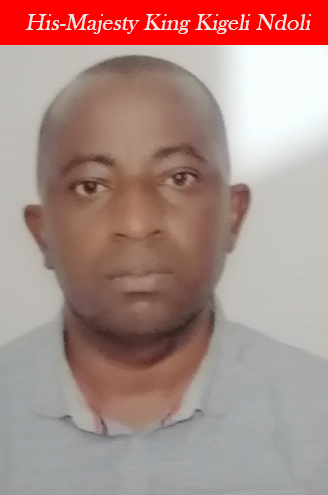
April 21, 2026 ibiro ntaramakuru byo mu ijuru (Heaven News Media Agency) biratangaza ko abashambo bayobowe na Kayumba Nyamwasa bahagaritse umutima cyane kuba umuryango wa Rwigara Assinapol ushobora gusaba Umwami Kigeli Ndoli More »

Hasigaye amasha (48) ngo kwa Rwigara Assinapol bahitemo urupfu cyangwa ubugingo!

Hasigaye amasha (48) ngo kwa Rwigara Assinapol bahitemo urupfu cyangwa ubugingo!

Reka dushimire Umwakagara Paul Kagame washyizeho komite izashyikirana n’Umwami Kigeli Ndoli kurebera hamwe uko hakorwa ihererekanya bubasha bwa republika mu bwami bw’Uhoraho Uwiteka Imana Nyiringabo. Ibyo bigaragaza ubushake no kutinangira umutima cyane More »

Next time don’t forget to change ref:number as you changed names

Next time don’t forget to change ref:number as you changed names

The rhema word comes from heaven unto me, and told me that man of living God of heaven; condemned and release the spirit of death of eternal life to the Rwandan spy’s Ashley Rhodes obtained n°36,210/0004/0026 thus More »

Nta bwo mwashobora kunyambura ubwami nahawe na data wo mu ijuru!!!

Nta bwo mwashobora kunyambura ubwami nahawe na data wo mu ijuru!!!

April 20, 2026 ibiro ntaramakuru byo mu ijuru biratangaza ko Jean Paul Turayishimye imbaraga yarafite z’u bumagigiri zarangiye. Ubuhanuzi bukomeza buvuga ko ngo na we yifuza kuvugana n’Umwami Kigeli Ndoli Majeshi Leon More »

For the Leadership in Iran, Gaza and Beirut, What Is the Only Important Outcome?

For the Leadership in Iran, Gaza and Beirut, What Is the Only Important Outcome?

[The US president’s negotiations and ceasefires] are viewed by Tehran, Gaza and Beirut as infidels trying to tell Muslims what to do. For them, such a situation is unimaginable, unacceptable, and cannot More »


Why Does the West Keep Colluding with Terrorists? by Douglas Murray

  • Like other criticisms of Hirsi Ali, the effort was to portray her as the problem itself rather than as the response to a problem.

  • That this type of campaign can succeed — that speakers can be stopped from speaking in Western democracies because of the implicit or explicit threat of violence — is a problem our societies need to face.
  • There is a whole pile of reasons why Islamists want to stop her explanations from being aired. But why — when the attacks keep on happening — do our own societies collude with such sinister people to keep ourselves the dark?

Only a fortnight after a vehicular terrorist attack in Westminster, London, another similar attack took place in Stockholm, Sweden. On one of the city’s main shopping streets, a vehicle was once again used as a battering-ram against the bodies of members of the public. As in Nice, France. As in Berlin. As so many times in Israel.

Amid this regular news there is an air of defeatism — a terrible lack of policy and lack of solutions. How can governments stop people driving trucks into pedestrians? Is it something we must simply get used to, as France’s former Prime Minister Manuel Valls and London’s Mayor Sadiq Khan have both suggested? Must we come to recognise acts of terror as something like the weather? Or is there anything we can do to limit, if not stop, them? If so, where would we start? One place would be to have a frank public discussion about these matters. Yet, even that is easier said than done.

There is a terrible symmetry to this past week in the West. The week began with the news that the Somali-born author and human-rights activist Ayaan Hirsi Ali had been forced to cancel a speaking tour in Australia. “Security concerns” were among the given reasons. A notable aspect of this issue, which has been made public, is that one of the venues at which Hirsi Ali was due to speak was contacted last month by something calling itself “‘The Council for the Prevention of Islamophobia Incorporated”. Nobody appears to know where this “incorporated” organisation comes from, but its purported founder — Syed Murtaza Hussain — claimed that the group would bring 5000 protestors to the hall at which Hirsi Ali was scheduled to talk. This threat is reminiscent of the occasion in 2009 when the British peer, Lord Ahmed, threatened to mobilise 10,000 British Muslims to protest at the Houses of Parliament in Westminster if the Dutch politician Geert Wilders were allowed to speak. On that occasion — as on this one — the event was cancelled. Promises to mobilise thousands of angry Muslims can have such an effect. But the long-term implications often get lost in the short-term outrage.

Other attacks on Hirsi Ali began, in fact, weeks before her now-cancelled tour had been due to start. On the web, for instance, a widely-watched video was disseminated showing a group of headscarf-covered Australian Muslim women. All were attacking Hirsi Ali and protesting her appearance in the country. Addressing her directly, they complained that, “Your narrative doesn’t support our struggles. It erases them.”

Like other criticisms of Hirsi Ali, the effort was to portray her as the problem itself rather than the response to a problem. Once again, mixing up (deliberately or otherwise) the arsonist and the firefighter, such groups present a homogenous, agreed-upon opinion — or “narrative” — as the only necessary answer to any problems that may or may not exist. Hirsi Ali, according to them, thinks the “wrong” things and says the wrong things. Therefore she must be stopped.

Ayaan Hirsi Ali, author and human-rights activist. (Image source: The Aspen Institute)

That this type of campaign can succeed — that speakers can be stopped from speaking in Western democracies because of the implicit or explicit threat of violence — is a problem our societies need to face. But in the meantime, we also have to face the reality that a shut-down of opinion has on our public policy as well as our public discourse.

What, after all, is the acceptable discourse — or “narrative” — on which we can agree to speak about the attacks in Stockholm, Berlin, Nice and elsewhere? Can the discussion be allowed to include the Islamic portion? Can anyone be allowed to say that the attackers act in the name of Islam, or must we continue to present all jihadist terrorists as people suffering from any affliction apart from that one?

In the middle of the week, at a memorial service in Westminster Abbey, the Very Reverend John Hall, Dean of Westminster, said that the UK was “bewildered” after the terrorist attacks of a fortnight earlier. He went on in his sermon to ask:

“What could possibly motivate a man to hire a car and take it from Birmingham to Brighton to London, and then drive it fast at people he had never met, couldn’t possibly know, against whom he had no personal grudge, no reason to hate them and then run at the gates of the Palace of Westminster to cause another death? It seems likely that we shall never know.”

If it is true that our societies are “bewildered”, as the Dean says, might it be because we have not heard a wide-enough range of possible explanations for such outrages — because we have deliberately cut ourselves off, by choice,- from the warnings of ex-Muslims such as Hirsi Ali? Amid the “narratives” that are acceptable and to be tolerated, perhaps we have failed to listen to the explanations that outline the sheer scale of the religious and societal problem now in front of us?

Of course, for many Muslims, such as those critics of Hirsi Ali in Australia, there is a clear reason why they want to stop her speaking. Were people to hear her, they would realise the vast enormity of the challenge ahead of us and the depth and breadth of its nature. Her audiences would discover the defensive play around the world in which many Muslim organisations are engaged — a campaign to limit speech precisely in order to protect their own interpretation of their religion and keep out any other.

It is, however, the dissenting, silenced voices such as Hirsi Ali’s that are precisely the voices the world needs to hear at present. How tragic that a week that began with a silencing, should end with yet another all-too-predictable terrorist attack — one which Sweden will do as much to fail at comprehending as Britain did two weeks before her.

Hearing from voices such as that of Hirsi Ali could lift the fog of our “bewilderment” and explain, for instance, what does motivate some people to drive a car or truck into crowds of people going about their lives. There is a whole pile of reasons why Islamists want to stop her explanations from being aired. But why — when the attacks keep on happening — do our own societies collude with such sinister people to keep ourselves in the dark?

Douglas Murray, British author, commentator and public affairs analyst, is based in London, England.

Why Do Muslims Flock to The “Evil West”? by Burak Bekdil

  • Millions of Muslims are trying, through dangerous ways, to reach the borders of a civilization they have historically blamed for all the world’s evils, including in their own countries’.


  • Muslims in this part of the world view the Christian West as “evil;” yet they know Christian lands are the most decent places to live economically and politically. Wealthy Arab states rigidly turn their back on the plight of fellow Muslims who are in need of a helping hand; and Islamist hypocrites blame it all on the West.

  • Sadly, no one questions why “West-hating” Muslims go West… or why non-Muslims should pay the price for exclusively intra-Muslim wars and the wave of migrants they create.

“The tragedy of the Palestinians,” Jordan’s (late) King Abdullah wrote in his memoirs, “was that most of their leaders had paralyzed them with false and unsubstantiated promises that they were not alone; that 80 million Arabs and 400 million Muslims would instantly and miraculously come to their rescue.”

Decades later, Syrians fleeing the civil war in their homeland make up the backbone of the world’s refugee tragedy.

Officially, Muslim Turkey is home to the largest number of Syrian refugees (1.9 million). Lebanon hosts 1.2 million Syrians; Jordan, more than 600,000; and Egypt, over 100,000. That makes nearly four million predominantly Muslim Syrians.

But curiously (or not), the refugees risk their lives trying to cross into the predominantly Christian West, which probably most of them have viewed as the “evil.” Hundreds of thousands have made their way into Greece via Turkey, or Italy via Libya, and thousands have drowned in rough crossings as their rubber dinghies often capsize in the Aegean and Mediterranean seas.

Migrants set sail on an inflatable boat from Turkey to the Greek island of Lesbos, August 25, 2015. (Image source: Reuters video screenshot)

European Union officials say the refugee crisis “could last years,” while European countries work day and night to settle hundreds of thousands of Syrians in their countries. Even faraway non-Muslim countries such as Brazil, Chile and Venezuela have said that they would volunteer to take thousands of refugees.

Tragic? No doubt. But who is to blame? According to Turkish President Recep Tayyip Erdogan, it is the West. In March, Erdogan criticized the West for having taken only 250,000 Syrian refugees. And, according to Turkish Prime Minister Ahmet Davutoglu, not Syria’s neighbors, but the United Nations Security Council’s five permanent members (the U.S., Russia, Britain, France and China), should pay the price.

In reality, millions of Muslims are trying, through dangerous ways, to reach the borders of a civilization they have historically blamed for all the world’s evils, including in their own countries’. Turkey’s leaders are blaming non-Muslims for the tragedy. But they do not speak a single word about super hydrocarbon-rich Muslim countries in their own neighborhood: Not a word about Saudi Arabia, Qatar, the United Arab Emirates, Bahrain and Oman (all of which employ large numbers of Asian workers) has taken a single Muslim Syrian refugee.

There is a history showing which hemisphere of the world’s political map has treated Muslims refugee problems with relative affection, and which side with visible cruelty. While most Muslims immigrants in the West have successfully integrated in countries like Britain (mostly Muslims from Pakistan and Bangladesh), France (mostly Muslims from North Africa) and Germany (mostly Muslims from Turkey), Arab host countries in the past abstained from giving, for instance, Palestinian refugees full citizenship and other civil rights.

In the 1970s and 1980s, when Saudi Arabia faced a labor shortage, it recruited thousands of South Korean and other Asian workers to fill job but refused to employ Palestinian refugees.

Until the First Gulf War, Kuwait employed big numbers of Palestinians but refused to give them citizenship. After the war, Kuwait expelled 300,000 Palestinian refugees.

After the downfall of Saddam Hussein, Palestinian refugees in Iraq faced systematic attacks by Muslim Shia militias. They were denied even medical care. In 2012, at least 300,000 Palestinian refugees were living in Lebanon. Human Rights Watch found their social and economic conditions “appalling.” But the Lebanese government persistently ignored their demands for broader property rights.

And before the summer of 2012, Egypt maintained a restrictive travel policy for Palestinians who cross into Egypt from Gaza. They had to be escorted by security officials and were sometimes detained.

The Syrian refugee crisis in lands stretching from the Middle East into the heart of Europe is another episode in a grandiose, multi-faceted Middle Eastern dilemma: Muslims in this part of the world view the Christian West as “evil;” yet they know Christian lands are the most decent places to live economically and politically. Wealthy Arab states rigidly turn their back on the plight of fellow Muslims who are in need of a helping hand; and Islamist hypocrites blame it all on the West.

Sadly, no one questions why “West-hating” Muslims go West; why their fellow Muslim Arab nations do not raise even a helping finger, let alone a hand; or why non-Muslims should pay the price for exclusively intra-Muslim wars and the wave of migrants they create.

That is always the easy way out.

Why Belgium is Ground Zero for European Jihadis by Soeren Kern

  • Growing numbers of Belgian Muslims live in isolated ghettos where poverty, unemployment and crime are rampant. In Molenbeek, the unemployment rate hovers at around 40%. Radical imams aggressively canvass in search of shiftless youths to wage jihad against the West.

  • “When we have to contact these people [European officials] or send our guys over to talk to them, we’re essentially talking with people who are… children. These are not pro-active, they don’t know what’s going on. They’re in such denial. It’s such a frightening thing to admit their country is being taken over.” — American intelligence official.
  • “Returned Syria fighters are a huge threat… It is absolutely unbelievable that our governments allow them to return… Every government in the West, which refuses to do so [lock them up], is a moral accessory if one of these monsters commits an atrocity. … Our citizens are in mortal danger if we do not restore control over our own national borders.” — Dutch MP Geert Wilders.

The terrorist attacks on the airport and metro in Brussels are casting a spotlight, once again, on Belgium’s ignominious role as a European haven for jihadists.

Several distinct but interconnected factors help explain why Brussels, the political capital of Europe, has emerged as the jihadist capital of Europe.

Scenes from the jihad on Belgium: The aftermath of yesterday’s bomb attacks at the Brussels airport (left) and a metro station (right).

Large Muslim Population

The Muslim population of Belgium is expected to reach 700,000 in 2016, or around 6.2% of the overall population, according to figures extrapolated from a recent study by the Pew Research Center. In percentage terms, Belgium has one of the highest Muslim populations in Western Europe.

In metropolitan Brussels — where roughly half of Belgium’s Muslims currently live — the Muslim population has reached 300,000, or roughly 25%. This makes Brussels one of the most Islamic cities in Europe.

Approximately 100,000 Muslims live in the Brussels district of Molenbeek, which has emerged as the center of Belgian jihadism.

Parallel Societies

Belgium’s radical Islam problem originated in the 1960s, when Belgian authorities encouraged mass migration from Turkey and Morocco as a source of cheap labor. They were later followed by migrants from Egypt and Libya.

The factories eventually closed, but the migrants stayed and planted family roots. Today, most Muslims in Belgium are the third- and fourth-generation offspring of the original migrants. While many Belgian Muslims are integrated into Belgian society, many others are not.

Growing numbers of Belgian Muslims live in marginal districts — isolated ghettos where poverty, unemployment and crime are rampant. In Molenbeek, the unemployment rate hovers at around 40%. Radical imams aggressively canvass the area in search of shiftless youths to wage jihad against the West.

Salafism

As in other European countries, many Muslims in Belgium are embracing Salafism — a radical form of Islam — and its call to wage violent jihad against all nonbelievers for the sake of Allah.

Salafism takes its name from the Arabic term salaf, which means predecessors or ancestors — meaning of Mohammed. Salafists trace their roots to Saudi Arabia, the Mohammed’s birthplace. They glorify an idealized vision of what they claim is the true, original Islam, practiced by the earliest generations of Muslims, including Mohammed and his companions and followers, in the 7th and 8th centuries. The aim of Salafism is to recreate a pure form of Islam in the modern era.

This goal presents serious problems for modern, secular and pluralistic states. A recent German intelligence report defined Salafism as a “political ideology, the followers of which view Islam not only as a religion but also a legal framework which regulates all areas of life: from the state’s role in organizing relations between people, to the private life of the individual.”

The report added: “Salafism rejects the democratic principles of separation of state and religion, popular sovereignty, religious and sexual self-determination, gender equality and the fundamental right to physical integrity.”

Although Salafists make up only a small fraction of Europe’s burgeoning Muslim community, authorities are increasingly worried that many of those attracted to Salafi ideology are impressionable young Muslims who may be receptive to calls for violence in the name of Islam.

Sharia4Belgium

Before the rise of the Islamic State, the best-known Salafist group in Belgium was Sharia4Belgium, which played an important role in radicalizing Belgian Muslims.

Sharia4Belgium was outlawed in February 2015, when its leader, Fouad Belkacem, was sentenced to 12 years in prison. A partial archive of the group’s former website can be found at the Internet Archive. There Sharia4Belgium issues an invitation to all Belgians to convert to Islam and submit to Sharia law or face the consequences. The text states:

“It is now 86 years since the fall of the Islamic Caliphate. The tyranny and corruption in this country [Belgium] has prevailed; we go from one scandal to another: Economic crises, paedophilia, crime, growing Islamophobia, etc.

“As in the past we [Muslims] have saved Europe from the dark ages, we now plan to do the same. Now we have the right solution for all crises and this is the observance of the divine law, namely Sharia. We call to implement Sharia in Belgium.

“Sharia is the perfect system for humanity. In 1,300 years of the Islamic state we knew only order, welfare and the protection of all human rights. We know that Spain, France and Switzerland knew their best times under Sharia. In these 1,300 years, 120 women were raped, which is equal to 120 women a day in Europe. There were barely 60 robberies recorded in 1,300 years.

“As a result, we invite the royal family, parliament, all the aristocracy and every Belgian resident to submit to the light of Islam. Save yourself and your children of the painful punishment of the hereafter and grant yourself eternal life in paradise.”

A cache of the background image for the Sharia4Belgium website has the black flag of jihad flying above the Belgian Parliament. Until recently, the Sharia4Belgium YouTube page (also shut down) was used to incite Muslims to jihad. The group had posted videos with titles such as, “Jihad Is Obligatory,” “Encouraging Jihad,” “Duelling & Guerrilla Warfare,” and “The Virtues of Martyrdom.” Thus Sharia4Belgium paved the way for the Islamic State in Belgium.

Belgian Jihadists

One of the smallest countries in Western Europe, Belgium has become Europe’s biggest per capita source of jihadists fighting in Syria and Iraq. According to data provided by Interior Minister Jan Jambon on February 22, 2016, 451 Belgian citizens have been identified as jihadists. Of these, 269 are on the battlefields in Syria or Iraq; 6 are believed currently to be on their way to the war zone; 117 have returned to Belgium; and 59 attempted to leave but were stopped at the border.

According to Jambon, 197 of the jihadists are from Brussels: 112 are in Syria while 59 have returned to Belgium. Another 195 jihadists are from Flanders: 133 are in Syria while 36 have returned.

Belgium is the EU’s leading supplier of jihadists to the Islamic State per capita: around 40 jihadists per million inhabitants, compared to Denmark (27), Sweden (19), France (18), Austria (17), Finland (13); Norway (12), UK (9.5), Germany (7.5) and Spain (2).

Official Incompetence?

During the past 24 months, at least five jihadist attacks have been linked to Belgium. In May 2014, jihadists attacked the Jewish Museum in Brussels. In August 2015, a jihadist with links to Molenbeek attacked an Amsterdam-to-Paris train. In January 2015, Belgian police carried out an anti-jihadist raid in Verviers, Belgium.

In November 2015, it emerged that two of the eight jihadists who struck Paris were residents of Brussels. Police on March 18 arrested Salah Abdeslam, a Belgian-born French national of Moroccan origin, for his role in the Paris attacks. He had been months on the run. On March 22, jihadists once again struck Brussels.

After the Paris attacks in November 2015, Belgian Prime Minister Charles Michel said: “There is almost always a link with Molenbeek. That’s a gigantic problem. Apart from prevention, we should also focus more on repression.”

Interior Minister Jambon added:

“We don’t have control of the situation in Molenbeek at present. We have to step up efforts there as a next task. I see that [Molenbeek] Mayor Françoise Schepmans is also asking our help, and that the local police chief is willing to cooperate. We should join forces and ‘clean up’ the last bit that needs to be done, that is really necessary.”

The latest attack in Brussels, however, indicates that Belgian authorities still do not have the jihadist problem under control.

A Belgian counterterrorism official said that due to the small size of the Belgian government and the large numbers of ongoing investigations, virtually every police detective and military intelligence officer in the country was focused on international jihadi investigations. He added:

“We just don’t have the people to watch anything else and, frankly, we don’t have the infrastructure to properly investigate or monitor hundreds of individuals suspected of terror links, as well as pursue the hundreds of open files and investigations we have. It’s literally an impossible situation and, honestly, it’s very grave.”

An American intelligence official reportedly said that working with security officials there was like working with children:

“Even with the EU in general, there’s an infiltration of jihadists that’s been happening for two decades. And now they’re just starting to work on this. When we have to contact these people or send our guys over to talk to them, we’re essentially talking with people who are — I’m just going to put it bluntly — children. These are not pro-active, they don’t know what’s going on. They’re in such denial. It’s such a frightening thing to admit their country is being taken over.”

In November 2015, the New York Times published a scathing analysis of Belgian incompetence. It emerged that a month before the Paris attacks, Molenbeek Mayor Schepmans received a list with the names and addresses of 80 jihadists living in her district. The list included two brothers who would later take part in the November 13 attacks in Paris.
According to the Times, Schepmans said: “What was I supposed to do about them? It is not my job to track possible terrorists. That is the responsibility of the federal police.” The Times continued: “The federal police service, for its part, reports to the interior minister, Jan Jambon, a Flemish nationalist who has doubts about whether Belgium — divided among French, Dutch and German speakers — should even exist as a single state.”

An Artificial State

Belgium, nestled between France, Germany, Luxembourg and the Netherlands, was established in 1830 to serve as a neutral buffer state between the geopolitical rivals, France and Germany. Belgium’s role as a buffer state effectively came to an end after the end of the Second World War and the subsequent move toward European integration. Over time, Brussels emerged as the de facto capital of the European Union.

For the past three decades, Belgium has faced an existential crisis due to growing antagonism between the speakers of Dutch and French. One observer wrote:

“The country operates on the basis of linguistic apartheid, which infects everything from public libraries to local and regional government, the education system, the political parties, national television, the newspapers, even football teams. There is no national narrative in Belgium, rather two opposing stories told in Dutch or French. The result is a dialogue of the deaf.”

This dysfunction extends to Belgian counter-terrorism. The New York Times observed:

“With three uneasily joined populations, Belgium has a dizzying plethora of institutions and political parties divided along linguistic, ideological or simply opportunistic lines, which are being blamed for the country’s seeming inability to get a handle on its terrorist threat.

“It was hardly difficult to find the two Molenbeek brothers before they helped kill 130 people in the Paris assaults: They lived just 100 yards from the borough’s City Hall, across a cobblestone market square in a subsidized borough-owned apartment clearly visible from the mayor’s second-floor corner office. A third brother worked for Ms. Schepmans’s borough administration.

“Much more difficult, however, was negotiating the labyrinthine pathways that connect — and also divide — a multitude of bodies responsible for security in Brussels, a capital city with six local police forces and a federal police service.

“Brussels has three Parliaments, 19 borough assemblies and the headquarters of two intelligence services — one military, one civilian — as well as a terrorism threat assessment unit whose chief, exhausted and demoralized by internecine turf battles, resigned in July but is still at his desk.

“Lost in the muddle were the two brothers, Ibrahim Abdeslam, who detonated a suicide vest in Paris, and Salah, who is the target of an extensive manhunt that has left the police flailing as they raid homes across the country.”

The language issue also affects integration. As a Washington Post analysis explains, “Many jobs in Brussels require knowledge of French, Flemish or Dutch, and now sometimes English, too, while most immigrants speak mostly Arabic and some French. That has blocked integration.”

Open Borders

The so-called Schengen Agreement, which allows for passport-free travel throughout most of the European Union, has allowed jihadists posing as migrants to enter Europe through Greece and make their way to northern Europe virtually undetected.

In an interview with Breitbart London, Dutch Politician Geert Wilders, currently on trial in the Netherlands for free speech, said:

“Returned Syria fighters are a huge threat. They are dangerous predators roaming our streets. It is absolutely unbelievable that our governments allow them to return. And it is incredible that, once returned, they are not imprisoned.

“In the Netherlands, we have dozens of these returned jihadists. Our government allows most of them to freely walk our streets and refuses to lock them up. I demand that they be detained at once. Every government in the West, which refuses to do so, is a moral accessory if one of these monsters commits an atrocity.

“The government must also close our national borders. The European Union’s Schengen zone, where no border controls are allowed, is a catastrophe. The Belgian Moroccan Salah Abdeslam, the mastermind of last November’s bloodbath in Paris, travelled freely from Belgium to the Netherlands on multiple occasions last year.

Wilders concluded: “This is intolerable. Open borders are a huge safety risk. Our citizens are in mortal danger if we do not restore control over our own national borders.”

Soeren Kern is a Senior Fellow at the New York-based Gatestone Institute. He is also Senior Fellow for European Politics at the Madrid-based Grupo de Estudios Estratégicos / Strategic Studies Group. Follow him on Facebook and on Twitter. His first book, Global Fire, will be out in 2016.

Why Are Christians Leaving the Holy Land? by Lawrence A. Franklin

  • People who reflexively blame the wrong party for criminal acts are either misinformed or disingenuous.
  • The sad truth is that in the Palestinian territories, Christians are forced to live like dhimmis — second-class citizens who survive largely by the protection-money they are required to pay to buy their daily safety. These barely-tolerated citizens exist only at the whim and pleasure of the ruling Muslim majority. Muslim Arab discrimination against non-Muslims includes economic and socially prejudicial behavior that makes it difficult or impossible for Christian Arabs to run a profitable business or for their families to be fully integrated into society.

  • It is also appropriate for Catholics to raise with Vatican authorities the issue of Father Twal’s continued representation of the Faith in the Holy Land: Who is he serving first, God or man?

No one of good will, especially Catholics, wants to accuse a prominent member of his faith of being knowingly untruthful. The truth rarely is found in the Palestinian public narrative. But in case of the latest repetition of Father Fouad Twal, the Latin Patriarch of Jerusalem, falsely blaming Israel for the ongoing spate of Palestinian violence against Israeli civilians, it appears certain from his consistent record of non-nuanced criticism of Israel, that he is motivated by a political bias.

Twal proclaimed that Israel’s alleged “occupation” of “Arab Palestine” is the cause of the murderous violence visited on Israeli civilians by Arab attackers — apparently “forgetting” that the Jews have lived in the region for nearly 4000 years. He was also apparently forgetting that the leaders of the Palestinian Authority (PA) have been glorifying such “acts of resistance” since the autumn of 2014. How can Twal ignore the reality that Palestinian media has been glorifying these knife attacks as “glorious feats.” In Palestinian schools, in fact, the attackers are hailed as heroes.

Outright lies are also part of the PA and Hamas propaganda campaigns. Palestinian Authority leader Mahmud Abbas, for instance, has claimed that a Palestinian boy, who was hit by a car after stabbing an Israeli child, was executed by Israeli troops, when it was well known that the perpetrator was alive and being cared for in an Israeli hospital.

Twal’s position is one that appears driven by ideological loyalty to a political cause, rather than that of a shepherd who attends to the spiritual needs of his flock. Even if Twal were concerned merely with the physical needs of his faithful, one would think that his focus would be on the real primary concern of his Catholic communities in the Holy Land — which is security. Twal also “forgets” the basic reason for the accelerating departure of Christians from Palestinian areas: the principal cause for this negative pattern is Islamic intolerance of religious minorities, not the Israeli occupation of Arab Palestinian territory.

Twal will be hard pressed to find many Palestinian Christians ready to accuse Israel or the actions of Israel Defense Force (IDF) personnel as the reason for Christian emigration. Many have already have voted with their feet by settling in Israel, where they can practice their faith without restriction. Thousands of Catholics now work in Israel, where they enjoy complete religious liberty. One has only to see how difficult it is to find a seat in the crammed Catholic Churches at Sunday Masses in Tel Aviv.

The sad truth is that in the Palestinian territories, Christians are forced to live like dhimmis — second-class citizens who survive largely by the protection-money they are required to pay to buy their daily safety. These barely-tolerated citizens exist only at the whim and pleasure of the ruling Muslim majority.[1] Muslim Arab discrimination against non-Muslims includes economic and socially prejudicial behavior that makes it difficult or impossible for Christian Arabs to run a profitable business or for their families to be fully integrated into society. Why has not Twal, as President of the Assembly of Catholic Ordinances in the Holy Land, felt an obligation publicly to denounce this record of intolerance by political Islamic extremists? If Twal does not, it appears that he places in jeopardy his role as guardian of the rights of Catholic Christians in the Holy Land. Consequently, the Israeli government is likely to be more dismissive of his legitimate concerns such as the defacement of Church property by anti-Christian Jewish youth.

It is also appropriate for Catholics to raise with Vatican authorities the issue of Twal’s continued representation of the Faith in the Holy Land. The instances involve Twal himself, which may help Catholics to discern whom Twal serves first: God or man. There was no hint of gratitude from Twal after IDF personnel rescued him from a jeering mob of Muslim Palestinians who hurled rocks at his car on the way to Bethlehem last Christmas. And there is no acknowledgement from him that the only reason these Christian holy sites are safe for pilgrims to go to and worship in is that they are protected by the State of Israel, and not by the Palestinian Authority. All we have to do is to observe how Christian holy sites are being demolished throughout the Middle East, to realize that without the Israel protecting Jerusalem’s and Bethlehem’s Christian holy places, there would, at some point, be no Christian holy places, period.

Father Fouad Twal, the Latin Patriarch of Jerusalem (right), consistently defames Israel, whose soldiers rescued him when he was attacked by rock-throwing Muslim Palestinians on the way to Bethlehem in December 2015. Pictured at left: Muslim Palestinians in the Bethlehem area, among them men dressed in Santa Claus costumes, hurl stones at Israeli soldiers while yelling “Allahu Akbar,” on Dec. 18, 2015.

There are many examples of why Christian leaders have a duty publicly to express gratitude to Israeli security personnel. For example, during the 2002 occupation of the Church of the Nativity by more than 200 armed Palestinian terrorists in the now-Muslim-dominated city of Bethlehem, Israel Defense Force (IDF) personnel conducted themselves with impressive restraint, rather than risk damaging a holy site sacred to Christians. After the 39-day occupation of this holy site, the Israeli government acceded to the Vatican’s desires, permitting the occupiers safe passage out of Bethlehem.[2] After the departure of the terrorist-occupiers from the vicinity and their hostages released, booby-trapped explosive devices were discovered in the Church. Further, altars, religious objects, and furniture were discovered fouled by urine, cigarette butts and human excrement.

Just last month, there were a series of incidents involving Palestinian terrorists just inside Jerusalem’s Damascus Gate. After one such incident, on February 14, Israeli border guards killed two terrorists from Nablus who had infiltrated Jerusalem. The target of the terrorists was probably a group of affluent American Christian pilgrims enjoying “happy hour” as they milled about the lobby of the Notre Dame Pilgrim Complex, unaware of the danger just a short distance from them. These Christian pilgrims might well have been grateful to the thin line of Israelis that protected them.

How grateful are you, Father Twal?

Dr. Lawrence A. Franklin was the Iran Desk Officer for Secretary of Defense Rumsfeld. He also served on active duty with the U.S. Army and as a Colonel in the Air Force Reserve, where he was a Military Attaché at the U.S. Embassy in Israel.

WHO WON The Trump-Fox News Feud?! HERE’S What The RATINGS Say!!

It was probably the most highly anticipated debate of this presidential election cycle, only because el Trumpo made such a melodramatic exit from the Fox News stage.

</div> <div id=’passback-wbe74ed5e1f’></div>

But if you want to know who the clear winner is, all you have to do is look at the ratings (from CNN Money):


Donald Trump counter-programmed Thursday’s GOP primary debate with his own prime time event. So whose show scored a bigger audience?

Answer: Fox’s debate. But it was the second lowest rated debate of the season. So Trump is certain to take credit for hurting the channel’s total viewership.


The first hour of Fox’s Trump-less debate had an 8.4 household rating, according to early Nielsen data on so-called metered markets.

This means 8.4% of American homes with TV sets were watching the face-off.

The second hour had an 8.3 rating, which means the audience was loyal even though Trump was absent.

By comparison, two of the cable channels that showed parts of Trump’s event, CNN and MSNBC, had about a quarter of Fox’s audience combined.

The most recent GOP debate, televised two weeks ago on the Fox Business Network, had a household rating of 7.4.

So Thursday’s debate was bigger — but not by much.

The other five GOP debates of the cycle have had household ratings ranging from 8.9 to 15.9.

Actual viewership numbers will be available later in the day on Friday. Fox News likely had 11 million to 13 million viewers for the debate.

Notice that they’re trying to downplay it to give Trump a win here – but why would the media want to do that? Makes you wonder.

A more honest comparison would be to show the ratings from four years ago in the 2012 presidential election cycle.

Translate »
Skip to toolbar