Kayumba Nyamwasa mu mazi abira!!!

Kayumba Nyamwasa mu mazi abira!!!

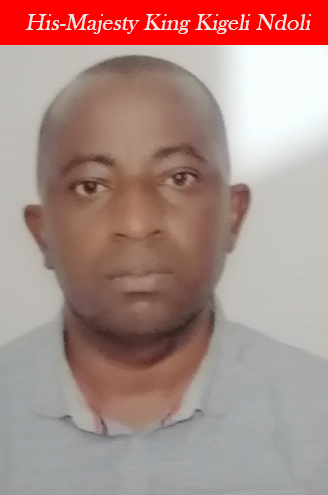
April 21, 2026 ibiro ntaramakuru byo mu ijuru (Heaven News Media Agency) biratangaza ko abashambo bayobowe na Kayumba Nyamwasa bahagaritse umutima cyane kuba umuryango wa Rwigara Assinapol ushobora gusaba Umwami Kigeli Ndoli More »

Hasigaye amasha (48) ngo kwa Rwigara Assinapol bahitemo urupfu cyangwa ubugingo!

Hasigaye amasha (48) ngo kwa Rwigara Assinapol bahitemo urupfu cyangwa ubugingo!

Reka dushimire Umwakagara Paul Kagame washyizeho komite izashyikirana n’Umwami Kigeli Ndoli kurebera hamwe uko hakorwa ihererekanya bubasha bwa republika mu bwami bw’Uhoraho Uwiteka Imana Nyiringabo. Ibyo bigaragaza ubushake no kutinangira umutima cyane More »

Next time don’t forget to change ref:number as you changed names

Next time don’t forget to change ref:number as you changed names

The rhema word comes from heaven unto me, and told me that man of living God of heaven; condemned and release the spirit of death of eternal life to the Rwandan spy’s Ashley Rhodes obtained n°36,210/0004/0026 thus More »

Nta bwo mwashobora kunyambura ubwami nahawe na data wo mu ijuru!!!

Nta bwo mwashobora kunyambura ubwami nahawe na data wo mu ijuru!!!

April 20, 2026 ibiro ntaramakuru byo mu ijuru biratangaza ko Jean Paul Turayishimye imbaraga yarafite z’u bumagigiri zarangiye. Ubuhanuzi bukomeza buvuga ko ngo na we yifuza kuvugana n’Umwami Kigeli Ndoli Majeshi Leon More »

For the Leadership in Iran, Gaza and Beirut, What Is the Only Important Outcome?

For the Leadership in Iran, Gaza and Beirut, What Is the Only Important Outcome?

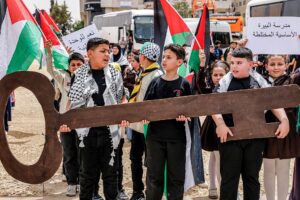
[The US president’s negotiations and ceasefires] are viewed by Tehran, Gaza and Beirut as infidels trying to tell Muslims what to do. For them, such a situation is unimaginable, unacceptable, and cannot More »


Why Palestinians Do Not Want Cameras on the Temple Mount by Khaled Abu Toameh

  • The Palestinian Authority (PA) will continue to work against having cameras in the hope of preventing the world from seeing what is really happening at the site and undermining Jordan’s “custodianship” over Islamic holy sites in Jerusalem.


  • Another reason the Palestinians oppose King Abdullah’s idea is their fear that cameras would expose that Palestinians have been smuggling stones, firebombs and pipe bombs into the Al-Aqsa Mosque for the past two years.

  • The cameras are also likely to refute the claim that Jews are “violently invading” Al-Aqsa Mosque and holding prayers on the Temple Mount. The cameras will show that Jews do not enter Al-Aqsa Mosque, as Palestinians have been claiming. Needless to say, no Jewish visitors have been caught trying to smuggle weapons into the holy site.

  • It remains to be seen how Secretary Kerry, who brokered the camera deal between Israel and Jordan, will react to the latest Palestinian Authority escalation of tensions. If Kerry fails to pressure the PA to stop its incitement and attempts to exclude the Jordanians from playing any positive role, the current wave of knife attacks against Jews will continue.

Why is the Palestinian Authority (PA) opposed to Jordan’s proposal to install surveillance cameras at Jerusalem’s Haram al-Sharif (Temple Mount), sacred to Christians, Muslims and Jews?

This is the question that many in Jordan have been asking in light of the recent agreement between Israel and Jordan that was reached under the auspices of US Secretary of State John Kerry. The idea was first raised by Jordan’s King Abdullah in a bid to ease tensions at the holy site in the Old City of Jerusalem.

Shortly after Israel accepted the idea, the Palestinian Authority rushed to denounce it as a “new trap.” PA Foreign Minister Riad al-Malki and other officials in Ramallah expressed concern that Israel would use the cameras to “arrest Palestinians under the pretext of incitement.”

During the past two years, the Palestinian Authority and other parties, including Hamas and the Islamic Movement (Northern Branch) in Israel, have been waging a campaign of incitement against Jewish visits to the Haram al-Sharif. The campaign claimed that Jews were planning to destroy Al-Aqsa Mosque.

In an attempt to prevent Jews from entering the approximately 37-acre (150,000 m2) site, the Palestinian Authority and the Islamic Movement in Israel hired scores of Muslim men and women to harass the Jewish visitors and the police officers escorting them. The men are referred to as Murabitoun, while the women are called Murabitat (defenders or guardians of the faith).

These men and women have since been filmed shouting and trying to assault Jews and policemen at the Haram al-Sharif. This type of video evidence is something that the Palestinian Authority is trying to avoid. The PA, together with the Islamic Movement, wants the men and women to continue harassing the Jews under the pretext of “defending” the Al-Aqsa Mosque from “destruction” and “contamination.”

Hundreds of Muslims on the Temple Mount, yelling and throwing objects, surround three Jewish men and their children, as about a dozen police officers try to hold back the angry crowd and evacuate the Jews.

The installation of surveillance cameras at the site will expose the aggressive behavior of theMurabitoun and Murabitat, and show the world who is really “desecrating” the Islamic holy sites and turning them into a base for assaulting and abusing Jewish visitors and policemen.

The cameras are also likely to refute the claim that Jews are “violently invading” Al-Aqsa Mosque and holding prayers at the Temple Mount. The Palestinian Authority, Hamas and the Islamic Movement have long been describing the Jewish visits as a “provocative and violent incursion” into Al-Aqsa Mosque. But now the cameras will show that Jews do not enter Al-Aqsa Mosque, as the Palestinians have been claiming.

Another reason the Palestinians are opposed to King Abdullah’s idea is their fear that the cameras would expose that Palestinians have been smuggling stones, firebombs and pipe bombs into Al-Aqsa Mosque for the past two years. These are scenes at the PA, Hamas and the Islamic Movement do not want the world to see: they show who is really “contaminating” the Haram al-Sharif. Needless to say, no Jewish visitors have thus far been caught trying to smuggle such weapons into the holy site.

Palestinian Arab young men with masks, inside Al-Aqsa Mosque (some wearing shoes), stockpile rocks to use for throwing at Jews who visit the Temple Mount, September 27, 2015.

By rejecting the idea of setting up 24-hour surveillance cameras at the Haram al-Sharif, the Palestinian Authority has found itself on a course of collision with Jordan. Jordanian politicians and columnists have voiced outrage over the stance of the PA, and have dubbed it harmful to Palestinian and Islamic interests.

The Jordanian newspaper Al-Ghad, which is close to the government, quoted Jordanian politicians as denouncing the opposition of the Palestinian Authority to the cameras as “inappropriate, clumsy, tasteless and unfair.”

Sources in Ramallah explained this week that the PA’s opposition to cameras should also be seen in the context of the power struggle between the Palestinians and Jordan over control of the Islamic holy sites in Jerusalem. The Jordanians have long been seeking to preserve their status as “custodians” of Al-Aqsa Mosque and other Islamic holy sites in Jerusalem. This is a status that some Palestinians and the Islamic Movement in Israel have been trying to change during the past two decades, especially after the signing of the Oslo Accords between the PLO and Israel in 1993.

The Palestinian Authority’s opposition to the installation of cameras is seen as an attempt to undermine Jordan’s status at the Islamic holy sites. Many Palestinians argue that they, and not the Jordanians, should be in charge of the Haram al-Sharif. Members of the PA are opposed to the cameras because it is a Jordanian proposal and reinforces Jordan’s role at the holy site.

As such, the Palestinian Authority’s position could be seen as an attempt to change the status quo at the holy site by driving the Jordanians out of the area. King Abdullah is obviously aware of the Palestinian attempt to prevent him from playing any role at the holy site; that is why he was quick to reach a deal with Israel about the installation of cameras. The PA, meanwhile, will continue to work against having cameras in the hope of preventing the world from seeing what is really happening at the site and undermining Jordan’s “custodianship” over Islamic holy sites in Jerusalem.

It now remains to be seen how Secretary Kerry, who brokered the camera deal between Israel and Jordan, will react, if at all, to the latest Palestinian Authority attempt to continue escalating tensions at the holy site. If Kerry fails to pressure the PA to stop its incitement and repeated attempts to exclude the Jordanians from playing any positive role at the Haram al-Sharif, the current wave of knife attacks against Jews will continue.

Why Must Women Choose between Feminism and Zionism, but Not Other “Isms”? by Alan M. Dershowitz

  • There are many countries and movements throughout the world that treat women as second-class citizens: Israel is not among them…. There is a word for applying a double standard to Jews. That word is anti-Semitism.

  • If Sarsour was concerned with addressing structural causes of all female oppression, she would mention the status of women in the PA-controlled West Bank where just a few months ago the names and photos of female candidates for the municipal elections were omitted, referring to the women instead as “wife of” or “sister of.” Sarsour would also call out the Hamas-controlled Gaza Strip, where the police are a law unto themselves who act as judge, jury and executioner of those who speak out against their oppression and misogyny. She would condemn the tolerance, if not acceptance, by so many Muslim countries of the “honor killings” and genital mutilation of women. Instead the IWS platform exploits the feminist cause in order to delegitimize and demonize only one nation: that of the Jewish people.
  • The real choice to be made now by all those who care about the feminist cause is whether to allow Sarsour and her radical anti-Israel allies to hijack the movement in support of their own bigoted views. The alternative is to maintain feminism’s focus on key issues that pertain to women and to call out countries and movements according to how seriously they violate women’s rights, rather than singling out the one Jewish democracy – Israel.

On March 8, women abstained from work as part of the International Women’s Strike (IWS) – a grassroots feminist movement aimed at bringing attention “to the current social, legal, political, moral and verbal violence experienced by contemporary women at various latitudes.” But these positive goals were distorted by the inclusion of anti-Israel rhetoric in the platform of the IWS.

There are many countries and movements throughout the world that treat women as second-class citizens: Israel is not among them. Yet this platform singles out for condemnation only Israel, the nation state of the Jewish people. There is a word for applying a double standard to Jews. That word is anti-Semitism.

It is a tragedy that this women’s movement – which has done so much good in refocusing attention on important women’s issues in the United States — from gender violence, to reproductive rights and equal-pay – has now moved away from its central mission and gone out of its way to single out one foreign nation by calling for the “decolonization of Palestine.” Not of Tibet. Not of Kurdistan. Not of Ukraine. Not of Cyprus. Only Palestine.

The platform, which is published on IWS’ website under the headline “Antiracist and Anti-imperialist Feminism” also says: “we want to dismantle all walls, from prison walls to border walls, from Mexico to Palestine.” No mention is made of the walls that imprison gays in Iran, dissidents in China, feminists in Gaza or Kurds in Turkey. Only the walls erected by Israel.

Criticizing Israel’s settlement and occupation policies is fair game. But singling out Israel for “decolonization” when it has repeatedly offered to end the occupation and to create a Palestinian state on the West Bank and Gaza; and when other countries continue to colonize, can be explained in no other way than applying a double standard to Jews and their state.

Linda Sarsour, a Palestinian-American who helped organize the Women’s March on Washington in January, responded to criticism of the anti-Israel plank appearing in a feminist platform. In an interview with The Nation Sarsour said the following:

“When you talk about feminism you’re talking about the rights of all women and their families to live in dignity, peace, and security. It’s about giving women access to health care and other basic rights. And Israel is a country that continues to occupy territories in Palestine, has people under siege at checkpoints—we have women who have babies on checkpoints because they’re not able to get to hospitals [in time]. It just doesn’t make any sense for someone to say, ‘Is there room for people who support the state of Israel and do not criticize it in the movement?’ There can’t be in feminism. You either stand up for the rights of all women, including Palestinians, or none. There’s just no way around it.”

Sarsour was responding directly to an op-ed published by Emily Shire, the politics editor of the online newsite Bustle. In her piece published in the New York Times,

Shire asked why, increasingly, women have to choose between their Zionism and feminism. Shire wrote:

“My prime concern is not that people hold this view of Israel. Rather, I find it troubling that embracing such a view is considered an essential part of an event that is supposed to unite feminists. I am happy to debate Middle East politics or listen to critiques of Israeli policies. But why should criticism of Israel be key to feminism in 2017?”

Israel like every country including our own is far from perfect—and I and other supporters of Israel have been critical of its flaws—but its commitment to gender equality can be traced back to its Declaration of Independence, which states that Israel “will ensure complete equality of social and political rights to all its inhabitants irrespective of religion, race or sex.” As the only democracy in the Middle East Israel’s legal guarantee of rights has meant that women play crucial roles in all aspects of Israeli society. It elected the first woman head of government in history – Golda Meir – who was not related to a male political leader. There is no legitimate reason for singling Israel out for condemnation, as the platform does, based on a denial of “basic rights” to women.

Sarsour presents a Catch-22. Under her own all-or-nothing criteria, she herself cannot be pro-Palestinian and a feminist because the Palestinian Authority and Hamas treat women and gays far worse than Israel does. If Sarsour was concerned with addressing structural causes of all female oppression, she would mention the status of women in the PA-controlled West Bank where just a few months ago the names and photos of female candidates for the municipal elections were omitted, referring to the women instead as “wife of” or “sister of.” Sarsour would also call out the Hamas-controlled Gaza Strip, where the police are a law unto themselves who act as judge, jury and executioner of those who speak out against their oppression and misogyny. She would condemn the tolerance, if not acceptance, by so many Muslim countries of the “honor killings” and genital mutilation of women. Instead the IWS platform exploits the feminist cause in order to delegitimize and demonize only one nation: that of the Jewish people.

Nor does Sarsour address the fact that one of the organizers of the strike, Rasmea Odeh, was a member of the Popular Front for the Liberation of Palestine (PFLP), who was convicted and sentenced to life in prison by an Israeli military court for her role in a 1969 terror attack, which killed two university students and injured nine others, including several women, at a supermarket in Jerusalem. Odeh was later freed in a prisoner exchange but a subsequent case against her in the United States is ongoing.

This double standard is reflective of a broader trend in hard left politics. Increasingly, groups such as Black Lives Matter, MoveOn, Code Pink, and Occupy Wall Street have embraced intersectionality—a radical academic theory, which holds that all forms of social oppression are inexorably linked—as an underpinning to their anti- Israel activism. This type of selective ideological packaging has left liberal supporters of Israel in an increasingly uncomfortable position. On the one hand, they care deeply about causes such as women’s rights, criminal justice reform, income inequality, environmental protection and LGBT rights. On the other, they find themselves excluded from the groups that advance those very causes unless they agree to

delegitimize Israel and denounce Zionism as the national liberation movement of the Jewish People.

Addressing the structural causes of sexism in the United States will take more than reproaching Israel—it will require far-reaching legislative and grassroots action. By morphing the discussion about women’s rights into a polemic against Israel, the IWS makes progress of the feminist cause even more difficult. All decent people should continue to fight for the absolute equal status of women in society. But we must not be forced to become complicit in the promotion of anti-Israel bigotry as a pre-condition for supporting the broader feminist movement.

The real choice to be made now by all those who care about the feminist cause is whether to allow Sarsour and her radical anti-Israel allies to hijack the movement in support of their own bigoted views. The alternative is to maintain feminism’s focus on key issues that pertain to women and to call out countries and movements according to how seriously they violate women’s rights, rather than singling out the one Jewish democracy – Israel.

Why Is the U.S. Embracing Iran – AGAIN? by Peter Huessy

  • “You will see we are not in any particular animosity with the Americans,” Ayatollah Khomeini said, and promised to President Jimmy Carter that Iran would be a “tolerant democracy.”

  • Although the State Department has in its just released annual report on world-wide terror designated Iran as the world’s premier state sponsor of terrorism, the Obama administration has assisted Iranian militias in Iraq with air support, provided intelligence to Hezbollah’s allies on Israeli air strikes, and has steadfastly refused to use any military force against any elements of the Assad regime.
  • America is apparently bent on repeating — yet again — the historic wrong turn it took in 1979 by once again embracing the radical Islamic regime in Iran. Why would the U.S. administration think doing the same thing again will have a different outcome?

Senior leaders from the Kingdom of Saudi Arabia are in Washington, meeting with top U.S. diplomatic and defense officials, and are deeply concerned America has significantly worsened the situation in the Middle East by creating a “strategic partnership” with Iran.

Thirty-seven years ago, U.S. President Jimmy Carter paved the way for Iran’s Islamic theocratic dictatorship to come to power, according to newly declassified secret documents, reports the BBC Persian News Service. The documents show that Carter pledged to “hold back” the Iranian military from attempting a coup, which would have prevented the return of the exiled Ayatollah Ruhollah Khomeini from France.

The documents also reveal that the Carter administration believed — erroneously — that bringing Ayatollah Khomeini into power in Iran, and in the process abandoning the Shah, would preserve American interests, keep the Soviets out of the region, protect U.S. allies, and ensure the flow of oil to the world’s industrial nations.

In one of his many messages to President Carter, Khomeini played into that belief. “You will see we are not in any particular animosity with the Americans,” Khomeini said, and promised that Iran would be a “tolerant democracy.”

Unfortunately, the mullahs did not stop their terrorist ways; and the U.S. government, through successive administrations, did not stop them, either.

The Reagan administration, for example, deployed “peacekeepers” to Lebanon under Congressionally-mandated rules of engagement that, tragically, only facilitated the Iranian- and Syrian-directed bombings of the U.S. Marine barracks and embassy in Beirut.

Then, the Clinton administration refused to lift an arms embargo and provide weapons to Muslims in the former Yugoslavia, ensuring that Iranian weapons and influence would fill the void.

The result of decades of the U.S. policy in Iran is that since Islamic terrorists took power in Tehran in 1979, Iran has murdered thousands of Americans[1] — in addition to those killed in the bombings in Lebanon, the Khobar Towers in Saudi Arabia, the African embassies, and the World Trade Center in New York.

U.S. court decisions have so far held Iran responsible for more than $50 billion in damages owed to American citizens for these terror attacks, which directed by the mullahs and their terrorist proxies.

America’s military has also suffered. Thousands of American and allied soldiers have been killed and maimed by Iranian Improvised Explosive Devices (IEDs) in Iraq and Afghanistan.[2]

It could be argued that the United States has at times had to make deals with unsavory countries. It was allied with the Soviet Union, for instance, in the fight to destroy Nazism in World War II. So, the thinking might go, a genuine agreement to eliminate Iran’s nuclear weapons program might require some compromise and thus a type of “partnership”.

U.S. Secretary of State John Kerry shakes hands with Iranian Foreign Minister Mohammad Javad Zarif during talks in Vienna, Austria, July 14, 2014. (Image source: U.S. State Department)

The Obama administration has, in fact, sought to justify its embrace of Iran by citing the assumed benefits from a nuclear agreement with Iran.[3] But the current “nuclear deal” with Iran is not a real agreement. The Iranians never signed it.

Members of Iran’s parliament reviewed it and made it clear that they would only adhere to those parts of the agreement they liked, insisting in a public statement, released after the review, that the U.S. had no reciprocal flexibility.

While the Obama administration tried to portray the agreement as one which would “dismantle” much of the Iranian nuclear infrastructure, the facts were that Iran was able to keep an “industrial sized nuclear program“. Elliot Abrams describes the Iranian strategy on its nuclear program as trading “permanent American concessions for Iranian gestures of temporary restraint”.

Even worse, under the “deal” Iran would ultimately be able to become a full-fledged, legitimate nuclear power in roughly ten years. Additionally, despite promises and signed UN resolutions to the contrary, Iran’s ballistic missile program continues, giving Tehran the largest missile inventory in the Middle East.

Thus, the current US “tilt” toward Iran has not been a carefully calibrated outreach to a dangerous adversary. It has been instead a firm embrace of a dictatorship that has not only killed thousands of Americans, but continues to undermine U.S. and allied interests in the Gulf and elsewhere.

Moreover, although the State Department has in its just released annual report on world-wide terror designated Iran as the world’s premier state sponsor of terrorism, the Obama administration has assisted Iranian militias in Iraq with air support, provided intelligence to Hezbollah’s allies on Israeli air strikes, and has steadfastly refused to use military force against any elements of the Assad regime. In 2014, President Obama wrote to Supreme Leader Khamenei that any US military action in Syria would “target neither the Syrian dictator nor his forces”.

Destroying ISIS or stopping terrorism against America and its allies cannot be achieved by embracing Shia terrorists directed by Tehran.

The Sunni nations of the Gulf, North Africa and the Mediterranean might be willing to provide leadership and manpower in a coalition to oppose Iran’s doctrine of Shia conquest. However, although the U.S. administration has repeatedly talked about such a coalition, America’s actions have continually embraced and helped Iran. As Michael Doran has explained, the result of the American administration’s embrace of Iran “has been the development of an extremist safe haven that… stretches from the outskirts of Baghdad all the way to Damascus.”

The U.S. could enter into talks with the Saudis, Egyptians, other Arab states and other countries in the region to help them build a coalition to oppose Iran’s plans to achieve hegemonic status in the Middle East.

Is reform in the region even possible? Or is the U.S. now solidly locked into an embrace with an increasingly hostile and violent Iran?

Reform in the Middle East does not come easily, but the “Arab Spring” illustrates that positive change can take place. Unfortunately, the Obama administration, as President Carter mistakenly did in 1979, has embraced the mullahs, who immediately sidelined any reformers who might have been democratically inclined. In Egypt, the U.S. then actively helped bring the extremist Muslim Brotherhood to power, until twenty-two million Egyptians themselves apparently decided they had tasted enough of such repression and revolted; and in Afghanistan, the U.S. pathetically kept looking for the “moderate wing” of the Taliban.[4]

America is apparently bent on repeating — yet again — the historic wrong turn it took in 1979, by once again embracing the radical Islamic regime in Iran. Why would the U.S. administration think doing the same thing again will have a different outcome?

Dr. Peter Huessy is President of GeoStrategic Analysis, a defense consulting firm he founded in 1981, and was the senior defense consultant at the National Defense University Foundation for more than 20 years. He is now the National Security Fellow at the AFPC, and Senior Defense Consultant at the Air Force Association.


[1] For the details about Iran’s involvement in 9-11 see http://www.iran911case.com. For Iran complicity in conducting other terror attacks against the United States in Beirut, Khobar Towers, and the African embassies, see Clare Lopez speaking at the Center for Security Policy. Also in documents recently translated from the “Abbottobad” material seized in the raid on Osama Bin Laden’s Pakistani hideout, Joseph Braude host of the New York radio show “Risalat,” reveals that according to Bin Laden, “Our main artery for funds, personnel and communication” is Iran.

[2] Testimony of Lt General Michael Flynn, (Retired), former Director of the Defense Intelligence Agency, 10 June 2015, the Joint Foreign Affairs and HASC Subcommittee, House of Representatives.

[3] See for example, these assessments of the Iran nuclear deal (JCPOA): “Our Iranian Allies“, “The Iran Deal Wasn’t About Nukes At All“, and “The Iran Deal, One Year In: Economic, Nuclear, and Regional Implications.”

[4] This aspect of the “Arab Spring” and the Administration’s response is detailed by Walid Phares in The Lost Spring, 2014, Palgrave Macmillan.

Why Has the Church Abandoned the Christians of the Middle East? by Judith Bergman

  • Why is the Archbishop of Canterbury, who is the symbolic head of 85 million Christians worldwide, expressing shock at yet another terrorist attack perpetrated by the Islamic State?


  • Had he paid more than just fleeting attention to his fellow Christians in Iraq and Syria, he would know that the Islamic State has been slaughtering Christians in the Middle East since 2006. How much more time did he need?

  • Without referring by name to the Islamic State, and speaking as if some invisible force of nature were at play here, Pope Francis I deplored “thousands of people, including many Christians, driven from their homes in a brutal manner; children dying of thirst and hunger in their flight; women kidnapped; people massacred; violence of every kind.”

The Archbishop of Canterbury, Justin Welby, was interviewed recently about the Paris attacks and asked about his reaction. “Like everyone else – first shock and horror and then a profound sadness…” he replied. “Saturday morning, I was out and as I was walking I was praying and saying: ‘God, why — why is this happening?'”

Welby is the principal head of the Anglican Church and the symbolic head of the Anglican Communion, which stands at around 85 million members worldwide and is the third largest communion in the world — after the Roman Catholic Church and the Eastern Orthodox Church. This is a man with an extremely high public profile, and millions of Christians looking to him for spiritual guidance.

But why is a man who is the symbolic head of 85 million Christians worldwide expressing shock at yet another terrorist attack perpetrated by the Islamic State? Had the Archbishop of Canterbury paid more than just fleeting attention to his fellow Christians in Iraq and Syria, he would know that the Islamic State has been slaughtering Christians in the Middle East since 2006. Between 2004 and 2006, before the Islamic State evolved out of Al Qaeda in Iraq, it hardly showed less zeal to root out Christianity even then.

The Archbishop had eleven years to get used to the idea of people being made homeless, exiled, tortured, raped, enslaved, beheaded and murdered for not being Muslims. How much more time did he need?

The Archbishop of Canterbury had more wisdom to offer in the interview. “The perversion of faith is one of the most desperate aspects of our world today,” he said, explaining that Islamic State terrorists have distorted their faith to the extent that they believe they are glorifying their God. But it is unclear how he is as qualified an expert in Islam as Islamic State “Caliph ” Abu Bakr al Baghdadi, who possesses a PhD in Islamic Studies from the University of Baghdad.

Christians, Yazidis and persecuted Muslims in the Middle East can probably point to aspects of the world more desperate than “the perversion of faith,” but then again, the Archbishop does not seem too preoccupied with the situation on the ground.

Fortunately, others are. In a piece for The Atlantic, “What ISIS Really Wants,” Graeme Wood spent time researching the Islamic State and its ideology in depth. He spoke to members of the Islamic State and Islamic State recruiters; his conclusions were the following:

“The reality is that the Islamic State is Islamic. Very Islamic. Yes, it has attracted psychopaths and adventure seekers, drawn largely from the disaffected populations of the Middle East and Europe. But the religion preached by its most ardent followers derives from coherent and even learned interpretations of Islam.

“Virtually every major decision and law promulgated by the Islamic State adheres to what it calls, in its press and pronouncements, and on its billboards, license plates, stationery, and coins, “the Prophetic methodology,” which means following the prophecy and example of Muhammad, in punctilious detail. Muslims can reject the Islamic State; nearly all do. But pretending that it isn’t actually a religious, millenarian group, with theology that must be understood to be combatted, has already led the United States to underestimate it and back foolish schemes to counter it.”

Members of the Islamic State are shown on the Libyan coast, preparing to behead a group of Ethiopian Christians. (From a video released in April 2015)

The West nevertheless continues to pretend that the Islamic State has nothing to do with Islam, and the Archbishop of Canterbury is apparently no different. It is noteworthy, however, that the Archbishop has no misgivings when it comes to Christians. “I cannot say that Christians who resort to violence are not Christians.,” he said to the Muslim Council of Wales two months ago. “At Srebrenica the perpetrators claimed Christian faith. I cannot deny their purported Christianity, but must acknowledge that event as yet another in the long history of Christian violence, and I must repudiate that what they did was in any way following the life and teaching of Jesus.”

During a debate in the House of Lords earlier this year, he also had no qualms in stating that “the church’s sporadic record of compelling obedience to its teachings through violence and coercion is a cause for humility and shame.”

If the Archbishop of Canterbury cannot deny the Christianity of Christian perpetrators who claim the Christian faith, how can he — not a Muslim scholar — deny the Islamic nature of Muslim perpetrators who claim the Muslim faith?

Just as mind-boggling is the refusal of Pope Francis I to speak the name of the perpetrators. In August 2014, when the Islamic State conquered the northern Iraqi city of Sinjar and began brutally to round up and murder Yazidis, and up to 100,000 Christians fled for their lives, Pope Francis could not make himself utter the name of the Islamic State. In his traditional Sunday blessing, he said the news from Iraq had left him “in dismay and disbelief.” As if every atrocity had happened for the first time! Christian Iraqis had at that point been persecuted by Al Qaeda in Iraq and the Islamic State for a full decade. Without referring by name to the Islamic State, and speaking as if some invisible force of nature were at play, the pope deplored “thousands of people, including many Christians, driven from their homes in a brutal manner; children dying of thirst and hunger in their flight; women kidnapped; people massacred; violence of every kind.”

A year later, in July 2015, he called the onslaught on Christians in the Middle East “a form of genocide,” but still without mentioning who exactly was committing it.

It is tragic that the Church has done so little to help its flock in the Middle East. Where, during the past decade, have the Archbishop of Canterbury and his colleagues from the Roman Catholic Church and Eastern Orthodox Church been? Where now is their vocal and public outrage at the near extinction of this ancient Christian culture? Where are their forceful appeals to political leaders and military decision-makers to intervene on behalf of their suffering brethren?
The Pope, however, did find time last May to write a 180-page encyclical about climate change, and he has spoken passionately about the bizarre concept of the “rights of the environment.” In front of the UN and a joint session of the U.S. Congress, he again spoke of the persecution of Christians, as if it were a metaphysical event:
“He expressed deep concern for the persecution of Christians in the Middle East, where they and other religious groups, have been ‘forced to witness the destruction of their places of worship, their cultural and religious heritage’ and been forced to flee or face death or enslavement.”

Christians in the Middle East are suffering and dying, and the world hardly pays attention. The post-Christian West evidently has no moment of charity for the plight of people with whom it might feel at least a slight solidarity. But in 2016, Europe will be receiving another three million migrants, according to the European Union. So far, most of those who have arrived are Muslims, and there is little reason to expect that those who will arrive next year will be persecuted Christians. Most of the refugees come from refugee camps near Syria; Christiansstay away from the refugee camps because they experience persecution in them too. It is no different with the Syrian refugees coming to the US.

The Christians in the Middle East are thus still left fending for themselves.

Judith Bergman is a writer, columnist, lawyer and political analyst.

Why Donald Trump Should Focus on Africa by Ahmed Charai

  • President-elect Trump has the opportunity to make a historic course correction, and to do so in a manner consistent with his administration’s stated goals. By renegotiating the U.S. African Growth and Opportunity Act, which was first initiated by the Clinton Administration, he can strengthen American exports, create new export-related jobs and foster development-oriented investment on the continent. By reforming U.S. humanitarian aid to Africa, he can cut considerable bureaucratic waste, effectively increasing assistance without upping the cost.

What’s a three-word foreign policy agenda President-elect Donald Trump can pursue that will create American jobs, reduce terrorism, challenge China and set him apart from the failings of his predecessor? Promote African development.

On the one hand, the world’s poorest continent is rife with socioeconomic problems that have paved the way for some lands to become hubs of international terrorism, posing a threat to their own populations as well as to distant countries, including the United States. Of the eighteen ISIS branches deemed fully operational by the National Counterterrorism Center, eight are in Africa. According to the latest edition of the Global Terrorism Index, the world’s deadliest terrorist group by sheer volume of lethality is not ISIS but the Nigerian Boko Haram.

These clear and present threats were built on a continent’s suffering — from example, drought in Somalia and throughout East Africa, and totalitarianism and corruption across the continent — breeding weak, failing and failed states that prove commodious to jihadist operations. Dictators in the mold of Zimbabwe’s Robert Mugabe continue to terrorize their own populations. And the Democratic Republic of Congo risks deteriorating into civil war should the head of state, Joseph Kabila, continue on his path to authoritarian rule. In a country rich in natural resources, the population remains destitute. These diverse factors help explain why the campaign to roll back terror on the continent is inseparable from African development needs.

On the other hand, some parts of Africa are among the world’s bright spots: According to the World Bank, six of the thirteen countries with the highest compound growth annually are on the continent. Among them, Rwanda provides an example of a country that has overcome one of the continent’s bloodiest conflicts in recent memory to empower women, fight corruption and attract international investment. Similar positive trends are visible in the democracies of Senegal, Cote d’Ivoire and even terror-plagued Nigeria — all of which are part of a larger pro-American bloc, stretching up to Morocco in the north, that stand with the United States in its struggle against terrorism. For Moroccan King Mohammed VI, the struggle against terrorism is inextricable from the challenge of developing the African continent. He has devised a holistic strategy to pursue both goals in tandem. And multinational bodies on the continent such as the African Union, after decades in a Cold War deep-freeze, are newly invigorated, as these like-minded African nations assert a greater leadership role within them.

One U.S. president in particular made a meaningful contribution to mitigating some of these problems: George W. Bush. He is widely viewed on the continent as a hero: His signature Africa initiative, “the President’s Emergency Plan for AIDS Relief” (PEPFAR), saved millions of lives, and also drew praise on both sides of the American partisan divide. He launched the single greatest initiative to fight malaria on the continent to date, and, as a private citizen together with his wife Laura, has since been committed to the struggle against cancer in Africa.

By contrast, President Obama’s legacy has been more hot air than action. It began with a preachy speech in Ghana early in his presidency, in which he called on African youth to succeed where their parents had failed. Laden with identity politics, it married Obama’s personal narrative to the symbolic choice of the city of Accra — through which countless slaves passed en route to the Americas — to send a message that was as much about domestic American politics as the real challenges and promise of Africa.

Obama’s policies have since fallen flat: A U.S. Government initiative to power up the continent with electricity, promising 30 thousand megawatts of power, came up 26 thousand megawatts short. American commerce with the continent, via a free trade agreement dating back to the Clinton years, remains largely limited to the importation of natural resources from countries in which the extraction of those resources is itself a source of conflict — not in keeping with any responsible plan to develop the continent or fight terrorism. The President’s “Africa Youth Summit,” a large student exchange program, has not been successful in attracting members of the young political class in any African country, upon whom so much of the continent’s hopes are placed. Nor has the U.S.-Africa Leaders Summit, convened repeatedly and with great fanfare during the second half of Obama’s second term, shown tangible effect on relations among the participating countries.

China has meanwhile exploited this vacuum to become the dominant foreign player in Africa. It has invested more than $100 billion in infrastructure and manufacturing, become the continent’s largest trading partner and even begun to flex military muscle: Earlier this year, Chinese armed forces began the construction of a base in Djibouti, a stone’s throw from USAFRICOM’s Camp Lemonnier. It is the first time in modern history that China established a base beyond its “near-abroad.”

Kenyan military personnel meet with U.S. military personnel at Camp Lemonnier, in Djibouti, on March 14, 2011. (Image source: U.S. Army)

President-elect Trump has the opportunity to make a historic course correction, and to do so in a manner consistent with his administration’s stated goals. By renegotiating the U.S. African Growth and Opportunity Act, which was first initiated by the Clinton Administration, he can strengthen American exports, create new export-related jobs and foster development-oriented investment on the continent. By reforming U.S. humanitarian aid to Africa, he can cut considerable bureaucratic waste, effectively increasing assistance without upping the cost.

Meanwhile, Trump’s commitment to strengthening U.S. military capacities can and must include due attention to AFRICOM — both in terms of the resources it needs, and with respect to the need to partner with indigenous militaries, which should become the world’s first line of defense from terror based in Africa. All these measures — in benefiting Americans, winning goodwill among Africans and strengthening U.S. military capacities in the area — will in turn challenge China’s dominance of Africa, gaining America leverage as it moves to challenge Beijing in other ways.

Donald Trump will find that helping Africans achieve their dreams is a cause that smartly complements his plans and goals to benefit the United States.

Mr. Charai, a Moroccan publisher, is on the board of directors of the Atlantic Council, the Center for Strategic and International Studies and the Center for the National Interest.

Reprinted with the kind permission of the author.

Translate »
Skip to toolbar