The World’s Shameful Silence on Hamas

The World’s Shameful Silence on Hamas

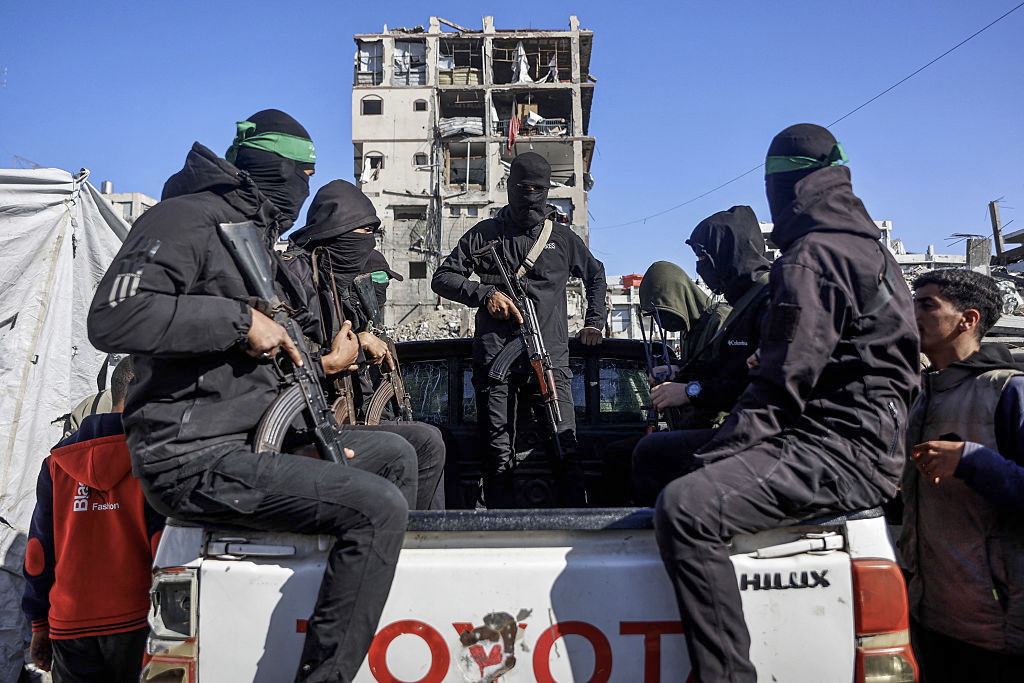
Six months after the ceasefire went into effect in the Gaza Strip, Hamas remains firmly in power. Despite international promises, diplomatic initiatives, and the much-publicized “Board of Peace,” the Iran-backed Islamist group More »

The Crown’s Moral Voice: King Charles in Washington and the Test of Western Clarity

The Crown’s Moral Voice: King Charles in Washington and the Test of Western Clarity

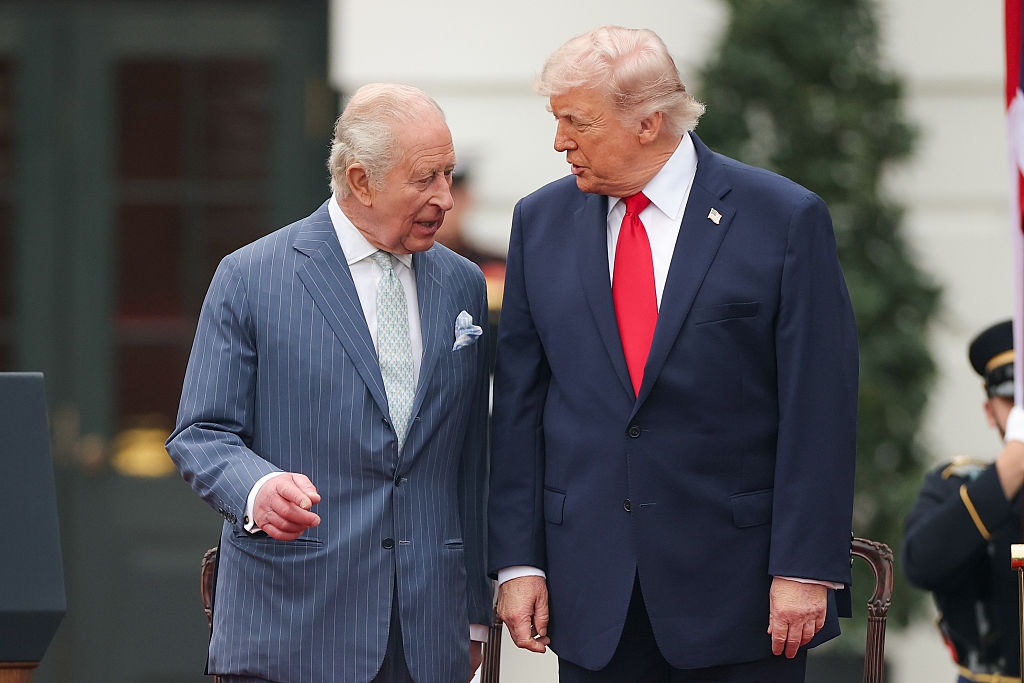
[P]arts of the West have become too cautious in naming the nature of the threats they face. The question is whether, at a time when the West is confronted by terrorism, tyranny, More »

Uwiteka Imana Nyiringabo ategeka ko Paul Kagame atazabona umusimbura ku ngoma uturuka mu muryango we!!!

Uwiteka Imana Nyiringabo ategeka ko Paul Kagame atazabona umusimbura ku ngoma uturuka mu muryango we!!!

Ijambo ry’Uhoraho Uwiteka Imana Nyiringabo rikomeza kunzaho cyane, maze rirambwira riti, mwana w’umuntu, wisubizemo imbaraga ukomeze umurimo wa data wo mu ijuru kuko abakugambanira nta bwo bafite ububasha bwo ku kugeraho kuko More »

International Law Can’t Stop Tyrannical Regimes

International Law Can’t Stop Tyrannical Regimes

Former head of Human Rights Watch Kenneth Roth and his chorus, including morally blind academics claiming legal expertise, promote an imaginary “rules-based international order” that paralyzes democracies while protecting despotic dictators. Under More »


Middle East: A Shift from Revolution to Evolution by Najat AlSaied

  • The lesson the Trump administration might learn from the disastrous mistakes of its predecessor is that the main sources of terrorism in the region are political Islam and all its related religious groups. All these radical groups, including ISIS, Al-Qaeda, Jabhat Al-Nusra and Hamas have been spawned by a political Islam driven by the ideology of the Muslim Brotherhood.

  • The fight, therefore, should not be against Islam, but against political Islam. Islam needs to be practiced the way other religions are, as a private personal faith that should be kept separate from public life and politics, and whose expression should be confined to worship only.
  • Mosques, whether in the Arab and Muslim world or in the West, should be places of worship only and must not transformed to centers for polarizing society or for recruitment by political religious groups.

After each Islamist terrorist attack in the West, the public is divided into two camps: one angry and one indifferent. The problem with defeating Islamist terrorism seems to be that either it is attacked by conservatives who call Islam an evil cult or it is forgiven entirely by liberal apologists. What, then, is the answer?

One of the main failures in Western analyses of the origins of terrorism in the Middle East and North Africa is that the West attributes them to a lack of democracy and a lack of respect for human rights. This is, indeed, part of the cause, but the root of the problem is a lack of development and modernity. U.S. President Donald Trump did not exaggerate when he said that the Obama administration’s foreign policy was disastrous. It was catastrophic mainly for two reasons. One was the knee-jerk support for the “Arab Spring” and for extremist Islamic political groups such as the Muslim Brotherhood. The second was the alliances the Obama administration built with unreliable countries such as Qatar, which supports radical political groups such as the Muslim Brotherhood. In addition, Obama made the mistake of continuing to try to appease Iran’s theocratic regime.

The Arab Spring’s uncalculated, hasty attempt to establish so-called democracy only generated more turmoil and chaos in the region. Certain radical political groups simply exploited the elections to serve their own political and sectarian agendas; that swoop for power only resulted in more authoritarian and dictatorial regimes, as have played out, for instance, in Egypt, where we have witnessed the murder of civilians and police officers by the Muslim Brotherhood. In other countries, the situation is even worse; attempts to install democracy have totally destroyed the state and facilitated the spread of terrorist militias, as in Libya.

It is ironic that Western countries and their advocates stress the need to apply democratic practices in Arab countries, but evidently do not recall that development and secularism preceded democracy in Western Europe. The United Kingdom, which has the oldest democratic system, did not become fully democratic until 1930. France became fully democratic only in 1945, 150 years after the French Revolution.

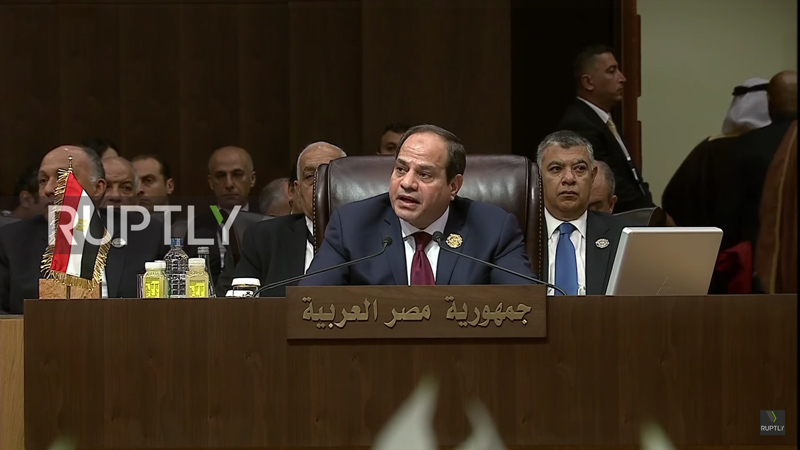
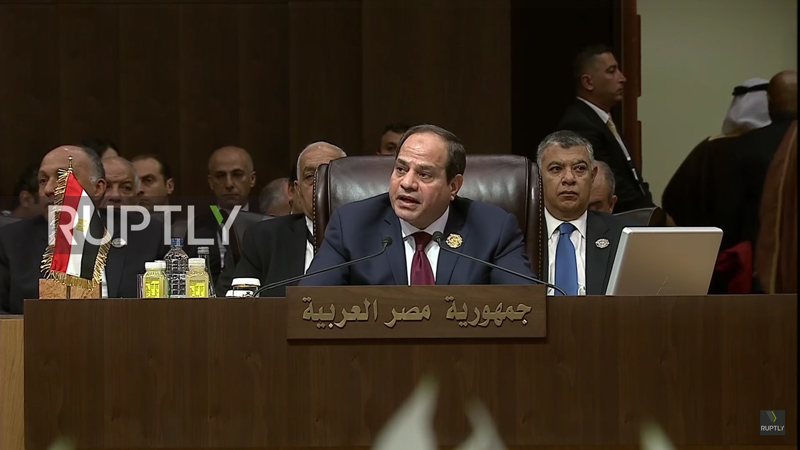
The Emir of Qatar, Sheikh Tamim bin Hamad Al-Thani, at the Arab Summit in Jordan on March 28, 2017 delivered a speech in which he indicated his continuous support for the Muslim Brotherhood:

“If we are serious about focusing our efforts on armed terrorist organizations, is it fair to consider any political party we disagree with as terrorist? Is our goal to increase the number of terrorists?”

Many Arab leaders were infuriated by his speech; at the forefront was President Abdel Fattah el-Sisi of Egypt, who left the Arab Summit Hall during the speech to meet King Salman of Saudi Arabia.

Most Arab leaders and analysts, in fact, are enraged by Qatar’s continuous support for Islamist political groups such as the Muslim Brotherhood, because these groups are a threat to their national security.

President Abdel Fattah el-Sisi of Egypt speaks at the Arab Summit, on March 29. The previous day, Sisi walked out of a speech by the Emir of Qatar, Sheikh Tamim bin Hamad Al-Thani. Sisi was infuriated by Al-Thani’s declaration of support for the Muslim Brotherhood. (Image source: Ruptly video screenshot)

Another consequence of Obama’s foreign policy — in particular attempts to get close to Iran’s hostile regime — has been a fraying of relationships with old Arab allies of the United States. Some of Obama’s advisors thought that replacing Saudi Arabia with Iran was somehow “better” for the United States, if Iran “is beginning to evolve into a very civilized and historically important country” — an analysis that can be described as completely short-sighted.

The Saudi regime, with all its flaws, is a monarchy run by princes; the Iranian regime is a theocracy run by clerics. The Saudi regime is not a theocratic regime but a hybrid structure, which is neither wholly secular nor wholly religious. As such, the religious class functions under the authority of the ruling class. Princes are driven by self-interest; clerics are driven by ideology. In terms of extremism, the Iranian regime is pushing for hegemony, whilst Saudi Arabia has been taking only a defensive, rather than an expansionist, position.

The motivation of Saudi Arabia in exporting mosques world-wide and installing radical Saudi imams is defensive, not expansionist as in Iran. Saudi Arabia’s impetus is to confront Iran’s hegemony and the spread of its hostile ideology. It is this strategy, which Saudi Arabia has practiced since 1979 to balance Iran’s power and to combat its rebellious ideology, that must change.

That Iran’s Khomeini regime sought to embarrass Saudi Arabia — a country that is home to Islam’s two holiest mosques, in Mecca and Medina — by portraying it as not sufficiently Islamic, meant that the foundational Islamic Wahhabism of the Saudi Kingdom was aggressively reinforced. This emphasis resulted in even more constraints being put in place in Iran: especially on entertainment. Since the Khomeini revolution in 1979, all plays, fashion shows, international events, and cinemas have been banned. As for women, the Commission for the Promotion of Virtue and Prevention of Vice has increasingly harassed them. As for minorities, especially Shia challenging the Iranian Shia regime and its support for Shia militias — particularly the dominant Revolutionary Guards — books were published attacking the Shia:

More books appeared, attacking the Shias and especially Khomeini’s views. These books – like the arguments of Khomeini’s followers – rejected modern thinking as an “intellectual invasion.” Saudi Arabia, considered the guardian of Sunni Islam, spent billions of dollars on challenging the Khomeini-backed Shiites.

This religious one-upmanship — a competition over which body can be the “most religious” — must stop. Saudi Arabia would do well to understand that in order to confront the hegemony of the Iranian theocratic regime, the answer is not to radicalize Saudi society but to return to the way it was before 1979.

The best way to defeat the rebel hostile regime in Iran might be through creating an inclusive and tolerant society in Saudi Arabia. Saudi Arabia needs to change its approach towards Iran because the current strategy has not worked. The current strategy has done nothing except to strengthen the Iranian regime’s dominance; distort, globally, the image of Saudi Arabia and accelerate terrorism.

The lesson the Trump administration might learn from the disastrous mistakes of its predecessor is that the main source of terrorism in the region are political Islam and all its related religious groups. All these radical groups including ISIS, Al-Qaeda, Jabhat Al-Nusra and Hamas have been spawned by a political Islam driven by the ideology of the Muslim Brotherhood. Extremist jihadists such as Osama bin Laden, Abdullah Azzam and Ayman al-Zawahiri were all taught by the Muslim Brotherhood.

Political Islam practiced by the Iranian theocratic regime has been comfortably generating Shia radical militias, including the terrorist group, Hezbollah. The fight, therefore, should not be against Islam, but against political Islam. Islam needs to be practiced the way other religions are, as a private personal faith that should be kept separate from public life and politics, and whose expression should be confined to worship only. Mosques, whether in the Arab and Muslim world or in the West, should be places of worship only and must not transformed to centers for polarizing society or for recruitment by political religious groups. Unfortunately, Western countries have turned a blind eye to the political activities inside these mosques.

The danger of these religious political groups is that they do not believe in democracy or human rights; they just use elections to grasp power in order to impose a system of “Islamic Caliphate” as their only form of government. Most of these groups use religion as an ideology to oppose governments other than their own, and when they are criticized or attacked, they play the role of the oppressed.

The Trump administration needs to take advantage of the fact that the majority of people in the Middle East and North Africa have lost faith in religious political groups, especially since the failure of the Muslim Brotherhood in Egypt and Tunisia.

Before the Arab Spring, support for these groups was huge; now it stands at less than 10% of the population. This study was conducted in the Arab world, not including Turkey. The Muslims who support Turkish President Recep Tayyip Erdogan are the Muslim Brotherhood.

Most recent polls indicate that the majority of people in Arab and Muslim countries prefer religion to be kept separate from politics.

The country that is working the most systematically to fight these religious political groups in the region is the United Arab Emirates (UAE). There are several institutes and think tanks researching how to combat these groups. Dr. Jamal Sanad Al-Suwaidi, Director General of the Emirates Center for Strategic Studies and Research (ECSSR), has given a robust analysis of these groups and how to combat them in his book, The Mirage. In it, he cites a study on public opinion on political religious groups: A survey of the UAE population, on how these groups are able to influence the public by taking advantage of certain flaws in the system: 53.9% because of corruption; 47.9% because of poverty and 29.1% because of an absence of civil society groups that confront these opportunists.

The Middle East-North Africa region will undoubtedly have to go through several stages before it can successfully establish democracy. An evolutionary developmental approach will definitely be better than the failed revolutionary democratic one pursued by the Obama administration.

Secularization is also crucial in the fight against terrorism. Trying to build a democracy before going through the stages of secularism and political reformation — which includes rectifying existing flaws, such as corruption; modernization which means the liberation of the region from extremist totalitarian religious dogma and all other forms of backwardness in order to kick-start a renaissance; and scientific development — will not only be inadequate but will actually generate more terrorism by helping radicals to keep gaining power. It would be like a farmer who wants to plant roses in arid desert soil full of thorns.

Middle East Strategic Outlook, February by Shmuel Bar

  • The EU-Turkey agreement of 25 November, which provided Turkey with 3 billion euros over two years in order to stop the flow of refugees to Europe, has not achieved that goal. Speaking privately, EU officials complain that Turkey has not taken any concrete measures to reduce the flow of refugees. In our assessment, Turkey will continue to prevaricate on steps to stem the flow of refugees as pressure on the EU to give more concessions.

  • During the coming year there will certainly be further terrorist attacks that will push European public opinion further to the right.
  • We assess that Iran will continue in indirect channels with a parallel nuclear program, realized long before the 10-year target of the JCPOA.
  • The demand for unification of Kurdistan — Iraqi and Syrian — will also begin to be heard. It is highly likely that Russia will take advantage of the trend and support the Kurds, effectively turning an American ally into a Russian one.

The announcement by the IAEA that Iran has fulfilled its obligations according to the Joint Comprehensive Plan of Action (JCPOA) has triggered “Implementation Day” and the removal of the nuclear-related sanctions on Iran. The JCPOA, however, did not deal with Iran’s ballistic missile program, and the sanctions related to it are still nominally in force. These sanctions are minor and will not have any real effect on the Iranian missile program. The missile program will mature during this period and will include Ghadr missiles with ranges of 1,650-1,950 km, which may be capable of carrying nuclear warheads.

The question now is: whither the Iranian nuclear program? After the lifting of sanctions, and taking into account the impracticality of “snap-back” of sanctions, we assess that Iran will now initiate a parallel nuclear program. This will, of course, be far slower than the program that was dismantled by the JCPOA, but it will be realized long before the 10-year target of the JCPOA. One possibility for Iran to continue its nuclear program is through North Korea. The wording of the JCPOA is ambiguous on nuclear Iranian nuclear cooperation with other countries that are not a party to the agreement. North Korea could produce the whole chain of nuclear weapons and put it at Iran’s disposal in return for Iranian funding. North Korea would certainly profit economically from such collaboration and would not risk further sanctions. Such cooperation would be difficult to detect, and even if detected, may not reach the threshold of a material breach of the JCPOA.

The most immediate reward that Iran will receive is the release of frozen Iranian funds ($100-$150 billion). In addition, Iran may now market oil stored offshore in tankers (about 50 billion barrels) and is preparing to increase its production by 500 thousand bpd (from 2.8 million bpd). It is doubtful that Iran can truly increase its production as planned. Even if it does, the addition of Iranian oil is likely to drive prices down even further, counter-balancing much of the potential profit. Sanctions relief also is not a quick fix for the Iranian economy. While it removes legal impediments for investment and business in Iran, the risks that Western companies will face due to residual non-nuclear sanctions (that may be enhanced and enforced by a future American administration), lack of government protection, corruption, and the weakness of the Iranian market cannot be removed by decree. Therefore, European banks and investors may not hurry to invest in Iran at the levels needed to jump-start the Iranian economy after years of sanctions.

The Iranian regime’s goal is not only to block the path to the reformists or reformist-minded, but also to the extremists on the right to Supreme Leader Ali Khamenei. Such a balance could help the Iranian system maintain its “centrist” orientation and guarantee the continuity in the event of Khamenei’s death and the appointment of a new successor (or a triumvirate of several potential leaders). It will also facilitate the eventual takeover of the regime by the Islamic Revolutionary Guards Corps (IRGC) after the demise of Khamenei. The backing that the Guardian Council received from the Supreme Leader for the results of its vetting process, in the face of Rouhani’s condemnation of the disapproval of almost all reformists, is also indicative of the balance of power in the regime.

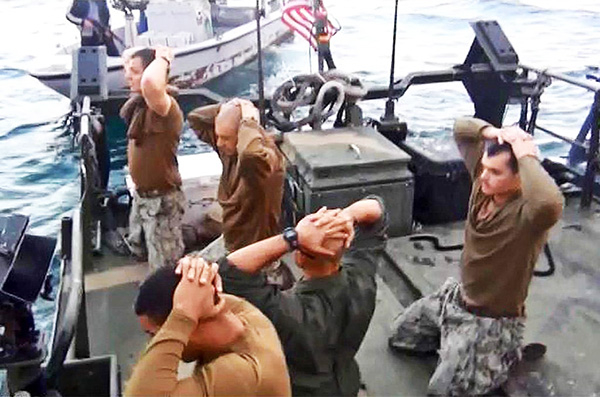
The Iranian seizure of two US Navy patrol boats on January 12 and the publication of drone pictures of a US Navy aircraft carrier underlined the sense of immunity that Iran has achieved. These actions should be seen in the context of Iran’s attempt to change the rules of the game in the Persian Gulf, while testing the waters of American tolerance and sending to Saudi Arabia and the Gulf States an indirect message that Iran is ready and willing to risk conflict with the US and that the US is a paper tiger that cannot be relied upon in a confrontation between the Gulf States and Iran. In our assessment, Iran will continue with shows of force such as seizing of naval vessels of Saudi Arabia and the Gulf States, stop and search operations of commercial vessels en route to the Gulf States, naval exercises — including missile tests close to Gulf sea-lanes and to the territorial waters of the Gulf States — in international waterways that implicitly interrupt and threaten shipping in the Gulf, “spooking” of Gulf aircraft and even false flag operations of mining, piracy or attacks by proxies in the Gulf and the Red Sea along the Yemeni coast. We may expect as a result possible frontier skirmishes on the shared littoral borders of Iran and Saudi Arabia, gas fields and disputed islands and in the international waters of the Gulf.
The Iranian seizure of two US Navy patrol boats on January 12 underlined the sense of immunity that Iran has achieved.

Saudi Arabia is drawing up its own map of interests and areas of influence that it is projecting as “no-go zones” for Iran — a Saudi “Monroe Doctrine” for the region. The most critical of these are: Yemen (due to the potential for threatening the Bab al-Mandeb Straits), subversion in the Gulf States (primarily Bahrain), the Strait of Hormuz and the international waters of the Gulf. To this list one must add the obvious: any Iranian-inspired or -planned attack on the Saudi homeland itself — government facilities, oil installations etc. — would be perceived as crossing a red line. While neither Saudi Arabia nor Iran is interested in direct conflict, and both would prefer to continue to work through proxies and in areas outside their respective sovereign territories, the dynamic nature of the situation can easily lend itself to misreading of such red lines and such miscalculation may lead to direct confrontation between them. While all-out direct war between Iran and Saudi Arabia remains a low probability, this assessment should be revisited again in the near future.

In Syria, American positions have undergone a strategic shift that reflects the new balance of power created by the Russian intervention. On the military side, the Russian presence imposes a heavy constraint on the American activities, and U.S. officials caution that the success of the Ramadi operation will not be followed by a concerted effort to roll back the “Islamic State” in the Syrian theater. In regards to a political solution, the US has accepted the Russian-Iranian four-point-plan that envisages Bashar al-Assad remaining in office during a transition period and being allowed to run for President in “internationally supervised elections”. In our assessment, the Syrian opposition and their Arab supporters cannot accept any blueprint that would leave any doubt regarding Bashar al-Assad relinquishing power before any process begins. These developments will only feed the sense of the Sunni Arabs that the United States has turned its back on them and is supporting Iranian-Russian hegemony in the region. On this background, the prospects that the Syrian “peace talks” in Geneva will achieve any progress towards resolution or even mitigation of the civil war are close to nil.

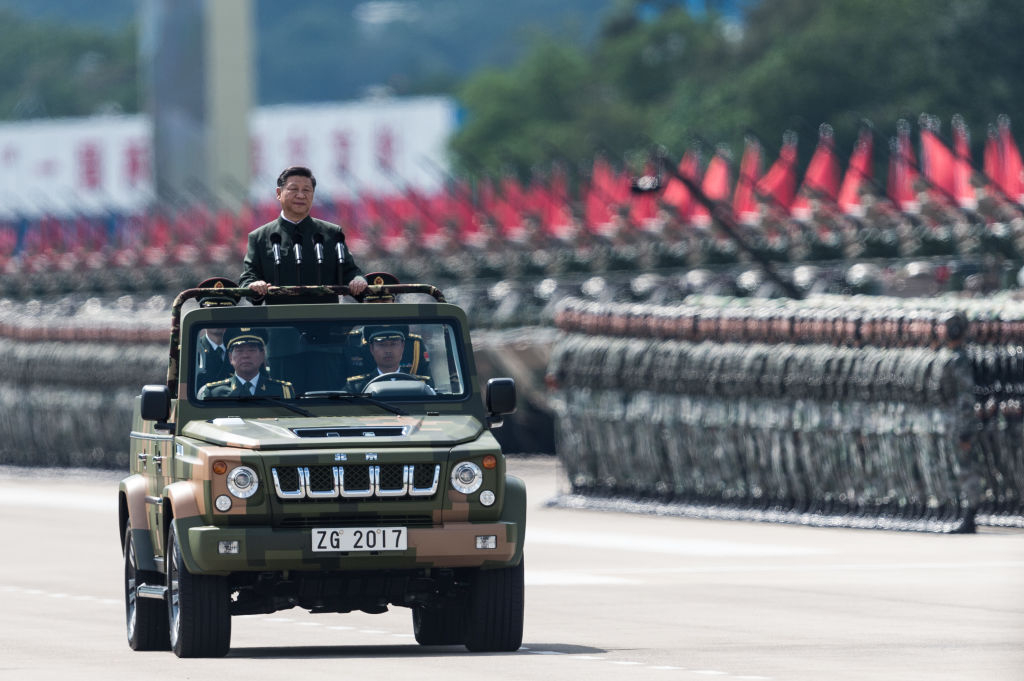
Last month’s visit by Chinese President Xi Jin Ping to Saudi Arabia, Egypt and Iran was the first such visit of a Chinese President in the region since 2002, and the first foreign head of state to visit Iran since the announcement of “Implementation Day” of the JCPOA. The Chinese emphasis in all the visits was on economic cooperation, development and stability, but above all — in an implicit stab at the US and Russia — emphasizing that China does not seek proxies, to fill a power vacuum or hegemony in the region. The leitmotif of the visit was the integration of the Middle Eastern partners (i.e. the Arabs in general and Iran) into China’s “Belt and Road Initiative.” In spite of the inclusion of Iran in the visit, President Xi took care not to offend the Arabs. The agreements with Saudi Arabia included nuclear cooperation in a scope far greater than that which was offered to Iran, and the joint statement reflected the Saudi position on Yemen, stating, “both sides stressed support for the legitimate regime of Yemen.”

The “Arab Policy Paper” published on the eve of the visit stresses China’s commitment to “non-intervention and opposition to interference in the affairs of other countries”. This is seen by the Arab policy communities as a sign of implicit Chinese support for their position vis-à-vis Iran’s activities in the region, though they would have welcomed more explicit statements of support. There is no expectation in the region that China is going to play the “Big Power” card in the region. Taking sides in this conflict would be out of character for China. Saudi Arabia and the other Arab states will attempt to convince China to refrain from demonstrations of rapprochement with Iran and to support the Arab positions vis-à-vis Iranian provocations in the Gulf, Syria and Yemen. While China may show a slight implicit leaning towards the Arab position on these issues, it is not likely to take a clear anti-Iranian/pro-Arab position in the near future.

The European Union-Turkey agreement of 25 November, which provided Turkey with 3 billion euros over two years in order to stop the flow of refugees to Europe, has not achieved that goal. Speaking privately, EU officials complain that Turkey has not taken any concrete measures to reduce the flow of refugees. In our assessment, Turkey will continue to prevaricate on steps to stem the flow of refugees as pressure on the EU to give more concessions. Turkey has already signaled that the sum will not suffice for the task of maintaining the refugees inside Turkey alone, and certainly not for other security measures such as blocking the border with Turkey to prevent passage to and fro of “Islamic State” foreign fighters.

Aside from the 3 billion euros, the EU commitments will also not be easily implemented; visa waivers for Turkish citizens in general will encounter massive opposition within the EU. The road to Turkish accession to the EU must also go through complex negotiations on various aspects of compatibility of Turkey to the standards of the EU. All these discussions will encounter a veto by Cyprus, pending a peace deal with Turkish-occupied Northern Cyprus. This veto may be resolved if a referendum on unification of Cyprus takes place and supports re-unification later this year. However, the real obstacle towards Turkish accession is not technical or due to the Cyprus question; it revolves around the shift in European public opinion towards absorption of immigrants from Muslim countries. During the coming year, there will certainly be further terrorist attacks that will push European public opinion further to the right. Under these circumstances, Turkish accession or even visa waiver will be very unlikely.

In our assessment, the trend towards Kurdish independence will eventually lead to an independent Iraqi Kurdistan. The events in Syrian Kurdistan will also affect the pace and direction of the independence movement in Iraq’s Kurdistan Regional Government (KRG). Unification of the parts of Syrian Kurdistan in the face of Turkish opposition and under Russian protection will give impetus to the demand to create a political fait accompli of independence in Iraqi Kurdistan. As the principle of Kurdish independence in Iraq gains more and more support and becomes a reality, the irredentist demand for unification of Kurdistan — Iraqi and Syrian — will also begin to be heard. This is the fulfillment of the Kurdish nightmare that Turkey has always feared. With the deterioration of relations between the AKP government and the Turkish Kurds inside Turkey, such a political reality of independent Kurdistan will add fire to the flames of the Kurdish rebellion in southern Turkey. It is highly likely that Russia will take advantage of the trend and support the Kurds, effectively turning an American ally into a Russian one. If this happens, the US will have lost an important potential ally in the new map of the Middle East.

The large number of players on the ground that may take a part in the campaign for Mosul will only complicate the campaign further and — if the city or part of it is retaken, will increase the chances of internal fighting between the components of the ad-hoc alliance of Iraqi government forces, Shiite militias, Sunni militias, Kurdish Peshmarga, Turks and American forces.

On this background, the Syrian “Peace Talks” in Geneva started (29 January) as “proximity talks” in which the UN representatives shuttle between the rooms of the opposing parties. The Saudi supported High Negotiations Committee (HNC) of the Syrian opposition ceded their original conditions — cessation of the attacks on civilians — though they refuse to meet with the regime representatives while the latter refuse to meet with “terrorists”. The Syrian regime representation is low-level as an indication that there is no intention to hold real negotiations. Furthermore, the Kurdish Democratic Union Party (PYD), whose military wing, the YPG, is the most effective fighting force on the ground against the “Islamic State,” were not included in the opposition delegation because of the Turkish threat to boycott the Geneva negotiations if it participates. Under these conditions, the prospects that the talks will achieve any progress towards resolution or even mitigation of the civil war are close to nil.

Dr. Shmuel Bar is a senior research fellow at Israel’s Institute for Policy and Strategy at the Interdisciplinary Center Herzliya in Israel and a veteran of Israel’s intelligence community.
Middle East Strategic Outlook – July 2016 by Shmuel Bar

  • It may be expected that in the coming months, the Syrian efforts to implement “ethnic cleansing” of Sunnis in the north will continue and even escalate, resulting in a growing stream of refugees into Turkey, Lebanon and Jordan. This will continue to destabilize these countries and to pose a challenge to a weakened Europe.

  • The overt American support for the Iranian involvement in Iraq will also serve to rally Sunnis to an anti-American position, while actually exacerbating the main problem — the sectarian divide. Therefore, the American involvement in the Fallujah campaign will not buy it Sunni gratitude.
  • Iran is entering a new stage of war in Syria which evokes the situation that the Soviet Union found itself in in Afghanistan in 1985. Like the Soviet Union in that stage of the Afghan war, Iran has achieved no decisive victory, but has incurred significant domestic opposition to the war and has no additional resources that could tip the scales.
  • The explanation put forward by the American administration that the attacks reflect the Islamic State’s “despair” in the face of its defeats in Syria and Iraq over the last months is specious. International terrorism “to strike fear in the hearts of Allah’s enemies” has been a hallmark of the Islamic State since its beginning and it does not need the excuse of military defeat in Syria and Iraq to continue to carry out such attacks.

Saudi Arabia

Approval of the National Transformation Plan

The Saudi Cabinet approved (June 6) the National Transformation Program (NTP), part of Saudi Vision 2030, led by Deputy Crown Prince Muhammad bin Salman. The NTP is supposed to be the basis for laying out targets to be met by government ministries and departments. The NTP was well received not only be the Saudi mainstream media (to be expected) but by the Saudi social media that represents to a great degree the public opinion of the younger Saudi generation. It may be expected that Prince Mohammad bin Salman will continue to take steps in the framework of his initiative that will, at least, preserve the sense of momentum and the public support he is enjoying.

Saudi-US Relations

In this framework, Mohammad bin Salman visited Washington DC in a bid to sell his project and himself as the future Saudi leader. During the visit, and especially in the meetings with officials from Congress and the security and intelligence Community, he also sought to build his own stature as future king and as the leader who must be at the helm throughout the period of implementation of his “Vision 2030” plan and beyond. His goal therefore was also to usurp Crown Prince Mohammad bin Nayef’s status as the favorite of the Washington officialdom as the successor to King Salman. This status derived not only from Washington’s respect of the Saudi rules of succession, but also from his years-long and tight cooperation with US agencies on security and counter-terrorism issues. Therefore, Mohammad bin Salman made an effort to project himself as a preferred effective interlocutor on those issues. The fact that Mohammad bin Salman was accorded meetings with President Obama, an honor usually reserved for heads of state, and the red-carpet reception he received, indicates that the administration now considers him as a likely future king and therefore seeks to establish a dialog with him and influence him.

Iraq

The War against the Islamic State

The liberation of Fallujah from the “Islamic State” after a month-long campaign (23 May-26 June) may be an important milestone is not the “beginning of the end” and it will certainly not lead to a stronger and more unified Iraqi state. The campaign and its anticipated aftermath will only exacerbate the sectarian divide in the country and encourage further conflict, whether in the name of the “Islamic State” or its successor under another name

The overt American support for the Iranian involvement[1] will also serve to rally Sunnis to an anti-American position. By backing a military campaign against Sunnis in which Shiite militias and Iran played a direct role, the US-led international coalition was fighting against the symptom — the Islamic State — while actually exacerbating the main problem: the sectarian divide in Iraq. Therefore, the American involvement in the Fallujah campaign will not buy it Sunni gratitude. The view of the US as pro-Shiite and pro-Iranian must have been enhanced by Secretary of State John Kerry’s statement (28 June) that Iran’s presence in Iraq is helpful to American attempts to beat back the threat of the Islamic State, and the praise heaped on the Shiite militias by the US special envoy tasked with defeating the Islamic State, Brent McGurk[2].

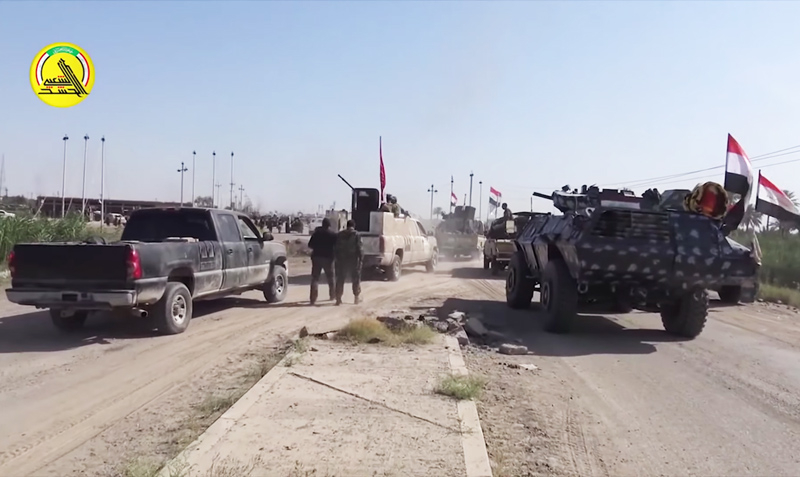
Iraqi army units and Shiite militias during the assault on Fallujah, June 2016.

Many Sunnis — in Fallujah and elsewhere in Anbar Province — view the Fallujah campaign as part of a strategic Iranian plan to take control, through its Iraqi proxies, of central and western Iraq, from the Diala Governorate on the Iraq-Iran border to the Iraqi-Syrian border, in order to create a safe land-bridge from Iran through Syria to Lebanon. To achieve this objective, the Sunnis of western Iraq have to be weakened and denied the ability to stage a meaningful resistance[3].

No End to the Political Stalemate Expected

The paralysis of the Iraqi Parliament further complicates the situation. The parliament cannot reach agreement on the composition of a new cabinet, and cannot pass the 2016 budget. While Iraq can continue to muddle along with a caretaker government under al-‘Abadi (just as Lebanon “survives” without electing a president), passing a reduced 2016 budget is a sine qua non for execution of the agreement that that the government reached in May with the International Monetary Fund (IMF) for a low-interest loan of $5.4 billion and for loans from other international institutions.

Iran’s interest is to maintain its control over the government in Baghdad, On one hand, this calls for a relatively stable and cohesive Shiite establishment. On the other hand, Iran enhances its position in Baghdad by playing one party against the other and positioning itself as the only acceptable broker between the different Shiite factions. In the eyes of Tehran, Muqtada al-Sadr is a loose cannon, and al-‘Abadi is too close to the West and therefore must be held in check. By maintaining the innate instability of the Shiite political system, Iran attempts to preserve the Iraqi Shiites’ dependency on it to bridge the differences between the different factions.

Therefore, the Shiite infighting will continue as long as al-Sadr is around. This is clear to Iran and to al-Sadr’s rivals and increases the possibility that an attempt will be made to assassinate him. In such a case, the reaction of those elements in the Shiite community who currently support him will be violent and extreme, possibly ultimately leading to the total breakdown of the Shiite political establishment that Iran is trying to prevent.

Iran and Hezbollah in Syria and Iraq

In contrast to its singular status as power-broker in Iraq, the situation in Syria and Lebanon does not bode well for the Iranian strategy. Since these two theaters are critical for Iran’s regional designs, it has no options for an exit strategy, disengagement or even reduction of its footprint. Its primary agent, Hezbollah is suffering setbacks on all the fronts. Without massive Russian military support in Syria, Hezbollah has had to resort to repeated tactical withdrawals and it and the Iranian forces are suffering increasingly heavy fatalities, wounded and fighters taken as prisoners by the Syrian Sunni rebels. In addition to that, the rebels know their own turf better, limiting Hezbollah’s ability to deploy more troops in the more sensitive areas of the theater. Nevertheless, Hezbollah is committed to increase its footprint in the Syrian theater and cannot back down — even as its growing casualties cause increasing discontent within its Shiite Lebanese constituency[4].

Iran is entering a new stage of war in Syria which evokes the situation that the Soviet Union found itself in in Afghanistan in 1985. Until that year, the Soviet Union achieved no decisive victory over the mujahedeen, but also did not lose any battle on the ground. Like the Soviet Union in that stage of the Afghan war, Iran has achieved no decisive victory, but has incurred significant domestic opposition to the war and has no additional resources that could tip the scales. In light of this, our forecast is that the current situation in Syria will become a stalemate for all the parties at least in the months to come.

Israel-Syria-Lebanon

In these circumstances, a conflict with Israel does not serve the interests of either Iran, Hezbollah or Syria. Therefore, all four parties (and Russia) have adapted themselves to a routine of tolerance towards Israeli attacks on Syrian and Hezbollah targets that endanger Israel directly or threaten Israel’s “strategic edge” in the Syrian-Lebanese theater. In a series of actions directed towards enhancing Israel’s deterrence, the IDF held an extensive war game (12-14 June) based on a scenario of confrontation with Hezbollah. Subsequently, Israeli aircraft hit a Syrian military target near the Israeli border and uncharacteristically released a communiqué that the target had indeed belonged to the Syrian regime and had been hit in response to shelling by the Syrians near the border fence.

Hezbollah seems to be losing its predominance even within the Lebanese theater itself, where it had been almost unchallenged for decades. The attrition of Hezbollah in Lebanon is weakening it within the Shiite community. At the same time, the large (1.4 million) Syrian Sunni refugee population has effectively changed the demographic status quo in Lebanon and created a large restive population for whom Iran, Shiites and particularly Hezbollah are the prime enemy.

Syria

Bashar Assad is defiant, but not delusional

On June 7, Bashar Assad delivered a speech to the newly “elected” Syrian Parliament. This was his first major speech since the collapse of the peace talks sponsored by the International Syria Support Group (ISSG) in Geneva in April. Assad vowed to retake every inch of the country from his enemies, and effectively dismissed the concept of a peaceful transition of power, which is at the heart of the ISSG’s approach to the resolution of the crisis.

Assad is not — as the US State Department implied — “delusional”. He clearly perceives no military or political threat to his rule. He may rationally asses that Secretary Kerry’s reported “Plan B” that called for escalated military action if Assad continued his defiance will not receive support of President Obama, who will be reluctant to increase the American military involvement in Syria and to risk damaging Iranian-American relations and the nuclear agreement, which is the centerpiece of Obama’s foreign policy legacy.

Assad also most probably assesses that neither Hillary Clinton, whose Libyan experience will discourage her from intervention, nor Donald Trump, who has laid out a non-interventionist foreign policy approach, would undertake a more active involvement in Syria than that of President Obama. Assad therefore felt free to obstruct the international efforts to transport emergency aid to civilians trapped in rebel-held areas, and to reject in his speech the August 1 deadline set by the US for developing a transition plan leading to his stepping down.

Assad’s attitude, the limits of the American, Iranian and Russian interventions and the absence of any additional forces that could appear in the theater and tip the scales means that the war will grind on. It may be expected, therefore, that in the coming months, the Syrian efforts to implement “ethnic cleansing” of Sunnis in the north will continue and even escalate, resulting in a growing stream of refugees into Turkey, Lebanon and Jordan. This will continue to destabilize these countries and to pose a challenge to a weakened Europe.

Iran

New Political Appointments

It may be assumed that the Iranian leadership understands that restoring full control by the Assad regime over all of Syria is unrealistic and it has an undeclared “Plan B”. This would entail defining “useful Syria” as the stretch of land from Damascus along Lebanon’s border through Homs to Aleppo and along the Syrian coast that would be essential for the above objectives. This “useful Syria,” however, does not correspond territorially with the “useful Syria” that Russia envisions. Russia’s “useful Syria” focuses on maintaining a viable “Alawistan” that would enable Russia to maintain a beachhead on the Mediterranean and a presence on the Turkish border.

There has been disagreement inside the Iranian power elite since the Syrian uprising began to deteriorate into a full-fledged civil war. The disagreement focused on the extent of the Iranian investment of resources to support Assad’s objective of restoring the regime’s control over the entire country.

The Islamic Revolutionary Guards Corps (IRGC), which dominated the policy on Syria and was the key executor of the policy through the Qods Force and Hezbollah, has supported these objectives. Other Iranian power-brokers — notably those associated with the Rouhani camp — have warned against a Syrian quagmire and have opposed tying Iran to Assad’s fate. They argue that while it is of strategic importance to prevent Syria from falling into the hands of radical Sunni groups, it is not prudent to insist on Assad remaining in office, particularly in view of his use of chemical weapons against his own population. (The use of chemical weapons is a sensitive issue in Iran since their use by Saddam Hussain against the Iranians in the Iran-Iraq war.)

The recent appointment of Rear Admiral Ali Shamkhani as military and security coordinator of the Iran-Syria-Russia joint cooperation group, and the reshuffle in the Foreign Ministry, may indicate a move towards willingness to project more flexibility vis-à-vis the Syrian peace process even before the anti-Assad forces have been crushed militarily, and a formal willingness to consider the possibility of a post-war Syria without Assad personally.

This was implied in the statement by Iranian Foreign Minister Javad Zarif after his meeting with US Secretary of State John Kerry, that “there will be no solution if we focus on any individual [i.e. Bashar Assad],” and that the process must “focus on institutional dispersion of power and the future form of governance, through which it will be possible to reduce or even eliminate the centrality of the role of any individual or ethnicity.”

If Iran no longer insists on Bashar Assad staying in power, it could open the road to some procedural progress in the peace talks, which have been blocked by the dispute regarding his future, with Western powers and the Sunni Arab states insisting on his departure. However, the damage done by the civil war is irreversible. Even if some formula is found that would facilitate negotiations, the crux of the crisis is whether Syria will return to be dominated or even co-ruled by an Alawite minority. The Assad regime and Iran (and even Russia) cannot accept a Sunni-dominated Syria that would inevitably take revenge on the Alawites and destroy all the assets that Iran has built up over the last thirty years.

The Financial Sanctions Issue

The US administration is continuing in its determined efforts to convince the Western business community to invest in Iran. In May, John Kerry and US Treasury Department officials met with European bankers in London to tell them “legitimate business” is available to them in Iran and to “dispel any rumors” regarding future American sanctions on Iran. The administration’s message was that as long as the banks do their normal due diligence, “they are not going to be held to some undefined and inappropriate standard.”

Nevertheless, the international banking system continues to view Iran as high-risk and is likely to continue to do so for the foreseeable future. Regardless of the credibility of the guarantees of the current American administration, which will not be in office after January 2017, the reluctance of the international financial community to approach Iran derives from real risk assessment. Iran ranks 130th (out of 168) on Transparency International’s “Corruption Perception Index” and 118th on the World Bank’s “Ease of Doing Business” list.

Given the current state of affairs, these goals are far from achievable. The approval of the Iran Petroleum Contract (IPC) model does not guarantee its implementation, given the opaque and informal character of the Iranian economy. The goals of the regime’s Five Year Plan are also not clearly detailed and it is difficult to see how they can be achieved. Furthermore, Iran cannot comply with the Financial Action Task Force (FATF) rules without a fundamental transformation of its economic structure and the very essence and worldview of the regime. Taking into consideration the leadership structure, the predominance of the Supreme Leader and the position of the IRGC in economy, such a move is impossible.

The Kurdish Factor

The alliance between the Patriotic Union of Kurdistan (PUK) and the Movement for Change (Gorran) is openly challenging the Barzani clan’s dominance of Kurdish politics and raises the pressure on Massoud Barzani. To consolidate his popularity among the Iraqi Kurdistan Region’s population, Massoud Barzani might therefore resort to “patriotic” acts, like holding his promised referendum on Kurdish independence soon, which PUK-Gorran will not be able to oppose. This could lead to “Kurexit” (Kurdish exit from Iraq), which would be the result not of well-thought-out strategic planning but of Kurdish political infighting.

Israeli-Turkish “Reconciliation”

The Israeli-Turkish reconciliation is a formal step that will certainly not revive the golden age of Israeli-Turkish relations. Turkey will continue to support Hamas and to incite against Israel in international fora, though it will stick to the letter of the agreement and will take advantage of the economic opportunities afforded by the reconciliation.

The French Peace Initiative

The chances that the French peace initiative will succeed in relaunching the Israeli-Palestinian peace process are very slim. The Israeli position remains that negotiations must take place directly between Israel and the Palestinians, and not through international fora. The French initiative, however, will encourage the Palestinian Authority to reject alternative proposals for direct negotiations, pending the international conference.

Terrorism

The spate of terrorist attacks by the Islamic State during the period of this report highlights the disconnect between the situation on the ground in Syria and Iraq and the threat of Islamic State or al-Qaeda inspired jihadi terrorism in susceptible countries. Most the latest attacks took place in Muslim countries (Istanbul, Turkey in June; Dhaka, Bangladesh in June; Baghdad, Iraq in June, and Mecca, Qatif and Medina in Saudi Arabia on July 4) in which the ability to “profile” potential attackers is limited and security measures are weak.

The explanation put forward by the American administration that the attacks reflect the Islamic State’s “despair” in the face of its defeats in Syria and Iraq over the last months is specious. International terrorism “to strike fear in the hearts of Allah’s enemies” has been a hallmark of the Islamic State since its beginning and it does not need the excuse of military defeat in Syria and Iraq to continue to carry out such attacks. Furthermore, these attacks were obviously planned many weeks or even months in advance. The Islamic State will continue to attempt to carry out such attacks according to its strategy to project its jihad into the heartland of its enemies — into Europe and in the territory of its enemies in the Middle East.

Spotlight on the Saudi Economic Transformation Plan

Deputy Crown Prince Muhammad bin Salman’s economic plan represents far more than economic change: it calls for no less than a transformation of the nature of the Saudi state and political order through creation of an economically independent citizenry. The developments in the level of education of the Saudi population and particularly the potential of Saudi women entering the upper levels of the workforce, coupled with the high level of unemployment among those parts of the society, are among the unspoken drivers of the Vision 2030 plan. The goal of this process is to gradually replace the waning traditional tribal and clerical power base of the regime with a young professional economic power base out of concern that the high percentage of (unemployed) youth in the country would be a recipe for social unrest that, along with the loss of the influence of the traditional Wahhabi power base to more radical anti-establishment Salafi clerics, may destabilize the country.

Mohammad bin Salman seeks therefore to mobilize their support by making Saudi society advanced technologically and by creating a large number of jobs in technology. Monitoring of social media shows significant support for Mohammad bin Salman and his plans among the younger Saudi population, including high expectations that the economic initiatives will be followed by social change — loosening religious controls and social restrictions, expanding women’s rights and increasing social mobility. The Saudi leadership, however, is on the horns of a dilemma; accelerated change will raise the ire of the conservative elements in the elite, whereas a sense among the younger population that change is too slow will give rise to a crisis of expectations and subsequent instability.

Dr. Shmuel Bar is a senior research fellow at the Samuel Neaman Institute for National Policy Studies at the Technion in Haifa, Israel, and a veteran of Israel’s intelligence community.

[1] Secretary of State, John Kerry, declared that Iran has been very “helpful” in Iraq.

[2] McGurk said that Iran-backed Shiite militias are mostly helpful in Iraq, though some go rogue: Most of them do operate under the control of the Iraqi state, but about 15-20% of them actually do not, “and those groups are a fundamental problem”.

[3] This Sunni suspicion finds support in statements of senior Shiite Iraqi leaders like former PM Nouri al-Maliki, whose hard-handed policies towards the Sunnis in Anbar Province fed the rise of the “Islamic State”, and who now praises the role of Iran and the Shiite militias, and accuses Iraq’s Sunni political leaders of supporting terrorism.

[4] Hassan Nasrallah (26 June): “The defense of Aleppo is the defense of the rest of Syria, it is the defense of Damascus, it is also the defense of Lebanon, and of Iraq. … It was necessary for us to be in Aleppo and we will stay in Aleppo. We will increase our presence in Aleppo…”.

Methodists Restarting BDS War Against Israel by Susan Warner

  • The United Methodist Church is following in the footsteps of the Presbyterian Church (USA), the United Church of Christ and the United Church of Canada, who all passed resolutions boycotting and divesting from the State of Israel.

  • In a sort of blundering naiveté, the United Methodist Church is ignoring what is surely inevitable: the very divestment they ostensibly imagine will stop the conflict between Israel and the Palestinians may actually serve to exacerbate it.
  • “Not all is lost. Many of the delegates to the General Conference come from Africa. They have witnessed jihad up close and personal and will likely have a much more sympathetic view of Israel’s predicament than many of the delegates who live in the relative safety of the United States.” — Dexter Van Zile, Christian media analyst.
  • “The BDS Movement has already fulfilled part of its potential – as a stalking horse for those seeking to destroy Israel by other means. … It’s committed not to peace but to a piecemeal elimination of Israel.” — Dr. Harold Brackman, Simon Wiesenthal Center.

On May 10, 2016, the General Conference of the United Methodist Church (UMC) will gather at the Oregon Convention Center, hosting thousands of Methodist leaders, delegates and visitors.

This leading policy-making event meets once every four years to revise church law and adopt resolutions on current moral, social, public policy and economic issues. The conference also approves plans and budgets for church-wide programs.

This year, four new proposals in support of the anti-Israel Boycott, Divestment and Sanctions (BDS) movement are being prepared for consideration of the general assembly during the 10-day event.

UMC is following in the footsteps of the Presbyterian Church (USA), the United Church of Christ and the United Church of Canada, who all passed resolutions boycotting and divesting from the State of Israel. The Methodists, however, are not waiting for their General Conference to get the ball rolling. In January, the UMC pension fund, last valued in 2014 at $20.9 billion, voted in favor of divesting from five Israeli banks.

According to US News and World Report,

“The pension board’s decision came at a time when divestment is gaining momentum among liberal Protestants as a tool to pressure Israel over its policies toward Palestinians. Last year, the United Church of Christ voted to divest from companies with business in the ‘Israeli-occupied’ territories. The Presbyterian Church (USA) took a similar vote in 2014.”

UMC, which represents 13 million members worldwide, is marching to the tune of the BDS drummer, banging away at the same tired anti-Israel melodies that falsely target Israel as an “evil, colonialist, imperialist” empire whose “illegal occupation of Palestinian lands” and its “apartheid” discriminatory behavior is unjustly directed against the civil rights of the “suffering Palestinians.”

The Methodists, along with influential and forceful factions, hope to satisfy their Palestinian and EU partners by censuring Israel. Further, in a sort of blundering naiveté, UMC is ignoring what is surely inevitable: the very divestment they ostensibly imagine will stop the conflict between Israel and the Palestinians may actually serve to exacerbate it.

The question then is raised: Is continuing the conflict in order to wound Israel what the Church actually wants? The answer, it appears, is a resounding yes. With the help of a well-oiled grassroots Methodist organization, the United Methodist Kairos Response (UMKR), the BDS agenda is successfully being pushed through the Church.

UMKR borrows its name from the Kairos Palestine Document. Drafted in 2009, the document was created by a group of Christians who invoked God’s name as part of their claim to His alleged favor in their war for “justice and peace” against Israel’s “occupation of Palestinian land.”

UMKR claims to be answering the calls of Palestinian Christians to “help end the Israeli occupation.” They exploit the boycott as a justifiable and effective strategy to force Israel to stop what they call the “illegal occupation of Palestinian lands.”

The Methodist organization publicly opposes anti-BDS legislation in the United States, stating that these legislative efforts “contradict the United Methodist Church’s longstanding policies of supporting economic advocacy as well as calling for an end to the Israeli occupation.”

The term “illegal occupation” is repeated so regularly by UMKR and other anti-Israel organizations that international media has used the phrase as an accepted term to describe the situation in Israel. A manifestation of “the big lie” against Israel, UMKR forcefully and repeatedly disseminates this false accusation. The entire UMKR website is peppered with references and claims of “illegal Israeli settlements.”

However, the accusations don’t stop there. Susanne Hoder, co-chair of UMKR, has gone on the record accusing Israel of ethnic cleansing against all non-Jews in Israel. In an editorial she wrote, Hoder characterizes Israel as “a society obsessed with the ethnic purity and intent on purging non-Jews from the region.” In a second article, Hoder calls on “followers of Christ” to “unite against Israel’s ethnic cleansing of Christians and Muslims.”

Accusing Israel of “ethnic cleansing of Christians and Muslims” is a preposterous and unfounded claim. Israel, the only democracy in the volatile Middle East region, is the one place people of all races and religions can live freely. Christians are not beheaded for their faith in Israel, unlike Christians living in areas controlled by ISIS. Women are not treated as second-class citizens, like in Iran and Saudi Arabia.

Hoder’s allegations against Israel highlight a greater problem of the UMKR and anti-Israel groups in general. UMKR is focusing all their attention on Israel, without acknowledging the misdeeds of the real perpetrators of the Mideast conflict. Why do the Methodists not hold the Palestinian leadership, who fail repeatedly to condemn and even encourage terrorism against Israel, accountable?

The UMKR’s anti-Israel strategy, including boycott and divestment maneuvers, is a multi-faceted campaign that includes tourism, lobbying, communications and education to undermine Israel. Each “department” espouses a divestment agenda along with an action program that undergirds its mission with a narrative of lies, innuendo and delegitimization of Israel. Palestinian responsibility for the conflict is completely ignored.

A quick look at the UMKR website features fictionalized maps of Israel that other religious groups call “false, misleading and harmful.” These are the same maps used by the international BDS movement, the Presbyterian Church (USA) and other demonizers of Israel to “educate” and brainwash their brethren with a false, revisionist history of the region.

The UMKR website also features an impressive, if frightening, list of Christian groups that partner and collaborate with the organization. The list reads like a “who’s who” of Israel-hate groups, including anti-Israel NGO’s, Jewish, Catholic and Protestant organizations, student groups and Palestinians businesses and government-affiliated institutions. Most of these groups are also signatories of the Kairos Palestine Document.

Among the highest profile partners of the UMKR divestment agenda are the World Council of Churches and Sabeel.

The World Council of Churches, with its Orthodox Catholic and mainline Protestant members, is mainly rooted in what scholars call “Supersessionism,” a 2,000-year-old doctrine that claims that because Israel and the Jews did not accept Jesus as the Messiah, they have been sidelined by God and “replaced” by the Christian Church.

Sabeel is a Protestant Palestinian Liberation Theology organization based in Israel. One of the more extreme aspects of their ideology is claiming Jesus was a “Palestinian”. Friends of Sabeel groups include Christians and secularists throughout North America. They sponsor tours and Christian conferences in which they augment their regular appeals for Palestinian peace and justice with an abundance of false allegations against Israel.

As the UMKR readies its forces for the May UMC General Conference, there will likely be some attempts to defeat their BDS agenda. Some opposition will likely come from Jewish watchdog groups rather than Christian advocacy groups. However, Dexter Van Zile, a Christian media analyst and close observer of the BDS movement in churches, offers insight into opposition stemming from African Methodists, telling Gatestone Institute:

“Not all is lost. Many of the delegates to the General Conference come from Africa. They have witnessed jihad up close and personal and will likely have a much more sympathetic view of Israel’s predicament than many of the delegates who live in the relative safety of the United States. Their participation at the upcoming conference may obstruct the passage of any divestment resolutions.”

A stunning report written by Dr. Harold Brackman, of the Simon Wiesenthal Center, states:

“The BDS Movement has already fulfilled part of its potential — as a stalking horse for those seeking to destroy Israel by other means …. It’s committed not to peace but to a piecemeal elimination of Israel — not to non-violence but to blackmail. It doesn’t believe in its own distinctions between ‘targeted’ and ‘total’ boycotts.”

Brackman adds that

“those truly committed to a ‘Two State Solution’ will never serve the cause of peace by embracing the anti-Semitic BDS. Honest people have a choice between two options only: a return to currently unfashionable, always difficult, peacemaking to forge two viable, peace states or the grim alternative, stripped bare of pretenses, of a deadly specter astride a Pale Horse.”

The BDS movement is a real crime. It is not the hoped-for movement towards peace and justice, but rather a way to demonize and disarm Israel by warping public opinion. The United Methodist Church and its anti-Israel counterparts have put Israel’s neck on the chopping block of history for crimes it did not commit.

Susan Warner is a Distinguished Senior Fellow of Gatestone Institute and co-founder of a Christian group, Olive Tree Ministries in Wilmington, DE, USA. She has been writing and teaching about Israel and the Middle East for over 15 years. Contact her at israelolivetree@yahoo.com.

Message for Swedish Foreign Minister: You Live in a Dream While We Live in a Nightmare

Israel has a message for Swedish Foreign Minister Margot Wallstrom: You’re living in a dream while we’re going through a nightmare.


Since September 13th, 2015, 30 people have been killed and 291 injured in Palestinian terror attacks.

Meanwhile, Wallstrom has gone on record blaming Israel for the ISIS attack in France and accuses the Jewish State of ‘executing’ Palestinians (terrorists).

Watch this powerful Hatovim video and tell the world to help Israel instead of her enemies. Help us get the truth out!

Israelis are Under Attack. Do You Support Israel?

Want to do something important for Israel? Make a donation to help fight against Palestinian incitement and terror.

The Palestinians’ self-proclaimed knife intifada is the latest result of ongoing incitement against innocent Israelis. Israelis are being stabbed, shot and run over. Yet the world is silent. Help Israel to fight and win the war against terror. The time to act is now!

Now more than ever, Israel needs your help to fight the battle of public opinion. Israel’s enemies are using social media to incite brutal terror against innocent civilians. You can help to remove Facebook pages and Youtube videos calling for the murder of Israelis. The People of Israel need your help to do even more!

Support from true friends of Israel like you make this possible, so please show your support today!

Translate »
Skip to toolbar