
The World’s Shameful Silence on Hamas

The World’s Shameful Silence on Hamas

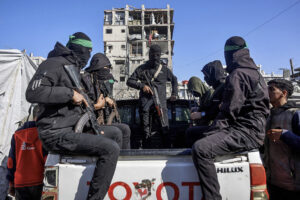
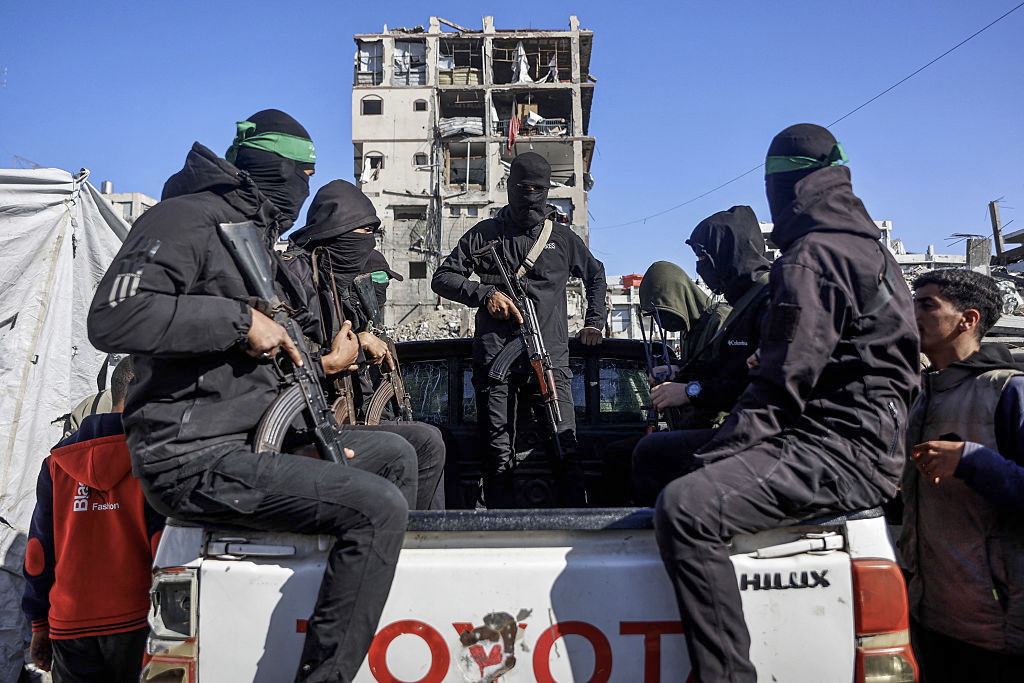
Six months after the ceasefire went into effect in the Gaza Strip, Hamas remains firmly in power. Despite international promises, diplomatic initiatives, and the much-publicized “Board of Peace,” the Iran-backed Islamist group More »

The Crown’s Moral Voice: King Charles in Washington and the Test of Western Clarity

The Crown’s Moral Voice: King Charles in Washington and the Test of Western Clarity

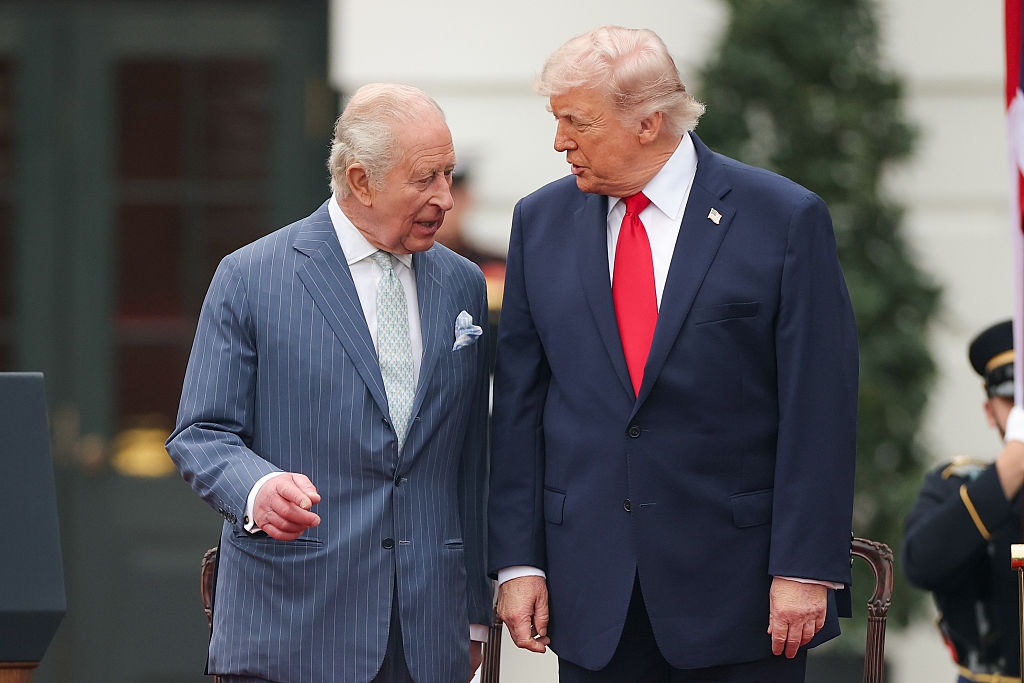
[P]arts of the West have become too cautious in naming the nature of the threats they face. The question is whether, at a time when the West is confronted by terrorism, tyranny, More »

Uwiteka Imana Nyiringabo ategeka ko Paul Kagame atazabona umusimbura ku ngoma uturuka mu muryango we!!!

Uwiteka Imana Nyiringabo ategeka ko Paul Kagame atazabona umusimbura ku ngoma uturuka mu muryango we!!!

Ijambo ry’Uhoraho Uwiteka Imana Nyiringabo rikomeza kunzaho cyane, maze rirambwira riti, mwana w’umuntu, wisubizemo imbaraga ukomeze umurimo wa data wo mu ijuru kuko abakugambanira nta bwo bafite ububasha bwo ku kugeraho kuko More »

International Law Can’t Stop Tyrannical Regimes

International Law Can’t Stop Tyrannical Regimes

Former head of Human Rights Watch Kenneth Roth and his chorus, including morally blind academics claiming legal expertise, promote an imaginary “rules-based international order” that paralyzes democracies while protecting despotic dictators. Under More »


Migration Crisis: Germany Wants to Be “Miss Congeniality” And Have Europe Pick Up the Tab

Chancellor Merkel today seems to be promising nothing less than absolution for Germany’s sins of the Holocaust. The problem is, of course, that Muslims are quite different from Jews. German media outlets have suppressed the stories of rampant rape and child abuse among the migrants housed in government-run accommodations. The editor-in-chief defended her decision to suppress the rape story on public TV broadcaster ZDF: “We don’t want to inflame the situation and spread the bad mood. [The migrants] don’t deserve it.” That the poor rape victim deserved justice was apparently of no concern to the broadcaster. Germany under Chancellor Merkel wants to play “Miss Congeniality” at the global scale, and wants Europe to pick up the tab. Overwhelmed by the unprecedented influx of migrants, Germany has imposed temporary border controls. This temporary halt in new arrivals is “intended to give Germany a chance to catch its breath while at the same time ratcheting up the pressure on other European Union member states to accept a quota system for the distribution of asylum recipients across the bloc,” according to Interior Minister Joachim Herrmann of the German state of Bavaria on public radio. Germany’s move to tighten its border controls, however, is not going to halt millions of migrants already mobilized by Berlin’s suspension of existing asylum rules and its open border policy in the first place. Horst Seehofer, the leader of Christian Social Union (CSU), the Bavaria-based sister party to Chancellor Angela Merkel’s Christian Democrats (CDU), painted a grim picture, saying that Merkel’s open border policy “was a mistake that will occupy us for a long time yet. I see no possibility of putting the stopper back into the bottle.” German media is in lockstep with the government, giving happy-talk and a positive spin on migrant crisis of gigantic proportions hitting Europe. German newspapers and media outlets have suppressed the stories of rampant rape and child abuse among the migrants housed in government-run accommodations. In a recent letter addressed to the Minister of Integration and Social Affairs in the state of Hesse, prominent women’s organizations have described the culture of rape and violence perpetuated by male migrants — right under the nose of German authorities. The letter states: “It is a fact that women and children [at HEAE accommodation facility, under the supervision of Administrative District of Giessen] are unprotected. This situation is opportune to those men who already regard women as their inferior and treat unaccompanied women as ‘fair game.’ As a consequence, there are reports of numerous rapes, sexual assaults and increasingly of forced prostitution. … These are not isolated incidents.” According to the letter, women were terrified to walk in the camp even during the day. The letter, signed by leading officials organizing the settlement of the migrants in the state of Hesse, went virtually unreported in the German media. For now, the German media can afford to ignore these crimes, committed in makeshift transit centers — away from the public eye. How do the media plan to suppress this reality once some of these criminals are released into communities? Here is a foretaste of the things to come: Recently the Germany’s top public broadcaster ZDF refused to run a segment about a rape case on its prime time crime show, “Aktenzeichen XY,” which helps law enforcement to gather leads from the general public, on the grounds that the alleged fugitive was of a “darker skin” and might fit the profile of a migrant. The editor-in-chief, Ina-Maria Reize-Wildemann, defended her decision: “We don’t want to inflame the situation and spread the bad mood. [The migrants] don’t deserve it.” That the poor rape victim deserved justice was apparently of no concern to the broadcaster. Mainstream media in Germany are not merely willing executioners of Merkel’s open border policy, they are ideological players committed to breaking any opposition to the plan. Commenting on Germany’s acceptance of hundreds of thousands of migrants, the popular mainstream newsmagazine Der Spiegel last week portrayed Chancellor Merkel as a Mother Theresa-like figure (left). Pictured at right, a German policeman leads a group of newly arrived migrants. Germany wants to dictate its stand on migration to other EU member states. First Germany wrecked the existing legal framework by unilaterally suspending the Dublin Protocol, and now it wants Europe to shoulder a “fair share” of migrants who are stampeding into Europe — encouraged by Berlin’s irresponsible stance to begin with. Chancellor Merkel today seems to be promising nothing less than absolution for Germany’s sins of the Holocaust. “The world sees Germany as a land of hope and opportunities,” she says. “That hasn’t always been the case.” The problem is, of course, that Muslims are quite different from Jews. German politicians and EU Commissars, however, seem hell bent on imposing quotas on member states – harkening back to the heyday of Soviets jackboots running the Eastern bloc. It may only be a matter of time until some of the reluctant East European states start complying, possibly forced by economic threats and sanctions from Brussels and Berlin. Germany under Chancellor Merkel wants to play “Miss Congeniality” at the global scale and wants Europe to pick up the tab. Vijeta Uniyal is a current affairs analyst based in Germany.

Migration Crisis Killing the European Dream?

  • These threats hardly align with the EU’s stated ambition of “ever-closer union” between member states. They are a gun to the head of EU integration.

  • The question of “what to do” remains politically toxic for any mainstream Western European politician. During the summer, British Prime Minister David Cameron passingly referred to the “swarm” of migrants at Calais. His political opponents immediately jumped on this and denounced his “offensive” language. What chance is there, however, of proposing the kind of bold thinking we will need to consider in Europe if we keep reducing our response to this crisis to a language game?
  • Professor Paul Collier recently suggested setting up EU-sponsored work-havens in Jordan to ensure Syrian refugees (who comprise 40% of recent EU arrivals) have an incentive to stay in the region.
  • It would make far more sense for EU countries to keep migrants out of Europe while sorting out who they are (most arrivals come without papers) and then assessing the legitimacy of their claim. The EU might consider paying North African countries to provide such holding centres. Tunisia is an obvious possibility, as is Morocco.

The breaking-down of borders and the free movement of people were central visions of the European Union project. But look anywhere across the continent today and that vision is becoming a nightmare. The flood of refugees and migrants across the Mediterranean is affecting every country in Europe and creating troubling new realities.

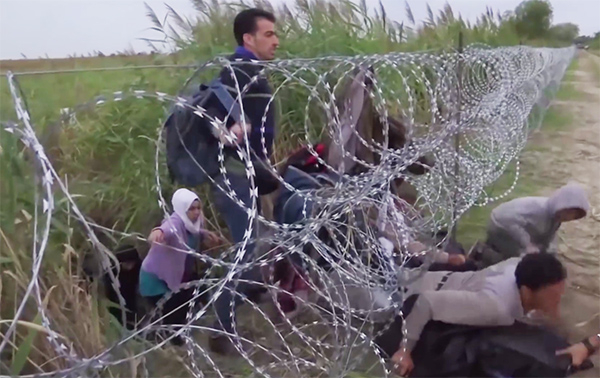
Along its border with Serbia, the Hungarian government has ordered the construction of a fence to try to keep out the flow of migrants. A temporary structure consists of vast rolls of razor wire. At the Italian-Austrian border, there are unprecedented backlogs of people, as the Austrian authorities refuse to allow migrants to cross. At Calais, there is pandemonium as migrants at the French port attempt to break into the Channel Tunnel or otherwise find a way to cross to Britain. And in the Eastern German town of Heidenau, there have been nights of rioting as locals protested an asylum seekers’ shelter, burned down a migrant reception hall and booed Chancellor Merkel when she arrived in the area. Her government has just announced that it expects 800,000 migrants to enter Germany this year.

Migrants from the Middle East enter Hungary from Serbia, on August 26, by crawling under a temporary razor wire fence erected by the Hungarian government. (Image source: WSJ video screenshot)

Everywhere the political climate is turning. Sweden has taken more than its fair share of migrants to Europe in recent years. Its government boasts proudly of the example it believes it is setting. Just one result is that the latest opinion polls have the anti-immigration “Sweden Democrats” showing above any other party. Until recently, the Sweden Democrats were featured in single digits in the polls.

Elsewhere things are, if not breaking apart, then certainly ceasing to hold together. Poland, the Czech Republic and Slovakia all announced in recent days that they will not take any more Muslim migrants. This may contravene the EU’s migration and asylum policies, but all three countries insist that they will from now on only accept Christian refugees from Syria.

And these are, it must be said, the countries that are “suffering” the problem least. The terms of the Dublin Treaty mean refugees claim asylum in the first EU country in which they arrive, so it is Italy and Greece that are now bearing the most responsibility. It is starting to show. In March, the Greek Defence Minister threatened other EU member states that he would flood the rest of Europe with migrants, including ISIS fighters, if they did not do more to help Greece’s finances. In June, the Italian government threatened to issue migrants visas allowing them legally to travel anywhere in the EU. These threats hardly align with the EU’s stated ambition of “ever-closer union” between member states. They are a gun to the head of EU integration.

Of course, migration via the soft underbelly of Europe is not a new story. What is new is the scale of the movement and the inadequacy of the response. This year has already seen the largest influx of migrants to date, with no end in sight.

It is not only the terrible humanitarian situation in Syria and Eritrea that is causing the crisis, it is also people from sub-Saharan Africa and elsewhere looking for a better life to support their families. The chaos in Libya obviously makes the problem of the chosen exit points hard to address. But there is little likelihood that the situation in those home countries will change any time soon.

It is hardly within Europe’s power to stabilize the situation in Syria and Eritrea (to name just two) and raise living standards across sub-Saharan Africa and the rest of the region. Anyone who does think that Europe can sort out the problems in those countries, as well as in their own, is as naïve as those who think the problem starts at Calais. The challenge does, however, require the type of full-spectrum response that is far from being considered.

There are reasons for this paralysis. To date, the question of “what to do” remains politically toxic for any mainstream Western European politician. During the summer, British Prime Minister David Cameron passingly referred to the “swarm” of migrants at Calais. His political opponents immediately jumped on this and denounced his “offensive” language. What chance is there, however, of proposing the kind of bold thinking we will need to consider in Europe if we keep reducing our response to this crisis to a language game?

The first challenge might be to try to encourage migrants to stay nearer the countries they are fleeing. Professor Paul Collier recently suggested setting-up EU-sponsored work-havens in Jordan to ensure Syrian refugees (who comprise 40% of recent EU arrivals) have an incentive to stay in the region. This not only allows them a better chance of integration, but also makes it easier to return home if and when the situation improves. Similar projects might be considered in other areas.

There is also an urgent need to improve the process of sorting out genuine refugees from economic migrants. The current process is not fit for purpose — something made worse by the fact that once people are inside Europe, it is exceedingly difficult to send them away, whoever they are. It would make far more sense for EU countries to keep migrants out of Europe while sorting out who they are (most arrivals come without papers) and then assessing the legitimacy of their claim. The EU might consider paying North African countries to provide such holding centres. Tunisia is an obvious possibility, as is Morocco. Perhaps the French government could negotiate with the Algerians. Unless anyone has a desire to go back into Libya, these are the partners with whom we might work.

Once legitimate refugee arrivals are in Europe, it will also be crucial to create a more nuanced tier-system of residencies rather than a one-size fits all system. So apart from permanent right to remain there, should be a use of temporary visas, strictly held to where they are issued and the dates they expire.

These few suggestions may at some point need to be adopted. In private, many lawmakers realize this. But as Europe’s leaders keep waiting for such ideas to become politically acceptable, they push the problem around the continent. It is time instead for them to lead. If they fail, then the fences will go up across Europe and at least one part of the European dream, if not more, may die with it.

Migrant Rape Epidemic Reaches Austria by Soeren Kern

  • A 20-year-old asylum seeker from Iraq confessed to raping a 10-year-old boy at a public swimming pool in Vienna. The Iraqi said the rape was a “sexual emergency” resulting from “excess sexual energy.”
  • Those who dare to link spiraling crime to Muslim mass migration are being silenced by the guardians of Austrian multiculturalism.

  • According to data compiled by the Austrian Interior Ministry, nearly one out of three asylum seekers in Vienna was accused of committing crimes in 2015. North African gangs fighting for control over drug trafficking were responsible for roughly half of the 15,828 violent crimes — rapes, robberies, stabbings and assaults — reported in the city during 2015.
  • Austria received 90,000 asylum requests in 2015, the second-highest number in the EU on a per capita basis, but this pales in comparison to what may lie ahead. Interior Minister Wolfgang Sobotka warned last month that up to one million migrants are poised to cross the Mediterranean from Libya to Europe.

The brutal gang rape of a woman by three Afghan asylum seekers in central Vienna on April 22 has shocked the Austrian public and drawn attention to a spike in migrant-related rapes, sexual assaults and other crimes across the country.

The migrant crime wave comes as the anti-immigrant Freedom Party of Austria (FPÖ) has surged in opinion polls. The party’s candidate, Norbert Hofer, won the first round of Austria’s presidential elections on April 24, and is on track to win the presidency in the second round, run-off election scheduled for May 22.

The three Afghans — two 16-year-olds and one 17-year-old — followed the woman, a 21-year-old exchange student, into a public restroom at the Praterstern train station, one of the main transportation hubs in Vienna. One of the migrants held the woman down while the other two took turns raping her.

A passerby called the police after she heard the woman screaming. By the time police arrived, the men had gone. The suspects, who were arrested as they were attempting to flee the station, do not speak German. Through an interpreter, the migrants told police they were drunk and do not remember carrying out the crime.

If convicted, they face a maximum sentence of seven-and-a-half years in prison. Due to the lenient nature of the Austrian judicial system, however, they may end up spending only two years behind bars, according to local observers.

It is also unlikely that the migrants will be deported: according to European law, sending them back to Afghanistan would be a violation of their human rights. Instead, observers say, the Afghans will qualify for Austrian social welfare benefits — €830 ($950) per month plus free healthcare — and probably for the rest of their lives become wards of Austrian state.

The assault in Praterstern is one of a growing number of migrant sex crimes in Austria (other migrant rapes and sexual assaults are included in the appendix below):

  • A 20-year-old asylum seeker from Iraq confessed to raping a 10-year-old boy at a public swimming pool in Vienna. The Iraqi said the rape was a “sexual emergency” resulting from “excess sexual energy.” The man, who left his wife and child behind in Iraq, said he had been unable to control his libido because he had not had sexual relations since arriving in Austria in September.
  • An 18-year-old asylum seeker from Afghanistan was sentenced to 20 months in prison for raping a 72-year-old woman in Traiskirchen. “First he beat the woman black and blue, then he raped her, and then he took her underwear as a trophy,” local police said. In addition to a lenient sentence, the man will be allowed to remain in Austria and, after he leaves prison, collect social welfare benefits.
  • A 20-year-old asylum seeker from Afghanistan was arrested after he coerced 13-year-old girl from the town of Korneuburg repeatedly to have sex with him. The man, who was living in an asylum shelter in Hollabrunn, first established contact with the girl over the Internet. Each time they met in person, he verbally threatened her until she agreed to have sex. The man was arrested after the girl told her parents about the relationship, which had been going on for more than three months.
  • Mobs of Arab migrants sexually assaulted dozens of women in Vienna, Salzburg and Innsbruck on New Year’s Eve. The sex attacks, known in Arabic as taharrush (“harassment”), were similar to those carried out that day by North African migrants in Cologne, Germany and other cities. Police initially denied that the attacks had taken place, but later admitted to lying, purportedly to protect the privacy of the victims.

Those who dare to link spiraling crime to Muslim mass migration are being silenced by the guardians of Austrian multiculturalism.

In April, for example, the Austrian Press Council (Presserat) — a group that enforces a politically correct “code of ethics” to ensure that Austrian media outlets toe the line of state-sanctioned multiculturalism — censured the left-leaning magazine, Falter, for “blanket discrimination” against Muslims.

The magazine’s editors — otherwise faithful proponents of European multiculturalism — appear to have had enough of migrants raping their way through Europe with virtual impunity. For the January-February 2016 edition, Falter’s cover featured a black and white drawing of five “light skinned” European women surrounded by large numbers of “dark skinned” Arab males. The image evoked images of the taharrush assaults in Cologne.

In a three-page “decision,” the Presserat ruled that the image violates the “code of ethics” because it amounts to “blanket slander and discrimination” against Arab men:

“The men are all portrayed with the same fierce-looking facial expression, dark hair and noticeably dark eyebrows. In this way — in the context of the attacks in Cologne — the artist is constructing a prototype of men from North Africa, i.e., the Arab world. The uniformity of the image suggests that, rather than portraying individuals, it depicts a homogenous group whose members all behave in the same way.

“Therefore, readers could be left with the impression that the sexual assaults in Cologne were not the acts of individual persons or person groups, but that such conduct is typical for men from North Africa, i.e., the Arab world. The image could leave the impression that all North Africa men who are here in Europe fail to conduct themselves correctly vis-à-vis women.”

The editors of Falter defended themselves against accusations of racism:

“The fact is that North Africans were overwhelmingly responsible for the assaults in Cologne. This is what took place and we should be allowed to represent it as such.”

Vienna is the epicenter of migrant crime in Austria. According to data compiled by the Austrian Interior Ministry, nearly one out of three asylum seekers in Vienna was accused of crimes in 2015. Of the nearly 21,000 officially approved asylum seekers in the capital, 6,503 were known to have committed crimes in 2015, a jump of nearly 50% over 2014. The data shows that 2,270 of the criminals were under the age of 20, a 72% jump over 2014. Seven were under age nine, while 31 were under age 13.

According to Vienna Police Chief Gerhard Pürstl, North African gangs fighting for control over drug trafficking were responsible for roughly half of the 15,828 violent crimes — rapes, robberies, stabbings and assaults — reported in the city during 2015.

The area around the Praterstern station, where the exchange student was raped, has become overrun by shiftless migrants from Afghanistan and North Africa who are selling drugs, fighting turf battles and assaulting female passersby. Police were dispatched to the area a total of 6,265 times in 2015, or an average of 17 times a day, according to local media. But local authorities appear unable or unwilling to restore order to the area.
The area around Praterstern train station in Vienna is overrun by shiftless migrants from Afghanistan and North Africa who are selling drugs, fighting turf battles and assaulting female passersby. Police were dispatched to the area 6,265 times in 2015.

The head of the Austrian Police Union, Hermann Greylinger, estimates that Vienna needs around 1,200 more police officers in order to establish order in the capital:

“If we are allowing in our country 111,000 migrants, few of whom have had background checks, then clearly the police must be massively increased. Almost all asylum claimants are moving to Vienna. We now have more migrants than the population of the city of Salzburg, the fourth-largest city in Austria.”

Austria’s migrant crime problem is being exacerbated by an extremely lenient criminal justice system. On May 4, for example, a 21-year-old migrant from Kenya randomly killed a 54-year-old woman on a busy street in Vienna by hitting her over the head with an iron bar. It soon emerged that the Kenyan was well known to city police: since arriving in Austria in 2008, he had committed at least 18 previous crimes — including dealing drugs, attacking police officers and hitting someone over the head with an iron bar — but he has repeatedly been set free.

Given the growing insecurity, it comes as no surprise that Austrian voters are looking for a change in political direction.

In what amounts to a political earthquake, Freedom Party (FPÖ) candidate Norbert Hofer won 36% of the vote in the first round of Austria’s presidential election on April 24. Hofer — who has campaigned on a platform calling for strict limits on immigration and tough rules for asylum seekers — defeated all of the other candidates, including those from the two governing parties, the Social Democrats and the Austrian People’s Party, which have dominated Austrian politics since the end of World War II.

Hofer, who says that as president he will be the “protector of Austria,” is now on track to defeat the Green Party’s Alexander Van der Bellen, a 72-year-old economist who is opposed to limits on immigration, in a run-off ballot to be held on May 22.

Hofer’s meteoric rise is focusing the minds of the establishment parties. On April 27, just three days after Hofer’s electoral victory, the Austrian Parliament adopted what may be one of the toughest asylum laws in Europe.

Under the new law, Austria will declare a “state of emergency” on the migration crisis. This will allow Austrian authorities to assess asylum claims directly at the border. Only asylum seekers with immediate family members already in Austria, or those who can prove they are in danger in neighboring transit countries, will be allowed to enter the country. Other migrants will be turned away. The new law also limits any successful asylum claim to three years.

Interior Minister Wolfgang Sobotka said the new law is needed to stem the flow of migrants and refugees: “We cannot shoulder the whole world’s burden.”

Austria received 90,000 asylum requests in 2015, the second-highest number in the European Union on a per capita basis, but this pales in comparison to what may lie ahead. In a radio interview on April 28, Sobotka warned that up to one million migrants are poised to cross the Mediterranean Sea from Libya to Europe.

Soeren Kern is a Senior Fellow at the New York-based Gatestone Institute. He is also Senior Fellow for European Politics at the Madrid-based Grupo de Estudios Estratégicos / Strategic Studies Group. Follow him on Facebook and on Twitter. His first book, Global Fire, will be out in 2016.

Appendix

Sexual Assaults and Rapes by Migrants in Austria, January-April 2016.

Gatestone Institute has reported about the migrant rape epidemic in Germany and Sweden. The problem has now spread to Austria. Following are a few cases from the first four months of 2016:

April 29. A 35-year-old migrant from Algeria attempted to rape a woman at a bus stop in Linz. The man beat the woman unconscious, but not before she broke his nose. He was arrested after he went to a local hospital seeking medical attention. It later emerged that the Algerian has a long criminal record, including other attempted rapes, but cannot be deported because Algeria will not take him back.

On April 25, Kronen Zeitung, the largest newspaper in Austria, reported that an “Arabic-looking man” attempted to rape a 27-year-old woman at a bus stop in Vienna. “All he could say was sex, sex, sex,” the woman said. The man pulled a condom out of his pants pocket and then dropped his trousers. “I screamed as loud as I could,” the woman said, “until the man ran away.” She said that city police have been wholly uninterested in her case: “They have not even asked me for my name.” After local media reported on her case, police issued an apology and blamed their failure to take her seriously on a “regrettable misunderstanding.”

April 24. An unidentified migrant raped a 19-year-old woman in Eisenstadt.

April 22. Three asylum seekers from Afghanistan gang-raped a 21-year-old woman at a train station in Vienna.

April 22. A 17-year-old asylum seeker from Afghanistan attempted to rape a 20-year-old woman in Graz.

April 21. A 17-year-old asylum seeker from Afghanistan sexually assaulted a 19-year-old woman on a train in Grieskirchen. The train’s conductor intervened after he heard the woman scream. The Afghan told police that the woman was lying and demanded an apology.

April 20. Two North African migrants sexually assaulted a woman in front of the main train station in Salzburg. When a 26-year-old passerby attempted to intervene, the migrants punched and kicked him so hard that he was rushed to a nearby hospital. One of the attackers is a 31-year-old asylum seeker from Morocco. The other suspect remains at large.

April 15. A 42-year-old migrant from Slovenia was arrested for attempting to sexually assault two 18-year-old women in Leibnitz.

April 13. An “Arab looking” man sexually assaulted three women at a bus stop in Vienna.

March 24. Two Afghan migrants were arrested for raping a 20-year-old woman in Wels.

March 21. A migrant from North Africa assaulted a 27-year-old woman on a packed subway train in Vienna. The man began touching the woman on her hands. When she got up to find another seat, the man grabbed her and began kissing her on the mouth. Police told the woman there was nothing they could do because kissing does not qualify as sexual assault.

March 12. A 16-year-old asylum seeker from Libya attempted to kidnap and rape two women in Vienna. After the three met on a subway train, the Libyan promised to take the women to a nightclub. He took them instead to an apartment where he attempted to lock the women in the basement and rape them. One of the women escaped and called the police.

March 8. A 20-year-old asylum seeker from Afghanistan was observed pointing to his genitals in front of a seven-year-old girl at a public swimming pool in Vienna. The pool director and a swimming instructor held the man until police arrived. The police let him go.

March 6. A “foreign looking” man sexually assaulted a 37-year-old woman at a public swimming pool in Klagenfurt after she intervened to prevent him from molesting her four-year-old boy.

February 25. A “southerner” sexually assaulted two teenage girls at a shopping mall in Innsbruck.

February 22. An 18-year-old migrant from Afghanistan was arrested for raping a 52-year-old woman in Innsbruck.

February 14. Six migrants sexually assaulted a 49-year-old woman on a subway in Vienna. Two of the men, an 18-year-old asylum seeker from Afghanistan and a 23-year-old asylum seeker from Iraq, were arrested as they tried to exit the station. The other four remain at large.

February 11. A 33-year-old migrant from Iran masturbated in front of female patrons at a public swimming pool in Linz.

February 8. A 22-year-old migrant from Macedonia identified only as Ibrahim J. was arrested in Vienna for sexually assaulting more than 20 women in Vienna and other parts of Austria. Among other crimes, the man is accused of raping a 15-year-old girl.

February 6. A group of 28 male asylum seekers sexually harassed female patrons at an outdoor ice skating rink in Stockerau. The migrants then attacked security guards who tried to intervene. Police were needed to restore order.

February 4. Six “southerners” assaulted a 53-year-old woman in front of a grocery store in Spittal after she refused to give them money.

February 3. Three migrants sexually assaulted a 16-year-old girl at a streetcar stop in Leonding. One of the men held the girl down while the other two took turns assaulting her.

January 26. A 24-year-old asylum seeker from Gambia raped and murdered a 25-year-old American woman in Vienna. The woman from Colorado, who was working as an au pair (nanny), had given the man, Abdou I., shelter in her apartment. He had fled his asylum shelter because his asylum request was denied and he feared being deported. After the murder, the man fled to Switzerland, where he was arrested after police traced his cellphone. It later emerged that he was wanted in Germany for sexually assaulting an underage girl.

January 23. A migrant from Macedonia attempted to rape a 21-year-old woman in Vienna. The man made eye contact with the woman on a subway and followed her after she got off the train.

January 16. A 21-year-old asylum seeker from Afghanistan raped an 18-year-old woman at the Prater, a large public park in Vienna.

January 10. A 29-year-old asylum seeker from Afghanistan tried to molest a six-year-old boy at a public swimming pool in Linz. The mother of the child said: “I noticed six migrants enter the building. Two of them sat down at the edge of the pool for children. One of them began stimulating his genitals while flirting with my youngest child.”

January 1. Mobs of Arab men sexually assaulted at least 24 women in Vienna, Salzburg and Innsbruck.
Migrant Issue: Turkey’s Dubious Role by Mohshin Habib

  • The flow of migrants has not been stopped, and the conditions for migrants in Turkey are provoking them to leave and risk their lives in a quest for safety in Greece.”I have a strong fear that Turkey’s smugglers have the support of the authorities, who act like they have seen nothing… There are even cases where the smugglers are helped. We have evidence.” — Greek President Prokopis Pavlopoulos.

  • It is doubtful if Turkey will hold up its end of the deal anytime soon.

Despite a deal with the European Union that promised stricter regulations on migrants traveling from Turkey to the EU, Turkey is doing little to prevent them from entering Europe. Turkey has also not done much to care for those stranded within their borders.

This was expected to change last year after a mini-summit led by German Chancellor Angela Merkel on November 29 in Brussels, to discuss closer cooperation between the EU and Turkey. Both the parties agreed to three main points: to limit the number of refugees leaving Turkey for the EU; to establish a bilateral readmission process, and to accept migrants expelled from the EU. In return Turkey would receive three billion euros from the EU and the US to aid refugees — especially the 2.2 million Syrians now living in Turkey. Additionally, EU member-states would allow visa-free entry for citizens of Turkey.

After the summit, French President François Hollande told reporters, “As Turkey is making an effort to take in refugees — who will not come to Europe — it’s reasonable that Turkey receive help from Europe to accommodate those refugees.”

Former Turkish Prime Minister Ahmet Davutoglu told reporters, “Today is a historic day in our accession process to the EU. With EU leaders today we will be sharing the destiny of our continent, global challenges of the economic crisis as well as regional geopolitical challenges in front of us including migration issues.”

The proposed deal seemed to anticipate that the Turks would control the Aegean border with the Greek islands to stop the flow of migrants there, and crack down on the smuggling rings running the trade. In practice, however, the flow of migrants has not been stopped, and the conditions for migrants in Turkey are not what was hoped for. There is no sign that there will be any serious steps taken against the smugglers operating inside Turkey.

Greek president Prokopis Pavlopoulos recently expressed his concern by saying, “I have a strong fear that Turkey’s smugglers have the support of the authorities, who act like they have seen nothing. … There are even cases where the smugglers are helped. We have evidence.”

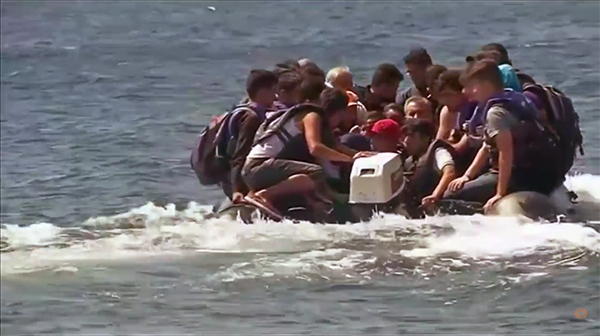
Migrants set sail on an inflatable boat from Turkey to the Greek island of Lesbos, August 25, 2015. (Image source: Reuters video screenshot)

The circumstances in which the refugees are living also remain unsatisfactory despite the considerable sum Turkey received to improve the migrants’ quality of life. One report states that,

“Temporary protection does not grant refugees permission to work and to qualify for temporary protection, all refugees must live in ‘satellite towns’ outside the main, cosmopolitan cities such as Istanbul. They must submit to controls and conditions and report once a week to the satellite cities they are allocated to. They do not receive any state support for accommodation or daily expenses so, without independent means, refugees are pushed towards living and working illegally.”

The conditions for migrants in Turkey are provoking them to leave and risk their lives in a quest for safety in Greece. Human Rights Watch, in its 2016 report, wrote,

“A lack of effective protection in Turkey for Syrians and others, existing border restrictions with Syria imposed by Turkey, and Turkey’s record of police abuse gave rise to concerns that the deal could deny people access to asylum, trap people in Syria, and lead to police abuse and detention of asylum seekers who try to travel to the Europe.”

Greece is at the receiving end of the migrants across the sea. If Turkey does not control the migrant flow, there is little that Greece can do once the refugees have arrived in its borders. In an interview with Deutsche Welle, Greek Migration Policy Minister Yiannis Mouzalas said, “Smuggling networks are still in full operation… The deportation of migrants who have traveled from Turkey is also a big problem.”

Although purportedly Turkey is a secular state, 99.8% of its people are officially registered as Muslim, mostly Sunni. Terrorist groups such as the Islamic State (ISIS), Al Nusra and Al-Qaeda come from the same sect of Islam. Some people believe that many Turkish officials sympathize with Sunni terrorist groups such as ISIS and that perhaps this partiality has an effect on their handling of the refugee crisis.

In 2014, amateur video footage appeared revealing Islamic State terrorists chatting with a group of Turkish border guards near the besieged Syrian city of Kobane. A report says, “The amateur footage, understood to have been filmed close to Zarova Hill in the outskirts of Kobane, raises serious questions about the apparently relaxed relationship between the terror group and officials from the Nato member state.” This raises concerns about the future of negotiations between Turkey and the EU.

Turkey, after the attempted coup in July, is expected to become increasingly Islamist. President Recep Tayyip Erdogan, after he finishes purging thousands of those he seems to regard as opponents, appears to be reaching for powers that are strictly Islamist, as well as totalitarian — possibly “Sultan for Life.” Already, homosexual conduct is punishable by imprisonment.

It is doubtful that Turkey will hold up its end of the EU migrant deal anytime soon.

Mideast Christian Suffering, U.S. Denial by Raymond Ibrahim


  •  
  • Escaped eyewitnesses have reported that ISIS places Iraqi and Syrian Christians in cages or coffins and sets them on fire.
  • ISIS persecution of Christians “fits the definition of ethnic cleansing.” — Simon-Skjodt Center for the Prevention of Genocide, at the U.S. Holocaust Memorial.

When a 1,400-year-old Iraqi Christian monastery was destroyed by the Islamic State (ISIS) most of the world condemned the demolition — except for spokesman for the U.S. military’s Operation Inherent Resolve, Col. Steve Warren.

“Thousands [of Iraqi Christians] have been killed, hundreds of thousands have been forced to flee,” said CNN’s Wolf Blitzer in an interview with Col. Warren the other week. “There is legitimate fear — you’re there in Baghdad — that the long history of Christians living peacefully, productively in Iraq, is coming to an end. How worried should we be about the Christian community in Iraq?”

Col. Warren’s response: “Wolf, ISIL doesn’t care if you’re a Christian … We’ve seen no specific evidence of a specific targeting towards Christians.”

Except that roughly two-thirds of Iraq’s 1.5 million Christian citizens have been killed or forced to flee the country by ISIS and its jihadi predecessors over the past decade. This has nothing to do with their religious identity?

In Iraq and everywhere else it has conquered, ISIS has, at a minimum, rigorously enforced on pain of death Islam’s dhimmi laws, which require Christians to pay extortion money (jizya) for “protection,” and agree to live by a set of degrading rules.

Often, ISIS fighters skip these formalities and simply torture to death Christians who refuse to convert to Islam. ISIS then releases the footage online for propaganda purposes. Most notable are two videotaped mass executions of 21 Egyptians and 30 Ethiopians in Libya last spring, but there have been many lesser-known instances. When, in 2014, a group of Iraqi Christian children refused to renounce Christ and said, “No, we love Jesus,” ISIS decapitated [them] and mangled their bodies.

Also, last summer in Aleppo, Syria, ISIS tortured, mutilated, publicly raped, beheaded and crucified 12 Christians for refusing to convert. Escaped eyewitnesses have reported that ISIS places Iraqi and Syrian Christians in cages or coffins and sets them on fire.

ISIS kidnaps Christians and demands ransom payments for their release. It forces female captives into sexual slavery. A 12-year-old girl, raped by an Islamic State fighter, was told that “what he was about to do was not a sin” because she “practiced a religion other than Islam.”

ISIS has sent operatives disguised as refugees into U.N. refugee camps in Jordan to kidnap young Christian girls to sell or use as slaves.

The Islamic State seems committed to expunging all physical traces of Christianity in areas it conquers. It has demolished dozens of ancient churches — up to 400 churches have been destroyed during the war in Syria alone — not to mention countless crucifixes, statues, graves, and other relics. The Islamic State has ordered the University of Mosul to burn all books written by Christians, and decreed that the names be changed of all Christian schools in Mosul and the Nineveh Plain. Some schools have been there since the 1700s.

ISIS’s destruction of a 1,400-year-old monastery is nothing new. Last summer, ISIS set fire to a 1,800 year-old church in Mosul and bulldozed a 1,600-year-old monastery in Homs as a response to “worshipping a God other than Allah.”

http://www.gatestoneinstitute.org/pics/1181.jpg” border=”0″ height=”374″ width=”600″>

The Syriac Orthodox Church of St. Ephrem in Mosul, Iraq, before if the captured by the Islamic State (left), and after.

In short, Christians are absolutely experiencing “specific targeting” by the Islamic State. ISIS also kills Muslims who get in its way, but only non-Muslims — chief among them Christians — are enslaved, raped, and sometimes forced to convert to Islam on pain of death. Although Islamic law, or Sharia, legitimizes the killing, enslavement, and rape of non-Muslims, it prohibits treating fellow Muslims that way, unless they are deemed takfir [excommunicated] or apostates.

Few informed observers dispute that the Iraqi Christian community is severely threatened by ISIS. According to the Simon-Skjodt Center for the Prevention of Genocide, at the U.S. Holocaust Memorial, ISIS persecution of Christians “fits the definition of ethnic cleansing.” David Saperstein, the United States ambassador at large for religious freedom, also acknowledges that it is “primarily Christians” being persecuted for their faith in Iraq.

For the official spokesman of the U.S. military’s fight against ISIS to make such remark is deeply disconcerting. But what if Col. Warren is not to blame — what if he is just a military man doing his best to comply with demands from politicians up at the top not to acknowledge the suffering of Middle East Christians?

Raymond Ibrahim, author of Crucified Again: Exposing Islam’s New War on Christians (a Gatestone publication published by Regnery, 2013), is Shillman fellow at the David Horowitz Freedom Center and Judith Friedman Rosen fellow at the Middle East Forum.

Translate »
Skip to toolbar