
Uwiteka Imana Nyiringabo amaze kubona ko Umwami Kigeli V Ndahindurwa atumva ibyo Umuhanuzi Majeshi Leon amubwira bikiza ubuzima bwe, amurekurira mu maboko y’Abagara ngo bamwice!!!

Uwiteka Imana Nyiringabo amaze kubona ko Umwami Kigeli V Ndahindurwa atumva ibyo Umuhanuzi Majeshi Leon amubwira bikiza ubuzima bwe, amurekurira mu maboko y’Abagara ngo bamwice!!!

July 8, 2016 ijambo ry’Uhoraho Uwiteka Imana Nyiringabo rikomeza kunzaho cyane, maze rirambwira riti, mwana w’umuntu, uburire abatuye kw’isi yuko umwuka w’Ubuhanuzi ari wo mushinjacyaha mukuru mu manza z’Uhoraho Uwiteka Imana Nyiringabo More »

Trump is Right: Laws Across the Middle East to Prevent Normalization with Israel are ‘Crazy’ – and Poisonous

Trump is Right: Laws Across the Middle East to Prevent Normalization with Israel are ‘Crazy’ – and Poisonous

So long as Arabs and Muslims are taught by law, religion and social pressure that contact with Israelis is forbidden, the prospects for peace and coexistence will remain out of reach. If More »

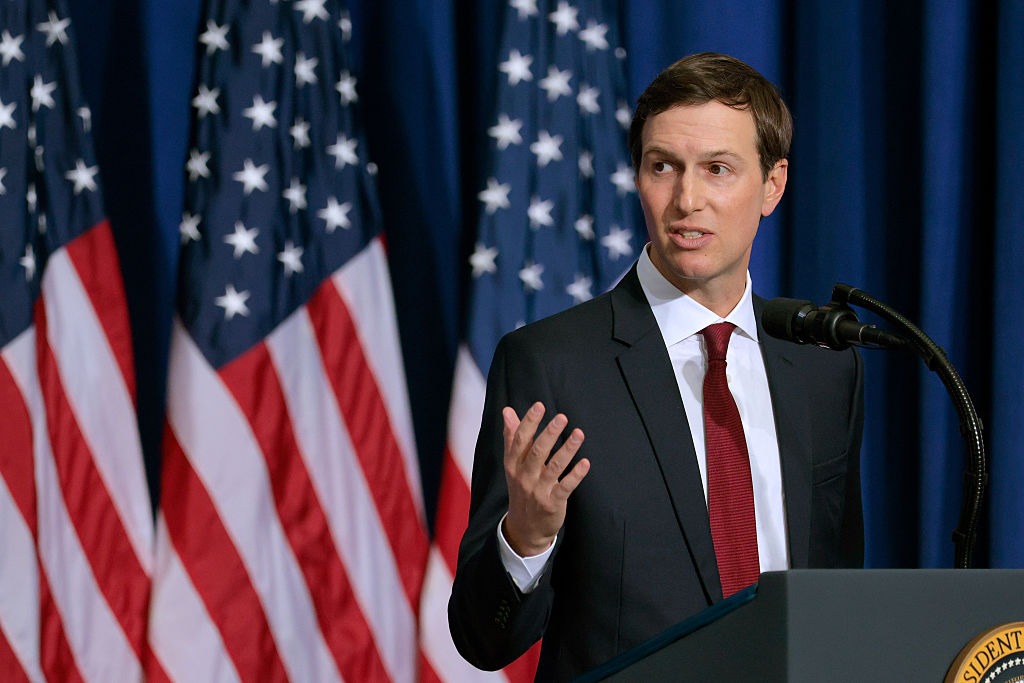
Judge Jared Kushner by What He Changed

Judge Jared Kushner by What He Changed

Kushner recognized that a younger generation of Arab leadership was increasingly focused on investment, innovation, security cooperation, connectivity, logistics, and economic diversification. In such an environment, diplomacy could no longer be conducted More »

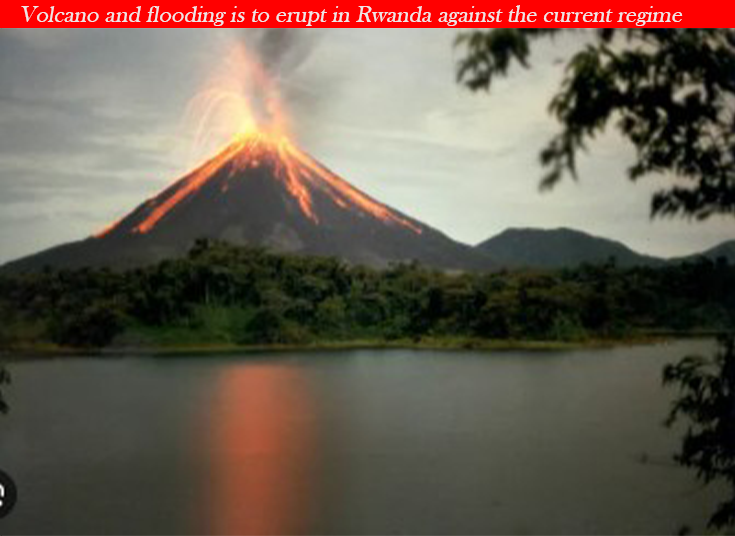
Mu Rwanda agatara katse, ibintu bimeze nabi cyane ubanza ibyo Ubuhanuzi bwavuze noneho batakibijyaho impaka!!!

Mu Rwanda agatara katse, ibintu bimeze nabi cyane ubanza ibyo Ubuhanuzi bwavuze noneho batakibijyaho impaka!!!

MINALOC, minisitiri y’ubutegetsi bw’igihugu, yasabye Abaturarwanda kugabanya inshuro bateka ku munsi mu rwego rwo kugabanya no gukoresha neza ibicanwa. Mu butumwa bwagenewe abaturage ku wa Gatandatu tariki 25 Mata 2026, ku muganda More »


Netanyahu Furious at US Ambassador’s ‘Unacceptable and Untrue’ Allegations Against Israel

Netanyahu reacted with fury over the US ambassador’s criticism of Israeli policy vis-a-vis the Palestinians, especially at the height of Palestinian terror.


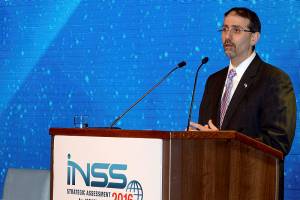
The US ambassador to Israel criticized Israeli policy in Judea and Samaria at a high-profile security conference Monday, a rare public rebuke that drew an angry response from Prime Minister Benjamin Netanyahu.

Ambassador Dan Shapiro said that Washington was “concerned and perplexed” over Israel’s strategy of building “West Bank settlements.” Speaking to the annual conference of the Institute for National Security Studies, a top Israeli think tank, he claimed that Israel’s “continued expansion of settlements” raises questions about Israel’s intentions and its stated commitment to establishing an independent Palestinian state. Shapiro added that Israel had also legalized some outposts despite pledges to the United States not to do so.

As Israel’s closest friend, the United States is steadfast in its support for Israel, but it was also its role to call Israel out on its errors, Shapiro said. He alleged that Israel restricts Palestinian economic development in the PA-run territories and bemoaned what he called an inadequate response to “settler” violence.


“Too much vigilantism goes unchecked, and at times there seem to be two standards of adherence to the rule of law: one for Israelis and another for Palestinians,” he said.

US Ambassador to Israel Dan Shapiro

US Ambassador to Israel Dan Shapiro addresses security conference Monday. (Matty Stern/U.S. Embassy Tel Aviv)

Shapiro’s remarks sparked a terse response from Netanyahu, who said they were inappropriate at a time of heightened violence with the Palestinians.

On Sunday, an Israeli woman was stabbed to death – in the presence of one of her six children – by a Palestinian terrorist in her home in Otniel, a Jewish community in Judea. On Monday, a pregnant woman was stabbed and badly wounded in the town of Tekoa in Judea, just south of Jerusalem.

‘PA Continues to Incite, Refuses to Negotiate’

“The ambassador’s comments, on a day when a mother of six is being buried and a pregnant woman is stabbed, are unacceptable and untrue,” Netanyahu stated. “Israel enforces the law on Israelis and Palestinians. The one responsible for the diplomatic stalemate is the Palestinian Authority, which continues to incite and refuses to negotiate.”

Israel contends that the violence is the result of a Palestinian campaign of lies and incitement. The Palestinians argue it is rooted in frustrations over Israel’s nearly 50-year “occupation,” although the PLO was established in 1964, three years before Israel liberated the Old City of Jerusalem, Judea and Samaria – the biblical heartland that was under Jordanian rule for 19 years.

The spat highlights the tense relations of late between the United States and Israel, largely over Israel’s fierce objection to the Iranian nuclear deal.

By: AP and United with Israel

Needed: Peace in Kashmir by Jagdish N. Singh

  • The terrorists set fire to more than 10,000 houses and destroyed huge amounts of private and public property in the state. This has left the minorities in the Kashmir Valley with no choice but to flee their homes. Today more than half a million of them are living in miserable conditions in camps in different parts of the country.

  • “Kashmiri Pandits are on the verge of losing their… homeland in Kashmir… the ethnic cleansing of Pandits from Kashmir…[led] to [the] forced exile of the entire minority… when Islamic insurgents committed mass massacres of Pandits in villages and hamlets throughout Kashmir.” — U.S. Representative Frank Pallone, 2004.
  • “Whatever is happening in Kashmir is Pakistan-sponsored. The name is ‘Pakistan,’ [Land of the Pure] but its acts are na-pak [not pure].” — Rajnath Singh, India’s Home Minister.

When Narendra Modi became India’s prime minister two years ago, he had a mandate from the citizens behind him and his party was in power. It was assumed, therefore, that he would be able to adopt policies and programs that would foster peace and development in the state of Jammu and Kashmir, which has been troubled ever since it became part of India in 1947. The scenario in the Kashmir Valley is, however, getting no better.

In a recent discussion on the ongoing crisis in Kashmir, a prominent member of the Indian Parliament said, “This government has miserably failed to restore peace in the Valley. There is an environment of insecurity and fear.”

Reports suggest that the right to exist, the most fundamental human right, has increasingly been in peril in the Valley. Since the killing of the dreaded Hizb-ul-Mujahideen “commander”, Burhan Wani — who allegedly had an encounter with Hafiz Saeed the notorious Pakistani terrorist leader and mastermind of the 2008 Mumbai terror attacks — there have been violent clashes there. Some protesters have been seen showing support for the Islamic State.

In the current crisis, forty-six people have been killed and 3,140, half of them security personnel, have been wounded.

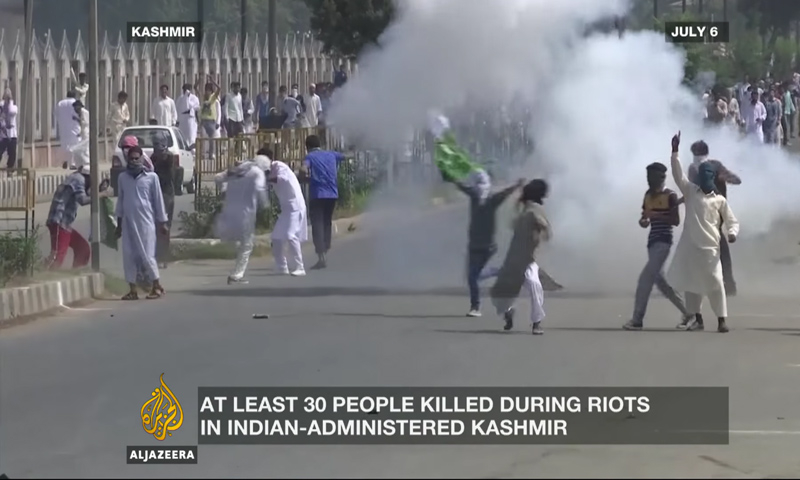
Rioters in Kashmir throw stones at Indian security forces and wave the Pakistani flag, July 6, 2016. (Image source: Al Jazeera video screenshot)

The government in New Delhi has done little so far to help. It is still adhering to its predecessors’ well-trodden path of first blaming Islamabad for the crisis and then refuting Pakistan’s occasional proposals for the issue.

India’s Home Minister Rajnath Singh said recently, “Whatever is happening in Kashmir is Pakistan-sponsored. The name is ‘Pakistan,’ [Land of the Pure] but its acts are na-pak [not pure].”

In response to Islamabad’s talk of a plebiscite to determine the legal status of Jammu and Kashmir, Singh said in a debate in the Parliament that the proposition was “outdated.”

It makes no sense for the Singh to waste the nation’s precious time criticizing Pakistan or blasting its plebiscite proposition. It is well-established that Pakistan has been seeking to foment trouble in the Valley and annex it by force.

Also well-established is that Islamabad has apparently never cared for the 1951 United Nations resolution regarding Jammu and Kashmir. The resolution prescribed a referendum to be conducted in the state after Pakistan withdrew its troops from the part of Kashmir that it captured by force in 1947. Islamabad has so far not honoured this resolution.

Pakistan has, in fact, not seemed interested in solving the Kashmir dispute by any peaceful, bilateral negotiations with India. In 1972, Indian Prime Minister Indira Gandhi created, with her Pakistani counterpart, Zulfikar Ali Bhutto, the Shimla Accord. This pact states that all disputes between New Delhi and Islamabad are to be solved bilaterally and peaceably, including the Kashmir question. But Pakistan has not cared to honour this deal and has instead planned wars, including the war in Kargil, against India.

In 2003, India’s Deputy Prime Minister at the time, L.K. Advani, blamed India’s first Prime Minister, Jawaharlal Nehru, for the present crisis in Jammu and Kashmir. “If the first Prime Minister had not taken the Kashmir issue to the UN,” he said, “India would have crushed Pakistan. Having been defeated thrice 1948, 1965 and again in 1971, Pakistan launched a proxy war and continues to export terrorism to India.”

The current government might bear in mind that the citizens do not employ or elect a new leadership to continue the failed policies of its predecessors. India has paid a heavy price for its past blunders. The country has remained deprived of two-fifths (Pakistan-occupied Kashmir) of its own territory in its state of Jammu and Kashmir. The people of Jammu and Kashmir, minorities in particular, have suffered most.

In 1989, the Kashmir Valley had a population of over half a million Pandits, the only Hindu natives of Kashmir. Their number today stands reduced to about four thousand. By the year 2000, terrorists had killed more than 34,252 citizens and wounded another 17,484. They set fire to more than 10,000 houses and destroyed huge amounts of private and public property in the state. This has left the minorities in the Kashmir Valley with no choice but to flee their homes. Today more than half a million of them are living in miserable conditions, in camps in different parts of the country.

In his letter to Indian Prime Minister Manmohan Singh in August of 2004, American Congressman Frank Pallone wrote:

“Kashmiri Pandits are on the verge of losing their identity, culture and homeland in Kashmir. … the ethnic cleansing of Pandits from Kashmir started as a result of targeted assassinations leading to forced exile of the entire minority community in the early stages of insurgency. … when Islamic insurgents committed mass massacres of Pandits in villages and hamlets throughout Kashmir.”

Ensuring the fundamental rights to life, liberty and property — of all citizens — is the first and primary obligation of a democratic state. The government must fulfill this duty and extend help to the people involved in the current crisis. The people in Kashmir are said to be running low on essentials, especially food and medicine. The government needs to reach out to them.

At the same time, the government must not tolerate those who celebrate the killing of security forces in the Valley or portray any militant killed as a martyr. The government also must not tolerate those separatist leaders who work to subvert the values of civilization and democracy and who have been behind the long crisis in the Valley. It is mainly because of their politics of hatred against certain ethnic and religious groups that acts of violence and shutdowns are organized there.

The approach of the separatists during the current crisis follows the same pattern: they spread hatred against the authorities that are trying to control the situation in the region. In a statement, separatist leaders Syed Ali Geelani, Mirwaiz Umar Farooq and Yasin Malik branded the current regime as “anti-people.”

The separatists do not seem ever to respond positively to peace or dialogue. They incite violence and have little to lose; most of the leading separatists keep their families outside of Kashmir.

The old political trick of inciting hatred among the ignorant majority to win their support has been used to ensure that the public turns a blind eye to the atrocities against the Pandits.

It is heartening to note that Home Minister Singh has recently invoked former Indian Prime Minister Atal Bihari Vajpayee’s famous call for Kashmiriyat, Jamhooriyat and Insaniyat (Kashmiri ethos, democracy and humanity); he has said, “If there is any place for Kashmiriyat in Jamhooriyat, it can be only on the basis of Insaniyat and not Haivaniyat (devilish acts). Those believing in Kashmiriyat and Insaniyat, cannot give space to Haivaniyat.”

One hopes that the government will finally take action to improve peace and development in the Valley.

Jagdish N. Singh is a journalist based in New Delhi, India.

Nearly 200 Former US Military Leaders Urge Congress to Reject Iran Nuclear Deal

The battle for Congress’ vote on the Iran nuclear deal wages on. Some 200 former US military leaders stated opposition to the accord, saying it threatens national security.


A group of nearly 200 retired generals and admirals sent a letter to Congress on Wednesday urging American lawmakers to reject the Iran nuclear agreement, saying it threatens national security, the Washington Post reports.

Supporters and opponents of the deal are waging a vigorous battle over the votes of congressmen, who are slated to vote next month on the deal secured by President Barack Obama, which is perceived by his backers as the crown jewel of his foreign policy.

In the latest development, retired senior military officers, including many who had worked in the White House during various administrations dating back to the 1980s, penned a letter addressed to Republican and Democratic leaders in the Senate and the House.

The letter is a response to a previous one sent last week by three dozen retired senior military officers expressing support for the deal, the Post explains.

“The agreement will enable Iran to become far more dangerous, render the Mideast still more unstable and introduce new threats to American interests as well as our allies,” Wednesday’s letter states.

“In our judgment as former senior military officers…removing sanctions on Iran and releasing billions of dollars to its regime over the next ten years is inimical to the security of Israel and the Middle East,” it continues.

Citing issues such as limited inspections, Iran’s tendency to violate agreements and the fact that the deal does not completely stop Iran from acquiring a bomb, the letter states that “the JCPOA [nuclear agreement] would threaten the national security and vital interests of the United States and, therefore, should be disapproved by the Congress.”

“In summary, this agreement will enable Iran to become far more dangerous, render the Mideast still more unstable and introduce new threats to American interests as well as our allies. In our professional opinion, far from being an alternative to war, the Joint Comprehensive Plan of Action makes it likely that the war the Iranian regime has waged against us since 1979 will continue, with far higher risks to our national security interests. Accordingly, we urge the Congress to reject this defective accord,” the letter concludes.

‘Most Dangerous Nuclear Accord in US History’

The signatories include retired generals and flag officers from every branch of service. One is retired Lt. Gen. William G. “Jerry” Boykin, who was deputy undersecretary of defense for intelligence under President George W. Bush and is now executive vice president of the Family Research Council.

Retired Vice Adm. John Poindexter also fixed his name to the missive as well as retired Maj. Gen. Richard Secord, who were involved in the Iran-Contra affair during the Reagan administration, according to which arms were sold to Iran, in violation of the arms embargo, in order to fund the Contra rebels in Nicaragua.

Many of the letter’s signatories served in the White House under both Democratic and Republian administrations. “The only thing they appear to have in common is that they consider the Iran nuclear deal a threat to US interests in the region and its own national security,” the Post states.

Leon A. “Bud” Edney, a retired admiral who served as vice chief of naval operations, initiated the letter after reading the previous one written by other retired officers in support of the agreement.

Retired Air Force Lt. Gen. Thomas McInerney

Retired Air Force Lt. Gen. Thomas McInerney. (Wikipedia)

“I looked at the letter they published and thought it was very weak,” Edney is quoted as saying by the Post. “I just don’t agree with it.” He passed the letter on to colleagues, who shared it with others. The number of signatories to the responding letter almost doubled between Tuesday afternoon and Wednesday morning.

“I don’t think this letter will sway anything,” Edney conceded. “It’s just the opinion of people who have served their country. It’s an alternative view to what I consider a very weak letter put out by the administration, implying generals and admirals support this agreement. But I don’t think it will have any impact.”

Retired Air Force Lt. Gen. Thomas McInerney, who was vice commander of US Air Forces in Europe, said he considers the agreement “the most dangerous nuclear accord in US history.”

“What I don’t like about this is, the number one leading radical Islamic group in the world is the Iranians,” he said. “They are purveyors of radical Islam throughout the region and throughout the world. And we are going to enable them to get nuclear weapons. Why would we do that?”

McInerney said he believes that most retired general officers do not support the agreement but that not all agreed to sign the letter, fearing negative career repercussions.

By: United with Israel Staff

Sign the Petition to Oppose the Nuclear Deal with Iran

The US Congress must reject the dangerous deal with Iran and ensure that sanctions remain in force until the nuclear threat is completely eliminated.

I strongly oppose any deal with Iran that allows for easing sanctions before the nuclear threat has been completely eliminated. Allowing Iran to enrich uranium without being subject to ‘anytime, anywhere’ inspections is extremely dangerous and unacceptable. This bad deal with Iran is far worse than no deal and must be rejected.

NATO Allies Making It Easier for Iran to Attack Israel?

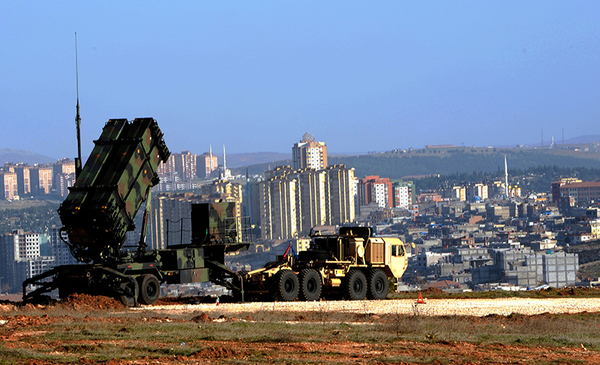
Iran did not go mad and threaten to hit all NATO installations in Turkey because it wanted 3.5 million Turkish citizens to die from the chemical warhead of a Syrian missile. It went mad and threatened because it viewed the defensive NATO assets in Turkey as a threat to its offensive missile capabilities.  Iran’s reaction to the NATO assets in Turkey revealed its intentions to attack. It could be a coincidence that the U.S. and Germany (most likely to be followed by Spain) have decided to withdraw their Patriot missile batteries and troops from Turkey shortly after agreeing to a nuclear deal with Iran. But if it is a coincidence, it is a very suspicious one.

National Security Threats vs. Defense Cuts by Peter Huessy

  • The nation’s media, who seem to assume that Americans are weary of war, rather than that they are desperately frustrated at being infantilized and lied to, rarely discuss what defense programs need more investment. If anything, they discuss what defense programs should be killed.


  • Defense spending grew from $265 billion in 1996 to $300 billion in 2000, a 13% increase, equivalent to a $76 billion annual increase today. And the plan to balance the budget reached its goal in 1997. Why can America not do that again? Reform tax policy. Restore a sound defense budget plan.

  • “You think defending this nation is expensive; try not defending it.” — Senator Ted Cruz, Nov. 10, 2015.

Especially as ISIS, Iran and others openly threaten the United States, it seems increasingly urgent for this administration and the next to determine the level of defense spending America should support.

new study by the American Enterprise Institute, (AEI), authored primarily by defense experts Tom Donnelly and Mackenzie Eaglen initially supports using as a minimum baseline the defense five year plan proposed in 2012, by then Secretary of Defense Robert M. Gates.

Unfortunately, too often in Washington a discussion of defense spending frequently defaults into arguments over whether major tax rate increases must be part of the bargain. This failure is in part due to policy proposals to increase defense spending often being linked to with other proposals — to cut tax rates, reform entitlements and balance the budget. Combined, these proposals are often described as unworkable and radical, and are thus easily dismissed.

A debate over how much to “tax the rich” lends itself to easy demagoguery. And that attracts politicians and their supporters to call for the redistribution of income. In short, if everything in the drive-by media newsroom can default to the progressive, Marxist narrative, it will.

In addition, the nation’s media, who seem to assume that Americans are weary of war, rather than that they are desperately frustrated at being infantilized and lied to, rarely discuss what defense programs need more investment. If anything, they discuss what defense programs should be reduced or killed. For example, Keith Payne, the President of the National Institute of Public Policy in Fairfax, Virginia and a former top DOD official, told a conference on September 17, 2015 that during the past few years, media stories advocating cutting nuclear deterrent programs outnumbered those pushing for modernization by more than 200 to 1.

Retired Air Force Lieutenant General David Deptula, Dean of the Air Force Association’s (AFA) Mitchell Institute and formerly the first Deputy Chief of Staff for Intelligence, Surveillance and Reconnaissance, explained at an AFA conference on bomber policy on November 10, that the U.S. needs to have a discussion of “first principals” — asking what defense of the country one should have, to accomplish what ends. Then one can determine what it would cost.[1] The first task in the Constitution is “to provide for the common defense.”

To be sure, it is also necessary to have an intelligent discussion on how to pay for such a defense.

That raises the further question of how best to generate the economic growth and jobs needed to raise the revenues needed to pay for these defense bills. If the U.S. is serious about balancing the federal budget in the next decade, as the new Speaker of the House, Paul D. Ryan, supports, that debate should be held soon. The debate should be about what smart tax, regulatory and spending policies would yield highest levels of revenue.

But does the U.S. really need to increase tax rates more on “the rich,” to meet its defense obligations?

Already, the current tax system is extraordinarily progressive. For example, while the top 1% earned 18.9% of national income they paid an astounding 37.4% of all federal taxes, while the top 5% earned 33.8% of national income but paid 59.1% of all federal taxes. By contrast, the bottom half of Americans received 11.7% of national income yet paid only 2.4% of federal taxes.

Few Americans, however, seem to know that every year — with no change in Federal tax rates — the U.S. government dramatically increases its “tax take” from the U.S. economy.

Despite the current economic recovery being the slowest in the post World War II era, revenue collected by the U.S. in 2014-2015 was still $230 billion higher than the year before.[2]

Obviously, a strong economy at near full employment would generate record levels of revenue, even when tax rates are lower (such as a 35% top tax rate) than in other years.[3]

The media and political discussion should include what to do with annual revenue increases that, even now in a slow-growth economy, are climbing each year by nearly a quarter of a trillion dollars.

For defense, if one accepts the recommendation of AEI that a $611 billion defense budget for FY2016 be adopted, as proposed by former Defense Secretary Robert Gates in 2012, it would boost the current administration’s February 2015 defense request of $585 billion by $26 billion.

It appears, in fact, that Congress and the administration have finally agreed on a new defense spending level of $607 billion, which does bring the U.S. significantly closer to the initial goal of $611 billion proposed by AEI’s Donnelly and Eaglen. This new annual increase in defense spending of about $60 billion above the previous budget caps is welcome, but amounts to the appropriation for more defense spending of only about 25% of the annual increase in federal revenue.

In short, it does not appear “radical” at all to devote some of those resources for U.S. national security, especially at this time.

It also does not seem “radical” to question the debates about taxing the rich, which are usually accompanied by arguments about who pays what share of federal revenue, and whether “the rich” make “too much” money.

Recent history has some lessons for the U.S. In 1996, the U.S. cut capital gains tax rates; lowered taxes on inheritances; expanded individual retirement accounts and increased the child tax credit. Domestic non-defense spending was curtailed. Nevertheless, defense spending grew from $265 billion in 1996 to $300 billion in 2000, a 13% increase, equivalent to a $76 billion annual increase today. And the plan to balance the budget reached its goal in 1997.

Why can America not do that again? Reform tax policy. Take people from welfare to work. Restore a sound defense budget plan. And balance the budget.

As said by U.S. presidential candidate Senator Ted Cruz, “You think defending this nation is expensive; try not defending it.” How radical is that?


[1] Lt Gen David Deptula, remarks at the AFA November 10, 2015 “

      What's Next for the Long-Range Strike Bomber?

[2] The budget, tax and GDP numbers are from Christopher Chantrill’s website. This site provides current and historical budget, tax and GDP data far superior in format and detail than any other source, government or private. You can also find the revenue numbers from the Treasury tables posted on the White House website.

[3] These revenue figures are for taxes collected from all tax rate levels. The top tax rates are for reference purposes and illustrate the key to greater revenue is greater economic growth.

Translate »
Skip to toolbar