
Ikiganiro cya Bwenge na Buhanga batugezaho uyumunsi

Ikiganiro cya Bwenge na Buhanga batugezaho uyumunsi

Bwenge: Maze iminsi nsoma amakuru atandukanye ateye kwibaza ejo hazaza ha abanyarwanda cyane abana bacu bavukiye mu mahanga batazi icyatsi nururo, uwahamagara Buhanga njya mbona andusha kumenya utuntu n’utundi nubwo ndi professor More »

Inzigo zabyaye inzika muri RNC

Inzigo zabyaye inzika muri RNC

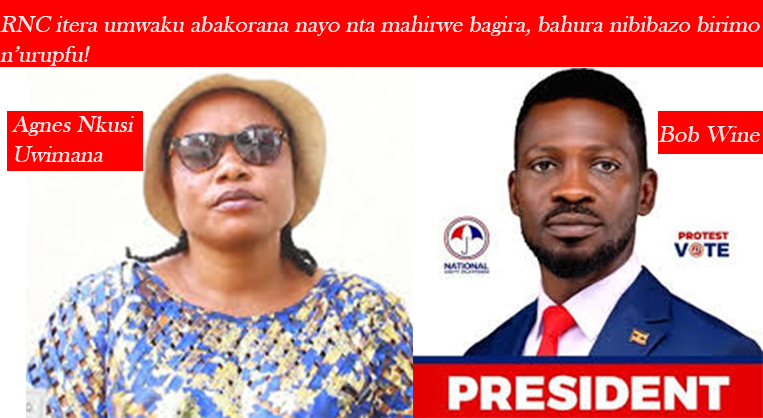
Ibiro ntaramakuru byo mu ijuru (Heaven News Media Agency) biratangaza ko inzika zazikutse bikomeye cyane nyuma yo kugaragaza ko umunyamakuru Agnes Uwimana Nkusi watangiye gukorera muri Uganda nyuma yo guhunga aho abantu More »

Trump’s Iran Doctrine: A Strategy for the History Books

Trump’s Iran Doctrine: A Strategy for the History Books

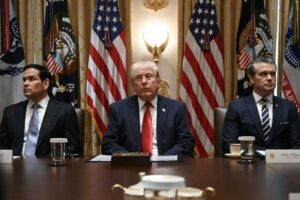
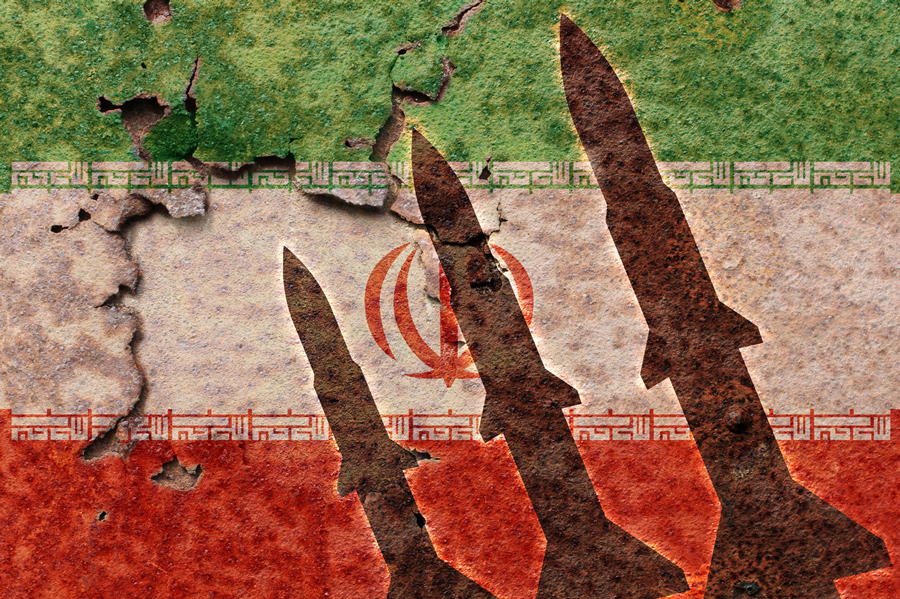
The narratives often suggest that the US campaign has failed and that Tehran remains firmly in control. In reality, however, US President Donald J. Trump has pursued a strategy that departs radically More »

Nyamwanga kumva ntiyanze no kubona!!!

Nyamwanga kumva ntiyanze no kubona!!!

Ubutegetsi bw’ingoma y’abega bukomeje kurakazwa cyane na makuru atangazwa n’ikinyamakuru EGRET NEWS ajyanye n’Ubuhanuzi bw’intambara ibera mu burasirazuba bwa DRCongo uburyo amakuru mu buhanuzi akomeje kugaragaza uko ibintu byifashe. Kuba bari mu More »

Umunyamakuru Uwimana Agnes Nkusi yavugiye abazimu mu ndaro, ahungira ubwayi mu kigunda!!!

Umunyamakuru Uwimana Agnes Nkusi yavugiye abazimu mu ndaro, ahungira ubwayi mu kigunda!!!

Tumaze igihe dufite impungenge z’umunyamakuru Agnes Nkusi Uwimana wahungiye muri Uganda yagerayo ubutegetsi bwaho bwamuhaye ibyangombwa byaho birimo id na passport, amaze kugera muri icyo gihugu yatangiye gukora ibiganiro bye nkuko bisanzwe More »


Saudi Arabia, Yemen and the Politicized UN by Richard Kemp and Jasper Reid

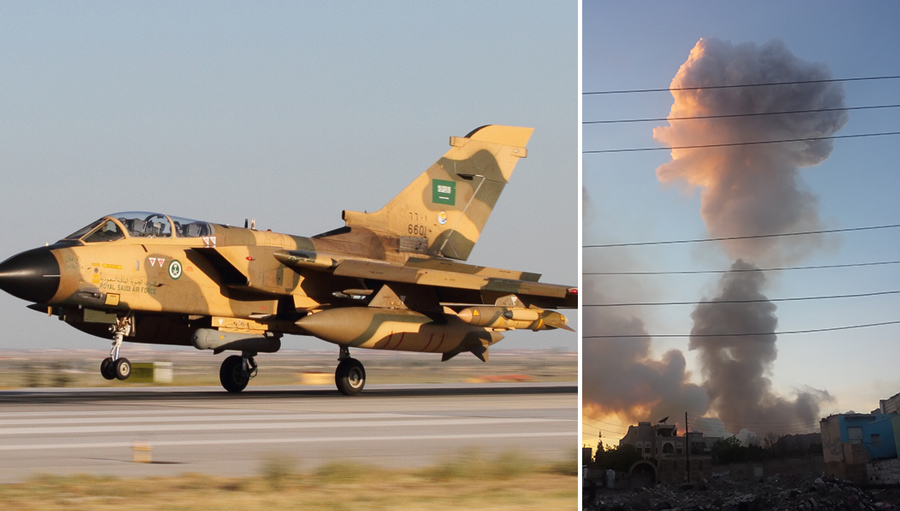
  • The UN’s assertion that the Saudi-led coalition has committed war crimes in Yemen is unlikely to be true. UN experts have not been to Yemen, depending instead on hearsay evidence and analysis of photographs.

  • The UN has a pattern of unsubstantiated allegations of war crimes against the armed forces of sovereign states. Without any military expertise, and never having visited Gaza, a UN commission convicted the Israel Defense Force of deliberately targeting Palestinian civilians in the 2014 conflict. It was an assessment roundly rejected by America’s most senior military officer, General Martin Dempsey, and an independent commission.
  • The Houthis have learned many lessons from Hamas and Islamic Jihad in Gaza, groups also supported by Iran. Those lessons include the falsification of civilian casualty figures and their causes. The UN swallowed the fake Gaza figures hook, line and sinker, and are now making the same error in Yemen.
  • The Houthis exploit gullible or compliant reporters and human rights groups to facilitate their propaganda, including false testimony and fabrication of imagery.
  • Forensic analysis shows that rather than deliberately targeting civilians, the Saudis and their allies have taken remarkable steps to minimize civilian casualties.

The United Nations, Amnesty International and other groups have accused the Saudi-led coalition of war crimes in Yemen. A leaked UN report claims the bombing campaign against Iranian-supported Houthi insurgents seeking violently to topple the legitimate government of Yemen has conducted deliberate, widespread and systematic attacks on civilian targets.

If the UN’s assertion is true, and the coalition is deliberately and disproportionately killing thousands of innocent civilians, it is a war crime. But it is unlikely to be true. The UN has produced no actual evidence of war crimes. None of their allegations is based on investigation on the ground. Their experts have not been to Yemen, depending instead on hearsay evidence and analysis of photographs.

The UN has a pattern of unsubstantiated allegations of war crimes against the armed forces of sovereign states. Only last year, without any military expertise, and never having visited Gaza, a UN commission convicted the Israel Defense Force of deliberately targeting innocent Palestinian civilians in the 2014 conflict. It was an assessment roundly rejected by America’s most senior military officer, General Martin Dempsey, the Chairman of the Joint Chiefs of Staff.

Dempsey’s own findings were confirmed by an independent commission of experienced senior military officers and officials from nine countries. The High Level Military Group found that Israel had not committed war crimes, but had in fact set a bar for avoiding civilian casualties so high that other armed forces would struggle to reach it.

Moreover, last September the UN said that a US airstrike against a hospital in Kunduz, Afghanistan, was “inexcusable” and “possibly a war crime.” Few military forces in the world take greater precautions to prevent civilian casualties on the battlefield than the US. Anyone who has actually experienced combat knows that while such incidents are tragic, when carried out by Western forces, they are far more likely to be the result of human error or the chaos of battle than deliberate war crimes.

There is every reason to believe that the UN is again crying wolf. There is no doubt that thousands are dying in Yemen in horrific circumstances. But we cannot just accept the UN’s figures and its attribution of the proportion of deaths being inflicted by the Saudi coalition. Most of the data comes from the Houthi insurgents, either directly or via non-governmental organizations (NGOs), and is simply accepted as fact. The Houthis have learned many lessons from Hamas and Palestinian Islamic Jihad in Gaza, groups also supported by Iran. Those lessons include the falsification and distortion of civilian casualty figures and their causes. The UN swallowed the fake Gaza figures hook, line and sinker, and are now making the same error in Yemen.

As with Israel’s defensive campaign in Gaza in 2014, and the continued U.S. military support to the Afghan regime, the Saudis’ war to defend the government of Yemen and curb Iranian aggression in the region is lawful and legitimate. Therefore, the illegality of civilian deaths must be assessed according to the laws of armed conflict, in particular whether adequate precautions were taken to avoid them, whether they were proportionate to the military objectives and whether they were necessary to achieve legitimate military goals. The UN cannot possibly make such judgements without a more far-reaching and thorough investigation, and especially not on the basis of information provided by Saudi Arabia’s enemies and by interpreting photographs.

Most of us do not like the way that the Saudi regime runs their country according to the strict application of Islamic Sharia law, and we abhor their record on human rights. But the Saudi military ethos is well known and understood by Western military leaders, including from the U.S. and UK, who have worked closely with them for many years. The reality is, as our officers currently serving alongside them will attest, that the Saudis and their allies are not deliberately trying to kill innocent civilians. Indeed, they are doing their best to minimize civilian casualties. The question is whether their best is good enough.

Saudi Arabia and its coalition allies have the most sophisticated Western combat equipment, including planes, attack helicopters, drones and precision-guided munitions. But they lack battle experience. The exception to this is the Emirati forces within the coalition. They have had many years of combat experience alongside Western militaries, including in Somalia, Kosovo, Libya and Afghanistan. Because of that, they have acquitted themselves in Yemen with great professionalism and effectiveness at sea, on the ground and in the air.

But the lack of experience of the other coalition members puts them many years behind our own forces in wielding the highly complex 21st century capabilities of intelligence, surveillance, reconnaissance, communication and targeting.

Yet the coalition faces the same tough challenges that we face on battlefields everywhere. Their Houthi adversaries fight according to the well-developed doctrine of their backers, the Iranian Quds Force. Like Hizballah, Hamas, the Taliban, Al Qaeda and the Islamic State, their techniques include deliberately killing civilians, fighting from within the population and forcing innocents to become human shields.

Completely ignoring the laws of war, they exploit their enemies’ adherence to them. They lure their opponents to attack and kill civilians. They exploit gullible or compliant reporters, international organizations and human rights groups to facilitate their propaganda, including false testimony and systematic fabrication of imagery. The aim is to instigate international condemnation in order to constrain their militarily superior enemies.

We have seen credible forensic analysis of strikes in Yemen that directly contradict the findings of the UN. Forensic analysis shows that rather than deliberately targeting civilians, the Saudis and their allies have taken remarkable steps to minimize civilian deaths. Of note, they have learned much from Israel’s conduct of operations in Gaza. This has included the use of inert munitions to conduct precision attacks against insurgents while seeking to reduce collateral damage.

Why would coalition forces spend vast amounts of money in a cripplingly expensive conflict firing precision strike munitions, and put their valuable pilots at risk, if they wanted to massacre civilians? Why not use much cheaper unguided munitions or Assad’s indiscriminate barrel-bombs?

The overwhelming majority of civilian deaths caused by the Saudi-led coalition have been due not to deliberate targeting, but to inexperienced pilots and unsophisticated intelligence and targeting capabilities in the face of an enemy that fights from within the civilian population. And to the friction, confusion, stress and fog of war that leads even the most sophisticated, experienced and restrained military forces, such as American, British and Israeli, to sometimes kill civilians unintentionally. Contrary to the UN’s claim, this is unlikely to amount to war crimes.

Like every conflict in the Middle East, the war in Yemen is almost intractable, takes a heavy toll on innocent civilians, and is unlikely to end in anything approaching a perfect solution. But Saudi Arabia and its allies are making considerable efforts to restore stability to the country and its legitimate government.

Instability in Yemen undermines Western interests, including oil supplies. Instability also allows Al Qaeda and the Islamic State — proven and lethal threats to the US and the West — to flourish there.

By confronting the Houthis in Yemen, Saudi Arabia is also confronting Iran, which represents an even greater threat to the region and to the world. Emboldened by U.S. President Barack Obama’s nuclear deal, enriched by the release of billions of dollars of previously frozen funds, encouraged by the imminent boost in oil revenues, Iranian imperial aggression is today rampant in Iraq, Syria, Lebanon and Yemen.

However unpalatable to many, Saudi Arabia is and will remain a vital ally of the West. We must continue to support them in the fight in Yemen. We must not allow the false, ill-informed and increasingly shrill condemnations by the UN, human rights groups and the media to undermine Saudi’s fighting effectiveness as they have sought to do against other legitimate government forces fighting lawless insurgents in so many other places.

Colonel Richard Kemp was Commander of British Forces in Afghanistan. He served in Iraq, Saudi Arabia, the Balkans and Northern Ireland and was head of the international terrorism team for the UK Joint Intelligence Committee. Jasper Reid is a British analyst specializing in politics, defense and international security.
Saudi Arabia’s New Oil Policy by Sabah Khadri

Deputy Crown Prince Mohammed’s vision for Saudi Arabia, the way he puts it, is as a country no longer dependent on oil; with a growing economy and transparent laws, which will consequently give it a strong position in the world.
The prince has already received negative blowback from conservative members of the Al Saud clan. They have been resistant to change in the past and may not appreciate new reforms which might threaten their authority in the country.
The status quo is that Saudis are raised with the conviction that the state will always provide for their needs, healthcare and security, in exchange for their loyalty to the ruling Al Saud clan. However, the recent oil crisis has witnessed many luxuries stripped away from the Saudi people, as the state prepared to deal with a growing budget deficit. The move to impose taxes, a concept alien to the country, is sure to create discontent among ordinary Saudi people.
Saudi Arabia, long associated with oil wealth and extravagance, has decided that time has come for it to revamp its image. Last year, King Salman, 80, ascended the Saudi throne, and since then has unleashed major reforms, introduced a more assertive domestic and foreign policy, and handed over the reins of some of the most significant posts of the Saudi leadership to a younger group of Saudi leaders.
The driving force behind these reforms is the 30-year-old deputy crown prince, Mohammed bin Salman, otherwise known as MBS. Prince Mohammed’s vision for Saudi Arabia, the way he puts it, is as a country no longer dependent on oil; with a growing economy and transparent laws, which will consequently give it a strong position in the world. All of this may come across as appealing, but the ability of Prince Mohammed to deliver these reforms depends on several variables. To succeed, Prince Mohammed, although he enjoys a broad mandate, still needs the support of the rest of the country.

Saudi Prince Mohammed bin Salman meets with U.S. Secretary of State John Kerry in Riyadh, Saudi Arabia, on May 7, 2015. (Image source: U.S. State Department)
Mohammed’s economic vision for Saudi Arabia, more commonly referred to in Saudi Arabia as “Vision 2030,” essentially intends to introduce major policy and economic reforms by turning its focus towards investments; creating more jobs; privatization; increased exports and creating a sustainable business environment.
Coming amid the oil price crunch in the region, Vision 2030 aims to move away from a dependence on oil and increasing private sector contribution towards the GDP from a current 40% to 65% by 2030, by investing more in sectors such as tourism, healthcare, education and manufacturing; increasing women’s participation in the workforce; reducing the youth unemployment rate, and privatizing major industries, such as the state owned oil company, Aramco.
The Saudi leadership apparently now wishes to turn Aramco into a conglomerate and sell 5% of its share in 2017 simultaneously in the London, Hong Kong and New York stock exchanges. The kingdom has also announced plans to cut subsidies on basic commodities such as water and electricity, in addition to introducing sales and transportation taxes.
As a part of these reforms, King Salman has also reshuffled various ministries, announced new ministers and ousted older ministers. A recent, much talked-about change has been the dismissal as Oil Minister of Ali Al-Naimi, whose name is synonymous with the Saudi oil economy, and who drove the country’s oil policy for the last two decades. He was replaced by the head of Aramco, Khalid Al Falih, who happens to be a close ally of the Crown Prince and relatively new to oil diplomacy.
These reforms are a clear indication that the Saudi government is coming to terms with the reality that, although oil revenues have been a great source of wealth, they have restricted Saudi economic growth and development in other sectors, while turning the country state into a rentier state — a condition that induced systemic and institutional problems in the country, such as lack of transparency, ingrained bureaucracy and growing corruption.
Is it possible, however, for Saudi Arabia, which derives 80% of its revenue from oil income, to break the dependence on oil?
The Saudi manufacturing sector has remained relatively small, with demand driven by limited domestic needs. Furthermore, the lack of an established prominent Saudi industry or alternative manufactured products that could appeal to foreign markets only makes it harder to consider venturing into other manufacturing.
Despite all the developments promised by Prince Mohammed, one question that lingers is the possibility of any of these reforms actually seeing the light of the day. Their success depends on support from Saudi society, which has heretofore provided strong allegiance to the leadership — royals, elites, the Wahhabi religious sect — and most importantly, the Saudi youth. Vision 2030 may call for comprehensive economic reforms, but might be perceived as insensitively turning a blind eye to the political, social, cultural and legal traditions with which it would be tampering. Prince Mohammed has already received negative blowback from conservative members of the Al Saud clan. They have been resistant to change in the past and may not appreciate new reforms which might threaten their authority in the country.
Another concern is how these reforms would be received by the ordinary Saudis. The status quo is that Saudis are raised with the conviction that the state will always provide for their needs, healthcare and security, in exchange for their loyalty to the ruling Al Saud clan. However, the recent oil crisis has witnessed many luxuries stripped away from the Saudi people, as the state prepared to deal with a growing budget deficit. The move to impose taxes, a concept alien to the country, is sure to create discontent among ordinary Saudi people. It is still unclear how reforms might affect and perhaps reinvent the social contract in the country.
Reforms to diversify the economy while an environment for growth, development and transparency, are much needed. Yet, while Prince Mohammed’s vision seems ambitious, it seems to lack concrete plans to achieve that vision. It may require years for change on the social, economic, cultural and political fronts. Until then, new reforms will be pitted against age-old partnerships, as Saudi Arabia rebuilds itself from scratch.
Sabah Khadri, a specialist in international economics, is based in Doha, Qatar.

Saudi Arabia’s Connection to Radicalizing British Jihadis by A. Z. Mohamed

  • The probe was to be conducted by the newly established “extremism analysis unit” of the Home Office, then headed by Theresa May, and its findings were due to be published in the spring of 2016. However, more than a year later, the investigation has yet to be completed.

  • Moreover, its contents might not be released to the public, due their “sensitive” nature, rumored to center on Saudi Arabia, Britain’s key ally in the Gulf. Since the U.K. recently approved £3.5 billion-worth of arms export licenses to Riyadh, it is possible — even likely — that any revelations about Saudi promotion of terrorism in the country could be problematic.
  • Mounting evidence suggests that British jihadis are not only groomed in Wahhabi mosques in the U.K., but many visit Saudi Arabia, where they work or study.

In the wake of the London Bridge attack on June 3, which came on the heels of the Manchester Arena bombing, Britain’s approach to combating terrorism has come under scrutiny at home and abroad. Judging by man-in-the-street interviews, it played a significant role in the June 8 general election, the outcome of which — a victory for Prime Minister Theresa May against Labour leader Jeremy Corbyn, yet a hung parliament — reflected a split in voter perception over whom was to blame for the country’s precarious security situation and which party is better suited to rectify it.

Although Corbyn has called terrorist groups, such as Hamas and Hezbollah, his “friends,” May not only has been holding the reins since the resignation of former Prime Minister David Cameron in September 2016 — after the Brexit referendum — but she had also served as Home Secretary for six years before that.

A few months earlier, in January, Cameron authorized an investigation into the foreign funding of radical Islamist groups inside Britain. According to a recent report in The Guardian, Cameron agreed to the inquiry, requested by the Liberal Democrat party in exchange for its support for British airstrikes against ISIS to Syria. The probe was to be conducted by the newly established “extremism analysis unit” of the Home Office, then headed by May, and its findings were due to be published in the spring of 2016.

However, more than a year later, the investigation has yet to be completed.

Moreover, its contents might not be released to the public, due their “sensitive” nature, rumored to center on Saudi Arabia, Britain’s key ally in the Gulf. Since the U.K. recently approved £3.5 billion-worth of arms export licenses to Riyadh, it is possible — even likely — that any revelations about Saudi promotion of terrorism in the country could be problematic.

During his election campaign, Corbyn attacked May for “suppressing” the report, and called for “some difficult conversations” with Saudi Arabia and other Gulf states, which have “funded and fueled extremist ideology.”

In a letter to Prime Minister May just over a week ahead of her re-election, Liberal Democrat foreign affairs spokesman Tom Brake urged that the inquiry be finished and its findings released:

“It is no secret that Saudi Arabia in particular provides funding to hundreds of mosques in the U.K., espousing a very hardline Wahhabist interpretation of Islam. It is often in these institutions that British extremism takes root.”

Brake was correct. Mounting evidence suggests that British jihadis are not only groomed in Wahhabi mosques in the U.K., but many visit Saudi Arabia, where they work or study.

One example is Khalid Masood, the British convert to Islam killed while perpetrating the terrorist attack on Westminster Bridge in March, and which left five innocent people dead. Masood, it emerged, had taken three trips to Saudi Arabia — two of them year-long stints to teach English and a third short visit to the country’s Islamic holy sites. Each time, he was given a visa by the Saudi authorities in Britain, despite having been convicted at least twice for violent crimes and lacking the required academic qualifications and experience for the job he was doing.

Although Saudi consulates require background checks of all visa applicants, Masood was ushered through the process, which is known to be strict. By way of explanation, the Embassy of the Kingdom of Saudi Arabia in London claimed that the reason Masood passed its vetting was that he did not have a criminal record in Saudi Arabia. This is, of course, a complete lie, which raises the question of whether Masood fell through the cracks through incompetence or collusion. Either way, the broader issue of Britons being radicalized both at home and abroad by Saudi Arabia urgently needs to be thoroughly examined and exposed.

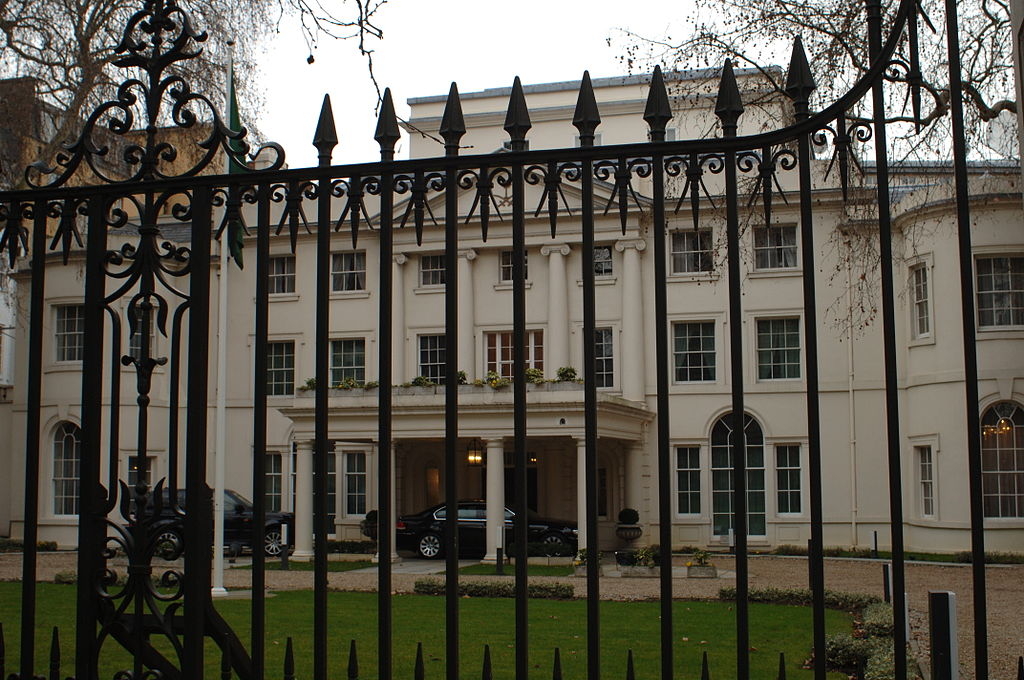
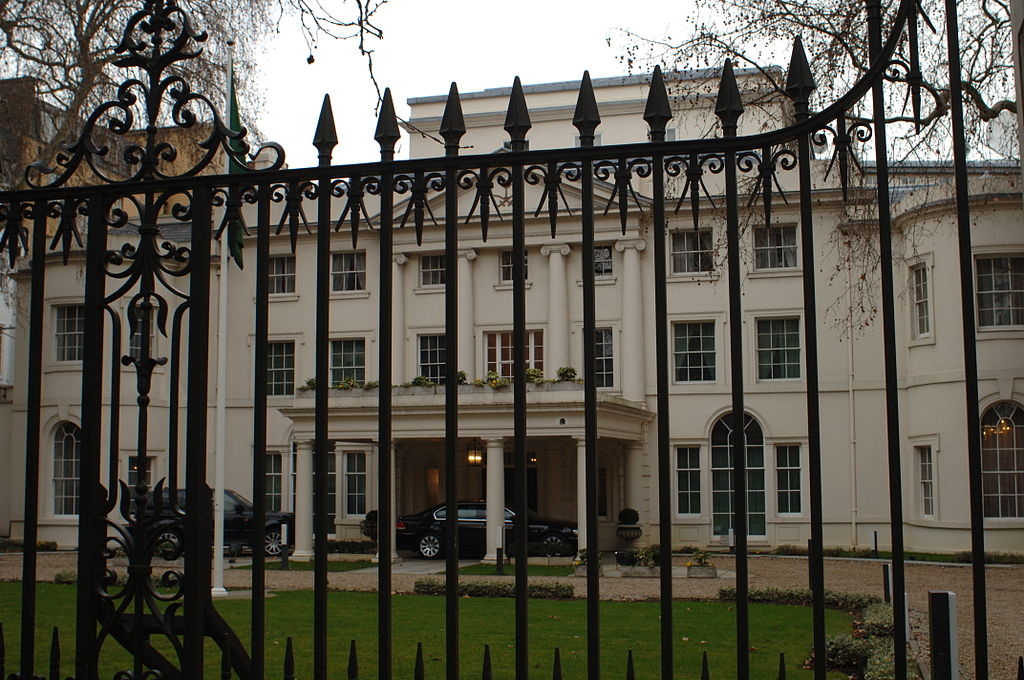
The Embassy of the Kingdom of Saudi Arabia in London (pictured) claimed that the reason Westminster Bridge terrorist Khalid Masood passed its visa vetting was that he did not have a criminal record in Saudi Arabia. This is, of course, a complete lie, which raises the question of whether Masood fell through the cracks through incompetence or collusion. (Image source: prebano66/Wikimedia Commons)

A.Z. Mohamed is a Muslim born and raised in the Middle East.

Saudi Arabia’s ‘Lavish’ Gift to Indonesia: Radical Islam by Mohshin Habib

Prior to Saudi Arabia’s attempts to spread Salafism across the Muslim world, Indonesia did not have terrorist organizations such as Hamas Indonesia, Laskar Jihad, Hizbut Tahrir, Islamic Defenders Front and Jemmah Islamiyah, to name just a few. Today, it is rife with these groups.
A mere three weeks after the Saudi king wrapped up his trip, at least 15,000 hard-line Islamist protesters took to the streets of Jakarta after Friday prayers, calling for the imprisonment of the capital city’s Christian governor, who is on trial for “blaspheming the Quran.”
In a separate crisis, crowds were demanding that Basuki Tjahaja Purnama (known familiarly as Ashok) be jailed for telling a group of fishermen that, as they are fed lies about how the Quran forbids Muslims from being governed by a kafir (infidel), he could understand why some of them might not have voted for him. If convicted, Ashok stands to serve up to five years in prison.
Accompanied by a 1,500-strong entourage, Saudi King Salman bin Abdul Aziz arrived in Indonesia on March 1 for a nine-day gala tour. He was welcomed warmly not only as the monarch of one of the world’s richest countries, but as the custodian of Islam’s two holiest cities, Mecca and Medina.
While appearing to be taking a holiday rather than embarking on an official state visit — the 81-year-old sovereign spent six days at a resort in Bali — the king had some serious business to attend to. In what was advertised as an effort to promote “social interaction” between Saudi Arabia and Indonesia — with His Majesty announcing a billion-dollar aid package, unlimited flights between the two countries and the allotment of 50,000 extra spots per year for Indonesian pilgrims to make the hajj to Mecca and Medina – it seems as if the real purpose of the trip was to promote and enhance Salafism, an extremist Sunni strain, in the world’s largest Muslim country, frequently hailed in the West as an example of a moderate Islamic society.

President Joko Widodo of Indonesia (foreground, left) meets with King Salman of Saudi Arabia (foreground, right), at Halim Perdanakusuma Airport in Indonesia. (Image source: Indonesian Presidential Palace)
Jakarta-based journalist Krithika Varagur, writing in The Atlantic on the second day of the king’s visit, describes Saudi efforts in Indonesia:
“Since 1980, Saudi Arabia has devoted millions of dollars to exporting its strict brand of Islam, Salafism, to historically tolerant and diverse Indonesia. It has built more than 150 mosques (albeit in a country that has about 800,000), a huge free university in Jakarta, and several Arabic language institutes; supplied more than 100 boarding schools with books and teachers (albeit in a country estimated to have between 13,000 and 30,000 boarding schools); brought in preachers and teachers; and disbursed thousands of scholarships for graduate study in Saudi Arabia.”
This Saudi influence has taken a serious toll on Indonesia, 90% of whose 250 million people are Sunnis. Despite its pluralistic constitution, which says, “The state guarantees each and every citizen the freedom of religion and of worship in accordance with his religion and belief,” Indonesia — which declared independence in 1945 — has grown increasingly intolerant towards Christians, Hindus and Shiite Muslims.
Prior to Saudi Arabia’s attempts to spread Salafism across the Muslim world, Indonesia did not have terrorist organizations such as Hamas Indonesia, Laskar Jihad, Hizbut Tahrir, Islamic Defenders Front and Jemmah Islamiyah, to name just a few.
Today, it is rife with these groups, which adhere strictly to Islamic sharia law, Saudi Arabia’s binding legal system, and which promote it in educational institutions. Like al-Qaeda and ISIS, they deny women equal rights, believe in death by stoning for adulterers and hand amputation for thieves, and in executing homosexuals and “apostate” Muslims.
The most recent example of the way in which this extremism has swept Indonesia took place a mere three weeks after the Saudi king wrapped up his trip. On March 31, at least 15,000 hard-line Islamist protesters took to the streets of Jakarta after Friday prayers, calling for the imprisonment of the capital city’s Christian governor, who is on trial for “blaspheming the Quran.”
This paled in comparison to the crowds — numbering about 200,000 at each violent rally — which flooded the city last November, December and February. The crowds were demanding that Basuki Tjahaja Purnama (known familiarly as Ashok) be jailed for telling a group of fishermen that, as they are fed lies about how the Quran forbids Muslims from being governed by a kafir, an infidel, he could understand why some of them might not have voted for him. If convicted, Ashok stands to serve up to five years in prison.

Sadly, such a jail term is nothing, when one considers the Islamist prison that the country as a whole has become — courtesy of King Salman and his lavish “gifts.”

Saudi Arabia will pursue nuclear weapons if Iran does

As Israel has warned, the deal with Iran will send the Middle East spiraling into a dangerous nuclear arms race.  


By: JNS.org and World Israel News Staff

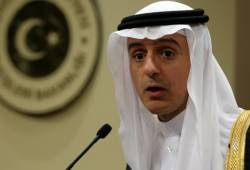
Saudi Foreign Minister Adel al-Jubeir hinted that his country would keep all options open, including pursing the acquisition of  nuclear weapons, if Iran obtained a nuclear weapon despite the newly implemented nuclear deal with world powers.

Saudi Arabia would do “whatever we need to do in order to protect our people,” al-Jubeir told Reuters.

“I don’t think it would be logical to expect us to discuss any such issue in public, and I don’t think it would be reasonable to expect me to answer this question one way or another,” he said.

Al-Jubeir’s comments come following the announcement that Iran sanctions would be lifted as part of the Islamic Republic’s compliance with the nuclear deal that was signed with world powers last summer.


Saudi Arabia, like Israel, has been strongly critical of the nuclear deal, which it fears could embolden Iran’s regional ambitions and boost their support of their terror proxies in Syria, Yemen and Lebanon. Iran is set to receive nearly $150 billion in sanctions relief as part of the deal.

“It depends on where these funds go. If they go to support the nefarious activities of the Iranian regime, this will be a negative and it will generate a pushback. If they go towards improving the living standards of the Iranian people then it will be something that would be welcome,” al-Jubeir said.

Israel has repeatedly warned that the nuclear deal has made the Middle East a more dangerous, and that Iran billions on thawed assets will significantly boost their regional belligerence.

Translate »
Skip to toolbar