Ikiganiro cya Bwenge na Buhanga batugezaho uyumunsi

Ikiganiro cya Bwenge na Buhanga batugezaho uyumunsi

Bwenge: Maze iminsi nsoma amakuru atandukanye ateye kwibaza ejo hazaza ha abanyarwanda cyane abana bacu bavukiye mu mahanga batazi icyatsi nururo, uwahamagara Buhanga njya mbona andusha kumenya utuntu n’utundi nubwo ndi professor More »

Inzigo zabyaye inzika muri RNC

Inzigo zabyaye inzika muri RNC

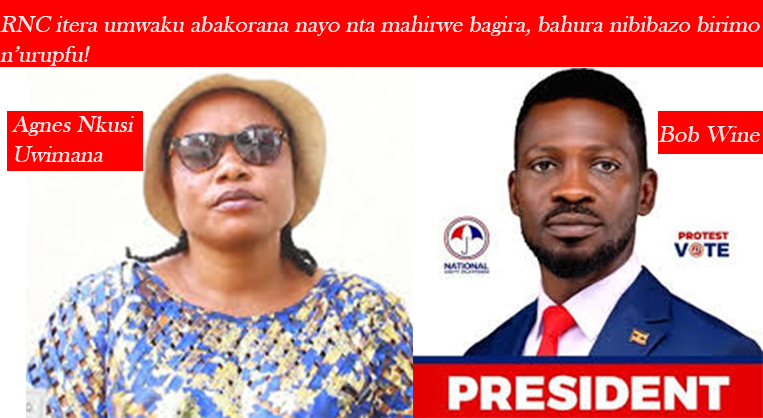
Ibiro ntaramakuru byo mu ijuru (Heaven News Media Agency) biratangaza ko inzika zazikutse bikomeye cyane nyuma yo kugaragaza ko umunyamakuru Agnes Uwimana Nkusi watangiye gukorera muri Uganda nyuma yo guhunga aho abantu More »

Trump’s Iran Doctrine: A Strategy for the History Books

Trump’s Iran Doctrine: A Strategy for the History Books

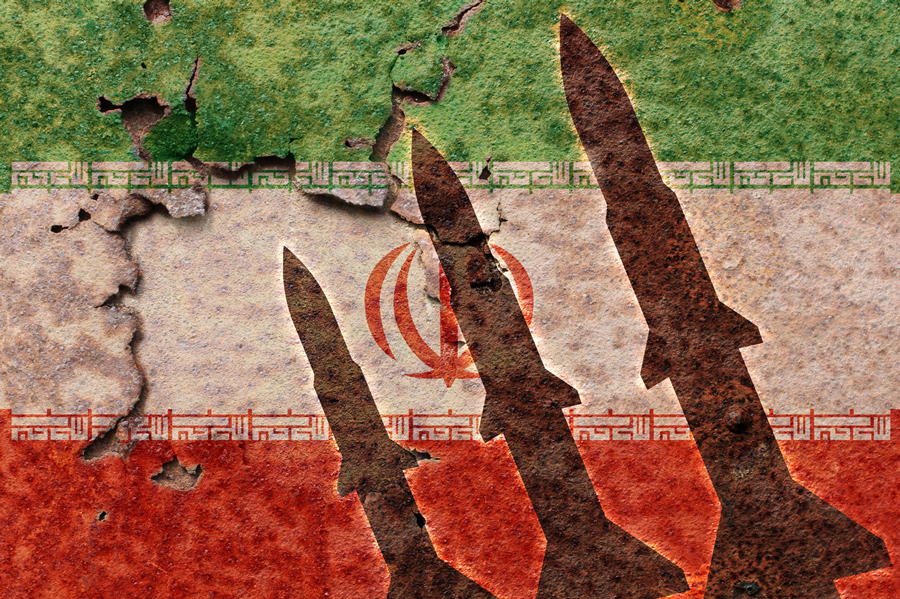
The narratives often suggest that the US campaign has failed and that Tehran remains firmly in control. In reality, however, US President Donald J. Trump has pursued a strategy that departs radically More »

Nyamwanga kumva ntiyanze no kubona!!!

Nyamwanga kumva ntiyanze no kubona!!!

Ubutegetsi bw’ingoma y’abega bukomeje kurakazwa cyane na makuru atangazwa n’ikinyamakuru EGRET NEWS ajyanye n’Ubuhanuzi bw’intambara ibera mu burasirazuba bwa DRCongo uburyo amakuru mu buhanuzi akomeje kugaragaza uko ibintu byifashe. Kuba bari mu More »

Umunyamakuru Uwimana Agnes Nkusi yavugiye abazimu mu ndaro, ahungira ubwayi mu kigunda!!!

Umunyamakuru Uwimana Agnes Nkusi yavugiye abazimu mu ndaro, ahungira ubwayi mu kigunda!!!

Tumaze igihe dufite impungenge z’umunyamakuru Agnes Nkusi Uwimana wahungiye muri Uganda yagerayo ubutegetsi bwaho bwamuhaye ibyangombwa byaho birimo id na passport, amaze kugera muri icyo gihugu yatangiye gukora ibiganiro bye nkuko bisanzwe More »


Sex Trafficking: The Abuse of Our Time by George Phillips

  • The State Department’s Trafficking in Persons Report estimates that more than 44,000 trafficking victims have identified throughout the world, out of which the Department of Justice has gained convictions in just 184 cases.

  • Compare this to the International Labor Organization 2012 estimate of a total of 20.9 million trafficked victims in the world and hundreds of thousands in the United States.


  • The media usually pays scant attention to their plight.

  • Esperanza was a sixteen-year-old girl when she was brutally raped by a man named Rey. He forced her to become a sex slave, and eventually brought her to New York, where she was raped, beaten and threatened in brothels day after day

    Like so many other trafficking victims, Esperanza could not speak English. A man who saw the bruises on her body connected her with Safe Horizon, a program that specializes in helping trafficking victims; they helped to rescue her.

    On the other side of the world from Esperanza, Sina Vann, in Cambodia, was taken as a sex slave when she was 13.

    Sina and the other girls were kept in underground cages — not able to see the difference between night and day. They were then brought into a room where they were raped by man after man.

    Sina was rescued in a raid organized by a former sex slave, Somaly Mam, who now runs an anti-trafficking program.

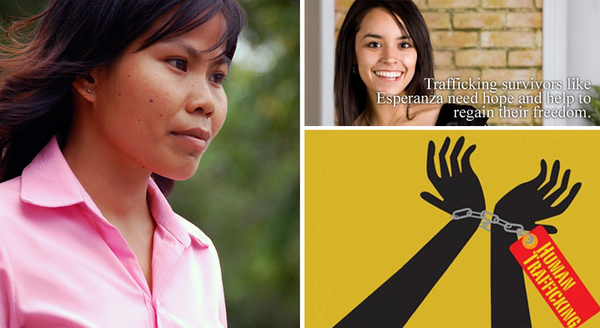
    Sina Vann (left) and Esperanza (upper right) were both kept as sex slaves and forced into prostitution as children, in Cambodia and the United States respectively.

    The fifteenth anniversary of the landmark Trafficking Victims Protection Act (TVPA) of 2000 took place recently, on October 28.

    After hearing of the plight of many women in Eastern Europe, Congressman Chris Smith of New Jersey authored the Act to set forth the legal framework for prosecuting criminals involved in the crimes of modern day slavery, and to support traumatized victims in the U.S.

    In addition to strengthening U.S. laws, the TVPA also targeted human trafficking throughout the world. The State Department annually reports on the efforts of all nations to combat trafficking. It also targets with sanctions on non-humanitarian aid countries that fail to meet minimum standards.

    Last year, thanks to their lack of effort to combat human trafficking, authoritarian regimes including Iran, Russia, Venezuela, and Zimbabwe, along with 19 other countries, weresubjected to sanctions.

    Nevertheless, even though from 2007 to 2014 there were a total of 218 new or amended anti-trafficking laws in the world, only a small percentage of the world’s trafficked victims are being rescued.

    The State Department’s Trafficking in Persons Report estimates that more than 44,000 trafficking victims have been identified throughout the world, out of which the Department of Justice has gained convictions in just 184 cases.

    Compare this to the International Labor Organization 2012 estimate of a total of 20.9 million trafficked victims in the world, with hundreds of thousands in the United States.

    United Nations report also shows that trafficking among children is on the rise. One out of three trafficking victims is a child; girls and women make up 70% of trafficking.

    The media usually pays scant attention to their plight. A University of North Carolina study details how, when it comes to stories about sex trafficking victims, the media often fails to report the nature of the crime and the need for action.

    Only 16% of sex trafficking cases were covered as a human rights issue, according to the study, and 41% failed to mention possible solutions to the tragedy of human trafficking.

    Many newspapers advertise “massage parlors” — often fronts for trafficking and prostitution rings — in their sports pages.

    At the forefront of trying to uncover massage parlors that are fronts for these rings has been, for example, the Polaris Project, a Washington DC based anti-trafficking organization. It estimates that in the U.S. there are an estimated 9,000 massage parlors, in which, every day, 27,000 women are suffering in prostitution or forced human trafficking. The Polaris Project’s hotline has identified more than 2,000 cases of human trafficking related to massage parlors.

    In 2010, after years of pleas from the Polaris Project on behalf of victims of trafficking and prostitution, The Washington Post finally announced that it would no longer accept ads from massage parlors.

    Yet, fifteen years after the signing of TVPA, the fight continues.

    Esperanza and Sina are two of the very few lucky ones who have been rescued from human trafficking. But all of us, especially in the media, need dramatically to increase our efforts to rescue the millions of others trapped in one of the darkest, most vicious human rights violations of our time.

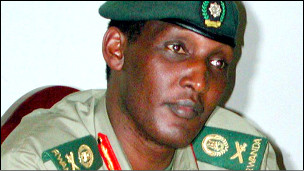
Sep 02nd 2014 njyanwa mu iyerekwa,mukibaya ntasanzwe menyereye cy’ubutayu bugufiya ariko gifite uduti dutoya twitwa imigenge,maze mbona insorensore zimanuka zijya gutozwa kumashana,ku ikubitiro ziraraswa ndetse zisubira inyuma bikomeye!Nerekwa uwahoze ar’

c,mukibaya ntasanzwe menyereye cy’ubutayu bugufiya ariko gifite uduti dutoya twitwa imigenge,maze mbona insorensore zimanuka zijya gutozwa kumashana,ku ikubitiro ziraraswa ndetse zisubira inyuma bikomeye!Nerekwa uwahoze ar’umugaba w’ingabo za APR/RDF  nyuma akaza gushoka amatage amatera gahinda mbona arahagajwe.


Sep 02nd 2014 njyanwa mu iyerekwa,mukibaya ntasanzwe menyereye cy’ubutayu bugufiya ariko gifite uduti dutoya twitwa imigenge,maze mbona insorensore zimanuka zijya gutozwa kumashana,ku ikubitiro ziraraswa ndetse zisubira inyuma bikomeye!Nerekwa uwahoze ar’umugaba w’ingabo za APR/RDF  nyuma akaza gushoka amatage amatera gahinda mbona arahagajwe.


Akimara kugera kubutaka bwaho bamashanira,mbona afashe intwaro iremereye ifite icyuma kireba kure baklunze kwita jomeri mbona yitegereje urugamba neza ndetse atangira kurutegura bundi bushya,bitewe ni uko mbere bari bagiye bonyine bararaswa batatana nk’ingabo zitagira umutware.

Mbona noneho hafi yuwo mu jeneral har’umuhanuzi mukuru mbona umujeneral aramwitegereje maze aramwenyura kuko ibyo yarimo gukora yarabonye ko,Imana ibihaye umugisha kuko umuhanuzi mukuru yahagobotse.

Ni uko mbona imbunda ayerekeje mu mfuruka z’amajyaruguru y’uburengera-zuba bwa gakondo,umunwa w’intwaro iremereye itangira kuruka ibihungabanya ibinyabugingo maze batangira kumashana noneho umwanzi wabo acika integer asa nkaho aneshejwe.

Ariko mbere yibyo byose abajyaga kumashana banyuze mu nzira zigoye zimikuku,amakombe,n’ibihanamanga,kuburyo kubona inzira yogutangiriramo intambara byari bigoye!.

Ariko abenshi batabaye bari biringiye imbaraga z’umwana w’umuntu,aho kwiringira Uwiteka Imana yo mu ijuru,abo bararashwe karahava kuburyo batabarukiye kurugamba bazize kutiringira Uwiteka Imana yo mu ijuru,abo nibabandi nubundi bikubise mu gituza bavuga ko,banesheje kubera imbaraga zabo.

Aho nshatse kuvuga itabaro rya mbere ryo kubohoza igihugu,iyi ntambara ntabwo izaba yoroshye ikibazo cyayo s’impande zombie zihanganye,ikibazo n’Uwiteka udafite umwanya mu mitima yabo,kuburyo abiringira amabaoko y’Abantu bose ntabwo bazabona gakondo nk’uko babitekerezaibyo bikazaba ku mpande zombie.Cyakora abafite guca bugufi muri bo,abo barahirwa ndetse Uwiteka azabana nabo.

Kandi nyuma y’itabaro bazahamya yuko Uwiteka ariwe Mana ya Israel,ibyo Uwiteka azabikorera kugirango yiheshe ikibahiro kuko iyi ntambara Atari ubushake bw’abantu,ahubwo iri mu mugambi w’Uwiteka dore ko,ya yihanuye mukanwa kabahanuzi hashize igihe kire kire.

Sentenced to Death for “Insulting Islam” by Majid Rafizadeh

  • Can you imagine making a joke and facing death as a result?”During his interrogation, Sina was told that if he signed a confession and repented, he would be pardoned and let go,” said the source in an interview with CHRI on March 21, 2017. “Unfortunately, he made a childish decision and accepted the charges. Then they sentenced him to death.” “Later he admitted that he signed the confession hoping to get freed,” said the source. “Apparently the authorities also got him to confess in front of a camera as well.” — Center for Human Rights in Iran (CHRI).

  • When the Islamists gain power, they immediately create their own “judiciary system” in order to “legitimize” their implementation of sharia law. In fact, the judiciary system is used less as a tool for bringing people to justice, and more as a tool to suppress freedom of speech and of the press.

To radical Islamist groups, Islam is not a religion which all are free to pursue; it is a weapon. It is the most powerful tool that can be wielded with manipulative skill to control entire populations. Beneath their fierce rule, every aspect of daily life is dictated. What is worn, what is eaten, what you say and what you write are all scrutinized; violations of these stringent laws are met with extreme punishments. Can you imagine making a joke and facing death as a result? Can you imagine the constant fear of doing the wrong thing, saying the wrong thing, when you have seen people beaten, stoned, or killed in the street for nothing more than a mild transgression?

Freedom of speech and press are the Islamists’ top enemies. They are targeted on a regular basis, making it difficult or impossible for the truth to be revealed to the world. While others may take their privacy for granted, the people living under this kind of tyranny must think about everything they say and do. Sometimes even the bravest of souls turn away in the face of such intimidation. Can it really be as restrictive as described? Yes, and far worse than you can imagine.

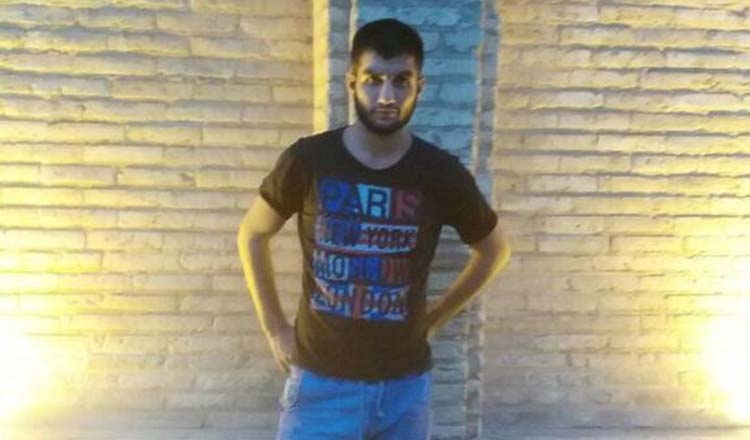
Sina Dehghan, 21, for example, was arrested by Iran’s Islamic Revolutionary Guard Corps (IRGC) when he was 19 for “insulting Islam”. Charges were brought against him for insulting the Prophet Muhammad on the messaging app LINE.

According to the Center for Human Rights in Iran (CHRI):

“During his interrogation, Sina was told that if he signed a confession and repented, he would be pardoned and let go,” said the source in an interview with CHRI on March 21, 2017. “Unfortunately, he made a childish decision and accepted the charges. Then they sentenced him to death.” “Later he admitted that he signed the confession hoping to get freed,” said the source. “Apparently the authorities also got him to confess in front of a camera as well.”

Such a sentence may seem like madness, but in fact there is a cold and calculated pattern to these actions. When extremist Muslims gain power, they immediately create their own “judiciary system” in order to “legitimize” their implementation of sharia law. This judiciary system is, in fact, used less as a tool for bringing people to justice, and more as a tool to suppress freedom of speech and freedom of the press. Once this silence is ensured, they are able to oppress the entire society, restrain any budding opposition, imprison and torture innocent people and sentence thousands to death.

Sina Dehghan, 21, has been sentenced to death in Iran for “insulting Islam”. There are many people like him in Iran who are currently imprisoned, tortured on a daily basis, or awaiting their execution for “insulting Islam”, “insulting the prophet”, “insulting the Supreme Leader” — the examples are endless. (Image source: Center for Human Rights in Iran)

By imprisoning, torturing and hanging idealistic and rebellious young people, the ruling politicians and the Islamist judiciary system are using them as an example to send a message to millions of people that they will not tolerate anyone who opposes their religious or political view.

Radical Islamist groups have been using the same tactic in other nations to impose fear and shock in the public. They aim at silencing people and making them subservient. Once they have control, they will stop at nothing to keep it.

For the Islamists, once you submit to their religion, your freedom of speech and of the press belong to Allah. Your only job is to exercise silence and obedience, and follow your religious leader, imam, sheikh, or velayat-e faqih (“guardianship of the Islamic jurist”).

As the Center for Human Rights in Iran pointed out:

“Security and judicial authorities promised Sina’s family that if they didn’t make any noise about his case, he would have a better chance of being freed, and that talking about it to the media would work against him,” added the source. “Unfortunately, the family believed those words and stopped sharing information about his case and discouraged others from sharing it as well.” “Sina is not feeling well,” continued the source. “He’s depressed and cries constantly. He’s being held in a ward with drug convicts and murderers who broke his jaw a while ago.”

For the ruling Islamists, it does not matter if you have been a loyalist all your life. If you speak up or oppose them just once, you will be eliminated. As CHRI quoted one source: “He was a 19-year-old boy at the time (of his arrest) and had never done anything wrong in his life.”

One of Dehghan’s co-defendants, Mohammad Nouri, was also sentenced to death for posting anti-Islamic comments on social media. Another co-defendant, Sahar Eliasi, was sentenced to seven years, and later the sentence was reduced to three years.

What does the term “anti-Islamic” mean exactly in an Islamist judiciary system? If it carries a death sentence, you might assume that the parameters of the law would be well outlined. However, that is not the case. For the ruling Islamists, the term “anti-Islamic” is completely ambiguous and subjective, and can relate to anything that opposes their view or their power. What might seem like an innocent remark, could change a life forever.

If they are such violent and oppressive people, you might wonder how they are ever able to gain power. They do this through manipulation, charm and countless false promises.

Some radical Islamists, before they gain power, promise people equality, justice, peace, and a far better life. They appeal to the young, to the traditional, and to the hopeful. But once they seize power, they close an iron grip around any and all freedoms, available to their people — in particular freedom of speech.

Once radical Islam has gained power, established its own judiciary system, or infiltrated the legal system with its sharia law, no one is capable of criticizing the government or the political establishment. In a social order ruled by radical Islam, the government is Islam; the government is the representative of Allah and the Prophet Muhammad. Ruling politicians who decide the laws are “divine” figures supposedly appointed by God. They are not to be questioned.

There are many people like Sina Dehghan who are currently imprisoned, tortured on a daily basis, or awaiting their execution for “insulting Islam”, “insulting the prophet”, “insulting the Supreme Leader” — the examples are endless. The issue is that we do not hear about these cases. Some media outlets refuse to report on them in order to appease the Islamic Republic of Iran — just further proof of how coercive their power can be. The only way to reduce it — and the oppression and slaughter of so many people — is to bring attention to the human rights abuses conducted under the Islamic banner of religious “legitimacy ” and “authenticity”.

This type of tyranny is a danger, not just for those enduring it, but for the world.

Selling Out Pentecost to Islam by Geert Wilders

  • The Dutch have officially been enjoying the feast of Pentecost since 1815, but the church wants it replaced by an official holiday on Eid-al-Fitr, the day marking the end of the Islamic holy month of Ramadan.
  • We are too tolerant to intolerance. We think that by allowing freedom to the enemies of freedom we prove to the world that we stand for freedom. But in reality, by refusing to draw boundaries to our tolerance, we are handing away our freedom.

  • If we want to remain the free and tolerant society which we used to be, we must realize that the West has a concrete identity. Our identity is not Islamic, but based on Judaism, Christianity and humanism. Our freedoms result from this identity.

Next Sunday, Christians are celebrating the feast of Pentecost. A Protestant church in the Netherlands is using the occasion to propose the abolishment of the public holiday for the second day of Pentecost. The Dutch have officially been enjoying this holiday since 1815, but the church wants it replaced by an official holiday on Eid-al-Fitr, the day marking the end of the Islamic holy month of Ramadan.

With its proposal, the Christian group says, it wants “to do justice to diversity in religion.” That is politically-correct claptrap. Browsing through today’s papers, I can, however, understand why many Dutch are in a festive mood once Ramadan is over! These days, the headlines are full of incidents, which De Telegraaf, the leading newspaper in the Netherlands, describes as Ramadan rellen (Ramadan riots).

Suppose Christians would, on an annual basis, start to riot after leaving church on Pentecost and demolish property, arson cars, attack police, throw stones through the neighbor’s windows. Suppose the police would feel obliged to mark the Christian Lent in the calendar as days of heightened tensions. Would we not begin to wonder whether there was something wrong with Christianity?

Or suppose Jewish gangs would terrorize entire town districts on Yom Kippur day. Would we not beginning to wonder what they were being taught in their synagogues? Or would we just accept it, celebrate it even, as indications of the cultural “diversity” of our society?

I am writing these lines in my office in the Dutch Parliament in The Hague, barely a few minutes away from the house where the great 17th century Dutch and Jewish philosopher Baruch Spinoza lived and died. Spinoza gave the world a philosophy of tolerance and freedom.

However, what we must never do is be tolerant to intolerance. Because if tolerance becomes a snake devouring its own tail, soon there will be no freedom left and the intolerant will rule the world. Indeed, we are almost there. Three and a half centuries after Spinoza, in the city where he lived, I am writing these lines in a heavily protected sector of the parliament building. The windows are blinded, the doors are armored, and police officers are standing watch outside. They are there to protect me against the intolerance which has in recent decades entered our country – an intolerance that is neither Christian nor Jewish or secular, but Islamic. I am not an extremist if I say that. I am telling the truth. And that is my duty.

For here is the crux of the matter: If we want to remain the free and tolerant society which we used to be, we must realize that the West has a concrete identity. Our identity is not Islamic, but based on Judaism, Christianity and humanism. Our freedoms result from this identity. By depriving Islam of the means to destroy our identity, we are not violating freedom; we are preserving our identity and guaranteeing freedom.

The terrible situation we are in today is caused by our tolerance of evil. We are too tolerant to intolerance, we are too tolerant to Islam. We think that by allowing freedom to the enemies of freedom we prove to the world that we stand for freedom. But in reality, by refusing to draw boundaries to our tolerance, we are handing away our freedom.

We live in an age where people like the idea of rights, so long as they do not have to pay a price for it. The political and media elites are all in favor of speaking the truth, so long as the “truth” is a cliché. But when duty and honor command them to stand athwart history and yell “Stop!” they flee. And those who do their duty are called extremists, dragged to court, silenced.

Earlier today, I learned that the Dutch Public Prosecutor in The Hague is investigating a speech which, two years ago, I gave in Vienna, Austria. He is doing this at the request of his colleague, the Public Prosecutor in Vienna, who accuses me of Verhetzung (incitement). The latter is a criminal offense in Austria and is comparable to incitement.

I find this truly unbelievable. Let them catch bandits and terrorists instead of prosecuting a politician for speaking about Islam. It is a disgrace that this is happening in the city of Spinoza, who was not only a great defender of tolerance but also of freedom of thought and speech. Spinoza’s face used to adorn one of our bank notes in the time when we still had our own currency. Too bad that this is no longer the case today.

Unbelievable also because it would be the third time in a few years that I would be prosecuted for saying things the elites do not want to hear. It is a legal jihad. While the elites are to blame for the existential crisis we are currently in. With their open border-policies and unprecedented love for Islam and their cultural relativism, they sell us out completely and put our freedom and security at stake. They have abandoned the legacy of Spinoza and introduced the totalitarianism of Mohammedanism in our nations. I say: no more. It is time to do our duty and defend our freedom and the freedom of our children.
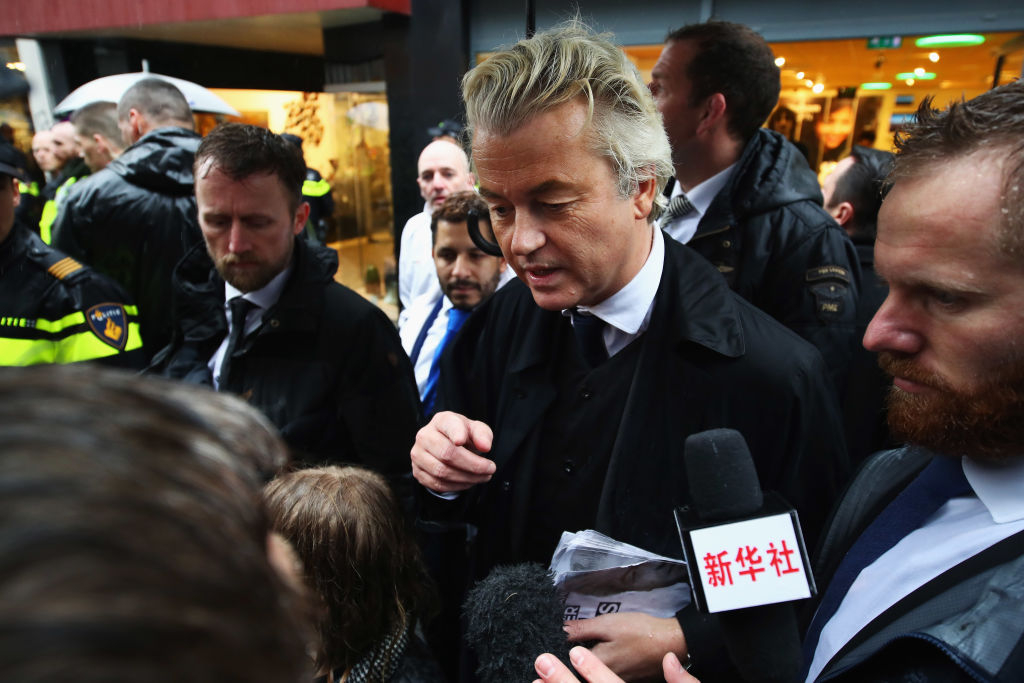
Geert Wilders on March 8, 2017 in Breda, Netherlands. (Photo by Dean Mouhtaropoulos/Getty Images)

Geert Wilders MP is leader of the Party for Freedom (PVV) in The Netherlands.
Self-Censorship: Free Society vs. Fear Society by Giulio Meotti

  • “The drama and the tragedy is that the only ones to win are the jihadists.” — Flemming Rose, who published the Mohammed cartoons in 2005, as cultural editor of JyllandsPosten newspaper.

  • “Why the f*ck did you say yes to appear on stage with this terrorist target, are you stupid? Do you have a secret death wish? You have grandchildren now. Are you completely out of your mind? It’s okay if you want to die yourself, but why are you taking the company though all this?” — The managers of Jyllands-Posten, to Flemming Rose.
  • “We are also aware that we therefore bow to violence and intimidation.” — Editorial, Jyllands-Posten.
  • “I do not blame them that they care about the safety of employees. I have bodyguards 24 hours a day. However, I believe that we must stand firm. If Flemming shuts his mouth, democracy will be lost.” — Naser Khader, a liberal Muslim of Syrian origin who lives in Denmark.

In the summer of 2005, the Danish artist Kåre Bluitgen, when he met a journalist from the Ritzaus Bureau news agency, said he was unable to find anyone willing to illustrate his book on Mohammed, the prophet of Islam. Three illustrators he contacted, Bluitgen said, were too scared. A few months later, Bluitgen reported that he had found someone willing to illustrate his book, but only on the condition of anonymity.

Like most Danish newspapers, Jyllands-Posten decided to publish an article about Bluitgen’s case. To test the state of freedom of expression, Flemming Rose, JyllandsPosten’s cultural editor at the time, called twelve cartoonists, and offered them $160 each to draw a caricature of Mohammed. What then happened is a well-known, chilling story.

In the wave of Islamist violence against the cartoons, at least two hundred people were killed. Danish products vanished from shelves in Bahrain, Qatar, Yemen, Oman, the UAE and Lebanon. Masked gunmen stormed the offices of the European Union in Gaza and warned Danes and Norwegians to leave within 48 hours. In the Libyan city of Benghazi, protesters set fire to the Italian consulate. Political Islam understood what was being achieved and raised the stakes; the West did not.

An Islamic fatwa also forever changed Flemming Rose’s life. In an Islamic caricature, his head was put on a pike. The Taliban offered a bounty to anyone who would kill him. Rose’s office at the newspaper was repeatedly evacuated for bomb threats. And Rose’s name and face entered ISIS’s blacklist, along with that of the murdered editor of Charlie Hebdo, Stéphane Charbonnier.

Less known is the “white fatwa” that the journalistic class imposed on Rose. This brave Danish journalist reveals it in a recently published book, “De Besatte” (“The Obsessed“). “It is the story of how fear devours souls, friendships and the professional community,” says Rose. The book reveals how his own newspaper forced Rose to surrender.

“The drama and the tragedy is that the only ones to win are the jihadists,” Flemming Rose told the Danish newspaper Weekendavisen.

The CEO of JyllandsPosten, Jørgen Ejbøl, summoned Rose to his office, and asked, “You have grandchildren, do not you think about them?”

The company that publishes his newspaper, JP/Politikens Hus, said: “It’s not about Rose, but the safety of two thousand employees.”

Jorn Mikkelsen, Rose’s former director, and the newspaper’s business heads, obliged him to sign a nine-point diktat, in which the Danish journalist accepted, among other demands, “not participating in radio and television programs”, “not attending conferences”, “not commenting on religious issues”, “not writing about the Organization of the Islamic Conference” and “not commenting on the cartoons”.

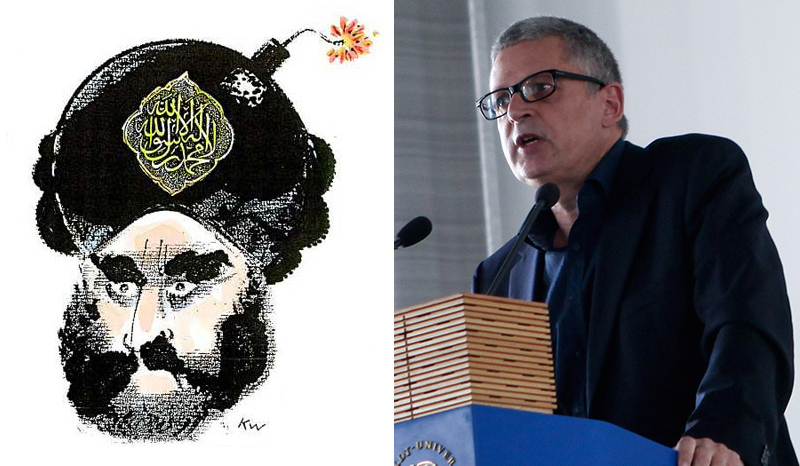
Rose signed this letter of surrender during the harshest time for the newspaper, when, in 2010-2011, there were countless attempts on his life by terrorists, and also attempts on the life of Kurt Westergaard, illustrator of a cartoon (Mohammed with a bomb in his turban) that was burned in public squares across the Arab world. Westergaard was then placed on “indefinite leave” by Jyllands-Posten “for security reasons.”

Is democracy lost? Eleven years after Jyllands-Posten published the Mohammed cartoons, the newspaper has a barbed-wire fence two meters high and one kilometer long. Kurt Westergaard, the illustrator who drew one of the cartoons (left), lives in hiding in a fortress, and Flemming Rose (right), the editor who commissioned the cartoons, has fled to the United States.

In his book, Rose also reveals that two articles were censored by his newspaper, along with an outburst from the CEO of the company, Lars Munch: “You have to stop, you’re obsessed, on the fourth floor there are people who ask ‘can’t he stop?'”.

Rose then drew more wrath from his managers when he agreed to participate in a conference with the equally targeted Dutch parliamentarian, Geert Wilders, who at this moment is on trial in the Netherlands for “hate speech.” Rose writes:

He starts yelling at me, “Why the f*ck did you say yes to appear on stage with this terrorist target, are you stupid? Do you have a secret death wish? You have grandchildren now. Are you completely out of your mind? It’s okay if you want to die yourself, but why are you taking the company though all this?”

Jyllands-Posten also pressured Rose when he decided to write a book about the cartoons, “Hymne til Friheden” (“Hymn to Freedom“). His editor told him that the newspaper would “curb the harmful effects” of the book by keeping its publication as low-key as possible. Rose was then threatened with dismissal if he did not cancel two debates for the tenth anniversary of the Mohammed cartoons (Rose, in fact, did not show up that day at a conference in Copenhagen).

After the 2015 massacre at Charlie Hebdo, Rose, no longer willing to abide by the “diktat” he was ordered to sign, resigned as the head of the foreign desk of Jyllands-Posten, and now works in the U.S. for the Cato Institute think-tank. The former editor of Jyllands-Posten, Carsten Juste, who was also blacklisted by ISIS, confirmed Rose’s allegations.

Rose writes in the conclusion of his book: “I’m not obsessed with anything. The fanatics are those who want to attack us, and the possessed are my former bosses at Jyllands-Posten.”

Rose’s revelations confirm another familiar story: Jyllands-Posten‘s surrender to fear. Since 2006, each time its editors and publishers were asked if they still would have published the drawings of Mohammed, the answer has always been “no.” This response means that the editors had effectively tasked Rose with writing the newspaper for fanatics and terrorists thousands of kilometers away. Even after the January 7, 2015 massacre at the weekly Charlie Hebdo in Paris, targeted precisely because it had republished the Danish cartoons, Jyllands-Posten announced that, out of fear, it would not republish the cartoons:

“We have lived with the fear of a terrorist attack for nine years, and yes, that is the explanation why we do not reprint the cartoons, whether it be our own or Charlie Hebdo’s. We are also aware that we therefore bow to violence and intimidation.”

A Danish comedian, Anders Matthesen, said that the newspaper and the cartoons were to blame for the Islamist violence — the same official position as the entire European political and journalistic mainstream.

A year ago, for the 10th anniversary of the affair, instead of the cartoons, Jyllands-Posten came out with twelve white spaces. These white spaces represent what Rose, in his previous book, called “Tavshedens tiranni” (“The Tyranny of Silence“). Naser Khader, a liberal Muslim of Syrian origin who lives in Denmark, wrote:

“I do not blame them that they care about the safety of employees. I have bodyguards 24 hours a day. However, I believe that we must stand firm. If Flemming shuts his mouth, democracy will be lost.”

Is democracy lost? The headquarters of Jyllands-Posten today has a barbed-wire fence two meters high and one kilometer long, a door with double lock (as in banks), and employees can only enter one at a time by typing in a personal code (a measure that did not protect Charlie Hebdo). Meanwhile, the former editor, Carsten Juste, has withdrawn from journalism; Kurt Westergaard lives in hiding in a fortress, and Flemming Rose, like Ayaan Hirsi Ali, fled to the United States.

Much, certainly, looks lost. “We are not living in a ‘free society’ anymore, but in a ‘fear society'”, Rose has said.

Giulio Meotti, Cultural Editor for Il Foglio, is an Italian journalist and author.

Translate »
Skip to toolbar