Category Archives: Uncategorized

Sweden’s Muslim Christmas Show by Ingrid Carlqvist

  • What finally seems to be dawning on the Swedes is that while the government puts the right to asylum before the safety of its own people, the country could be filling up with terrorists.


  • “No, ‘Sweden’ has not been naïve. You, your party and your coalition partners have been naïve and you still are.” — Mattias Karlsson, Parliamentary group leader of the Sweden Democrats.

  • The announcement that a person such as Dirawi, who professes to be of the Islamic faith, and who according to Islamic scholars should believe the celebration of the birth of Christ is a heathen tradition, will be Christmas Host, sparked feelings of anger and betrayal.

From the night of the Paris attacks until Tuesday, when Sweden’s government announced it was reversing its open-borders policy, Sweden was in a state of turmoil. No matter what the government said, it accomplished nothing — other than making the Swedes increasingly livid.

When Prime Minister Stefan Löfven accused his people of being naïve about radical Islamism, anger exploded on social media. You could read comments such as: “No. Some of you have been naïve. The rest of us have been labeled fascists and other ugly things.”

The shock and horror of the Paris attacks — in which one Swedish woman was among the 130 dead and another among the 350 wounded — had barely subsided when the Swedish people received another blow. On November 18, a grim Security Service Chief, Anders Thornberg, held a press conference during which he revealed that a combat-trained ISIS terrorist was suspected of having entered Sweden and a warrant was issued for his arrest. Because of this, Thornberg had raised the threat level in Sweden from three to four on a scale of five — meaning the country was now facing the highest “threat level” since the scale was introduced in 2010.

The Security Service Chief, as well as various Ministers, then urged people not to be alarmed. The suggestion had little effect. Rumors ran rampant on Facebook and other social media that police in Stockholm had told their family members to “stay away from the inner city for the next four or five days as the threat was a lot more serious than what had been made public; apparently they are looking for more terrorists, about 20 people; you need to decide for yourselves. In any event, the threat is bigger than what was shown on the news.”

The next day, the Stockholm subway, which normally transports 1.2 million passengers a day, was rather desolate. Then, on November 20, the Security Service confirmed that an attack had indeed been planned to take place in Stockholm.

The day after the nationwide alert, the suspected ISIS terrorist was apprehended. It turned out that he had sought asylum in Sweden under the name Mutar Muthanna Majid, and had been living for several weeks at an asylum seekers’ home in the small mining village of Boliden in northern Sweden.

Only after the arrest did Prime Minister Stefan Löfven speak out in public. During a press conference, he announced stricter anti-terror laws to deal with foreign Islamist extremists, which he now admitted posed the biggest threat to Sweden, and not the only one:

“We know that about 300 Swedish citizens have gone to Syria and Iraq to fight alongside ISIL. We also know that about 120 have returned. The Security Service believes that among them, there are individuals who pose a threat to our society and have also committed crimes against people in other countries. It is unacceptable that people can travel, participate in terrorist acts and come back without being held accountable — and drain the society of large resources.”

Next, the Prime Minister claimed that “Sweden has been naïve,” conveniently forgetting that he had called those who were not naïve — those who had expressed concern about the Islamization of Sweden — “racists” and “Islamophobes.” He also neglected to mention that as far back as May, Security Service chief Anders Thornberg had raised the alarm that Sweden could not handle any more jihadism. At the time, Thornberg had also expressed concern that foreign jihadis would take advantage of the Swedish asylum system — through which more than 90% of applicants lack identification documents but still got permanent residency — by hiding among the refugees.

A few days after Mutar Muthanna Majid, the suspected terrorist, was arrested, the District Attorney dismissed the Security Service’s evidence against him. On November 22, Majid wasreleased and all charges dropped. A columnist from the daily Dagens Nyheter, Lasse Wierup, called the Security Service’s conduct “astonishingly unprofessional.”

Even as the mass immigration of Muslims to Sweden increased at an explosive rate during the last few years, the government kept stubbornly insisting that it did not entail any problems. According to the government, everyone was the same, and it did not matter if Sweden was populated by Swedes or by Muslim Somalis, Iraqis or Afghans. Those who insisted otherwise were ruthlessly branded “racists” and “Islamophobes.”

Finally, last week, Prime Minister Stefan Löfven stood up on live television, and said:

“I must say that Sweden has been naïve in this regard. Maybe it has been hard for us to accept that in our open society, right in our midst, there are people, Swedish citizens, who sympathize with the murderers of ISIL.”

In response to questions from Gatestone Institute about who, exactly, was being called naïve, Mr. Löfven’s press secretary, Dan Lundqvist Dahlin, said that the Prime Minister had in mind “Swedes in general.” When asked if that meant Löfven was blaming the Swedish people for the peril the country was now in, Dahlin replied: “The Prime Minister says that we have been naïve in Sweden. He means me and you and you and you and you!”

When asked if that meant he was accusing the Swedish people of being naïve, Dahlin said:

“But can’t you see what I mean? It is not an accusation. If someone feels accused, that is his problem. I suppose he means politicians and everyone else.”

The Prime Minister’s statement seemed to outrage many Swedes. The hashtag #naiv (“naïve”) immediately started trending on Twitter, and people began posting comments such as:

  • “I haven’t been ‪#naiv so don’t drag me into this.”
  • “‘Sweden has been naïve’? No, you have betrayed your country.”
  • “I have been called many things over the years, but this is the first time I have been called naïve. By the Prime Minister no less. Not bad.”
  • “Why is Löfven saying that ‘Sweden’ has been naïve? Very, very many have warned about exactly the situation we are now in!”

The only political party that warned about the Islamization of Sweden was the Sweden Democrats, and it has consistently been shut out of all consultations. During the press conference, Löfven called for national unity and invited all the opposition parties to talks — except the Sweden Democrats. He even said:

“In moments such as this, it is important that Sweden stands united. There is no room for partisan squabbling or party politics here. That is why I have invited the right wing-bloc for talks on how to fight terrorism.”

The Sweden Democrats’ Parliamentary group leader, Mattias Karlsson, wrote on Facebook:“No, ‘Sweden’ has not been naïve. You, your party and your coalition partners have been naïve and you still are.”

Karlsson reminded the public of the massive criticism of the Sweden Democrats, when its members recently handed out flyers to migrants in southern Europe. The flyers — signed by the Sweden Democrats and “the people of Sweden” — urged asylum seekers not to go to Sweden. Journalists and politicians then attacked the party for speaking on behalf of “the people.”

“Judging by the media storm and the comments of government representatives about our flyer the other week,” Karlsson wrote, “I got the impression that speaking in the name of the Swedish people was utterly terrible, but apparently, that was not the case.”

Löfven, appearing on the newscast TV4 News, was asked if stricter border controls should have been introduced earlier, to prevent terrorists from entering Sweden. Löfven was evasive, but the question was actually inaccurate.

The border controls Sweden had introduced in past, meant, in reality, nothing. The borders were as wide open as ever to anyone claiming to seek asylum. The flow of migrants was as big as before: 10,000 new asylum seekers a week.

While the mainstream media is careful to avoid telling the public about this, Dispatch International recently broke the story that at the Öresund Bridge, which connects Sweden and Denmark, the border police performed only random checks — and only on people not claiming to seek asylum. The people who claimed to seek asylum were not checked at all. They were simply transported to an Immigration Service facility. There, they were fingerprinted and photographed; however, as very few of the asylum seekers actually have passports or other identification documents, it takes months even to get a “probable” identification.

While the identity of the asylum seekers was being investigated, they were not held. On the contrary, although many are actual refugees or honestly seeking better lives, they all were sent to various asylum facilities around the country, where, if some wished, they were free to plan any terrorist acts they liked in peace and quiet. For example, Mutar Muthanna Majid, the man who a few days ago had been suspected of being a terrorist, even had his own apartment in the Boliden village — with his name on the door.

Instead of closing Sweden’s borders, Löfven kept pressing for a redistribution of Sweden’s asylum seekers throughout the EU. He called the EU countries that did not have open borders (all except Sweden, Germany and Austria) “irresponsible.” He apparently did not reflect on the idea that the responsible thing might, in fact, have been to protect your own people, and put their well-being first.

Keeping the country’s borders wide open and calling terrified people “racists” and “Islamophobes,” while claiming “we have been naïve,” did not exactly increase the Prime Minister’s popularity. The daily Metro recently reported that Löfven’s Social Democrats now have only 21.4% of Swedish voters on their side, while the Sweden Democrats reached a new record of 26.7%. Moreover, according to the same survey, despite people tending to rally around their leaders in times of crisis, Löfven has become one of the government’s least popular ministers – in 21st place out of 24. His Deputy Prime Minister, Green Party leader Åsa Romson, is the most unpopular.

The poll also showed that more and more Swedes believe that the most important political issue right now is the migrant problem. Since the last poll a month ago, the number of people believing this has grown to 64%, an increase of 8% since October.

What finally seems to be dawning on the Swedes is that while the government puts the right to asylum before the safety of its own people, the country could be filling up with terrorists.

To add insult to injury, Swedes have just found out that the host of the Christmas Show on Swedish Public Television — a very prestigious role designed mainly to comfort lonely people who do not have anyone with whom to celebrate Christmas — will this year be a young Muslim woman, Gina Dirawi, aged 24. Regrettably, on several occasions she has made anti-semitic remarks, yet she nevertheless keeps getting new TV hosting assignments.

Swedish Public Television’s appointment as Christmas Host of Gina Dirawi, who professes to be of the Islamic faith, and who according to Islamic scholars should believe the celebration of the birth of Christ is a heathen tradition, sparked feelings of anger and betrayal in Swedes. (Image source: Expressen video screenshot)

The Public Service director, Safa Safiyari, who recently introduced Dirawi to a large press gathering, came to Sweden at the age of 14. In newspaper articles, he has spoken about how he does not feel “fancy” enough for the Swedish archipelago; and how, in 2001, when he got to do current affairs shows for young people about “all the injustices in Sweden,” it felt as if it were revenge for all the injustices he said he has experienced in Sweden and that still characterize his life.

The announcement that a person such as Dirawi, who professes to be of the Islamic faith and who according to Islamic scholars should believe that the celebration of the birth of Christ is aheathen tradition, will be Christmas Host, sparked widespread expressions of anger and disappointment on social media. Comments were posted on Twitter, such as: “Public Television has declared war on Christian Sweden by choosing Muslim Gina Dirawi as Christmas Host! It is shameful!” And, “If things continue down this road, by next Christmas, Christmas ham will be banned.”

Safa Safiyari told the daily Göteborgs-Posten, that Swedish Public Television had been prepared for all kinds of reactions: “We have chosen Gina Dirawi as Christmas Host based on her competence, her comedic talents and experience in large television broadcasts. When we hire our Christmas Hosts, religious belief is not something we inquire about.”

Ingrid Carlqvist is a journalist and author based in Sweden, and a Distinguished Senior Fellow of Gatestone Institute.

Sweden’s Migration Industry by Nima Gholam Ali Pour

  • That Sweden is a “humanitarian superpower” is a myth that needs exposing once and for all. The recent migration wave to Sweden has made some people poor and others very, very rich. It is all about money, and it is about winners and losers.

  • If liberal journalists outside Sweden believe that rape is humanitarian, then Sweden has a humanitarian migration policy.
  • Meanwhile, thousands of “unaccompanied refugee children” are disappearing. and no one knows where they are.
  • There is nothing “noble” in Sweden’s migration policy — far from being a good example of how a migration policy should function, it is a disaster, and its final result is chaos, conflict, and corruption.

When you talk to journalists from the U.S. or the UK, they often seem to think that Sweden is a humanitarian superpower that has received refugees because the Swedish government is following some ideology based on doing good deeds.

That Sweden is a humanitarian superpower, eager to lead by example, is a myth that needs exposing once and for all. The recent migration wave to Sweden has made some people poor and others very, very rich.

Every day one reads news in Sweden about the winners and the losers in the migration industry. One of the winners in Sweden’s migration industry is ICA Bank. In November 2015, it invoiced the Swedish Migration Agency $8 million for providing asylum seekers prepaid cards. For every cash withdrawal, ICA Bank takes a $2 fee, and for every prepaid card activated, it takes $21. ICA Bank won the contract without any competition; its contract with the Migration Agency extends to March 2017.

Many asylum accommodations in Sweden are run by private operators and are making huge profits. In 2015, the 30 largest companies that run the asylum accommodations invoiced the Swedish Migration Agency an estimated $109 million. The losers, on the other hand, were the Swedish taxpayers who had to finance these decisions.

In November 2015, it was reported that Sweden’s Migration Agency had paid $174 million during an 11-month period to private sector property owners for asylum seekers’ accommodation.

Many of the companies running the asylum accommodations have a profit margin of over 50%. Defakon Renting AB has a profit margin of 68%. Nordic Humanitarian AB has a profit margin of 58%. Fastigheterna på Kullen AB has a profit margin of 50%.

The biggest private company running asylum accommodations, Jokarjo AB, is owned by Bert Karlsson, known in Sweden primarily as director of a record label. In the early 1990s, Mr. Karlsson was the leader and founder of a political party, New Democracy, that advocated reducing immigration to Sweden. Between 1991 to 1994, as a representative of his party, he sat in the Swedish parliament. In 2015, his company billed the Swedish Migration Agency $23.9 million. Mr. Karlsson explained his business plan for running a home for asylum seekers in a simple sentence: “My idea is to make it cheaper and better than anyone else.”

One method he used to make his business more profitable is that asylum seekers have to buy their own toilet paper, apparently despite having agreed with the Migration Agency to provide asylum seekers with toilet paper, sanitary napkins and diapers. In December 2015, the Swedish media revealed that asylum seekers have to buy all these products themselves.

One can only imagine the situation for asylum accommodations run by minor private operators.

This is what the Swedish “humanitarian superpower” is actually about. It is all about money, and it is about winners and losers.

The companies running the asylum accommodations are becoming rich at the Swedish taxpayers’ expense; at the same time, asylum accommodations are not managed properly.

Here are a few of the violent incidents that happen every day:

On January 25, 2016, the police arrived at an asylum accommodation in Annerstad, southern Sweden, after hearing of a brawl there between Syrians and Afghans. When the police arrived, according to their report, no one — not even the people working there — could speak Swedish.

In January 2016, there were reports that a ten-year old boy at an asylum accommodation in Västerås had been raped repeatedly. In February 2016, there were reports that a boy at an asylum accommodation in Maglarp, in southern Sweden, had been raped by two other boys at the same asylum accommodation.

If liberal journalists outside Sweden believe that rape is humanitarian, then Sweden has a humanitarian migration policy.

What is actually happening in Sweden, however, is that private companies are making millions of dollars at taxpayer expense, while the newly arrived migrants are living a horrible existence in which rape and other abuses are a part of daily life. This is what other European countries will experience if they follow Sweden’s liberal migration policy.

Children who come to Sweden without parents (“unaccompanied refugee children“) must, according to the Swedish law, be assigned a legal guardian. The guardian, instead of the parents, is responsible for the child’s personal relationships and managing daily affairs. In December 2015, it was reported that there are guardians responsible for up to 29 unaccompanied refugee children, and who earn more than $7,000 a month. It is not, of course, possible for one guardian to take care of 29 unaccompanied refugee children. The migration industry in Sweden has created opportunities for people with no conscience to become wealthy. Meanwhile, thousands of unaccompanied refugee children are disappearing and no one knows where they are.

Another part of the migration industry that has grown of late are foster homes for unaccompanied refugee children. In February, reports surfaced that one of the heads of the Swedish Migration Agency also runs the private company, Starkfamn Familjehem AB: a business that provides foster homes to unaccompanied refugee children. It is not only people in the private sector are making money from the migration industry, but also people working inside the state apparatus who want to do well.
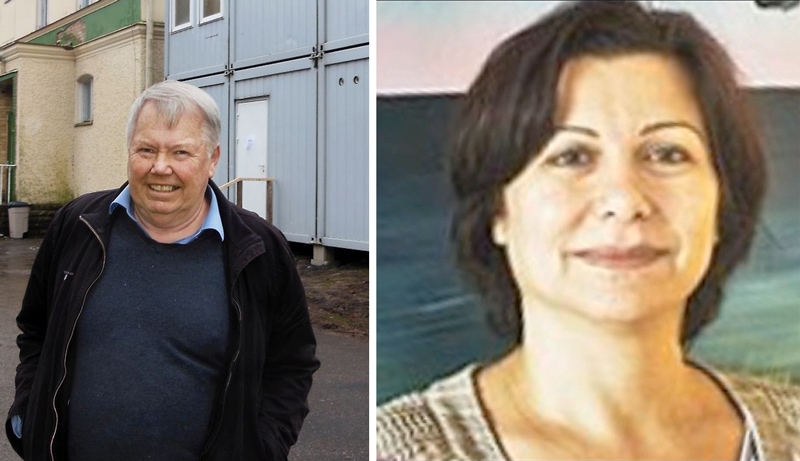
The biggest private company running asylum accommodations is owned by Bert Karlsson (left). In 2015, his company billed Swedish taxpayers $23.9 million. His homes require asylum seekers to buy their own toilet paper, apparently despite having agreed with the Migration Agency to provide asylum seekers with toilet paper, sanitary napkins and diapers. Wafa Issa (right) is head of the Migration Agency for the Stockholm region. She also runs a private company that is paid to provide foster homes to unaccompanied refugee children.

One of the losers is the Swedish police. They have reported that they can no longer cope with their jobs because they cannot handle the hundreds of young men in Sweden right now from Morocco and other countries in North Africa.

When you talk with journalists from Britain or the United States who think that Sweden’s migration policy is a role model, you have to think of those journalists who once saw the Soviet Union as a model. Communism did not work; Sweden’s migration policy does not work. That Sweden is a “humanitarian superpower” is truthfully nothing but marketing: the Green Party and some Social Democrats want to export Sweden’s liberal migration policy to the rest of Europe.

Although a small clique in Sweden have become millionaires because of the migration industry, the schools, police, social services and taxpayers in Sweden have lost a lot and have a difficult and uncertain future. There will be major conflicts in Sweden. There is nothing “noble” in Sweden’s migration policy. The Swedish migration model, far from being a good example of how a migration policy should function, is an embarrassment and a disaster, and its final result is chaos, conflict, and corruption.

Nima Gholam Ali Pour is a member of the board of education in the Swedish city of Malmö and is engaged in several Swedish think tanks concerned with the Middle East. He is also editor for the social conservative website Situation Malmö.
Sweden’s Holy War on Children’s Books by Judith Bergman

  • Taken to its extremes, the urge to cleanse a culture of elements that do not live up to the politically correct orthodoxy currently in political vogue unsettlingly echoes the Taliban and ISIS credos of destroying everything that does not accord with their Quranic views. The desire “not to offend,” taken to its logical conclusion, is a totalitarian impulse, which threatens to destroy everything that disagrees with its doctrines. Crucially, who gets to decide what is offensive?

  • The question arises: How much purging and expiation will be needed to render a country’s culture politically correct?
  • “When we have days of carnivals and music the goal is that these days should be experienced as positive by everyone. The Swedish flag is not allowed as part of carnival dress. … Positive and bright feelings must be in focus. … School photos must obviously be free of national symbols.” — Swedish school in Halmstad.
  • Rome covered up its classical nude statues for a visit from Iran’s president, Hassan Rouhani, in January 2016. A decade ago, who would have even imagined such sycophancy?

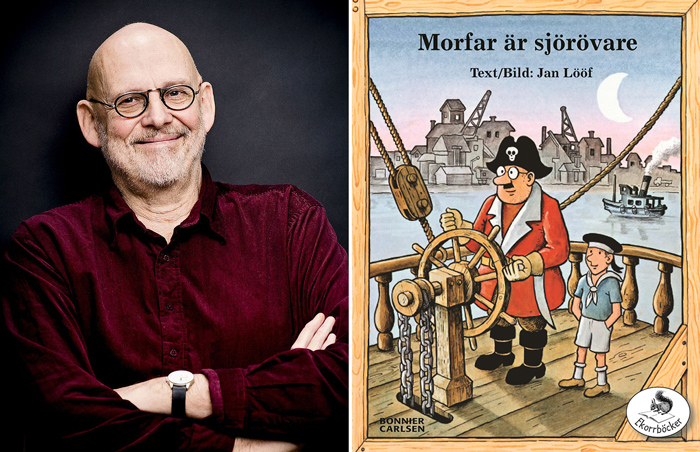
In 1966, one of Sweden’s most popular children’s writers, Jan Lööf, published Grandpa is a Pirate, an illustrated children’s book, which featured, among other characters, the wicked pirate Omar and the street peddler, Abdullah. The book has been a bestseller ever since, and has been translated into English (as My Grandpa is a Pirate), Spanish, French and other languages. Ten years ago, 100,000 copies of it were even distributed to the Swedish public with McDonald’s Happy Meals, as part of an initiative to support reading among children.

Ah, but those were the days of yesteryear! Now, fifty years later, the book is no longer tolerable. The now 76-year-old author told Swedish news outlets that his publisher recently said that unless he rewrites the book and changes the illustrations, it will be taken off the market. The publisher also threatened to withdraw another of his books unless it is redone: it features an illustration of a black jazz musician who sleeps with his sunglasses on.

Lööf’s publisher, the Swedish publishing giant Bonnier Carlsen, says that it has not yet made a final decision and that it only views the rewriting and re-illustrating of the books as “an option.” There is no doubt, however, that they consider the books in question extremely problematic.

“The books stereotype other cultures, something which is not strange, since all illustrations are created in a context, in their own time, and times change,” said Eva Dahlin, who heads Bonnier Carlsen’s literary department.

“But if you come from the Middle East, for instance, you can get tired from rarely being featured on the good side in literary depictions. Children’s books are special because they are read over a longer period of time and the norms of the past live on in them, unedited. As an adult, one may be wearing one’s nostalgic glasses and miss things that could be seen as problematic by others.”

Dahlin further explained that the publishing house spends a lot of time reviewing older publications, to check if such “problematic” passages occur. She added that the publishing house does not check for only culturally sensitive passages:

“There are many female editors, and therefore we have probably been more naturally aware of gender-biased depictions than these type of questions. But now we have better insights and a greater awareness of these issues.”

One of Sweden’s most popular children’s writers, Jan Lööf, was recently told by his publisher that unless he makes his bestselling 1966 book, Grandpa is a Pirate, more politically correct by rewriting it and changing the illustrations, it will be taken off the market.

Sweden is no stranger to “literary revisions” of this kind, or other cultural revisions in the name of political correctness. Both Pippi Longstocking and other children’s books have gone through assorted revisions or have even been taken off the market. In the Pippi Longstocking television series, a scene in which Pippi squints her eyes to look Chinese has been edited out altogether, so as not to offend anyone. In 2013, a popular, award-winning Danish children’s book, Mustafa’s Kiosk, by Jakob Martin Strid, was taken off the market in Sweden after complaints on Swedish social media that it was racist and “Islamophobic.” Ironically, the author wrote it in 1998, when he was staying in Indonesia, the world’s most populous Muslim country, as “an anti-racist statement.” Tellingly, the book had been on the Swedish market since 2002 with no complaints. In his response to the criticism, the Danish writer noted that an equal and non-racist society only comes about “when you are allowed to make (loving) fun of everyone.” “I also make fun of Norwegians,” he added.

In 2014, after complaints on Swedish social media that some of its candy was “racist,” the Haribo company decided to change one of its products, “Skipper Mix,” which consisted of candies shaped in the form of a sailor’s souvenirs, including African masks.

The question arises: How much purging and expiation will be needed to render a country’s culture politically correct?

That question raises an even bigger one: How high is the price of political correctness in terms of “cleansing” the past and present of perceived slights, anywhere, to just about anyone?

Taken to its extremes, the urge to cleanse a culture of elements that do not live up to the politically correct orthodoxy currently in political vogue unsettlingly echoes the Taliban and ISIS credos of destroying everything that does not accord with their Quranic views. The desire “not to offend,” taken to its logical conclusion, is a totalitarian impulse, which threatens to destroy everything that disagrees with its doctrines. Crucially, who gets to decide what is offensive?

What begins innocently enough, by taking out passages from books that may hurt someone’s feelings, can end up turning into something far more sinister, as it indeed has in Sweden. Former Swedish Prime Minister Frederik Reinfeldt famously stated in 2014 that Sweden belongs to immigrants, not to the Swedes who have lived there for generations. He thereby communicated that he believes the future of Sweden will be shaped by non-Swedes, showing a curious contempt for his own culture.

This contempt has spread fast throughout official Sweden. In 2014, a Swedish school in Halmstad forbade displaying the Swedish flag, after a student painted his face in the Swedish colors for a carnival. In its new rules, the school specified why:

“Most students look forward to school traditions. When we have days of carnivals and music the goal is that these days should be experienced as positive by everyone. The Swedish flag is not allowed as part of carnival dress. … Positive and bright feelings must be in focus. … School photos must obviously be free of national symbols.”

However, the “precedent” for such rules had already been set ten years prior, in 2004, at a school in Vaargaarda, when two girls had worn printed sweatshirts which happened to display the Swedish flag and the word “Sweden.” They were told that this kind of clothing was not allowed at school. One of the girls told reporters that singing the national anthem had also been forbidden at the school.

In 2012, two members of Sweden’s parliament suggested that statues of the Swedish Kings Carl XII and Gustav II Adolf should be removed, because they represent a time when Sweden was a great military power, “a dark time in our country as well as in other countries, which were affected by Swedish aggression,” as the MPs wrote in the motion. Instead, the MPs suggested, the squares of central Stockholm should be adorned in a way such that they “signal peace, tolerance, diversity, freedom and solidarity.”

In 2013, a Baroque painting of the nude goddess Juno was removed from the restaurant of the Swedish parliament, ostensibly to avoid offense to feminist and Muslim sensibilities.

The above should not be discarded as crazy practices peculiar to Sweden. On the contrary, they present a perfect case-study of the consequences of politically correct culture driven to the extreme.

Indeed, these consequences are already proliferating across the Western world. One particularly noteworthy instance took place when Iranian president Hassan Rouhani visited Rome in January 2016. To prevent Rouhani having “a hormonal shock and ripp[ing] up the freshly signed contracts with our Italian industries,” as one Italian columnist, Massimo Gramellini, wrote, Rome covered up its classical nude statues. Who would have even imagined such sycophancy a decade ago?

In Britain, students have recently campaigned for the removal of symbols of British imperialism, such as a statue of Cecil Rhodes at Oxford University. These students claim the campaign is not only about the statue itself, but that it is “…a campaign against racism at Oxford, of which the Rhodes statue is a small but symbolic part.” Already in 2000, the London Mayor Ken Livingstone suggested that statues of two 19th-century British generals should be removed from Trafalgar Square in London, based on his own ignorance:

“The people on the plinths in the main square of our capital city should be identifiable to the generality of the population. I haven’t a clue who two of the generals there are or what they did. I imagine that not one person in 10,000 going through Trafalgar Square knows any details about the lives of those two generals. It might be time to look at moving them and having figures ordinary Londoners and other people from around the world would know.” The problem with all this, of course, is that most of London’s wealth and greatness in terms of art and architecture is due largely to British colonialism, so the question is just how many buildings would be left standing in the British capital, if one were to take this issue and bring it to its logical conclusion.

The trouble with wanting to scrub the cultural and historical slate clean, as it were, is, of course, that countries cannot just press “delete” on their culture and history. Such a move would entail not just the removal of books, paintings and statues, but a complete purge. Those who truly care for history will know that this experiment has already been attempted, not once but several times over, by the various communist and Nazi movements of the twentieth century. While there is little comparison between those movements and the culture of political correctness, the impulse governing them all nevertheless remains the same: To forge and impose one singular “truth” on everyone, rooting out everything that does not fit the utopian mold. That is neither “diverse” nor “tolerant.”

Judith Bergman is a writer, columnist, lawyer and political analyst.

Sweden’s Afghan “Rapefugees” by Ingrid Carlqvist

  • Some 90 young men — “mostly Afghan refugee kids,” according to police — were apprehended in connection with the mass sexual assaults at the concert.

  • A recurring theme in recent articles by prominent feminists is the assertion that ethnic Swedish men act exactly the same as migrant gang-rapists.
  • One can draw only one conclusion: Feminists would rather protect Muslim men from criticism than protect Swedish women from sexual assaults.
  • None of the women’s shelters would admit that the mass sexual abuse of Swedish women might have anything to do with the perpetrators’ ethnicity or religion. They did not wish to “generalize,” they said — then hung up.
  • What Swedish politicians intend to do about the “Rapefugees” that are now in the country is anyone’s guess.

On New Year’s Eve, the same kind of mass sexual assaults that happened to women in Cologne — in Arabic called the “Taharrush” game — also took place in Sweden, but the police and the media have chosen to bury the information. The men, it turned out, were mainly Afghan, and claiming to be “unaccompanied refugee children.”

In reality, many of them are much older than 18, and are now commonly referred to with the recently coined name, “Rapefugees,” rather than “refugee children.”

It recently emerged that the Immigration Service urged its administrators to accept as a “child” everyone who looked under the age of 40 — apparently without any thought as to how inappropriate it is to place grown men in elementary and secondary schools with teenage girls. As Sweden — until December — kept its doors wide open to the migrants of the world, the country has accepted vastly more asylum seekers than its Nordic neighbors. Statistics for 2012-2015 are available via Eurostat, and provide the following statistics on the number of migrant arrivals:

  • Sweden: 342,635
  • Norway: 63,370
  • Denmark: 41,290
  • Finland: 40,470
  • Iceland: 675

Many who seek asylum in Sweden come from war-torn Syria: 51,338 in 2015. Afghanistan comes in at second place with 41,564 for the last year — an increase of a staggering 1,239% compared to 2014. Most of the Afghans seeking asylum claim to be children, and are therefore fast-tracked to being admitted within six months of the asylum application.

A few days after the story broke on the “Circle of Hell” attacks in Cologne, the alternative media website Nyheter Idag revealed that the respected daily newspaper, Dagens Nyheter, had known about similar attacks at a music festival in Stockholm in August 2015, but had declined to write about it.

Possibly to defend itself against accusations of a cover-up, Dagens Nyheter furiously attacked the Stockholm police. The newspaper claimed that the police had refused to corroborate reports of the attacks, thus tying the publishers’ hands and preventing the newspaper from running the story. Dagens Nyheter even claimed that a high-ranking police officer said, “This is a sore spot. Sometimes we are afraid to tell the truth because that might benefit the Sweden Democrats. The police do need to take responsibility for this.”

The police have accepted the blame — partly. The National Police Chief, Dan Eliasson, has now been tasked with investigating why the information was withheld.

Political decisions are not supposed to be made by the police. The leader of the Sweden Democrats Party, Jimmie Åkesson, reacted strongly to his party even being mentioned in this context, and demanded that National Police Chief Eliasson immediately be removed from office. Eliasson has long been a controversial figure. He started his career as a bass player in the punk rock band Bad Boo Band, best known for the radio hit song “Knulla i Bangkok” (F**king in Bangkok”), released in 1979. After his music career faded, Eliasson pursued a career in politics and public administration, and worked closely with several government ministers of the Social Democrat Party. When the Social Democrats lost the election in 2006, he was appointed Director General of the Immigration Service (2007-2011); then became Director General of the Social Security Service. In January 2015, he was appointed National Police Chief.

Despite such a roaring career, Eliasson has, on several occasions, made a spectacle of himself. In June 2007, the former Chancellor of Justice, Göran Lambertz, revealed that Eliasson, then State Secretary with the Justice Department, tried to get Lambertz to stop criticizing flaws in the Swedish judicial system. Eliasson’s request came after the Chancellor of Justice had initiated a report on the many Swedish men who had been wrongly convicted, mainly of sex crimes.

“I particularly remember meeting Bodström’s [then Minister of Justice] State Secretary in May 2006,” Lambertz said in a radio interview. “Eliasson made it clear that the minister would publicly renounce me if I did not tone down my criticism. I perceived this as undue influence.”

As head of Social Services, Eliasson tweeted in February 2014 that the mere sight on TV of the Sweden Democrats’ party leader, Jimmie Åkesson, made him physically sick. And now Eliasson is supposed to head an investigation into why the police withheld information on how “Rapefugees” attacked Swedish girls at the music festival “We Are Sthlm” [short for Stockholm] in August 2015?

When the news of the mass sexual assaults finally broke in early January, it was clear that the men involved had been so-called “unaccompanied refugee children.” Some 90 young men were apprehended by the police in connection with the sexual assaults. “According to an internal police report,” Dagens Nyheter wrote, “there was a large group of young people, ‘mostly Afghan refugee kids’, who stood out at the concert.”

In a similar scandal, it was also recently revealed that Swedish girls were sexually assaulted by groups of young men “of foreign background” in the summer of 2015, during a music festival in Malmö’s Pildammsparken park. The photographer Freddy Mardell told internet radio station Granskning Sverige that he witnessed the chaos, with crying, hysterical girls. Mardell took photographs and offered them to local daily newspaper, Kvällsposten. The newspaper declined to publish them.

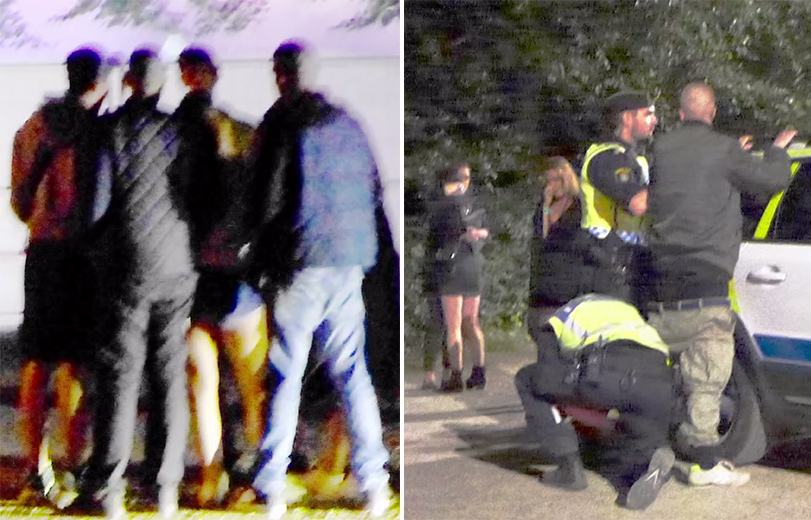
Scenes from a Malmö summer music festival… Left: Four young men surround and sexually assault a young woman. Right: Police arrest a suspect, as sexual assault victims cry in the background. The photographer reported that Swedish girls were sexually assaulted by groups of young men “of foreign background.”

It is also now clear that girls were attacked by large groups of Muslim men on New Year’s Eve in the Swedish cities of Kalmar and Malmö as well. The daily newspaper Kvällsposten reported that “gangs of young men surrounded inebriated girls on New Year’s Eve in Malmö.” Incidents happened in several locations in Malmö city, around the King’s Park and Central Station.

One police report read: “Something that stood out compared to earlier years was that a couple of hundred that I perceive as ‘unaccompanieds from Afghanistan’ drifted around the city, causing mayhem. There were several cases of large gangs surrounding mostly intoxicated girls/women and molesting them.” In Kalmar, where people had gathered in the square, Larmtorget, to celebrate, several girls were subjected to sexual molestation. So far, 16-17 complaints have been filed to the police.

“Lisa” told the local paper, Barometern:

“We stood at the edge of the square at first, but we noticed immediately how many men were in the square and when we went out there, things got really unpleasant. These were men who did not speak Swedish, men of all ages. They surrounded us and started groping; they also took hold of people’s heads and forcibly kissed their cheeks and foreheads. When we told them to leave or stop, they just laughed at us and asked ‘What have I done?’ We have all reported this to the police. It is outrageous that one should have to be afraid to go out at night or ride a bus alone in the evening. And we are not the only ones who have had this experience; I have girlfriends in Kalmar who say that they would rather not go out by themselves after dark. One thing is for sure, I will never celebrate New Year’s in Kalmar again, I would rather stay with my parents at home.”

Swedish feminists appear to be the group least upset by the “Rapefugee” attacks. They turn their backs on the victims by refusing to acknowledge that mass sexual abuse such as Taharrush is part of Sweden’s new reality.

During the past week, newspapers have been overflowing with opinion pieces in which various feminists claim that these attacks have nothing to do with religion or ethnicity, but with the bare fact that the perpetrators are men. One can draw only one conclusion: Feminists would rather protect Muslim men from criticism than protect Swedish women from sexual assaults. A recurring theme in the articles is the assertion that ethnic Swedish men act exactly the same as migrant gang-rapists.

Remarks by feminists go:

The last article was written by Gudrun Schyman, an ex-communist and current leader of the Feminist Initiative Party. In an interview with the podcast, “The Feminist Inspection,” Schyman said that mass sexual assaults are “nothing new” but “have been around for a very long time in all of our countries. “That is just how it is,” Schyman claimed, “men take liberties when anonymity and proximity enable them. I do not think it has accelerated, it is just that the propensity to report it has increased.”

Viktor Banke, a (male) feminist and lawyer, lamented in the free daily, Metro, that the attacks “play right into the hands of the Sweden Democrats… If necessary,” he wrote, “we should be able to talk about a perpetrator’s background. But we cannot afford to let the debate on the vulnerability of women be hijacked by people who take an interest in women’s rights only when they smell a perpetrator of another skin color.”

Gatestone Institute called a large number of women’s shelters and asked them what they thought about the mass sexual abuse of Swedish women. None would admit that the abuse might have anything to do with ethnicity or religion. They did not wish to “generalize,” they said; then, as soon as the question of ethnicity or religion was mentioned, they hung up.

In Norway, however, the police are well aware of the differences between Western and Islamic views of women. Eivind Borge, head of the Tactical Intelligence Department of the National Criminal Investigation Service (Kripos), told the daily newspaper Aftenposten that attacks like those in Sweden and Germany have, to his knowledge, not yet taken place in Norway, but that the police are prepared: “A lot of asylum seekers who have come to Norway during the last few months come from countries where the culture is quite different from ours. Many have grown up in cultures where there is a higher acceptance of various kinds of sexual harassment of women in public places.”

Benedicte Bjørnland, Chief of the Norwegian Police Security Service (PST), recently spoke at the “People and Defense” (“Folk och Försvar“) conference in Sweden. “You cannot assume,” she said, “that new arrivals will automatically adapt to the values and rules of Norwegian society. Rapidly increasing immigration, especially from Muslim countries, can also bring other challenges in the long run. When a large number of asylum seekers descend on a local community, it can lead to unfortunate consequences.”

In Denmark, the state is permitted to compile statistics on the ethnicity of criminals, something Sweden stopped doing years ago. During the last ten years in Denmark, 615 people have been convicted of rape — of these, 212 were first- or second-generation immigrants. That number equals more than one third (34.5%) of all convicts, three times higher than the immigrants’ share of the population.

Gatestone Institute contacted one of Sweden’s best known criminologists, Professor Jerzy Sarnecki of Stockholm University. When asked if it were possible to get statistics that show if Muslims were over-represented in Sweden’s rape convictions, Professor Sarnecki replied: “We do not maintain statistics like that in Sweden.”

Sarnecki was asked then if the failure to have reliable statistics did not fuel rumors and prejudice.

“Yes,” he replied, “or it confirms them. I do not mind such knowledge coming to light. You cannot do something about a problem if you do not have the facts. It is of course possible to do studies by going in and reviewing the criminals, and asking them about their religion, but that has not been done in Sweden as far as I know.”

Professor Sarnecki confirmed that immigrants in Sweden convicted for virtually all types of crimes — sex crimes most of all — are represented in a proportion greater than their percentage of the population, as shown in 25 studies conducted between 1974 and 2005. The latest report was called “Crime among persons born in Sweden and abroad” (“Brottslighet bland personer födda i Sverige och i utlandet“). Sarnecki says that because the statistics are unequivocal, he believes further studies would be pointless.

Swedish men are outraged by the current debate. On social media, many say that they have been unfairly singled out — and most definitely do not want to be associated with men who commit gang rape.

From a sampling of social media posts and comments:

Conrad: “It makes me furious that feminists claim that I would behave like these barbarians, simply because we belong to the same gender.”

Fredrik: “I am not easily offended, but I am pissed off, sad and insulted that I am being lumped together with other men as a potential gang rapist. I have almost had a falling out with some of my female friends, after they have urged men on Facebook to ‘talk to each other’ to prevent rapes in the future. WTF? Do women believe that normal men talk to their friends about this? If I knew someone who had committed a rape, that bastard would immediately be reported to the police and then be left without a social network.”

Jan: “I do not want to be compared to these uncivilized ogres. Very offensive that feminist writers point the finger at an entire group for something very few have done. It is called collective punishment…”

Willy: “If one is to believe the arguments of feminist debaters about the rape attacks, there is only one solution: Exterminate all men.”

Lorentz: “The comparison with Swedish men is base and grotesque.”

Johan: “Swedish feminists live in one of the most gender-equal countries in the world. That balance is now tipping over, and Swedish women are no longer safe in the streets. So what are the feminists fighting for? The view of women? No, they are trying to kick the timid, equal Swedish men. Talk about denial and cowardice.”

Tommy: “This is obviously a problem we have had in the past, that good upbringing and gender equality have freed us from. But increased immigration, mostly by Muslim men, puts us back not to square one, but to square -500.”

Mathias: “I have been brought up to respect women. I would never ever lay hand on a woman or rape her. It is ingrained in my soul. It is our task as men to protect our women against the threat that they face.”

What Swedish politicians intend to do about the “Rapefugees” that are now in the country is anyone’s guess. Prime Minister Stefan Löfven’s only comment so far was:

“First, I want to say that I am very angry that young women cannot go to a music festival without being violated, sexually harassed and attacked. This is a very big problem to those affected, but also a democratic problem for our entire country and we should therefore not budge an inch. We should not close our eyes and look away. We should address such a serious problem.”

The Swedish people are still waiting to see where the Prime Minister will look.

Ingrid Carlqvist is a journalist and author based in Sweden, and a Distinguished Senior Fellow of Gatestone Institute.

Sweden Descends into Anarchy by Ingrid Carlqvist

  • “You have to understand that Swedes are really scared when an asylum house opens in their village. They can see what has happened in other places.” — Salesman for alarm systems.


  • Since Parliament decided in 1975 that Sweden should be multicultural and not Swedish, crime has exploded. Violent crime has increased by over 300% and rapes have increased by an unbelievable 1,472%.

  • Many Swedes see the mass immigration as a forced marriage: Sweden is forced to marry a man she did not choose, yet she is expected to love and honor him, even though he beats her and treats her badly. Her parents (the government) tell her to be warm and show solidarity with him.

  • “Are the State and I now in agreement that our mutual contract is being renegotiated?” — Alexandra von Schwerin, whose farm who was robbed three times. Police refused to help.

Once upon a time, there was a safe welfare state called Sweden, where people rarely locked their doors.

Now, this country is a night-watchman state — each man is on his own. When the Minister of Justice, Morgan Johansson, encourages breaking the law, it means opening the gates toanarchy. Mr. and Mrs. Swede have every reason to be worried, with the influx of 190,000 unskilled and unemployed migrants expected this year — equivalent to 2% of Sweden’s current population. The number is as if 6.4 million penniless migrants who did not speak English arrived in U.S. in one year, or 1.3 million in Britain.

And the Swedes are preparing: demand for firearms licenses is increasing; more and more Swedes are joining shooting clubs and starting vigilante groups. After a slight dip in 2014, the number of new gun permits has gone up significantly again this year. According to police statistics, there are 1,901,325 licensed guns, owned by 567,733 people, in Sweden. Add to this an unknown number of illegal weapons. To get a gun permit in Sweden, you need to be at least 18 years old; law-abiding; well-behaved, and have a hunting license or be a member of an approved shooting club. In 2014, 11,000 people got a hunting license: 10% more than the year before. One out of five was a woman.

“There is also a high demand for alarm systems right now,” says a salesman at one of the security companies in an interview with Gatestone.

“It is largely due to the turbulence we are seeing around the country at the moment.” People have lost confidence in the State, he added. “The police will not come anymore. Truck drivers say that when they see a thief emptying the fuel tank of their trucks, they run out with a baseball bat. It is no use calling the police, but if you hit the thief, you can at least prevent him from stealing more diesel. Many homeowners say the same thing: they sleep with a baseball bat under the bed. But this is risky: the police can then say you have been prepared to use force, and that might backfire on you.”

The salesman, who asked to remain anonymous, also spoke of Sweden’s many Facebook groups, in which people in different villages openly discuss how they intend to protect themselves: “Sometimes you get totally freaked out when you see what they are writing. But you have to understand that Swedes are really scared when an asylum house opens in their village. They can see what has happened in other places.”

One blog, detailing the consequences for the local population when an asylum facility opens, is aptly named Asylkaos (“Asylum Chaos”). There is a list of companies the reader is prompted to boycott; the blog claims these businesses encourage the transformation of Sweden to a multicultural society, and are therefore considered “hostile to Swedes.”

At another security company, a salesman said that every time the Immigration Service buys or rents a new housing facility, his firm is swamped with calls. “The next day,” he said, “half the village calls and wants to buy alarm systems.”

Ronny Fredriksson, spokesman of the security company Securitas, said that the demand for home alarm systems first exploded about six years ago, when many local police stations were shut down and police moved to the main towns. This, he said, could result in response times of several hours. “More and more people now employ the services of our security guards. Shopping malls and stores in the city come together and hire guards. We are kind of like the ‘local beat’ cops of old.”

Even though Securitas makes big money from the increased need for home security alarms and security guards, Fredriksson says they also are worried about the effect on society:

“The problem is that we too need the police. When our guards catch a burglar or a violent person, we call the police but the response times are often very long. Sometimes, the detainees get violent and quite rowdy. On occasion, the police have told us to release the person we have apprehended, if we have his identity, because they do not have a patrol nearby.”

Even before the massive influx of migrants in the fall of 2015, Swedes felt a need to protect themselves — and with good reason. Since the Parliament decided in 1975 that Sweden should be multicultural and not Swedish, crime has exploded. Violent crime has increased by more than 300%, and rapes have increased by an unbelievable 1,472%.

The politicians, however, ignore the people’s fear completely. It is never discussed. Instead, the people who express concern about what kind of country Sweden has become are accused of xenophobia and racism. Most likely, that is the reason more and more people are taking matters into their own hands, and protecting themselves and their families to the best of their ability.

All the same, some people do not settle for that. It seems some people are trying to stop mass immigration to Sweden. Almost every day there are reports of fires being set at asylum houses. So far, miraculously, no one has been hurt.

These fires are set not only by Swedes. On October 13, a 36-year-old woman living in Skellefteå was convicted of setting fire to the asylum facility in which she herself resided. The woman claimed she lit a candle and then fell asleep. Yet forensic evidence showed that a combustible fluid had been doused throughout the room, and the court found beyond a reasonable doubt that she herself had ignited the fire.

Left: The burned remains of a home for asylum seekers in Munkedal, Sweden, after it was torched last month. Right: There are nearly 2 million licensed guns, owned by 567,733 people, in Sweden.

The number of violent incidents at Sweden’s Immigration Service facilities is now sky-high. In 2013, according to Dispatch International, at least one incident happened every day. When Gatestone Institute recently acquired the incident list for January 1, 2014 through October 29, 2015, that number had risen to 2,177 incidents of threats, violence and brawls — on average, three per day.

The Swedish government, however, would apparently rather not talk about that. Foreign Minister Margot Wallström conceded, in an interview with the daily Dagens Nyheter that garnered international attention, that Sweden is, in fact, heading for a systemic breakdown:

“Most people seem to think we cannot maintain a system where perhaps 190,000 people will arrive every year. In the long run, our system will collapse. This welcome is not going to receive popular support. We want to give people who come here a worthy reception.”

Symptomatic of Swedish journalists, this statement was tucked away at the end of the article. The headline was about how the political party that is critical of immigration, the Sweden Democrats Party (Sverigedemokraterna), is responsible for the asylum-housing fires. But foreign media, such as The Daily Mail and Russia Today, picked up Wallström’s warning about a systemic collapse and ran it as the urgent news it actually is.

Nevertheless, in official Sweden, the imminent collapse is ignored. Instead, journalists exclusively focus on attacks by supposedly “racist” Swedes on refugee centers. To prevent new fires, the Immigration Service decided on October 28 that from now on, all asylum facilities would have secret addresses. And meager police resources will now be stretched even further — to protect asylum seekers. Police helicopters will even patrol refugee centers. But considering there are only five helicopters available, and that Sweden’s landmass is 407,340 square km (157,274 square miles), this gesture is effectively empty.

At a meeting with the Nordic Council in Reykjavik, Iceland, on October 27, Sweden’s Prime Minister, Stefan Löfven, was questioned by his Nordic colleagues about the situation in Sweden. Löfven had recently said that, “We should have the option of relocating people applying for asylum in Sweden to other EU-countries. Our ability, too, has a limit. We are facing a paradigm shift.” That comment led a representative of Finland’s Finns Party (Sannfinländarna) to wonder, with a hint of irony, how mass immigration to Sweden, which for years Swedish politicians have touted as being so profitable, has now suddenly become a burden.

Another Finns Party representative, Simon Elo, pointed out that the situation in Sweden is out of control. “Sweden has great abilities, but not even the Swedes have abilities that great,” Elo said.

When Löfven was asked how he is dealing with the real concerns and demands of the citizenry, his answer was laconic: “Of course I understand there is concern,” Löfven said. “It is not easy. But at the same time — there are 60 million people on the run. This is also about them being our fellow men, and I hope that viewpoint will prevail.”

The daily tabloid Expressen asked Löfven about the attacks on asylum facilities. He replied, “Our communities should not be characterized by threats and violence, they should be warm and show solidarity.”

As if such behavior can be forced.

Many Swedes see mass immigration as a forced marriage: Sweden is forced to marry a man she did not choose, yet she is expected to love and honor him even though he beats her and treats her badly. And on top of that, her parents (the government) tell her to be warm and show solidarity with him.

More and more Swedish commentators are now drawing the same conclusion: that Sweden is teetering on the brink of collapse. Editorial columnist Ivar Arpi of the daily Svenska Dagbladet,wrote an astonishing article on October 26, about a woman named Alexandra von Schwerin and her husband. The couple lives on the Skarhults Estate farm in Skåne in southern Sweden; they have been robbed three times. Most recently, they were robbed of a quad bike, a van and a car. When the police arrived, von Schwerin asked them what she should do. The police told her that they could not help her. “All our resources are on loan to the asylum reception center in Trelleborg and Malmö,” they said. “We are overloaded right now. So I suggest you get in touch with the vigilante group in Eslöv.”

What the police had called a “vigilante group” turned out to be a group of private business owners. In 2013, after being robbed more or less every night, they had decided to come together and start patrolling the area themselves. Currently, they pay a security firm to watch their facilities.

“On principal, I am totally against it,” von Schwerin said. “What are the people who cannot afford private security to do? They will be unprotected. I’m sure I will join, but very, very reluctantly. For the first time, I feel scared to live here now. Are the State and I now in agreement that our mutual contract is being renegotiated?”

Commenting on the police’s encouraging people to join vigilante groups, social commentator and former Refugee Ombudsman Merit Wager wrote:

“So, the Swedes are supposed to arrange and pay for their own and their families’ security and keep their farms from being subjected to theft, even though that has up to now been included in the social contract — for which we pay high taxes, to have police we can count on to protect us and apprehend criminals?! When did the social contract expire? October 2015? Without any notice of termination, since the tax-consuming party is not fulfilling its part of the deal? This should mean that our part of the deal – to pay taxes for public, joint services — has also become invalid? If the social contract is broken, it is broken. Then it is musical chairs (lawlessness, defenselessness, without protection), and that means that each and every one of us should pay less taxes.”

Ilan Sadé, lawyer and social commentator, wrote about the refugee chaos at Malmö Central Train Station on the blog Det Goda Samhället on October 27: “The authorities no longer honor the social contract.” He described four large signs on display around the station that read “Refugee? Welcome to Malmö!” in four different languages.

“It is unclear who the sender of the message is, or, for that matter, who is in charge of the reception facility — a number of barracks by the old post office in the inner harbor. Everything is utterly confusing. It could be Malmö City or the Immigration Service, but it might as well be ‘Refugees Welcome,’ or possibly a religious community. I think to myself that a government agency could not reasonably write like this, a correct and pertinent sign would say something like: ‘Asylum seekers are referred to the barracks for information and further transport.’ But I am probably wrong; Malmö City is the chief suspect communicant. … The signs in and around the Central Station are symptoms of something incredibly serious: Role confusion and the decay of the constitutional state. And thus, that our authorities no longer honor the social contract.”

In a post called Anarchy, blogger Johan Westerholm, who is a Social Democratic Party member and a critic of the government, wrote that the Minister for Justice and Migration, Morgan Johansson, is now urging authorities to “be pragmatic” about laws and regulations (concerning asylum housing for so-called unaccompanied refugee children). Westerholm stated that this is tantamount to the government “opening the gates to anarchy”:

“Our country is founded on law; Parliament legislates and the courts apply these. Morgan Johansson’s statement and his otherwise passive approach are testimony to how this, our kind of democracy, may fade into a memory very shortly. He now laid the first brick in the building of a state that rests on other principles. Anarchism.”

If anarchy really does break out, it would be good to remember that there are nearly two million licensed firearms in Sweden. Sweden’s shooting clubs have seen a surge in interest; many are welcoming a lot of new members lately.

Translate »
Skip to toolbar