Category Archives: Uncategorized
Spicer’s Mistake and the Democrat’s Over-Reaction by Alan M. Dershowitz
Sean Spicer made a serious mistake when he compared Bashar Al-Assad to Hitler, and to make matters worse, he got his facts wrong. He quickly and fully apologized. There was no hint of anti-Semitism in his historical mistake and his apology should have ended the matter. But his political enemies decided to exploit his mistake by pandering to Jews. In doing so, it is they who are exploiting the memory of the six million during the Passover Holiday.
The Democratic National Committee issued a rebuke with the headline “We will not stand for anti-Semitism.” Its content included the following: “Denying the atrocities committed by Adolf Hitler and the Nazi regime is a tried and true tactic used by Neo-Nazis and white supremacists groups that have become emboldened since Donald Trump first announced his campaign for president.” By placing Hitler and Trump in the same sentence, the DNC committed a mistake similar to that for which they justly criticized Spicer. Moreover, the DNC itself, is co-chaired by a man who for many years did “stand for anti-Semitism” — namely Keith Ellison who stood by the notorious anti-Semite Louis Farrakhan, while denying that he was aware of Farrakhan’s very public Jew-hatred. It is the epitome of Chutzpah for the DNC to falsely accuse Spicer of standing by anti-Semitism while it is they who are co-chaired by a man who committed that sin. In another display of Chutzpah, Jeremy Ben Ami of J Street an organization that supports Keith Ellison characterized Spicer’s statement as “unforgivable.” I do not recall him saying that Ellison’s collaboration with a notorious anti-Semite was “unforgivable.” Indeed, Ben Ami quickly forgave him and continues to support him.
Nancy Pelosi, the House Minority leaders, falsely accused Spicer of “downplaying the horror of the Holocaust.” But by leveling that false accusation, Pelosi herself is exploiting the tragedy.
Steven Goldstein, a hard-left radical who heads a phony organization that calls itself “The Anne Frank Center for Mutual Respect,” accused Spicer of “engage[ing] in Holocaust denial.” He called Spicer’s mistake a “most evil slur” against the Jewish people. Goldstein claims to speak for the Jewish people, but he represents only himself and a few handfuls of radical followers who are not in any way representative of the mainstream Jewish community. He repeatedly exploits the Holocaust in order to gain publicity for him and his tiny group of followers. Shame on them!
These over the top reactions to a historical mistake made by Spicer that was not motivated by anti-Semitism represents political exploitation of the Holocaust. Spicer was wrong in seeking to bolster his argument against Assad by referring to Hitler, and his political opponents are wrong in exploiting the tragedy of the Holocaust to score partisan points against him.
The difference is that Spicer gaffe was not in any way pre-meditated, whereas the exploitation by his enemies was carefully calculated for political gain. All sides must stop using references to Hitler and the Holocaust in political dialogue. Historical analogies are by their nature generally flawed. Analogies to the Holocaust are always misguided, and often offensive, even if not so intended.
On CNN the other night, Don Lemon asked me if I was “offended as a Jew” by what Spicer had said. The truth is that I was offended as someone who cares about historical accuracy by Spicer’s apparent lack of knowledge regarding the Nazi’s use of chemicals such as Zyklon B to murder Jews during the Holocaust. But it never occurred to me that Spicer’s misstatements were motivated by anti-Semitism, Holocaust denial or an intent to “slur” the Jewish people. Nor do I believe that those who have accused him of such evil motivations actually believe it. They deliberately attributed an evil motive to him in order to pander to Jewish listeners. That offends me more than anything Spicer did.
Extreme right wing anti-Semitism continues to be a problem in many parts of Europe and among a relatively small group of “alt-right” Americans. But hard left and Muslim extremist anti-Semitism is a far greater problem in America today, especially on university campuses. So those of us who hate all forms of anti-Semitism and bigotry, regardless of its source, must fight this evil on a non-partisan basis. We must get our priorities straight, focusing on the greatest dangers regardless of whether they come from the right or the left, from Republicans or Democrats. The fight against bigotry is a bi-partisan issue and must not be exploited for partisan gain.
Spain: Courses on Islam in Public Schools A Gateway to Radical Islam?
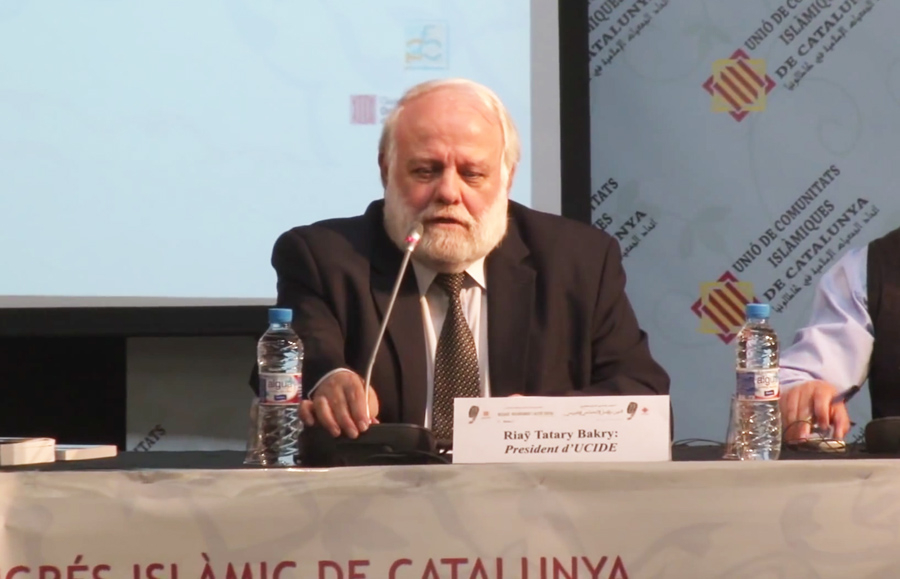
- The guidelines for teaching Islam in public schools — drafted by the Islamic Commission of Spain and approved by the Ministry of Education — are aimed at stirring religious fervor and promoting Islamic identity among young Muslims in Spain.
-
- The guidelines, which envision the teaching of every aspect of Islamic doctrine, culture and history, are interspersed with “politically correct” terminology… but the overall objective is clear: to inculcate young people with an Islamic worldview.
- According to the guidelines, preschoolers (ages 3- 6) are to learn the Islamic profession of faith, the Shahada, which asserts that “there is no God but Allah and Mohammed is his messenger.” The Shahada is the gateway into Islam: one becomes a Muslim by repeating the Shahada three times in front of a witness. They are also encouraged to “emulate, through different forms of expression, the values observed by Mohammed.”
- In primary school (ages 6-12), the guidelines call for children to “recognize Mohammed as the final prophet sent by Allah and accept him as the most important.”
The Spanish government has published new guidelines for teaching Islam in public preschools and primary and secondary schools.
The guidelines are being touted as a way to prevent Muslim children and young people from being drawn into terrorism by exposing them to a “moderate” interpretation of Islam.
On closer inspection, however, the guidelines — drafted by the Islamic Commission of Spain and approved by the Ministry of Education — are aimed at stirring religious fervor and promoting Islamic identity among young Muslims in Spain.
The new plan, which is the most ambitious in all of Europe, amounts to a government-approved program to establish a full-fledged Islamic studies curriculum at public schools nationwide, at a time when Christian religious symbols are being systematically removed from Spanish public schools by official enforcers of secularism.
Although Spanish taxpayers are being expected to pay for the religious education of up to 300,000 Muslim students between the ages of 3 and 18, it remains unclear whether Spanish authorities will have any oversight of the teaching of Islam in public schools. The government has agreed to allow local Muslim organizations to draft the course syllabi, choose the textbooks, and even determine who will teach the classes.
Spain’s Ministry of Education quietly published the guidelines in the official state gazette (Boletín Oficial del Estado) on March 18. The curriculum for teaching Islam in Spanish public preschools can be found here; in public primary schools here; and in public secondary schools here.
The guidelines, which envision the teaching of every aspect of Islamic doctrine, culture and history, are interspersed with “politically correct” terminology — the documents are rife with buzzwords such as coexistence, diversity, equality, human rights, inclusion, integration, intercultural education, interreligious dialogue, moderation, pluralism, religious liberty, respect and tolerance — but the overall objective is clear: to inculcate young people with an Islamic worldview.
According to the guidelines, preschoolers (ages 3- 6) are to learn the Islamic profession of faith, the Shahada, which asserts that “there is no God but Allah and Mohammed is his messenger.” The Shahada is the gateway into Islam: one becomes a Muslim by repeating the Shahada three times in front of a witness.
Block 6 is aimed at instilling “interest for Islamic religious and cultural texts,” stirring “curiosity for the Koran in oral and written language,” and learning “Islamic recitations, narrations and descriptions.”
Children should develop an “attitude of listening to Koranic and prophetic texts” and memorize “short Hadiths [reports about the words, actions or habits of Mohammed] and Koranic stories.” They are also encouraged to “emulate, through different forms of expression, the values observed by Mohammed.”
In primary school (ages 6-12), the guidelines call for children to “recognize Mohammed as the final prophet sent by Allah and accept him as the most important.” Students are to “recite the Shahada in perfect Arabic and Spanish,” and “recognize that the Koran is a guide for all of humanity.” Children are to “know certain Arabisms in the Spanish language and appreciate the linguistic contributions of Islam to the history of Spain, using verbal language to communicate emotions and sentiments.”
Primary school students are to “know examples of Mohammed’s coexistence with non-Muslims,” although there is no indication that Muslim pupils will be taught about the 900 Jews of the Banu Qurayza tribe in Medina that Mohammed ordered to be beheaded in 627AD.
Students are also to “understand that Islam is a religion of peace — spiritual or internal peace and social or communitarian peace. The prophet teaches us to live in peace. Islam promotes solutions to resolve conflicts and social inequality.”
Moreover, the guidelines call for primary students to “comprehend and explain the existence of other monotheistic revelations of Allah: Judaism and Christianity.” But it remains unclear whether students will learn about the three instances in the Koran (Suras 2:65, 5:60 and 7:166) in which Allah turns Jews into apes and/or pigs.
In secondary school (ages 12-18), the guidelines call for students to “know, analyze and explain the affective-emotional attitudes of Mohammed when confronting personal offenses, valuing conflict resolution.” It remains unclear whether students will learn about Suras 5:33 and 33:57-61, which call for curses against those who “annoy Allah and His Messenger.”
Block 4 calls on students to evaluate the “transversality present in the Koran and the Hadiths regarding social relations.” It does not, however, mention whether students will be taught that the Koran and the Hadiths require non-Muslim subjects (dhimmis) residing in Muslim lands to pay a protection tax known as the jizya.
In a section on the “Islamic model for economics and jurisprudence,” students are asked to identify Islamic solutions to world problems. They are also asked to “analyze and explain the benefits of interest-free loans [aka Sharia finance].”
In Block 8, students are asked to “analyze the stages of the establishment and flourishing of Islamic jurisprudence [Sharia law] during the splendor of al-Andalus.”
Al-Andalus is the Arabic name given to those parts of Spain, Portugal and France that were occupied by Muslim conquerors (also known as the Moors) from 711 to 1492. The Islamic State (ISIS) has repeatedly vowed to “liberate” al-Andalus from non-Muslims and make it part of their new Islamic Caliphate.
The guidelines also encourage students to use the internet to learn more about Islam, even though the internet is playing an increasingly important role in the radicalization of young Muslims.
The legal basis for teaching Islam in Spanish public schools can be found in Article 27.3 of the Spanish Constitution of 1978, which establishes that although Spain is non-confessional (meaning that it does not recognize an official state religion), “the State guarantees parents the right for their children to obtain a religious and moral education which conforms to their own convictions.” Muslims (and Roman Catholics) have long understood this to mean that children are entitled to religious education in public schools.
On November 10, 1992, the Socialist government of Felipe González — seeking to end the monopoly of the Roman Catholic Church over Spanish education — negotiated a “Cooperation Agreement between the Government of Spain and the Islamic Commission of Spain” (Comisión Islámica de España, CIE). That agreement, codified in Law 26/1992, recognized Islam as a minority religion in Spain and guaranteed that “Muslim students … receive Islamic religious education in public schools.”
(Also on November 10, 1992, the Spanish government approved the “Cooperation Agreement between the Government of Spain and the Federation of Evangelical Christian Entities in Spain.” That agreement was codified in Law 24/1992. In June 1993, the Spanish government published guidelines for the teaching of evangelical Christianity in public schools.)
In recent years, Muslim leaders in Spain have complained that the Spanish government has failed to implement the 1992 agreement. According to the CIE, 90% of Muslims students in Spain lack access to Islamic studies in public schools. The new guidelines appear to signal the current government’s commitment to follow through on the promises of past governments.
The guidelines were drafted by CIE president Riaÿ Tatary, a Syrian who has lived in Spain for more than 45 years. Tatary, a medical doctor who is also the imam of the Abu-Bakr Mosque, the second-largest mosque in Madrid, is often portrayed as the epitome of Muslim integration and moderation.
Tatary is the chief interlocutor between Spain’s Muslim community and the Spanish government and has received a civilian merit award from the Ministry of Justice for his work on Spain’s law on religious liberty.
But Spanish counterterrorism analysts (here and here) have long suspected that Tatary is closely linked to the Muslim Brotherhood, which is highly critical of Western concepts of justice and democracy. The Brotherhood’s motto is: “Allah is our objective; the Prophet is our leader; the Koran is our law; Jihad is our way; dying in the way of Allah is our highest hope.”
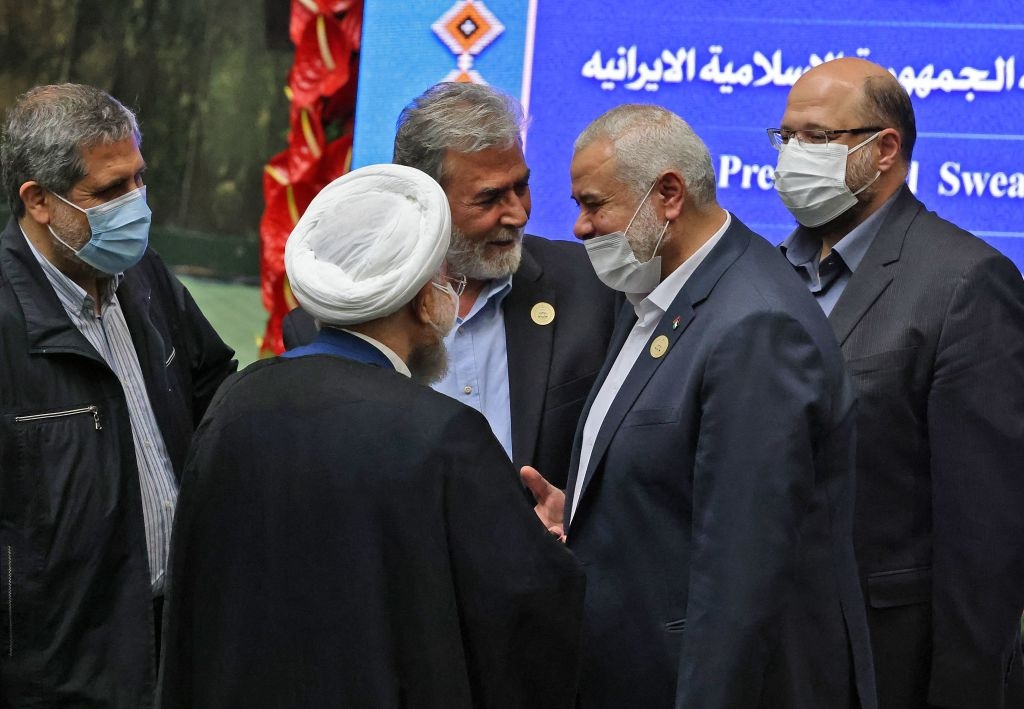
The Spanish government’s curriculum guidelines for public school Islamic studies were drafted by Riaÿ Tatary, imam of the Abu-Bakr Mosque. Spanish counterterrorism analysts have long suspected that Tatary is closely linked to the Muslim Brotherhood. |
Tatary denies the charges, although members of his mosque have, in fact, been tied to al-Qaeda.
Ahead of municipal elections in May 2015, Tatary admonished Muslims in Spain not to vote for any candidate who “hinders or impedes the establishment of mosques for our faithful, and cemeteries for our dead.” He also said that Muslim voters should not vote for anyone who “hinders or prevents the children of Muslim citizens from receiving Islamic religion courses in public or private schools.”
Spanish political analysts said Tatary’s attempt to enforce the Spanish Muslim vote was alarming:
“At first glance, it does not seem objectionable that a group, whatever its nature, defends the rights of its members. However, when it comes to an entity that appeals to religion to impose a massive discipline of the faithful in the political arena, we cannot but be alarmed. Especially when that religion is engaged in relentless war within itself and with the rest of the civilized world.”
It seems unlikely, however, that parents and imams will accept many of Tatary’s politically correct non-literal interpretations of the Koran, which apparently are aimed at securing the government’s approval of the guidelines. The challenge of reform-minded Muslims is to convince the majority of Muslims that the Koran and the Hadiths do not actually mean what they say.
In the end, the new guidelines may end up achieving a completely undesired objective: serving as gateway to radical Islam for tens of thousands of young Muslims in Spain.
Spain: “Pacifist” Imam Arrested on Terror Charges The New York Times once praised his moderation by Soeren Kern
- Several months after the New York Times published its hagiography of Shashaa, he was arrested for physically assaulting his third wife, who was hospitalized with a broken nose and shoulder. “The attack was obviously very brutal,” a hospital spokesperson said at the time. “What a man does with his wife does not concern the authorities,” Shashaa said.
-
- Spanish High Court Judge Eloy Velasco ordered Shashaa — who lives in a 10,000 square meter (108,000 square foot) mansion in Teulada-Moraira, a small coastal town on Spain’s Mediterranean coast, with his four wives and 18 children — to be held in prison without bail.
- Spanish authorities are now investigating the source of Shashaa’s wealth. His mosque in Munich was shuttered in October 2015 due to financial difficulties, while the mansion he purchased in Spain in February 2015 is said to be worth more than half a million euros.
- More than two weeks after Shashaa was arrested, the New York Times still has not reported on the fate of its poster boy for Salafist pacifism.
Spanish authorities have arrested a Muslim cleric — whom the New York Times once praised for his efforts to fight radicalization within Germany’s Islamic community — for alleged ties to the Islamic State.
Hesham Shashaa (aka Abu Adam), a 46-year-old Egyptian-Palestinian, was detained near Alicante in southeastern Spain on April 26 on charges of aiding the Islamic State, extolling terrorism and promoting Salafi-jihadism.
The Spanish Interior Ministry said that Shashaa had facilitated the travel to Spain of Islamic State jihadists from Syria and Iraq by providing them with money, refuge and fake documents.
Most recently, Shashaa had made arrangements for two jihadists — who are the subjects of international arrest warrants for their membership of the Islamic State — to travel from Turkey to Spain by providing them with false passports.
In addition, Shashaa fraudulently tried to obtain for two jihadists letters of invitation with the aim of facilitating their travel from Egypt to Spain.
According to the Spanish Interior Ministry, Shashaa has also been charged with disseminating Islamic State propaganda:
“The detainee took advantage of his privileged position within the Islamic Community of the province of Alicante to spread content extolling attacks committed by the terrorist organization Islamic State and cruelly disparaging their victims. In addition, he used social networks as a tool to generate hate by publishing videos in which terrorist leaders indoctrinate their followers to engage in violent jihad.”
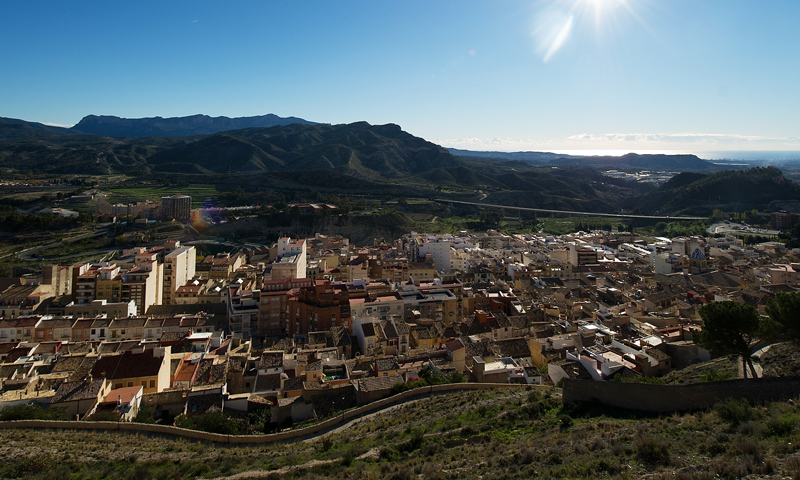
Jijona, in Alicante Province, Spain. (Image source: Getty Images) |
On April 29, Spanish High Court Judge Eloy Velasco ordered Shashaa — who lives in a 10,000 square meter (108,000 square foot) mansion in Teulada-Moraira, a small coastal town on Spain’s Mediterranean coast, with his four wives and 18 children — to be held in prison without bail. Velasco ruled that Shashaa was a flight risk and that there was a danger he would repeat his criminal behavior (reiteración delictiva).
Shashaa settled in Spain in 2012, shortly after the New York Times published a glowing profile of his moderation while he was an imam at the Darul Quran mosque in Munich, Germany. The story, entitled “Munich Imam Strives to Dilute the Elixir of Radical Islam,” stated:
“A growing number of imams in Europe and the Middle East have denounced suicide missions and terrorist acts. Many of these imams, however, still view Al-Qaeda, the Taliban or Hamas as legitimate resistance movements, while Mr. Shashaa openly declares that they are violating the tenets of Islam.
“He travels to mosques and madrasas throughout Europe, as well as the Middle East and Pakistan, telling young Muslims that fighting against American troops and other forces is a violation of their religion. He condemns militant recruiters in his sermons, urges worshipers at Friday Prayer to call the police if they hear about plans for an attack and readily talks with law enforcement officials about the reasons for radicalization and the best way to combat it.”
In an interview with the Times, Shashaa portrayed himself as a pacifist:
“They [the militants] use the religion for their personal aims and declare war on Jews and Christians, but I want people to follow what Islam really says. We cannot just sit down and let other people hijack our religion.”
The Times also quoted a senior German security official, who said:
“We know that he speaks and works against terrorist groups like Al-Qaeda or the Taliban, and that is important. He is the only example of someone who is doing it in this way here in Germany, and in this sense he is effective.”
Shashaa told the Times that he ended up in Germany after he lost his briefcase there on a 2000 stopover while on his way to Britain from Romania, where he had been living. “Everything was gone, the papers, the money,” he said. “So I thought it was God’s will that I should stay here.”
Several months after the New York Times published its hagiography of Shashaa, he was arrested for physically assaulting his third wife, who was hospitalized with a broken nose and shoulder. “The attack was obviously very brutal,” a hospital spokesperson said at the time.
The woman, a Syrian, told police that she had wanted to live a more Western lifestyle; she wanted to find a job and stop wearing the hijab. Shashaa refused. After the woman called police, Shashaa refused to let them in. “What a man does with his wife does not concern the authorities,” he said. Shashaa was arrested and then released.
During a raid on Shashaa’s mosque in Munich, police found copies of a book — Women in the Shade of Islam — which has been banned in Germany because of its calls for violence against women. Shashaa defended his possession of the book: “I need to know what is in these books. How else will I know how to argue with recruiters?”
Spanish authorities believe Shashaa moved to Spain to evade German law enforcement, which had become increasingly suspicious of his activities. Die Zeit reported:
“In 2012, German intelligence called him a Salafist: He opposed a pluralistic society, repeatedly stated that a woman should not leave the house without her husband’s permission, and during the Gaza War in 2009 preached a sermon that disparaged Jews. He wants a theocracy, which would be inconsistent with the separation of powers, the rule of law and the parliamentary system. He posted several videos with extremist content. According to the 2012 intelligence findings, his claims to have distanced himself from extremism were deemed ‘questionable.'”
Shashaa, who does not speak Spanish, said he moved to Spain to establish a “center for cultural understanding.” Through an interpreter, Shashaa told a Spanish newspaper that “spreading culture is the best way to end prejudice and to promote tolerance.” He said that his cultural center would operate under the premise of “openness and integration” and that its doors would be “open to the whole world.” He added that the walls of the center “must be made of glass so that everyone can see how we are and what is going on in there.” Shashaa also insisted that “fundamentalism is a disease we must eradicate.”
Spanish authorities are now investigating the source of Shashaa’s wealth. His mosque in Munich was shuttered in October 2015 due to financial difficulties, while the mansion he purchased in Spain in February 2015 is said to be worth more than half a million euros.
Meanwhile, more than two weeks after Shashaa was arrested, the New York Times still has not reported on the fate of its poster boy for Salafist pacifism.
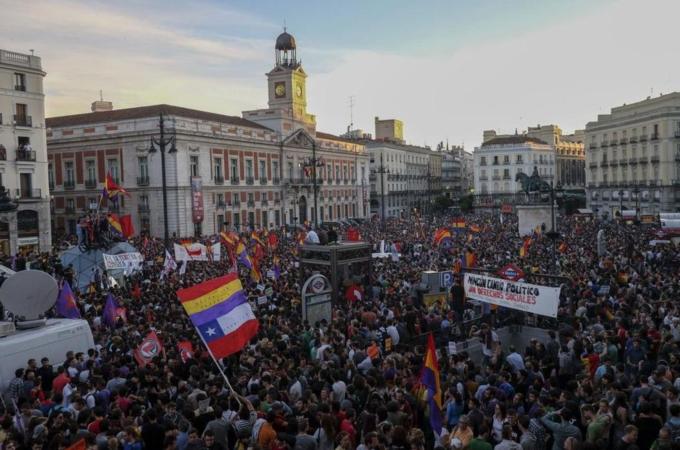
Spain protests call for vote on monarchy .
|
|
|
Tens of thousands rally across Spain to demand referendum on removal of royal family after King Juan Carlos abdicates.
|
|
Riot police were put on standby as thousands took to the streets [AFP] |
|
Riot police were on standby as tens of thousands took to the streets in Madrid, Barcelona and other cities across Spain to demand a vote on whether to rid Spain of its royal family. The protests came after Spain’s King Juan Carlos, who led Spain’s transition from dictatorship to democracy but faced royal scandals during the nation’s near financial meltdown, announced on Monday he would abdicate in favour of his son Felipe, making way for a “new generation”.
“I think it is very good (that King has abdicated). He should have done it a long time ago. The abdication will return to the people their sovereignty,” activist Alfonso Vaquez told the AP news agency.
Where he has made a mistake is to give the sovereignty to his son Felipe, who doesn’t have this privilege.” Prince Felipe, 46, a former Olympic yachtsman, would presumably take the title King Felipe IV.Far-left parties called for a national referendum to abolish Spain’s monarchy after the king made his announcement.
Royal scandals
Juan Carlos has been on the throne for 39 years and was a hero to many for shepherding Spain’s democratic and economic transformation.He came to power in 1975, two days after the death of long-time dictator Francisco Franco.His longstanding popularity took a big blow following royal scandals, including one involving an extravagant elephant-shooting trip he took in 2012 at the height of Spain’s financial crisis.
The Botswana trip, which came to light after he broke his right hip and was flown home privately for surgery, undermined the king’s earlier declarations that he lost sleep thinking about unemployed young people. Juan Carlos’s daughter, Princess Cristina, and her husband, Inaki Urdangarin, are also under investigation in a corruption case.
|

Sorry, Egypt No Longer a Province of the Ottoman Empire by Burak Bekdil
-
Egypt is increasingly unnerved by overt Turkish activity to support the Muslim Brotherhood politically, and covert Turkish activity to support alleged subversion.
-
-
Erdogan’s obsessive shadow-fighting with the Egyptian regime in the hope of rebuilding a Muslim Brotherhood regime in the former Ottoman “Khedivate” is bad news: it undermines any Western effort to stabilize — relatively — the turbulent Middle East.
In August, possibly the first cheerful news containing the words “Turkey” and “Egypt” hit the headlines in the Turkish press since July 2013, when Egypt’s army chief General Abdel Fattah al-Sisi spearheaded a coalition to remove Egypt’s President Mohamed Morsi, a member of the Muslim Brotherhood. The Turkish chargé d’affaires in Cairo (Turkey and Egypt withdrew their ambassadors after a row) married an Egyptian actress and former beauty queen on August 2. Their wedding was by attended by Turkish, Egyptian and foreign diplomats at a Turkish embassy residence in Giza.
At the wedding ceremony, the Turkish groom, Alper Bosuter, said that Turkey’s relations with Egypt have been tense but would eventually return to their normal course. The Egyptian bride, Inci Abdullah, said she wished their marriage to have a positive effect on the two countries’ relations.
Best wishes. But not so fast, given Turkish President Recep Tayyip Erdogan’s obsession about building a Muslim Brotherhood regime in Cairo.
In 1805, Muhammad Ali Pasha [“Kavalali Mehmet Ali Pasa” in Turkish], an Ottoman army commander of Albanian origin, seized power in Egypt. His dynasty would rule Egypt until the revolution of 1952. Under his rule, Egypt was nominally an Ottoman province. In 1867, Egypt was granted the status of an autonomous vassal state or “khedivate.” It would remain an Ottoman “khedivate” until 1914.
With the rise to power of the Muslim Brotherhood in Egypt in 2012, Turkey’s neo-Ottomans, most notably (then prime minister) Erdogan and Prime Minister Ahmet Davutoglu (then foreign minister) miscalculated that Egypt, the most populous Arab nation, could once again become a “khedivate” of an emerging Turkish empire, with its Muslim Brother rulers paying servitude to their Turkish ideological next of kin.
Instead, today, Morsi is imprisoned, a death sentence hanging over his head, possibly never to be executed; Muslim Brothers are on Egypt’s terror list; Turkey and Egypt have downgraded their diplomatic relations to the level of chargé d’affaires; and hostilities between Turkey’s ruling Islamists and Egypt’s ruling Muslims are deepening every day, with no prospect of normalization in the foreseeable future.
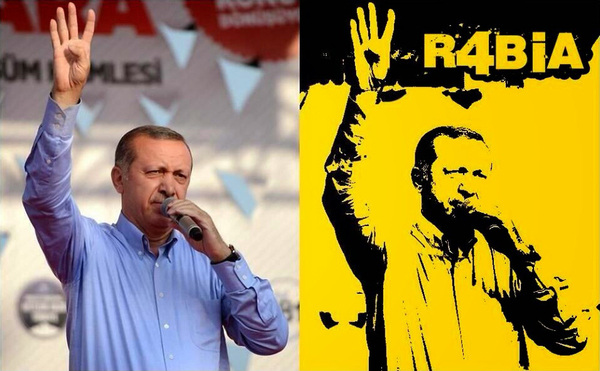
Erdogan keeps on investing in the Muslim Brotherhood, politically and otherwise. No doubt, the Brotherhood’s famous “Rabia” sign, four fingers raised, the symbol of Brotherhood’s riots against President Sisi, will be cheerfully featured at election rallies in Turkey — by Erdogan — in the run up to renewed parliamentary elections on Nov. 1.
The Muslim Brotherhood “Rabia” sign was a major election campaign theme used by the Turkey’s ruling Islamists in the last three elections: municipal (March 2014), presidential (August 2014) and parliamentary (June 7, 2015). There is no reason why it should be abandoned, as Erdogan et al view it as an inexpensive and easy vote-catcher.
In this image, widely circulated in social media, Turkey’s then-Prime Minister [now President] Recep Tayyip Erdogan flashes the Egyptian Muslim Brotherhood’s four-fingered “Rabia” sign. |
Meanwhile, Egypt is increasingly unnerved by overt Turkish activity to support the Muslim Brotherhood politically, and covert Turkish activity to support alleged subversion.
In July, news reports said that the Egyptian military had captured Turkish intelligence officers and jihadists involved in guerrilla warfare targeting Egypt and Sisi’s regime. An Egyptian news site provided the names of a Turkish intelligence officer and his Arab operatives, who were captured and accused of attacks against Egyptian troops stationed in the Sinai Peninsula. Moreover, Egyptian officials often accuse Turkey of providing safe haven to Muslim Brotherhood terrorists, including their broadcasts from Turkish territory.
Erdogan’s obsessive shadow-fighting with the Egyptian regime in the hope of rebuilding a Muslim Brotherhood regime in the former Ottoman “khedivate” is bad news: it undermines any Western effort to stabilize — relatively — the turbulent Middle East.
To augment any allied campaign against the Islamic State of Iraq and Syria (ISIS) the United States needs regional support. Egypt remains a staunch ally in the war against radical Islamists. Turkey has just recently joined the coalition campaign after several months of negotiations with its NATO allies. But Turkey’s deep ideological problems with Egypt would only weaken the allied-plus-regional-powers effort against ISIS.
In remarks late in July, Egypt’s Foreign Minister Sameh Shoukry said: “For a long time now, we have called on all states in the region to be more forthcoming in dealing with the ISIS threat, including monitoring and control of borders. Unfortunately, this has not been the case with Turkey.”
The neo-Ottoman ambitions of Turkey’s Islamists, to make Egypt a “neo-khedivate,” have crashed into the wall of Middle Eastern realities. But those ambitions are still alive and kicking, and could damage a cohesive allied fight against the jihadists.
Burak Bekdil, based in Ankara, is a Turkish columnist for the Hürriyet Daily and a Fellow at the Middle East Forum.