China Attacked Meta, So Cut All Tech Links

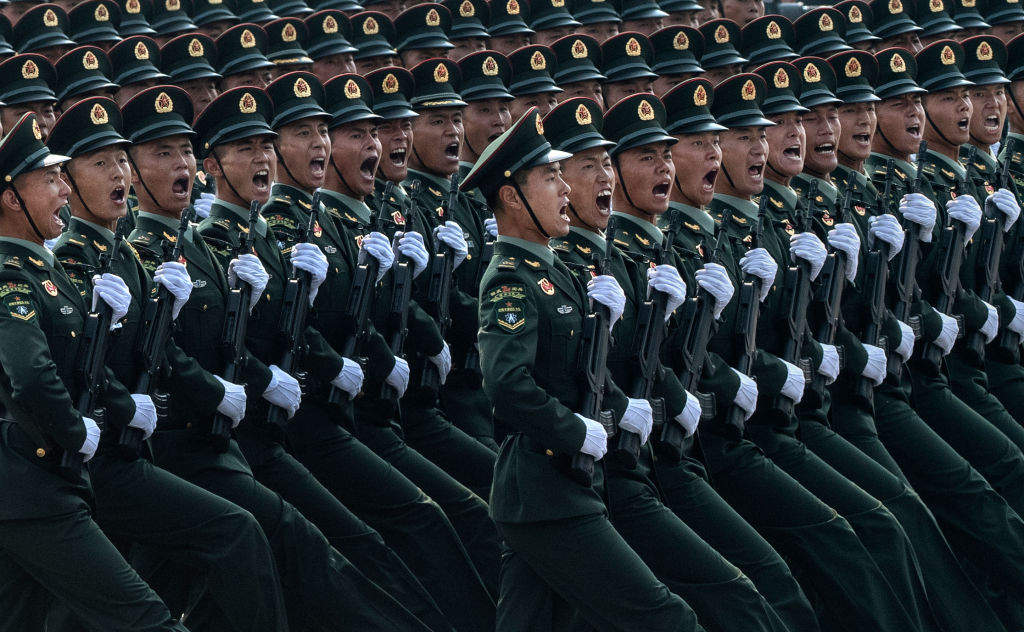
China Attacked Meta, So Cut All Tech Links

The Chinese regime’s protection of its AI businesses raises the issue of what America must now do to protect its tech. There are two things. First, America should mirror China’s actions…. Xi More »

Nimutampa ubutegetsi vuba murajyanwa mu butayu bugufiya kandi muzabuheramo!!!

Nimutampa ubutegetsi vuba murajyanwa mu butayu bugufiya kandi muzabuheramo!!!

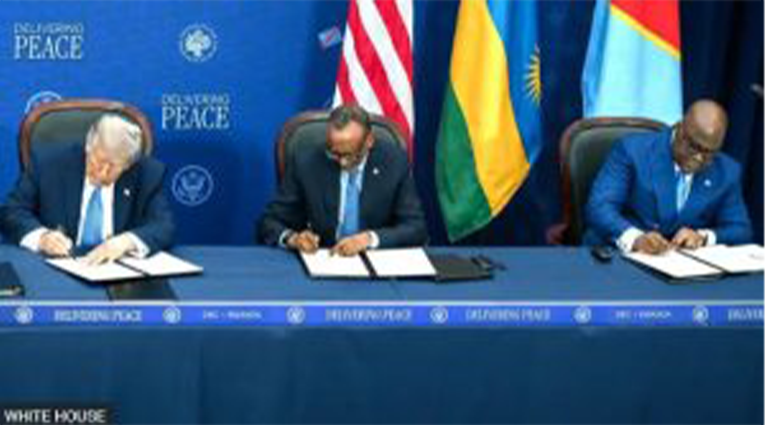
Ndababwiza ukuli yuko Paul Kagame araza gusara mu gihe America ikomeje gufunga inzira zose zishoboka zirimo amayeri yo kurwana intambara muri DRCongo kugirango bafate ubutegetsi. Uwiteka Imana Nyiringabo yababwiye kurekura imfungwa zose More »

The World’s Shameful Silence on Hamas

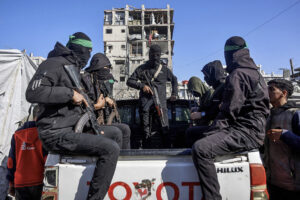
The World’s Shameful Silence on Hamas

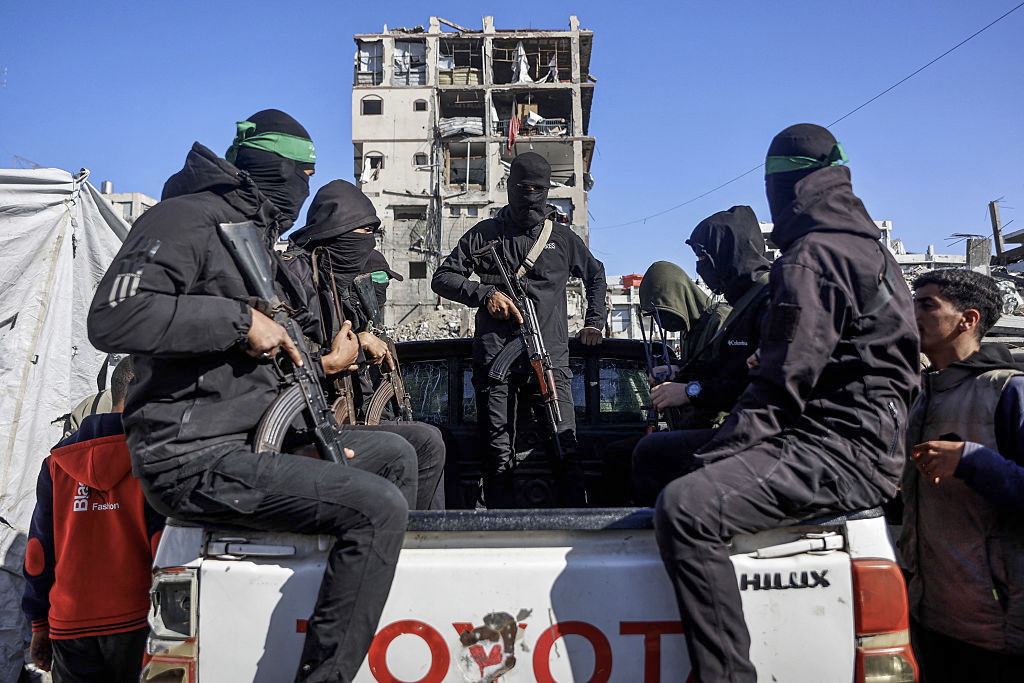
Six months after the ceasefire went into effect in the Gaza Strip, Hamas remains firmly in power. Despite international promises, diplomatic initiatives, and the much-publicized “Board of Peace,” the Iran-backed Islamist group More »

The Crown’s Moral Voice: King Charles in Washington and the Test of Western Clarity

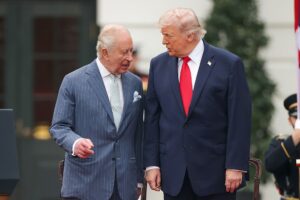
The Crown’s Moral Voice: King Charles in Washington and the Test of Western Clarity

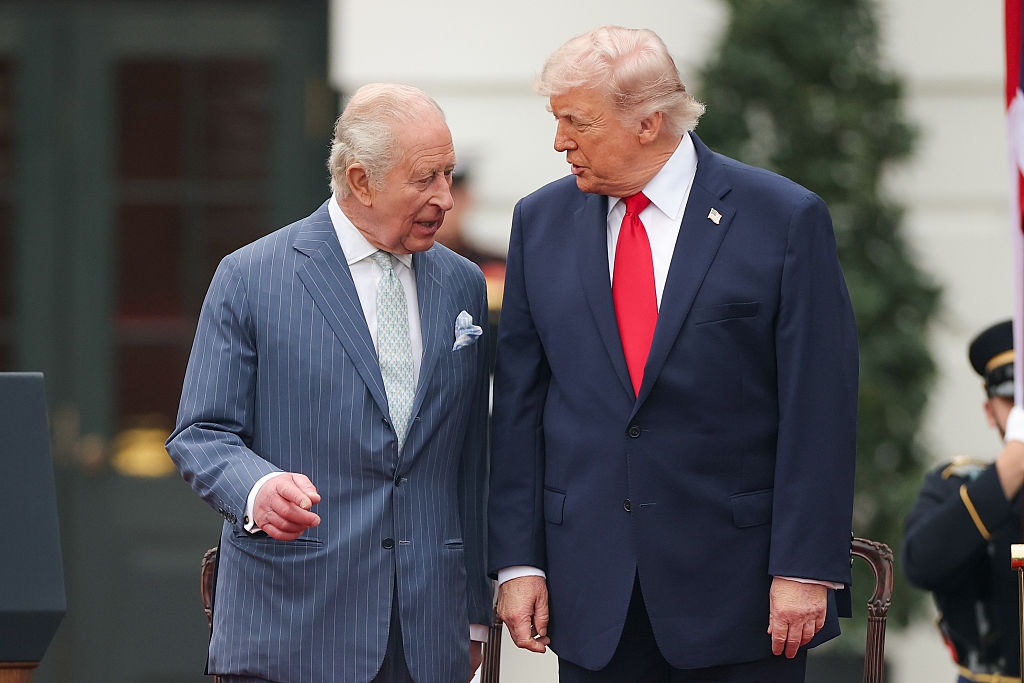
[P]arts of the West have become too cautious in naming the nature of the threats they face. The question is whether, at a time when the West is confronted by terrorism, tyranny, More »


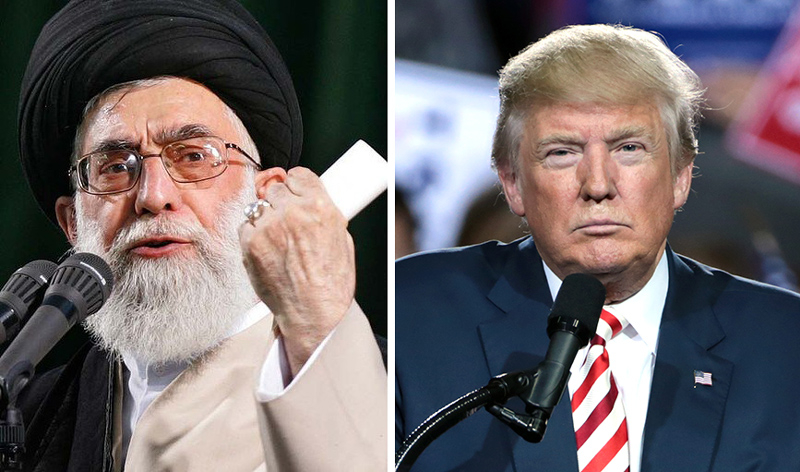
Iran Steps Up Threats to Israel, U.S. by Majid Rafizadeh

  • “En Sha’a Allah [God willing], there will be no such thing as a Zionist regime in 25 years. Until then, struggling, heroic and jihadi morale will leave no moment of serenity for Zionists.” — Iran’s Supreme Leader, Ayatollah Ali Khamenei, September, 2015.

  • “If the Supreme Leader’s orders [are] to be executed, with the abilities and the equipment at our disposal, we will raze the Zionist regime in less than eight minutes.” — Ahmad Karimpour, a senior adviser to the Iranian Revolutionary Guards’ elite unit, the Quds Force.
  • Iran is also attempting to intimidate Donald Trump from taking a tough stance against Iran. Trump ought to be wary of falling into Iran’s tactical game of fear-mongering. For Iran, US concessions and silence in the face of Iran’s threats mean weakness and fear. On the other hand, when Iran sees that the US is taking a robust stance and that the military option is always on the table, Tehran retreats.
  • As long as Iran’s Supreme Leader is alive and as long as the ruling clerics preserve the political establishment, Iran will maintain the core pillars of its foreign policies and revolutionary principles: these are anchored in anti-Israeli, anti-American and anti-Semitic politics. Iranian politicians across the political spectrum totally agree on these fundamentals.

Iran’s threats against Israel and the US are becoming bolder and louder. Iran’s Supreme Leader, Ayatollah Ali Khamenei, is now repeatedly threatening Israel’s annihilation relatively soon.

According to Iran’s Press TV, Khamenei recently stated:

“The Zionist regime — as we have already said — will cease to exist in the next 25 years if there is a collective and united struggle by the Palestinians and the Muslims against the Zionists.”

In addition, Iranian officials are warning President-elect Donald Trump that if he makes any wrong move, it would lead to a World War, wiping Israel from the face of earth and destroying the smaller Gulf states.

Iranian leaders are adopting their classic tactics and strategy of threatening in advance — and frequently — probably to obtain concessions, push the next US administration to pursue policies of appeasement, and, more importantly, to drive the US to abandon Israel.

In addition, through anti-Israeli and incendiary statements, Khamenei and Iran’s Islamic Revolutionary Guards Corps (IRGC) are inciting Palestinians and the Muslim world to use violence against the Israeli nation. As a result, Khamenei heightens even further his anti-Israeli and anti-Semitic sentiments. Many who follow his beliefs consider it their Islamic duty to fulfill his policies, religious doctrines and prophesies.

Ahmad Karimpour, a senior adviser to the Revolutionary Guards’ elite unit, the Quds Force, previously said that Iran is ready to follow Khamenei’s orders once the leader gives the green light. According to the semi-official Fars News Agency, Karimpour said, “If the Supreme Leader’s orders [are] to be executed, with the abilities and the equipment at our disposal, we will raze the Zionist regime in less than eight minutes.”

In order to project himself as the leader of the Muslim world (both Shia and Sunni) and to mobilize opposition to Israel and the US, Khamenei reaffirmed the Islamic Republic’s support for groups that stand against Israel and America:

“Despite being engaged in certain regional issues, the Islamic Republic has always announced explicitly that Palestine is the number one issue in the Muslim world and has fulfilled its obligations in this regard.”

Iran’s leader then went on to lash out at the United States as “the most arrogant [power] and the Great Satan.”

Khamenei is correct that his generals and he have previously threatened Israel’s destruction.

In July 2016, the deputy commander of the (IRGC) warned that Iran possesses tens of thousands of missiles outside Iran to hit Israel. According to Iran’s state-owned news agency Tasnim, General Hossein Salami pointed out:

“Hezbollah has 100,000 missiles ready to hit Israel to liberate the occupied Palestinian territories if the Zionist regime repeats its past mistakes… today, the grounds for the annihilation and collapse of the Zionist regime are (present) more than ever.”

In addition, Khamenei has already published a 9-point plan on how to destroy Israel. In September 2015, he called on violence and jihad against Israel, until it is completely destroyed:

“En Sha’a Allah [God willing], there will be no such thing as a Zionist regime in 25 years. Until then, struggling, heroic and jihadi morale will leave no moment of serenity for Zionists.”

Beside exploiting people’s grievances and inciting violence against Israel, Khamenei primarily relies on Hezbollah, Hamas and the IRGC to pursue his anti-Israel agenda.

Hassan Nasrallah, the leader of Lebanon’s Hezbollah, previously disclosed that Iran is lifeline of Hezbollah. In a speech broadcast by the Shiite party’s Al-Manar TV station, he said:

“We do not have any business projects or investments via banks… We are open about the fact that Hezbollah’s budget, its income, its expenses, everything it eats and drinks, its weapons and rockets, come from the Islamic Republic of Iran. We have no money in Lebanese banks, neither in the past nor now. We do not transfer our money through the Lebanese banking system…. We totally reject this [U.S.] law until the Day of Judgment. … Even if the law is applied, we as a party and an organizational and jihadi movement, will not be hurt or affected”.

Nasrallah also insisted that, “as long as Iran has money, we have money… Just as we receive the rockets that we use to threaten Israel, we are receiving our money. No law will prevent us from receiving it.”

Notably, there are no differences across Iran’s political spectrum when it comes to opposing and threatening Israel. Moderates, reformist, principalists [in Farsi, Osolgarayan: ultra revolutionary and conservatives] and hardliners all pursue the core anti-Israel pillar of the Islamic Republic’s foreign policy.

The so-called moderate Iranian president, Hassan Rouhani, said previously:

“The Zionist regime (Israel) is a regional base for America and the global arrogance … Disunity and discord among Muslim and terrorist groups in the region … have diverted us from the important issue of Palestine… We stand with the dispossessed Palestinian nation.”

Iranian leaders believe that arming groups and people who oppose Israel is critical. Khamenei tweeted that “I announced and it will absolutely happen that, just like #Gaza, the #WestBank must also be armed…”

Iran is also attempting to intimidate Trump from taking a tough stance against Iran. Trump ought to be wary of falling into Iran’s tactical game of fear-mongering. For Iran, US concessions and silence in the face of Iran’s threats mean weakness and fear. The fact is that whenever the US surrenders to Iran’s threats, Iranian leaders become louder and bolder in their threats. On the other hand, when Iran sees that the US is taking a robust stance and that military option is always on the table, Tehran retreats.

Finally, at least as long as Iran’s Supreme Leader is alive, and as long as the ruling clerics preserve the political establishment, the Islamic Republic of Iran will maintain the core pillars of its foreign policies and revolutionary principles: these are anchored in anti-Israel, anti-American and anti-Semitic politics. Iranian politicians across the political spectrum totally agree on these fundamentals.

Iran Infiltrates the West Bank by Khaled Abu Toameh

  • “The Patient Ones,” Al-Sabireen, are seeking Palestinians as a group to become an Iranian proxy in the region, and redoubling efforts to eliminate the “Zionist entity” and replace it with an Islamist empire.

  • Loosed from its sanction-based constrictions, Iran is now free to underwrite terror throughout the region. This is precisely what is happening in Lebanon, Syria, Yemen, Iraq and the West Bank and Gaza Strip.
  • Iran’s infiltration of the West Bank should serve as a red flag not only for Israel, but also for the U.S. and other Western powers. An Israeli pullout, leading to a Hamas takeover of the West Bank, has been a subject of concern. Now, a growing number of Israelis and Palestinians are wondering if such a vacuum will provide an opening for Iran.

Emboldened by its nuclear deal with the world powers, Iran is already seeking to enfold in its embracing wings the Arab and Islamic region.

Iran’s capacity for intrusions having been starved by years of sanctions. Now, with the lifting of sanctions, Tehran’s appetite for encroachment has been newly whetted — and its bull’s-eye is the West Bank.

Iran has, in fact, been meddling for many years in the internal affairs of the greater region. It has been party to the civil wars in Yemen and Syria, and, through the Shiite Muslims living there, continues actively to undermine the stability of many Gulf states, including Saudi Arabia and Bahrain.

The lives of both the Lebanese and the Palestinians are also subject to the ambitions of Iran, which fills the coffers of groups such as Hezbollah and Islamic Jihad.

Until recently, Iran held pride of place as Hamas’s primary patron in the Gaza Strip. It was thanks to Iran’s support that Palestinian Islamist movement, Hamas, held hostage nearly two million Palestinians living in the Strip. Moreover, this backing enabled Hamas to smuggle all manner of weapons into the Gaza Strip, including rockets and missiles that were aimed and fired at Israel.

But the honeymoon between Iran and Hamas ended a few years ago, when Hamas refused to support the regime of Syrian President Bashar Assad — Tehran’s major ally in the Middle East — against the Syrian opposition. Since then, the Iranians, who have lost confidence in their erstwhile Hamas allies, have been searching among the Palestinians for more loyal friends. And they seem to have found them: Al-Sabireen (“the Patient Ones”).

Al-Sabireen, Iran’s new ally, first popped up in the Gaza Strip, where they recruited hundreds of Palestinians, many of them former members of Hamas and Islamic Jihad. Palestinian sources report that Al-Sabireen has also succeeded in enlisting many disgruntled Fatah activists who feel betrayed by the Palestinian Authority (PA) and its president, Mahmoud Abbas. This sense of betrayal is the fruit of the PA’s failure to pay salaries to its former loyalists. In addition, anti-Israel incitement and indoctrination in mosques, social media and public rhetoric has radicalized Fatah members and driven them into the open arms of Islamist groups.

The Iranian-backed Al-Sabireen is already a headache for Hamas. The two terror groups share a radical ideology and both seek to destroy Israel. Nonetheless, Al-Sabireen considers Hamas “soft” on Israel because it does not wage daily terror attacks against its citizens. The “Patient Ones” are seeking Palestinians as a group to become an Iranian proxy in the region.

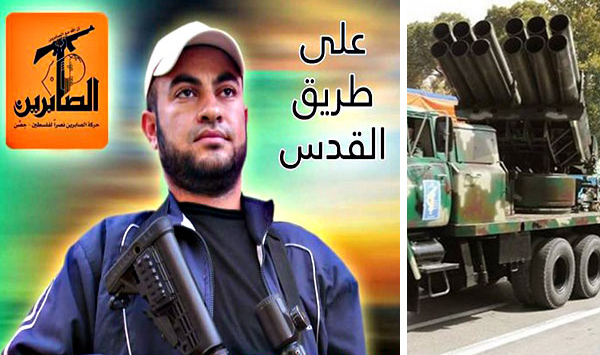
Al-Sabireen’s Gaza commander, Ahmed Sharif Al-Sarhi (left), was responsible for a series of shooting attacks on Israel before he was fatally shot in October 2015 by IDF snipers along the border with the Gaza Strip. The Iranians are also believed to have supplied their new terrorist group in the Gaza Strip with Grad and Fajr missiles (right) that are capable of reaching Tel Aviv.

Buoyed by the nuclear deal and the lifting of sanctions against Tehran, Al-Sabireen members are feeling optimistic. The group recently described these developments as a “victory” for all Muslims and proof of their “pride and strength.” Muslims should now unite, they said, in order to stand up to the “world’s arrogance and remove the Zionist entity from the land of Palestine.”

Indeed, Al-Sabireen appears to be redoubling its efforts to eliminate the “Zionist entity” and replace it with an Islamist empire. Toward that goal, the group is now seeking to extend its control beyond the Gaza Strip. The lifting of the sanctions against Iran coincided with reports that Al-Sabireen has infiltrated the West Bank, where it is working to establish terror cells to launch attacks against Israel.

According to Palestinian Authority security sources, Al-Sabireen has already located some West Bank Palestinians who were more than happy to join the group’s jihad against Jews and Israel.

PA security forces recently uncovered a terror cell belonging to Al-Sabireen in Bethlehem and arrested its five members. The suspects received money from the group’s members in the Gaza Strip in order to purchase weapons to attack Israeli soldiers and settlers in the West Bank.

Al-Sabireen is not the only Iranian proxy whose eye is on the West Bank. Last month, in the West Bank city of Tulkarm, Israeli security forces uncovered and broke up a terrorist cell commanded by Hezbollah, which was planning suicide bombings and shooting attacks. The Palestinian members of the cell had been taught by Jawed Nasrallah, the son of Hezbollah chief Hassan Nasrallah, how to carry out suicide bombings, assemble bomb vests, gather intelligence, and set up training camps.

All of this sounds eerily familiar. As it has spread its wings over Al-Sabireen and Hezbollah, Iran has done much the same with its other proxies such as the Houthis in Yemen and members of the Shiite communities in Saudi Arabia and Bahrain, all the while fomenting instability and gaining bases of local power.

Loosed from its sanction-based constrictions, Iran is now free to underwrite terror throughout the region. This is precisely what is happening in Lebanon, Syria, Yemen, Iraq and the West Bank and Gaza Strip.

Iran’s infiltration of the West Bank should serve as a red flag not only for Israel, but also for the U.S. and other Western powers. At the moment, there is little to be done to combat Iran’s presence in the Gaza Strip. But Iran on Israel’s West Bank doorstep is a flag of a different color.

An Israeli pullout, leading to a Hamas takeover of the West Bank, has been a subject of concern. Now, a growing number of Israelis and Palestinians are wondering if such a vacuum will provide an opening for Iran.

The future of the Middle East and Europe would be shockingly different if any Palestinian state were to fall into the hands of Iran’s Islamic extremists and their allies.

The Palestinians and all interested parties might remember that Al-Sabireen is — if nothing else — patient.

Khaled Abu Toameh is an award winning journalist based in Jerusalem.
Iran in Syria: Russia Took Over by Heshmat Alevi

  • It appears that Iran literally gained nothing from the Moscow conference, meaning that its participation was merely of a ceremonial nature.

  • “The regime in Tehran is the source of crisis in the region and killings in Syria; it has played the greatest role in the expansion and continuation of ISIS. Peace and tranquility in the region can only be achieved by evicting this regime from the region.” — Maryam Rajavi, President of the National Council of Resistance of Iran, and a leader of the opposition to Iran’s regime.

The recent three-party conference held in Moscow with the participation of Russia, Turkey and Iran came to a significant end. With mainstream media emphasizing how the U.S. Administration was completely sidelined in talks that discussed the future of Syria, a different perspective also sheds light on how Iran was sidelined to an unprecedented degree. Considering that this session ended with a document signed by all three parties, one can take a hard look at the results.

This document emphasizes Syria’s independence and territorial integrity as a multi-racial, multi-religious, non-sectarian, democratic and secular state; underscores the necessity of reaching a political solution; welcomes joint efforts in East Aleppo to evacuate civilians and armed rebels; highlights the need to expand a ceasefire across the country and facilitate access to humanitarian aid; supports a possible agreement between the Syrian opposition and the Syrian government; and accentuates continuing joint efforts against terrorism and especially the Islamic State (ISIS/ISIL), differentiating their forces from those of the armed democratic opposition.

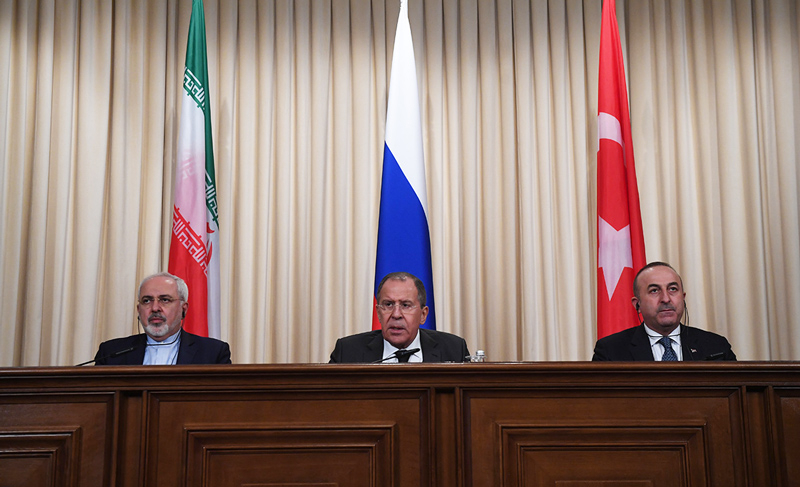
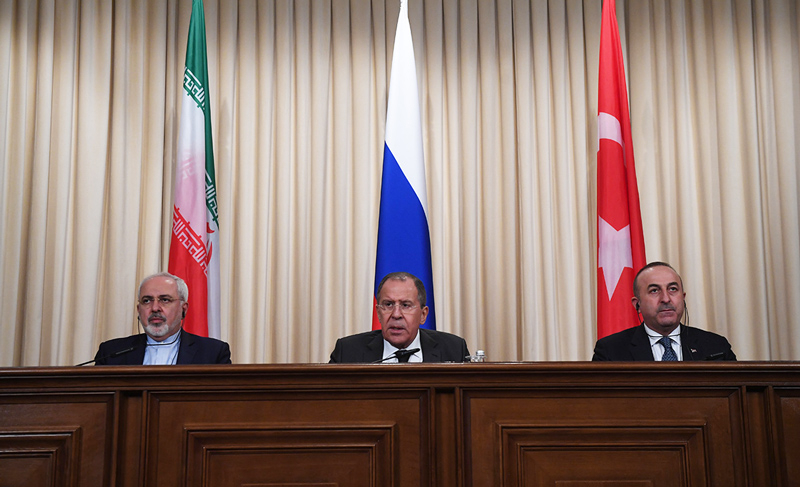
Russian Foreign Minister Sergey Lavrov (center) holds a joint press conference with Iranian Foreign Minister Mohammad Javad Zarif (left) and Turkish Foreign Minister Mevlut Cavusoglu (right) in Moscow, December 20, 2016. (Image source: Russia Ministry of Foreign Affairs)

A closer look brings us to a preliminary conclusion that most of the articles are clash Iran’s interests. For example, Iran was, and remains, fully against the safe evacuation of civilians and rebels from East Aleppo.

Iranian President Hassan Rouhani went so far as saying, “Various Islamic states… are worried about the fate of terrorists and seek their safe exit from Aleppo.”

In this document, there is no mention of the Assad regime or any language discussing its remaining in power. And importantly, while Iran went to great lengths to massacre all dissidents and annihilate the entire Syrian opposition under the pretext of fighting ISIS, this document specifically differentiates and recognizes the separate nature of ISIS and the Free Syrian Army.

The Moscow conference also emphasized the role of the United Nations in resolving the Syrian crisis, highlighting the necessity to abide by UN Security Council Resolution 2254. This resolution emphasizes the Security Council as the reference body, also enjoying support from the United States and Saudi Arabia. There is no reference to Assad’s future role; instead the resolution:

“expressed support for free and fair elections, pursuant to the new constitution, to be held within 18 months and administered under United Nations supervision, ‘to the highest international standards’ of transparency and accountability, with all Syrians — including members of the diaspora — eligible to participate.”

Taking these factors into consideration, it appears that Iran literally gained nothing from the Moscow conference, meaning that its participation was merely of a ceremonial nature.

The conference outcome makes it clear that Russia enjoys hegemony over Iran in Syria, and that Moscow has imposed its interests and road map on Tehran, leaving the mullahs no choice but to submit to the status quo. This setback of its hegemony seems a major reason why Iran needed to parade Revolutionary Guards Quds Force General Qassem Suleimani in Aleppo: perhaps to boost an iota of morale in its dwindling base of support.

On the ground, Iran’s hordes of Shiite militias relied completely on Russian air power to take even one step forward. This provides a clear picture of the road ahead.

To bring an end to Iran backing Assad’s atrocities, the international community and Middle East states need to begin fundamentally to cooperate in establishing a coalition, parallel to implementing economic and political pressures on Tehran. Companies investing in Iran should also recalculate their priorities.

Iranian opposition leader Maryam Rajavi, president of the National Council of Resistance of Iran, went even further to provide a solution for Syria and ISIS:

“The regime in Tehran is the source of crisis in the region and killings in Syria; it has played the greatest role in the expansion and continuation of ISIS. Peace and tranquility in the region can only be achieved by evicting this regime from the region.”

Iran may have enjoyed tactical gains in Aleppo. However, Russia apparently has separate, long-term interests in complete dissimilarity from those of Tehran. Russia has conducted secret direct talks with the Syrian opposition. To add insult to injury, Iran — viewing the Obama presidency as a golden era — is also concerned about the incoming presidency of Donald Trump and his administration, who seem to have strong views against Tehran.

“The fact that Trump has taken very firm positions against Iran, including threatening to rip apart the nuclear deal, has,” according to The Hill, “already terrified Tehran, representing a major contrast to the ‘golden era‘ under Obama.”

Heshmat Alavi is a political and rights activist. His writing focuses on Iran, ranging from human rights violations, social crackdown, the regime’s support for terrorism and meddling in foreign countries, and the controversial nuclear program. He tweets at @HeshmatAlavi & blogs at IranCommentary

Iran Comes Clean on Banking Problems by Lawrence A. Franklin

  • Central Bank of Iran (CBI) governor Seif Valiollah mentioned that Iran has a reputation for not being exactly transparent on countering financial support for terrorist operations. He further blamed the regime’s willingness to facilitate money-laundering schemes as another factor discouraging investment from abroad, and indirectly criticized the overweening influence of the huge business conglomerates run by the Islamic Revolutionary Guard Corps (IRGC) on the Iranian economy.

  • Nasser Hakimi, another CBI official blamed Iran’s own banks for access problems with the Society for Worldwide International Transactions (SWIFT) network.
  • Several of Iran’s key banks had not yet purchased or installed the required software and financial identifier codes that would enable SWIFT to become operable in Iran.

Central Bank of Iran (CBI) officials have admitted that the regime’s own financial policies, and not the United States, are responsible for some of the country’s banking problems. CBI governor Seif Valiollah admitted recently that Tehran’s failure to reap more economic benefits from the JCPOA agreement is, at least in part, Iran’s own fault.

These revelations by Iran’s top banking officials refute charges by Iranian hardliners that the United States has been orchestrating a toteyeh bozoorg (“grand conspiracy”) to deny Iran access to international banking networks.

CBI officials and others have detailed the shortcomings of Iran’s own banking system. These CBI statements challenge the skewed comments in the Iranian press that America’s refusal to grant foreign banks access to U.S financial services is what is responsible for Iran’s bank problems. Some of the negative commentary came from economists disappointed with President Rouhani’s management of the economy.

CBI governor Valiollah said that the failure of the country’s banks to adhere to standard international reporting practices is at fault. He also blamed the financial policies of former President Ahmadinejad as contributing to the present disorder in Iran’s banking network. Valiollah criticized, for instance, Ahmadinejad’s populist policies, such as frequent and careless loans, as a waste of finances. Valiollah also specifically mentioned Ahmadinejad’s penchant for using non-accredited financial institutions, through which he doled out rewards to political cronies, and addressed the lack of liquidity in Iran’s banks as a consequence of the large amount of failed loans. Subsequently, these bad loans necessitated the buy-back by the government of physical assets, such as residential and business properties. Valiollah offered an overall bleak assessment of Iran’s tarnished financial image, which he suggested, has discouraged foreign investment.

In a swipe at the hardliners who oppose President Rouhani’s economic “opening to the West,” Valiollah also mentioned that Iran has a reputation for not being exactly transparent on countering financial support for terrorist operations. He further blamed the regime’s willingness to facilitate money-laundering schemes as another factor discouraging investment from abroad, and indirectly criticized the overweening influence of the huge business conglomerates run by the Islamic Revolutionary Guard Corps (IRGC) on the Iranian economy. Valiollah also called for Iran to have a unified and stable exchange rate tied to the market rate, not one subject to manipulation by powerful groups affiliated with the regime.

Nasser Hakimi, another CBI official, blamed Iran’s own banks for access problems with the Society for Worldwide International Transactions (SWIFT) network. The SWIFT messaging system enables banks to process financial transactions in a secure and rapid manner. Moreover, one CBI functionary added that several of Iran’s key banks had not yet purchased or installed the required software and financial identifier codes that would enable SWIFT to become operable in Iran.

Deputy Foreign Minister Abbas Araghchi stated in the press that Iran’s banks are determined to improve access to SWIFT, and urged Iranian economists to visit the SWIFT Room of the CBI.

Economists opposed to the Rouhani administration had accused Washington of obstructing banking ties with the European Union and discouraging investment in Iran.[1] One of these economists, Asadollah Asgaroladi, claimed that Iran still can only process transactions with foreign countries through Dubai. One official, affiliated with the Iranian Chamber of Commerce’s Industries, Mines, and Agriculture Division, stated that there is limited access to SWIFT, but with Asian nations only, such as China, Japan, and South Korea.

CBI officials realize now that the Obama White House went out of its way to allay the fears of Western banks, especially those from the European Union, that they would risk being fined for conducting normal banking relations with Iran. CBI governor Valiollah even complimented Secretary of State Kerry’s assistance in convincing European banks that it is acceptable to deal with their Iranian counterparts. In praising Kerry’s effort to facilitate the foreign transactional activity of Iran’s banks, “Kerry insisted that foreign banks should cooperate with Iranian banks and that any bank that doubts this, should contact Washington.”

Dr. Lawrence A. Franklin was the Iran Desk Officer for Secretary of Defense Rumsfeld. He also served on active duty with the U.S. Army and as a Colonel in the Air Force Reserve, where he was a Military Attaché at the U.S. Embassy in Israel.

Iran Breaks Nuclear Deal and UN Resolutions by Majid Rafizadeh

  • “We will have a new ballistic missile test in the near future that will be a thorn in the eyes of our enemies.” – Iranian President Hassan Rouhani.The range of existing Iranian ballistic missiles has grown from 500 miles to over 1,250 miles (roughly 2,000 kilometers), which can easily reach Eastern Europe, as well as countries such as Israel.

  • In addition, Iranian Defense Minister Brig. Gen. Hossein Dehqan said that there would be no limit for the range and amount of missiles that Iran will develop.

The nuclear agreement, known as the Joint Comprehensive Plan of Action Agreement (JCPOA) — effective, as of October 18, 2015, according to the State Department – clearly and distinctly stipulates that Iran should not undertake any ballistic missile activity “until the date eight years after the JCPOA Adoption Day or until the date on which the IAEA submits a report confirming the Broader Conclusion, whichever is earlier.”

Not only is Iran avoiding honoring this stipulation, but also Iran’s ballistic missile operations have significantly ratcheted up. More importantly, there has been no criticism at all from the Obama administration or other involved parties regarding this critical violation.

As cited by Iran’s state-owned Fars News Agency, Brig. Gen. Amir Ali Hajizadeh, Iran’s commander of the Islamic Revolutionary Guards Corps (IRGC) Aerospace Force, said in Tehran on Dec 6, 2016:

“In addition to enhancing the precision-striking power and quality of ballistic missiles, the Iranian authorities and experts have used innovative and shortcut methods to produce inexpensive missiles, and today we are witnessing an increase in production [of ballistic missiles].”

Iran is bragging about it.

In addition, Iranian Defense Minister Brig. Gen. Hossein Dehqan said that there would be no limit for the range and amount of missiles that Iran will develop. He boasted:

“90 percent of the country’s defense systems have reached an acceptable standard and enjoy competitive quality compared with the weapons of advanced countries; production of the national individual weapons and efforts to improve the quality and precision-striking power of ballistic missiles are among the defense ministry’s achievements in the defense field.”

Fars News reported on a December 6, 2016 statement from Iran’s Defense Minister:

“His remarks came as the Islamic Revolution Guards Corps (IRGC) fired 2 home-made ‘Qadr H’ ballistic missiles from the Eastern Alborz Mountains at a target in Iran’s Southeastern Makran seashore some 1400km away… The missiles were fired on the sidelines of the main stage of the IRGC drills in Central Iran and various parts of the country.”

One missile, which was launched on March 2016, had a clear message written on it that said in the Hebrew language: “Israel should be wiped off the Earth”. Fars Agency adds:

“Qadr is a 2000km-range, liquid-fuel and ballistic missile which can reach territories as far as Israel… The missile can carry different types of ‘Blast’ and ‘MRV’ [Multiple Reentry Vehicle] payloads to destroy a range of targets. The new version of Qadr H can be launched from mobile platforms or silos in different positions and can escape missile defense shields due to their radar-evading capability.”

Iran has repeatedly test-fired, long-range ballistic missiles and laser-guided surface-to-surface missiles. For example, on March 2016, Iran tested a new ballistic missile, capable of carrying multiple warheads. More recently, Iran fired a test missile with an accuracy within 25 feet, which is characterized as “zero error,” according to Brig. Gen. Ali Abdollahi, the Iranian military’s deputy chief of staff, and Iran’s semi-official Tasnim news agency.

The range of existing Iranian ballistic missiles has grown from 500 miles to over 1,250 miles (roughly 2,000 kilometers), which can easily reach Eastern Europe, as well as countries such as Israel.

According to a previous report obtained by the Associated Press, the launches are “destabilizing and provocative” and the Shahab-3 medium-range ballistic missile and Qiam-1 short-range ballistic missile fired by Iran are “inherently capable of delivering nuclear weapons.”

In addition to violating the nuclear agreement, provoking and threatening other nations, and destabilizing the region, Iran is breaching two UN Security Council Resolutions. Security Council resolution 2231 (section 3 of Annex B) “calls upon Iran not to undertake any activity related to ballistic missiles designed to be capable of delivering nuclear weapons, including launches using such ballistic missile technology.”

The second United Nations Security Council resolution, 1929, states:

“Iran shall not undertake any activity related to ballistic missiles capable of delivering nuclear weapons, including launches using ballistic missile technology, and that States shall take all necessary measures to prevent the transfer of technology or technical assistance to Iran related to such activities.”

Iran has the largest ballistic missile arsenal in the Middle East. It is also the most diversified one. No country, other than Iran, has acquired long-range ballistic missiles before obtaining nuclear weapons. Ballistic missiles can be used for offensive or defensive purposes, but sophisticated missiles are more likely developed as delivery vehicles for nuclear weapons.

These missiles have the capability of carrying multiple nuclear warheads. Iran Tasnim news agency reported:

“Defense Minister Brigadier General Hossein Dehqan praised the country’s military might…saying the Islamic Republic can mass produce ballistic missiles with any range and destructive power… In the missile sphere, Iran has been able to maximize the accuracy of projectiles, as emphasized by Leader of the Islamic Revolution Ayatollah Seyed Ali Khamenei, with reliance on the local forces, Brigadier General Amir Ali Hajizadeh said at an academic ceremony in Tehran on Tuesday.”

Iran is also is increasingly provoking other countries in the region, and has made it clear that the ballistic missiles are aimed at targeting other nations. Brig. Gen. Amir Ali Hajizadeh, said previously to FARS news agency that “Iran has built missiles that can hit targets at 2,000 Km. They are designed to hit Israel at such a distance.” He added that Islamic countries have surrounded Israel and “its [Israel’s] life is short. So it will collapse in any given war — long before a missile is even fired.”

Iran also exports these missiles to its proxies across the region. Tasnim news agency quoted General Hossein Salami as saying:

“Hezbollah has 100,000 missiles that are ready to hit Israel to liberate the occupied Palestinian territories if the Zionist regime repeats its past mistakes… today, the grounds for the annihilation and collapse of the Zionist regime are (present) more than ever.”

In addition, Gen. Salami warned Israeli leaders that if they make the “wrong move,” Israel would come under attack.

It is crucial to point out that both Iran’s so-called “moderates” and hardliners are on the same page when it comes developing ballistic missiles. When his country was unveiling a new missile, Fateh 313, President Hassan Rouhani pointed out that “we will have a new ballistic missile test in the near future that will be a thorn in the eyes of our enemies.”

The Obama administration, the international community, a major global power, or a coalition of nations need robustly to confront these provocations, threats, and violations of the nuclear deal and UN Security Council Resolutions by Iran.

Dr. Majid Rafizadeh, political scientists and Harvard University scholar is president of the International American Council on the Middle East. He can be reached at Dr.rafizadeh@post.harvard.edu.

Translate »
Skip to toolbar