China Attacked Meta, So Cut All Tech Links

China Attacked Meta, So Cut All Tech Links

The Chinese regime’s protection of its AI businesses raises the issue of what America must now do to protect its tech. There are two things. First, America should mirror China’s actions…. Xi More »

Nimutampa ubutegetsi vuba murajyanwa mu butayu bugufiya kandi muzabuheramo!!!

Nimutampa ubutegetsi vuba murajyanwa mu butayu bugufiya kandi muzabuheramo!!!

Ndababwiza ukuli yuko Paul Kagame araza gusara mu gihe America ikomeje gufunga inzira zose zishoboka zirimo amayeri yo kurwana intambara muri DRCongo kugirango bafate ubutegetsi. Uwiteka Imana Nyiringabo yababwiye kurekura imfungwa zose More »

The World’s Shameful Silence on Hamas

The World’s Shameful Silence on Hamas

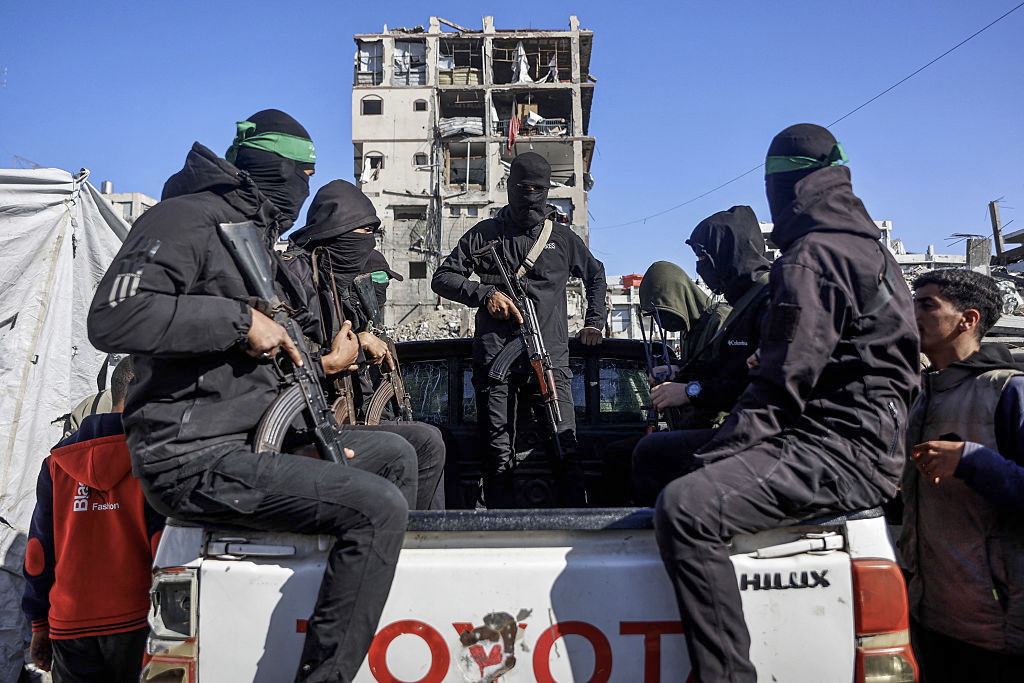
Six months after the ceasefire went into effect in the Gaza Strip, Hamas remains firmly in power. Despite international promises, diplomatic initiatives, and the much-publicized “Board of Peace,” the Iran-backed Islamist group More »

The Crown’s Moral Voice: King Charles in Washington and the Test of Western Clarity

The Crown’s Moral Voice: King Charles in Washington and the Test of Western Clarity

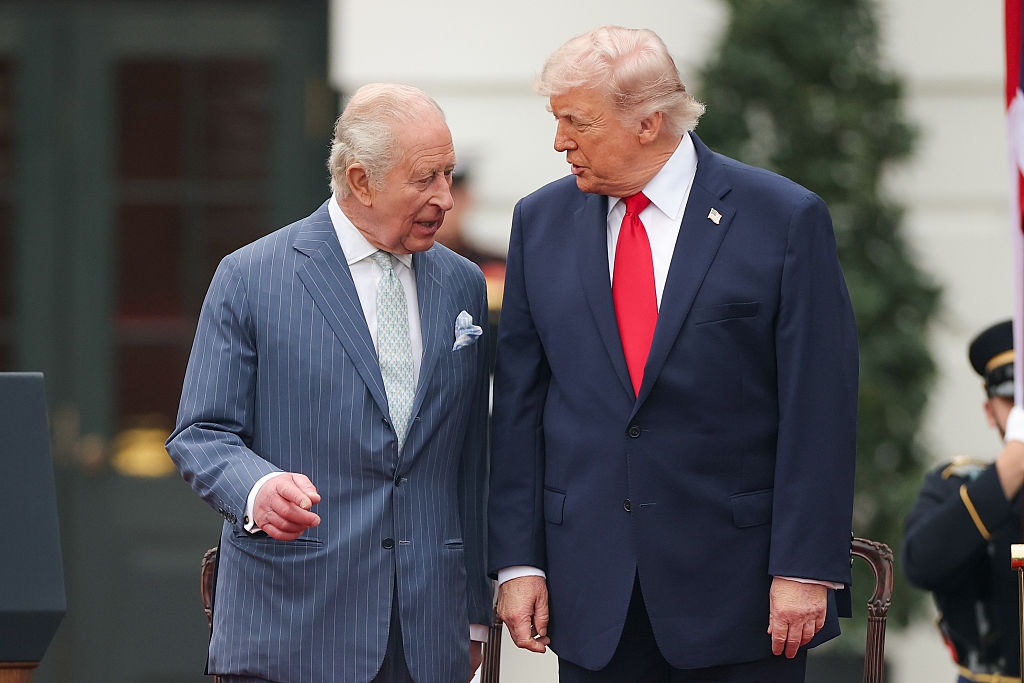
[P]arts of the West have become too cautious in naming the nature of the threats they face. The question is whether, at a time when the West is confronted by terrorism, tyranny, More »


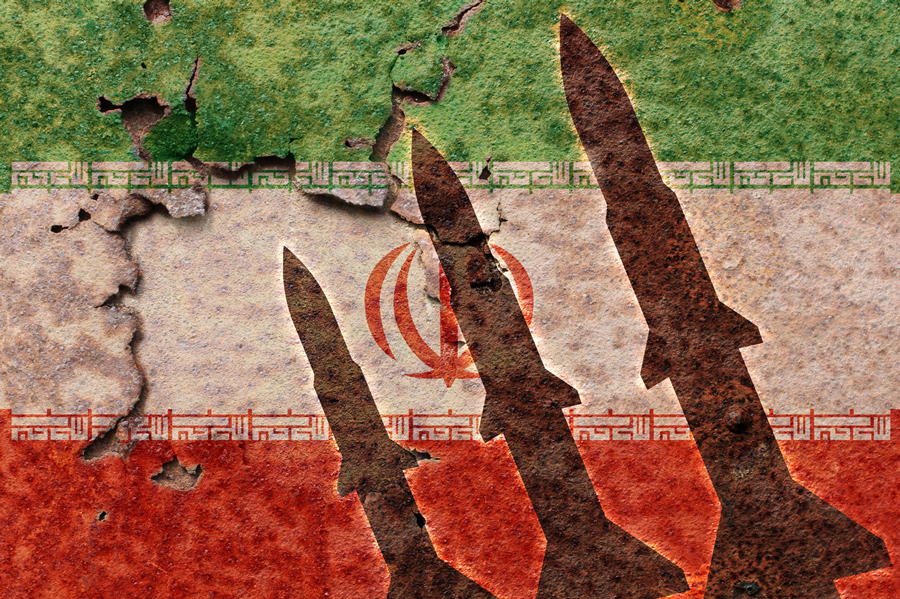
Iran’s Soft War Against America by Lawrence A. Franklin

  • Iran’s sophisticated employment of asymmetrical tactics such as “soft war” — which relies on the other side’s wishes, conscious or not, to be taken in — is apparently part of Tehran’s strategy to level the playing field against the U.S., despite America’s overwhelming military superiority.

  • Iran is now being treated by most of the world as a normal nation-state rather than the revolutionary, terror-supporting, totalitarian regime that in reality it is.

Iran is waging a “soft war” offensive — media, social media, charm — against the United States. Tehran believes it is scoring significant victories in this war, and it clearly has, as can be seen by the so-called “Iran deal” — technically no “deal” at all: one side, Iran, got everything.

Iran’s sophisticated employment of asymmetrical tactics, such as “soft war” — which relies on the other side’s wishes, conscious or not, to be taken in — is apparently part of Tehran’s strategy to level the playing field against the U.S., despite America’s overwhelming military superiority.

Tehran seems to think, with justification, that it has successfully exploited the Obama administration’s uncorseted desire for better bilateral relations into granting Iran concessions that are not part of the original Joint Comprehensive Program of Action (JCPOA).

One of these concessions is granting Iran access to the U.S financial system; U.S. Secretary of State John Kerry spent last week trawling through Europe, imploring bankers to do business with Iran, despite that minor detail that America will not.

Another concession is the U.S. offer to buy Iran’s heavy water, a product of its planned plutonium bomb-making reactor in Arak.

Still another concession is the U.S. administration’s failure to increase sanctions on Iran for repeatedly launching potentially nuclear-capable ballistic missiles — in violation of UN Security Council Resolution 2231.

The Iranian regime may well attribute these American concessions to its employment of the “jang-e-narm” (soft war) tactic of “smile diplomacy”: the media-friendly demeanor of President Hassan Rouhani and Foreign Minister Mohammad Javad Zarif.

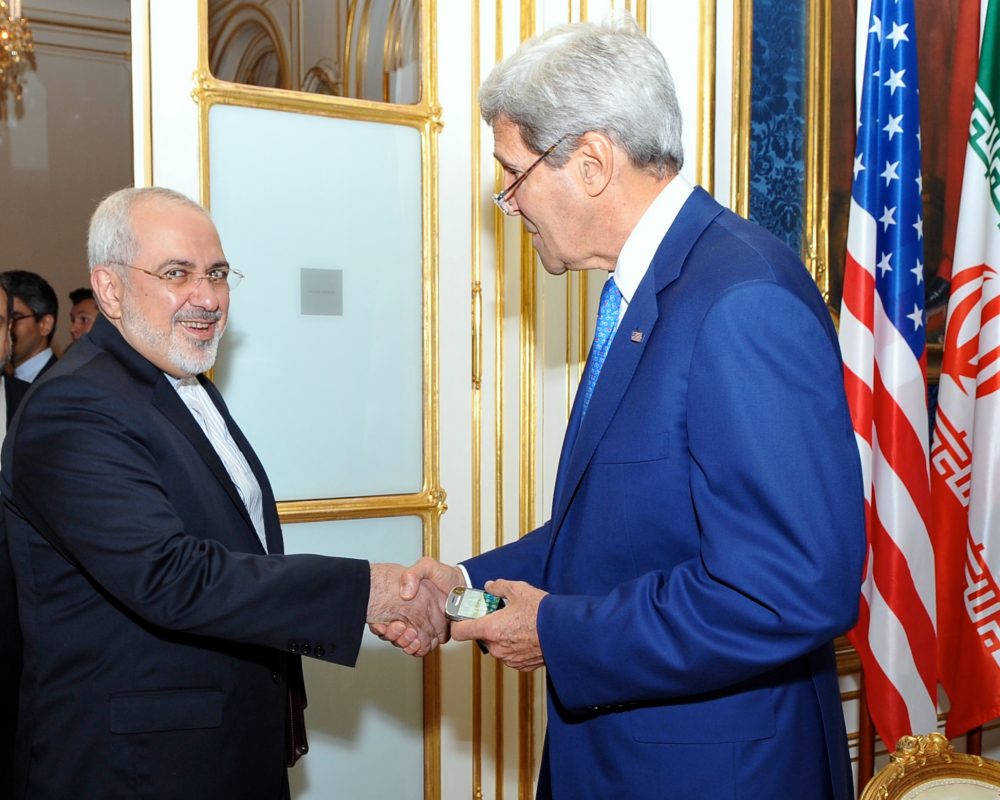
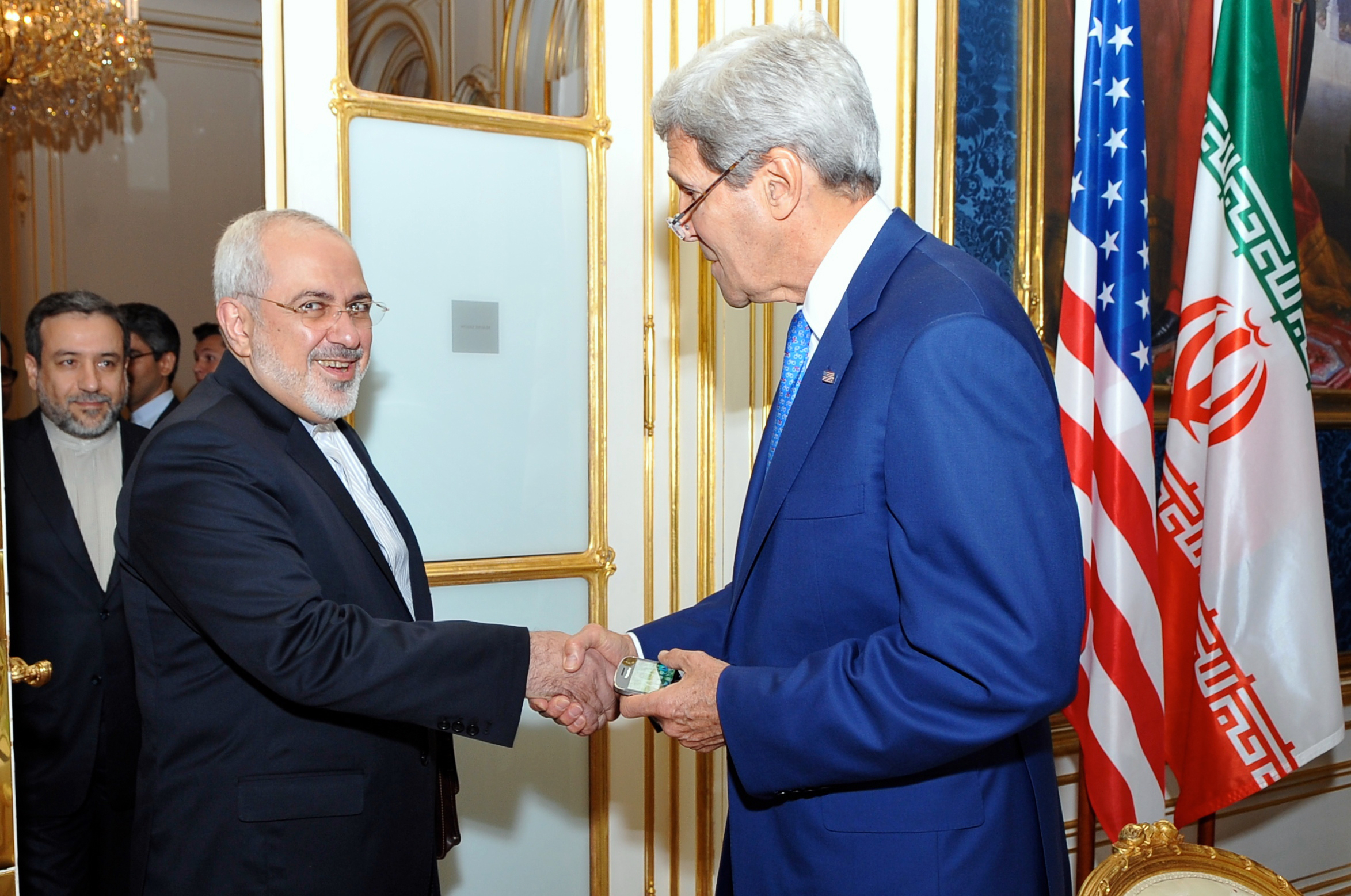
The Iranian regime may well attribute recent American concessions to its employment of the soft war tactic of “smile diplomacy”: the media-friendly demeanor of President Hassan Rouhani and Foreign Minister Mohammad Javad Zarif. Pictured: U.S. Secretary of State John Kerry shakes hands with Iranian Foreign Minister Mohammad Javad Zarif during talks in Vienna, Austria, July 14, 2014. (Image source: U.S. State Department)

Not surprisingly, those are the same tactics that Iran is accusing Washington of using against Iran. Iran has been alleging that the U.S. has been waging soft war attacks against it, via Facebook, YouTube, and Twitter, supposedly — according to Iran — to develop sympathies within Iran’s elites for Western culture, policies, and ideals. Presumably the next concession is that the U.S. be quiet and let Iran keep expanding as far as it likes. The other day, Iran threatened to block the transport of oil by closing the Strait of Hormuz at the mouth of the Persian Gulf.

This is the problem: Iran is now being treated by most of the world as a normal nation-state rather than the revolutionary, terror-supporting, totalitarian regime that in reality it is.

Iran also is using this narrative of an American-led soft war against Iran to institute tighter controls on Iranian citizens. Iran recently dispatched Basij paramilitary teams to elementary schools to instill revolutionary Islamic values in the students. Iran has also established “Atlas,” a new, government-controlled press agency modeled upon Qatar’s Al-Jazeera network. Iranian authorities most likely hope that this news service will counteract any untoward thoughts of liberalization that the “Arab Spring” might have conjured up to question the regime’s “stability.”[1] Iran has also stepped up internet censorship as well as efforts by the government’s plainclothes police to sever contacts between Western NGO personnel and Iran’s civil society activists.

Evidence of how seriously Iran views the potential of America’s supposed soft war tactics was its establishing a National Data Center to filter messages coming into Iran from Western media, in addition to Tehran’s sponsorship of its first National Forum on Soft War, in the autumn of 2015.

Meanwhile, pursuing both its hard war and soft war offensives, Iran continues to trumpet its ability to produce new weapons systems, including novel and illegal ballistic missiles.

The regime also boasts about its acquisition of weapons from outside the country, such as Russia’s S-300 air defense system.

Not surprisingly, this soft war saber-rattling by Shi’ite Iran has been increasing the security concerns of its neighboring Sunni Arab States. These concerns, in turn, cause the Gulf countries and others to demand that their American ally demonstrate that it is serious about halting Iranian expansion in the region. Recent visits to the Sunni states by high-level American political leaders (President Obama), ranking diplomats (Secretary of State John Kerry), and senior military figures (Secretary of Defense Ashton Carter and Chairman of the Joint Chiefs of Staff General Dunford) have sought to allay these fears; it is still not clear with what.

Meanwhile, Iran’s aggressive involvement in Syria, Yemen, and Iraq is clearly creating the impression among Gulf states and others that regional leadership is passing from Sunni Saudi Arabia onto a toxic Shi’ite Iran.

Dr. Lawrence A. Franklin was the Iran Desk Officer for Secretary of Defense Rumsfeld. He also served on active duty with the U.S. Army and as a Colonel in the Air Force Reserve, where he was a Military Attaché at the U.S. Embassy in Israel.

Iran’s Plans to Control a Palestinian State by Khaled Abu Toameh

  • The Iran nuclear deal, marking its first anniversary, does not appear to have had a calming effect on the Middle East.
  • Iran funnels money to Hamas and Islamic Jihad because they share its desire to eliminate Israel and replace it with an Islamic empire. The Iranian leaders want to see Hamas killing Jews every day, with no break. Ironically, Hamas has become too “moderate” for the Iranian leadership because it is not doing enough to drive Jews out of the region.

  • More Palestinian terror group leaders may soon perform the “pilgrimage” to their masters in Tehran. If this keeps up, the Iranians themselves will puppeteer any Palestinian state that is created in the region.

The Iran nuclear deal, marking its first anniversary, does not appear to have had a calming effect on the Middle East. The Iranians seem to be deepening their intervention in the Israeli-Palestinian conflict in general and in internal Palestinian affairs in particular.

This intervention is an extension of Iran’s ongoing efforts to expand its influence in Arab and Islamic countries, including Iraq, Yemen, Syria and Lebanon and some Gulf states. The nuclear deal between Tehran and the world powers has not stopped the Iranians from proceeding with their global plan to export their “Islamic Revolution.” On the contrary, the general sense among Arabs and Muslims is that in the wake of the nuclear deal, Iran has accelerated its efforts to spread its influence.

Iran’s direct and indirect presence in Iraq, Syria, Yemen and Lebanon has garnered some international attention, yet its actions in the Palestinian arena are still ignored by the world.

That Iran provides financial and military aid to Palestinian groups such as Hamas and Islamic Jihad has never been a secret. In fact, both the Iranians and the Palestinian radical groups have been boasting about their relations.

Iran funnels money to these groups because they share its desire to eliminate Israel and replace it with an Islamic empire. Like Hezbollah in Lebanon and the Houthis in Yemen, Hamas and Islamic Jihad agreed to play the role of Tehran’s proxies and enablers in the Israeli-Palestinian conflict.
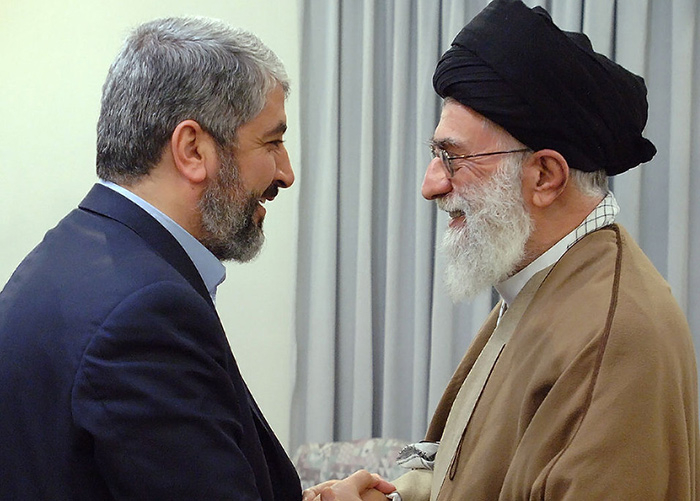
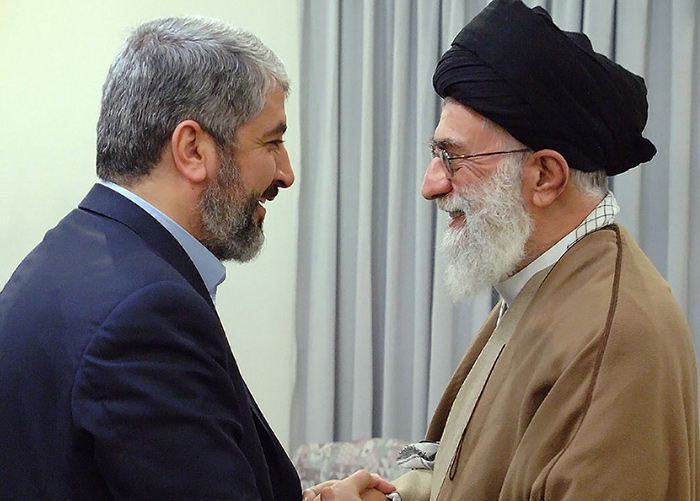
Iran used to funnel money to Hamas and Islamic Jihad because they share its desire to eliminate Israel and replace it with an Islamic empire. Relations between Iran and Hamas foundered a few years back, when Hamas leaders refused to support the Iranian-backed Syrian dictator, Bashar Assad. Pictured above: Hamas leader Khaled Mashaal (left) confers with Iranian “Supreme Leader” Ali Khamenei, in 2010. (Image source: Office of the Supreme Leader)

But puppets must remain puppets. Iran gets nasty when its dummies do not play according to its rules. This is precisely what happened with Hamas and Islamic Jihad.

Relations between Iran and Hamas foundered a few years back over the crisis in Syria. Defying their masters in Tehran, Hamas leaders refused to declare support for the Iranian-backed Syrian dictator, Bashar Assad. Things between Iran and Hamas have been pretty bad ever since.

First, the Assad government closed down Hamas offices in Damascus. Second, Assad expelled the Hamas leadership from Syria. Third, Iran suspended financial and military aid to Hamas, further aggravating the financial crisis that the Gaza-based Islamist movement had already been facing.

Islamic Jihad got it next. Iranian mullahs woke up one morning to realize that Islamic Jihad leaders have been a bit unfaithful. Some of the Islamic Jihad leaders were caught flirting with Iran’s Sunni rivals in Saudi Arabia and other Gulf countries. Even worse, the Iranians discovered that Islamic Jihad was still working closely with their erstwhile allies in the Gaza Strip, Hamas.

Iran had had high hopes for Islamic Jihad replacing Hamas as Tehran’s darling, and major proxy in the Palestinian arena. But here were Islamic Jihad leaders and activists working with their cohorts in Hamas, in apparent disregard of Papa Iran.

The mullahs did not lose much time. Outraged by Islamic Jihad’s apparent disloyalty, Iran launched its own terror group inside the Gaza Strip: Al-Sabireen (The Patient Ones). This group, which currently consists of several hundred disgruntled ex-Hamas and ex-Islamic Jihad members, was meant to replace Islamic Jihad the same way Islamic Jihad was supposed to replace Hamas in the Gaza Strip — in accordance with Iran’s scheme.

Lo and behold: it is hard to get things right with Iran. Al-Sabireen has also failed to please its masters in Tehran and is not “delivering.” Palestinian sources in the Gaza Strip say that Iran has realized that the investment in Al-Sabireen has not been worthwhile because the group has not been able to do anything “dramatic” in the past two years. By “dramatic,” the sources mean that Al-Sabireen has neither emerged as a serious challenger to Islamic Jihad or Hamas, and has not succeeded in killing enough Israelis.

So Iran has gone running back to its former bedfellow, Islamic Jihad.

For now, Iran is not prepared fully to bring Hamas back under its wings. Hamas, for the Iranians, is a “treacherous” movement, thanks to its periodic temporary ceasefires with Israel. The Iranian leaders want to see Hamas killing Jews every day, with no break. Ironically, Hamas has become too “moderate” for the Iranian leadership because it is not doing enough to drive Jews out of the region.

That leaves Iran with the Islamic Jihad.

In a surprise move, the Iranians this week hosted Islamic Jihad leader Ramadan Shalah and senior officials from his organization, in a renewed bid to revive Islamic Jihad’s role as the major puppet of Tehran in the Gaza Strip. Islamic Jihad officials said that the visit has resulted in the resumption of Iranian financial aid to their cash-strapped organization. As a result of the rift between Islamic Jihad and Iran, the Iranians are said to have cut off nearly 90% of their financial aid to the Palestinian terror organization.

Some Palestinians, such as political analyst Hamadeh Fara’neh, see the rapprochement between Iran and Islamic Jihad as a response to the warming of relations between Hamas and Turkey. The Iranians, he argues, are unhappy with recent reports that suggested that Turkey was acting as a mediator between Hamas and Israel.

Other Palestinians believe that Iran’s real goal is to unite Islamic Jihad and Al-Sabireen so that they would become a real and realistic alternative to Hamas in the Gaza Strip.

Whatever Iran’s intentions may be, one thing is clear: The Iranians are taking advantage of the nuclear deal to move forward with their efforts to increase their influence over some Arab and Islamic countries. Iran is also showing that it remains very keen on playing a role in the Israeli-Palestinian conflict — one that emboldens radical groups that are bent on the destruction of Israel and that share the same values as the Islamic State terror group.

Iran’s latest courtship of Islamic Jihad is yet another attempt by the mullahs to deepen their infiltration of the Palestinian arena by supporting and arming any terror group that strives to smash Israel. For now, it seems that Hamas’s scheme is working, largely thanks to the apathy of the international community, where many believe that Iran has been declawed by the nuclear deal.

But more Palestinian terror group leaders may soon perform the “pilgrimage” to their masters in Tehran. If this keeps up, the Iranians themselves will puppeteer any Palestinian state that is created in the region. Their ultimate task, after all, is to use this state as a launching pad to destroy Israel. And the Iranians are prepared to fund and arm any Palestinian group that is willing to help achieve this goal.

Khaled Abu Toameh is an award-winning journalist based in Jerusalem.
Iran’s Next Supreme Leader?

The process of selecting the successor to Supreme Leader Ayatollah Khamenei already seems underway.

  • President Rouhani, government cabinet officers, and deputies of the Majles (consultative assembly/parliament) usually have little to no influence in the vetting process of candidates.

  • The Revolutionary Guards, ranking intelligence officers, and the regime’s plutocrats do not want to elevate anyone with an independent power base or a charismatic personality.
  • Whoever is ultimately selected, regime stability at least for the next few years seems assured: anti-regime networks remain shredded after the 2009 nationwide protests were violently suppressed.

While U.S. policymakers, media talking-heads and many think tank pundits are fixated on the Joint Comprehensive Plan of Action (JCPOA) and Tehran’s nuclear weapons projects, the focus of Iran’s power-brokers is on regime continuity and leadership succession. Iran’s next parliamentary elections are scheduled for February 26, 2016.

The process of selecting the successor to Supreme Leader Ayatollah Khamenei already seems underway. Former President Ali Akbar Hashemi Rafsanjani (1989-1997) hinted as much, according to a Reuters report. The aging first generation of the 1979 Islamic Revolution’s leadership are determined to maintain regime stability during the transition to a new rahbar (leader) upon the retirement or death of Khamenei.

Those institutions that will play a large role in the selection process include: ranking members of the Islamic Revolutionary Guard Corps (IRGC), senior clergy in Qom, members of the Assembly of Experts,[1] and the Council of Guardians.[2]

President Hassan Rouhani, government cabinet officers, and deputies of the Majles (consultative assembly/parliament) usually have little to no influence in the vetting process of candidates.

Some Western media commentary, which can be inclined to mirror imaging — assuming “they” are like “us” — has hinted that former President Ali Akbar Hashemi Rafsanjani is a serious contender. This is not so. The 81-year-old Rafsanjani was long ago pushed to the side by political and religious hardline acolytes of the current leadership. As early as 2011, when Rafsanjani’s personal website registered growing popularity in a poll, it was shut down. Another sign of Rafsanjani’s marginalization is the decision by the Council of Guardians to disqualify him from submitting his candidacy for the Presidency in the 2012 presidential election. Still another is the dearth of coverage of the former president in Iran’s media. In one recent case, Iranian state television and the regime’s leading daily newspaper, Keyhan, appeared to excise his photo from a public event where he sat near Khamenei. Another sign is his reduced role in the 82-member Assembly of Experts, which holds its next election in February 2016. Rafsanjani was also defeated by Khamenei ally, Ayatollah Mohamad Yazdi, in a recent election for the Assembly’s Speakership.

The likely successor to Khamenei will be chosen from a vetting process that is probably already underway.

The next Supreme Leader likely will be selected from the following pools of talent: Tehran Friday Prayer Leaders, the Council of Guardians, and Iran’s Judiciary.

But if Khamenei’s demise is sudden, an interim leader may be selected from Qom’s several senior Ayatollahs.

The next Supreme Leader, however, is likely to be just as colorless as the present occupant of the office: the IRGC, ranking intelligence officers, and the regime’s plutocrats do not want to elevate anyone with an independent power base or a charismatic personality. They do they want someone like Rafsanjani who is independently wealthy and considered politically unreliable by hardliners. Nor will they be content with the radical hardline cleric, Mesbah Yazdi, who once was close to former President Mahmoud Ahmadinejad. However, Yazdi has been of late an exuberant, public supporter of Khamenei, especially since Ahmadinejad’s fall from favor.

One candidate who may be a serious contender for the office of Supreme Leader is the current chief of Iran’s judiciary, Ayatollah Sadegh Larijani. Nevertheless, whoever is ultimately selected, regime stability at least for the next few years seems assured: anti-regime networks remain shredded after the 2009 nationwide protests were violently suppressed.

Out with the old, in with the new?
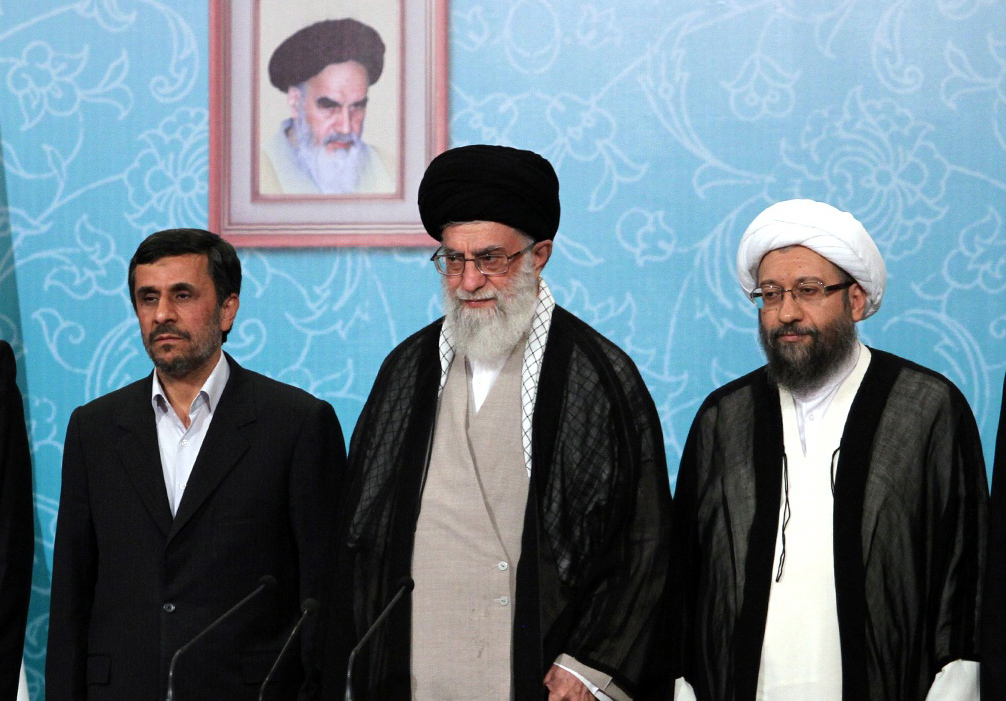
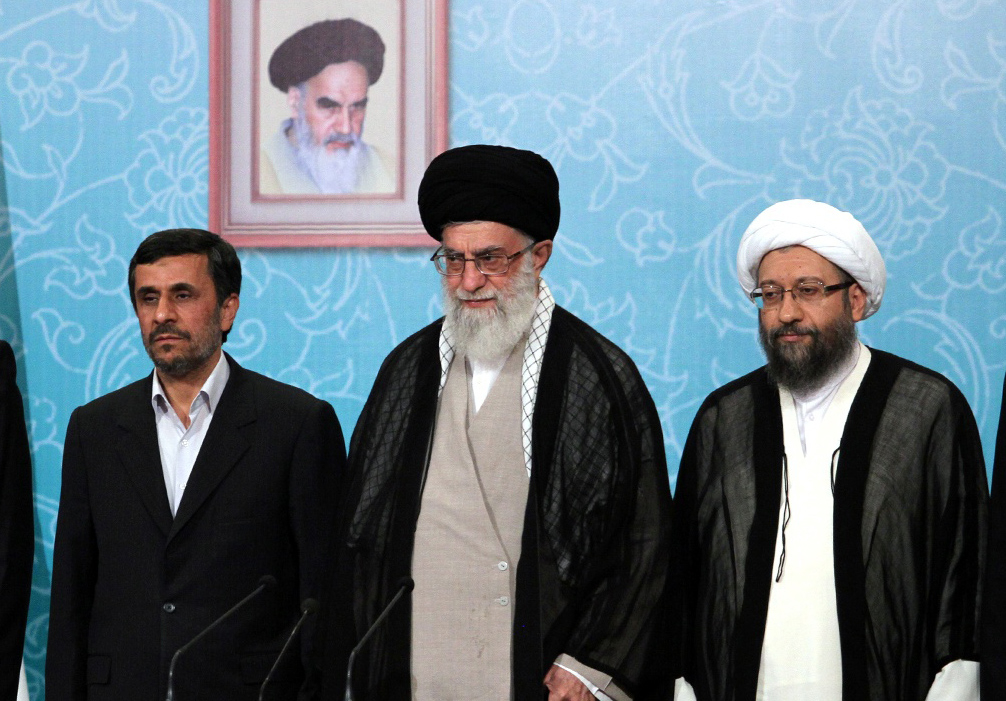
A serious contender to replace Ayatollah Khamenei (center) in the office of Supreme Leader is Ayatollah Sadegh Larijani (right). (Image source: Office of Supreme Leader)

Dr. Lawrence A. Franklin was the Iran Desk Officer for Secretary of Defense Rumsfeld. He also served on active duty with the U.S. Army and as a Colonel in the Air Force Reserve, where he was a Military Attaché at the U.S. Embassy in Israel.

Iran’s New Palestinian Terror Group: Al-Sabireen by Khaled Abu Toameh

  • The Iranians are also believed to have supplied their new terrorist group in the Gaza Strip with Grad and Fajr missiles that are capable of reaching Tel Aviv.

  • The leader of Al-Sabireen, Hisham Salem, is a former commander of Palestinian Islamic Jihad in the Gaza Strip. His activities and rhetoric have worried many in Hamas and Palestinian Islamic Jihad, who fear that his group is beginning to attract many of their followers.
  • Salem has been accused by many Palestinians of helping Iran spread Shia Islam inside the Gaza Strip, where all Muslims belong to the rival Sunni denomination.
  • This, of course, is bad news for [Palestinian President Mahmoud] Abbas, who is now watching as many of his former loyalists have come onto Iran’s payroll and are sharing its radical ideology.
  • Many Palestinians and Arabs in the region are already voicing concern. The last thing Abbas, Egypt’s President Sisi and Jordan’s King Abdullah need is another Iranian terror group such as Hezbollah in the Middle East.
  • It now remains to be seen whether the Obama Administration and other Western powers will wake up and realize that the Iranians are continuing to fool them, not only regarding Tehran’s nuclear program, but also concerning its territorial ambitions in the Middle East.
  • Unless the U.S. and Western powers realize that Iran remains a major threat to world peace, Al-Sabireen and other terrorist groups will one day manage to establish a UN-recognized Palestinian state that would pose an existential threat to Israel and destabilize the entire Middle East.

The nuclear deal between Iran and the world powers has paved the way for the Iranians to resume their efforts to spread their influence throughout the Middle East.

As the Obama Administration and the rest of the international community choose to look the other way, Iran evidently feels that this is the appropriate time to meddle in the internal affairs of Arabs and Muslims

Iran’s main goal, from all appearances, is to dominate the entire Middle East by destroying Israel and most of the Arab and Islamic regimes that are considered too “moderate” and “pro-West.” So far, thanks to the indifference of the Obama Administration and most Western countries, the Iranians seem to be marching in the right direction toward achieving their goal.

Iran is already deeply involved in Yemen, Syria, Iraq and Lebanon. In recent months, the Iranians have also returned to the Palestinian arena, this time through a new group called Al-Sabireen Movement For Supporting Palestine. Translated into English, Al-Sabireen means “The Patient One.”

The new Iranian-backed Al-Sabireen was established in wake of tensions between Iran and its two former allies in the Gaza Strip: Hamas and Islamic Jihad. Since the beginning of the Syrian crisis four years ago, relations between Tehran and Hamas and Islamic Jihad have been strained. The refusal of Hamas and Islamic Jihad publicly to support Iran’s ally, President Bashar Assad, in his fight against the Syrian opposition, has resulted in the expulsion of Hamas and Islamic Jihad leaders from Syria. It has also prompted the Iranians to cut off financial aid to the two groups, an abandonment that has left them facing a severe and unprecedented crisis — the worst in more than two decades.

Al-Sabireen, whose emblem is identical to that of another Iran proxy, Hezbollah, so far has about 400 followers in the Gaza Strip. Each one receives a monthly salary of $250-$300, while the senior officials of the group get at least $700.

Although Al-Sabireen has been operating in the Gaza Strip for several months now, its name surfaced two weeks ago when one of its top military commanders was shot and killed by the Israel Defense Forces (IDF). The man, Ahmed Sharif Al-Sarhi, was responsible for a series of shooting attacks on Israel before he was fatally shot by IDF snipers along the border with the Gaza Strip.

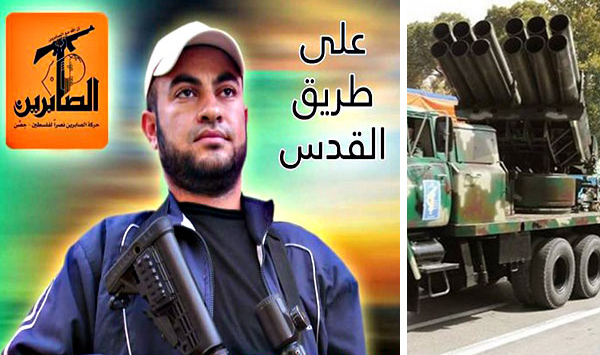
Al-Sabireen commander Ahmed Sharif Al-Sarhi (left) was responsible for a series of shooting attacks on Israel before he was fatally shot two weeks ago by IDF snipers along the border with the Gaza Strip. The Iranians are also believed to have supplied their new terrorist group in the Gaza Strip with Grad and Fajr missiles (right) that are capable of reaching Tel Aviv.

Palestinian sources said that most of the Al-Sabireen terrorists are former disgruntled members of Palestinian Islamic Jihad. The sources said that Iran has been supplying Al-Sabireen with various and new types of weapons that are being used to attack Israel. According to the sources, Al-Sarhi was killed by the IDF while he was trying to fire from a new Steyr HS .50 long-range sniper rifle he had recently received from the Iranians.

The Iranians are also believed to have supplied their new terrorist group in the Gaza Strip with Grad and Fajr missiles that are capable of reaching Tel Aviv.

The leader of Al-Sabireen, Hisham Salem, is a former commander of Palestinian Islamic Jihad in the Gaza Strip. His activities and rhetoric have worried many in Hamas and Palestinian Islamic Jihad, who fear that his group is beginning to attract many of their followers.

Two weeks ago, unidentified assailants stabbed and moderately wounded Salem shortly after he gave a newspaper interview in the northern Gaza Strip. Although no group has claimed responsibility, it is widely believed that the assailants belong to either Hamas or Palestinian Islamic Jihad. Salem has been accused by many Palestinians of helping Iran spread Shia Islam inside the Gaza Strip, where all Muslims belong to the rival Sunni denomination.

Al-Sabireen is also believed to have succeeded in recruiting scores of militiamen belonging to President Mahmoud Abbas’s Fatah faction in the Gaza Strip. These militiamen have gone to the Iranian-backed group mostly for financial considerations. This, of course, is bad news for Abbas, who is now watching as many of his former loyalists have come onto Iran’s payroll and are sharing its radical ideology.

Iran’s presence in the Gaza Strip — this time through Al-Sabireen — is bad news not only for Israel, but also for many Palestinians and Arabs in the region. The Egyptians, who have been waging a relentless war on Hamas, Palestinian Islamic Jihad and other terrorist groups in the Gaza Strip and Sinai, are already voicing concern over Iran’s new Palestinian proxy. The last thing Abbas, Egyptian President Abdel Fattah Sisi and Jordan’s King Abdullah need is another Iranian terror group similar to Hezbollah in the Middle East.

It now remains to be seen whether the Obama Administration and other Western powers will wake up and realize that the Iranians are continuing to fool them, not only regarding Tehran’s nuclear program, but also concerning its territorial ambitions in the Middle East. Iran’s Al-Sabireen group states that its main goal is to “eliminate the Zionist entity.”

On its way to achieving its goal, the group will also kill Arabs and Muslims who do not share its objectives and ideology. It also seeks to kill Israel’s Western friends, especially those living in the U.S. and Europe. Unless the U.S. and Western powers realize that Iran remains a major threat to world peace, Al-Sabireen and other terrorist groups will one day manage to establish a UN-recognized Palestinian state that would pose an existential threat to Israel and destabilize the entire Middle East.

Iran’s Monstrous Record in 2016 by Majid Rafizadeh

  • Tehran has not become a rational and moderate state. Iran has instead become more empowered and emboldened to pursue its revolutionary ideals of anti-Americanism and anti-Semitism.When it comes to the JCPOA nuclear deal — which Iran never signed — Iranian leaders violated the deal three times in the past year.

  • UN Security Council resolution 2231 is clear. The resolution “calls upon Iran not to undertake any activity related to ballistic missiles designed to be capable of delivering nuclear weapons, including launches using such ballistic missile technology.”
  • Iran also increased strategic and tactical cooperation with Russia to undermine US interests, strengthening the Russia-China-Iran axis.
  • Iran ranks top in the world for executions per capita. Iran also became the world’s leading executioner of juveniles.

In 2016, Iran reached an unprecedented level when it comes to breaking international laws. It expanded interventionist policies in the region; pursued revolutionary principles of anti-Americanism and anti-Semitism; ignored several UN resolutions and the Joint Comprehensive Plan of Action (JCPOA) between the P5+1 and Tehran, which Iran never signed; continued regional hegemonic ambitions, and abused human rights.

With billions of dollars of revenue pouring into the pockets of Iran’s Supreme Leader Ayatollah Ali Khamenei and the Islamic Revolutionary Guard Corps (IRGC), Tehran did not become a rational and moderate state. Iran instead became more empowered and emboldened to pursue its revolutionary ideals of anti-Americanism and anti-Semitism.

Iran was listed as the top state sponsor of terrorism — “providing a range of support, including financial, training, and equipment, to groups around the world.”

When it comes to the JCPOA nuclear deal — which Iran never signed — Iranian leaders violated the deal three times.

The first violation was reported by Germany’s domestic intelligence agency, the Federal Office for the Protection of the Constitution, in July 2016. The agency stated that the Iranian government was pursuing a “clandestine” path to obtain illicit nuclear technology and equipment from German companies “at what is, even by international standards, a quantitatively high level.” German Chancellor Angela Merkel criticized Iran, but no action was taken.

According to the nuclear deal, Iran should request permission from a UN Security Council panel for “purchases of nuclear direct-use goods”, but Tehran did not. Another report by the Institute for Science and International Security drew attention to Iran’s violation as well:

“The Institute for Science and International Security has learned that Iran’s Atomic Energy Organization (AEOI) recently made an attempt to purchase tons of controlled carbon fiber from a country. This attempt occurred after Implementation Day of the Joint Comprehensive Plan of Action (JCPOA). The attempt to acquire carbon fiber was denied by the supplier and its government. Nonetheless, the AEOI had enough carbon fiber to replace existing advanced centrifuge rotors and had no need for additional quantities over the next several years, let alone for tons of carbon fiber. This attempt thus raises concerns over whether Iran intends to abide by its JCPOA commitments. In particular, Iran may seek to stockpile the carbon fiber so as to be able to build advanced centrifuge rotors far beyond its current needs under the JCPOA, providing an advantage that would allow it to quickly build an advanced centrifuge enrichment plant if it chose to leave or disregard the JCPOA during the next few years. The carbon fiber procurement attempt is also another example of efforts by the P5+1 to keep secret problematic Iranian actions.”

The next violation came in February 2016 as Iran exceeded its threshold for heavy water, used to produce nuclear weapons. In addition, in November 2016, according to a report by the International Atomic Energy Agency (IAEA), Iran again violated the deal by holding more heavy water than permitted. Iran was let go free both times with no consequences.

Third, when it comes violating several UN resolutions, in 2016, Iran significantly ratcheted up its production of ballistic missiles.

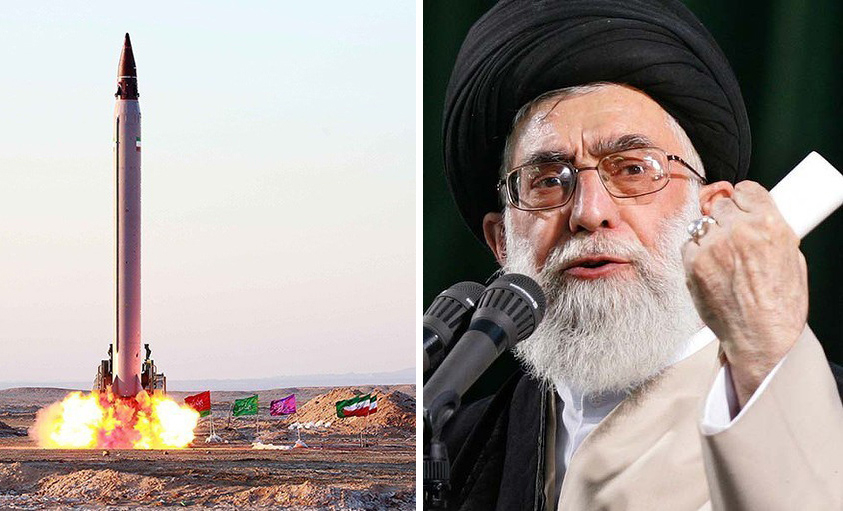
Iran test-fired at least eight ballistic missiles, capable of carrying multiple nuclear heads, an act in violation of the nuclear deal, as well as United Nations resolutions 1929 and 2231.

The JCPOA states that Iran should not undertake any ballistic missile activity “until the date eight years after the JCPOA Adoption Day or until the date on which the IAEA submits a report confirming the Broader Conclusion, whichever is earlier.”

The UN Security Council resolution (Paragraph 3 of Annex B of resolution 2231 of 2015) is clear. The resolution “calls upon Iran not to undertake any activity related to ballistic missiles designed to be capable of delivering nuclear weapons, including launches using such ballistic missile technology.”

Another UN Security Council resolution, 1929, also states:

“Iran shall not undertake any activity related to ballistic missiles capable of delivering nuclear weapons, including launches using ballistic missile technology, and that States shall take all necessary measures to prevent the transfer of technology or technical assistance to Iran related to such activities.”

It is accurate to argue that if not for the Obama Administration’s appeasement policies towards Iran, Tehran would not have received tremendous financial relief. Nevertheless, Iran’s Supreme leader Khamenei who enjoys the final say in Iran’s domestic and foreign policy, instigated more anti-American sentiments and continued lashing out at the “Great Satan“. Iran publicly harassed the US Navy, detained US sailors, and imprisoned several American citizens. Khamenei also repeatedly threatened Israel and made incendiary remarks about wiping Israel from the face of earth in less than 8 minutes. In December 2016, Khamenei stated that Israel would not exist in 25 years. He also published a book laying out a plan on how to destroy Israel.

Regionally speaking, as Tehran became more heavily armed with additional revenues and weaponry, it has increased its military interventions in Syria, Iraq, Yemen, and intensified its advisory, financial, weapons and intelligence assistance to its Shiite proxies and Bashar al Assad, bolstering the “Shia axis”. Iran also increased strategic and tactical cooperation with Russia to undermine US interests, strengthening the Russia-China-Iran axis.

Finally, and more fundamentally, when it comes to human rights, Iran set some of the worst records since its establishment in 1979. According to the Human Rights Watch, 2016 saw Iran escalating the mass executions of minorities, and the imprisonment of human rights and political activists. Now, Iran ranks top in the world for executions per capita. Iran also became the world’s leading executioner of juveniles, according to Amnesty International.

These are only some examples of Iran’s disregard for international laws and its human rights abuses.

There is definitely a positive correlation between, on the one hand, Iran gaining more dollars and, on the other hand, breaching international laws, committing egregious human rights violations, spreading its revolutionary values of anti-Americanism and anti-Semitism, destabilizing the region, intensifying regional conflicts and humanitarian tragedies, and pursing its regional ambitions.

Translate »
Skip to toolbar