Nimutampa ubutegetsi vuba murajyanwa mu butayu bugufiya kandi muzabuheramo!!!

Nimutampa ubutegetsi vuba murajyanwa mu butayu bugufiya kandi muzabuheramo!!!

Ndababwiza ukuli yuko Paul Kagame araza gusara mu gihe America ikomeje gufunga inzira zose zishoboka zirimo amayeri yo kurwana intambara muri DRCongo kugirango bafate ubutegetsi. Uwiteka Imana Nyiringabo yababwiye kurekura imfungwa zose More »

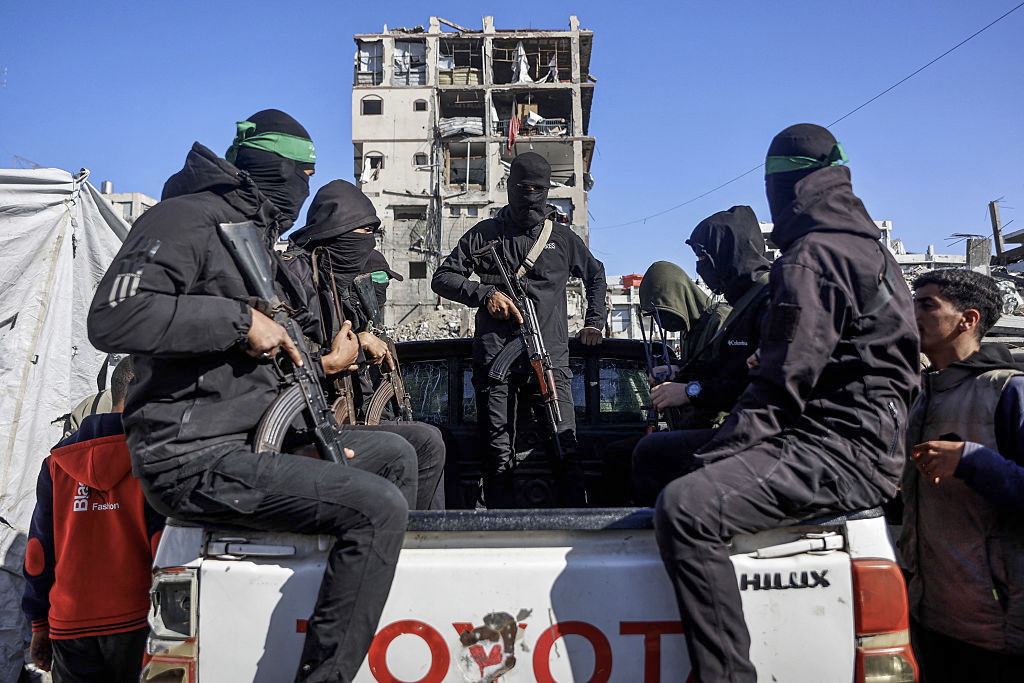
The World’s Shameful Silence on Hamas

The World’s Shameful Silence on Hamas

Six months after the ceasefire went into effect in the Gaza Strip, Hamas remains firmly in power. Despite international promises, diplomatic initiatives, and the much-publicized “Board of Peace,” the Iran-backed Islamist group More »

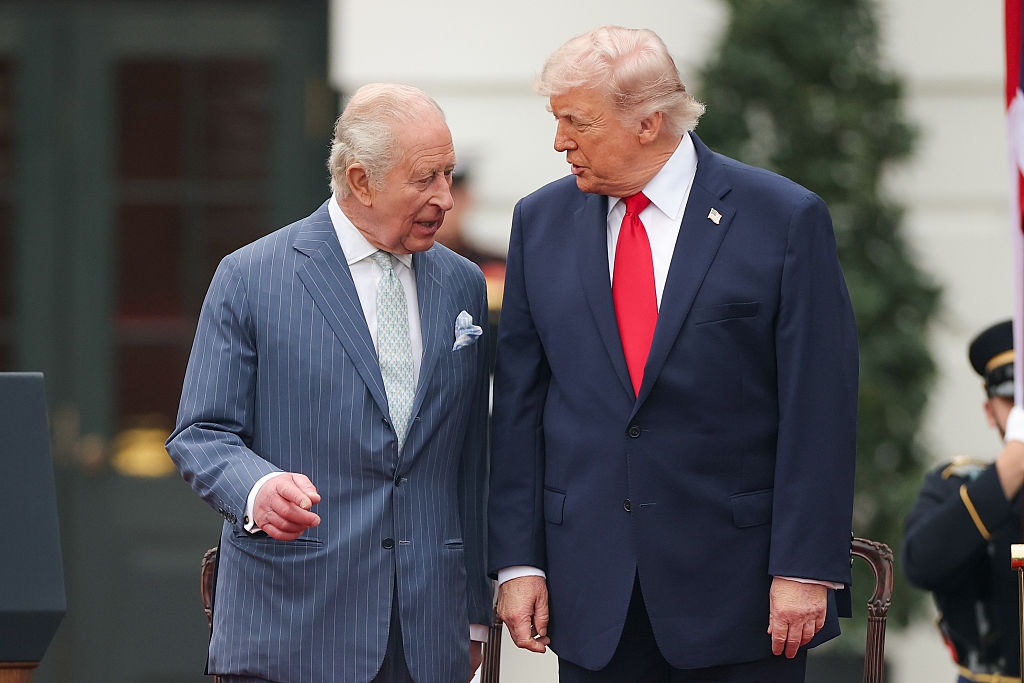
The Crown’s Moral Voice: King Charles in Washington and the Test of Western Clarity

The Crown’s Moral Voice: King Charles in Washington and the Test of Western Clarity

[P]arts of the West have become too cautious in naming the nature of the threats they face. The question is whether, at a time when the West is confronted by terrorism, tyranny, More »

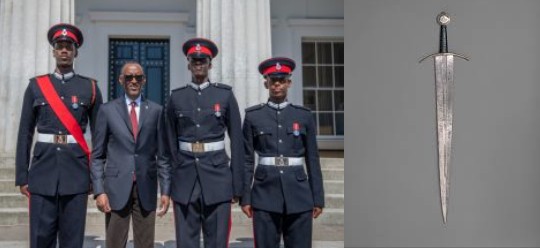
Uwiteka Imana Nyiringabo ategeka ko Paul Kagame atazabona umusimbura ku ngoma uturuka mu muryango we!!!

Uwiteka Imana Nyiringabo ategeka ko Paul Kagame atazabona umusimbura ku ngoma uturuka mu muryango we!!!

Ijambo ry’Uhoraho Uwiteka Imana Nyiringabo rikomeza kunzaho cyane, maze rirambwira riti, mwana w’umuntu, wisubizemo imbaraga ukomeze umurimo wa data wo mu ijuru kuko abakugambanira nta bwo bafite ububasha bwo ku kugeraho kuko More »


Islamist Terrorism, European Denial by Yves Mamou

  • Europeans have delegated to the State the exclusive right to use violence against criminals. But Europeans, especially in France and Germany, are discovering that some kind of “misunderstanding” seems actually to be at work. Their State, the one that has the monopoly on violence, does not want to be at war with its Islamist citizens and residents. Worse, the State gives off the feeling that it is afraid of its Muslim citizens.

  • “The concept of the rule of law means that the citizen is protected from the arbitrariness of the State. Currently, the rule of law protects the attackers above all”. — Yves Michaud, French author and philosopher.

If a group of Jewish or Christian terrorists in Algeria, Egypt or Saudi Arabia had committed the same kind of stabbings, car-rammings, throat-slittings and shootings that France and Germany are suffering now, they would have provoked an immediate reaction. Tens of thousands — maybe hundreds of thousands — of enraged Muslims would have rushed into the streets to kill, stab or eviscerate the first group of Jews or Christians they met. Within 24 hours, no church or synagogue would be able to open its doors: all of them would have been burned to cinders.

These words are not to stigmatize anyone; they are meant to explain what terrorists want. According to Gilles Kepel, professor at the Paris Institute of Political Studies and a specialist of Islam, “ISIS calls for stabbing dirty and evil French people… because they want to trigger a civil war.” Muslim terrorists behind the wave of terrorist attacks apparently assume that thousands of French, Germans or Belgians will rush out into the streets, as they would do themselves, to kill, stab or eviscerate Muslims. Muslim sponsors of terrorism may not even be able to imagine that Europeans may not wish to participate in the pleasure of bloodthirsty riots.

The fact is that even if millions of Arabs and Muslims live in Europe today, Europeans are not Arabs and do not act as Arabs do. Westerners in Europe have delegated the “legitimate use of physical force” — commonly, if controversially, known as the “monopoly on violence” — to the State.

Max Weber, in his 1919 essay, “Politics as a Vocation”, claims that the State is any “human community that claims the monopoly of the legitimate use of physical force within a given territory.” In other words, Weber describes the State as any organization that succeeds in having the exclusive right to use, threaten, or authorize physical force against residents of its territory (“Gewaltmonopol des Staates“).

For French and Germans citizens, the mission of the State is to fight Islamist terrorists — harshly if necessary. But today, instead of the “legitimate violence” of the State, German and French citizens are encountering only denial. The State keeps denying that Islamist crimes are being openly committed in its territory. This denial comes in different forms:

1. The Real Victim is the Terrorist.

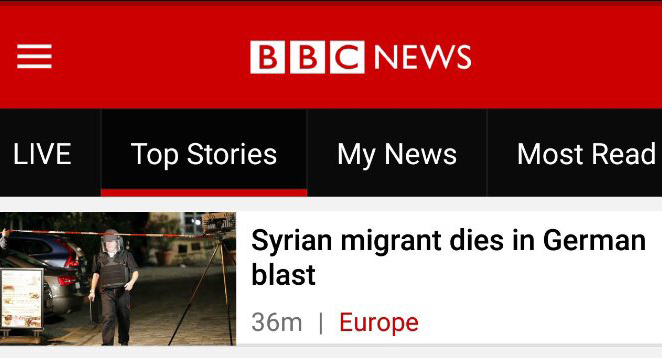
  • From Britain’s BBC: “Syrian Migrant Dies in German Blast.”
  • From Le Monde: “Germany: A Syrian Refugee Dies While Causing an Explosion in Front of a Restaurant in Bavaria” (Allemagne : un réfugié syrien meurt en provoquant une explosion devant un restaurant en Bavière). The headline (which has since been changed) is not about the diners in the restaurant who were targeted by the suicide bomber. The headline is about a victim, who is “the author of the explosion”. This “victim” — apparently only incidentally an Islamist criminal, according to this narrative — may have had a good reason to seek revenge! He was, after all, “a Syrian refugee whose entry into Germany was denied by the administration.” He was not deported for humanitarian reasons. The journalist barely mentions the 15 victims wounded, some severely, in the explosion. There is only one victim, the author of the suicide attack, which some journalists implied was not really a suicide attack, but maybe only a suicide. The man had history of psychiatric problems, after all.
  • According to the Wall Street Journal: “He was known to police and had been treated twice after trying to take his own life, Mr. Herrmann [the Bavarian Interior Minister] said. He was also known because of a previous drug misdemeanor, a police spokeswoman said.”

In short, the killer is not a killer but a poor, sick, young man.
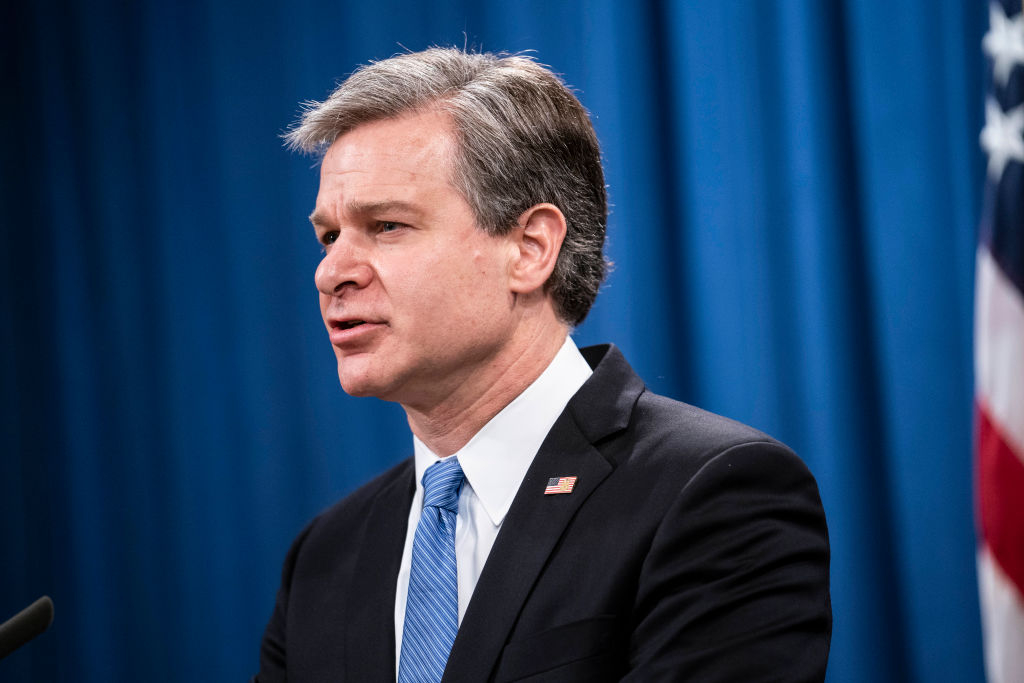
After a Muslim suicide bomber injured 15 people on July 24 in Germany, many media outlets rushed to portray the terrorist as the victim.

2. He Was Not an Islamist, Just a Lunatic. Ali Sonboly, the 18-year-old German-Iranian gunman who murdered nine people at a Munich shopping mall on July 25 may be an Islamist killer, but he was more surely psychotic. According to Reuters:

“Materials found at the gunman’s home also showed he had been hospitalized for psychiatric care for three months around the same time, and was an avid player of violent video games, the officials told a news conference”.

Immediately after the attack, officials said the murderer was not an Arab but an Iranian — but that would simply make him a Shi’ite Muslim. According to Walid Shoebat, a Palestinian-American who converted to Christianity from Islam, “Sonboly is no Iranian. He is Syrian. His Facebook page showed that he is pro-Turkey’s Islamists”. However, even more bizarrely, some officials and media outlets said that Sonboly was inspired by the far-right Norwegian terrorist, Anders Breivik.

3. The Problem Is Not Islam or Islamism, but Too Many Guns on the Black Market. “German politicians have signaled that they will review the country’s gun laws, after a troubled 18-year-old was able to use a 9mm handgun and amass 300 rounds of ammunition in a shooting that left nine dead in Munich,” according to The Guardian.

4. The Victims Are Responsible for Their Own Murders. In Nice, France, after Mohamed Lahouaiej Bouhlel murdered more than 80 people by driving a 19-ton truck into a crowd celebrating Bastille Day, Julien Dray, a Socialist MP, said,

“The fireworks… It is a popular festival, there are families, children; it is often the only party that these children have, and so people are eager to go, and often checkpoints are removed to help the flow, because people do not want to wait, they want to leave, and that is unfortunately, is the time there may be a problem. “

5. The Attacker “Self-Radicalized” Rapidly. Even if the State is at fault, it found a good excuse to explain incompetence and lack of foresight: the terrorist “self-radicalized” so quickly that he was undetectable. The daily Le Figaro reported:

It seems that the perpetrator of the Nice attack “radicalized very quickly.” Interior Minister Bernard Cazeneuve called it “a new type of attack” that “demonstrates the extreme difficulty of combating terrorism.”

Cazeneuve added that Bouhlel, the Tunisian attacker, “was not known to the intelligence services.”

6. ISIS Is Not Islamist; It Is a Right-Wing Organization. We can sleep soundly, we are advised. The terrorists, we are told, are not Islamists but Fascists. “In claiming to be part of Daesh [ISIS], the two assassins show once again the bloody nature of this right-wing sect with policies that are racist, anti-Semitic, sexist and homophobic,” wrote SOS Racisme, an NGO financed by France’s Socialist government in a bid to seduce Muslim voters.

No doubt the next attacks will produce new and interesting explanations of this type whose aim is to reassure people.

Europeans have delegated to the State the exclusive right to use violence against criminals. But Europeans, especially in France and Germany, are discovering that some kind of “misunderstanding” seems actually to be at work. Their State, the one that has the monopoly on violence, does not want to be at war with its Islamist citizens or residents. Worse, the State gives off the feeling that it is afraid of its Muslim citizens.

The question now is: if the State does not want to fight Islamists murderers; if the State does not want to shut down Salafist mosques, deport hate preachers, and break the alliance between Islamists and organized criminals in the no-go zones of France and Germany; if the only solution proposed by President François Hollande is to “remain united”, unfortunately it will not work. “They attacked democracy,” Hollande said, “democracy will be our shield.”

But “national unity has no meaning when no serious measure is taken,” wrote Yves Michaud, the French author and philosopher, on his Facebook page:

“The concept of the rule of law means that the citizen is protected from the arbitrariness of the State. The same legal barriers cannot be used to protect those who want to kill citizens and destroy the res publica [republic]. … Currently, the rule of law protects the attackers above all”.

Yves Mamou, based in France, worked for two decades as a journalist for Le Monde.
Islamism’s Culture War Sets Sight on Multi-Billion Dollar Beauty Industry by Shireen Qudosi

  • The long game of Western Muslims averse to Western values, was largely unaffected by an altered political landscape as they transitioned to a new arena: culture.

  • “[F]ashion is one of the outlets in which we can start that cultural shift in today’s society to normalize the hijab in America.” — Melanie Elturk, CEO of Haute Hijab.
  • Beautiful Nura Afia in an advertising campaign is a far more appealing and consumer-friendly alternative to CAIR’s Nihad Awad or the political complexities of the Muslim Brotherhood. The face has changed but the message is constant.
  • Here you have the two faces of Islamist thought, one which underscores the myth of peace while privately exiling dissenting voices as ignorant, racist or bigoted. Meanwhile, CoverGirl and other brands upholding the hijab as a new standard of beauty, ignore the hijab’s very ugly origins.

As 2016 drew to a close, many people were on the edge of their seats after a defining presidential election between one choice (Clinton) who stood for the status quo and the other (Trump), seen as the harbinger of a resolute victory against radical Islam. For many Muslims, there was a third choice. Unanchored to the changing tides of elections, the long game of Western Muslims who are averse to Western values was largely unaffected by an altered political landscape. They had transitioned to a new arena: culture.

In 2016, the élite fashion label Dolce and Gabbana launched an “Abaya and Hijab Collection.” Months later, at New York Fashion Week, a sartorial Mecca, hosted the first catwalk spotlighting models fully donned in hijabs.

Islamist influence is now using Western culture to solidify Islamist values in society’s more coveted circles: fashion and beauty.

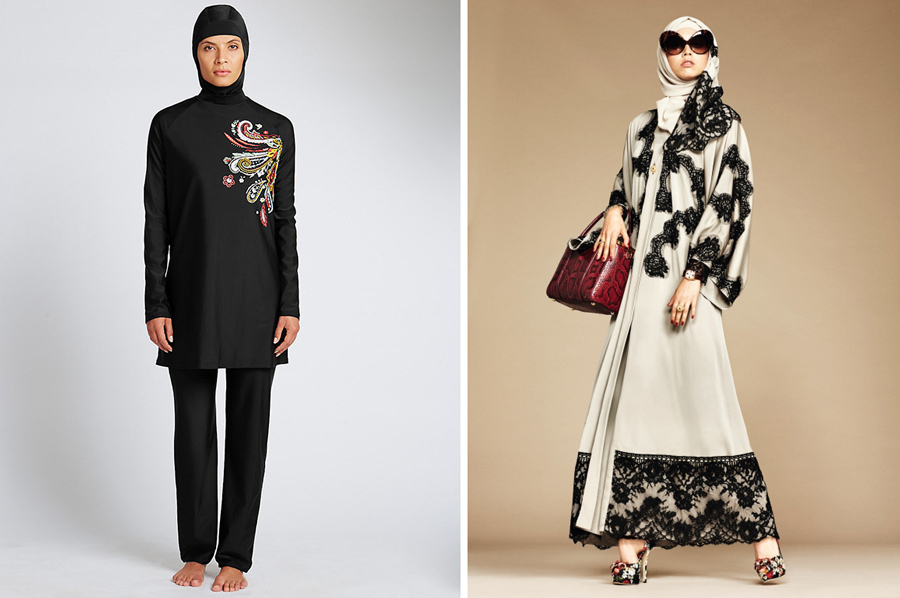
Left: Marks & Spencer’s Paisley Print Burkini. Right: An outfit from the Dolce & Gabbana Abaya and Hijab Collection.

Melanie Elturk, CEO of Haute Hijab, a leading U.S. hijab brand, openly shared a widely held belief that “fashion is one of the outlets in which we can start that cultural shift in today’s society to normalize the hijab in America.”

Later in the year, CoverGirl, a popular affordable makeup line, announced Muslim beauty blogger Nura Afia as its newest “brand ambassador.” A 23-year-old wife and mother, Afia hosts a YouTube channel, with over 200,000 subscribers, for hijab and makeup tutorials. She now stands with celebrities such as CoverGirl’s first male makeup model, James Charles; Modern Family star Sofia Vergara and pop singer Katy Perry in a campaign that highlights brands of makeup targeted at customers who applaud surface “diversity” and “equality.”

Posing together for a CoverGirl campaign aimed at portraying “diversity” were a male makeup model, a “hijabi,” a Latina TV star and a pop singer. It is a visual tableau trying to appeal to an audience that prizes “diversity” — one that sees “equality” based entirely on appearance rather than values or intrinsic worth. Rather than inquire into the marketplace of ideas that explores identity, faith and American values, we now have advertising campaigns that homogenize competing ideas into the funnel of multiculturalism. In this instance, a noted pop singer and a TV star are used as gateways to usher in the hijab as normal and perhaps even coveted.

Beauty and fashion industries in particular offer a mold in which intellectual discourse and cultural commentary is cast aside for opinion. That opinion is then shaped, packaged, and pushed as a product onto a population group already pliable to messaging. With CoverGirl’s newest “brand ambassador,” Nura Afia, the message echoes the mantra of hardline Islamist groups who have, since the presidential election, lost much of their political ground. Lost ground is now regained in new spheres through personalities such as Afia, without any association with political parties.

Beautiful Nura Afia in an advertising campaign is a far more appealing and consumer-friendly alternative to CAIR’s Nihad Awad or the political complexities of the Muslim Brotherhood. The face has changed but the message has not.

In an earlier Refinery29 interview, Afia had this message to share:

“Islam is such a beautiful religion. It’s peaceful and everyone else twists it, even within our own faith. Just from looking at social media, [I see] Muslims bash Muslims, so if that’s happening I can’t believe that we expect non-Muslims not to do the same. It’s just how humans are, I guess. It has nothing to do with religion.”

Yet, in a Facebook post just a month prior, Afia also shared this:

“If you find yourself no longer my friend on FB it’s because you either shared or posted some straight up ignorant, racist, or bigoted [expletive].”

Here you have the two faces of Islamist thought. The PR-friendly face of Islamist thought underscores the myth of peace, while on the other hand Islamism exiles dissenting voices as ignorant, racist or bigoted.

Meanwhile, CoverGirl and other brands uphold the hijab as a new standard of beauty, ignore the hijab’s extremely ugly origins. A handful of Islamic scholars believe the practice of hijab grew out of exclusionary practices designed to draw a distinction between “believing” women (Muslims) and “non-believing” women (non-Muslims). Islamic culture embraces piety through veiling the body of Muslim women, while at the same time it strips non-Muslim women of their dignity by seeing them as property and spoils of war to be parceled and consumed — a practice allowed by the faith.

The origin of the hijab tradition in Islam likely pre-dates the Quran, and comes from early Islamic society. The Quran, a book that outlines civilian and military life to the most granular detail, does not offer any doctrine that specifically dictates covering the hair. The Quranic verse (33:59) believed to mandate the hijab states:

“O Prophet, tell your wives and your daughters and the women of the believers to bring down over themselves [part] of their outer garments. That is more suitable that they will be known and not be abused. And ever is Allah Forgiving and Merciful.”

The practice of covering the hair grew from a slave-owning society. Speaking on Surah 33:59-60, which advises believing women to cover their bodies, Professor Barlas circulates a widely-shared view among academics:

“These are rather straightforward verses: if Muslim women don an outer garment (jil-bab), non-Muslim men will recognize them as such and not harass them. In early slave-owning societies, like Arabia, the ‘law of the veil’ set apart free women from slaves and therefore women who were off-limits from those who ‘were fair game’ (Lerner in Ahmed 1992:15). This was the society in which the first Muslim community took shape and it seems to have been under siege at the time.”

Professor Barlas’s assessment is debated by some Islamic scholars based on what they say is insufficient evidence; other Islamic scholars, including Professor Khaleel Mohammed, argue that the claim has merit.

The larger point is this: slavery at the time was a standard practice. It thrived culturally through acts of social and religious demarcations, such as the hijab, which became to many Muslims a sign of class supremacy, whereas women who were not veiled have been, and continue to be, harassed and attacked[1]:

“Except from their wives or those their right hands possess, for indeed, they are not to be blamed…” (Surah 70, Verse 30, Al-Ma’aarej, Sahih International)

Islam, to its credit, introduced many incentives to shift away from a slave-owning society, by making it simple to free slaves. According to Hadith (Sahih Bukhari Vol 3, Book 46, Number 693), for example, Muslims are rewarded in the afterlife for the act of freeing a slave; freeing the body of a slave is like freeing one’s own body from hellfire. Still, while Islam did not initiate slavery and while it did create pathways to move out of the practice, the faith never championed the right of all people to be free.

This failure is largely responsible for present-day slavery in Mauritania, a country to which devout Muslims flock to study Islam in an environment free from Western influence. This failure has also continued to permit rapes. These take place not only during wars from Sudan to Syria and the horrifying present day open enslavement of Yazidi women and children by ISIS and at international slave auctions in neighboring countries such as Saudi Arabia, bit also it seems, by various migrants to Europe.

It is then a fantastic stretch of the imagination when brands such as CoverGirl try to have consumers associate “equality” and “diversity” with hijabs and make-up. It also does not mirror the “Islam of peace” that many Muslims try to emphasize.

These deeper conversations are lost when the market through which Afia reaches out is largely uninterested in history, facts or any other evidence that prompts inquiry or reflection.

For Islamists, Afia and CoverGirl make excellent proxies in the push for normalizing the rigidity in the system of Islam by making it “chic to celebrate oppression.” Contrary to modern-day fantasies of the hijab “breaking barriers,” the hijab historically was used as a social barrier.

Normalizing the hijab reinforces the message that if you are not covered, you are not respectable and therefore not acceptable. That is the underbelly of Islamic culture: it controls thought and movement before attempting to corral other women into submission under the spoon-fed illusion of “diversity” and “equality.”

Shireen Qudosi, Director of Muslim Matters, at America Matters, is an American Muslim raised on three continents. She is writing her first book, Islam’s Origin Story.


[1] The Islamic scholar Dr. Tawfik Hamid also wrote a compelling piece, “Hijab, Even American Flag Hijab, Supports Historical Slave System.” Relying on multiple Islamic sources as evidence, Dr. Hamid exposes how the “hijab is a dress code in Islam that was designed to distinguish ‘free’ from ‘slave’ women.” Other modern Islamic thinkers, such as Asra Nomani and Hala Arafa add that Surah 33:59 wasn’t instruction to add a new layer of fabric, but to draw closer the jilbab (a long, overflowing gown) that was common at the time. Nomani and Arafa also cite the eight times “hijab” or its variation has appeared in the Quran; each time it was not in reference to piety but to draw distinction and barriers between two things:

The word hijab, or a derivative, appears only eight times in the Quran as an “obstacle” or “wall of separation” (7:46), a “curtain” (33:53), “hidden” (38:32), just a “wall of separation” (41:5, 42:52, 17:45), “hiding” (19:14) and “prevented” or “denied access to God” (83:15).”

Multiple references, both primary and secondary sources, point back to the hijab’s origin as not an act of piety, but an act of supremacy and distinction that made it easier for a slave system to thrive.

Islamism in Europe by Khadija Khan

  • Ironically, those who dare to speak out against extremists either face severe consequences, such as death threats, or are called anti-Muslim bigots. This kind of response often discourages progressive voices from speaking out, and understates the progress of counter-extremism even within the Muslim community. Opposition voices still might be there — more than ever. They just go underground.

  • Since the unprecedented terror attacks in France, Belgium and Germany, citizens across Europe have been living in constant fear. They seem to be sick and tired of the Muslim extremists; children might be in danger on their way to school, and shopping takes place under the protection of soldiers.
  • With Brexit, the election of Donald Trump, and Italy’s referendum, there seems to be a snowball effect. The growing influence of the Alternative for Germany (AfD), the National Front in France, the Party for Freedom in the Netherlands, the Freedom Party Austria and the Five Star Movement in Italy all appear to be byproducts of the same rhetoric.
  • The dull reaction of a vast number of European Muslims to the rising wave of terror and violence has also contributed to this shift. Increasing numbers of native-born Europeans seem angry and distrustful of their fellow Muslim citizens, especially when everyone else has come out loud and clear in denouncing terrorist crimes.

German authorities and those across Europe seem finally to be strengthening their campaign against the militant far-right, including Muslim extremists, during the past few weeks.

This awakening, however, seems to be coming after a major price that Europe had to pay in terms of death and chaos unleashed by terrorists in Germany, Belgium, France, Denmark, and so on.

Governments across Europe seem to be switching into panic mode to prevent the rise of European radicalism through the rise of the far-right, racism and nationalism throughout the entire continent.

German Chancellor Angela Merkel sounds as if she is backing down a bit from championing the influx of migrants and her slogan of “We can do it!” in developing a multicultural society. She not only vowed to Germans in an address last week that the migrant crisis must never be repeated; she also called for an all-out ban on the full-face veil covering in Germany.

Following Merkel’s lead, Interior Minister Thomas de Maizière also proposed a partial ban on veils, and pronounced them contrary to assimilation.

The dramatic shift in policy might be a consequence of the planned and perpetrated acts of terrorism by extremist Muslims, many of whom are the migrants on whom Merkel placed her hopes. It might also be the result of the resultant rise of European neo-Nazis. More likely, it would appear to come from an eye to re-election.

Merkel was declared by many the only defender of the free world after the election of Donald Trump as U.S. president. Perhaps, after the surprising victory of Donald Trump, she realized that it might be a good idea finally to address the grievances of her fellow countrymen.

The brutal rape and murder of a 19-year-old German woman, Maria Ladenburger, apparently by Afghan migrant who claims to be 17 years old, seems to have been the last nail in the coffin of Merkel’s open-door migrant policy, which she had promised to not to let go even after extreme opposition from within her own party’s leadership.

Ladenburger had been a medical student volunteering at a migrant housing facility. Her murderer had reportedly seen her in the shelter. The incident set off shockwaves not only in the Germany but also across Europe, especially after promises by Germany’s interior ministry to deport as many Afghan citizens as possible after failing to confirm any credible claims for asylum.

In the meanwhile, authorities in Berlin last weekend announced the arrest of an Afghan citizen who was actively involved in terrorist attacks in Afghanistan, while living part-time in Germany.

German police a few weeks back also launched an operation against a Salafist group in the country, whose members were brainwashing Muslim youths, mostly in Germany, to get jihadist training and join the Islamic State’s battle against the world in Syria and Iraq.

The Salafist organization had registered itself as a social work entity under the cover of distributing the Quran in markets and public places, and claiming to be bridging the gap between the West and Islam.

One suspect was arrested in Aschaffenburg and another was detained in Mannheim, on the allegation of plotting an Islamically motivated attack on a public place.

This recent shift in strategy is also a lesson that the West has learnt a bit too late, despite having experienced similar assaults not that long ago by the Nazis, Mussolini, Lenin, Stalin as well as terror organizations such as Baader Meinhof, al-Shebaab, ETA, the Red Brigades, Hamas, Al Qaeda, Palestinian Islamic Jihad and Hezbollah, to name just a few.

Since the unprecedented terror attacks in France, Belgium and Germany, citizens across the Europe have been living in constant fear. They seem to be sick and tired of the Muslim extremists; children might be in danger on their way to school, and shopping takes place under the protection of soldiers.

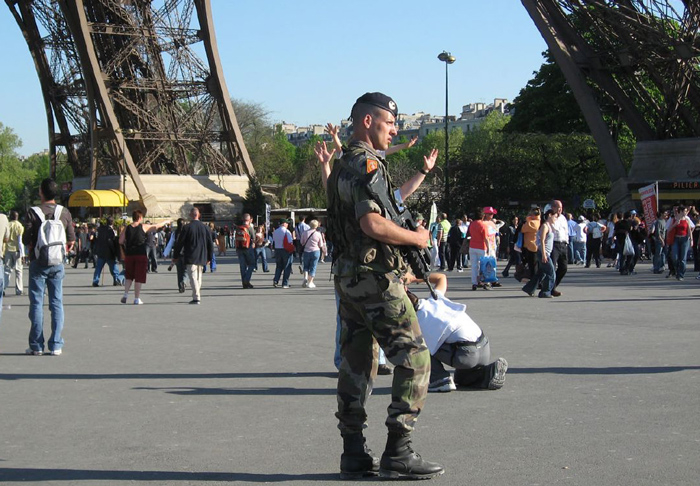
Since the unprecedented terror attacks in France, Belgium and Germany, citizens have been living in constant fear. In France, soldiers are deployed in the streets. Pictured: A soldier on guard at the Eiffel Tower in Paris. (Image source: Kirsteen/Flickr)

With Brexit, the election of Donald Trump, and Italy’s referendum, there seems to be a snowball effect. The growing influence of the Alternative for Germany (AfD), the National Front in France, the Party for Freedom in the Netherlands, the Freedom Party Austria and the Five Star Movement in Italy all appear to be byproducts of the same rhetoric.

The dull reaction of a vast number of European Muslims to the rising wave of terror and violence has also contributed to this shift. Increasing numbers of native-born Europeans seem angry and distrustful of their fellow Muslim citizens, especially when everyone else has come out loud and clear in denouncing terrorist crimes.

Ironically, those who dare to speak out against extremists either face severe consequences, such as death threats, or are called anti-Muslim bigots. This kind of response often discourages progressive voices from speaking out, and understates the progress of counter-extremism even within the Muslim community. Opposition voices still might be there — more than ever. They just go underground.

The majority of Muslims in the West seem oblivious to the fact that they would be the greatest victims of empowered lunatic extremists such as ISIS or neo-Nazis, because both would try to punish progressive Muslims either for remaining silent about terrorist attacks or for not joining the bandwagon for ISIS.

Progressive Muslims should realize that their voices matter at this sensitive time if they do not want to end up being losers between those two extremes.

The failed political policies of the global powers have started to translate into a dreadful future for humanity where a clone of Abu Bakr al-Baghdadi, Anders Breivik or a Neville Chamberlain clone might be calling the shots, and the civilized world would become a hell for those caught in the middle, the rest of us.

Khadija Khan is a Pakistan-based journalist and commentator.

Islamic State Closing in on Germany Stabbing Is First ISIS-Inspired Attack on German Soil by Soeren Kern

  • Hans-Georg Maaßen, the head of Germany’s domestic intelligence agency (BfV), warned that the Islamic State was deliberately planting jihadists among the refugees flowing into Europe, and reported that the number of Salafists in Germany has now risen to 7,900. This is up from 7,000 in 2014 and 5,500 in 2013.

  • “Salafists want to establish an Islamic state in Germany.” — Hans-Georg Maaßen, director, BfV, German intelligence.
  • More than 800 German residents — 60% of whom are German passport holders — have joined the Islamic State in Syria and Iraq. Of these, roughly one-third have returned to Germany. — Federal Criminal Police Office.
  • Up to 5,000 European jihadists have returned to the continent after obtaining combat experience on the battlefields of the Middle East. — Rob Wainwright, head of Europol.

A 15-year-old German girl of Moroccan descent stabbed and seriously wounded a police officer in Hanover. The stabbing appears to be the first lone-wolf terrorist attack in Germany inspired by the Islamic State.

The incident occurred at the main train station in Hanover on the afternoon of February 26, when two police officers noticed that the girl — identified only as Safia S. — was observing and following them.

The officers approached the girl, who was wearing an Islamic headscarf, and asked her to present her identification papers. After handing over her ID, she stabbed one of the officers in the neck with a six-centimeter kitchen knife.

According to police, the attack happened so quickly that the 34-year-old officer, who was rushed to the hospital, was unable to defend himself. After her arrest, police found that Safia was also carrying a second, larger knife.

“The perpetrator did not display any emotion,” a police spokesperson said. “Her only concern was for her headscarf. She was concerned that her headscarf be put back on properly after she was arrested. Whether the police officer survived, she did not care.”

On March 3, Hanover Public Prosecutor Thomas Klinge revealed that Safia had travelled to the Turkish-Syrian border in November 2015 to join the Islamic State, but that her mother had persuaded her to return to Germany on January 28.

Last month, Safia S., a 15-year-old German girl of Moroccan descent, stabbed and seriously wounded a police officer in Hanover, in what appears to be the first lone-wolf terrorist attack in Germany inspired by the Islamic State.

According to police, the stabbing was premeditated: unable to join the Islamic State in Syria, Safia had determined to carry out an attack against the police in Germany.

Safia is being charged with attempted murder. She is also being charged with a terrorism offense. According to prosecutors, by travelling to Turkey to join the Islamic State, the girl violated Section 89a of the German Criminal Code, “Preparation of a serious violent offense endangering the state.”

The newspaper, Die Welt, reported that Safia had been part of the local Salafist scene since 2008 — she was only seven years old at the time. She had appeared in Islamist propaganda videos alongside Pierre Vogel, a convert to Islam and one of the best-known Salafist preachers in Germany. In those videos, Vogel praised Safia for wearing a headscarf to school and for being able to recite verses from the Koran.

Safia’s brother, Saleh, is reportedly being held in a jail in Turkey, where he was arrested for trying to join the Islamic State.

Until now, the only other successful Islamist attack in Germany took place at Frankfurt Airport in March 2011, when Arid Uka, an ethnic Albanian from Kosovo, shot and killed two United States airmen and seriously wounded two others. Uka was later sentenced to life in prison.

On February 4, 2016, German police arrested four members of an ISIS cell allegedly planning jihadist attacks in Berlin. In coordinated raids, more than 450 police searched homes and businesses linked to the cell in Berlin, Lower Saxony and North Rhine-Westphalia.

The ringleader — a 35-year-old Algerian who was staying at a refugee shelter with his wife and two children in Attendorn — arrived in Germany in the fall of 2015. Posing as an asylum seeker from Syria, the Algerian, identified only as Farid A., is said to have received military training with the Islamic State in Syria.

Also arrested were: a 49-year-old Algerian living in Berlin under a fake French identity; a 30-year-old Algerian living in Berlin with a valid residence permit; and a 26-year-old Algerian, allegedly with ties to Islamists in Belgium, who is living in a refugee shelter in Hanover.

The men allegedly were planning to attack Checkpoint Charlie, the iconic Cold War crossing point between East and West Berlin. They also allegedly were planning to attack the Alexanderplatz, a large public square and transportation hub in the center of Berlin.

On February 8, German police arrested an alleged ISIS commander who was living at a refugee shelter in the small town of Sankt Johann. The 32-year-old jihadist, known only as Bassam and posing as a Syrian asylum seeker, had entered Germany in the fall of 2015. German intelligence authorities were unaware of the man’s true identity until the German newsmagazine, Der Spiegel, interviewed him after receiving a tip from other Syrians at the shelter. Bassam said the accusations against him are false: “I want to learn German and work as a cook,” he said.

In a February 5 interview with ZDF television, Hans-Georg Maaßen, the head of Germany’s domestic intelligence agency (Bundesamt für Verfassungsschutz, BfV), warned that the Islamic State was deliberately planting jihadists among the refugees flowing into Europe. “The terror risk is very high,” he said.

On February 4, the Berliner Zeitung quoted Maaßen as saying that the BfV had received more than 100 warnings that there were Islamic State fighters among the refugees currently living in Germany. Some of the jihadists are known to have entered Germany using fake or stolen passports.

Maaßen also revealed that the BfV knows of 230 attempts by Salafists to canvass German refugee shelters in search of new recruits. In a recent interview with the Berlin newspaper, Der Tagesspiegel, Maaßen said that the number of Salafists in Germany has now risen to 7,900. This is up from 7,000 in 2014; 5,500 in 2013; 4,500 in 2012, and 3,800 in 2011.

Although Salafists make up only a small fraction of the estimated six million Muslims living in Germany today, intelligence officials warn that most of those attracted to Salafi ideology are impressionable young Muslims who, at a moment’s notice, are willing to carry out terrorist acts in the name of Islam.

In an annual report, the BfV described Salafism as the “most dynamic Islamist movement in Germany.” It added:

“The absolutist nature of Salafism contradicts significant parts of the German constitutional order. Specifically, Salafism rejects the democratic principles of separation of state and religion, popular sovereignty, religious and sexual self-determination, gender equality and the fundamental right to physical integrity.”

In an interview with the Frankfurter Allgemeine Zeitung, Maaßen warned: “Salafists want to establish an Islamic state in Germany.”

On February 16, more than 200 German police raided the homes of 44 Salafists in the northern city state of Bremen. The Interior Minister of Bremen, Ulrich Mäurer, said he had ordered the closure of the Islamic Association of Bremen (Islamischen Fördervereins Bremen) for the alleged recruiting of jihadists for the Islamic State:

“It is rather apocalyptic that we have people living in the middle of our city who are prepared, from one day to the next, to participate massively in the terror of the Islamic State.”

In December 2014, authorities in Bremen shut down another Salafist group, the Culture and Family Association (Kultur- und Familieverein, KUF), after some of its members joined the Islamic State.

More than 800 German residents — 60% of whom are German passport holders — have joined the Islamic State in Syria and Iraq, according to Die Welt, based on the most recent data compiled by the Federal Criminal Police Office (Bundeskriminalamt, BKA). Of these, roughly one-third have returned to Germany. Around 130 others have been killed on the battlefield, including at least a dozen suicide bombers.

In a February 19 interview with the Neue Osnabrücker Zeitung, the head of Europol, Rob Wainwright, said that up to 5,000 European jihadists have returned to the continent after obtaining combat experience on the battlefields of the Middle East. He added that further jihadist attacks in Europe were to be expected:

“Europe is now facing the greatest terrorist threat in more than ten years. We expect that ISIS or other Islamist groups will carry out an attack somewhere in Europe, with the aim of achieving high losses among the civilian population. In addition, there is the threat posed by lone-wolf attackers. The growing number of foreign fighters presents the member states of the EU with completely new challenges.”

A recent poll conducted by YouGov for the news agency, Deutsche Presse Agentur (DPA), found that 66% of Germans expect the Islamic State to carry out a jihadist attack on German soil in 2016. Only 17% of those surveyed believe there will be no attack; 17% said they did not have an opinion.

Speaking at a gathering of international police in Berlin on February 25, Hans-Georg Maaßen, the spy chief, warned that Germany is not an island: “We have to assume that we will become the target of jihadist attacks, and we need to be prepared.”

Soeren Kern is a Senior Fellow at the New York-based Gatestone Institute. He is also Senior Fellow for European Politics at the Madrid-based Grupo de Estudios Estratégicos / Strategic Studies Group. Follow him on Facebook and on Twitter. His first book, Global Fire, will be out in 2016.

Islamic Islamophobia: When Muslims Are Not Muslim Enough, What Does It Promise for the Rest of Us? by Douglas Murray

  • Mr Shah’s murderer was a Sunni Muslim, Tanveer Ahmed, who had travelled to Glasgow to kill Mr Shah because he believed Mr Shah had “disrespected the Prophet Mohammed.” At this point the comfortable narratives of modern Britain began to fray.


  • If Mr Shah’s murderer had been a non-Muslim, there would be a concerted effort by the entirety of the media and political class to find out what inspirations and associations the murderer had. Specifically, they would want to know if there was anybody — especially any figure of authority — who had ever called for the murder of Muslim shopkeepers. Yet when a British Muslim kills another British Muslim for alleged “apostasy” and local religious authorities are found to have praised or mourned the killers of people accused of “apostasy,” the same people cannot bother to stir themselves.

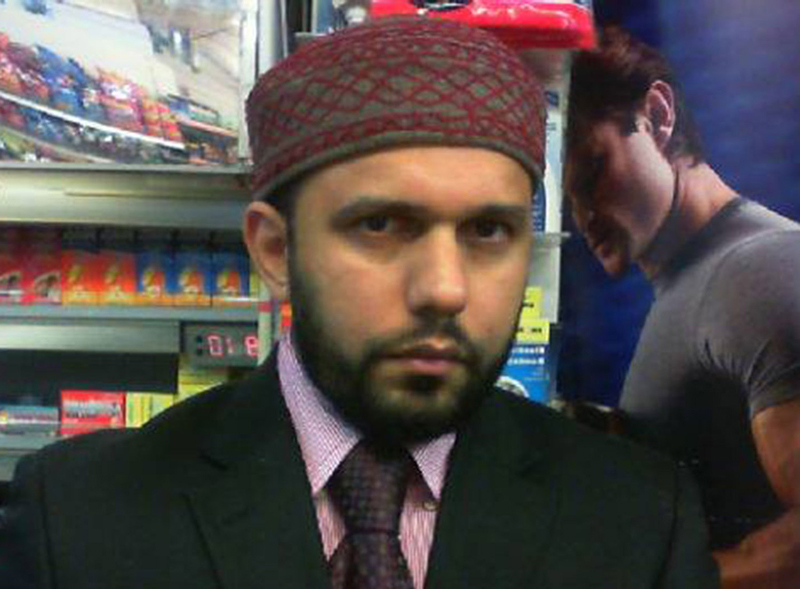
Earlier this year there was a murder that shocked Britain. Just before Easter, a 40-year old shopkeeper in Glasgow, Asad Shah, was repeatedly stabbed in his shop; he died in the road outside. The news immediately went out that this was a religiously-motivated attack. But the type of religiously motivated attack it was came as a surprise to most of Britain.

There is so much attention paid to the idea of “Islamophobia” in the country that many people — including some Muslim groups — immediately assumed that the killing of Asad Shah was an “Islamophobic” murder. It turned out, however, that the man who had been detained by police — and this week sentenced to a minimum of 27 years in prison for the murder — was also a Muslim.

Mr Shah was an Ahmadiyya Muslim — that is, a member of the peaceable Islamic sect which is dismissed as “heretical” by many Muslims. Mr Shah’s murderer, on the other hand, was a Sunni Muslim, Tanveer Ahmed, who had travelled up from Bradford to kill Mr Shah because he believed Mr Shah had “disrespected the Prophet Mohammed.” At this point the comfortable narratives of modern Britain began to fray.

Asad Shah was murdered in Glasgow, Scotland by Tanveer Ahmed, a fellow Muslim who claimed Shah had “disrespected the Prophet Mohammed” by wishing Christians a Happy Easter.

While everyone would have known what to do, what to say and where to start hunting for connections if such an atrocity had been committed by a non-Muslim against a Muslim, politicians and others were uncertain what to do when it turned out to be a Muslim-on-Muslim crime. If, for instance, the crime, had been committed by a non-Muslim against a Muslim, political leaders such as Scotland’s First Minister, Nicola Sturgeon, would have immediately sought to trace links to anyone who had called for, or approved of, any such act. But beneath this murder lay a whole iceberg that Sturgeon and others have still shown no interest in investigating.

Usually after terrorist attacks, it is traditional for Sturgeon and other Scottish politicians to traipse off to the local mosque, to say that of course the attack has nothing to do with Islam, and otherwise to reassure the Scottish Muslim community. Yet the mosque most often frequented for this trip — and the largest mosque in Scotland — is the Glasgow Central Mosque. Sturgeon has met its leaders many times, including after the Paris attacks last November. Those leaders include Imam Maulana Habib Ur Rehman. Just a month before the killing of Mr Shah in Glasgow, this Glasgow Imam gave his response to the hanging in Pakistan of Mumtaz Qadri — the man who murdered Salman Taseer, the governor of Pakistan’s Punjab province, for his opposition to blasphemy laws.

Reacting to the hanging of Salman Taseer’s assassin, Imam Rehman said, among other things, “I cannot hide my pain today. A true Muslim was punished for doing which [sic] the collective will of the nation failed to carry out.” The statement is a pretty clear justification of the actions of Taseer’s assassin, and as close as you can get to advocating others carry out similar actions against people deemed to be outside a particular interpretation of Islam.

Of course, if Mr Shah’s murderer had been a non-Muslim, there would be a concerted effort by the entirety of the media and political class to find out what inspirations and associations the murderer had. Specifically, they would want to know if there was anybody — especially any figure of authority — who had ever, for instance, called for the murder of Muslim shopkeepers. Yet when a British Muslim kills another British Muslim for alleged “apostasy,” and local religious authorities are found to have praised or mourned the killers of people accused of “apostasy,” the same people cannot bother to stir themselves. There is talk of being “taken out of context” or there are warnings not to “generalise” or be “Islamophobic” or any number of other fatuous get-out clauses.

What happened this week in court when Tanveer Ahmed was found guilty and sentenced for the murder of Asad Shah was even more revealing. After the judge read out the sentence, Tanveer Ahmed raised his fist and started shouting in Arabic “There is only one prophet.” Supporters, who made up around half the people in the public gallery, joined in with his cries. All of which made it understandable that the family of Mr Shah had been too terrified to turn up in court during the trial of their relative’s murderer, and are apparently planning to leave Scotland.

Then, outside the court, a news reporter from LBC Radio confronted some of the murderer’s family members. The video is worth watching. “Did Asad Shah deserve to die?” he asks the killer’s family as they head to their car. They refuse to comment.

When another supporter is asked whether he thinks it was “respectful” for the killer to do the chanting he did in the dock, he becomes threatening and says, “Yeah, he’s respecting his prophet. He’s saying ‘I love my prophet’. What’s wrong with that?” Asked if he thinks the sentence was fair, the man replies “No.” Asked in what way, he replies, “No comment.”

It is, of course, a good thing that the criminal justice system has done its job and done it swiftly. Asad Shah’s murderer has been brought to justice and been given a suitably long sentence. But this case should have provided a learning moment for politicians, the media and wider society to finally understand the full threat to our society that this type of fanaticism poses, as well as a realistic awareness of how widespread that fanaticism actually is. Instead, on glimpsing for a moment how deeply this problem goes, it seems that the UK has decided once again to turn away and avert its gaze, for fear of what it might otherwise find out.

Douglas Murray, a British author, news analyst and commentator, is based in London, England.

Translate »
Skip to toolbar