Category Archives: Uncategorized

Sharia Councils: Taking Liberties by Robbie Travers

  • A report by Machteld Zee, a Dutch Academic raised the issue that sharia councils “frustrate women in their requests [for divorce], especially if the husband is unwilling to co-operate,” and she also suggested that women are treated as “second-class citizens.”

  • Sharia councils, however, can demand that the parties involved in a dispute sign contracts beforehand, demanding that women agree to the results of the arbitration. To force a woman, who has been denied rights to any legal representation, to agree to an illegal or wrongful contract before trial, is a travesty that the British justice system cannot allow to continue.
  • As Dr Taj Hargey, Imam of the Oxford Islamic Congregation argues, “Sharia is not divine law, it is just medieval opinion.”
  • Is Britain really agreeing to allow women to be sentenced in England, then to be stoned to death elsewhere?
  • This ruling actually reveals to the husband the process required to have his wife stoned to death. It arguably even encouraging men to have their wives taken abroad and have them murdered. The court has therefore condemned someone to murder solely the words of her husband without allowing her a chance to speak.
  • How can these groups that not only fail to protect the rights of women but actually undermine them, be considered charitable organisations, funded by British taxpayers?

It is considered a fundamental principle in liberal democracies that individuals should have equality under the law, with equal access to justice, despite race, gender, or religious belief and that the same laws of a single legal system should apply equally to everyone.

To have two simultaneously functioning rules of law, applied on differing judicial bases, would create a challenge of which precedents to follow, or why individuals from different groups should be treated differently. How long before people form one group would claim to be from a different group to be exempt from the first group’s laws? Such a system invites abuse.

Dealing with minorities by differing legal systems rather than creating a more pluralist utopia simply leads to a divided society in which minorities and majorities have justified mutual distrust.

Sadly, these principles which have sculpted a strong judicial system in the United Kingdom for so long are now facing a significant threat.

In Britain, the Human Rights Act 1998 (HRA) recognises and protects women’s rights to equality, and not to be discriminated against in legal proceedings. But the rule of law in Britain is being eroded by the legitimisation of sharia councils. This has occurred under the Arbitration Act (1996), even though their operation in the Britain has been recorded since 1992.

There are valid reasons why sharia councils and sharia itself should not be given any legitimacy under British law.

First, these alternative judicial systems can mislead Muslim women to believe that sharia, and the fatwas pronounced by clerics, are binding and that such a marriage is recognised under UK law. In fact, it is estimated that 70-75% of all Islamic marriages in Britain are not recognized, according to the findings in the Dame Louise Casey report.

Islamic women also might be misled into believing that they have more marital rights than they actually have – a cruel deception that must end. And they further seem misled into believing they are compelled to approach a sharia council, rather than a UK civil court, for a divorce.

Second, these sharia councils often offer themselves as “an alternative,” to people seeking a civil law judgement, but the elders who hold the proceedings do not use juridical standards compatible with existing British legal ones. In cases arbitrated by sharia councils, as opposed to British law, for example, women lack the legal ability to initiate any divorce proceedings without the explicit agreement of her husband, and often women have no legal representation at these trials.

With little ability even to mount a legal defence, there is always the probability that Muslim women are not receiving equal justice under the law.

A report by Machteld Zee, a Dutch Academic raised the issue that sharia councils “frustrate women in their requests [for divorce], especially if the husband is unwilling to co-operate” and she also suggested that women are treated as “second-class citizens.”

sharia councils can also fundamentally attack the rights of women in arbitration, a device meant to be facilitate resolving issues. sharia councils, however, can demand that the parties involved in a dispute sign contracts beforehand, demanding that women agree to the results of the arbitration. To force a woman, who has been denied rights to any legal representation, to agree to an illegal or wrongful contract before trial, is a travesty that the British justice system cannot allow to continue.

Is it really acceptable that these sharia councils are granted authority under the Arbitration Act of 1996 when they treat women in such a way?

Dr Taj Hargey, Imam of the Oxford Islamic Congregation argues, “Sharia is not divine law, it is just medieval opinion.”

The right of a woman to be free from abuse should be a paramount consideration. Therefore, a parallel legal system that declines to recognise the law of the land on the abuse of women is fundamentally incompatible with our legal system.

Third, which law? A trial can be considered just in terms of sharia law might well not be considered just under another form of law. Even if women are allowed to attend sharia councils in Britain, their submissions in sharia law are considered worth half of the submissions of a man — not exactly fair.

Fourth, a recent report compiled by Dame Louise Casey suggests that the growth of sharia councils in Britain have increased division and segregation in communities.

What if a woman wishes to appeal the verdict? There is no right to appeal. What if she feels there was irregularity or corruption in the process? As there exists no regulator, Muslim women seem trapped in a system the outcome of which they have to accept, even when there may not even be fleeting chance of justice.

Read this ruling from a British sharia council:

1) Adultery is one of the most heinous crimes in Islamic law, the punishment for which is death by stoning. But as Britain is not a Muslim state such a punishment may not be carried out here. This punishment can only be administered in a Muslim state after due process.

This is cause for concern. This ruling actually reveals to the husband the process required to have his wife stoned to death. It arguably even encouraging men to have their wives taken abroad and have them murdered.

Is Britain really agreeing to allow women to be sentenced in England then to be stoned to death elsewhere? The ruling should instead be considered incitement to violence and reckless endangerment.

The judgement continues to state that, “Allah will punish her for her immorality.” This presumes that the wife is guilty without even hearing her testimony. The court has therefore condemned someone to murder solely the words of her husband without allowing her a chance to speak. This sort of trial has no place in a modern democracy.

It is also hard to hold sharia councils accountable: they do not record their judgements, or transparently display a record of council rulings. Why would an organisation wish not to make its rulings publicly available unless it I trying to hide something?

If cases are arbitrated on any basis that that withhold full transparency or that promotes inequality for women, it is the duty of the state not only to criticise these trials, but to withdraw any legislation that gives these laws legitimacy.

Sharia councils have been known completely to disregard the decrees of civil British courts; some councils are even suggesting that women comply with abusive husbands. More dangerously, sharia councils have even made private statements, supposedly hidden by court decree, concerning individuals in abusive relationships, public. Sharia councils have put these statements on court documents and sent them to the abuser – a practice that has led to death threats, children kidnapped, and even to women being violently raped in retaliation for seeking justice.

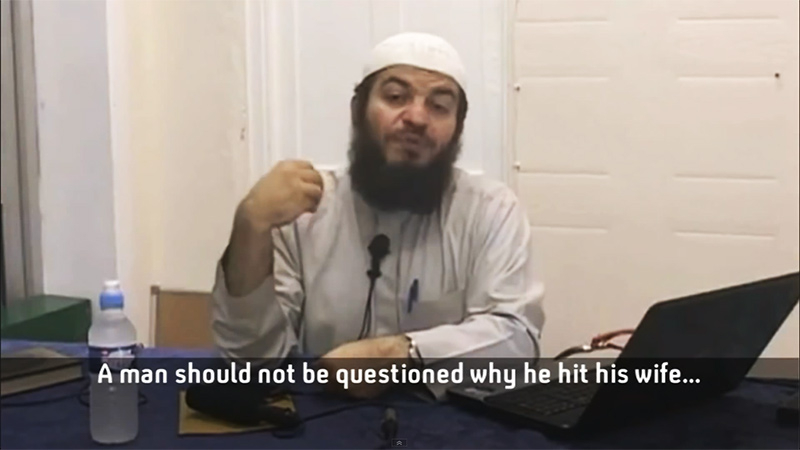
Haitham al-Haddad is a British shari’a council judge, and sits on the board of advisors for the Islamic Sharia Council. Regarding the handling of domestic violence cases, he stated in an interview, “A man should not be questioned why he hit his wife, because this is something between them. Leave them alone. They can sort their matters among themselves.” (Image source: Channel 4 News video screenshot)

To add insult to injury, these unaccountable courts that offer judgements which sometimes incite violence and often disadvantage women, are often registered charities that charge around £800 for a divorce. How can these groups that not only fail to protect the rights of women but actually undermine them be considered charitable organisations, funded by British taxpayers?

Even more problematic is this excessive fee, when Islamic women often coming from economically disadvantaged backgrounds, and who perhaps have been discouraged from earning a living outside the home and may therefore have no funds to buy her freedom? Muslim women within abusive marriages can therefore be imprisoned by a process that is unattainable. One might even deduce that perhaps that is the purpose of the fee?

Elham Manea, author of the book Women and Sharia Law, argues that the first Sharia councils were established by Islamists. She also notes that Sharia councils have “been working with a kind of a tacit approval of British establishment. There is a certain kind of hesitancy from British institutions to interfere in what they consider is internal affair to the Muslim community.”

We can no longer be afraid to speak out against a legal system that disadvantages women because of the religion of those who run it, or that criticism may be perceived as hateful.

More alarming is that views on Sharia amongst the UK Islamic community are favourable towards this judicial practice. Sharia is now even being promoted as a solution that should be considered by the British Government. In polls conducted for the Police Exchange: 43% said they supported “the introduction of Sharia Law.” And 16% of British Muslims “strongly support” the “introduction of aspects of Sharia law into Britain”

What aspects of the Sharia do they support? How you can support only “aspects” of Sharia, when Sharia is designed to be followed in its entirety, without concession. Even then, which aspects do they support? Those that instruct that “women are restricted in leaving their homes and driving cars”? Or that “a man may coerce his wife to have sex”? Or the “recommendation of severe punishments for homosexuals?”

48% of the respondents said they would not turn someone they know with links to terrorism in Syria over to the police.

As Denis MacEoin illustrates, Sharia even justifies jihad:

In Sharia Law or One Law for All, I drew attention to another level of sharia rulings that provide fatwas for numbers of British Muslims, in particular of the younger generation. These are online sites: “fatwa banks.” Individuals or couples send questions to the muftis who run the sites, and receive answers in the form of fatwas that are considered authoritative. The questions and answers are preserved in galleries of rulings, which can be browsed by anyone seeking advice. The sites are by no means consistent, differing from one scholar to another. But they do provide an insight into the kinds of rulings that may be given in the sharia councils.

Among the rulings MacEoin details is that “fighting the Americans and British is a religious duty.” Such a ruling, sadly, could be delivered on British soil.

Sharia councils and Sharia both clearly restrict the rights of women, homosexuals, Christians and Jews, and are therefore incompatible with a diverse and tolerant society. They should be granted no legitimacy by the state.

The cessation of Sharia councils in the UK is not Islamophobic, or an “attack on Islamic rights to freedom of expression or belief”. It is the defence of a just legal system that respects diversity but judges all equally. If we are to have a society in which all are equal, then all law must be derived from a single system that applies to all.

Robbie Travers, a political commentator and consultant, is Executive Director of Agora, former media manager at the Human Security Centre, and a law student at the University of Edinburgh.
Sharia Councils and Sexual Abuse in Britain by Khadija Khan

  • As bad as this is, there is an even darker side to the story: Under sharia law, the second husband is under no obligation to give his wife a quick divorce – allowing him to keep her as his virtual sex slave for as long as he wishes.
  • If one asks how all of this jibes with British law, the answer is that it does not.

  • The UK-based NGO, Muslim Women’s Network, penned an open letter — with 100 signatories — to the British government and Home Affairs Select Committee demanding that the Sharia Council be investigated to determine whether its practices adhere to British law. In response, the Sharia Council declared the letter to be “Islamophobic” and accused the Muslim Women’s Network of being an anti-Muslim organization.
  • It is British law, not sharia, law that protects Muslim individuals and couples, as it does any other citizen. Contrary to what apologists for this travesty say, the plight of Muslim women should be treated as an issue of human rights.

The most recent scandal surrounding the sexual exploitation of Muslim women by Islamic religious leaders in the UK is yet further proof of the way in which Britain is turning a blind eye to horrific practices going on right under its nose.

A BBC investigation into “halala” — a ritual enabling a divorced Muslim woman to remarry her husband by first wedding someone else, consummating the union, and then being divorced by him — revealed that imams in Britain are not only encouraging this, but profiting financially from it. This depravity has led to many such women being held hostage, literally and figuratively, to men paid to become their second husbands.

This ritual, which is considered a misinterpretation of Islamic sharia law even by extremist Shi’ites and Saudi-style Salafists, is practiced by certain Islamic sects, such as Hanafis, Barelvis and Deobandis. When a husband repeats the Arabic word for divorce — talaq — three times to his wife, these sects consider a Muslim marriage null and void. For such a woman to be allowed to return to the husband who banished her, she must first marry someone else — and have sex with him — before the second husband divorces her.

These divorce rites, despite the laws of the land, are common in India, Bangladesh, Pakistan and other Asian countries, where a majority of the people belong to the Hanafi, Barelvi or Deobandi sects. Nevertheless, local seminaries, mosques and online services openly advertise and promote halala with impunity; it is accepted by society and rarely monitored by state authorities.

In Britain, halala has emerged as a booming business, with websites and social media sites offering to provide women with second husbands for exorbitant sums of money. As bad as this is, there is an even darker side to the story: Under sharia law, the second husband is under no obligation to give his wife a quick divorce — allowing him to keep her as his virtual sex slave for as long as he wishes.

One Muslim woman, who changed her mind about going through with halala after looking into the process, told the BBC that she knew others who did undergo the process, and ended up being sexually abused for months by the second husbands paid to marry them. According to a report in The Guardian, the Sharia Council of Britain says it deals with hundreds of divorce cases annually.

This infamous council is indirectly responsible for what essentially has become a rape pandemic, since it does nothing to stop or refute halala. In fact, it declares that the practice is completely legal under sharia law. The only caveat, the council states, is that the imams presiding over it are not following the proper guidelines, according to which the second marriage and divorce should not be premeditated, but rather happen naturally.

If one asks how all of this jibes with British law, the answer is that it does not. But young Muslims in the UK are discouraged by their communities from marrying through the British system, and are told to have imams perform their weddings and sharia councils register their marriages. Couples who comply end up being at the mercy of Islamic authorities in family matters, including divorce.

Due to its often unethical practices conducted in the name of religious law, the Sharia Council has come under scrutiny a number of times. Last November, for instance, the UK-based NGO, Muslim Women’s Network, penned an open letter — with 100 signatories — to the British government and Home Affairs Select Committee demanding that the Sharia Council be investigated to determine whether its practices adhere to British law.

In response, the Sharia Council declared the letter to be “Islamophobic” and accused the Muslim Women’s Network of being an anti-Muslim organization. In addition, Labour MP Naz Shah jumped to the defense of the Sharia Council, rejecting the idea of an inquiry, on the grounds that shutting down such councils could mean that more women would be stuck in abusive marriages.

While acknowledging that these councils could be used as a tool to deny women their rights, Shah said that they also serve as valuable arbitrators in marital disputes.

Her claims are totally baseless. It is British law, not sharia, law that protects Muslim individuals and couples, as it does any other citizen.

Haitham al-Haddad is a British shari’a council judge, and sits on the board of advisors for the Islamic Sharia Council. Regarding the handling of domestic violence cases, he stated in an interview, “A man should not be questioned why he hit his wife, because this is something between them. Leave them alone. They can sort their matters among themselves.” (Image source: Channel 4 News video screenshot)

Had the British government addressed Sharia Council malpractice when it was first revealed, we would not be facing this pandemic today. Contrary to what apologists for this travesty say, the plight of Muslim women should be treated as an issue of human rights.

It is time for the British government to wake up and take a tough stand on such unethical, and probably illegal, system. And the sooner the better, lest the whole sharia council system go “underground” and out of reach to protect thousands of women from abuse.

Khadija Khan is a Pakistan-based journalist and commentator.

Sex Trafficking: The Abuse of Our Time by George Phillips

  • The State Department’s Trafficking in Persons Report estimates that more than 44,000 trafficking victims have identified throughout the world, out of which the Department of Justice has gained convictions in just 184 cases.

  • Compare this to the International Labor Organization 2012 estimate of a total of 20.9 million trafficked victims in the world and hundreds of thousands in the United States.


  • The media usually pays scant attention to their plight.

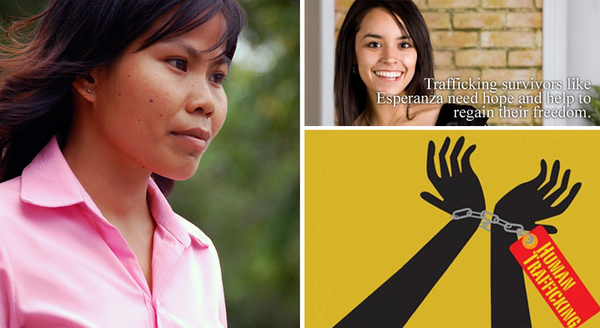
  • Esperanza was a sixteen-year-old girl when she was brutally raped by a man named Rey. He forced her to become a sex slave, and eventually brought her to New York, where she was raped, beaten and threatened in brothels day after day

    Like so many other trafficking victims, Esperanza could not speak English. A man who saw the bruises on her body connected her with Safe Horizon, a program that specializes in helping trafficking victims; they helped to rescue her.

    On the other side of the world from Esperanza, Sina Vann, in Cambodia, was taken as a sex slave when she was 13.

    Sina and the other girls were kept in underground cages — not able to see the difference between night and day. They were then brought into a room where they were raped by man after man.

    Sina was rescued in a raid organized by a former sex slave, Somaly Mam, who now runs an anti-trafficking program.

    Sina Vann (left) and Esperanza (upper right) were both kept as sex slaves and forced into prostitution as children, in Cambodia and the United States respectively.

    The fifteenth anniversary of the landmark Trafficking Victims Protection Act (TVPA) of 2000 took place recently, on October 28.

    After hearing of the plight of many women in Eastern Europe, Congressman Chris Smith of New Jersey authored the Act to set forth the legal framework for prosecuting criminals involved in the crimes of modern day slavery, and to support traumatized victims in the U.S.

    In addition to strengthening U.S. laws, the TVPA also targeted human trafficking throughout the world. The State Department annually reports on the efforts of all nations to combat trafficking. It also targets with sanctions on non-humanitarian aid countries that fail to meet minimum standards.

    Last year, thanks to their lack of effort to combat human trafficking, authoritarian regimes including Iran, Russia, Venezuela, and Zimbabwe, along with 19 other countries, weresubjected to sanctions.

    Nevertheless, even though from 2007 to 2014 there were a total of 218 new or amended anti-trafficking laws in the world, only a small percentage of the world’s trafficked victims are being rescued.

    The State Department’s Trafficking in Persons Report estimates that more than 44,000 trafficking victims have been identified throughout the world, out of which the Department of Justice has gained convictions in just 184 cases.

    Compare this to the International Labor Organization 2012 estimate of a total of 20.9 million trafficked victims in the world, with hundreds of thousands in the United States.

    United Nations report also shows that trafficking among children is on the rise. One out of three trafficking victims is a child; girls and women make up 70% of trafficking.

    The media usually pays scant attention to their plight. A University of North Carolina study details how, when it comes to stories about sex trafficking victims, the media often fails to report the nature of the crime and the need for action.

    Only 16% of sex trafficking cases were covered as a human rights issue, according to the study, and 41% failed to mention possible solutions to the tragedy of human trafficking.

    Many newspapers advertise “massage parlors” — often fronts for trafficking and prostitution rings — in their sports pages.

    At the forefront of trying to uncover massage parlors that are fronts for these rings has been, for example, the Polaris Project, a Washington DC based anti-trafficking organization. It estimates that in the U.S. there are an estimated 9,000 massage parlors, in which, every day, 27,000 women are suffering in prostitution or forced human trafficking. The Polaris Project’s hotline has identified more than 2,000 cases of human trafficking related to massage parlors.

    In 2010, after years of pleas from the Polaris Project on behalf of victims of trafficking and prostitution, The Washington Post finally announced that it would no longer accept ads from massage parlors.

    Yet, fifteen years after the signing of TVPA, the fight continues.

    Esperanza and Sina are two of the very few lucky ones who have been rescued from human trafficking. But all of us, especially in the media, need dramatically to increase our efforts to rescue the millions of others trapped in one of the darkest, most vicious human rights violations of our time.

Sep 02nd 2014 njyanwa mu iyerekwa,mukibaya ntasanzwe menyereye cy’ubutayu bugufiya ariko gifite uduti dutoya twitwa imigenge,maze mbona insorensore zimanuka zijya gutozwa kumashana,ku ikubitiro ziraraswa ndetse zisubira inyuma bikomeye!Nerekwa uwahoze ar’

c,mukibaya ntasanzwe menyereye cy’ubutayu bugufiya ariko gifite uduti dutoya twitwa imigenge,maze mbona insorensore zimanuka zijya gutozwa kumashana,ku ikubitiro ziraraswa ndetse zisubira inyuma bikomeye!Nerekwa uwahoze ar’umugaba w’ingabo za APR/RDF  nyuma akaza gushoka amatage amatera gahinda mbona arahagajwe.


Sep 02nd 2014 njyanwa mu iyerekwa,mukibaya ntasanzwe menyereye cy’ubutayu bugufiya ariko gifite uduti dutoya twitwa imigenge,maze mbona insorensore zimanuka zijya gutozwa kumashana,ku ikubitiro ziraraswa ndetse zisubira inyuma bikomeye!Nerekwa uwahoze ar’umugaba w’ingabo za APR/RDF  nyuma akaza gushoka amatage amatera gahinda mbona arahagajwe.


Akimara kugera kubutaka bwaho bamashanira,mbona afashe intwaro iremereye ifite icyuma kireba kure baklunze kwita jomeri mbona yitegereje urugamba neza ndetse atangira kurutegura bundi bushya,bitewe ni uko mbere bari bagiye bonyine bararaswa batatana nk’ingabo zitagira umutware.

Mbona noneho hafi yuwo mu jeneral har’umuhanuzi mukuru mbona umujeneral aramwitegereje maze aramwenyura kuko ibyo yarimo gukora yarabonye ko,Imana ibihaye umugisha kuko umuhanuzi mukuru yahagobotse.

Ni uko mbona imbunda ayerekeje mu mfuruka z’amajyaruguru y’uburengera-zuba bwa gakondo,umunwa w’intwaro iremereye itangira kuruka ibihungabanya ibinyabugingo maze batangira kumashana noneho umwanzi wabo acika integer asa nkaho aneshejwe.

Ariko mbere yibyo byose abajyaga kumashana banyuze mu nzira zigoye zimikuku,amakombe,n’ibihanamanga,kuburyo kubona inzira yogutangiriramo intambara byari bigoye!.

Ariko abenshi batabaye bari biringiye imbaraga z’umwana w’umuntu,aho kwiringira Uwiteka Imana yo mu ijuru,abo bararashwe karahava kuburyo batabarukiye kurugamba bazize kutiringira Uwiteka Imana yo mu ijuru,abo nibabandi nubundi bikubise mu gituza bavuga ko,banesheje kubera imbaraga zabo.

Aho nshatse kuvuga itabaro rya mbere ryo kubohoza igihugu,iyi ntambara ntabwo izaba yoroshye ikibazo cyayo s’impande zombie zihanganye,ikibazo n’Uwiteka udafite umwanya mu mitima yabo,kuburyo abiringira amabaoko y’Abantu bose ntabwo bazabona gakondo nk’uko babitekerezaibyo bikazaba ku mpande zombie.Cyakora abafite guca bugufi muri bo,abo barahirwa ndetse Uwiteka azabana nabo.

Kandi nyuma y’itabaro bazahamya yuko Uwiteka ariwe Mana ya Israel,ibyo Uwiteka azabikorera kugirango yiheshe ikibahiro kuko iyi ntambara Atari ubushake bw’abantu,ahubwo iri mu mugambi w’Uwiteka dore ko,ya yihanuye mukanwa kabahanuzi hashize igihe kire kire.

Sentenced to Death for “Insulting Islam” by Majid Rafizadeh

  • Can you imagine making a joke and facing death as a result?”During his interrogation, Sina was told that if he signed a confession and repented, he would be pardoned and let go,” said the source in an interview with CHRI on March 21, 2017. “Unfortunately, he made a childish decision and accepted the charges. Then they sentenced him to death.” “Later he admitted that he signed the confession hoping to get freed,” said the source. “Apparently the authorities also got him to confess in front of a camera as well.” — Center for Human Rights in Iran (CHRI).

  • When the Islamists gain power, they immediately create their own “judiciary system” in order to “legitimize” their implementation of sharia law. In fact, the judiciary system is used less as a tool for bringing people to justice, and more as a tool to suppress freedom of speech and of the press.

To radical Islamist groups, Islam is not a religion which all are free to pursue; it is a weapon. It is the most powerful tool that can be wielded with manipulative skill to control entire populations. Beneath their fierce rule, every aspect of daily life is dictated. What is worn, what is eaten, what you say and what you write are all scrutinized; violations of these stringent laws are met with extreme punishments. Can you imagine making a joke and facing death as a result? Can you imagine the constant fear of doing the wrong thing, saying the wrong thing, when you have seen people beaten, stoned, or killed in the street for nothing more than a mild transgression?

Freedom of speech and press are the Islamists’ top enemies. They are targeted on a regular basis, making it difficult or impossible for the truth to be revealed to the world. While others may take their privacy for granted, the people living under this kind of tyranny must think about everything they say and do. Sometimes even the bravest of souls turn away in the face of such intimidation. Can it really be as restrictive as described? Yes, and far worse than you can imagine.

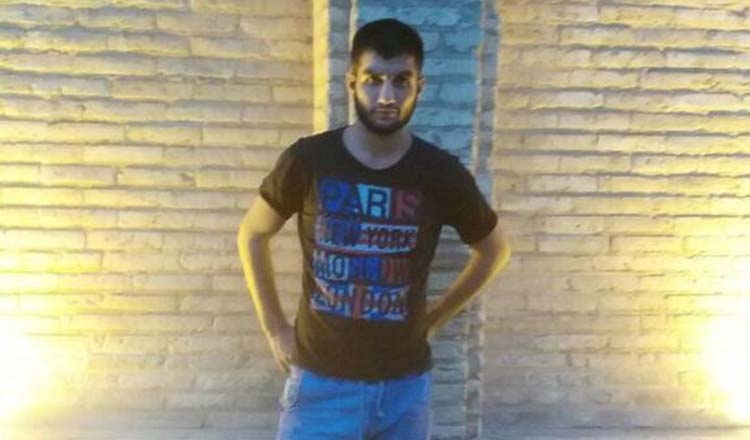
Sina Dehghan, 21, for example, was arrested by Iran’s Islamic Revolutionary Guard Corps (IRGC) when he was 19 for “insulting Islam”. Charges were brought against him for insulting the Prophet Muhammad on the messaging app LINE.

According to the Center for Human Rights in Iran (CHRI):

“During his interrogation, Sina was told that if he signed a confession and repented, he would be pardoned and let go,” said the source in an interview with CHRI on March 21, 2017. “Unfortunately, he made a childish decision and accepted the charges. Then they sentenced him to death.” “Later he admitted that he signed the confession hoping to get freed,” said the source. “Apparently the authorities also got him to confess in front of a camera as well.”

Such a sentence may seem like madness, but in fact there is a cold and calculated pattern to these actions. When extremist Muslims gain power, they immediately create their own “judiciary system” in order to “legitimize” their implementation of sharia law. This judiciary system is, in fact, used less as a tool for bringing people to justice, and more as a tool to suppress freedom of speech and freedom of the press. Once this silence is ensured, they are able to oppress the entire society, restrain any budding opposition, imprison and torture innocent people and sentence thousands to death.

Sina Dehghan, 21, has been sentenced to death in Iran for “insulting Islam”. There are many people like him in Iran who are currently imprisoned, tortured on a daily basis, or awaiting their execution for “insulting Islam”, “insulting the prophet”, “insulting the Supreme Leader” — the examples are endless. (Image source: Center for Human Rights in Iran)

By imprisoning, torturing and hanging idealistic and rebellious young people, the ruling politicians and the Islamist judiciary system are using them as an example to send a message to millions of people that they will not tolerate anyone who opposes their religious or political view.

Radical Islamist groups have been using the same tactic in other nations to impose fear and shock in the public. They aim at silencing people and making them subservient. Once they have control, they will stop at nothing to keep it.

For the Islamists, once you submit to their religion, your freedom of speech and of the press belong to Allah. Your only job is to exercise silence and obedience, and follow your religious leader, imam, sheikh, or velayat-e faqih (“guardianship of the Islamic jurist”).

As the Center for Human Rights in Iran pointed out:

“Security and judicial authorities promised Sina’s family that if they didn’t make any noise about his case, he would have a better chance of being freed, and that talking about it to the media would work against him,” added the source. “Unfortunately, the family believed those words and stopped sharing information about his case and discouraged others from sharing it as well.” “Sina is not feeling well,” continued the source. “He’s depressed and cries constantly. He’s being held in a ward with drug convicts and murderers who broke his jaw a while ago.”

For the ruling Islamists, it does not matter if you have been a loyalist all your life. If you speak up or oppose them just once, you will be eliminated. As CHRI quoted one source: “He was a 19-year-old boy at the time (of his arrest) and had never done anything wrong in his life.”

One of Dehghan’s co-defendants, Mohammad Nouri, was also sentenced to death for posting anti-Islamic comments on social media. Another co-defendant, Sahar Eliasi, was sentenced to seven years, and later the sentence was reduced to three years.

What does the term “anti-Islamic” mean exactly in an Islamist judiciary system? If it carries a death sentence, you might assume that the parameters of the law would be well outlined. However, that is not the case. For the ruling Islamists, the term “anti-Islamic” is completely ambiguous and subjective, and can relate to anything that opposes their view or their power. What might seem like an innocent remark, could change a life forever.

If they are such violent and oppressive people, you might wonder how they are ever able to gain power. They do this through manipulation, charm and countless false promises.

Some radical Islamists, before they gain power, promise people equality, justice, peace, and a far better life. They appeal to the young, to the traditional, and to the hopeful. But once they seize power, they close an iron grip around any and all freedoms, available to their people — in particular freedom of speech.

Once radical Islam has gained power, established its own judiciary system, or infiltrated the legal system with its sharia law, no one is capable of criticizing the government or the political establishment. In a social order ruled by radical Islam, the government is Islam; the government is the representative of Allah and the Prophet Muhammad. Ruling politicians who decide the laws are “divine” figures supposedly appointed by God. They are not to be questioned.

There are many people like Sina Dehghan who are currently imprisoned, tortured on a daily basis, or awaiting their execution for “insulting Islam”, “insulting the prophet”, “insulting the Supreme Leader” — the examples are endless. The issue is that we do not hear about these cases. Some media outlets refuse to report on them in order to appease the Islamic Republic of Iran — just further proof of how coercive their power can be. The only way to reduce it — and the oppression and slaughter of so many people — is to bring attention to the human rights abuses conducted under the Islamic banner of religious “legitimacy ” and “authenticity”.

This type of tyranny is a danger, not just for those enduring it, but for the world.

Translate »
Skip to toolbar