Category Archives: Uncategorized

Islamism in Europe by Khadija Khan

  • Ironically, those who dare to speak out against extremists either face severe consequences, such as death threats, or are called anti-Muslim bigots. This kind of response often discourages progressive voices from speaking out, and understates the progress of counter-extremism even within the Muslim community. Opposition voices still might be there — more than ever. They just go underground.

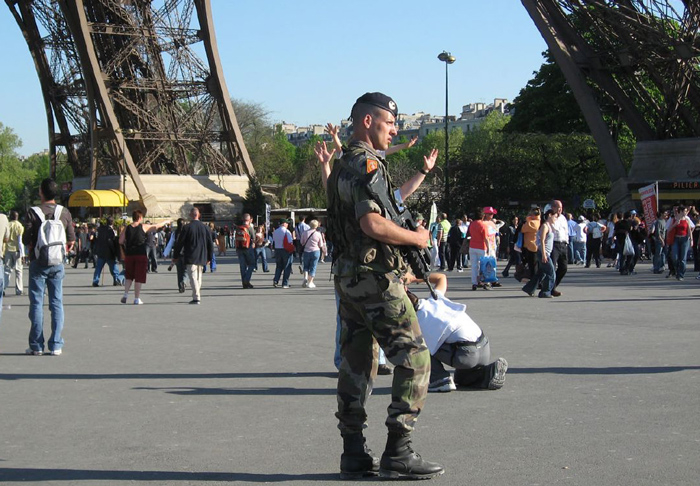
  • Since the unprecedented terror attacks in France, Belgium and Germany, citizens across Europe have been living in constant fear. They seem to be sick and tired of the Muslim extremists; children might be in danger on their way to school, and shopping takes place under the protection of soldiers.
  • With Brexit, the election of Donald Trump, and Italy’s referendum, there seems to be a snowball effect. The growing influence of the Alternative for Germany (AfD), the National Front in France, the Party for Freedom in the Netherlands, the Freedom Party Austria and the Five Star Movement in Italy all appear to be byproducts of the same rhetoric.
  • The dull reaction of a vast number of European Muslims to the rising wave of terror and violence has also contributed to this shift. Increasing numbers of native-born Europeans seem angry and distrustful of their fellow Muslim citizens, especially when everyone else has come out loud and clear in denouncing terrorist crimes.

German authorities and those across Europe seem finally to be strengthening their campaign against the militant far-right, including Muslim extremists, during the past few weeks.

This awakening, however, seems to be coming after a major price that Europe had to pay in terms of death and chaos unleashed by terrorists in Germany, Belgium, France, Denmark, and so on.

Governments across Europe seem to be switching into panic mode to prevent the rise of European radicalism through the rise of the far-right, racism and nationalism throughout the entire continent.

German Chancellor Angela Merkel sounds as if she is backing down a bit from championing the influx of migrants and her slogan of “We can do it!” in developing a multicultural society. She not only vowed to Germans in an address last week that the migrant crisis must never be repeated; she also called for an all-out ban on the full-face veil covering in Germany.

Following Merkel’s lead, Interior Minister Thomas de Maizière also proposed a partial ban on veils, and pronounced them contrary to assimilation.

The dramatic shift in policy might be a consequence of the planned and perpetrated acts of terrorism by extremist Muslims, many of whom are the migrants on whom Merkel placed her hopes. It might also be the result of the resultant rise of European neo-Nazis. More likely, it would appear to come from an eye to re-election.

Merkel was declared by many the only defender of the free world after the election of Donald Trump as U.S. president. Perhaps, after the surprising victory of Donald Trump, she realized that it might be a good idea finally to address the grievances of her fellow countrymen.

The brutal rape and murder of a 19-year-old German woman, Maria Ladenburger, apparently by Afghan migrant who claims to be 17 years old, seems to have been the last nail in the coffin of Merkel’s open-door migrant policy, which she had promised to not to let go even after extreme opposition from within her own party’s leadership.

Ladenburger had been a medical student volunteering at a migrant housing facility. Her murderer had reportedly seen her in the shelter. The incident set off shockwaves not only in the Germany but also across Europe, especially after promises by Germany’s interior ministry to deport as many Afghan citizens as possible after failing to confirm any credible claims for asylum.

In the meanwhile, authorities in Berlin last weekend announced the arrest of an Afghan citizen who was actively involved in terrorist attacks in Afghanistan, while living part-time in Germany.

German police a few weeks back also launched an operation against a Salafist group in the country, whose members were brainwashing Muslim youths, mostly in Germany, to get jihadist training and join the Islamic State’s battle against the world in Syria and Iraq.

The Salafist organization had registered itself as a social work entity under the cover of distributing the Quran in markets and public places, and claiming to be bridging the gap between the West and Islam.

One suspect was arrested in Aschaffenburg and another was detained in Mannheim, on the allegation of plotting an Islamically motivated attack on a public place.

This recent shift in strategy is also a lesson that the West has learnt a bit too late, despite having experienced similar assaults not that long ago by the Nazis, Mussolini, Lenin, Stalin as well as terror organizations such as Baader Meinhof, al-Shebaab, ETA, the Red Brigades, Hamas, Al Qaeda, Palestinian Islamic Jihad and Hezbollah, to name just a few.

Since the unprecedented terror attacks in France, Belgium and Germany, citizens across the Europe have been living in constant fear. They seem to be sick and tired of the Muslim extremists; children might be in danger on their way to school, and shopping takes place under the protection of soldiers.

Since the unprecedented terror attacks in France, Belgium and Germany, citizens have been living in constant fear. In France, soldiers are deployed in the streets. Pictured: A soldier on guard at the Eiffel Tower in Paris. (Image source: Kirsteen/Flickr)

With Brexit, the election of Donald Trump, and Italy’s referendum, there seems to be a snowball effect. The growing influence of the Alternative for Germany (AfD), the National Front in France, the Party for Freedom in the Netherlands, the Freedom Party Austria and the Five Star Movement in Italy all appear to be byproducts of the same rhetoric.

The dull reaction of a vast number of European Muslims to the rising wave of terror and violence has also contributed to this shift. Increasing numbers of native-born Europeans seem angry and distrustful of their fellow Muslim citizens, especially when everyone else has come out loud and clear in denouncing terrorist crimes.

Ironically, those who dare to speak out against extremists either face severe consequences, such as death threats, or are called anti-Muslim bigots. This kind of response often discourages progressive voices from speaking out, and understates the progress of counter-extremism even within the Muslim community. Opposition voices still might be there — more than ever. They just go underground.

The majority of Muslims in the West seem oblivious to the fact that they would be the greatest victims of empowered lunatic extremists such as ISIS or neo-Nazis, because both would try to punish progressive Muslims either for remaining silent about terrorist attacks or for not joining the bandwagon for ISIS.

Progressive Muslims should realize that their voices matter at this sensitive time if they do not want to end up being losers between those two extremes.

The failed political policies of the global powers have started to translate into a dreadful future for humanity where a clone of Abu Bakr al-Baghdadi, Anders Breivik or a Neville Chamberlain clone might be calling the shots, and the civilized world would become a hell for those caught in the middle, the rest of us.

Khadija Khan is a Pakistan-based journalist and commentator.

Islamic State Closing in on Germany Stabbing Is First ISIS-Inspired Attack on German Soil by Soeren Kern

  • Hans-Georg Maaßen, the head of Germany’s domestic intelligence agency (BfV), warned that the Islamic State was deliberately planting jihadists among the refugees flowing into Europe, and reported that the number of Salafists in Germany has now risen to 7,900. This is up from 7,000 in 2014 and 5,500 in 2013.

  • “Salafists want to establish an Islamic state in Germany.” — Hans-Georg Maaßen, director, BfV, German intelligence.
  • More than 800 German residents — 60% of whom are German passport holders — have joined the Islamic State in Syria and Iraq. Of these, roughly one-third have returned to Germany. — Federal Criminal Police Office.
  • Up to 5,000 European jihadists have returned to the continent after obtaining combat experience on the battlefields of the Middle East. — Rob Wainwright, head of Europol.

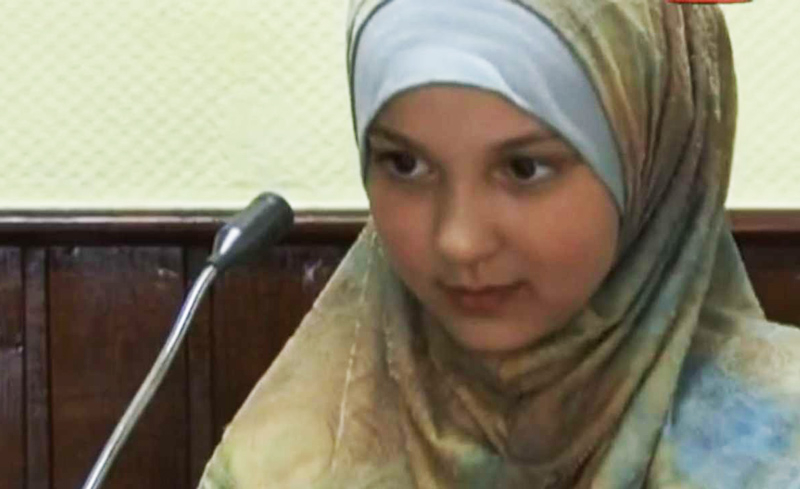
A 15-year-old German girl of Moroccan descent stabbed and seriously wounded a police officer in Hanover. The stabbing appears to be the first lone-wolf terrorist attack in Germany inspired by the Islamic State.

The incident occurred at the main train station in Hanover on the afternoon of February 26, when two police officers noticed that the girl — identified only as Safia S. — was observing and following them.

The officers approached the girl, who was wearing an Islamic headscarf, and asked her to present her identification papers. After handing over her ID, she stabbed one of the officers in the neck with a six-centimeter kitchen knife.

According to police, the attack happened so quickly that the 34-year-old officer, who was rushed to the hospital, was unable to defend himself. After her arrest, police found that Safia was also carrying a second, larger knife.

“The perpetrator did not display any emotion,” a police spokesperson said. “Her only concern was for her headscarf. She was concerned that her headscarf be put back on properly after she was arrested. Whether the police officer survived, she did not care.”

On March 3, Hanover Public Prosecutor Thomas Klinge revealed that Safia had travelled to the Turkish-Syrian border in November 2015 to join the Islamic State, but that her mother had persuaded her to return to Germany on January 28.

Last month, Safia S., a 15-year-old German girl of Moroccan descent, stabbed and seriously wounded a police officer in Hanover, in what appears to be the first lone-wolf terrorist attack in Germany inspired by the Islamic State.

According to police, the stabbing was premeditated: unable to join the Islamic State in Syria, Safia had determined to carry out an attack against the police in Germany.

Safia is being charged with attempted murder. She is also being charged with a terrorism offense. According to prosecutors, by travelling to Turkey to join the Islamic State, the girl violated Section 89a of the German Criminal Code, “Preparation of a serious violent offense endangering the state.”

The newspaper, Die Welt, reported that Safia had been part of the local Salafist scene since 2008 — she was only seven years old at the time. She had appeared in Islamist propaganda videos alongside Pierre Vogel, a convert to Islam and one of the best-known Salafist preachers in Germany. In those videos, Vogel praised Safia for wearing a headscarf to school and for being able to recite verses from the Koran.

Safia’s brother, Saleh, is reportedly being held in a jail in Turkey, where he was arrested for trying to join the Islamic State.

Until now, the only other successful Islamist attack in Germany took place at Frankfurt Airport in March 2011, when Arid Uka, an ethnic Albanian from Kosovo, shot and killed two United States airmen and seriously wounded two others. Uka was later sentenced to life in prison.

On February 4, 2016, German police arrested four members of an ISIS cell allegedly planning jihadist attacks in Berlin. In coordinated raids, more than 450 police searched homes and businesses linked to the cell in Berlin, Lower Saxony and North Rhine-Westphalia.

The ringleader — a 35-year-old Algerian who was staying at a refugee shelter with his wife and two children in Attendorn — arrived in Germany in the fall of 2015. Posing as an asylum seeker from Syria, the Algerian, identified only as Farid A., is said to have received military training with the Islamic State in Syria.

Also arrested were: a 49-year-old Algerian living in Berlin under a fake French identity; a 30-year-old Algerian living in Berlin with a valid residence permit; and a 26-year-old Algerian, allegedly with ties to Islamists in Belgium, who is living in a refugee shelter in Hanover.

The men allegedly were planning to attack Checkpoint Charlie, the iconic Cold War crossing point between East and West Berlin. They also allegedly were planning to attack the Alexanderplatz, a large public square and transportation hub in the center of Berlin.

On February 8, German police arrested an alleged ISIS commander who was living at a refugee shelter in the small town of Sankt Johann. The 32-year-old jihadist, known only as Bassam and posing as a Syrian asylum seeker, had entered Germany in the fall of 2015. German intelligence authorities were unaware of the man’s true identity until the German newsmagazine, Der Spiegel, interviewed him after receiving a tip from other Syrians at the shelter. Bassam said the accusations against him are false: “I want to learn German and work as a cook,” he said.

In a February 5 interview with ZDF television, Hans-Georg Maaßen, the head of Germany’s domestic intelligence agency (Bundesamt für Verfassungsschutz, BfV), warned that the Islamic State was deliberately planting jihadists among the refugees flowing into Europe. “The terror risk is very high,” he said.

On February 4, the Berliner Zeitung quoted Maaßen as saying that the BfV had received more than 100 warnings that there were Islamic State fighters among the refugees currently living in Germany. Some of the jihadists are known to have entered Germany using fake or stolen passports.

Maaßen also revealed that the BfV knows of 230 attempts by Salafists to canvass German refugee shelters in search of new recruits. In a recent interview with the Berlin newspaper, Der Tagesspiegel, Maaßen said that the number of Salafists in Germany has now risen to 7,900. This is up from 7,000 in 2014; 5,500 in 2013; 4,500 in 2012, and 3,800 in 2011.

Although Salafists make up only a small fraction of the estimated six million Muslims living in Germany today, intelligence officials warn that most of those attracted to Salafi ideology are impressionable young Muslims who, at a moment’s notice, are willing to carry out terrorist acts in the name of Islam.

In an annual report, the BfV described Salafism as the “most dynamic Islamist movement in Germany.” It added:

“The absolutist nature of Salafism contradicts significant parts of the German constitutional order. Specifically, Salafism rejects the democratic principles of separation of state and religion, popular sovereignty, religious and sexual self-determination, gender equality and the fundamental right to physical integrity.”

In an interview with the Frankfurter Allgemeine Zeitung, Maaßen warned: “Salafists want to establish an Islamic state in Germany.”

On February 16, more than 200 German police raided the homes of 44 Salafists in the northern city state of Bremen. The Interior Minister of Bremen, Ulrich Mäurer, said he had ordered the closure of the Islamic Association of Bremen (Islamischen Fördervereins Bremen) for the alleged recruiting of jihadists for the Islamic State:

“It is rather apocalyptic that we have people living in the middle of our city who are prepared, from one day to the next, to participate massively in the terror of the Islamic State.”

In December 2014, authorities in Bremen shut down another Salafist group, the Culture and Family Association (Kultur- und Familieverein, KUF), after some of its members joined the Islamic State.

More than 800 German residents — 60% of whom are German passport holders — have joined the Islamic State in Syria and Iraq, according to Die Welt, based on the most recent data compiled by the Federal Criminal Police Office (Bundeskriminalamt, BKA). Of these, roughly one-third have returned to Germany. Around 130 others have been killed on the battlefield, including at least a dozen suicide bombers.

In a February 19 interview with the Neue Osnabrücker Zeitung, the head of Europol, Rob Wainwright, said that up to 5,000 European jihadists have returned to the continent after obtaining combat experience on the battlefields of the Middle East. He added that further jihadist attacks in Europe were to be expected:

“Europe is now facing the greatest terrorist threat in more than ten years. We expect that ISIS or other Islamist groups will carry out an attack somewhere in Europe, with the aim of achieving high losses among the civilian population. In addition, there is the threat posed by lone-wolf attackers. The growing number of foreign fighters presents the member states of the EU with completely new challenges.”

A recent poll conducted by YouGov for the news agency, Deutsche Presse Agentur (DPA), found that 66% of Germans expect the Islamic State to carry out a jihadist attack on German soil in 2016. Only 17% of those surveyed believe there will be no attack; 17% said they did not have an opinion.

Speaking at a gathering of international police in Berlin on February 25, Hans-Georg Maaßen, the spy chief, warned that Germany is not an island: “We have to assume that we will become the target of jihadist attacks, and we need to be prepared.”

Soeren Kern is a Senior Fellow at the New York-based Gatestone Institute. He is also Senior Fellow for European Politics at the Madrid-based Grupo de Estudios Estratégicos / Strategic Studies Group. Follow him on Facebook and on Twitter. His first book, Global Fire, will be out in 2016.

Islamic Islamophobia: When Muslims Are Not Muslim Enough, What Does It Promise for the Rest of Us? by Douglas Murray

  • Mr Shah’s murderer was a Sunni Muslim, Tanveer Ahmed, who had travelled to Glasgow to kill Mr Shah because he believed Mr Shah had “disrespected the Prophet Mohammed.” At this point the comfortable narratives of modern Britain began to fray.


  • If Mr Shah’s murderer had been a non-Muslim, there would be a concerted effort by the entirety of the media and political class to find out what inspirations and associations the murderer had. Specifically, they would want to know if there was anybody — especially any figure of authority — who had ever called for the murder of Muslim shopkeepers. Yet when a British Muslim kills another British Muslim for alleged “apostasy” and local religious authorities are found to have praised or mourned the killers of people accused of “apostasy,” the same people cannot bother to stir themselves.

Earlier this year there was a murder that shocked Britain. Just before Easter, a 40-year old shopkeeper in Glasgow, Asad Shah, was repeatedly stabbed in his shop; he died in the road outside. The news immediately went out that this was a religiously-motivated attack. But the type of religiously motivated attack it was came as a surprise to most of Britain.

There is so much attention paid to the idea of “Islamophobia” in the country that many people — including some Muslim groups — immediately assumed that the killing of Asad Shah was an “Islamophobic” murder. It turned out, however, that the man who had been detained by police — and this week sentenced to a minimum of 27 years in prison for the murder — was also a Muslim.

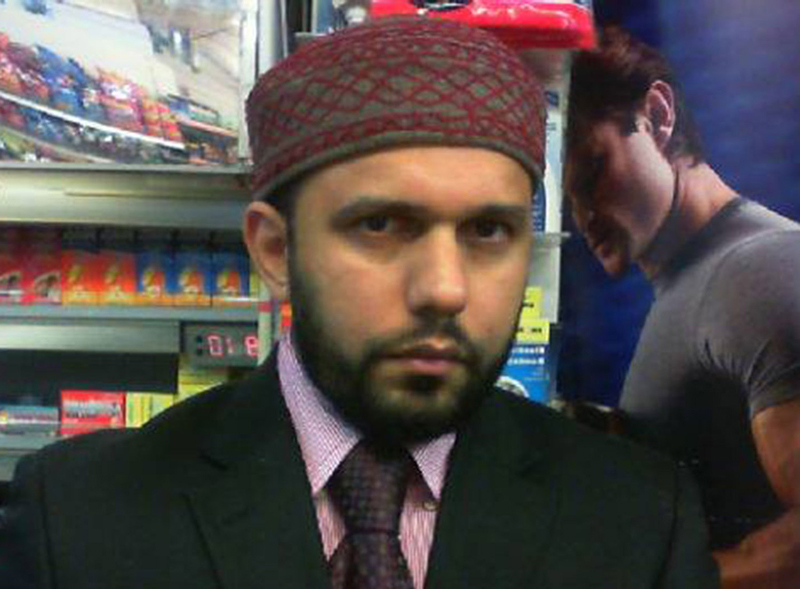
Mr Shah was an Ahmadiyya Muslim — that is, a member of the peaceable Islamic sect which is dismissed as “heretical” by many Muslims. Mr Shah’s murderer, on the other hand, was a Sunni Muslim, Tanveer Ahmed, who had travelled up from Bradford to kill Mr Shah because he believed Mr Shah had “disrespected the Prophet Mohammed.” At this point the comfortable narratives of modern Britain began to fray.

Asad Shah was murdered in Glasgow, Scotland by Tanveer Ahmed, a fellow Muslim who claimed Shah had “disrespected the Prophet Mohammed” by wishing Christians a Happy Easter.

While everyone would have known what to do, what to say and where to start hunting for connections if such an atrocity had been committed by a non-Muslim against a Muslim, politicians and others were uncertain what to do when it turned out to be a Muslim-on-Muslim crime. If, for instance, the crime, had been committed by a non-Muslim against a Muslim, political leaders such as Scotland’s First Minister, Nicola Sturgeon, would have immediately sought to trace links to anyone who had called for, or approved of, any such act. But beneath this murder lay a whole iceberg that Sturgeon and others have still shown no interest in investigating.

Usually after terrorist attacks, it is traditional for Sturgeon and other Scottish politicians to traipse off to the local mosque, to say that of course the attack has nothing to do with Islam, and otherwise to reassure the Scottish Muslim community. Yet the mosque most often frequented for this trip — and the largest mosque in Scotland — is the Glasgow Central Mosque. Sturgeon has met its leaders many times, including after the Paris attacks last November. Those leaders include Imam Maulana Habib Ur Rehman. Just a month before the killing of Mr Shah in Glasgow, this Glasgow Imam gave his response to the hanging in Pakistan of Mumtaz Qadri — the man who murdered Salman Taseer, the governor of Pakistan’s Punjab province, for his opposition to blasphemy laws.

Reacting to the hanging of Salman Taseer’s assassin, Imam Rehman said, among other things, “I cannot hide my pain today. A true Muslim was punished for doing which [sic] the collective will of the nation failed to carry out.” The statement is a pretty clear justification of the actions of Taseer’s assassin, and as close as you can get to advocating others carry out similar actions against people deemed to be outside a particular interpretation of Islam.

Of course, if Mr Shah’s murderer had been a non-Muslim, there would be a concerted effort by the entirety of the media and political class to find out what inspirations and associations the murderer had. Specifically, they would want to know if there was anybody — especially any figure of authority — who had ever, for instance, called for the murder of Muslim shopkeepers. Yet when a British Muslim kills another British Muslim for alleged “apostasy,” and local religious authorities are found to have praised or mourned the killers of people accused of “apostasy,” the same people cannot bother to stir themselves. There is talk of being “taken out of context” or there are warnings not to “generalise” or be “Islamophobic” or any number of other fatuous get-out clauses.

What happened this week in court when Tanveer Ahmed was found guilty and sentenced for the murder of Asad Shah was even more revealing. After the judge read out the sentence, Tanveer Ahmed raised his fist and started shouting in Arabic “There is only one prophet.” Supporters, who made up around half the people in the public gallery, joined in with his cries. All of which made it understandable that the family of Mr Shah had been too terrified to turn up in court during the trial of their relative’s murderer, and are apparently planning to leave Scotland.

Then, outside the court, a news reporter from LBC Radio confronted some of the murderer’s family members. The video is worth watching. “Did Asad Shah deserve to die?” he asks the killer’s family as they head to their car. They refuse to comment.

When another supporter is asked whether he thinks it was “respectful” for the killer to do the chanting he did in the dock, he becomes threatening and says, “Yeah, he’s respecting his prophet. He’s saying ‘I love my prophet’. What’s wrong with that?” Asked if he thinks the sentence was fair, the man replies “No.” Asked in what way, he replies, “No comment.”

It is, of course, a good thing that the criminal justice system has done its job and done it swiftly. Asad Shah’s murderer has been brought to justice and been given a suitably long sentence. But this case should have provided a learning moment for politicians, the media and wider society to finally understand the full threat to our society that this type of fanaticism poses, as well as a realistic awareness of how widespread that fanaticism actually is. Instead, on glimpsing for a moment how deeply this problem goes, it seems that the UK has decided once again to turn away and avert its gaze, for fear of what it might otherwise find out.

Douglas Murray, a British author, news analyst and commentator, is based in London, England.

Islam’s Sword Comes for Christians Muslim Persecution of Christians, December 2015 by Raymond Ibrahim

  • “It was very difficult above all when they said, ‘Become Muslim or we’ll cut your head off.'” — Rev. Jacques Mourad, Syriac Catholic priest, Syria.

  • “The only reason they [Muslim authorities] let you go is when they torture you to death…. They don’t want you to die in prison, it’s not their responsibility, so they send you home to die.” — Helen Berhane, gospel singer, Eritrea.
  • “[I]f they fear that people are offended by being surrounded by Christian symbols, then perhaps those [Muslim] people applied for asylum in the wrong country.” — A speaker for the Progress Party, Norway, on being asked to remove crosses from Christian camp sites to accommodate Muslim asylum seekers.

Hostility for Christmas was on full display. On Christmas Day, Muslims in Bethlehem, as documented here, set a Christmas tree on fire and greeted the Latin Patriarch of Jerusalem with a hail of stones; in Belgium, Muslim “refugees” set fire to a public Christmas tree; in Nigeria, Muslim jihadis attacked churches during Christmas mass and killed at least 16; in the Philippines, on Christmas Eve, Muslim jihadis slaughtered 10 Christians to “make a statement;” in Bangladesh, churches skipped Christmas mass, due to assassination attempts on pastors and death threats against Christians; in Indonesia, churches were on “high alert,” with 150,000 security personnel patrolling; in Iran, Christians celebrating Christmas in homes were arrested; and three Muslim countries — Somalia, Tajikistan, and Brunei — formally banned any Christmas celebrations.

Earlier in December, in the United States, in San Bernardino, California, Mohamed Ahmed Elrawi, 57, a Muslim, pulled out a sword and, saying he would “Die and kill for Allah,” chased his neighbor, Mark Tashamneh a Christian of Jordanian descent. Tashamneh escaped and called police. After they arrested Elrawi on suspicion of attempted murder, they found in his apartment evidence suggesting that he is a “radicalized Muslim.” While police were escorting Elrawi out of his apartment, Elrawi said in Arabic to Tashamneh that he would kill him. “I’m a Christian,” Tashamneh told reporters. “I’m happy … and I believe what I believe. I am not against what he believes, but he apparently has a problem with me and came and threatened me.”

In Uganda, in separate incidents, Muslims slaughtered two Christian leaders with swords. Patrick Ojangole, a 43-year-old Christian father of five, was hacked to death. He had also supported several children whose families had disowned them for leaving Islam. According to Ojangole’s friend, who survived, they had been traveling to their village when they saw Muslim women covered in burqas sitting on the road: “Because it was late in the evening, we thought they needed some help from us, so we stopped, and while we were still talking with them, a man arrived [followed by two more men] … The two women immediately pulled out swords from their burqas and gave them to the men.” One of the three Muslim men reproached Patrick Ojangole’s for refusing to cease his Christian activities. Then the Muslims killed him. “Patrick was a very committed Christian and a hard-working farmer,” said the friend. “From his farm work, he used to support 10 children from Muslim families who had been ostracized by their families.” Ojangole’s five children range in age from seven to sixteen.

Separately, a pastor was also hacked to death and beheaded after he and other church members resisted efforts by local Muslims to seize land belonging to the church. When pastor Bongo Martin, 32, confronted them, the imam of the Muslim group said, “We have told you many times that we do not want the church to be located near our mosque. Your church has been taking our members to your church.” Then a Muslim, Abdulhakha Mugen, pulled out a sword and struck the pastor’s neck. Martin instantly collapsed but Mugen kept hacking at him until he was decapitated. His body was later found floating the river.

In a predominantly Muslim village in Uganda, after a Bible study, an additional five underground Christians, including a pregnant mother, died from poisoning.

The rest of December’s roundup of Muslim persecution of Christians around the world includes, but is not limited to, the following:

Muslim Attacks on Christian Churches and Symbols

Italy: While shouting “Allahu Akbar!” [“Allah is the Greatest!”], two Muslim men, one Palestinian the other Tunisian, attacked and tried to disarm soldiers stationed outside Santa Maria Maggiore cathedral in Rome. According to Italian media, “[W]hen police intervened, the two men aged, 40 and 30, called other foreigners in the area to their aid, and assaulted and threatened the arresting officers. After they were taken to the police station, they continued to speak out against law enforcement and Europe in both Arabic and Italian. They were charged with resisting and threatening an officer and instigation to commit a crime with intent to commit terrorist acts, slapped with an expulsion order, and taken to a migrant reception center in the southern city of Bari prior to repatriation.”

Egypt: A church which had obtained the necessary permits required for construction, and was under construction, in Swada village, Minya, was attacked on December 10 by a mob of at least 400 Muslims, incited by local officials. “They destroyed the marble, ceramics, cement, wood and church’s signs inside the buildings and destroyed the contents of the building, and attacked and injured some of the workers,” said a local man. After the attack, the same officials who incited the attack pointed to it as the reason to outlaw the church. The population of Swada is about 35% Christian, or 3,000 people, and there is not a single Coptic Orthodox church to serve them.

Separately, the ancient Paromeos monastery was threatened online by jihadists. The monastery, dedicated to the Virgin Mary, was built more than two hundred years before Islam overran Christian Egypt. Although the ancient monastery receives police protection, Christian activists are calling for greater security measures in response to increasing threats.

Yemen: Days after the Islamic State (ISIS) assassinated Aden city’s governor, an abandoned Catholic church was blown up. “The gunmen,” according to a resident, “who were probably extremists, blew up the [Immaculate Conception] Catholic church in the Mualla district of Aden… The building was completely destroyed.” The church had already been severely damaged after a Saudi-led coalition air strike last May. Reuters wrote: “Once a cosmopolitan city, home to thriving Hindu and Christian communities, Aden has gone from one of the world’s busiest ports as a key hub of the British empire to a largely lawless backwater. Its small Christian population left long ago. Unknown assailants had previously vandalized a Christian cemetery and torched another Aden church this year.”

Iraq: ISIS bombed a monastery that belonged to nuns in the Christian village of Tel Kepe. Ten Assyrian Christian homes were also bombed and several people injured. Separately, in Kirkuk, a cemetery used by the Assyrian Church and the Syriac Orthodox church was vandalized. Crosses and tombstones were broken, and graves opened. The identity of the perpetrators is unknown. Chaldean Patriarch Louis Sako condemned the destruction of the cemeteries. He said, “We live in difficult conditions…”
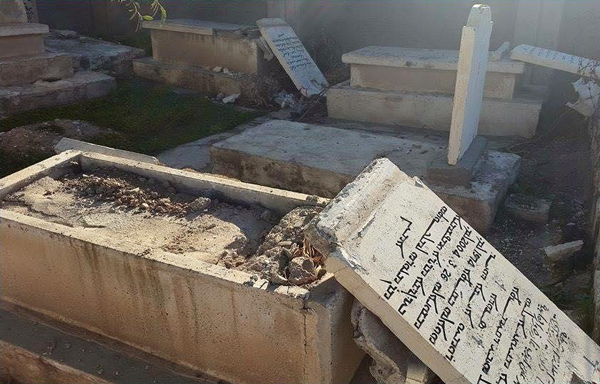
In December 2015, a Christian cemetery in Kirkuk, Iraq was vandalized. Crosses and tombstones were broken, and graves opened.

Turkey: Groups believed to be associated with ISIS issued death threats to at least 20 evangelical churches via social media, email, and mobile texts. They included “upsetting videos and pictures” said a human rights activist. Suspected Islamic State militants reportedly said they “are tired of waiting” for Muslims who had converted to Christianity to return to Islam. “Koranic commandments… urge us to slay the apostate like you,” said one message.

Bangladesh: “He who preaches Christianity must leave the country or die” were the words of an anonymous letter sent to ten leaders of Protestant Christian churches. An additional four church leaders narrowly escaped attempts on their lives, causing the nation’s churches to cancel Christmas Day church services.

Cameroon: Boko Haram jihadis invaded a Christian village and torched a church and several homes. Up to 1,000 Christians – men, women and children – were affected. Eight were killed. After reducing everything the villagers had to ashes, the jihadis also set their food supplies on fire. The villagers are struggling to survive.

Muslim Slaughter of Christians

Nigeria: Seven Muslim Fulani herdsmen attacked two households and a compound for Christians who had already been displaced from earlier jihadi attacks. Fifteen Christians were slaughtered, including three children aged 1, 3, and 5, as well as their grandmother. According to her daughter, “My mother struggled with the gunmen until they finally shot her and the three kids,” said her daughter. “She died trying to save the three children.” According to one resident: “They had come to survey the village that Sunday morning while we were in our churches. The Fulani gunmen even asked our children to give them drinking water, which they did, but the kids did not suspect anything and did not inform us about this. It was only after the attack that we were told about the visit of the gunmen to our village.”

Central African Republic: Armed Muslim Seleka militants attacked a camp for internally displaced persons. They killed eight Christians and wounded one UN peacekeeper. Since Muslim Seleka seized power of the Christian-majority country in 2013, thousands of people have been killed. After months of massacres, rapes, and looting by armed Seleka, Christian anti-balaka (anti-machete) armed groups emerged to counter the Seleka. Although they see themselves as a Christian militia, the nation’s churches condemn their violent actions.

Egypt: A 70-year-old Christian woman was found stabbed to death in her house in what is now a Muslim majority nation. She had 10 stab wounds in her chest. Police were informed and the matter was reported as being under investigation.

Dhimmitude

Norway: Christian camp sites offered as shelter for asylum seekers were told by local authorities to remove Christian symbols. According to the report, to accommodate “the large influx of asylum seekers to Norway, immigration authorities found it necessary to lodge asylum seekers in more places than ordinary reception centres. The Norwegian Missionary Society offered several Christian camp sites, which authorities accepted as long as the missionary society took down any cross or other Christian symbols.” It agreed. But a speaker for the Progress Party said, “I understand that asylum centres should be politically and religiously neutral, but I interpret it so that the camps would not engage in active ministry, which is said they will respect. The cross however, is not just a religious symbol, but also a part of our heritage and part of our flag…. [I]f they fear that people are offended by being surrounded by Christian symbols, then perhaps those [Muslim] people applied for asylum in the wrong country.”

Eritrea: After finding a new life in Europe, Gospel singer Helen Berhane shared her experiences in Eritrea. She told of how she was locked in a shipping container and tortured for being Christian. At a conference in Rome, she said: “The only reason they [Muslim authorities] let you go is when they torture you to death…. They don’t want you to die in prison, it’s not their responsibility, so they send you home to die.” Berhane, who was arrested for evangelizing and releasing religious music, was released only after she became deathly ill.

Syria: A Christian priest who escaped to the West after being held for months by Islamic State in Raqqa shared his “very intense experience, from the spiritual point of view.” According to Syriac Catholic priest, Rev. Jacques Mourad: “It was very difficult above all when they said, ‘Become Muslim or we’ll cut your head off.'”

Turkey: After widespread international criticism, the nation’s schoolroom textbooks appear improved in several ways, including how non-Sunni Muslims are depicted. But they still contain biases against non-Muslim religions, said a new study. The “major weakness” is that the “textbooks are still written through the paradigm of the officially-sanctioned interpretations of Islam and Islamic culture. All religious minority traditions in the country are depicted within the Muslim context rather than as distinct traditions. In addition, only superficial, limited, and misleading information is given about religions other than Islam, such as Judaism, Christianity, Hinduism and Buddhism.” For example, instead of explaining that Christians view Jesus as the Son of God, an eighth-grade text depicts him as one in a line of Islamic prophets called by Allah, akin to the Islamic historiography about Muhammad: “When Jesus reached 30 years of age, Allah gave him the duty of being a prophet…. He then began inviting people to believe in Allah. At the start, only 12 people believed in his call. They are called the ‘disciples.'”

Pakistan: Mary Javaid, a Christian teacher at a female primary school in the Punjab, was accused of having “preached Christianity to Muslim girls.” A Muslim man, Muhammad Sharif, filed a complaint with the Department of Education containing accusations against Javaid which, according to human rights lawyer, Sardar Mushtaq Gill, are false, and instead represent yet another case of discrimination and abuse towards a Christian involved in the area of education. A few months earlier, a Catholic teacher, appointed headmaster at a primary school, was beaten and tortured by a group of Muslim teachers who spurned the authority of a Christian “infidel.”

Nigeria: Mercy, a 22-year-old Christian woman abducted by Boko Haram in June 2014 and rescued after five weeks, described her ordeal in the Islamic camp. In June 2014, members of Boko Haram overran her town and declared it an Islamic caliphate. At least 100 people were killed in the attack. She was seized from her home in the middle of the night. “Everyone in the town,” she said, “ran to save themselves. My dad and I were separated. I don’t know what happened to him. I think he died the same way many others died, because they refused to deny Christ.” She was marched off to a Boko Haram camp. “When we got to the place, there were about 50 other women. I recognised many other Christians, who had now become Muslims and were forced to undergo Islamic teaching…. My first day was like hell. I cried all day and all night. I prayed like never before and asked God to give me courage.” The next morning, Mercy and the others were taken to a clearing for questioning and asked to convert to Islam.

The four other girls were very scared and immediately agreed. I pleaded that they allow me to remain a Christian, but my pleas fell on deaf ears. They beat me and told me to never mention Christianity in the camp again. Then they told me that they would arrange a husband for me. … We were forced to attend prayers at 5am. After that, we were sent to a madrassa [Islamic school]. There was only a short break. After we were given a little food, we returned to the madrassa. They constantly told us to work hard for the advancement of Boko Haram. In the afternoon we were dispersed to do our chores, such as washing the men’s clothes…. I witnessed constantly how Boko Haram members killed innocent people. Christian men who were captured and brought to the camp were killed for refusing to deny their faith. [It was like] the fulfilment of the [things written in the] Bible played out in front of my eyes, as people died for their faith in Christ. But others, including me, could not endure the torture and gave in to their demands.

Mercy was eventually “married” off to a Muslim man and without giving any details only said, “Every single day came with tears and fears for the unknown.”

Islam’s “Quiet Conquest” of Europe by Giulio Meotti

  • “Islam is a French religion and the French language is a language of Islam.” — Tariq Ramadan.In 1989, Dalil Boubakeur, rector of the Grand Mosque of Paris, justified the persecution of Salman Rushdie by Ayatollah Khomeini. Last year, Boubakeur called for the conversion of churches into mosques.

  • In Britain, mainstream Muslim organizations are dispensing “Islamic justice” through more than 85 sharia courts attached to mosques.
  • Civil war in France is what the Islamic State is looking for: unleashing a blind repression so that the Muslim population will show solidarity with the revolutionary minority. Yet, there is still worse possible outcome: that nothing happens and we continue as is.
  • Real “moderate Muslims” are silenced or murdered.

Last month, the Wall Street Journal published an interview with France’s director of domestic intelligence, Patrick Calvar. “The confrontation is inevitable,” Mr. Calvar said. There are an estimated 15,000 Salafists among France’s seven million Muslims, “whose radical-fundamentalist creed dominates many of the predominantly Muslim housing projects at the edges of cities such as Paris, Nice or Lyon. Their preachers call for a civil war, with all Muslims tasked to wipe out the miscreants down the street.”

These Salafists openly challenge France’s way of life and do not make a secret of their willingness to overthrow the existing order in Europe through violent means, terror attacks and physical intimidation. But paradoxically, if the Islamists’ threat to Europe were confined to the Salafists, it would be easier to defeat it.

There is in fact another threat, even more dangerous because it is more difficult to decipher. It has just been dubbed by the magazine Valeurs Actuelles,the quiet conquest“. It is “moderate” Islam’s sinuous project of producing submission. “Its ambition is clear: changing French society. Slowly but surely”.

That threat is personified in the main character of Michel Houellebecq’s novel, Submission: Mohammed Ben Abbes, the “moderate” Muslim who becomes France’s president and converts the state to Islam. And from where does President Ben Abbes start his Islamization? The Sorbonne University. It is already happening: Qatar recently made a significant donation to this famous university, to sponsor the education of migrants.

In France, the quiet conquest has the face of the Union of the Islamic Organizations of France (UOIF), which a Simon Wiesenthal Center report charged with “anti-Semitism, advocacy and financing of terrorism and call to Jihad… ”

Not only does UOIF not encourage the integration of Moslems in France,” the report states, “it actually provides a nursery for the most radical Islamist positions.”

In Italy we have just witnessed the strategy of this “moderate Islam.” The largest and most influential Islamic organization, l’Unione delle comunità ed organizzazione islamiche in Italia (Ucoii), sponsored Milan’s first Muslim councilwoman, Sumaya Abdel Qader, a veiled candidate of the center-left coalition. Qader’s husband, Abdallah Kabakebbji, openly called for the destruction of the State of Israel: “It is a historical mistake, a scam”, he wrote on Facebook. His solution? “Ctrl + Alt + Delete”.

Qader won the race over a real moderate Muslim, the unveiled Somali activist, Maryan Ismail. I met Mrs. Ismail at a pro-Israel forum in Milan. After losing the election, she broke with Italy’s Democratic Party in an open letter: “The Democratic Party has chosen to dialogue with obscurantist Islam. Once again, the souls of modern, plural and inclusive Islam were not heard”.

Take two “stars” of this French “moderate Islam.” The first one is Tariq Ramadan, the grandson of Hassan al-Banna, the founder of the Muslim Brotherhood, the motto of which is: “Allah is our objective; the Prophet is our leader; the Quran is our law; Jihad is our way; dying in the way of Allah is our highest hope.”

Ramadan does not hide in Raqqa or shoot at French citizens. By applying for French citizenship, he would like to become one of them. His office is in the Parisian suburb of Saint Denis; he has written 30 books and he has two million Facebook followers. Ramadan has academic chairs all over the world, he is the director of the Research Center for Islamic Law in Doha (Qatar) and the president of the European Muslim Network. He publicly campaigns for Islam along with Italy’s former prime minister, Massimo D’Alema. Ramadan recently explained his vision for Europe and France: “Islam is a French religion and the French language is a language of Islam”.

Ramadan’s project is not the hoped-for Europeanization of Islam, but the not-hoped-for frightful Islamization of Europe. He opposes the assimilation of Muslims into French culture and society. A few days before the election in Milan, Ramadan was in Italy to endorse the candidacy of Sumaya Abdel Qader.

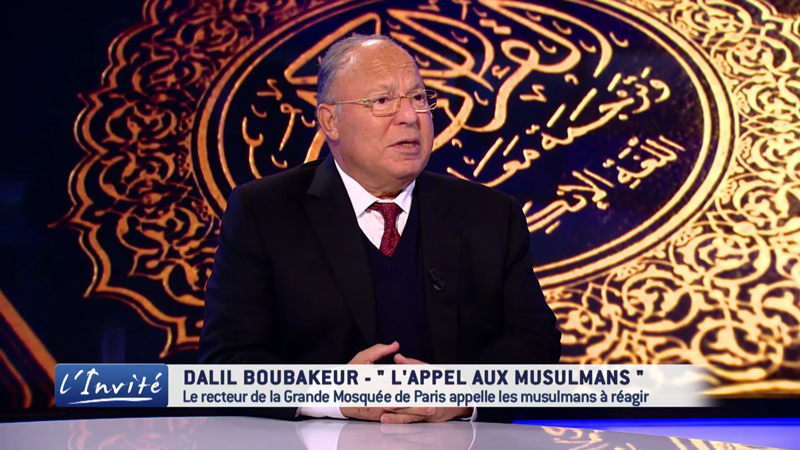
The second French “star” is Dalil Boubakeur, the rector of the Grand Mosque of Paris. In 1989, Boubakeur justified the persecution of Salman Rushdie by Ayatollah Khomeini. In 2002, he testified for the prosecution against the writer Michel Houellebecq. In 2006, he sued Charlie Hebdo in court, after the publication of the Danish Mohammed cartoons. Last year, Boubakeur called for the conversion of churches into mosques and asked to “double” the number of mosques in France.

Dalil Boubakeur, rector of the Grand Mosque of Paris, last year called for the conversion of churches into mosques and asked to “double” the number of mosques in France. (Image source: TV5 Monde)

In the United Kingdom, mainstream Muslim organizations are dispensing “Islamic justice” through more than 85 sharia courts attached to mosques. Divorce, polygamy, adultery and wife-beating are only some of these courts’ matters of jurisprudence. In Germany, vice-chancellor Sigmar Gabriel criticized Saudi Arabia for financing Islamic extremism in Europe. It is the same kingdom which last year offered to build 200 new mosques in Germany.

Qatar, with its Al Jazeera television megaphone, is also very active in sponsoring Muslim Brotherhood Islamic radicalism all over Europe. The Qatari royal family, for example, in 2015 donated £11 million to Oxford’s St. Anthony’s College, where Tariq Ramadan teaches. Qatar also announced that it was willing to spend $65 million in the French suburbs, home to the vast majority of the six million Muslims in France.

Today in Europe, several scenarios are possible, including the worst. Among them, there is a civil war, which many are beginning to talk about, including Patrick Calvar, the director of domestic intelligence. This is what the Islamic State is looking for: unleashing a blind repression so that the Muslim population will show solidarity with the revolutionary minority. Yet, there is still worse possible outcome: that nothing happens and we continue as is.

The end is more important than the means. The Islamic State has the same goal as most of the members of so-called “moderate Islam”: domination under the sharia. Many supposedly “moderate Muslims”, even if they do not commit violent acts themselves, support them quietly. They support them by not speaking out against them. If they do speak out against them, they usually do so in coded terms, such as that they are “against terrorism,” or that what concerns them about violent acts by Muslims is the possibility of a “backlash” against them.

Violent jihadis, however, are not the only means of transforming Europe, and perhaps are even counterproductive: they could awaken the nations they attack. Soft and more discreet means, such as social pressure and propaganda, are even more dangerous, and possibly even more effective: they are harder to see, such as the West’s acceptance of dual judiciary and legal systems; sharia finance (if there had been a “Nazi finance” system, in which all financial transactions went to strengthening the Third Reich, what effect might that have had on World War II?), and the proliferation in the West of mosques and extremist Islamic websites. Although there are indeed many real “moderate Muslims”, there are also still many who are not.

To conservative Muslims, however, any Muslim who does not accept every word of Allah — the entire Koran — is not a true Muslim, and is open to charges of “apostasy”, the punishment for which is death. According to a leading Sunni theologian, Yusuf al-Qaradawi, based in Qatar, “If they [Muslims] had gotten rid of the punishment for apostasy, Islam would not exist today.”

That is why the late writer Oriana Fallaci once said to The New Yorker: “I do not accept the mendacity of the so-called Moderate Islam”. That is why real “moderate Muslims” are silenced or murdered.

This might summarize the current Islamic mainstream mentality: “Dear Europeans, continue to think about a shorter working week, early retirement, abortion on demand and adultery in the afternoon. With your laws, we will conquer you. With our laws, we will convert you”.

Giulio Meotti, Cultural Editor for Il Foglio, is an Italian journalist and author.

Translate »
Skip to toolbar