Category Archives: Uncategorized

Kuraha kw’inkoko siko gutoragura,kudondagura siko guhaga kw’inkoko.


Iyo witegereje imbaraga leta y’uRwanda repubulika ya lll itemewe n’amategeko,imbaraga ikoresha kwica abanyagihugu bayo banenga imikorere yayo idahwitse,ushobora gutekereza yuko atari leta ya fpr yamamaye ku isi yivuga ibigwi ko ariyo yakijije abaturage b’uRwanda mu gihe amahanga bivugwa ko yareberaga nyamara aribo babujije amahanga gutabara abaturage kugirango bifatire ubutegetsi.


Muri politiki y’abarepubulike habamo ibinyoma,ariko uko iminsi igenda ibegereza wa munsi utegerejwe n’abakiranutsi,niko ikinyoma cyicaye ku ntebe mu buryo butajyanye n’amategeko kijyenda gisohoza kurimbuka.FPR irimo kugeregeza gukoresha uburyo bwose bushoboka ikoresheje inzego zose z’amaboko y’ubutegetsi bwayo,itibagiwe gukoresha abanyaguihugu b’amoko yose cyane abo mu bwoko bw’abahutu kwitandukanya nabanyarwanda bo mu bwoko bw’abatutsi kugirango batazishyira hamwe bakabyara umusaruro wogukura fpr kubutegetsi.

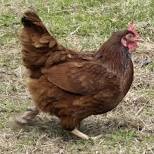
Ariko twakwibutsa yuko ,kudondagura ku inkoko atariko gutoragura kwayo,ndetse witegereje inkoko uburyo isanza ibintu byose ishakisha utwokurya watekereza yuko idashobora kugeza nimugoroba igitoragura!.Ariko ushobora gutangazwa ni uko izuba ririnda rirenga ikiraha igitoragura kuburyo ishobora kwinjira mu nzu aho irara itarahaga.

Nyamara iyo bukeye yongera gutangirira aho ejo yagereje,hari n’igihe,agaca gatwara imishwi yayo yibereye mukuraha,nyamara urusaku rwayo ntirushobora kubuza agaca gutwara umushwi kuko agaca ko gahanga amaso imikorere y’inkoko mu gihe inkoko itungurwa no kumanuka kwa gaca igashiduka kayitwaye umushwi wayo.

Imikorere ya leta y’uRwanda twayigereranya no kuraha ku inkoko,nta munyarwanda runaka wagenewe gukuraho Kaga Paul,kuko biramutse bibaye gutyo abo dutekereza ko bazakuiraho FPR,wasanga abasigaye babarirwa ku ntoki.Ndetse nta nibyiringiro twakongera kwigirira,ariko kuko Uwiteka Imana yamaze gutegura uko gahunda zizakorwa,niyompamvu ibyo fpr ikora byose kugirango itazakurwa kubutegetsi yafashe ku ngufu zagisirikareumuntu yabyita ko bisa no kuvomera mukiva.


FPR yishe abanyarwanda bo mu bwoko bw’abahutu benshi cyane babanyapolitiki yibwira yuko  kubarangiza bizayiha ibyiringiro byo kuramba ku ngoma,yongera kwikuza abanyarwanda bo mu bwoko bw’abatutsi kuko izi neza ko bazi neza ibanga fpr yakoresheje kugirango ibashe kugera kubutegetsi,ariko yaribeshye cyane kuko umugambi w’Uwiteka Imana warunyuranye cyane nimitekerereze ya fpr kuko Imana idashobora guhuza imitekerereze n’abana b’abantu.


Niyompamvu yasohoye ubuhanuzi mbere y’igihe kugirango abitekereza nkaho aribo bazageza amahoro arambye kubanyarwanda bakur e amerwe mu isaho,ahubwo bashake mu maso h’Uwiteka Imana kugirango niba bishoboka nabo bazagirirwe ubuntu bwokuzaba ibikoresho by’Uwiteka Imana.Igitangaje n’uburyo Imana igenda ishyira ahagaragara imikorere inyuranye n’imigambi yayo,cyangwa igashyira ahagaragara imigambi yayo ititaye ko fpr yayiburizamo kuko biyemeje guhangana n’Imana yo mu ijuru. 

Ku wa 16 Nzeri 2014.

Ku wa 16 Nzeri 2014, amakuru aturuka mu biro ntara makuru byo mu ijuru’Heaven Media’agera ku kinyamakuru inyangeNews.com , aratangaza ko, muri iki gitondo cyo ku wa 16 Nzeri 2014,umwuka w’Uwiteka yahishuye imigambi ya satani muri leta y’uRwanda iyobowe n’agatsiko k’abicanyi ka fpr inkotanyi,yuko bamaze gutegura gahunda yuko bagiye kunaniza abanyarwanda bo mu bwoko bw’Abahutu.


Ku wa 16 Nzeri 2014, amakuru aturuka mu biro ntara makuru byo mu ijuru’Heaven Media’agera ku kinyamakuru inyangeNews.com , aratangaza ko, muri iki gitondo cyo ku wa 16 Nzeri 2014,umwuka w’Uwiteka yahishuye imigambi ya satani muri leta y’uRwanda iyobowe n’agatsiko k’abicanyi ka fpr inkotanyi,yuko bamaze gutegura gahunda yuko bagiye kunaniza abanyarwanda bo mu bwoko bw’Abahutu.

Hewven Media.

Impamvu yo kunaniza abanyarwanda ngo ni ukubera ubwoba bafitiye abatavuga rumwe n’ubutegetsi bwa Kigali,amakuru akomeza avuga ko,ngo leta ya fpr inkotanyi ifitiye ubwoba bukomeye fdlr na rnc amashyaka atavuga rumwe n’ubutegetsi bwa Kigali buyobowe nagatsiko k’Abatutsi higanjemo abaturutse Uganda barimo kugenda basimburwa nagatsiko ka Nyiramongi Jennette kagame.

Nk’uko umwuka w’Imana abitangaza,ngo bazananiza amashyirahamwe yabacuruzi babahutu kugirango imisanzu bahaga fdlr na rnc ihagarare,bityo abarwanya ubutegetsi babure imbaraga zituruka imbere mu gihugu. Amakuru aturuka mu ijuru abivuga ngo bagiye kwaka buri muhutu w’umucuruzi wo kurwego rw’igihugu ngo atange million zigera kuri 15, abatazibonye bakazafungirwa imiryango.

Ubu buhanuzi mu bundi buhanuzi buragenda bwuzuzanya,kuko ubuhanuzi bwo mu gice cya mbere 1-3,buvuga ko,umwakagara azakora ibishoboka byose,azakoresha imbaraga zose zibaho ndetse zishoboka kugirango arebe ko yahamana ubutegetsi,ariko ntizashoboka kuko azaba arwana n’Uwiteka.

Imbaraga afite zizamushuka yibwire yuko,kuri we byose bishoboka,ariko ntabwo bizashoboka kubera ko,azaba ashinga umuhunda ku kirenge.Ibi Uwiteka yabikoreye kugirango yiheshe icyubahiro,abanyarwanda babashe gusobanukirwa yuko mu ijuru har’Imana.Abanyarwanda bagiye gutabarwa nk’uko ubwoko bw’Israel bwatabawe ubwo bwakurwaga mu gihugu cya Misiri-Egpty.

Nk’uko byatangajwe nibiro by’itangaza makuru byo mu ijuru «HEAVEN MEDIA» ngo abanyarwanda ntabwo bazongera gutwara icyubahiro cy’Uwiteka,niyompamvu iby’abanyapolitike batavuga rumwe n’ubutegetsi,bias naho byayoberanye kubera nabo ubwabo Uwiteka yabateje kutumvikana kugirango umugambi w’Uwiteka usohore isi yose imenye ko mu ijuru har’Imana.

Intambara y’1994,abanyarwanda bo mu bwoko bw’Abatutsi bashinze amajosi,ngo nibo bahagaritse jenocide biyita intwari ku ngufu za leta,nyamara,abo bakijije bangana nabo bishe mu w’2000 ubwo ingabo z’uRwanda zavaga muri Congo-Kinshasa,Gen.Kabarebe James yatangarije amahanga ahagaze kumupaka wa Congo-Goma n’uRwanda «No man’s land» aravuga ngo isi yose iratuzi ko,turabarwanyi nta gihugu cya hangar kuturwanya kuko twarwanije amahanga menshi turayanesha Zimbabwe,Angola,Namibia,nayandi menshi.

Uhereye icyo gihe Uwiteka yaciye ukubiri n’ubutegetsi bw’uRwanda kubera kwirata imbaraga zabo,ubu rero bakaba bahanganye n’imbaraga zitagaragara kuburyo kumenya uwo barwanya uwari we bitaborohereye kuko Uwiteka yabakuyeho amaboko kugirango abakoze isoni nk’uko ubuhanuzi bubivuga ko,bazakorwa nisoni mumarembo yamahanga.

Impamvu yo kunaniza abanyarwanda ngo ni ukubera ubwoba bafitiye abatavuga rumwe n’ubutegetsi bwa Kigali,amakuru akomeza avuga ko,ngo leta ya fpr inkotanyi ifitiye ubwoba bukomeye fdlr na rnc amashyaka atavuga rumwe n’ubutegetsi bwa Kigali buyobowe nagatsiko k’Abatutsi higanjemo abaturutse Uganda barimo kugenda basimburwa nagatsiko ka Nyiramongi Jennette kagame.

Nk’uko umwuka w’Imana abitangaza,ngo bazananiza amashyirahamwe yabacuruzi babahutu kugirango imisanzu bahaga fdlr na rnc ihagarare,bityo abarwanya ubutegetsi babure imbaraga zituruka imbere mu gihugu. Amakuru aturuka mu ijuru abivuga ngo bagiye kwaka buri muhutu w’umucuruzi wo kurwego rw’igihugu ngo atange million zigera kuri 15, abatazibonye bakazafungirwa imiryango.

Ubu buhanuzi mu bundi buhanuzi buragenda bwuzuzanya,kuko ubuhanuzi bwo mu gice cya mbere 1-3,buvuga ko,umwakagara azakora ibishoboka byose,azakoresha imbaraga zose zibaho ndetse zishoboka kugirango arebe ko yahamana ubutegetsi,ariko ntizashoboka kuko azaba arwana n’Uwiteka.

Imbaraga afite zizamushuka yibwire yuko,kuri we byose bishoboka,ariko ntabwo bizashoboka kubera ko,azaba ashinga umuhunda ku kirenge.Ibi Uwiteka yabikoreye kugirango yiheshe icyubahiro,abanyarwanda babashe gusobanukirwa yuko mu ijuru har’Imana.Abanyarwanda bagiye gutabarwa nk’uko ubwoko bw’Israel bwatabawe ubwo bwakurwaga mu gihugu cya Misiri-Egpty.

Nk’uko byatangajwe nibiro by’itangaza makuru byo mu ijuru «HEAVEN MEDIA» ngo abanyarwanda ntabwo bazongera gutwara icyubahiro cy’Uwiteka,niyompamvu iby’abanyapolitike batavuga rumwe n’ubutegetsi,bias naho byayoberanye kubera nabo ubwabo Uwiteka yabateje kutumvikana kugirango umugambi w’Uwiteka usohore isi yose imenye ko mu ijuru har’Imana.

Intambara y’1994,abanyarwanda bo mu bwoko bw’Abatutsi bashinze amajosi,ngo nibo bahagaritse jenocide biyita intwari ku ngufu za leta,nyamara,abo bakijije bangana nabo bishe mu w’2000 ubwo ingabo z’uRwanda zavaga muri Congo-Kinshasa,Gen.Kabarebe James yatangarije amahanga ahagaze kumupaka wa Congo-Goma n’uRwanda «No man’s land» aravuga ngo isi yose iratuzi ko,turabarwanyi nta gihugu cya hangar kuturwanya kuko twarwanije amahanga menshi turayanesha Zimbabwe,Angola,Namibia,nayandi menshi.

Uhereye icyo gihe Uwiteka yaciye ukubiri n’ubutegetsi bw’uRwanda kubera kwirata imbaraga zabo,ubu rero bakaba bahanganye n’imbaraga zitagaragara kuburyo kumenya uwo barwanya uwari we bitaborohereye kuko Uwiteka yabakuyeho amaboko kugirango abakoze isoni nk’uko ubuhanuzi bubivuga ko,bazakorwa nisoni mumarembo yamahanga.

ku wa 13 Nzeri 2014.

ku wa 13 Nzeri 2014,njyanwa mu iyerekwa mbona itorero riyobowe n’umuhanuzi-kazi Marie Esther Murebwayire,mu itorero yarayoboye ryari rifite abashumba bagera kuri 15,aba bashumba ntabwo bumvikanaga kubera kurwanira umwanya wa (2) ku muyobozi mukuru w’itorero n’umwanya wa (3) iyo myanya yombi yateje akavuyo gakomeye cyane muri iryo torero bituma muri iryo torero habamo ubukene bukabije.


ku wa 13 Nzeri 2014,njyanwa mu iyerekwa mbona itorero riyobowe n’umuhanuzi-kazi Marie Esther Murebwayire,mu itorero yarayoboye ryari rifite abashumba bagera kuri 15,aba bashumba ntabwo bumvikanaga kubera kurwanira umwanya wa (2) ku muyobozi mukuru w’itorero n’umwanya wa (3) iyo myanya yombi yateje akavuyo gakomeye cyane muri iryo torero bituma muri iryo torero habamo ubukene bukabije.

Nerekwa umuyobozi wiryo torero Esther ahamagaza inama rusange nyuma yamateraniro kugirango babashe gukemura ibibazo biri muri iryo torero,mbona abanyetorero bose bitabira inama maze umuyobozi mukuru wiryo torero ahamagaza abashumba bose bayoboye iryo torero barwaniraga imyanya bashyirwa imbere y’itorero kugirango basobanurire abakiristu icyo baba bapfa kugirango abakiristu babone kubakemurira ibibazo byabo bijyanye n’ubukene.

Bose babuze icyo bavuga,batangira kurya iminwa,bakorwa nisoni kuko byari bigayitse gusobanurira abakiristu ko,barimo kurwanira ubuyobozi cyangwa imyanya y’ubuyobozi kandi bitwa abakozi b’Imana. Nyuma yogukemura izo mpaka mbona abakiristu basozoraniriza impiya hamwe kugirango bafashe abo bashumba bari bafite ubucyene bukabije.

Khamenei’s Anti-Americanism by Majid Rafizadeh

  • Khamenei is sending a strong signal to Washington that Iran’s reintegration in global financial system does not mean that the Iranian regime will change its hostility towards the U.S. and Israel.

  • “The Persian Gulf is the Iranian nation’s home and the Persian Gulf and a large section of the Sea of Oman belong to this powerful nation. Therefore, we should be present in the region, hold war games and display our power.” – Iranian Supreme Leader Ali Khamenei
  • In addition, Khamenei is sending a message to the Iranian people that the current process of implementing the nuclear agreement, lifting sanctions, and partial economic liberalization does not mean that Iran is going to liberalize its politics and allow freedom of speech, freedom of the press, and more political participation.

Some politicians and policy analysts argue that Iran’s sanctions relief and the continuing implementation of its nuclear program would push Iran towards moderation in dealing with the United States and Israel, as well as scaling down Iran’s expansionist and hegemonic ambitions. The realities on the ground suggest otherwise.

As Tehran’s revenues are rising, anti-American and anti-Semitic rhetoric by Iran’s Supreme Leader, Ayatollah Ali Khamenei, are escalating.

The Iranian regime continues to view the U.S. and Israel as their top geopolitical, strategic and ideological enemies. According to Iran’s Mehr News Agency, on May 1, Khamenei welcomed the Secretary General of Palestinian Islamic Jihad, Ramadan Abdullah Shalah, and his accompanying delegation in Tehran:

“Ayatollah Khamenei reaffirmed that with this perspective in regional issues, Iran sees the United States as the main enemy with the Zionist regime standing behind it. He pointed to extensive, unprecedented sanctions of the U.S. and its followers against the Islamic establishment in recent years and dubbed the objective of them as discouraging Iran from continuing its path; ‘but they failed to achieve their goals and will fail in future as well.’ “

Khamenei is sending a strong signal to Washington that Iran’s reintegration in the global financial system does not mean that the Iranian regime will change its hostility towards the U.S. and Israel.

In addition, Khamenei is sending a message to the Iranian people that the current process of implementing the nuclear agreement, lifting sanctions, and partial economic liberalization does not mean that Iran is going to liberalize its politics and allow freedom of speech, freedom of the press, and more political participation.

Khamenei is also making it clear that Iran is not going to fundamentally change its foreign policy objectives in the region.

Regarding Iran’s role in the Gulf, Iran’s Supreme Leader pointed out on May 2 that

“The Persian Gulf is the Iranian nation’s home and the Persian Gulf and a large section of the Sea of Oman belong to this powerful nation. Therefore, we should be present in the region, hold war games and display our power.”

When it comes to Syria, Iran’s Islamic Revolutionary Guard Corps (IRGC) has become more emboldened and empowered in supporting the Syrian regime financially, militarily, and in intelligence and advisory capacities. Even during the current peace talks, Iran is ramping up its presence in Syria to increase Bashar Assad’s leverage in the negotiations.

In Iraq, Iran’s sectarian agenda and support for Shiite militias continues to cause political instability. This week, hundreds of followers of the Iraqi Shia leader, Muqtada al-Sadr, stormed into the Iraqi parliament building, demanding its speaker halt the session. Prime Minister Haider al-Abadi warned that these protests could lead to the Iraqi state’s failure. After the protests, al-Sadr — who spent several years studying in Qom (Iran’s center of Islamic studies) — travelled to Iran.

Currently, some of the powerful Iraqi Shiite militias with which Iran has close connections, and in which it is investing its resources, are: Sadr’s Promised Day Brigade, the successor to the Mahdi Army; the Badr Organization, Asa’ib Ahl al Haqq (League of the Righteous) and Kata’ib Hezbollah (Battalions of Hezbollah).

In Yemen and Bahrain, Iran’s support for the Houthi rebels and Shiite groups continues to fuel the sectarian conflicts there.

Khamenei has also unleashed a series of anti-U.S. and anti-Israel tweets, including:

“Lebanon’s Hezbollah is strong enough not to be hurt by some pressures; today, no doubt Zionist regime is scared of Hezbollah more than past.” (1 May 2016)

“Shia-Sunni clash is colonialist, US plot. Top issue is to realize 2 sides of the extensive war & one’s stance to avoid being against Islam.” (1 May 2016)

Iran’s foreign policy is anchored in three areas: ideological principles (anti-Americanism and anti-Semitism), national interests (mainly economic gains), and nationalism.

Although Khamenei needed to emphasize Iran’s national and economic interests, there is no evidence that he is giving up on the revolutionary ideological norms. Khamenei is relying on the so-called moderates — President Hassan Rouhani and his U.S.-educated foreign minister, Javad Zarif — to continue the process of implementing the nuclear deal in order to benefit Iran economically and ensure the regime’s hold on power.
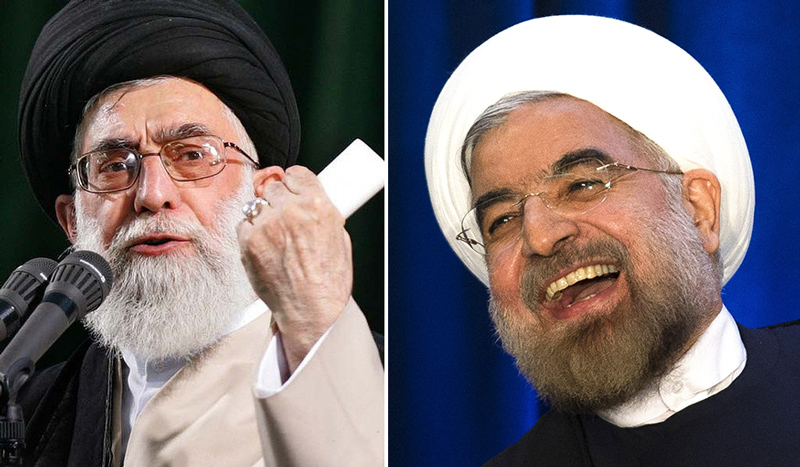
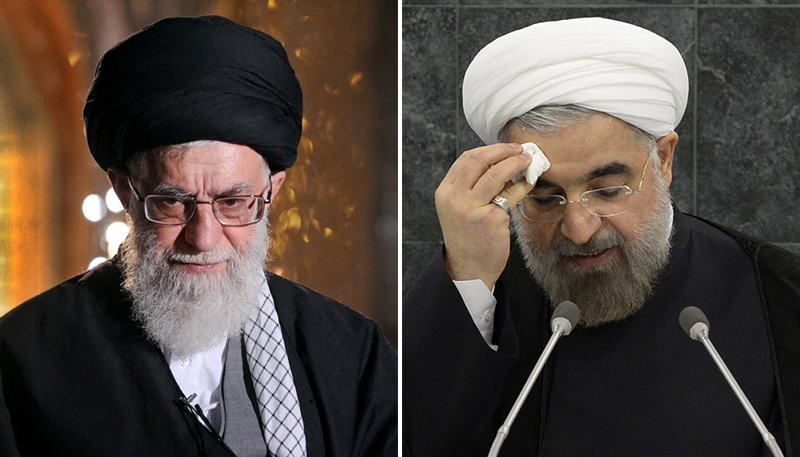
Iran’s Supreme Leader, Ayatollah Khamenei (left), is not giving up on the revolutionary ideological norms. He is relying on the so-called moderates, such as President Hassan Rouhani (right), to continue the process of implementing the nuclear deal in order to benefit Iran economically and ensure the regime’s hold on power.

Nevertheless, at the end of day, the key decision makers in Iran’s political establishments are Khamenei and the senior cadre of the IRGC, who prioritize Iran’s ideological and revolutionary principles. It is from them that Khamenei draws his legitimacy.

As long as the Supreme Leader is alive, one should not expect that Iran’s reintegration into the global economy to move the country to the moderate end of the spectrum, or that its anti-American, anti-Semitic sentiments and fundamentals of Tehran’s foreign policies will change.

Dr. Majid Rafizadeh, an Iranian-American political scientist and Harvard University scholar, is president of the International American Council.
Khamenei and IRGC’s Increasing Popularity by Majid Rafizadeh

  • The same state-run media that shapes the Iranians’ views of the West also pushes them to favor hardline candidates.
  • The new poll shows that Ayatollah Khamenei, his media outlets, and the Revolutionary Guards generals appear to be preparing the platform for a hardline President who will pull out of the nuclear agreement. The new poll also shows that so far their campaign has been successful.

The number of hardliners in Iran is on the rise, according to the latest poll. The Supreme Leader, Ayatollah Khamenei, appears to be preparing the social base so that a hardline president would replace President Hassan Rouhani after the sanctions are lifted by foreign powers. Khamenei seems to be achieving this by using Iranian media to slander the West and improve the image of hardline politicians. Iran’s former president, Mahmoud Ahmadinejad, appears to be getting ready to take Rouhani’s place, and is reportedly preparing his hardline platform to run in Iran’s 2017 presidential elections.
Rouhani’s popularity and standing are evidently not what they used to be. This seems to have come about largely because of changes in the economy. The overwhelming majority of Iranians believed in Rouhani’s economic promises when they elected him; after the nuclear deal was settled, 63% of Iranians believed that they would witness improvements in the economy and living standards within a year. However, a new report shows that 74% of Iranians said that there have been no economic improvements in the last year.

Iran’s Supreme Leader Ali Khamenei (left) appears to be preparing the social base so that a hardline president would replace President Hassan Rouhani (right).

A number of factors have slowed economic growth, including the high unemployment level, the state-owned and state-led economy, financial corruption at high levels, lack of an open market and business opportunities for the public, the increasing gap between the rich and poor, and the accumulation of wealth among the gilded circle in power and other major players — such as Supreme Leader Ayatollah Ali Khamenei, the Islamic Revolutionary Guard Corps (IRGC) and the connected elite business class — who hold control over major socio-political and economic sectors of Iran.

The Iranian government has also not done all that it could to help improve conditions. For example, after the flimsy and incomplete nuclear agreement, the Obama Administration immediately began transferring billions of dollars to Iran’s Central Bank. One of the payments included $1.7 billion transferred in January 2016. Of this sum, $1.4 billion came from American taxpayers. Iran immediately increased its military budget by $1.5 billion from $15.6 billion to $17.1 billion, rather than investing it for creating jobs.

Khamenei has already begun his campaign of blaming the West for Iranian economic problems. He fails to acknowledge the true reason that Iranians are not benefiting from the lifting of sanctions. Instead, as is his method of operation, he blames the West so that he himself is never blamed or held accountable in the eyes of the public. He stated recently “Weren’t the supposed sanctions lifted to change the life of the people? Is any tangible effect seen in people’s life after six months?” Although Iran’s oil exports have reached pre-sanctions levels, and although Iran is freely doing business on the state level, Mr. Khamenei claimed in a speech that, “the U.S. Treasury… acts in such a way that big corporations, big institutions and big banks do not dare to come and deal with Iran.”

An official from the State Department said that Iran should not blame the US for companies not doing business with Iran. Most likely, large corporations are just not yet prepared to make deals with Iran.

Khamenei’s rhetoric has a significant impact on public opinion in Iran. According to a poll, 75% of Iranians believe that the U.S. is to blame for Iran’s stagnant economy. They believe that the U.S. has been creating obstacles to Iranian business with Western companies, and to Iran’s ability to fully rejoin the global financial system.

It is true that since the nuclear deal, Iran’s unemployment rate has increased from roughly 10.8% to 12%. During the course of Rouhani’s presidency, the unemployment rate has increased by two percent. The government has also cut subsidies.

It is possible that Iran’s problems trading with American corporations and rebuilding its economy are due to other Iranian leaders’ rhetoric, the Iranian state-owned media narratives, and lack of clear understanding of the terms of the nuclear agreement among the general public. Approximately 65% of the population still watch only Iran’s domestic news channels to gain information about the latest news in comparison to the 25.4% who use internet, and 18.2% who watch satellite television. Notably, the states viewed most unfavorably by the Iranian public are the Islamic State (97.6% very unfavorable), Saudi Arabia (81.3% very unfavorable), and the United States. The overwhelming majority of Iranians, roughly 80%, believe that it is very important that their country should continue developing its nuclear program.

The same state-run media that shapes the Iranians’ views of the West also pushes them to favor hardline candidates. The new poll reveals that former president Mahmoud Ahmadinejad’s popularity is increasing. Ahmadinejad previously mentioned that he was retiring from politics, but the latest signs indicate that he is repositioning himself to lead the Islamic Republic again. During his presidency, people enjoyed subsidies on petrol, gas and electricity, and his government paid monthly cash handouts of approximately $17 to everyone. In the next presidential race, the poll shows that Ahmadinejad now trails Rouhani by only 8 percentage points compared to 27 points in May 2015.

Finally, another intriguing finding is that the person who has the highest level of respect, “very favorable,” among Iranians is General Qassem Soleimani, the head of IRGC-Qods Force (the external operations wing of the IRGC, which operates in foreign countries). His popularity has increased in the last year. This could be because he is portrayed by the Iranian media as the savior of the Shia in Iraq and Syria, a patriot, and the protector of Iranians from the Islamic State and other types of Sunni extremism. In general, the favorability of the high-profile, hardline and conservative politicians such as Muhammad Bagher Ghalibaf and Ali Larijani appears to have increased. These could threaten Rouhani’s reelection.

Khamenei, his media outlets, and the IRGC generals appear to be preparing the platform for a hardline President who will pull out of the nuclear agreement. The new poll also shows that so far, their campaign has been successful.

Dr. Majid Rafizadeh, political scientists and Harvard University scholar is president of the International American Council on the Middle East. He can be reached at Dr.rafizadeh@post.harvard.edu.

Translate »
Skip to toolbar