

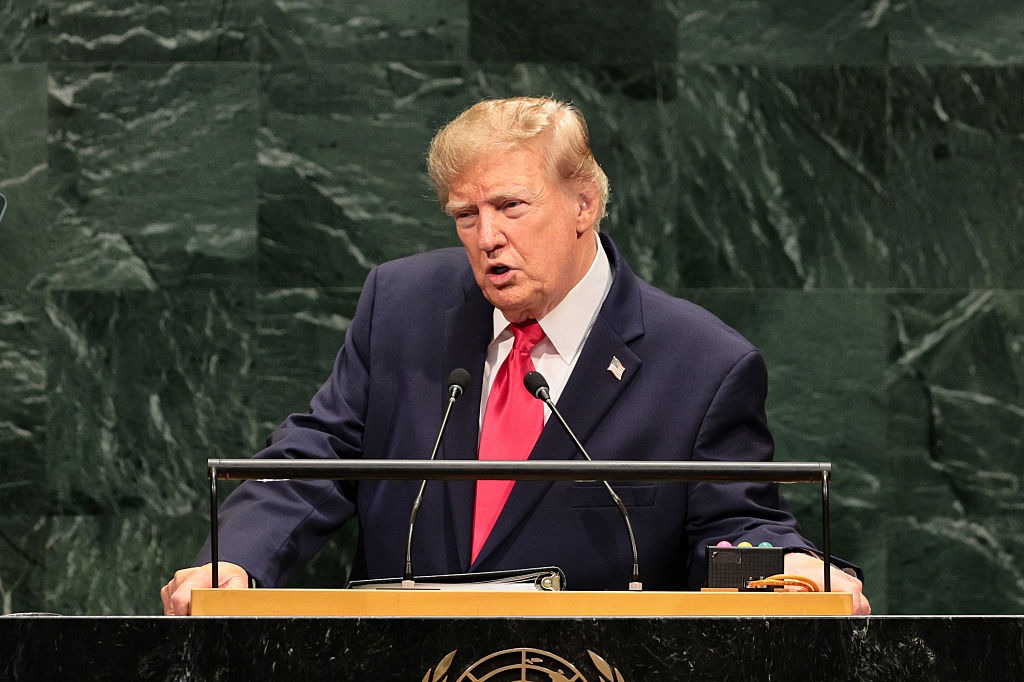
Behind the familiar Trump theater, however, was a serious demonstration of how this administration understands American power: establish leverage, define the limits, then negotiate.
Kushner’s presence is significant. From the Abraham Accords to Gaza, Ukraine, and now Iran, he has… concentrat[ed] on ending conflicts and building what comes after them. It is diplomacy conceived less as process than as an attempt to produce an outcome.
Iran matters far beyond the nuclear question. The confrontation touches the Strait of Hormuz, global energy markets, Israel, Gulf security, Yemen, and the calculations of China and Russia.
The objective is not simply an agreement. It is a regional balance capable of surviving one.
At the United Nations, President Donald Trump offered a revealing demonstration of American power: pressure, dialogue, and the leverage to know when to use each.
For one week every September, New York becomes the capital of the world. Motorcades replace taxis, presidents replace tourists, and behind the speeches at the United Nations, governments search for meetings that may matter more than the speeches themselves. This year, the stakes were particularly high: war with Iran, the continuing war in Ukraine, instability across the Middle East, tensions with China, and growing doubts about whether international institutions can still manage a world increasingly shaped by hard power.
Perhaps New York simply brings out a different Donald Trump. Or perhaps it brings out the original one. Away from Washington — with its permanent political warfare and institutional battles — Trump looked remarkably comfortable. He smiled. He negotiated. He threatened. He sparred with the press. He welcomed some leaders and kept others out. Behind the familiar Trump theater, however, was a serious demonstration of how this administration understands American power: establish leverage, define the limits, then negotiate.
Iran provided the clearest example. Trump’s message before the United Nations General Assembly was deliberately uncompromising. Tehran could negotiate an agreement and choose a different relationship with the international community, or continue on its present course and face potentially devastating consequences. Two choices. Not three. And then, within hours, diplomacy began. Jared Kushner and Steve Witkoff were at the center of the American effort, engaging through mediators in three hours of indirect discussions with the Iranian side.
Kushner’s presence is significant. From the Abraham Accords to Gaza, Ukraine, and now Iran, he has emerged — alongside Witkoff — as a reference point for Trump’s pragmatic diplomacy: fewer diplomatic rituals, direct access to decision-makers, and a concentration on ending conflicts and building what comes after them. It is diplomacy conceived less as process than as an attempt to produce an outcome.
That helps explain the apparent contradiction. How can a president threaten an adversary in the morning and negotiate with it in the afternoon? Perhaps that is precisely the point. Trump’s language is often maximalist. His diplomacy can be surprisingly transactional. The mistake is assuming the first necessarily prevents the second. Pressure creates leverage; leverage changes calculations; negotiation tests whether those calculations can produce an agreement.
Iran matters far beyond the nuclear question. The confrontation touches the Strait of Hormuz, global energy markets, Israel, Gulf security, Yemen, and the calculations of China and Russia. That is why Trump’s simultaneous consultations with Arab leaders mattered. Washington must negotiate with Tehran without losing the confidence of its regional partners — and reassure those partners without making diplomacy with Tehran impossible. The objective is not simply an agreement. It is a regional balance capable of surviving one.
Ukraine offered another test. Trump met President Volodymyr Zelensky at the United Nations and French President Emmanuel Macron in New York, with Ukraine and transatlantic security central to the discussions. Ukraine is where Trump’s transactional instincts confront the institutional architecture America itself built after 1945 — ending the war matters. But so does ensuring any settlement strengthens rather than weakens NATO’s credibility.
egretnewseditor@gmail.com