Monthly Archives: June 2017

Vicious High-Speed Car Ramming Attack Injures 4 Israeli Soldiers

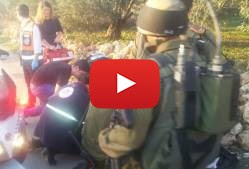
Four Israeli soldiers were run over in a most vicious high-speed vehicular attack. While the video has been circulating around the internet, viewer discretion is advised.


Four IDF soldiers were injured by a car-ramming Palestinian terrorist in Samaria, just east of the Tel Aviv district, Thursday afternoon. One of the victims is reportedly in serious condition.

The terrorist, Mahmoud abd al Halim abd al Hamid Salam, a 37-year-old resident of the village of Al Luban in Samaria, was caught in an overnight manhunt.

Earlier in the day, a six-month-old girl was injured by rock-throwing terrorists while traveling in the family car from Beitar Illit towards Jerusalem. The car window was shattered, and the infant was wounded by shards of glass.

Although we believe it’s important to see what Israelis are dealing with, viewer discretion is advise

Israelis are Under Attack. Do You Support Israel?

Want to do something important for Israel? Make a donationto help fight against Palestinian incitement and terror.

The Palestinians’ self-proclaimed knife intifada is the latest result of ongoing incitement against innocent Israelis. Israelis are being stabbed, shot and run over. Yet the world is silent. Help Israel to fight and win the war against terror. The time to act is now!

Now more than ever, Israel needs your help to fight the battle of public opinion. Israel’s enemies are using social media to incite brutal terror against innocent civilians. You can help to remove Facebook pages and Youtube videos calling for the murder of Israelis. The People of Israel need your help to do even more!

Support from true friends of Israel like you make this possible, so please show your supporttoday!

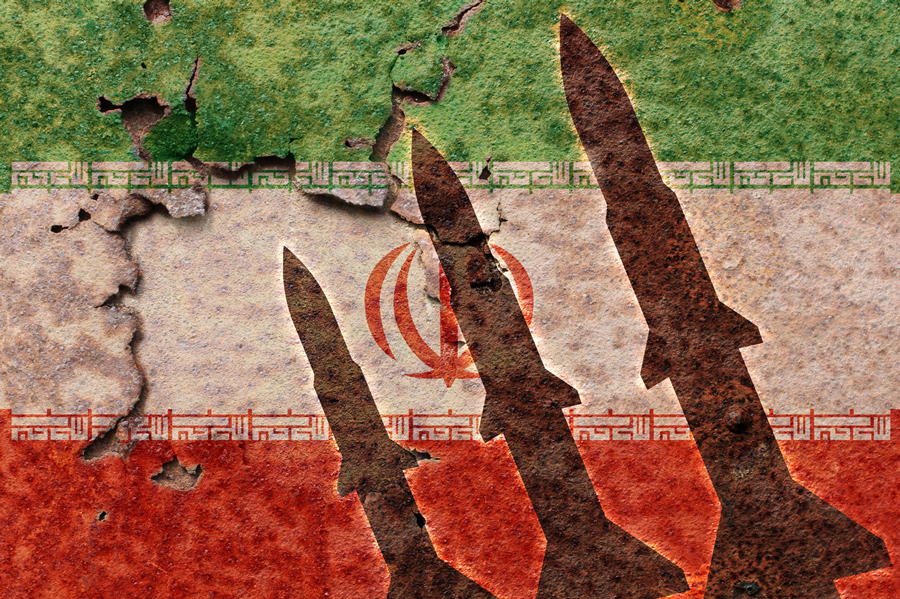
Venezuela, Iran, USA and Narco-Terrorism by Susan Warner

  • There are an estimated six million Muslims living in Latin American cities, who provide a fertile terrorist recruiting environment.

  • “Iran has opened up more than 80 cultural centers in Latin America in order to export its toxic brand of political influence and serve its interest, focusing on partnering with nations well known for their anti-American rhetoric including Venezuela, Argentina, Bolivia, Ecuador, and Nicaragua.” — US Rep. Ileana Ros-Lehtinen, in testimony for the House Sub-Committee on the Middle East and North Africa.

Amidst the unspeakable economic distress facing residents of Venezuela today, security experts have identified yet another major cause for concern emanating from this once prosperous, oil-rich nation: Iran is moving in, partnering with Venezuela’s prosperous drug traders and creating a foothold there, as well as in other “friendly” Latin American countries. Iran is laundering money in Latin America and presumably secretly plotting to accomplish a strategic long-term goal to penetrate the Western hemisphere.

Iran’s terrorist activities, its partnership with Venezuelan drug traffickers and the general criminal atmosphere affects the citizens of Caracas so much that people reportedly are fearful of even going to the store to wait in the endless lines for food.

In Venezuela, security analysts say, the corruption starts at the very top with President Nicolas Maduro himself, who is looking frantically for money in every crevasse to keep the nation and his presidency afloat. Reports estimate that in Venezuela one police officer dies every day and the number of homicides per capita in Caracas is the highest in the world.

National crime statistics, however, seem to be just the start: deeper and more alarming than the Venezuelan homicide toll, there appears to be an imminent threat to the entire Western hemisphere from partnerships between Venezuelan drug traffickers and terrorist networks like Hamas and Hezbollah, two groups that act a proxies for Iran.

Together, terrorism and illegal drugs represent a significant export for Venezuela. Iran and Venezuela partner together to move terrorist cells and drugs to hubs in the United States and throughout North America.

This alliance has already come to the attention of the House Sub-Committee on the Middle East and North Africa; in 2015, Chairwoman Ileana Ros-Lehtinen headed a hearing entitled, “Iran and Hezbollah in the Western Hemisphere.”

“Drug trafficking funds terrorism,” said Ros-Lehtinen. “The need for a comprehensive strategy must address this fundamental cause of the problem.”

“Recent reports of the connections between Hezbollah and the FARC [Colombia]; the murder of the special prosecutor of Argentina, Alberto Nisman, and the alleged conspiracy between the Argentine Government, Venezuela and Iran to cover up Hezbollah’s activities and involvement in the AMIA [Jewish Community Center] bombing do nothing to quell doubts about Iran’s activities in Latin America.”

Through its Islamic Revolutionary Guard Corps (IRGC) and Hezbollah, Iran’s terrorist proxy in Lebanon, Iran is spreading its roots through legitimate enterprise “laundries” throughout Latin America.

Iran has set up banking entities, embassies, cultural centers and business enterprises, through which it is building an infrastructure to advance expansionist strategies.

Vanessa Neumann wrote in 2011:

“Besides its sponsored terrorist groups, Iran also has a growing direct influence in Latin America, spurred by three principal motivations: 1) a quest for uranium, 2) a quest for gasoline, 3) a quest for a base of operations that is close to the US territory, in order to position itself to resist diplomatic and possible military pressure, possibly by setting up a missile base within striking distance of the mainland US, as the Soviets did in the Cuban Missile Crisis”

“FARC in Columbia, Hezbollah in Lebanon and Al Qaeda all have training camps, recruiting bases and networks of mutual assistance in Venezuela as well as throughout the continent,” the Foreign Policy Research Institute reported.

Jaime Daremblum wrote in 2011:

“An official involved in the fight against terrorism said that the relation between Venezuela and Iran is becoming a strategic association. How to explain otherwise reported regular flights between Caracas and Tehran, for which no tickets are sold and no immigration or customs inspections are required?”

Rachel Ehrenfeld, in her 1990 book on terrorism funding (page xiii), defined the term “narco-terrorism” as “the use of drug trafficking to advance the objectives of certain governments and terrorist organizations.” Two decades after the book’s publication, the term narco-terrorism has almost become a household word, with Venezuela as a hub of activity in the Western hemisphere.

A U.S. State Department report stated:

“Venezuela remained a major drug-transit country in 2014. Venezuela is one of the preferred trafficking routes for illegal drugs from South America to the Caribbean region, Central America, the United States, Western Africa, and Europe, due to its porous western border with Colombia, weak judicial system, sporadic international counternarcotics cooperation, and permissive and corrupt environment.”

Hezbollah’s annual budget of more than 100 million dollars is provided by the Iranian government directly and through a complex system of finance cells scattered around the world, from Bangkok and Paraguay to Michigan and North Carolina.

Far from being the passive beneficiaries of drug-trafficking expats and sympathizers, Hezbollah has high-level officials directly involved in the South American cocaine trade and its most violent cartels, including the Mexican crime syndicate Los Zetas. Hezbollah’s increasing foothold in the cocaine trade is facilitated by an enormous Lebanese diaspora.

There are an estimated six million Muslims living in Latin American cities, who provide a fertile terrorist recruiting environment. Vanessa Neumann writes:

“The Free Trade Zones of Iquique, Chile; Maicao, Colombia; and Colón, Panama, can generate undetected financial and logistical support for terrorist groups. Colombia, Bolivia, and Peru offer cocaine as a lucrative source of income. In addition, Cuba and Venezuela have cooperative agreements with Syria, Libya, and Iran.”

Iran’s Islamic Revolutionary Guards Corps (IRGC) was established by Ayatollah Khomeini in 1979. Today it plays a leading role in Iran’s expansionist enterprises. The IRGC has become a wide-ranging political, social, and economic corporation — with holdings in industry, security, energy, construction, and communications. It is the most robust economic organization in the country. According to reports, many of its former members currently hold senior political and bureaucratic positions in the Iranian government.

According to a 2013 report in Military and Strategic Affairs:

“… the Revolutionary Guards are active on two major complementary levels. First, the organization leads the efforts to export the Iranian Islamic Revolution, seeking to expand the republic’s political, ideological, and religious influences in the Middle East, Central Asia, Africa, and Latin America. Secondly, the Revolutionary Guards continuously exert efforts to undermine the influence of the United States in the Middle East by harming the superpower’s regional interests and its allies. … the Revolutionary Guards make extensive global use of asymmetrical strategies in their struggle against the West and its allies, preferring tactics of subversion and terrorism.”

The Quds Force, an arm of IRGC, is in charge of exporting the Islamic Revolution and organizing terrorist and subversive activity against Iran’s enemies, according to a 2013 report from the American Center for Democracy

The Quds Force uses proxies as a way to disguise Iran’s involvement in terrorist activity. The force’s most prominent ally is the Lebanese Hezbollah, which was established in 1982 with the help of the Revolutionary Guards.

Alongside their efforts to battle their own serious homegrown drug problems in Iran, the Revolutionary Guards are also reportedly working to harness the strategic and tactical potential of the international drug trade in order to advance Iran’s expansion.

Venezuela and Iran seem to have been friendly since the establishment of the Organization of Petroleum Exporting Countries (OPEC) in 1960. They have been reinforcing their bonds since May 2001, when then President Hugo Chavez paid a visit to Tehran. There he coordinated their anti-Western narrative, stressing opposition to all forms of “imperialism and oppression” in the Third World — a code for “lets agree to stay away from any relationship with Western capitalist powers: the United States, Israel and their allies”. This “anti-imperialist” mantra has been used by both Chavez and his successor, Nicolas Maduro, along with Iran as a unifying cry against the U.S. and its allies.
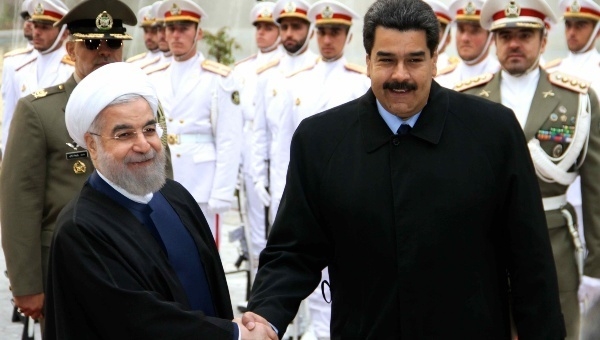
Venezuelan President Nicolas Maduro (right) meets with Iranian President Hassan Rouhani in Tehran, January 10, 2015. (Image Source: TeleSUR video screenshot)

According to the testimony of Ileana Ros-Lehtinen:

“Iran has opened up more than 80 cultural centers in Latin America in order to export its toxic brand of political influence and serve its interest, focusing on partnering with nations well known for their anti-American rhetoric including Venezuela, Argentina, Bolivia, Ecuador, and Nicaragua.”

Hamas and Hezbollah, both Iranian proxy terrorist groups, have also established offices in Caracas.

Representatives Ileana Ros-Lehtinen, Jeff Duncan and others say this is an appropriate time for the United States to pay more attention to activities happening in its own backyard.

The Need for a U.S. Response

In his statement to the House Committee on Foreign Affairs, Rep. Jeff Duncan asserted at the 2015 hearing, that the U.S. and its allies must do more to counter Iran’s goals to develop nuclear weapons, export terrorism and develop alliances with the narcotics trade.

Since the (unfortunate) approval of “Iran Nuclear Deal” in 2015, the United States has largely dissolved international sanctions against Iran, which leaves the IRGC free to make uninhibited alliances with networks of transnational organized crime organizations to finance its aspirations. Along with United States’ recent payment of $1.5 billion to Iran, there may be a grave risk to our own national security as Iran marches north from Venezuela into Central America and further into the United States through our southern border with Mexico.

In 2015, according to the US Department of State, U.S. President Barack Obama determined that Venezuela had failed to adhere to its obligations under international counternarcotics agreements. Even so, the US issued a waiver, allowing for continued assistance to be granted to Venezuela “in the interest of U.S. national security“.

The State Department admits that Venezuelan authorities do not effectively prosecute drug traffickers, in part due to their political corruption. Additionally, Venezuelan law enforcement officers lack the equipment, training, and resources required to significantly impede the operations of major drug trafficking organizations.

The U.S. Treasury Department has sanctioned multiple Venezuelan banks and Venezuelan regime operatives, including the former Minister of Interior and Justice. The U.S. State Department has cited Venezuela’s state-owned oil company, PDVSA, and CAVIM, the Venezuelan weapons company, for their role in helping Iran circumvent the sanctions that the U.S. has now lifted altogether.

At the same time, the U.S. administration continues to purchase 10% of its oil (roughly 300 million barrels per year) from Venezuela, the same entity that it sanctioned in 2011 for shipping gasoline to Iran.

This is all happening while terrorist groups are regularly connecting to drug cartels in the region, and forging a deepening narco-terror machine that in turn is funding terrorist activities.

While the US administration — apparently in denial about the clear threats posed by Iran’s expansionist and nuclear aspirations — dismisses Israel’s concerns as “hysteria,” Iran quietly continues its unfettered march westward.

Susan Warner, a specialist on religion and international issues, is a Distinguished Senior Fellow at Gatestone Institute. Visit her web site at www.israelolivetree.org
Veiling Women: Islamists’ Most Powerful Weapon by Giulio Meotti

  • The first victim of the Islamist war in Algeria was a girl who refused the veil, Katia Bengana, who defended her choice even as the executioners pointed a gun at her head. In 1994, Algiers literally awoke to walls plastered with posters announcing the execution of unveiled women.

  • In April 1947, Princess Lalla Aisha gave a speech in Tangiers and people listened astonished to that unveiled girl. In a few weeks, women throughout the country refused the scarf. Today Morocco is one of the freest countries in the Arab world.
  • In the mid-1980s, sharia law was implemented in many countries, women in the Middle East were placed in a portable prison and in Europe they resumed the veil to reclaim their “identity,” which meant the refusal of assimilation to Western values and the Islamization of many European cities.
  • First veils were imposed on women, then Islamists began their jihad against the West.

Laurence Rossignol, France’s Minister for the Family, Children and Women’s Rights, sparked a furor about the Islamic veil proliferating in her country, when she compared headscarved women to “American negroes who accepted slavery.” In addition, Elisabeth Badinter, one of France’s most famous feminists, even called for boycotting Europe’s fashion companies, such as Uniqlo and Dolce & Gabbana, which are developing Islamically correct clothes (in 2013, Muslims spent $266 billion dollars on clothing, and the figure could reach $484 billion by 2019).

A new trend is also emerging in Western popular culture, which was almost invisible in the media a decade ago: headscarved women are now also present in television programs such as MasterChef.

The mainstream culture now considers veiling women “normal.” Air France recently called on its female employees to wear veils while in Iran. The government of Italy recently veiled nude sculptures at Rome’s Capitoline Museum during a visit by Iran’s President Hassan Rouhani, out of “respect” for his sensibilities.

In the Arab-Islamic world, however, for a long time covered women were the exception.

It is hard to believe that, until the early 1990s, the majority of women in Algeria were not veiled. On May 13, 1958 at Place du Gouvernement in Algiers, dozens of women tore off their veils. Miniskirts invaded the streets.

Iran’s Revolution reversed this trend: the first scarf appeared at the beginning of the 1980s with the rise of the Islamic movements in Algeria’s universities and poor neighborhoods. The hijab was distributed by the Iranian Embassy in Algiers.

In 1990, Algeria was on the edge of a long season of death and fear: a civil war, with the specter of Islamist breakthrough (100,000 dead). People knew that something terrible was going to happen by counting the number of veils in the streets.

The first victim of the Islamist war in Algeria was a girl who refused the veil, Katia Bengana. She defended her choice even as the executioners pointed a gun at her head. In 1994, Algiers literally awoke to walls plastered with Islamist posters announcing the execution of unveiled women. Today, very few women dare to leave their house without a hijab or chador.

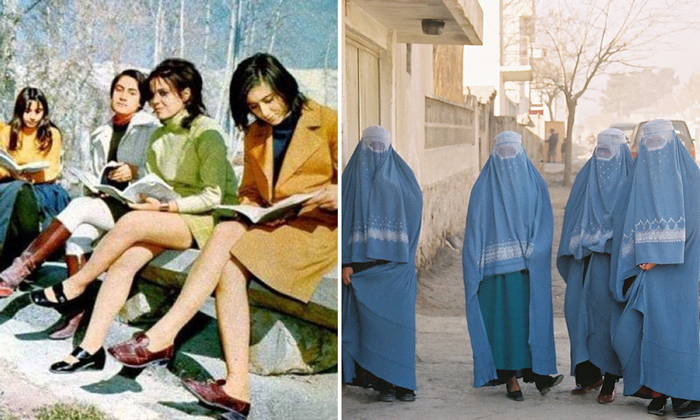
Look at the photographs of Kabul in the 1960s, 1970s and 1980s, and you will see many unveiled women. Then came the Taliban and covered them. The emancipation in Morocco was sparked by Princess Lalla Aisha, the daughter of Sultan Mohamed Ben Youssef, who took the title of king when the country proclaimed independence. In April 1947, Lalla gave a speech in Tangiers and people listened astonished to that unveiled girl. In a few weeks, women throughout the country refused the scarf. Today Morocco is one of the freest countries in the Arab world.

Look at the photographs of Kabul in the 1960s, 1970s and 1980s, and you will see many unveiled women. Then came the Taliban and covered them.

In Egypt, back in the 1950s, President Gamal Abdel Nasser took to television to mock the Muslim Brotherhood’s request to veil the women. His wife, Tahia, did not wear a scarf, even in official photographs. Today, according to the scholar Mona Abaza, 80% of Egyptian women are veiled. It was only in the 1990s that the strict Wahhabi version of Islam arrived in Egypt, through millions of Egyptians who went to work in Saudi Arabia and other Gulf countries. Meanwhile, Islamist political movements gained ground. Then Egyptian women began sporting the veil.

In Iran, the traditional black veil covering Iranian women from head to ankles, invaded the country under Ayatollah Khomeini. He asserted that the chador is the “banner of the revolution” and imposed it on all the women.

Fifty years earlier, in 1926, Reza Shah had provided police protection to women who had chosen to refuse the veil. On January 7, 1936, the Shah ordered all the teachers, the wives of ministers and government officials “to appear in European clothes.” The Shah asked his wife and daughters to go unveiled in public. These and other Western reforms were supported by Shah Muhammad Reza Pahlavi, who succeeded his father in September 1941, and instituted the ban on veiled women in public.

In Turkey, Mustafa Kemal Ataturk harangued female crowds, pushing them to set an example: taking off the veil meant hastening the necessary rapprochement between Turkey and Western civilization. For fifty years, Turkey refused the veil — until 1997, when the government headed by the Islamist Necmettin Erbakan abolished the ban on the veil in public places.

Turkey’s Erdogan used the veil to encourage the rampant Islamization of the society.

In contrast, Tunisia’s President, Habib Bourguiba, issued a circular banning the wearing of hijab in schools and public offices. He called the veil “odious rag,” and promoted his country as one of the most enlightened Arab nations.

It was not only the Muslim world that for a long time refused this symbol. Before the spread of radical Islam, the miniskirt, a symbol of Western culture, could also be seen all over the Middle East. There are many photographs to remind us of that long period: the unveiled stewardesses in skirts of the Afghan airline (what an irony that Air France today wants to veil them); the beauty contest that King Hussein of Jordan organized at Hotel Philadelphia; the Iraqi female football team; the Syrian female athlete Silvana Shaheen; the unveiled Libyan women marching in the streets; the female students at the Palestinian Birzeit University and the Egyptian girls on the beach (at that time, a burkini would have been rejected as a cage).

Then, in the mid-1980s, everything suddenly changed: Sharia law was implemented in many countries, women in the Middle East were placed in a portable prison, and in Europe they resumed the veil to reclaim their “identity,” which meant the refusal of assimilation to Western values and the Islamization of many European cities.

First veils were imposed on women, then Islamists began their jihad against the West.

First we betrayed these women by accepting their slavery as a “liberation,” then Air France started veiling women while in Iran as a form of “respect.” It is also revealing of the hypocrisy of most of Western feminists, who are always ready to denounce the “homophobic” Christians and “sexism” in the U.S., but keep silent about the sexual crimes of radical Islam. In the words of the feminist Rebecca Brink Vipond, “I won’t take the bait of a patronizing call for feminists to set aside their goals in America to address problems in Muslim theocracies.” These are the same feminists who abandoned Ayaan Hirsi Ali, the brave Dutch-Somali dissident from Islam, to her own defenses even after she found refuge in the U.S.: they prevented her from speaking at Brandeis University.

For how long we will maintain our ban on female genital mutilation (FGM)? A study just published in the U.S. suggests that allowing some “milder” forms of female mutilation, which affect 200 million women in the world, is more “culturally sensitive” than a ban on the practice, and that a ritual “nick” of girls’ vaginas could prevent a more radical disfiguring practice. The proposal didn’t come from Tariq Ramadan or an Islamic court in Sudan, but from two American gynecologists, Kavita Shah Arora and Allan J. Jacobs, who published the study in one of the most important scientific journals, the Journal of Medical Ethics.

It is a testament to the depths that can be reached in what the French “new philosopher,” Pascal Bruckner, called “the tears of White men” with their masochism, cowardice and cynical relativism. Why not also justify the Islamic stoning of women who are said to commit adultery? It is as if we cannot capitulate quickly enough.

Giulio Meotti, Cultural Editor for Il Foglio, is an Italian journalist and author.

Uwiteka yamanuwe no kumva urusaku rwabarega uRwanda!.

Kuwa 10th Kanama 2014,umwuka w’Uwiteka yavuganye nanjye,arambwira ati: mwana w’umuntu,ngiye gutanga umugisha kubakiranutsi,abihanganye bose bagiye kubona ineza yanjye!Kandi abanzi banyu nta bwo muzongera kubabona ukundi.Ndabizi neza murarushye umwanzi wanyu n’umukuru w’igihugu cyanyu,bwira ubwoko bwanjye ngo ntabwo muzongera kumubona ukundi!urusaku rwe,rumeze nk’intare itontoma izirirtse!


Igihe kibaye kirekire mutegereje ibyo navuze,ariko biragaragara yuko murambiwe,ibyo nibyo nashakaga yuko murambirwa mugakura amaso kubana ba bantu,kugirango munyiringire kuko nd’Uwiteka Imana ya Israel Abraham ,Issack, na Yakobo.

Bwira ubwoko bwanjye ngo,mwitinya kandi mwigira ubwoba uti mbese?ibyo navuze no kubikora sinzabikora?Dore nd’Uwiteka wifite imibiri byose mbese hariho icyananira?Yeremia 32:27,doreibyo nibwira kubagirira s’ibibi ahubwo n’ibyiza,kuko nzihesha icyubahiro mu bwoko bwanjye no mu bantu banjye uko niko Uwiteka Imana avuga.

Namanuwe no kureba urusaku rwabaharega,bavuga ko barengana,kandi ko,amaraso yamenetse ari menshi,yewe koko nibyo kuko amaraso ararira ndetse arasaba guhorerwa ariko kuri wa munsi utegerejwe niho bazamenya yuko nd’Uwityeka Imana ikiranuka ihorera gukiranirwa kwa base na banyina uko niko Uwiteka Imana nyiri juru n’isi avuze.

Inkota izasimbura iyindi,abicishije inkotaniyo izabica,uwakoresheje umupanga niwo uzamutema,uwkoresheje umuhoro niwo uzamuca igihanga,uwakoreshe intwaro z’ubumara izo nizo zizamumaraho ubugingo ujko niko Uwiteka avuga bwira ubwoko bwanjye bwitegure dore igihe cyarangiye kandi kiraje dore uzaba umunsi uteye ubwoba amahanga azatangara ndetse nabamanitse amajosi uwo munsi bazamenya ko bakiraniwe uko niko Uwiteka avuga.Abanyantege nke nzabacyura,abanyembaraga nzabarinda,kugirango bankorere kuko ibihe mugiye kwinjiramo nibihe byabafite uwkizera gukomeye kandi bihanganiye ibibagerageza,kuko abo nibo bazankorera umurimo kuko bagaragaweho ubutwari nokwihangana kwa bera!Ishuri murarirangije mu giye guhembwa muhabwe imbaraga zogukiranuka no kurwanya isi kandi muzayitsinda uko niko Uwiteka imana avuze.

Uwiteka Imana akoresha abanyantege nke.

Bizagora cyane abanyapolitike b’abanyarwanda bo mu bwoko bw’Abarepubulike,kugirango bazagere kumugambi uhamye wogukura umwakagara ku ngoma,ibi turavugira yuko fpr kugirango ibashe kugera kumugambi wayo mubisha wokubohoza igihugu nk’aha kitari icyabo,na nyuma yo kukibohoza bagakomeza kukiboha,kugirango ibi byose babigereho,n’uko bemeye kwifatanya nabanyarwanda bo mu bwoko bw’Abahutu babirukanye murwagasabo bakabashyira imbere kugirango abahutu babashe kubibonamo bityo fpr ibe igeze kumugambi wayo.


Twibutseko fpr yakusanyije ibinyoma byose aho yagendega ibeshya abanyarwanda b’impunzi bo mu bwoko bw’Abatutsi ko,bagiye gucyura Umwami w’Urwanda KIGELI wa V Ndahindurwa.Maze abanyarwanda biva mu mizi batanga abana babo n’utwabo bibwira yuko bagiye gusubirana ubwami bwabo,ariko batangajwe ni uko ibyo bibwiraga Atari ko byagenze!.
Iyo ikaba yarabaye imwe mu nzika yagaragaraye hagati ya fpr na nabayarwanda bo mu bwoko bw’Abatutsi ndetse nabahutu bahunze kubera gukunda umwami wabo.Biragoye rero kugirango abatavuga rumwe na leta y’Abakagara,bazabashe kuyitsimbura mu gihe amazi atakiri yayandi,abanyarwanda bamaze guhumuka ikinyoma ubu baragitahuye,byaba byiza bemeye kuboka ukuri bagashyigikira Umwami w’uRwanda kuko naramuka asubiye ku ngoma batarigeze bamushyigikira kuko ariwe wemewe namategeko muri LONI,sinzi icyo bazahinga hagati y’imfura ubwo zizaba zateranye.

Ariko se iyo mwumva ko,hariho indangamuntu yabega n’iyabanyarwanda ubwo koko ntacyo mwumvamo?kwibeshya s’icyaha,ariko kumenya ko wibeshye ntuhindukire birenze kuba icyaha!?Niba fpr yatubeshye,nyuma tukayitahura none tukaba dushaka gukomeza inzira z’ikinyoma yadutoje ngo tubashe kugera kubyo nayo yagezeho,ubwo se twaba dutandukaniye nayo?ibyo birasa no kuvomera mukiva?.
Kubera iyo mpamvu Imana izakoresha abanyantege nke kugirango isohoze imgambi yayo,kuko abanyembaraga bamaze kwirata imbagara zabo,ninayompamvu Imana izatabateza umwakagara akabamara kubera kwanga kugendera mukuri mukirengagiza nkana,ukuri mugahitamo ikinyoma.

Imana yahise Dawid imukoresha ibikomeye kugirango kwirata kw’Abisiraheli kurangirire mu ntambara,kuko Goliathi yari yarabazengereje,maze Uwiteka azamura Umwami Dawid kugirango azaheshe Imana icyubahiro,ibya fpr byasuzuguje Imana,nanubu biracyakomeje ninayompamvu ubuhanuzi bugaragaraza ko,abantu bazashira kubera banze kumva umuburo w’Imana.

Translate »
Skip to toolbar