Monthly Archives: June 2017

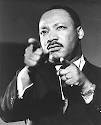
Martin Luther King’s Dream for Peace in Israel

Dr. Martin Luther King, Jr. possessed a remarkable clarity of vision and purpose. He complemented these attributes with a sound understanding of the history of human oppression.


Dr. King’s unequivocal renunciation of anti-Zionism reflected his consistent, courageous opposition to all manifestations of bigotry. Against the backdrop of resurgent Jew hatred worldwide, epitomized by the hypocritical Durban Conference on “Racism”, Dr. King’s candid, thoughtful reflections on the true nature of anti-Zionism are particularly edifying.

Watch this very enlightening film that shows Dr. King’s strong support for the State of Israel and the Jewish people. He had a dream for peace in Israel, but understood that peace comes with security.

Shortly before his death, Dr. King had the moral courage to confront the burgeoning Jew hatred of the extreme left wing, including the Black Panthers and the radicalized Student Non-violent Coordinating Committee, as well as the Black Muslims. For example, during a 1968 appearance at Harvard University, he stated bluntly:

“When people criticize Zionists, they mean Jews. You are talking anti-Semitism.”

King immediately recognized anti-Zionism as anti-Semitism – refusing to indulge what he believed was simply another manifestation of the same hatred confronting Blacks. As Georgia Congressman John Lewis, who worked closely with Dr. King during the civil rights movement, observed that “he knew that both peoples [i.e., Blacks and Jews] were uprooted involuntarily from their homelands. He knew that both peoples were shaped by the tragic experience of slavery. He knew that both peoples were forced to live in ghettos, victims of segregation. He knew that both peoples were subject to laws passed with the particular intent of oppressing them simply because they were Jewish or black. He knew that both peoples have been subjected to oppression and genocide on a level unprecedented in history.”

Here are some other quotes from Dr. King:

“I see Israel as one of the great outposts of democracy in the world… as a marvelous example of what can be done… how desert land can be transformed into an oasis of brotherhood and democracy.”

“Peace for Israel means security and that security must be a reality.”

“I solemnly pledge to do my utmost to uphold the fair name of the Jews.”

Manchester: Europe Still ‘Shocked, Shocked’ by Judith Bergman

  • After hearing of the Manchester terrorist attack, politicians once more communicated their by now old-routine of “shock” and “grief” at the predictable outcome of their own policies.

  • Most dumbfounding of all, German Chancellor Angela Merkel said that she was watching the developments in Manchester “with grief and horror” and that she found the attack “incomprehensible”.
  • Every time a European leader publicly endorses Islam as a great faith, a “religion of peace”, or claims that violence in Islam is a “perversion of a great faith”, despite massive evidence to the contrary, they signal in the strongest way possible that with every devastating attack, the West is ripe for the taking.

When ISIS attacked the Bataclan Theater in Paris in November 2015, it did so because, in its own words, it was “where hundreds of pagans gathered for a concert of prostitution and vice.” A year earlier, ISIS had forbidden all music as haram (forbidden). Many Islamic scholars supports the idea that Islam forbids the ‘sinful’ music of the West.

It should, therefore, not be a surprise to anybody that Islamic terrorists might target a concert by the American pop singer Ariana Grande in Manchester on May 22. In addition, the U.S. Department of Homeland Security warned last September that terrorists are focused on concerts, sporting events and outdoor gatherings because such venues “often pursue simple, achievable attacks with an emphasis on economic impact and mass casualties”.

Islamic State claimed responsibility for the Manchester suicide bombing, in which a device laced with screws and bolts was detonated. Twenty-two people, children and adults, were murdered in the explosion that ripped through the Manchester concert area; more than 50 people were wounded. While the media is describing the use of nail bombs at the concert hall as a new and surprising tactic, it is in fact an extremely old one, practiced by Arab terrorists on Israelis for decades.

A police officer stands guard near the Manchester Arena on May 23, 2017, following a suicide bombing by an Islamic terrorist who murdered 22 concert-goers. (Photo by Dave Thompson/Getty Images)

Nevertheless, after hearing of the Manchester terrorist attack, politicians once more communicated their by now old-routine of “shock” and “grief” at the predictable outcome of their own policies. The usual platitudes of “thoughts and hearts” being with the victims of the attack, accompanied professed shock.

President of the European Council Donald Tusk, tweeted: “My heart is in Manchester this night. Our thoughts are with the victims.” Leader of the British Liberal Democrats, Tim Farron, condemned the “shocking and horrific” attack. British Home Secretary Amber Rudd said it was a “tragic incident”, while Labour party leader Jeremy Corbyn called it a “terrible incident”. Canada’s Prime Minister Justin Trudeau said his citizens were “shocked by the news of the horrific attack in Manchester tonight”. Most dumbfounding of all, German Chancellor Angela Merkel said that she was watching the developments in Manchester “with grief and horror” and that she found the attack “incomprehensible”.

After 9/11 in the United States; the 2004 Madrid train bombings, which killed nearly 200 and wounded 2000; the 2005 attacks on London’s transit system where 56 people were killed and 700 wounded; the 2015 attacks in Paris, where ISIS killed 130 people and wounded nearly 400; the March 2016 attacks on the Brussels airport and metro station, where 31 people were killed and 300 wounded; the July 2016 attack in Nice, where 86 people, including ten children, were killed and more than 200 people wounded; the December 2016 attack in Berlin, where 12 people were killed and almost 50 wounded; the March 2017 attack on Westminster that killed three people and wounded more than 20; the April 2017 attack in Stockholm, where 5 people were killed, including one 11-year-old girl; let alone countless attacks in Israel, Western leaders have run out of all conceivable excuses to be shocked and surprised at Islamic terrorism occurring in their cities at ever-increasing frequency.

All the above-mentioned attacks are just the spectacular ones. There have been innumerable others, sometimes at the rate of several attacks per month, which barely made the headlines, such as the Muslim man who, a little over a month ago, tortured and stabbed a 66-year-old Jewish woman in Paris and then, while shouting “Allahu Akbar”, threw her out of the window; or the Paris airport attacker in March, who came “to die for Allah” and accomplished his goal without, miraculously, taking any innocent bystanders with him,

After the last spectacular terrorist atrocity in the UK, which aimed at the very heart of European democratic civilization by targeting the Houses of Parliament and Westminster Bridge, British PM Theresa May said: “It is wrong to describe this as Islamic terrorism. It is Islamist terrorism and the perversion of a great faith”.

It is impossible to fight back against that which you refuse to understand or acknowledge, but then again, European leaders seem to have no intention of fighting back, as they have evidently chosen an entirely different tactic, namely that of appeasement.

Every time a European leader publicly endorses Islam as a great faith, a “religion of peace”, or claims that violence in Islam is a “perversion of a great faith”, despite massive evidence to the contrary — the actual violent contents of the Quran and the hadiths, which include repeated exhortations to fight the “infidels” — they signal in the strongest way possible to organizations such as ISIS, Al Qaeda, Boko Haram, Hezbollah and Hamas, that with every devastating attack, the West is ripe for the taking. The terror organizations and their supporters see European leaders’ immense fear of causing even the slightest offense, despite protestations to the contrary from leaders such as Theresa May.

The fear is accompanied by a persistent resolve to pretend, at whatever cost — even that of the lives of their citizens — that Europe is not at war, even though it is blindingly clear that others are at war with it.

These terrorist organizations perceive that when ministers in countries such as Sweden, where according to news reports, 150 ISIS fighters have returned and are apparently walking around freely, propose the integration of Islamic State jihadists back into Swedish society — as a solution to terrorism! — it will not take much more effort to make these leaders submit completely, as Sweden almost certainly has. This “solution” can only work on terrorists as encouragement to carry out even more terrorism — as is overwhelmingly evident from the increasing frequency of terrorist attacks on European soil.

While European politicians, incredibly, believe that their tactics are preventing terrorism, they are in fact empowering it as much as possible: Terrorists do not react to heartfelt sympathy, teddy bears and candlelit vigils. If anything, it arguably makes them even more disgusted with Western society, which they want to transform into a caliphate under Islamic sharia law.

Politicians seem to lose sight all the time of the Islamist goal of the caliphate. Islamic terrorism is not “mindless violence” but clearly calculated terror to force the eventual submission of the targeted society. So far, with the West inert and in denial, the terrorists seem to be winning.

Judith Bergman is a writer, columnist, lawyer and political analyst.
Luther’s Anti-Semitism Back to Life by Petra Heldt

  • At the Lutheran assembly in New Orleans, there was one resolution to end all US aid to Israel, and one to divest from Israel. Both resolutions, de facto, intend the destruction of the State of Israel. The anti-Israel character of the resolutions fits the old-style Lutheran anti-Semitic diatribes.

  • The ELCA group “Isaiah 58” recommends two sources. One is the book by Bethlehem Lutheran pastor Mitri Raheb, Faith in the Face of Empire, which recommends Islamic sharia law as the remedy against Israeli occupation. The other is the 2009 Kairos Palestine Document of the World Council of Churches, which aims for the elimination of the State of Israel.
  • So who is interested in the anti-Semitic Lutheran resolution? The conclusion is that all those are cheerful about this resolution who like to see Israel disappear, be it with a one- or two-state solution; all those who distribute millions of dollars to Hamas in Gaza to enable the destruction of Israel while the intended recipients — namely the children in Gaza — remain deprived; all those who turn a blind eye to the education of Palestinian children in summer camps and schools where they are taught to murder Jews and to destroy the allegedly non-existent State of Israel; all those who fail to put the record straight about the just and right support that many Israelis give to Palestinians.

Lutheran Churches worldwide are getting ready to honor the 500th anniversary of their founder Martin Luther. Martin Luther’s well-known anti-Semitic diatribes and biblical commentaries have been worked through and are in disrepute with many Lutheran Christians. A generation ago, in 1994, the Lutheran leadership in the US, “in concert with the Lutheran World Federation” (LWF) condemned Luther’s anti-Semitism and expressed its desire to “love and respect” the Jewish people:

“In concert with the Lutheran World Federation, we particularly deplore the appropriation of Luther’s words by modern anti-Semites for the teaching of hatred toward Judaism or toward the Jewish people in our day. Grieving the complicity of our own tradition within this history of hatred, moreover, we express our urgent desire to live out our faith in Jesus Christ with love and respect for the Jewish people.”

At that time the LWF was under the leadership of President Gottfried Brakemeier, a Brazilian of German origin, and a Professor of theology. The Evangelical Lutheran Church in America (ELCA) was headed by the Presiding Bishop Herbert W. Chilstrom. Both clergy are still well-respected men of faith who have set the Lutheran Church on a recognizable Christian track. Now, that effort seems to be lost under the influence of two present Lutheran leaders, LWF President Munib Younan and ELCA Presiding Bishop Elizabeth A. Eaton.

Lutheran anti-Semitic hatred of old against the Jewish people is back to life. This became clear, again, at the triennial assembly of the ELCA in New Orleans, August 8-13, under the title “Freed and Renewed in Christ: 500 Years of God’s Grace in Action.” Celebrating such an acclaimed kind of freedom and renewal, the assembly approved of the destruction of Israel in the Memorial on “peace with justice in the Holy Land.” There were two resolutions, one to end all US aid to Israel and one to divest from Israel. Both resolutions, de facto, intend the destruction of the State of Israel. The anti-Israel character of the resolutions fits the old-style Lutheran anti-Semitic diatribes.

The resolutions were spearheaded by a group within the ELCA called “Isaiah 58.” It is a self-described “group of Lutherans working for peace and justice in the Holy Land.” The head of the group is named as Jan Miller, a Rocky Mountain Synod member. Information about Jan Miller leads to the initiative “Peace and Walls” where he is listed under the “Rocky Mountain Synod Peace and Walls Working Group” and as a “trip planner” for June 2016 to the Holy Land.

The website informs:

“Peace and Walls connects ELCA members to our Palestinian Lutheran companions—promoting dignity, full respect for human rights, healing and reconciliation. With our companions in the Evangelical Lutheran Church of Jordan and the Holy Land (ELCJHL) and the Lutheran World Federation (LWF), we also accompany Palestinians and Israelis, Jews, Christians and Muslims working together for peace with justice.”

There are two sources recommended for a successful trip. One is the book by Bethlehem Lutheran pastor Mitri Raheb, Faith in the Face of Empire (2014), which recommends Islamic sharia law as the remedy against Israeli occupation. The other is the 2009 Kairos Palestine Document of the World Council of Churches (WCC), which aims for the elimination of the State of Israel. One of its authors is the Head of the Lutheran World Federation, who is also the presiding Bishop of the Evangelical Lutheran Church of Jordan and the Holy Land (ELCJHL). It is precisely that connection between the ELCA Synod and ELCJHL plus LWF that Miller wished to consolidate with a trip in June 2016. This was the mental boost given to successfully lobbying those two anti-Semitic ELCA resolutions.

If the connection of the ELCA’s Isaiah 58 with Bishop Munib Younan’s ELCJHL and LWF is not enough, the cooperation with the World Council of Churches is at hand. The Palestine Israel Ecumenical Forum (PIEF), cooperating with the ELCA has the theme of “peace and walls” as its center, just like Miller’s “Peace and Walls Synod Working Group,” and calls for a “World Week of Peace” in September 2016 under the motto “God has broken down the dividing walls.” It will be “a week of advocacy and action in support of an end to the illegal occupation of Palestine and a just peace for all in Palestine and Israel.”

At the ELCA assembly, Isaiah 58 received further support from well-known anti-Israel allies such as Israel Palestine Mission Network of the Presbyterian Church (USA), American Friends Service Committee, Friends of Sabeel – North America, New Orleans Palestinian Solidarity Committee, Jewish Voice for Peace, and the U.S. Campaign to End the Israeli Occupation.

The strategy was simple: Isaiah 58 (Miller) and the network of the current head of the LWF (Younan) teamed up for the preparations of the anti-Israel resolutions. The organized lobbying work in New Orleans produced the desired results. To make sure that no mishap occurred, the ELCJHL Pastor Khader Khalila from Bethlehem addressed the ELCA assembly on the alleged Israeli occupation of Bethlehem (which of course has been controlled by the Palestinian Authority since 1993). It worked like clockwork. There was no recognizable group of Lutheran Christians that was able to defend its own turf against such anti-Semitic usurpers.

The one resolution, to stop US aid to Israel, passed with a compelling majority of 751-162 votes. It urged Lutherans to

“call on their U.S. Representatives, Senators and the Administration to take action requiring that to continue receiving U.S. financial and military aid, Israel must comply with internationally recognized human rights standards as specified in existing U.S. law, stop settlement building and the expansion of existing settlements in East Jerusalem and the West Bank, end its occupation of Palestinian territory, and enable an independent Palestinian state.”

In other words, it calls on the U.S. government to end all aid to Israel if it does not stop building settlements and “enable an independent Palestinian state.” The resolution is determined to harm the State of Israel.

The other resolution picked up the divestment issue and passed with an even bigger majority of 821-92. It called for the church to “increase positive investment in Palestine” and adopted a human rights-based investment screen for its social responsibility funds to ensure the church is not profiting from human rights abuses, and mentioned the Israeli-Palestinian conflict by name.

The two resolutions do not face reality. Each one presents a hopeful fantasy that is immediately contradicted by facts, such as, the on-going successful negotiations between Jerusalem and Washington for a long-term aid program. These concessions continue as if that Church clique of some 4 million US citizens does not exist. Like a small-town lobby group, the ELCA sought a halt to all investment in companies that profit from Israel’s “occupation” and called on the president of the United States to recognize the State of Palestine. But nothing happens. Who listens? Who is interested? Who profits from such an old-style anti-Semitic diatribe that once had been shelved by a former enlightened leadership?

An answer points in the direction of the present Palestinian leader of the LWF and his machinations. He and his constituency in Jerusalem are known for being close cooperators with Palestinian aspirants, including the ELCA. Unlike some of his predecessors, the present LWF bishop is known for not upholding the renunciation of anti-Semitism and anti-Israelism in Geneva. He is also known for cherishing the widely dismissed anti-Semitic Palestinian Liberation Theology, including the Kairos Palestine Document. The introduction of the Prayer against the Occupation (i.e. Israel) on each 24th day of the month also appeared under the leadership of that same bishop. The ELCA is one of the most faithful followers of that anti-Semitic urge to pray against Israel on every 24th day of any given month, including in December!

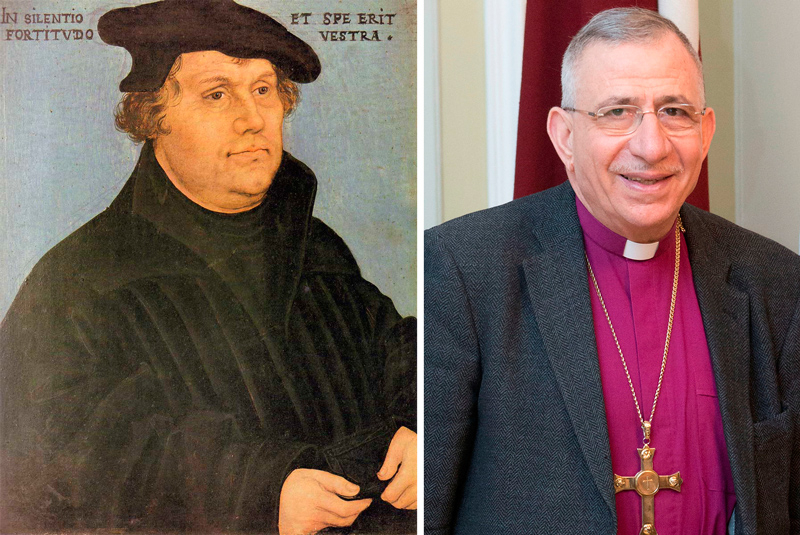
A generation ago, in 1994, the leadership of the Lutheran Church in the US condemned the anti-Semitism of Church founder Martin Luther (left), and expressed its desire to “love and respect” the Jewish people. Today’s president of the Lutheran World Federation, Bishop Munib Younan (right), is known for not upholding the renunciation of anti-Semitism and anti-Israelism.

So who is interested in the anti-Semitic Lutheran resolution? The conclusion is that all those are cheerful about this resolution who like to see Israel disappear, be it with a one- or two-state solution; all those who distribute millions of dollars to Hamas in Gaza to enable the destruction of Israel while the intended recipients — namely the children in Gaza — remain deprived; all those who turn a blind eye to the education of Palestinian children in summer camps and schools where they are taught to murder Jews and to destroy the allegedly non-existent State of Israel; all those who fail to put the record straight about the just and right support that many Israelis give to Palestinians. Those are the ones who are listening to the ELCA resolutions.

Even if the democratically elected political structures do not pay much attention to fringe groups such as the ELCA assembly, such resolutions might gain momentum. Anti-Israel NGOs might be invigorated and the undecided might get encouraged to jump on the bandwagon. Once before, Lutherans were influential in tilting the scale against the Jews, as the ELCA declaration of 1994 said with remorse:

“Lutherans belonging to the Lutheran World Federation and the Evangelical Lutheran Church in America feel a special burden in this regard because of certain elements in the legacy of the reformer Martin Luther and the catastrophes, including the Holocaust of the twentieth century, suffered by Jews in places where the Lutheran churches were strongly represented.”

While politicians might be able to afford to ignore old-fashioned and outdated resolutions on Israel and continue with their business as usual, the good leadership of the Lutheran Churches worldwide should not. There are the examples of inspiring Lutheran leaders such as Bishop Brakemeier and Bishop Chilstrom. Do they still have followers in the Lutheran church? Is there outrage from Lutheran Church leaders in Europe and Lutheran lay people about the anti-Semitism presented by the Isaiah 58 group and its (many synod) followers? Is there anybody who will take to task the ELCA leaders who, in order to broaden anti-Israel manipulation, called on the US government not to prevent the application of the State of Palestine for full membership in the UN and, in coordination with the UN Security Council,

“to offer a new, comprehensive and time-bound agreement to the governments of Israel and Palestine, resulting in a negotiated final status agreement between Israel and Palestine leading to two viable and secure states with a shared Jerusalem.”

All this is known Arab Muslim parlance on the floors of the UN. But now, it is not meek and just to demand a return to proper Church language, to the good use of the church as a place of divine worship and of “action of God’s grace” which, by the way, in Christian thought includes Israel?

Such would be a way to put Luther’s old anti-Semitism to sleep again.

Rev. Dr. Petra Heldt is Director of the Ecumenical Theological Research Fraternity, Jerusalem.

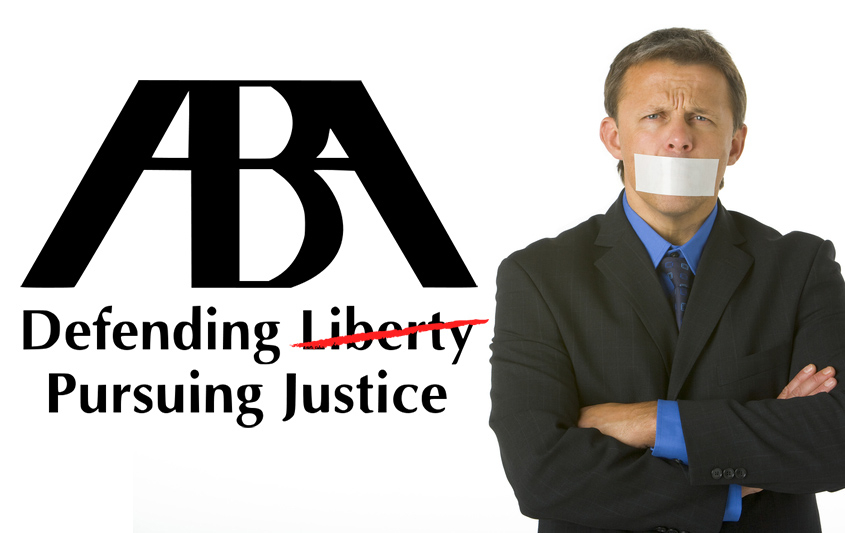
Look Who Is Gutting the First Amendment! by Johanna Markind

  • “The [American Bar Association] wants to do exactly what the text calls for: limit lawyers’ expression of viewpoints that it disapproves of. … state courts and state bars should resist the pressure to adopt it.” — Eugene Volokh, UCLA law professor and Washington Post columnist.

  • The language of Resolution 109 is “so broad it could mean anything… a kind of a speech code that restricts perfectly acceptable speech… anything you say might offend someone and therefore you can be punished for it.” — Ilya Shapiro, Cato Institute.
  • The ABA declined to answer questions for this article, as did the American Civil Liberties Union (ACLU). The ACLU, which calls itself “our nation’s guardian of liberty,” and touts itself as fighting for “your right… to speak out – for or against – anything at all,” has not issued any statements or press releases about the model rule revision.

The struggle between free speech and speech codes that are intended to prevent harassment and discrimination appears set to leap from college campuses to law offices around the United States.

On August 8, 2016, the American Bar Association (ABA) approved resolution 109, which curtails freedom of speech. The approved resolution amended its model rule of professional conduct 8.4. It prohibits

“conduct that the lawyer knows or reasonably should know is harassment or discrimination on the basis of race, sex, religion, national origin, ethnicity, disability, age, sexual orientation, gender identity, marital status or socioeconomic status in conduct related to the practice of law.”

The official comment explains:

“discrimination includes harmful verbal or physical conduct that manifests bias or prejudice towards others. Harassment includes sexual harassment and derogatory or demeaning verbal or physical conduct.”

The model rule is non-binding, but has potentially great influence on professional conduct rules that state courts require lawyers to follow. Should state courts adopt the change, lawyers found to violate it could be sanctioned and possibly disbarred. Because professional rules are legally binding on lawyers, the prospect that states may regulate “verbal conduct” implicates First Amendment concerns.

The ABA declined to answer questions for this article, as did the American Civil Liberties Union (ACLU). The ACLU, which calls itself “our nation’s guardian of liberty,” and touts itself as fighting for “your right… to speak out – for or against – anything at all,” has not issued any statements or press releases about the model rule revision.

Ilya Shapiro, Cato Institute’s senior fellow in constitutional studies and editor-in-chief of Cato’s Supreme Court Review, views the ABA resolution as “a kind of a speech code that restricts perfectly acceptable speech. It’s like safe spaces on college campuses, where anything you say might offend someone and therefore you can be punished for it.”

Many American colleges, motivated at least partly by a desire to protect members of growing minority populations on campus, have adopted speech codes. The codes have arguably fostered a culture chilling free speech, enabling people who claim offense to shut down dissenting voices. The past two years, for example, have witnessed members of a student government impeached for wearing mini-sombreros to a tequila-themed party, a college master hounded into resigning for publicly disagreeing with a college’s cautionary note not to don offensive Halloween costumes, and a professor accused of racism and pressured into taking a sabbatical for supporting the state of Israel’s fight against a recognized terrorist organization.

Paul Kazaras, assistant executive director and staff counsel to the professional guidance commission of the Philadelphia Bar Association, agrees that college speech codes are problematic, but says:

“I think this [ABA resolution] is something fundamentally different. We are talking about a profession having ethical rules that already restrict lawyers, and what’s more, Pennsylvania’s Constitution gives its Supreme Court the authority to regulate the practice of law. There needs to be a way to make sure lawyers act ethically.”

Kazaras believes the change is needed to address bias that is still pervasive in some places, which has “no place in a professional world.” By adding an affirmative duty to lawyers’ ethical obligations, Kazaras says, junior lawyers and other law office employees have a needed tool to cope with special hardships they face in rectifying harassment. According to Kazaras,

“In most workplaces, if a senior manager harasses someone below him/her, the victim can complain through HR [human resources]. HR will then approach the manager and explain, ‘You can’t do this anymore.’ That doesn’t fit within law firm culture. It’s hard for a woman, person of color, person with disabilities, etc., to say, ‘You can’t treat me that way.'”

Laws already exist regulating the work environment, Kazaras notes, and adds, “I think compliance with the new ethics rule should in fact lower the instances of litigation by employees against law firms, and that is a good thing.”

Ilya Shapiro acknowledges that lawyers are already restricted by special rules — for instance, rules limiting lawyers’ speech by requiring them to be courteous to opposing counsel and parties — but believes the proposed model rule change “goes far beyond any existing ethical guidelines. I think it’s a much bigger step” than existing rules, says Shapiro, “like boiling a frog.”

Shapiro believes the revision also “goes far beyond existing employment laws barring harassment.” Workplace harassment, Shapiro explains, “is limited to conduct so offensive and pervasive that it creates a hostile work environment.” By contrast, the language of Resolution 109 is “so broad it could mean anything.” If someone believes he or she is being harassed, Shapiro argues, that person might be able to make a colorable claim under the model rule.

Eugene Volokh, a UCLA law professor who authors a Washington Post column on free speech issues, has written that the new model rule is significantly broader than existing workplace harassment laws, both in terms of what statements are covered, and in what settings they may be prohibited. For example, he fears that a lawyer presenting at a continuing legal education (CLE) program, who makes a statement critical of, say, homosexuals or Muslims in the course of the program, may thereby violate professional rules based on the new ABA guideline.

Kazaras, a longtime ethics consultant for the Philadelphia Bar Association, doubts statements made for the purpose of instruction during a CLE program could lead to liability.

Regardless of how that particular issue plays out, Volokh infers from the fact that the ABA moved ahead and adopted the new model rule, despite the many objections raised, “that the ABA wants to do exactly what the text calls for: limit lawyers’ expression of viewpoints that it disapproves of.” State courts and state bars, Volokh writes, “should resist the pressure to adopt it.”

Johanna Markind is an attorney who writes about public policy and criminal justice.

Loni ntiyemera Repuburika y’u Rwanda ibice byose.


Mu kiganiro ikinyamakuru Inyangenews cyagiranye na bwana Iryumugabe Faustin umunyamabanga mukuru wa ( Rwandes Democratic Monarchy)  twabagejejeho mu nkuru zacu z’ubushize, twababwiye ko tuzakomeza kubagezaho igice cya kabiri.

… tubabajwe n’uburyo abakoroni bihaye kwirukana umwami bagaharika inzego ze zose akamburwa ububasha bwe ntampamvu (Notes with regret that the Administering Authority has arbitrarily suspended the power of the Mwami of Ruanda and has not allowed him to return to Rwanda to resume his duties as Mwami)”- Loni.

Inyangenews: Muteganya ko Umwami azaba yageze mu Rwanda ryari?

Iryumugabe Faustin: Icyo n’ikibazo kigoye gusubiza aka kanya, ariko na none cyoroshye, icyo nakubwira n’uko Umuryango RDM uri gukora ibishoboka byose ngo Umwami w’u Rwanda asubire mu gihugu cye, ndetse n’Ubwami bugendera ku itegeko nshinga bwongere buyobore u Rwanda, kuko ari wo muti wonyine u Rwanda rusigaranye, uhereye kubibazo abanyarwanda bafite ubungubu bagiye baterwa n’abanyapolitiki batandukanye.

Nk’uko nabikubwiye mbere, Repuburika y’u Rwanda ntiyagiyeho mu buryo butemewe gusa, ahubwo yakoze n’ibibi byishi byatumye u Rwanda rutakaza byishi, birimo abantu, umuco, ubumuntu n’umubupfura, u Rwanda rwahoranye, aribwo bwaturindaga gukora ikibi, tukagira kirazira, yatumaga umuntu adakora ikizira,ntahemukire mugenzi we nk’uko ubu bisigaye bikorwa mu Rwanda. Gutakaza rero uyu mwimerere nyarwanda byatumye u Rwanda ruhura n’amahano rwahuye nayo twese tuzi arimo ubwicanyi bwabaye akarande mu Rwanda.

  • Inyangenews: Ushatse kuvuga ko ubwicanyi bwatewe no kutagira Ubwami?

Iryumugabe Faustin: Kimwe nakubwira n’uko iyo Umwami aza kuba ariwe mukuru w’u Rwanda, amahame n’ishingano z’Ubwami zikubahirizwa nk’uko zahoze ataravangirwa n’abazungu, ntabwo ubwicanyi abanyarwanda bahuye nabwo bwari gushoboka. Impamvu ninyishi ariko iyi ngenzi n’uko abanyapolitiki aribo batumye abanyarwanda bacikamo ibice, kuko kuva repuburika yajyaho, bagiye bitwaza ubwoko bwabo mu kwikubira ububasha bwo kuyobora igihugu, bityo bakongera amacakubiri mu banyarwanda aribyo ubona bitugejeje aha, ugiyeho wese arangwa no gutoteza abaturage agamije kurengera inyungu ze, ariko kuva u Rwanda rwa yoborwa n’Ubwami imyaka myishi cyane nta muntu wari wapfa azira ko ari umuhutu cyagwa umututsi, ibyo byazanywe na Repubulika.

Kuko Umwami atagira ubwoko n’ishyaka kandi akaba adashobora kwemera ko abanyarwanda bacikamo ibice, kuko atari umunyapolitiki kandi ikibazo cy’ubwicanyi kikaba cyarazanywe n’abaharanira inyungu zabo bwite bitwaje kugira imyanya runaka muri politiki. Iki kibazo cy’ubwicanyi nticyari kubaho, iyo aza kuba ariwe uyoboye u Rwanda. Kuko kuva cyera Umwami aharanira icyateza imbere buri munyarwanda atavanguye.

Inyangenews: Ko uvuze ko umwami atari umunyapolitiki, azayobora u Rwanda gute?

Iryumugabe Faustin: Nagusobonuriye kare ko Ubwami ari ubutuma abanyapolitiki badakoresha ububasha bwabo kugirango bakandamize abaturage, kuko akeshi abanyapolitiki aribo bitwaza inyungu bwite zabo bakabangamira rubanda, bashaka ko baguma kubutegetsi kungufu, batitaye kuburenganzira bwabo bayoboye, ikibashimisha n’uko bagumana ubutetsi kabone n’iyo baba abo bayoboye bari kungoyi cyangwa bicwa nk’uko twakunze kubibona mu gihugu cyacu.

Inyangenews : N’iki Umwami azakora kugirango abanyapolitiki batabangamira abaturage.

Iryumugabe Faustin: Umwami w’u Rwanda namara kugera mu Rwanda azasubirana ububasha bwe nk’uko yarahiye kuba Umwami ugenda ku itegeko nshinga (Constitutional Monarchy), n’ukuvuga ko u Rwanda ruzaba rufite Ubwami n’uwo twita Minisitiri w’intebe. Umwami azaba ariwe urinda ubusugire bw’itegeko nshinga u Rwanda ruzagenderaho, abe kandi umukuru w’ikirenga w’ingabo. Minisitiri w’intebe niwe uzayobora guverinoma atorwa n’abaturage, ava mu mashyaka atandukanye aba yiyamamaje, Umwami aharanire ko ibyo abaturage bitoreye “ Itegeko nshinga” ridakoreshwa n’abanyapolitiki mu kubangamira inyungu z’abaturage, kandi n’ingabo z’igihugu zidakoreshwa nabo, mu nyungu zabo bwite. Ni ukuvuga ko aho yava hose ntacyo aba atwaye abaturage kuko azakora ibiri mu itegeko nshinga abaturage bitoreye kandi adafite ububasha bwo kurihindura uko shatse nk’uko bikorwa ubu, ntampungenge zo kurwanira ubutegetsi ku bwoko runaka nk’uko byakunze gukorwa mu Rwanda.


Inyangenews: Ubwo se narinda itegeko nshinga ry’u Rwanda ndetse akaba n’umugaba mukuru w’ikirenga w’ingabo ntazaba yinjiye muri politiki?


Iryumugabe Faustin: Oya, Umwami ntabwo azaba abaye umunyapolitiki nk’uko ubivuga, ahubwo impamvu yo kurinda itegeko nshinga n’uko ari ryo abanyapolitiki bakomeza guhindura uko bashatse bagamije kwigwizaho ububasha mu rwego rwo gushaka inyungu zabo bwite zitagize aho zihuriye n’inyungu z’abaturage.

Umwami rero kuko ariwe uzaba ufite ububasha burinda itegeko nshinga,azahora ariwe ureba ko rigumana umwimerere waryo cyangwa se rihindurwa munyungu z’abaturage atari inyungu z’abanyapolitiki, nkuko byakunze kugaragara ko abanyapolitiki bakoresha itegeko nshinga mu kubangamira abaturage. Ndagirango nkwibutse ko Umwami atagira ishyaka, iryo ariryo ryose aba abogamiyeho, ahubwo we yubaha ibyo abaturage batoye kandi akaba umurinzi wabyo, ahora afite ijisho rikomeye kunyungu z’abaturage, areba ko zidahungabana.

Naho kuba ariwe mugaba mukuru w’ikirenga w’ingabo, n’uko byagaragaye ko umunyapolitiki wese ushatse kubangamira abaturage no kubatoteza yifashisha ingabo. Ingero ninyishi z’ukuntu ingabo zagiye zikoreshwa mu kurenganya abaturage, duhereye kuva Repuburika yashingwa, nizo zakoresheje abasirikare ( ingabo) mu kwica abaturage bituma abari bashizwe kurinda abaturage babahukamo bakabica. Kugeza ubu kuva Repuburika zajyaho nta ngoma nimwe itaregwa kwica abaturage bari bashinzwe kurinda.

Igitera ibi byose n’uko ububasha ku ngabo buri mu maboko yabo banyapolitiki badafite ubushake bwo kurinda abaturage nk’uko itegeko shinga rivuga, ahubwo bafite inyota yo kugera kunyungu zabo bwite bagakoresha ingabo ngo zibafashe kurenganya abaturage.Umwami rero azaba afite ububasha ku ngabo butuma umunyapolitiki washaka kuzikoresha nabi bitamushobokera.

Inyangenews: Ubwami buzasubiraho bute ko abanyarwanda bamaze gutora itegekoshinga ryabo .

Iryumugabe Fastini: Ntabwo abanyarwanda bigeze bagira uruhare rwo guhitamo ubutegetsi bazagenderaho, kuko ubwo bagenderaho uyu munsi atari ubwo bihitiyemo nk’uko nabikubwiye, ahubwo n’ubwo bahitiwemo n’abazungu bari bakoronije u Rwanda,nk’uko imyanzuro ya Loni itandukanye uhereye 1579, 1580, 1605 n’iyindi yabaye mu myaka ya za 1960 ibivuga, Abakoroni birukanye Umwami w’u Rwanda ngo babone uko bashyiraho Repuburika, ariko si abanyarwanda bayihisemo. Ubwo burenganzira rero Umwami w’u Rwanda yambuwe n’abakoroni ndetse n’ubwo abaturage babanyarwanda bavukijwe bwo kwihitiramo ubuyobozi bashaka n’ibwo RDM iharanira gusubiza abanyarwanda.

Umwami n’amara gusubizwa mu Rwanda amaze gusubizwa ububasha bwe, hazategurwa Kamarampaka ihuriweho n’abanyarwanda, bahitemo icyo bashaka ko cyabafasha kandi kibabereye cyatuma bagira amahoro badahatiwe, cyangwa ngo habeho guhezwa kw’abanyarwanda bamwe mu matora.

Byaruhanga I.

  • Loni ntiyemera Repuburika y’u Rwanda igice cya 2
Mu kiganiro ikinyamakuru Inyenyerinews cyagiranye na bwana Iryumugabe Faustini umunyamabanga mukuru wa RDM (Rwandese Democratic Monarchy) RDM twabagejejeho mu nkuru zacu z’ubushize, twababwiye ko tuzakomeza kubagezaho igice cya kabiri.

Inyangenews: Muteganya ko Umwami azaba yageze mu Rwanda ryari?

Iryumugabe Faustin: Icyo n’ikibazo kigoye gusubiza aka kanya ariko nanone cyoroshye, icyo nakubwira n’uko Umuryango RDM uri gukora ibishoboka byose ngo Umwami w’u Rwanda asubire mu gihugu, ndetse n’Ubwami bugendera ku itegeko nshinga bwongere buyobore u Rwanda, kuko ari wo muti wonyine u Rwanda rusigaranye, uhereye kubibazo abanyarwanda bafite ubungubu bagiye baterwa n’abanyapolitiki batandukanye.

Nk’uko nabikubwiye mbere, Repuburika y’u Rwanda ntiyagiyeho mu buryo butemewe gusa, ahubwo yakoze n’ibibi byishi byatumye u Rwanda rutakaza byishi, birimo abantu, ubumuntu n’umubupfura u Rwanda rwahoranye, aribwo bwaturindaga gukora ikibi, tukagira kirazira, yatumaga umuntu adakora ikizira,ntahemukire mugenzi we nk’uko ubu bisigaye bikorwa mu Rwanda. Gutakaza rero uyu mwimerere nyarwanda byatumye u Rwanda ruhura n’amahano rwahuye nayo twese tuzi arimo ubwicanyi bwabaye akarande mu Rwanda.

Inyangenews: Ushatse kuvuga ko ubwicanyi bwatewe no kutagira Ubwami?

Iryumugabe Faustin: Kimwe nakubwira n’uko iyo Umwami aza kuba ariwe mukuru w’u Rwanda, amahame n’ishingano z’Ubwami zikubahirizwa nk’uko zahoze ataravangirwa n’abazungu, ntabwo ubwicanyi abanyarwanda bahuye nabwo bwari gushoboka. Impamvu ninyishi ariko iyi ngenzi n’uko abanyapolitiki aribo batumye abanyarwanda bacikamo ibice, kuko kuva repuburika yajyaho, bagiye bitwaza ubwoko bwabo mu kwikubira ububasha bwo kuyobora igihugu, bityo bakongera amacakubiri mu banyarwanda aribyo ubona bitugejeje aha, ugiyeho wese arangwa no gutoteza abaturage agamije kurengera inyungu ze, ariko kuva u Rwanda rwa yoborwa n’Ubwami imyaka myishi cyane nta muntu wari wapfa azira ko ari umuhutu cyagwa umututsi, ibyo byazanywe na Repubulika.

Kuko Umwami atagira ubwoko n’ishyaka kandi akaba adashobora kwemera ko abanyarwanda bacikamo ibice, kuko atari umunyapolitiki kandi ikibazo cy’ubwicanyi kikaba cyarazanywe n’abaharanira inyungu zabo bwite bitwaje kugira imyanya runaka muri politiki. Iki kibazo cy’ubwicanyi nticyari kubaho, iyo aza kuba ariwe uyoboye u Rwanda. Kuko kuva cyera Umwami aharanira icyateza imbere buri munyarwanda atavanguye.

Inyangenews: Ko uvuze ko umwami atari umunyapolitiki, azayobora u Rwanda gute?

Munyeragwe: Nagusobonuriye kare ko Ubwami ari ubutuma abanyapolitiki badakoresha ububasha bwabo kugirango bakandamize abaturage, kuko akeshi abanyapolitiki aribo bitwaza inyungu bwite zabo bakabangamira rubanda, bashaka ko baguma kubutegetsi kungufu, batitaye kuburenganzira bwabo bayoboye, ikibashimisha n’uko bagumana ubutetsi kabone n’iyo baba abo bayoboye bari kungoyi cyangwa bicwa nk’uko twakunze kubibona mu gihugu cyacu.

Inyangenews: N’iki Umwami azakora kugirango abanyapolitiki batabangamira Abaturage. Umwami w’u Rwanda namara kugera mu Rwanda azasubirana ububasha bwe nk’uko yarahiye kuba Umwami ugenda ku itegeko nshinga (Constitutional Monarchy), nukuvuga ko u Rwanda ruzaba rufite Ubwami n’uwo twita Minisitiri w’intebe. Umwami azaba ariwe urinda ubusugire bw’itegeko nshinga u Rwanda ruzagenderaho, abe kandi umukuru w’ikirenga w’ingabo. Minisitiri w’intebe niwe uzayobora guverinoma atorwa n’abaturage, ava mu mashyaka atandukanye aba yiyamamaje, Umwami aharanire ko ibyo abaturage bitoreye “ Itegeko nshinga” ridakoreshwa n’abanyapolitiki mu kubangamira inyungu z’abaturage, kandi n’ingabo z’igihugu zidakoreshwa nabo, mu nyungu zabo bwite. Ni ukuvuga ko aho yava hose ntacyo aba atwaye abaturage kuko azakora ibiri mu itegeko nshinga abaturage bitoreye kandi adafite ububasha bwo kurihindura uko shatse nk’uko bikorwa ubu, ntampungenge zo kurwanira ubutegetsi ku bwoko runaka nk’uko byakunze gukorwa mu Rwanda.

Inyangenews: Ubwo se narinda itegeko nshinga ry’u Rwanda ndetse akaba n’umugaba mukuru w’ikirenga w’ingabo ntazaba yinjiye muri politiki?

Iryumugabe Faustini: Oya, Umwami ntabwo azaba abaye umunyapolitiki nk’uko ubivuga, ahubwo impamvu yo kurinda itegeko nshinga n’uko ari ryo abanyapolitiki bakomeza guhindura uko bashatse bagamije kwigwizaho ububasha mu rwego rwo gushaka inyungu zabo bwite zitagize aho zihuriye n’inyungu z’abaturage.

Umwami rero kuko ariwe uzaba ufite ububasha burinda itegeko nshinga,azahora ariwe ureba ko rigumana umwimerere waryo cyangwa se rihindurwa munyungu z’abaturage atari inyungu z’abanyapolitiki, nkuko byakunze kugaragara ko abanyapolitiki bakoresha itegeko nshinga mu kubangamira abaturage. Ndagirango nkwibutse ko Umwami atagira ishyaka, iryo ariryo ryose aba abogamiyeho, ahubwo we yubaha ibyo abaturage batoye kandi akaba umurinzi wabyo, ahora afite ijisho rikomeye kunyungu z’abaturage, areba ko zidahungabana.

Naho kuba ariwe mugaba mukuru w’ikirenga w’ingabo, n’uko byagaragaye ko umunyapolitiki wese ushatse kubangamira abaturage no kubatoteza yifashisha ingabo. Ingero ninyishi z’ukuntu ingabo zagiye zikoreshwa mu kurenganya abaturage, duhereye kuva Repuburika yashingwa, nizo zakoresheje abasirikare (ingabo) mu kwica abaturage bituma abari bashizwe kurinda abaturage babahukamo bakabica. Kugeza ubu kuva Repuburika zajyaho nta ngoma nimwe itaregwa kwica abaturage bari bashinzwe kurinda.

Igitera ibi byose n’uko ububasha ku ngabo buri mu maboko yabo banyapolitiki badafite ubushake bwo kurinda abaturage nk’uko itegeko shinga rivuga, ahubwo bafite inyota yo kugera kunyungu zabo bwite bagakoresha ingabo ngo zibafashe kurenganya abaturage.Umwami rero azaba afite ububasha ku ngabo butuma umunyapolitiki washaka kuzikoresha nabi bitamushobokera.

Inyangenews: Ubwami buzasubiraho bute ko abanyarwanda bamaze gutora itegekoshinga ryabo .

Iryumugabe Faustin: Ntabwo abanyarwanda bigeze bagira uruhare rwo guhitamo ubutegetsi bazagenderaho, kuko ubwo bagenderaho uyu munsi atari ubwo bihitiyemo nk’uko nabikubwiye, ahubwo n’ubwo bahitiwemo n’abazungu bari bakoronije u Rwanda,nk’uko imyanzuro ya Loni itandukanye uhereye 1579, 1580, 1605 n’iyindi yabaye mu myaka ya za 1960 ibivuga, Abakoroni birukanye Umwami w’u Rwanda ngo babone uko bashyiraho Repuburika, ariko si abanyarwanda bayihisemo. Ubwo burenganzira rero Umwami w’u Rwanda yambuwe n’abakoroni ndetse n’ubwo abaturage babanyarwanda bavukijwe bwo kwihitiramo ubuyobozi bashaka n’ibwo RDM iharanira gusubiza abanyarwanda.

Umwami n’amara gusubizwa mu Rwanda amaze gusubizwa ububasha bwe, hazategurwa Kamarampaka ihuriweho n’abanyarwanda, bahitemo icyo bashaka ko cyabafasha kandi kibabereye cyatuma bagira amahoro badahatiwe, cyangwa ngo habeho guhezwa kw’abanyarwanda bamwe mu matora.

Byaruhanga I.


Loni ivuga ko Repubirika y’u Rwanda iriho mu buryo bunyuranyije n’itegeko.
 

Mu kiganiro umunyamakuru w’ikinyamakuru Inyenyerinews.com yagiranye n’umunyamabanga mukuru w’umuryango uharanira kugarura ubuyobozi bugendera ku Bwami bushingiye ku itegeko-nshinga, na demokarasi (Constutional Monarchy),  RDM mu magambo ahinnye y’icyongereza,  bwana Iryumugabe Faustin, yatubwiye mu ikiganiro kirambuye amavu n’amavuko y’icyo bagamije ndetse n’impamvu yatumye bafata uwo mugambi wo kugarura Ubwami mu Rwanda.

Muri iki kiganiro twagiranye kuri telephone, cyafashe hafi amasaha atatu, Munyeragwe yatubwiye mu magambo maremare ko biteguye kandi umugambi wabo bazawugeraho vuba. Muri iki kiganiro twagiranye turatangaza igice cyacyo cya mbere ikindi kizakomeza ubutaha:
Inyangenews:
RDM  ni muryango ki?

Iryumugabe Faustin: Ni umuryango nyarwanda  ugamije guharanira itahuka ry’Umwami w’u Rwanda,guca burundu ubuhunzi kubanyarwanda no gusubizaho ubwami mu Rwanda bugendera kw’Itegeko nshinga, nukuvuga bugendera kuri demokarasi nk’ibindi bihugu byagize amahirwe yo kutagira ababangamira umuco gakando wabyo, nk’Ubwongereza, n’ibindi bihugu byishi biyobowe muri ubwo buryo.

Inyangenews: Umuryango RDM waba warashinzwe ryari?
Iryumugabe Faustin:
Washinzwe mu mwaka 2011, ufite ikicaro cyawo I London mu Bwongereza, ufite n’Amashimi  ku isi hose cyane ukaba ukorera mu bihugu bikorera mu biyaga bigri.

Inyangenews:Ese ko leta y’u Rwanda  iyobowe na Perezida Paul Kagame yasabye ko Umwami yataha agahabwa ibijyenerwa uwigeze kuba umukuru w’Igihugu ,kuki adataha?
Iryumugabe Faustin:
Abanyapolitiki bamwe b’u Rwanda na perezida Kagame abarimo birengagije nkana  ko Nyagasani Umwami w’u Rwanda KIGELI  V Ndahindurwa atigeze akurwaho n’Abanyarwanda baba abahutu ,Abatutsi cyagwa Abatwa, ahubwo yakuweho na  kudeta yakozwe n’Ababirigi.

Ibi bigaragarizwa mu mwanzuro wa LONI No:1580 wo kuwa 20/12/1960 wasabaga ko Ababirigi bareka umwami agataha agakomeza imirimo ye nk’Umukuru w’Igihugu,bakareka  n’Abanyarwanda ba batutsi bari bamaze guhunga igihugu  bameneshejwe n’Ababirigi, ko bagaruka mu gihugu kugirango habe Kamarampaka yagombaga kwemeza ko u Rwanda ruyoborwa  muburyo bw’Ubwami bugendera kw’Itegekonshinga.
Nyuma yaho Ababirigi bari bamaze kubona ko ubwo buryo bukubiyemo demokarasi imeze nk’iy’iwabo, bakabona abanyarwanda barikongera bakaba bamwe nkuko byari bimeze Ababirigi bataraza mu Rwanda mbere y’umwaka w’1919, bahisemo kwanga ko umwanzuro wa Loni 1580 ushyirwa mubikorwa.
Mu byukuri twe twemera ko Umwami w’u Rwanda ko akiri Umukuru w’u Rwanda kuku ntabwo ari abanyarwanda bamukuyeho, kandi ntabwo Ababirigi aribo bahitirimo abanyarwanda icyo bashaka.Ikibazo cyo gutaha k’Umwami wâ u Rwanda akaba atari ikibazo cye n’Umwami KIGELI V Ndahindurwa ahubwo n’ikibazo cya rubanda rwe(Abahutu,Abatutsi,n’Abatwa) kuko niwe mizero y’Igihugu Abanyarwanda basigaranye.

Byaruhanga I

inyangenewsinfo@gmail.com

Translate »
Skip to toolbar