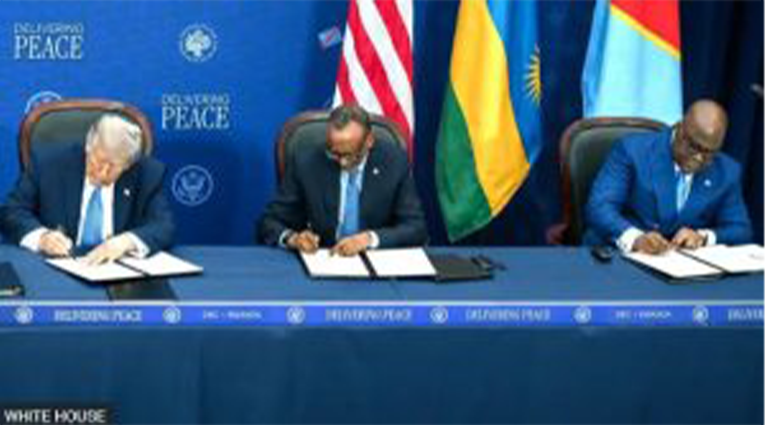


Nimutampa ubutegetsi vuba murajyanwa mu butayu bugufiya kandi muzabuheramo!!!

Nimutampa ubutegetsi vuba murajyanwa mu butayu bugufiya kandi muzabuheramo!!!

Ndababwiza ukuli yuko Paul Kagame araza gusara mu gihe America ikomeje gufunga inzira zose zishoboka zirimo amayeri yo kurwana intambara muri DRCongo kugirango bafate ubutegetsi. Uwiteka Imana Nyiringabo yababwiye kurekura imfungwa zose More »

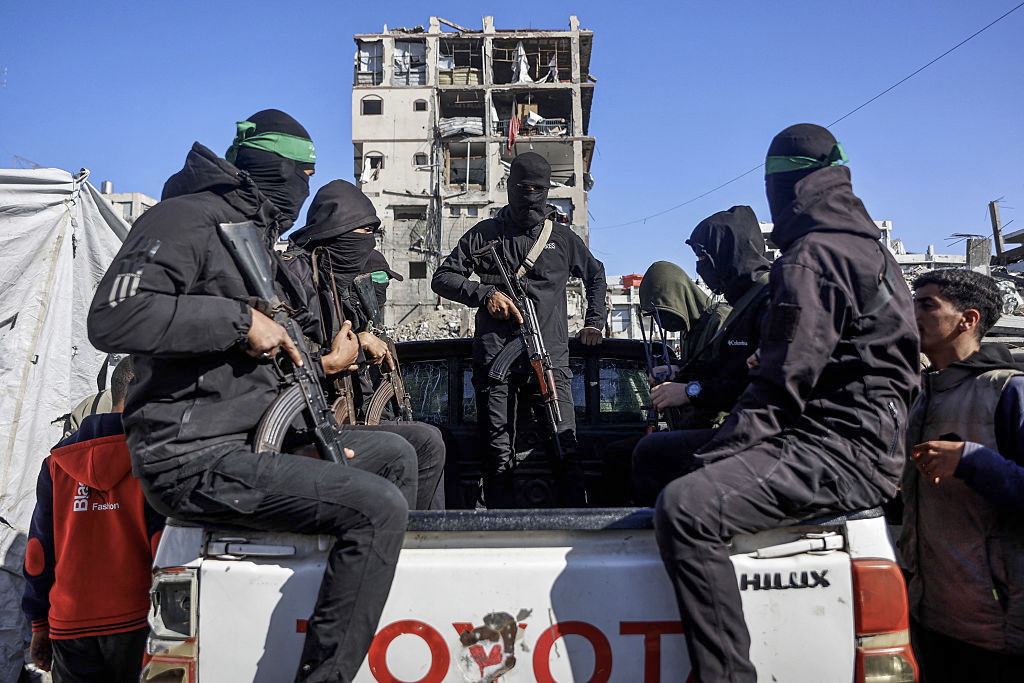
The World’s Shameful Silence on Hamas

The World’s Shameful Silence on Hamas

Six months after the ceasefire went into effect in the Gaza Strip, Hamas remains firmly in power. Despite international promises, diplomatic initiatives, and the much-publicized “Board of Peace,” the Iran-backed Islamist group More »

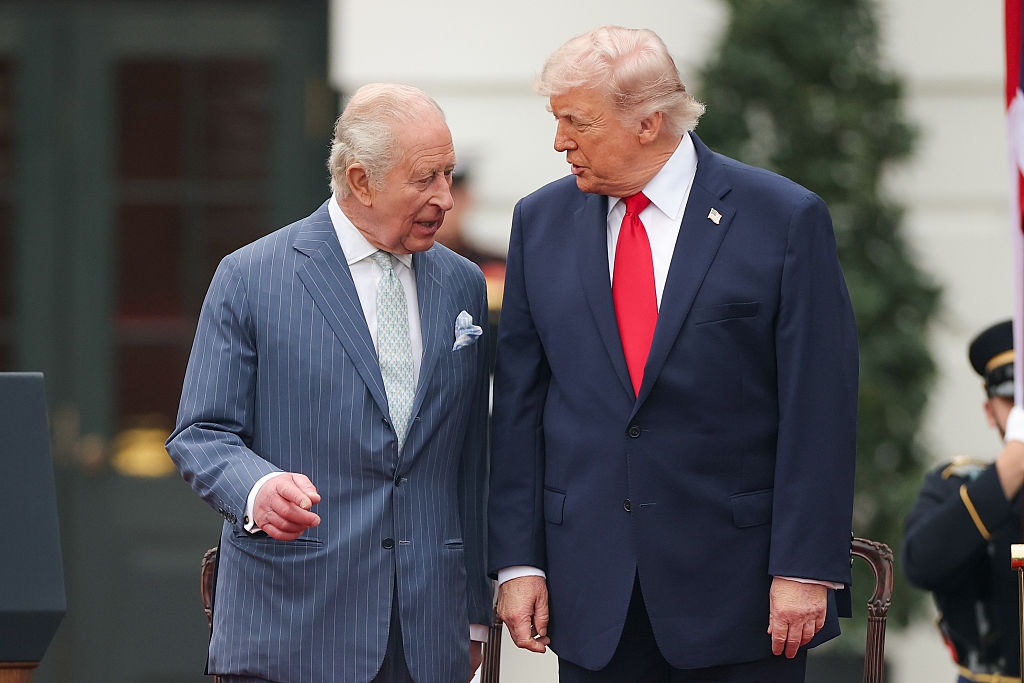
The Crown’s Moral Voice: King Charles in Washington and the Test of Western Clarity

The Crown’s Moral Voice: King Charles in Washington and the Test of Western Clarity

[P]arts of the West have become too cautious in naming the nature of the threats they face. The question is whether, at a time when the West is confronted by terrorism, tyranny, More »

Uwiteka Imana Nyiringabo ategeka ko Paul Kagame atazabona umusimbura ku ngoma uturuka mu muryango we!!!

Uwiteka Imana Nyiringabo ategeka ko Paul Kagame atazabona umusimbura ku ngoma uturuka mu muryango we!!!

Ijambo ry’Uhoraho Uwiteka Imana Nyiringabo rikomeza kunzaho cyane, maze rirambwira riti, mwana w’umuntu, wisubizemo imbaraga ukomeze umurimo wa data wo mu ijuru kuko abakugambanira nta bwo bafite ububasha bwo ku kugeraho kuko More »


Israel Rejects French Threat to Recognize ‘State of Palestine’

Israel said it refuses to negotiate under ultimatum in response to France’s threat, despite the wave of Palestinian terror, to recognize the “state of Palestine.”


France will recognize a Palestinian state if its efforts to revive Israeli-Palestinian peace talks at an international conference fail, Foreign Minister Laurent Fabius said Friday.

He told French diplomats that the conference will aim to bring together the two parties and their American, European and Arab partners in order “to make happen a two-state solution.”

If this attempt faces a deadlock, Fabius said, France will have to recognize a Palestinian state.


“This is not how one conducts negotiations and not how one makes peace,” the Israeli Prime Minister’s Office stated, Ha’aretz reported. Many in government circles say this latest ultimatum to Israel encourages the Palestinian Authority (PA) to be unbending in its demands, according to unnamed sources.

The French threat to Israel was made amidst a wave of Palestinian terror against Jews in Israel, in which 29 victims have been killed and close to 300 wounded – 25 seriously.

baby who lost leg in terror attack

18-month-old Yotam Sitbon lost his leg when a Palestinian terrorist rammed his car into pedestrians in Jerusalem in December. (Courtesy)

Prime Minister Benjamin Netanyahu has repeatedly invited PA Chairman Mahmoud Abbas to resume negotiations, but to no avail. Instead, he has been making unilateral moves to force a solution upon Israel, and his government has been inciting terror.

Fabius’ announcement comes as the Palestinians, buoyed by the Iran nuclear deal and the start of U.N.-mediated talks on Syria, have been exploring steps that could lead to a two-state solution without direct negotiations, including an international conference and a Security Council resolution that would demand an end to construction of homes in Jewish communities in Judea and Samaria, or what they call “illegal Israeli settlement building.”

“Israel will not negotiate under threat,” Energy Minister Yuval Steinitz stated on Saturday.

Riyad Mansour, the Palestinian U.N. ambassador, told AP: “The Palestinian leadership does welcome the announcement of foreign minister Fabius today in Paris in connection with the convening of an international conference in the next few weeks, and if things fail the recognition of the state of Palestine by France.”

“I think the objective of this conference … has to be to open the process that would lead to the end of the occupation and the preservation of the two-state solution,” he said.

fabius and netanyahu

French Foreign Minister Laurent Fabius (L) with Israeli Prime Minister Benjamin Netanyahu at PM’s residence in Jerusalem in August. (Marc Israel Sellem/GPO/Flash90)

As for recognition, Mansour said, “France promised us some time ago that if there is no opening for a meaningful political process — a collective process that would lead to the end of occupation and independence of the state of Palestine and therefore saving the two-state solution soon — then they will recognize the state of Palestine.”

He said the Palestinians wanted recognition from France “some time ago,” noting that the French parliament has unanimously recommended recognizing the “state of Palestine.”

“And we hope that they do that,” Mansour said. “If they are tying it to the political process, that is their thinking. But eventually if you believe in a two-state solution, then recognizing the state of Palestine is an investment.”

Earlier on Friday, at U.N. headquarters in New York, Mansour said the nuclear talks on Iran and talks on Syria, Yemen and Libya have spurred the Palestinians to seek a broader international framework to try to settle the decades-old conflict with Israel. “This is a new culture — and why shouldn’t that spread to the Palestinian issue?,” he asked.

Mansour said the Palestinians don’t accept that in 2016 “the door is closed” and that nothing can be done to make progress toward a two-state solution because of the U.S. presidential election in November.

He said that’s why he has been engaging all 15 members of the Security Council, including the United States, as well as the U.N. Secretariat and other “friends,” on their readiness to take steps — especially since virtually all members at the last Mideast meeting spoke out against Israeli settlement building.

Mansour commended Secretary-General Ban Ki-moon “for characterizing correctly the settlements as illegal, illegitimate and a major obstacle to peace.” Israel’s Prime Minister Benjamin Netanyahu said Ban’s remarks justify terrorism.

Funeral of terror victim

Relatives and wife of Aharon Yesiab, 32, one of two Israelis killed recently in a terror attack in Tel Aviv, at the funeral. (Gili Yaari/Flash90)

“As oppressed peoples have demonstrated throughout the ages, it is human nature to react to ‘occupation,’” the UN chief said, thereby placing the blame for Palestinian terror on Israeli policies.

“The UN Secretary General’s remarks give a tailwind to terrorism,” Prime Minister Benjamin Netanyahu stated in response. “There is no justification for terrorism. The Palestinian murderers do not want to build a state – they want to destroy a state and they say this openly. They want to murder Jews simply because they are Jews, and they say this openly. They do not murder for peace and they do not murder for human rights.”

Besides a new resolution on settlements and an international conference, Mansour said he has raised the French idea of “a support group” of other countries to promote progress toward peace, an expansion of the Quartet of Mideast mediators — the U.S., U.N., European Union and Russia.

He said adoption of a Security Council resolution would be “a signal” that the council and key world powers want to end the conflict and see an independent Palestinian state.

By: AP and United with Israel Staff

Israel Puts the Spike Missile on its Apache Helicopters by Stephen Bryen and Shoshana Bryen

  • For this reason, Israel concluded that the U.S. under Obama was not a reliable supplier of either helicopters or missiles.Israel’s Spike is superior to the Hellfire. It has longer range, making it safer to use against an enemy that possesses shoulder-fired ground to air missiles.

  • Worse yet, despite Saudi Arabia’s horrible bombing performance in Yemen, the U.S. continues to sell billions of dollars’ worth of weapons and has stepped up shipments of munitions.
  • The Spike is a better option than the Hellfire and safer to use, which is why 25 nations now use the missile and 25,000 or more have been produced.

Sometimes when decisions do not work out exactly as intended, they work out just fine.

In the midst of Operation Protective Edge — Israel’s response to 182 Hamas rockets and mortars fired at Israeli towns and villages in the first week of July 2014 — the Obama administration accused Israel of “heavy handed battlefield tactics,” including the use of artillery instead of precision-guided munitions. U.S. President Barack Obama halted the supply of Hellfire missiles and announced that all military equipment supplied to Israel would be vetted individually in the White House, instead of shipped, according to prior agreements, by the Pentagon to Israel.

The President, it appears, had been reading wild press stories about the damage to Gaza — which ultimately turned out to be concentrated in areas in which Hamas was stockpiling munitions and rockets and conducting command and control operations, which included firing more than 2,700 rockets and missiles during the rest of July. Israel struck an UNRWA-administered school, prompting cries of outrage, but UNRWA later admitted that it covered up that Hamas had used the school for military operations.

The Hellfire decision was especially ironic because it is a precision munition, generally less broadly damaging than bombs dropped from aircraft. The Hellfire can be fired from airplanes, drones and helicopters.

Ironic, too, because the United States has used Hellfire missiles against terrorists — often without the permission of the countries in which the terrorists were killed. A Hellfire was used to kill Anwar al-Awlaki and Samir Kahn, American citizens, in Yemen. Al-Awlaki was designated a terrorist, and Kahn the editor of the al-Qaeda magazine Inspire, but U.S. law may have been violated by their assassination.

Israel carried the Hellfire on its Apache helicopters — and the story of Israel’s purchase of 42 Apaches is also one of difficulty. In 2009, the Obama administration blocked the delivery of six of the Apaches to Israel, on the grounds Israel might use them in Gaza. U.S.-Israel military cooperation on the Apache was made difficult and as Obama’s dislike of Israel and Israeli security policy increased, the Hellfire on the Apache became the White House target.

For this reason, Israel concluded that the U.S. under Obama was not a reliable supplier of either helicopters or missiles. After the 2014 operation in Gaza, Israel turned to the Israeli manufacturer Rafael, developer of the hugely successful and potent Spike anti-tank missile. Rafael was to adapt Spike technology to the Apache, while the helicopter retained Hellfire capability at the same time.

The decision was fairly easy, because Israel was already working on adopting the Spike to helicopters in Europe, where the Spike is a big hit. Spain has already installed the Spike ER version on its Eurocopter Tiger attack helicopters. Others in Europe and Asia are doing the same.
A Tiger attack helicopter carrying two racks of Israeli Spike ER missiles. (Image source: Airbus Helicopters)

Israel’s Spike is superior to the Hellfire. It has longer range, making it safer to use against an enemy that possesses shoulder-fired surface-to-air missiles known as MANPADS. Since Benghazi, sophisticated MANPADS, including US-made Stingers (the same as were used in Afghanistan in “Charlie Wilson’s War”), have been smuggled from Libya and are now in the hands of terrorists including Hezbollah and ISIS.

The Spike features a non-line-of-sight firing capability, making it a more flexible weapon. But one feature of Spike that is entirely missing in Hellfire is that the operator can change target in mid-course or even destroy the weapon in flight if the target turns out to be wrong — a capability that is not trivial. During the Yugoslav war, NATO aircraft on a number of occasions hit targets that should have been aborted. One such incident occurred during an attack to knock out the Grdelica Bridge near Belgrade on April 12, 1999. When the missile was launched, the bridge was empty; when it struck some minutes later a civilian train was crossing and destroyed. On May 1, 1999 in Kosovo, NATO planes hit a bridge at Luzane where, again, a school bus came along after the missile was launched, killing many school children.

The Obama administration should never have cut off the sale of a precision weapon such as the Hellfire in the middle of battle. It was bad policy: it signaled the unreliability of the U.S. at that time as an ally. Worse yet, despite Saudi Arabia’s horrible bombing performance in Yemen, the U.S. continues to sell the Saudis billions of dollars’ worth of weapons, and has stepped up shipments of munitions. So Israelis have reason to believe that America failed her at a moment when it counted.

But there is a silver lining. The Spike is a better option than the Hellfire and safer to use, which is why 25 nations now use the missile and 25,000 or more have been produced.

Stephen Bryen is President of SDB Partners, LLC. Shoshana Bryen is Senior Director of The Jewish Policy Center.


Israel Opening Diplomatic Mission in United Arab Emirates

A step towards full diplomatic ties? Israel will open a diplomatic mission in Abu Dhabi, but will not establish official ties with United Arab Emirates – yet.


Israel is set to establish its first diplomatic presence in Abu Dhabi, the capital of the United Arab Emirates (UAE), albeit not with the UAE itself.

The Israeli office will not formally constitute an Israeli diplomatic representation to the United Arab Emirates, but instead to the United Nations International Renewable Energy Agency (IRENA), which has its headquarters in the Gulf state.

Dore Gold, director-general of Israel’s Foreign Ministry, visited Abu Dhabi earlier last week for three days to discuss the office’s future activities and to finalize the opening of the mission, including meeting with IRENA Director-General Adnan Amin, Israel’s Haaretz reported.

Israeli Ambassador Dore Gold in 1998

Director General of Israel’s Foreign Ministry Dore Gold. (AP Photo/Khue Bui)

The opening of the mission follows a several-year process by Israel to establish a presence in the UAE. In 2009, Israel supported the UAE’s bid to host the headquarters of IRENA with the understanding that it would eventually allow Israel to have a diplomatic presence in the Gulf State.

The 2010 assassination of Hamas member Mahmoud Al-Mabhouh in Dubai, which the UAE blamed on Israel, set back the process.

In January 2010, Israel’s Minister of National Infrastructure Uzi Landau attended a renewable energy conference in Abu Dhabi. He was the first Israeli minister to ever visit UAE.

Israel will be the only country in the 145-member IRENA that will have its diplomatic mission in Abu Dhabi accredited solely to IRENA. Israel will not fly its flag, but inside its offices it will display the state’s symbols.

Israel and the United Arab Emirates do not have diplomatic relations. The UAE does not recognize Israel as a state. At the same time, the Palestinian Authority (PA) maintains a consulate general in Dubai and an embassy in Abu Dhabi. The UAE maintains a representative office in Ramallah.

Israel’s mission will be unique when it comes to the workings of IRENA, which normally hosts foreign officials on temporary visits for specific conferences. In this case, Israel is likely expecting to turn its official IRENA representation into an unofficial embassy in Dubai, albeit without a corresponding representative in Israel.

However, the UAE government said it does not plan to change its relationship with Israel any time soon.

“The International Renewable Energy Agency is an international, independent agency that works according to the laws, regulations and norms that govern the work of such organizations. Any agreement between IRENA and Israel does not represent any change in the position of the UAE or its relations with Israel,” UAE Foreign Ministry’s Director of Communications Maryam Al Falasi said on Friday.

Al Falasi stated that missions accredited to IRENA are limited to dealings with agency business, nothing more. “They do not, under any circumstances, cover any other activities and do not involve any obligation upon the host country with regards to its diplomatic relations or any other relations,” she said.

The IRENA itself stated that “under the agreement, the work of member missions is confined to engagement with the agency in implementation of its work program focused on the uptake of renewable energy, and bears no implication on the relation between the member of IRENA and the host country.”

By: JNS.org and JNI.Media

Bring Chanukah Joy to Israeli Soldiers – Say Thank You!

We are honored to thank the young men and women of the IDF who risk their lives every day to protect and defend the citizens of Israel. Join us in sending winter care packages (and personal notes of support) to Israeli soldiers who are out in the cold all day long.

Warm up a soldier’s heart with essential winter wear including a fleece jacket, hat, gloves and neck warmer. Keep an entire unit warm by ordering 10 packages! The soldiers greatly appreciate your love and concern.

Send a gift and write your personal message to a soldier today!

Click Here to Send Your Gift to Israeli Soldiers

Israel Does Not Cause Anti-Semitism by Alan M. Dershowitz

In a recent letter to the New York Times, the current Earl of Balfour, Roderick Balfour, argued that it is Israel’s fault that there is “growing anti-Semitism around the world.”


Balfour, who is a descendent of Arthur Balfour, the British Foreign Secretary who wrote the Balfour Declaration a hundred years ago, wrote the following: “the increasing inability of Israel to address [the condition of Palestinians], coupled with the expansion into Arab territory of the Jewish settlements, are major factors in growing anti-Semitism around the world.” He argued further that Prime Minister Benjamin Netanyahu “owes it to the millions of Jews around the world” who suffer anti-Semitism, to resolve the Israel-Palestine conflict.

This well-intentioned but benighted view is particularly ironic in light of the fact that the Balfour Declaration had, as one of its purposes, to end anti-Semitism around the world by creating a homeland for the Jewish people. But now the scion of Lord Balfour is arguing that it is Israel that is causing anti-Semitism.

Roderick Balfour’s views are simply wrong both as a matter of fact and as a matter of morality. Anyone who hates Jews “around the world” because they disagree with the policy of Israel would be ready to hate Jews on the basis of any pretext. Modern day anti-Semites, unlike their forbearers, need to find excuses for their hatred, and anti-Zionism has become the excuse de jure.

To prove the point, let us consider other countries: has there been growing anti-Chinese feelings around the world as the result of China’s occupation of Tibet? Is there growing hatred of Americans of Turkish background because of Turkey’s unwillingness to end the conflict in Cypress? Do Europeans of Russian background suffer bigotry because of Russia’s invasion of Crimea? The answer to all these questions is a resounding no. If Jews are the only group that suffers because of controversial policies by Israel, then the onus lies on the anti-Semites rather than on the nation state of the Jewish people.

Moreover, Benjamin Netanyahu’s responsibility is to the safety and security of Israelis. Even if it were true that anti-Semitism is increasing as the result of Israeli policies, no Israeli policy should ever be decided based on the reaction of bigots around the world. Anti-Semitism, the oldest of bigotries, will persist as long as it is seen to be justified by apologists like Roderick Balfour. Thought Balfour does not explicitly justify anti-Semitism, the entire thrust of his letter is that Jew hatred is at least understandable in light of Israel’s policies.

Balfour doesn’t say a word about the unwillingness of the Palestinian leadership to accept Israel’s repeated offers of statehood to the Palestinians. From 1938 through 2008, the Palestinians have been offered and repeatedly rejected agreements that would have given them statehood. Even today, the Palestinian leadership refuses to accept Netanyahu’s offer to sit down and negotiate a final status agreement without any pre-conditions. Nor does Balfour mention Hamas, Hezbollah, and other terrorists groups that constantly threaten Israel, along with Iran’s publicly declared determination to destroy the state that Lord Balfour helped to create. It’s all Israel’s fault, according to Balfour, and the resulting increase in anti-Semitism is Israel’s fault as well.

Roderick Balfour ends his letter by essentially joining the boycott movement against Israel. He has declared his unwillingness to participate in the Centenary Celebration of the Balfour Declaration, until and unless Israel takes unilateral action to end the conflict. So be it. I am confident that the author of the Balfour Declaration would have willing participated in this celebration, recognizing that no country in history has ever contributed more to the world – in terms of medical, technological, environmental and other innovations — in so short a period of time (69 years) than has Israel. Nor has any country, faced with comparable threats, ever been more generous in its offers of peace, more committed to the Rule of Law, or more protective of civilians who are used as human shields by those who attack its civilians.

So let the Celebration of the Balfour Declaration go forward without the participation of Roderick Balfour. Let Israel continue to offer a peaceful resolution to its conflict with the Palestinians. And let the Palestinians finally come to the bargaining table, and recognize Israel as the Nation State of the Jewish people in the way that the Balfour Declaration intended.

Israel Deserves Better by Yleem D.S. Poblete

Iran continues to take Americans and other Westerners hostage, indicting three dual-nationals just days ago on unknown charges. This remains a troubling pattern of diplomatic blackmail, negotiation by coercion. Last month in Lebanon, a so-called parliamentarian for Hezbollah, a terrorist surrogate of the Iranian regime, called for “Israeli civilians to be kidnapped in a future war with Israel.” He “boasted” that Hezbollah’s missiles “can now reach Tel Aviv from Iran, not just Damascus, Beirut, or Cairo.”

The German intelligence service recently reported on numerous Iranian attempts to clandestinely obtain dual-use chemical, biological and nuclear technology. The report by the Bundesamt für Verfassungsschutz (BfV), the domestic intelligence service of the Federal Republic of Germany, also noted “a further increase in the already considerable procurement efforts in connection with Iran’s ambitious missile technology program, which could, among other things, potentially serve to deliver nuclear weapons.”

In early May, the Deputy Chief of Staff of the Iranian Armed Forces, Brigadier General Ali Abdollahi, reportedly revealed at a conference in Tehran that the regime had test-fired a high-precision ballistic missile “with a range of 2000 kilometers and pinpoint accuracy of 8 meters.” In March, Iran’s Islamic Revolutionary Guard Corps (IRGC) launched two Qadr medium-range ballistic missiles. On one of them, in Hebrew, was inscribed the phrase, “Israel must be wiped out.”

Iran’s Deputy Foreign Minister recently said, in response to the U.N. Secretary General’s statement that Iran’s ballistic missile tests are “not consistent” with the “spirit” of the multilateral nuclear agreement: “We will severely confront any move — be it political, legal, or technical — that hinders our missile program.”

Also recently, U.S. Department of Energy officials confirmed the purchase from Iran of nuclear materials. Congress voted to block such transactions but as media reports indicate that the purchase, amounting to $8.6 million in taxpayer funds, was conducted in April, the vote was to no avail.

More surprises could be in the offing. An oft-overlooked benefit in the JCPOA can be found in Annex III, where the parties decided to engage “in different areas of civil nuclear co-operation,” including construction and modernization of Iranian light water reactors, provision of technical assistance and on-the-job training.

Meanwhile, Israel has been denied a bilateral nuclear cooperation agreement with the U.S.

Some argue that, in light of the security challenges posed by Iran as well as other state and non-state actors, Israel should accept whatever the U.S. offers in the Memorandum of Understanding (MOU). This acceptance would be a mistake. A close ally — the only democracy in the Middle East — and a much needed partner in U.S. efforts to combat regional and global threats, Israel must not be turned into a beggar, particularly when Obama Administration policies have, arguably, contributed to an escalation of the dangers Israel faces.

Consider the billions in previously frozen assets released to Iran under the nuclear agreement. As least some of it, by Secretary of State Kerry’s own admission, will fall into the hands of the IRGC and other Iranian entities, affiliates, and surrogates designated as terrorists and terrorist-enablers. A separate $1.7 billion the U.S. Treasury transferred to the Central Bank of Iran in January of this year, as Tehran released Americans it had unjustly held captive for years, will be used to fund Iran’s military expansion.

For these and many other reasons, Israel’s reported MOU requests on security assistance, missile defense, and regional qualitative military advantage are justified.

Israel is a major strategic partner, as declared in the United States-Israel Strategic Partnership Act, enacted on December 19, 2014. The new law laid the foundation for expanded bilateral cooperation in a wide variety of spheres including defense, intelligence, and homeland- and cyber-security. Among other provisions, it enhanced “Israel’s trade status to expedite export licensing” for certain defense-related technologies and products, and expanded “authority for forward-deployed U.S. weapons stockpiles in the Jewish State.” Israel is also a major non-NATO ally and, in May of this year, was granted permission by the North Atlantic Council to open a diplomatic mission at NATO headquarters in Brussels.

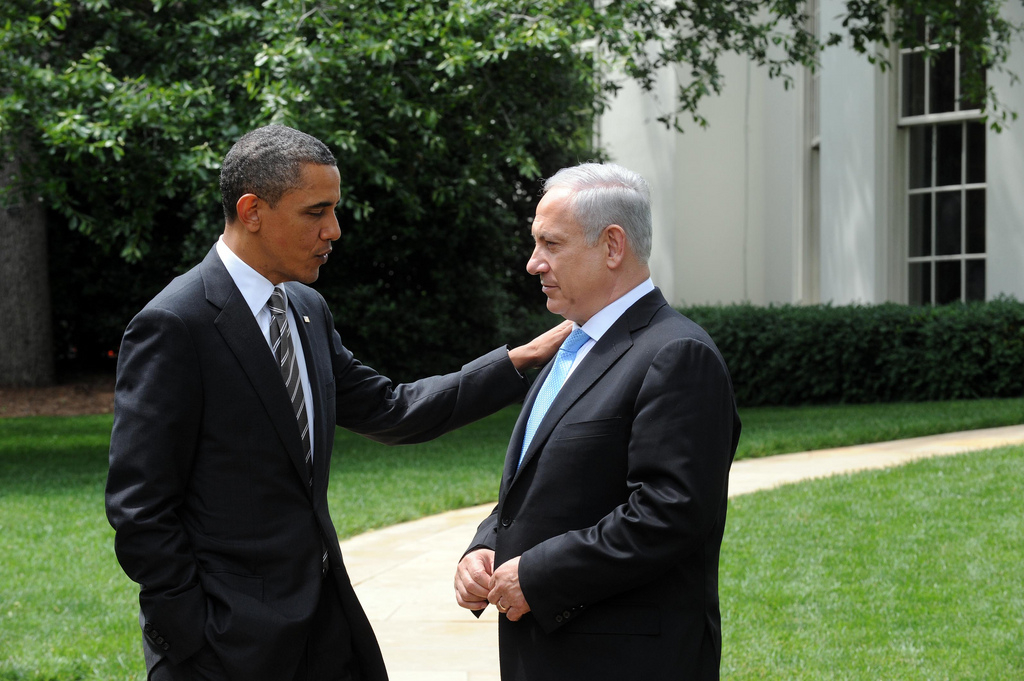
Israel is a major strategic partner, as declared in the United States-Israel Strategic Partnership Act, enacted on December 19, 2014. The new law laid the foundation for expanded bilateral cooperation in a wide variety of spheres including defense, intelligence, and homeland- and cyber-security. Above, Israeli PM Netanyahu meets President Obama at the White House, May 20, 2011. (Image source: Israel PM office)

Perhaps it is time to fill the void in the security relationship with the Jewish State, elevate the discussions beyond an MOU, and consider a more fulsome security arrangement — one that is comparable to those with such trusted allies as the United Kingdom and Australia.

The Congress should lead the way, as the Obama Administration does not have “clean hands”. A newly released Senate Subcommittee report explains how the State Department awarded hundreds of thousands of dollars in government grants to an Israeli organization that used the funds to mount a campaign against Prime Minister Netanyahu in the 2015 parliamentary elections. President Obama once even questioned the necessity of maintaining Israel’s qualitative military edge.

Ultimately, the terms of any U.S.-Israel agreement must withstand comparison to the concessions offered Iran in the JCPOA and show unequivocally that Israel, a trusted ally and major strategic partner, fared better in negotiations than an unconstrained enemy.

Yleem D.S. Poblete, Ph.D. is a Fellow at the Institute for Policy Research at the Catholic University of America. She served for close to 20 years on the staff of the Committee on Foreign Affairs, U.S. House of Representatives, including as Chief of Staff. During her tenure, she was responsible for such consequential measures as the Iran Threat Reduction and Syria Human Rights Act of 2012, the Palestinian Anti-Terrorism Act of 2006, and the 2007 MOU with Israel.

Translate »
Skip to toolbar