Monthly Archives: June 2017

Khamenei’s Anti-Americanism by Majid Rafizadeh

  • Khamenei is sending a strong signal to Washington that Iran’s reintegration in global financial system does not mean that the Iranian regime will change its hostility towards the U.S. and Israel.

  • “The Persian Gulf is the Iranian nation’s home and the Persian Gulf and a large section of the Sea of Oman belong to this powerful nation. Therefore, we should be present in the region, hold war games and display our power.” – Iranian Supreme Leader Ali Khamenei
  • In addition, Khamenei is sending a message to the Iranian people that the current process of implementing the nuclear agreement, lifting sanctions, and partial economic liberalization does not mean that Iran is going to liberalize its politics and allow freedom of speech, freedom of the press, and more political participation.

Some politicians and policy analysts argue that Iran’s sanctions relief and the continuing implementation of its nuclear program would push Iran towards moderation in dealing with the United States and Israel, as well as scaling down Iran’s expansionist and hegemonic ambitions. The realities on the ground suggest otherwise.

As Tehran’s revenues are rising, anti-American and anti-Semitic rhetoric by Iran’s Supreme Leader, Ayatollah Ali Khamenei, are escalating.

The Iranian regime continues to view the U.S. and Israel as their top geopolitical, strategic and ideological enemies. According to Iran’s Mehr News Agency, on May 1, Khamenei welcomed the Secretary General of Palestinian Islamic Jihad, Ramadan Abdullah Shalah, and his accompanying delegation in Tehran:

“Ayatollah Khamenei reaffirmed that with this perspective in regional issues, Iran sees the United States as the main enemy with the Zionist regime standing behind it. He pointed to extensive, unprecedented sanctions of the U.S. and its followers against the Islamic establishment in recent years and dubbed the objective of them as discouraging Iran from continuing its path; ‘but they failed to achieve their goals and will fail in future as well.’ “

Khamenei is sending a strong signal to Washington that Iran’s reintegration in the global financial system does not mean that the Iranian regime will change its hostility towards the U.S. and Israel.

In addition, Khamenei is sending a message to the Iranian people that the current process of implementing the nuclear agreement, lifting sanctions, and partial economic liberalization does not mean that Iran is going to liberalize its politics and allow freedom of speech, freedom of the press, and more political participation.

Khamenei is also making it clear that Iran is not going to fundamentally change its foreign policy objectives in the region.

Regarding Iran’s role in the Gulf, Iran’s Supreme Leader pointed out on May 2 that

“The Persian Gulf is the Iranian nation’s home and the Persian Gulf and a large section of the Sea of Oman belong to this powerful nation. Therefore, we should be present in the region, hold war games and display our power.”

When it comes to Syria, Iran’s Islamic Revolutionary Guard Corps (IRGC) has become more emboldened and empowered in supporting the Syrian regime financially, militarily, and in intelligence and advisory capacities. Even during the current peace talks, Iran is ramping up its presence in Syria to increase Bashar Assad’s leverage in the negotiations.

In Iraq, Iran’s sectarian agenda and support for Shiite militias continues to cause political instability. This week, hundreds of followers of the Iraqi Shia leader, Muqtada al-Sadr, stormed into the Iraqi parliament building, demanding its speaker halt the session. Prime Minister Haider al-Abadi warned that these protests could lead to the Iraqi state’s failure. After the protests, al-Sadr — who spent several years studying in Qom (Iran’s center of Islamic studies) — travelled to Iran.

Currently, some of the powerful Iraqi Shiite militias with which Iran has close connections, and in which it is investing its resources, are: Sadr’s Promised Day Brigade, the successor to the Mahdi Army; the Badr Organization, Asa’ib Ahl al Haqq (League of the Righteous) and Kata’ib Hezbollah (Battalions of Hezbollah).

In Yemen and Bahrain, Iran’s support for the Houthi rebels and Shiite groups continues to fuel the sectarian conflicts there.

Khamenei has also unleashed a series of anti-U.S. and anti-Israel tweets, including:

“Lebanon’s Hezbollah is strong enough not to be hurt by some pressures; today, no doubt Zionist regime is scared of Hezbollah more than past.” (1 May 2016)

“Shia-Sunni clash is colonialist, US plot. Top issue is to realize 2 sides of the extensive war & one’s stance to avoid being against Islam.” (1 May 2016)

Iran’s foreign policy is anchored in three areas: ideological principles (anti-Americanism and anti-Semitism), national interests (mainly economic gains), and nationalism.

Although Khamenei needed to emphasize Iran’s national and economic interests, there is no evidence that he is giving up on the revolutionary ideological norms. Khamenei is relying on the so-called moderates — President Hassan Rouhani and his U.S.-educated foreign minister, Javad Zarif — to continue the process of implementing the nuclear deal in order to benefit Iran economically and ensure the regime’s hold on power.
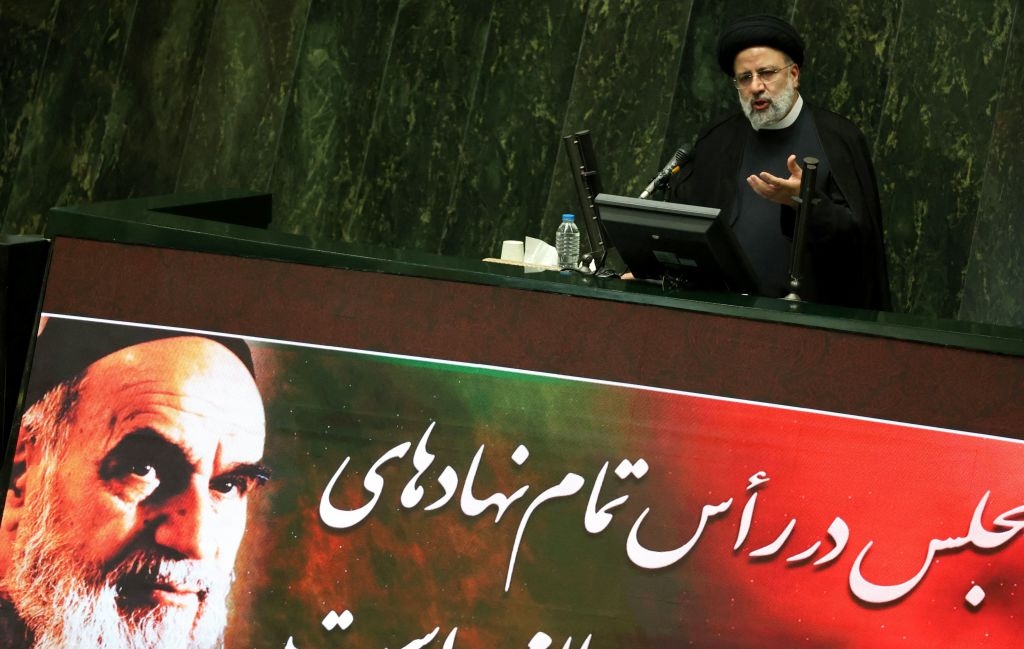
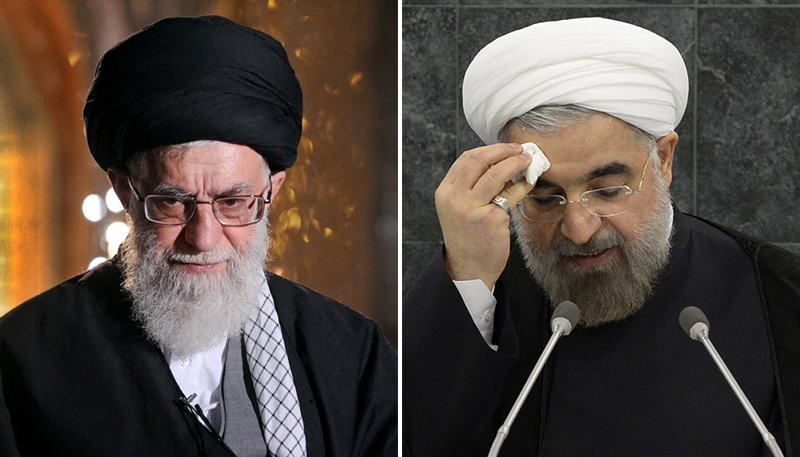
Iran’s Supreme Leader, Ayatollah Khamenei (left), is not giving up on the revolutionary ideological norms. He is relying on the so-called moderates, such as President Hassan Rouhani (right), to continue the process of implementing the nuclear deal in order to benefit Iran economically and ensure the regime’s hold on power.

Nevertheless, at the end of day, the key decision makers in Iran’s political establishments are Khamenei and the senior cadre of the IRGC, who prioritize Iran’s ideological and revolutionary principles. It is from them that Khamenei draws his legitimacy.

As long as the Supreme Leader is alive, one should not expect that Iran’s reintegration into the global economy to move the country to the moderate end of the spectrum, or that its anti-American, anti-Semitic sentiments and fundamentals of Tehran’s foreign policies will change.

Dr. Majid Rafizadeh, an Iranian-American political scientist and Harvard University scholar, is president of the International American Council.
Khamenei and IRGC’s Increasing Popularity by Majid Rafizadeh

  • The same state-run media that shapes the Iranians’ views of the West also pushes them to favor hardline candidates.
  • The new poll shows that Ayatollah Khamenei, his media outlets, and the Revolutionary Guards generals appear to be preparing the platform for a hardline President who will pull out of the nuclear agreement. The new poll also shows that so far their campaign has been successful.

The number of hardliners in Iran is on the rise, according to the latest poll. The Supreme Leader, Ayatollah Khamenei, appears to be preparing the social base so that a hardline president would replace President Hassan Rouhani after the sanctions are lifted by foreign powers. Khamenei seems to be achieving this by using Iranian media to slander the West and improve the image of hardline politicians. Iran’s former president, Mahmoud Ahmadinejad, appears to be getting ready to take Rouhani’s place, and is reportedly preparing his hardline platform to run in Iran’s 2017 presidential elections.

Rouhani’s popularity and standing are evidently not what they used to be. This seems to have come about largely because of changes in the economy. The overwhelming majority of Iranians believed in Rouhani’s economic promises when they elected him; after the nuclear deal was settled, 63% of Iranians believed that they would witness improvements in the economy and living standards within a year. However, a new report shows that 74% of Iranians said that there have been no economic improvements in the last year.

Iran’s Supreme Leader Ali Khamenei (left) appears to be preparing the social base so that a hardline president would replace President Hassan Rouhani (right).

A number of factors have slowed economic growth, including the high unemployment level, the state-owned and state-led economy, financial corruption at high levels, lack of an open market and business opportunities for the public, the increasing gap between the rich and poor, and the accumulation of wealth among the gilded circle in power and other major players — such as Supreme Leader Ayatollah Ali Khamenei, the Islamic Revolutionary Guard Corps (IRGC) and the connected elite business class — who hold control over major socio-political and economic sectors of Iran.

The Iranian government has also not done all that it could to help improve conditions. For example, after the flimsy and incomplete nuclear agreement, the Obama Administration immediately began transferring billions of dollars to Iran’s Central Bank. One of the payments included $1.7 billion transferred in January 2016. Of this sum, $1.4 billion came from American taxpayers. Iran immediately increased its military budget by $1.5 billion from $15.6 billion to $17.1 billion, rather than investing it for creating jobs.

Khamenei has already begun his campaign of blaming the West for Iranian economic problems. He fails to acknowledge the true reason that Iranians are not benefiting from the lifting of sanctions. Instead, as is his method of operation, he blames the West so that he himself is never blamed or held accountable in the eyes of the public. He stated recently “Weren’t the supposed sanctions lifted to change the life of the people? Is any tangible effect seen in people’s life after six months?” Although Iran’s oil exports have reached pre-sanctions levels, and although Iran is freely doing business on the state level, Mr. Khamenei claimed in a speech that, “the U.S. Treasury… acts in such a way that big corporations, big institutions and big banks do not dare to come and deal with Iran.”

An official from the State Department said that Iran should not blame the US for companies not doing business with Iran. Most likely, large corporations are just not yet prepared to make deals with Iran.

Khamenei’s rhetoric has a significant impact on public opinion in Iran. According to a poll, 75% of Iranians believe that the U.S. is to blame for Iran’s stagnant economy. They believe that the U.S. has been creating obstacles to Iranian business with Western companies, and to Iran’s ability to fully rejoin the global financial system.

It is true that since the nuclear deal, Iran’s unemployment rate has increased from roughly 10.8% to 12%. During the course of Rouhani’s presidency, the unemployment rate has increased by two percent. The government has also cut subsidies.

It is possible that Iran’s problems trading with American corporations and rebuilding its economy are due to other Iranian leaders’ rhetoric, the Iranian state-owned media narratives, and lack of clear understanding of the terms of the nuclear agreement among the general public. Approximately 65% of the population still watch only Iran’s domestic news channels to gain information about the latest news in comparison to the 25.4% who use internet, and 18.2% who watch satellite television. Notably, the states viewed most unfavorably by the Iranian public are the Islamic State (97.6% very unfavorable), Saudi Arabia (81.3% very unfavorable), and the United States. The overwhelming majority of Iranians, roughly 80%, believe that it is very important that their country should continue developing its nuclear program.

The same state-run media that shapes the Iranians’ views of the West also pushes them to favor hardline candidates. The new poll reveals that former president Mahmoud Ahmadinejad’s popularity is increasing. Ahmadinejad previously mentioned that he was retiring from politics, but the latest signs indicate that he is repositioning himself to lead the Islamic Republic again. During his presidency, people enjoyed subsidies on petrol, gas and electricity, and his government paid monthly cash handouts of approximately $17 to everyone. In the next presidential race, the poll shows that Ahmadinejad now trails Rouhani by only 8 percentage points compared to 27 points in May 2015.

Finally, another intriguing finding is that the person who has the highest level of respect, “very favorable,” among Iranians is General Qassem Soleimani, the head of IRGC-Qods Force (the external operations wing of the IRGC, which operates in foreign countries). His popularity has increased in the last year. This could be because he is portrayed by the Iranian media as the savior of the Shia in Iraq and Syria, a patriot, and the protector of Iranians from the Islamic State and other types of Sunni extremism. In general, the favorability of the high-profile, hardline and conservative politicians such as Muhammad Bagher Ghalibaf and Ali Larijani appears to have increased. These could threaten Rouhani’s reelection.

Khamenei, his media outlets, and the IRGC generals appear to be preparing the platform for a hardline President who will pull out of the nuclear agreement. The new poll also shows that so far, their campaign has been successful.

Dr. Majid Rafizadeh, political scientists and Harvard University scholar is president of the International American Council on the Middle East. He can be reached at Dr.rafizadeh@post.harvard.edu.

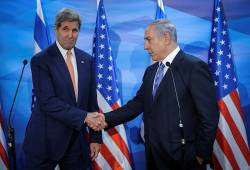
Kerry Says ‘The Fight’s Over’ Between Netanyahu and the Obama Administration

Now that the nuclear agreement with Iran is a done deal, despite Israeli opposition, Kerry declared that “the fight’s over.” As for moving forward, Netanyahu said he and the US see “eye-to-eye.”


US Secretary of State John Kerry said that “the fight’s over” between the Obama Administration and Prime Minister Benjamin Netanyahu regarding the Iran nuclear deal.

“I think he recognized that the fight’s over and we can move on,” Kerry said on Thursday in Davos, Switzerland, at the annual World Economic Forum, CNN reported.

Indeed, in an interview with CNN earlier Thursday, the Israeli leader discussed, among other issues, the “strong, powerful” and “rock-solid” cooperation and friendship between Washington and Jerusalem.

 After years of fighting against the signing of a nuclear agreement with Iran, Netanyahu – who in fact had the support of political leaders across the spectrum in Israel, including the Opposition leader – continues to bemoan the deal, saying he’d “be the happiest person” if proven wrong. “It’s no secret that I oppose this deal,” he told CNN, but moving forward, there are necessary steps to take: Monitoring any violation on the part of Iran, resisting Iranian aggression in the region and dismantling Iran’s global terror network.

“I think on this we see eye-to-eye with the United States and with President Obama,” Netanyahu stated.

By: Terri Nir, United with Israel
(With files from CNN)

shutterstock_152856233

Do You Support Israel?

Want to do something important for Israel? Make a donation to United with Israel, and help to educate and inspire millions around the world to support Israel too!

Now more than ever, Israel needs your help to fight the battle of public opinion. Israel’s enemies are using social media to incite brutal terror against innocent civilians. We need your help to fight back! Every day, we teach the truth about Israel to millions of people around the world.

In addition, United with Israel contributes to vital causes like building bomb shelters to protect Israeli citizens. Donations from true friends of Israel like you make this possible, so please show your support today!

KENYA: MANEKO THEOPHILE HABAKURAMA ARI KURIKOROZA I NAIROBI!

IKAZE IWACU ikunze kubagezaho amakuru yerekeye umutekano w’abanyarwanda aho bari hirya no hino. Akenshi iyo ingogo itaragarama, abasomyi bakunze kuvuga ngo ibyo n’ibihuha, ariko iyo runaka ashimuswe cyangwa akicwa nibwo abenshi bibuka ko byari byatangajwe, maze bakisama basandaye. Ibyiza ni ugukenga, aho kuvuga buri gihe ngo uzemera ikintu aruko kibaye, ahubwo ukavuga uti, ese biramutse bibaye nakwitwara nte!

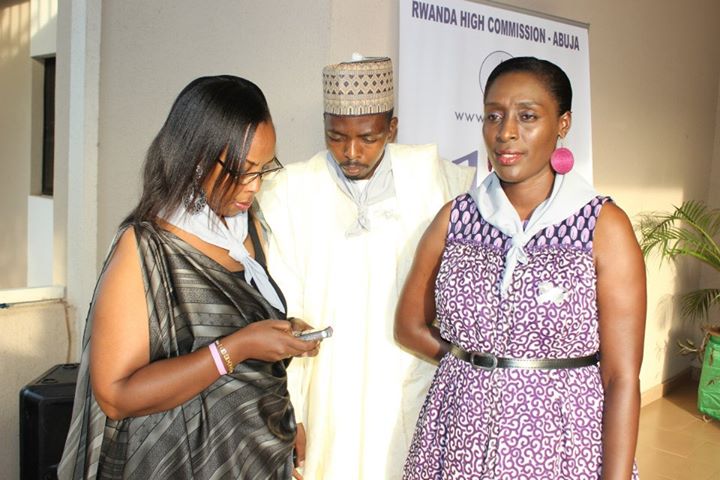
Maneko Théophile Habakurama (hagati), aha yari akiri muri Nigeria

Ibi tuvuze haruguru nibyo byabaye na n’ubu bikiri kuba ku banyarwanda batuye muri Kenya cyane cyane mu mugi wa Nairobi. Mu minsi ishize abicanyi ba DMI bashimuse Emile Gafirita, abantu babona ari ibintu bisanzwe, hadaciye kabiri bashimuta Capt Ex-FAR, Chrysostome Ntirugiribambe, nanone bigenda gutyo. Mu kwezi gushize nabwo abicanyi ba DMI bashimuse abandi bagabo 2 b’abanyarwanda i Nairobi, tutari buvuge amazina kubera ko bene wabo badashaka ko ngo bivugwa mu binyamakuru: NYAMARA UHISHIRA UMUROZI AKAKUMARA KU BANA.

Aba bicanyi ba leta ya FPR-Inkotanyi bakomeje kwivugana abanyarwanda ubu baridegembya mu mugi wa Nairobi kubera nyine ya masezerano u Rwanda rwagiranye na Kenya mu gufatanya mu bya gipolisi no mu butasi. Iki nicyo cyanzu aba bicanyi n’intore banyuramo bagakora ibyo bashaka muri Kenya.

Amakuru agera ku IKAZE IWACU avuga ko mu ntore zikaze cyane muri Kenya harimo umugabo ukunze kwiyita Theo Ruhigira, ariko amazina ye nyayo ni Théophile Habakurama. Uyu mugabo yatangiye gukorera DMI kuva cyera cyane. Mbere yo kuza gukorera mu mugi wa Nairobi, ubu agiye kumaramo hafi imyaka 2, yari umukozi wa Ambasade y’u Rwanda muri Nigeria, igihe yayoborwaga na Joe Habineza. Ariko mbere yo kuza i Nairobi yabanje koherezwa gukora muri ambasade y’u Rwanda muri Afrika y’epfo, ariko kubera ibibazo u Rwanda rwagiranye n’Afrika y’epfo bitewe n’ubwicanyi DMI yahakoreye, irasa Kayumba Nyamwasa n’ibindi bikorwa by’ubutasi, Theophile yahamaze igihe gito ahita yoherezwa i Nairobi mu mpera z’umwaka wa 2013.

Abantu bazi neza Théophile Habakurama babwiye IKAZE IWACU ko uyu mugabo azi amayeri menshi cyane ku buryo n’abantu b’inshuti ze magara harimo benshi batazi ko ari maneko wa DMI. Ngo yubatse uruhererekane runini rw’abamaneko (Network), rurimo n’umu pasteur witwa Théogène utuye mu mugi wa Durban muri Afrika y’epfo. Akorana kandi n’abandi bamaneko bigize abarokore basengera mw’itorero ryitwa « PALANI MINISTRY », naryo ribarizwa i Durban. Uyu mugi wa Durban arawuzi cyane kuko yigeze kuhatura muri 2005.

Uyu maneko kandi akorana bya hafi na murumuna wa ambasaderi Joe Habineza, witwa Jonas Habumuremyi, nawe akaba ubu atuye i Nairobi. Akenshi mu mugi wa Nairobi aba bamaneko bombi ngo bakunze kugendera mu modoka ya Benz ifite ibirahure byijimye (Fumés), bakaba kandi bakunze kuba bari kumwe mu tubari dutandukanye, ariko cyane bakunze kunywera mu kabari kitwa « TRIBEKA ». Muri aka kabari niho bakorera za gahunda no guhuza amakuru aba yavuye muri rwa ruhererekane rw’abamaneko.

Maneko Théophile Habakurama mu kabari i Nairobi ategereje abamuzanira amakuru

Maneko Théophile Habakurama mu kabari i Nairobi ategereje abamuzanira amakuru

Maneko Théophile Habakurama anakorana n’abarundi, akaba ari bo bamufasha kumunekera abarundi bahunga bakajya gushaka ubuhungiro kuri UNHCR. Anakoresha nanone abanyamulenge. Bamwe muri abo banyamulenge banekera Théophile Habakurama batuye ahitwa KIDURAYI 45, KASARANI NA UMOJA. AHO HOSE UHAMUSANGA MURI WEEKEND ASHAKISHA AMAKURU MURI ABO BANYAMURENGE.

Uyu maneko kandi akorana cyane n’umusore w’umushoferi witwa DIDIER nawe aba i Nairobi. Abantu bakunze kubabona mu modoka bazenguruka cyane cyane binyunyuza ahantu abanyarwanda bakorera. Abandi bakorana nawe ni Albert Uwizeyimana na Kuramba, bombi bakaba batuye muri Zambiya.

Uyu maneko kandi ngo azi indimi nyinshi cyane ku buryo aho ageze hose ahita avuga ururimi bumva ntihagire urabukwa. Muri ubu bunetsi bwe, ngo yigeze no kujya muri Malawi, ngo anashinga iduka ahantu hitwa KAWALE, ariko ngo nta minsi yahamaze yahise yigendera n’iryo duka atanarigurishije. Yewe ngo na Zambiya yarahageze. Ubwo nyine aba agenda yubaka network ye y’abamaneko, abatabizi bakibwira ko ari umucuruzi. Ntabwo ari aho yagarukiye gusa, kuko IKAZE IWACU yamenye ko anafite abamaneko bamukorera batuye Tanzaniya, ngo iyo ashaka guhura nabo bahurira ku mupaka wa Kenya na Tanzaniya witwa NAMANGA. 

Murumva ko akavuyo kamaze iminsi muri Tanzaniya, gafite ishingiro. Ni abamaneko ba DMI bakari inyuma, ndetse ngo bapanze ko bazateza imvururu nyuma y’amatora ya perezida n’abadepite ari kuba ubu twandika iyi nkuru. Ubwo rero inzego z’umutekano za Tanzaniya zibe maso.


Kenya Prophecy of Majeshi Leon


HERE IS THE NEXT KENYAN PRESIDENT GOD HAD PREDESTINED HIM TO SUCCEED PRESIDENT MWAI KIBAKI:


Fulfilled Prophecy:

Sept 17, 2012 God foretold the outcome the presidential election in Kenya, and that UHURU KENYATTA from the country of Kenya, is going to be the next Republican President; and in addition, he is going to be the vessel through which God is going to use to raise that nation, upon the condition that he accepts to do what God requests of him. Even, that the La-Haye lawsuit against him, shall be terminated as the rainfall dwindles down. God also declared that a man, known as MUSALIA Mudavadi shall face insurmountable challenges, and that this shall be a fortune opportunity for UHURU KENYATTA to rise up towards becoming a President.

Translate »
Skip to toolbar