Daily Archives: June 20, 2017

Sweden: Rampant Sexual Assaults Steam On One Month of Islam and Multiculturalism in Sweden: May 2016 by Ingrid Carlqvist

  • The police released a report noting that Sweden is at the top of the EU’s statistics on physical and sexual violence against women, sexual harassment and stalking. The report stated unequivocally that it is “asylum-seeker boys” and “foreign men” who commit the vast majority of the reported crimes.

  • As far as the widespread sexual assaults at public pools are concerned, the police said that in four out of five cases, the perpetrators have been “unaccompanied refugee children”.
  • A survey by the National Board of Health and Welfare (Socialstyrelsen) suggested that as many as 38,000 women in Sweden may have been subjected to female genital mutilation (FGM). Yet health care services rarely help women with the complications associated with FGM.
  • A Swedish father was told that he and his two children are being thrown out of the house they are renting from the municipality — to make room for an immigrant family.

May 4: The terrorist who turned out not to be a terrorist, but was chased by the police all over Sweden in November 2015, Mutar Muthanna Majid, demanded 1 million kronor (about $110,000) in damages from the Swedish government. However, the Chancellor of Justice decided that the standard sum for those wrongly incarcerated was enough compensation. Majid was held in custody for four days, which means he gets 12,000 kronor ($1,300).

May 4: Turkish President Recep Tayyip Erdogan came to the defense of Sweden’s Muslim Minister of Housing Mehmet Kaplan, who was forced to resign after his connections to Islamists and neo-Fascists were revealed, as was his defamatory comparison of Israel to Nazi Germany. According to Erdogan, however, the forced resignation of Kaplan was symptomatic for how Muslims are treated in the West: “Just look at what Sweden has done to a Muslim who reached a position in Cabinet,” Erdogan indignantly said.

May 4: It is now up to Sweden’s Supreme Court to decide if an Algerian, Karim Ageri, should be deported from Sweden after knifing a 16-year-old girl because she refused to have sex with him. November 10, 2015, two teenage Swedish girls visited an asylum house for “unaccompanied refugee children” in the Stockholm metropolitan area. Karim Ageri, who claimed to be 16 years old, groped one of the girls, who climbed out a window to get away from him. Ageri then followed her, and slashed her face twice with a knife. The prosecutor in the case argued that Ageri is at least 21 years old, and should therefore be tried as an adult and, after serving his sentence, deported. However, the Municipal Court did not agree, and sentenced the Algerian to juvenile detention. The Court of Appeals increased the sentence to 18 months in prison, followed by deportation. Prosecutor My Hedström says she is now looking forward to having the case tried by the Supreme Court, to get a precedent on how “refugee children” who commit serious crimes should be handled legally.

May 4: The National Board of Health and Welfare reported that the large number of asylum seekers who arrived in Sweden in 2015 has put a huge strain on Swedish healthcare services, especially primary care, dental care and psychiatry. Language barriers, combined with a shortage of interpreters, exacerbates the problem. Many asylum seekers have bad teeth, and 20-30% are thought to have psychiatric problems. Increased pressure on the health service has led to a shortage of hospital beds, limited availability and longer waits.

May 5: Five “unaccompanied refugee children” suspected of gross sexual coercion were apprehended, and remanded into custody. The suspects, who claim to be in their mid-teens, allegedly assaulted a young man at the asylum house where all of them were staying. The crime was initially classified as rape, but later changed to gross sexual coercion, aggravated assault and unlawful threats.

May 5: Khalid Salim Tarabeih, 20, was sentenced to 18 months in prison for child rape. According to the indictment, Tarabeih promised to buy alcohol for a 14-year-old girl, but once they were alone in a wooded area, he demanded sex in return. He told the girl he had served time for violent crimes, which scared her to the point of not daring to resist him as he raped her. Since Tarabeih is a Swedish citizen, he cannot be deported.

May 8: The Swedish media almost never reports on the violence and misogyny in immigrant-heavy areas of Sweden, but the Norwegian television channel NRK aired a story on the infamous Stockholm suburb of Rinkeby, and showed how their own reporters had been attacked there. In the segment, a police officer talked about how the police are losing control of the Swedish “no-go zones,” a point that was proven by Norwegian journalists being attacked and subjected to stone throwing.

May 9: An Iraqi citizen, Hosar Mahmood, 22, has once again been convicted of rape — this time of a hospitalized woman. In 2013, he broke into an apartment, severely beat its owner, and then raped his teenage daughter. That time, Mahmood was sentenced to four years in prison for aggravated rape — but was freed after serving two-thirds of the time, as is the legal practice in Sweden. This time, the sentence was more lenient — two years and two months. He will not be deported because, the court said, he was granted permanent residency status prior to the age of 15.

May 9: The fear that Sweden is being Islamized was evident when the news broke that a new mosque is planned in Halmstad. The municipality received many angry e-mails, such as:

  • “Building mosques in Sweden means you are welcoming the murderers into your own nation.”
  • “Armed Muslims will gather in the mosques.”
  • “People will ignore the weapon laws and arm themselves if you do not stop the Muslim invasion.”

A representative of the Muslim group that wants to build the mosque told Swedish public radio: “There are many Muslims in Halmstad, and I think it is only fair they should have a mosque to go to”.

May 9: A report from the National Board of Housing, Building and Planning concluded that there is a shortage of housing in four out of five Swedish municipalities. Young people and the elderly are the worst off. The reason is the rapid population growth due to third-world asylum immigration, which is expected to continue and aggravate the problem.

May 9: A mother of three from the village of Höör opened up her home to two “unaccompanied refugee children”, and let them move into her 10-year-old daughter’s room. One of the men, Isak Andai from Eritrea, who claims he is 15 years old, then snuck into the daughter’s bed one night and started molesting her. Andai, who is believed to be significantly older than 15, was sentenced to juvenile detention and will not be deported.

May 9: A 25-year-old asylum seeker from the Congo, was remanded into custody, suspected of setting a waste bin on fire in the cottage where he was staying in Pite havsbad. The fire was extinguished, but according to the prosecution there was a great risk of it spreading. Pite havsbad is one of Europe’s largest seaside resorts, nicknamed “The Swedish Riviera.” In January 2016, its owner made a deal with the Immigration Service to house 1,000-2,000 asylum seekers, mainly in the winter months.

May 11: One of the many “unaccompanied refugee children” who have lately amused themselves by sexually attacking others at public swimming pools, was found guilty of sexually molesting three girls, aged 8-10, at a pool in Överkalix. The man, who claims he is 16 years old, was sentenced to 35 hours of community service and 16,000 kronor (about $1,800) in damages.

May 11: Södertörn Municipal Court recently sentenced a Syrian man to five years in prison, followed by deportation, for aggravated battery in Syria in 2012 and crimes against international law. Among the evidence against him was a film, where he could be seen severely beating a tied-up man. The verdict was appealed to the Court of Appeals. Once there, however, the victim emerged and said he wanted to testify, and the case was sent back to the lower court for a new trial. According to the victim, the perpetrator and he belonged to the same rebel group, and the reason for the abuse was a conflict between the men. The Municipal Court therefore rejected the charges on the crimes against international law, and convicted the Syrian only of aggravated battery. Still, the victim’s description of how he was bound and tortured for days led the court to sharpen the sentence to seven years imprisonment, deportation and damages of 268,000 kronor ($30,000).

May 13: Sweden and Morocco signed an agreement regarding the many Moroccan street children who roam the streets of Stockholm and Gothenburg — they are to be deported back to their homeland. Negotiations have been ongoing for quite some time, but did not move forward until Sweden a few months ago abruptly abandoned its plans to recognize the independent Sahrawi Arab Democratic Republic in Western Sahara, a region occupied by Morocco. Interior Minister Anders Ygeman, who has been responsible for the negotiations, denies that this decision had any influence on Morocco’s newfound desire to welcome back its young citizens.

May 14: Two robbers dressed in black burqas targeted a phone shop in the Stockholm suburb of Nacka, forcing the staff to hand over cell phones worth about 500,000 kronor ($55,000). The police released surveillance film from the robbery, which was not much help in identifying the robbers, as they were completely covered by the burqas.

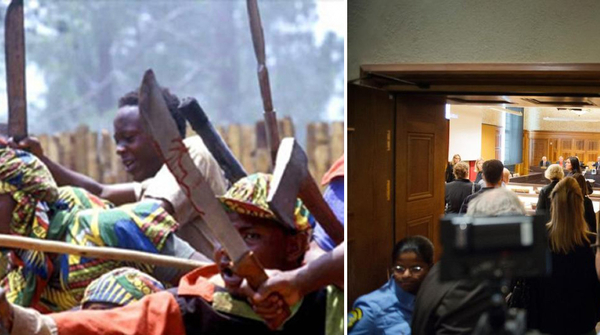
May 16: The Stockholm District Court convicted another “Swede” of genocide in Rwanda. The 61-year-old man, now a Swedish citizen, claimed he was innocent of the charges and that the evidence against him had been fabricated. The indictment concerned five different massacres, in which around 800,000 people were murdered. The man was sentenced to life in prison. In 2013, another Rwandan, Stanislas Mbanenande, who had claimed to be a refugee but was also was sentenced to life in prison for a similar crime, was able to become a Swedish citizen.

May 16: An Eritrean man was arrested, suspected of committing a rape in a restaurant in central Stockholm. The man had previously been suspected of assaulting a woman at an Eritrean party. Those charges, however, were dropped when it became clear that it was actually the woman who had assaulted the man, injuring them both.

May 16: Green Party representative Yasri Khan, now known for refusing to shake a female television reporter’s hand, turned out to have close connections to the Islamic terror group Pulo in Thailand. Khan’s father, Samsudine Khan, also a resident of Sweden, is vice chairman for the group, which has carried out bombings and shootings against civilians and other targets deemed “legitimate.” After 13 people were killed by a bomb in March 2013, Yasri Khan commented on the deed in the Bangkok Post. He warned that the violence would continue unless the government solved the “root problems” that have created the separatist movements.

May 16: Two Roma were remanded into custody for 60 cases of theft against the elderly. The men would call senior citizens on the phone, and introduce themselves as craftsmen sent to check something in the residence. Once inside, one of the men would distract the victim, while the other would steal money and valuables. Those hesitant to let the Roma in would be threatened with hefty “fines” of several thousand kronor. The crimes were committed in a number of different cities; the Malmö police put considerable resources into tracking down the men.

May 17: A 30-year-old Arab asylum seeker was convicted of battery after flogging his wife with a belt in front of their six-year-old son. The abuse took place at an asylum house on the island of Öland, and was stopped when the staff intervened. The man was sentenced to 100 hours of community service.

May 17: Osbecksgymnasiet high school in Laholm was forced to hire extra staff to protect female students from daily inappropriate sexual advances. In a letter to the school, the girls’ parents wrote that “there is catcalling, shouting and screaming in other languages, and photographs being stealthily taken.”
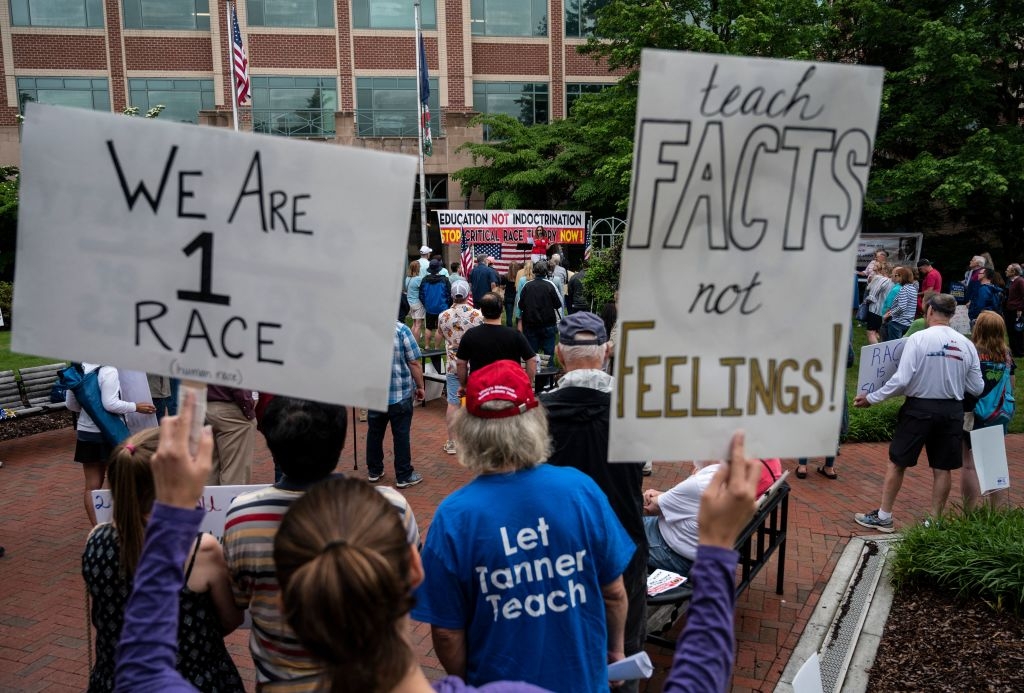
Hosar Mahmood (left), 22, was convicted in May of raping a hospitalized woman, and sentenced to two years and two months. He previously served a short prison sentence for another crime in 2013, when he broke into an apartment, severely beat its owner, and then raped his teenage daughter. Right: Osbecksgymnasiet high school in Laholm was forced to hire extra staff to protect female students from daily inappropriate sexual advances, mainly by immigrant students.

May 18: The police released a report — “The current situation regarding sexual assault and proposals for action” (“Lägesbild över sexuella ofredanden samt förslag till åtgärder“), which noted that Sweden is at the top of the EU’s statistics on physical and sexual violence against women, sexual harassment and stalking. The report stated unequivocally that it is “asylum-seeker boys” and “foreign men” who commit the vast majority of the reported crimes. As far as the widespread sexual assaults at public pools are concerned, the police said that in four out of five cases, the perpetrators have been “unaccompanied refugee children”. However, in an appendix to the report, alternative theories blaming “the Nordic alcohol culture” and Sweden’s “non-traditional gender roles” are set forth.

May 18: The LLT public transport company in Luleå announced that it will be teaching classes for newly arrived migrants — on the art of riding a bus. The idea came about after some 20 Afghan “unaccompanied refugee children” ended up having a heated argument with a Somali bus driver. In other parts of Sweden, courses exist on how to take out the garbage, how to use a light switch, unlock the front door, and so on. The bus class will teach the new arrivals what bus passes and bus stops are, how they work, and other useful things.

May 18: Two brothers were sentenced respectively to three, and three-and-a-half, years in prison — as well as deportation — for people-smuggling. The brothers apparently transported five disabled people from Bulgaria to Sweden, forced them to beg on the street for up to twelve hours a day, and then took their money. During a period of five months, the brothers made at least 300,000 kronor ($33,000) from the beggars.

May 18: A study released by the Swedish National Council for Crime Prevention (Brottsförebyggande rådet, BRÅ) showed that only one in five foreign nationals convicted of rape are sentenced to deportation. The reason given is that they are registered residents and thus thought to have a connection to Sweden. The study does not mention how the victims feel about that.

May 19: Another gang rape, this time of a minor girl, was revealed in Växjö. Four teenagers of non-Western descent were arrested for raping the girl sometime during the weekend May 7-8. No other details were given.

May 20: Four of the many Moroccan street children staying illegally in Sweden committed a particularly brutal robbery against an 87-year-old woman. The four broke into the woman’s house, held her in a stranglehold until she passed out, hitting her head hard as she fell. They then ripped rings from her fingers, severely bruising her in the process. The young men were caught and subsequently convicted, thanks to surveillance footage from a nearby subway station which tied them to the scene. One man was sentenced to five years in prison and deportation, another to juvenile detention for a year and four months. The other two claimed to be under 15, and therefore could not be tried.

May 21: A survey by the National Board of Health and Welfare (Socialstyrelsen) suggested that as many as 38,000 women in Sweden may have been subjected to female genital mutilation (FGM). Yet health care services rarely help women with the complications associated with FGM. Hayat Bihi from Somalia told the Swedish public radio, Sveriges Radio:

“When I had my health examination, no one asked me if I had been subjected to genital mutilation. It reminds me somewhat of Somalia, where nobody asks or cares about women’s health. I would wish all girls and women were asked about this.”

May 23: Youssaf Khaliif, the Somali “unaccompanied refugee child” who stabbed to death a young social worker, Alexandra Mezher, on January 25, was indicted. Ms. Mezher was working alone at the asylum house for unaccompanied children where Khaliif lived at the time of the murder. According to the prosecution, he stabbed her three times with a knife — in the back, thigh and hand. The stab in the thigh severed an artery, which caused Ms. Mezher to bleed to death before the ambulance could arrive. Youssaf Khaliif still claims he is 15 years old, but according to age tests ordered by prosecutor Linda Wiking, he is at least 18, and will therefore stand trial as an adult.

May 23: A group of Arab men who are asylum seekers have, according to witnesses, systematically sexually assaulted women traveling on a late-night bus in Umeå. One witness claims that the police initially refused to file a report on the matter, but after a large number of people complained, the police are now working actively to restore order on the buses.

May 24: A 24-year-old Palestinian, Omar Ali Abdalsalam was sentenced to life in prison and deportation for strangling his girlfriend to death in a park in Oskarshamn, in December 2015. Abdalsalam, who had previous convictions for violence against women with whom he had relationships, admitted that he had been violent to his girlfriend, but denied any intent to kill. He was also sentenced to pay damages of 350,000 kronor ($39,000) to the woman’s family.

May 24: Police officer Hanif Azizi told the daily Metro that stone throwing against police has more or less become an everyday occurrence:

“This weekend I was out working with my colleagues. On three occasions, we were subjected to stone throwing. On Friday we got a call to go to central Rinkeby, where the emergency service was trying to put out a car on fire. When the police arrived, we had stones thrown at us at two separate times.”

In Landskrona, individual police officers and the police station have received so many serious threats that the police have applied for permission to have closed-circuit television installed at the police station.

May 25: The Swedish Labor Court sentenced an Arab, Samy Makram Buchra Tawadrous, to pay 50,000 kronor ($5,500) in damages to a 19-year-old woman, who was made to sit on his lap while negotiating her salary. The woman was reluctant, but her boss insisted. He then wanted hugs and kisses, and promised to make sure that she got a raise. After the incident, the woman was afraid to go back to work, and reported her boss to the Labor Court. The man admitted what had happened, but did not feel he had done anything wrong.

May 25: Abo Raad, imam of the Gävle mosque, which is known for its hate speech and close connections to terrorists, was invited to a seminar in the Swedish Parliament. The seminar was organized by the parliamentary intergroup network against discrimination and honor violence. Parliamentarian Jonas Lundgren defended Raad’s involvement: “We invited him because, unfortunately, he is a person with certain sway over Muslims in Sweden. Also, he is a very controversial person, to say the least.”

May 26: Khurshed Karimov, a 26-year-old Muslim immigrant from Tajikistan, was indicted for the murder of his boss. According to the indictment, Karimov admitted to stabbing his employer 60 times allegedly for being an “Islamophobe.” The murderer lived in a trailer on his employer’s property, and helped him with a wide range of chores. Karimov told the police that he was in the house on January 27, when he heard his boss utter the words “f**king Muslim” and “f**king idiot,” and saying that he was going to “f**k Muslims.” After the murder, Karimov scribbled messages on the walls — “Allahu Akbar,” “France,” and “Charlie,” the latter an apparent reference to the terror attack against the satirical magazine Charlie Hebdo in Paris in 2015.

May 27: After a quick investigation, the government decided that newly arrived migrant children will be allowed to bypass the waiting lists for independent schools. This rule will be even more strictly imposed on schools with a large number of applicants, and means that Swedish children who have waited for a long time will be bypassed. Mattias Karlsson, group leader for the Sweden Democrats in the Parliament, raged against the idea:

“This says something of the state of the nation, when the responsible minister actually brags about being efficient when it comes to working out a law that discriminates against the country’s own citizens in relation to non-citizens, and when the so-called right-wing ‘opposition’ says they are happy with this. Everyone should resign!”

May 31: The Immigration Service warned that there might be some turmoil in asylum houses when the law changes on June 1. From that date, migrants who have had their asylum applications rejected will no longer be allowed free housing, nor receive any allowances. At present, this applies to 1,700 people.

May 31: The Swedish public television station Sveriges Television aired a story on the living conditions for women at asylum houses. Women only make up about a third of the residents in the country’s asylum houses; the women interviewed talked about widespread sexual abuse. One woman said: “I am afraid, and when I wake up in the morning, my heart beats so fast. I go outside, but it feels as if everyone is watching me. Eyes staring at me up and down.”

May 31: A Swedish father was told that he and his two children are being thrown out of the house they are renting from the municipality — to make room for an immigrant family. The father, Uffe Rustan, told the local paper, Mitti: “It feels as if I am worth less, even though I pay taxes and my children go to school here. If only it had been a day care center moving in or something, but you cannot put one family on the street for the benefit of another family.”

Ingrid Carlqvist is a journalist and author based in Sweden, and a Distinguished Senior Fellow of Gatestone Institute.
Sweden: Muslim Government Minister Sacked After Making Nazi Allegations by Ingrid Carlqvis


  • “This is not about freedom of speech, this is about insulting people’s faith. I cannot see anything that has to do with freedom of speech here.” — Mehmet Kaplan, on the Mohammed cartoon controversy, 2005.

  • Mehmet Kaplan told Turkish media that the reason young Muslims join ISIS is “the rampaging Islamophobia in Europe.” As a solution to the problem, he suggested that the Swedish government support mosques financially, ostensibly to counteract ISIS’s recruitment.

In 2014, three Muslims became ministers in the Swedish government. Clearly the most fervent and committed believer was Mehmet Kaplan, 44, who took on the role of Minister for Housing and Urban Development.

Kaplan came to Sweden from Turkey, at the age of one. Despite many claims that he is in fact an Islamist, until now Kaplan has been untouchable. That is, until it emerged that he said that Israel treats the Palestinians the same way the Nazis treated the Jews in Germany. At a hastily summoned press conference on April 18, Prime Minister Stefan Löfven announced that he had accepted Kaplan’s resignation.

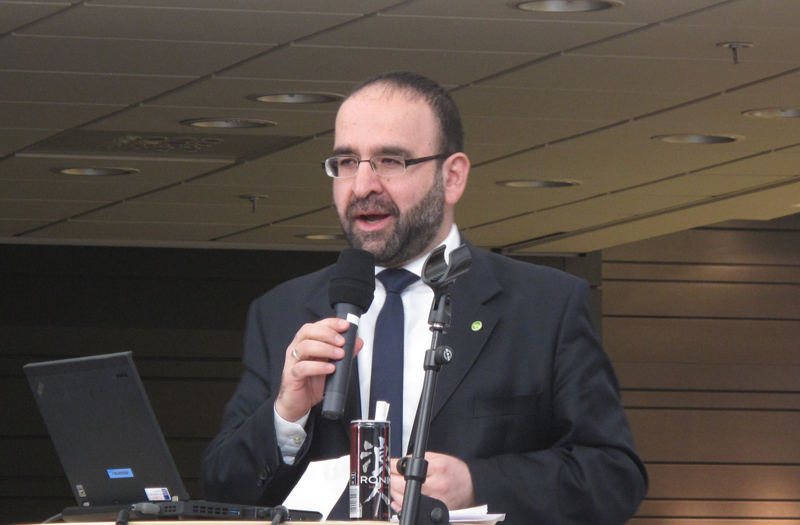
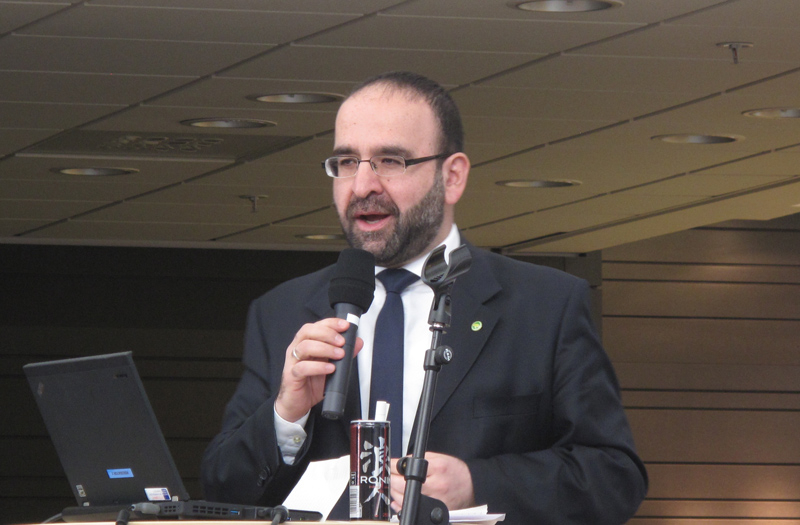
Mehmet Kaplan was a minister in Sweden’s government until last week, when he was forced to resign after revelations that he compared Israel’s treatment of Palestinians to that of the German Nazis’ treatment of Jews. (Image source: Wikimedia Commons/Jan Ainali)

Kaplan, a member of the Green Party, has a history of being affiliated with various Muslim organizations connected to the Muslim Brotherhood. In 2005, he denounced the Danish newspaper Jyllands-Posten, for publishing cartoons depicting the Muslim prophet Mohammed. In an interview with the Christian magazine Dagenhe said, “This is not about freedom of speech, this is about insulting people’s faith. I cannot see anything that has to do with freedom of speech here. This is an insupportable provocation.”

In 2010, Kaplan was aboard one of the ships of the flotilla sailing to the Gaza Strip, with the aim of breaking Israel’s naval blockade. He, along with several others, was arrested after the Israeli Defense Forces (IDF) boarded the vessel. Once safe and sound back in Sweden, he complained that the IDF “acted like pirates.”

In 2011, he invited the well-known Islamist and anti-Semite, Yvonne Ridley, to the Swedish parliament for a seminar. Ridley, a supporter of Hamas, has called Israel “that disgusting little watchdog of America that is festering in the Middle East.”

Since becoming a minister in the Swedish government, Mehmet Kaplan has continued to stir up controversy. He has made several hair-raising remarks, such as, in the summer of 2014, when he compared Swedish Muslims who go to Syria to fight for the Islamic State, to Swedish volunteers fighting for Finland in the 1939 Winter War, when Finland was attacked by the Soviet Union three months into the Second World War. Under the slogan “Finland’s cause is ours,” 8,260 Swedes traveled to Finland to aid their neighbors. To compare this courageous and highly moral effort to that of murderous jihadis, willingly joining the killing machine known as ISIS, rightly upset many Swedes. When the Finnish media criticized the Swedish minister, Kaplan retreated, saying that it “was not a good comparison,” and that he was “against young Swedes joining the war in Syria.”

In the fall of 2014, it was time for the next controversial statement. Kaplan told the Turkish media that the reason young Muslims join ISIS is “the rampaging Islamophobia in Europe.” As a solution to the problem, he suggested that the Swedish government support mosques financially, ostensibly to counteract ISIS’s recruitment.

This thought evidently made Social Democrat Party member Nalin Pekgul (a Kurdish Muslim) furious. In an opinion piece for the business paper Dagens Industri, she wrote that the only reason more people did not openly criticize Kaplan was their fear of being labeled “Islamophobes”:

“Appointing Mehmet Kaplan government minister is surprising and appalling. … I am convinced that Mehmet Kaplan said exactly what he meant and that he regards the jihadis as freedom fighters. … Mehmet Kaplan says that he believes in the equal value of all human beings and equality between the sexes, but very few secular Muslims believe that he is not in fact an Islamist. With Mehmet Kaplan in the government, [Green Party leaders] Gustav Fridolin and Åsa Romson have sent a clear signal to the Muslims of Sweden — that the Islamists now have the support of the Swedish establishment.”

Social anthropologist Aje Carlbom supported Pekgul’s conclusion that Kaplan is an Islamist. In an opinion piece for the magazine Dagens Samhälle, Carlbom wrote:

“When it comes to identity politicians in general, this might seem like political mudslinging. One should be aware, however, that Kaplan has his ideological background in the Islamist movement that, for the past 20 years, has been hard at work trying to gain influence in various political arenas.”

Last week, another scandal exploded around Kaplan. It all started with the Turkish National Association of Sweden holding a meeting in central Stockholm, where Association Vice President Barbaros Leylani made a speech in which he agitated against Armenians and shouted to the audience: “The Turk awakens! The Armenian dogs should take care. Death to the Armenian dogs!”

Leylani was forced to resign from his organization, but soon pictures surfaced, taken at a Ramadan dinner in July 2015, where Mehmet Kaplan could be seen dining with Barbaros Leylani. To make matters worse, members of the Islamist organization Milli Görüs were visibly present, as were members of the Turkish ultra-nationalist, right-wing extremist organization, the Grey Wolves.

Kaplan said that he had no knowledge of their presence, and that it is his job as a politician to meet with representatives of “Turkish civil society in Sweden.” Prime Minister Stefan Löfven called Kaplan’s presence at the dinner “deeply regrettable”:

“As a government minister, one has a responsibility to act in such a way as never to raise any doubts about what organizations or values one represents. That is why it is deeply regrettable that Mehmet Kaplan ended up in this company, and he realizes now that he needs to be more meticulous.”

On Sunday, April 17, the final straw appeared. The daily Svenska Dagbladet published pictures taken by the Somali Star, a local Swedish-Somali TV station. In the segment, which aired in 2009, Mehmet Kaplan compared Israel’s treatment of Palestinians to that of the German Nazis’ treatment of Jews:

“There are certain similarities, which many Jews have actually testified to. The persecution in the 1930s — the persecution under Nazi Germany — against the people thought to be the most deviant, people were treated in such a way that they constantly had to explain why they had chosen a certain way of life.”

This turned out to be a bit rich, even for Sweden’s notoriously Israel-critical Foreign Minister Margot Wallström. Come Monday morning, Wallström made a statement: “I think this is an appalling statement, and I strongly denounce this.” Wallström did not want to speculate about the consequences at that point, and explained that it was up to Prime Minister Stefan Löfven to decide Kaplan’s fate.

And so Löfven did, only hours later. At a televised press conference, Löfven said that Kaplan had handed in his resignation, and that he had accepted it. There can be little doubt, however, that if it had been up to Kaplan, he would have remained at his post.

Ingrid Carlqvist is a journalist and author based in Sweden, and a Distinguished Senior Fellow of Gatestone Institute

Sweden: Is Islam Compatible with Democracy? Part I of a Series: The Islamization of Sweden by Ingrid Carlqvist

  • It is not a secret that democracy can be used to abolish democracy.It may have finally begun to dawn on the people that Swedish Sweden will soon be lost forever, and in many areas replaced by a Middle Eastern state of affairs, where different immigrant groups (mainly Muslims) make war on each other as well as on the Swedes.

  • According to Dr. Peter Hammond, in his book Slavery, Terrorism and Islam: The Historical Roots and Contemporary Threat, the goal of Islam is not to convert the whole world, but rather, to establish sharia law all over the world.
  • There is no country where Islam is dominant that can be considered a democracy with freedom of speech and equal justice under law.

In Sweden’s last census in which citizens were asked about their religious beliefs, in 1930, fifteen people said that they were Muslims. Since 1975, when Sweden started its transformation from a homogenous, Swedish country into a multicultural and multi-religious one, the number of Muslims has exploded. Now, approximately one million Muslims live here — Sunni, Shia and Ahmadiyya from all the corners of the world — and Mosques are built and planned all over the country.

No one, however, seems to have asked the crucial question upon which Sweden’s future depends: Is Islam compatible with democracy?

The Swedish establishment has not grasped that Islam is more than a private religion, and therefore it dismisses all questions about Islam with the argument that Sweden has freedom of religion.

Two facts point to Islam not being compatible with democracy. First, there is no country where Islam is dominant that can be considered a democracy with freedom of speech and equal justice under law. Some point to Malaysia and Indonesia — two countries where flogging and other corporal punishments are meted out, for example, to women showing too much hair or skin, as well as to anyone who makes fun of, questions or criticizes Islam. Others point to Turkey as an example of an “Islamic democracy” — a country which routinely imprisons journalists, political dissidents and random people thought to have “offended” President Erdogan, “Islam” or “the nation.”

Second, Muslims in Europe vote collectively. In France, 93% of Muslims voted for the current president, François Hollande, in 2012. In Sweden, the Social Democrats reported that 75% of Swedish Muslims voted for them in the general election of 2006; and studies show that the “red-green” bloc gets 80-90% of the Muslim vote.

It is no secret that democracy can be used to abolish democracy — yet, this crucial issue is completely taboo in Sweden. Politicians, authorities and journalists all see Islam as just another religion. They seem to have no clue that Islam is also a political ideology, a justice system (sharia) and a specific culture that has rules for virtually everything in a person’s life: how to dress; who your friends should be; which foot should go first when you enter the bathroom. Granted, not all Muslims follow all these rules, but that does not change the fact that Islam aspires to control every aspect of human life — the very definition of a totalitarian ideology.

While the establishment closes its eyes to the problems that come with a rapidly growing Muslim population in Sweden, ordinary Swedes seem to be growing increasingly upset. Prime Minister Stefan Löfven, however, appears to be at a complete loss as to why this is. He recently told the British newspaper, Financial Times:

“But the more surreal thing is that all the numbers are going in the right direction, but the picture the public have is that the country is now going in the wrong direction. It’s not only a question about if they are afraid of the refugee crisis; it’s as if everything is going in the wrong direction.”

This comment says a lot about how disconnected Prime Minister Löfven is from the reality that ordinary Swedes are facing. The mainstream media withhold information about most of the violence that goes on in, and around, the asylum houses in the country, and it is not very likely that Stefan Löfven reads the alternative media sites; he and others in power have, in unison, dubbed them “hate sites.” He obviously has no idea about the anger and despair many Swedes are now feeling. It may have finally begun to dawn on them that Swedish Sweden will soon be lost forever, and in many areas replaced by a Middle Eastern state of affairs where different immigrant groups (mainly Muslims) make war on each other as well as on the Swedes.

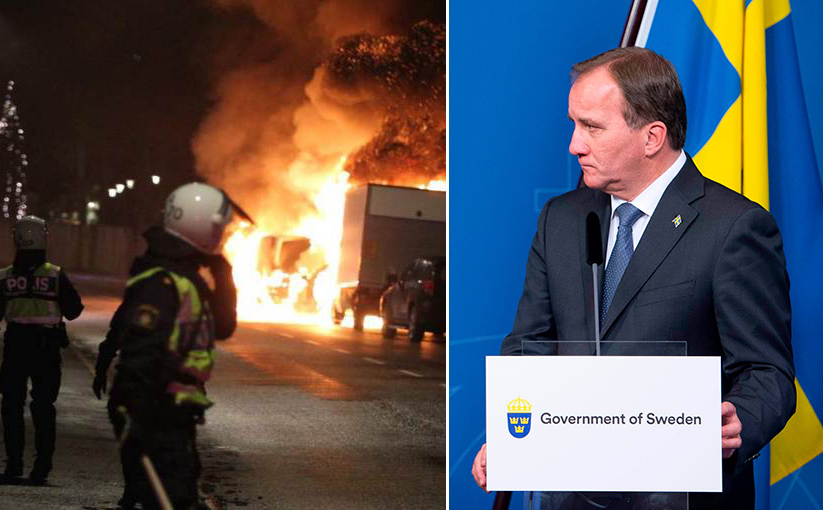
While the establishment closes its eyes to the problems that come with a rapidly growing Muslim population in Sweden, ordinary Swedes seem to be growing increasingly upset. Prime Minister Stefan Löfven (right), however, appears to be at a complete loss as to why this is. Pictured at left: The results of rioting in a Stockholm suburb, December 2014.

The people suffering most cruelly in the “New Sweden” are the elderly. The costs of immigration borne by the welfare state have led to a quarter of a million retirees living below the EU poverty line. Meanwhile, the government recently added another 30 billion kronor (about $3.6 billion) to the migration budget. The 70 billion kronor ($8.4 billion) Sweden will spend on asylum seekers in 2016 is more than what the entire police force and justice system cost, more than national defense costs, and twice the amount of child benefits.

Sweden’s 9.5 million residents are thus forced to spend 70 billion kronor on letting citizens of other countries come in. In comparison, the United States, with its 320 million residents, spent $1.56 billion on refugees in 2015. The editorial columnist PM Nilsson commented in the business paper, Dagens Industri:

“To understand the scope of the increase in spending, a historic look back can be worthwhile. When the right bloc came to power in 2006, the cost was 8 billion [kronor] a year. In 2014, it had gone up to 24 billion. That summer, then Minister of Finance Anders Borg talked about the increase being the most dramatic shift in the state budget he had ever seen. The year after, 2015, the cost rose to 35 billion, and in 2016, it is projected to rise to 70 billion.”

For many years, the politicians managed to fool the Swedish people into thinking that even if immigration presented an initial cost, the immigrants would soon enable the country to turn a profit. Now, more and more research indicates that the asylum seeker immigrants rarely or never find work. The daily newspaper Sydsvenskan reported in February, for example, that 64% of Malmö’s immigrants are still unemployed after living in Sweden for ten years. The government openly calculates in its budget that in four years, 980,000 people will be living on either sickness benefits, disability pensions, unemployment benefits, “introduction benefits” or social welfare.

Swedes, who for many years have paid the highest taxes in the world without whining, are now taking to social media to express their anger that their money is going to citizens of other countries. More and more Swedes are choosing to emigrate from Sweden, mainly to the other Nordic countries, but also to Spain, Portugal and Great Britain, where taxes on pensions are considerably less.

But there are worse problems than the economic aspect. A sense of insecurity and fear has gripped the many Swedes who live close to asylum houses. On some level, the government seems to have grasped that danger: in a recent decision to continue maintaining border controls, Interior Minister Anders Ygeman wrote:

“The Swedish Civil Contingencies Agency (Myndigheten för samhällsskydd och beredskap), MSB, makes the assessment that the flow of migrants still brings challenges to upholding security in society, when it comes to the ability to maintain certain important public functions, among other things. Several of these challenges are expected to persist over time. The Police Authority’s assessment is still that a serious threat to public order and internal security exists. The Immigration Service still advocates border controls.”

Despite these ominous words, politicians still do not seem to understand that many Swedes are already experiencing “a serious threat to public order and internal security.” New asylum houses are opening at an alarming pace, against the will of the people living near them. In the Stockholm suburb of Spånga-Tensta, on April 15, local authorities held a public meeting, the purpose of which was to allow local residents to ask the politicians and officials questions about planned housing for 600 migrants — next to a school. The meeting, which was filmed, showed a riotous mood among those gathered there, many shouting that they were going to fight “until their last breath” to keep the plans from materializing.

Some of the comments and questions were:

  • “We have seen how many problems there have been at other asylum houses – stabbings, rapes and harassment. How can you guarantee the safety for us citizens? This is going to create a sense of us against them, it’s going to create hate! Why these large houses, why not small ones with ten people in each? Why haven’t you asked us, the people who live here, if we want this? How will you make this safe for us?”
  • “We already have problems at the existing asylum houses. It’s irresponsible of you to create a situation where we put our own and our children’s health in jeopardy, with people who are not feeling well and are in the wrong environment. Why is this house right next to a school? What is your analysis?”
  • “Will Swedes be allowed to live in these houses? Our young people have nowhere to live. You politicians should solve the housing issue for the people already living here, not for all the people in the world.”

When the chairman of the meeting, Green Party representative Awad Hersi, of Somali descent, thanked the audience for the questions without giving any answers, the mood approached that of a lynch mob. People shouted: “Answer! Answer our questions! We demand answers!”

Everything points to the so far docile Swedes now having had enough of the irresponsible immigration policy that has been going on for many years, under socialist and conservative governments alike.

People are furious at the wave of rapes that have given Sweden the second-highest rate of rape in the world, after only Lesotho, and that recently forced the Östersund police to issue a warning to women and girls not to go outside alone after dark. People are scared: the number of murders and manslaughters has soared. During the first three months of this year alone, there have been 40 murders and 57 attempted murders, according to statistics compiled by the journalist Elisabeth Höglund.

The authorities have long claimed that lethal violence in Sweden is on the decline, but that is compared to a record-breaking year, 1989, when mass immigration to Sweden was already in full swing. If one instead were to compare the present to the 1950s and 1960s, when Sweden was still a homogenous country, the number of murders and manslaughters has doubled. Recently, the Swedish National Council for Crime Prevention (Brottsförebyggande rådet), BRÅ, had to admit that lethal violence did, in fact, increase in 2015, when 112 people were killed — 25 more than the year before. It was also revealed that the kind of lethal violence that has gone down was run-of-the-mill drunken homicides committed by Swedes, while the number of gangster-style hits carried out by immigrants has gone up dramatically. Improved trauma care for wounded victims also helps keep the number of murders and manslaughters down.

A recent poll showed that 53% of Swedes now think immigration is the most important issue facing the country. The change from 2015 is dramatic — last year, only 27% said that immigration was most important. Another poll showed that 70% of Swedes feel that the amount of immigration to Sweden is too high. This is the fourth year in a row that skepticism about the magnitude of immigration has increased.

More and more people also seem to worry about the future of Sweden as a democracy with an increasing number of Muslims — through continued immigration as well as Muslim women having significantly more children than Swedish women do.

As statistics on religious beliefs are no longer kept, no one knows exactly how many Muslims are in Sweden. Last year, a poll showed that Swedes believe 17% of the population is Muslim, while the actual number, according to the polling institute Ipsos Mori, may be more like 5%. The company does not account for how it arrived at this number, and it is in all likelihood much too low. Ipsos Mori probably counted how many members Muslim congregations and organizations have, but as Islam is also a culture, and the country is equally affected by the Muslims who do not actively practice their faith, yet live according to Islamic culture.

In 2012, the Swedish alternative newspaper, Dispatch International, calculated how many Muslims were registered residents of Sweden at that time, based on the Swedish name registry. The number the paper arrived at was 574,000, plus or minus 20,000. For obvious reasons, illegals and asylum seekers were not included. The actual number may therefore have been much higher.

Since then, close to 300,000 people have sought asylum in Sweden. Not all of them have had their applications approved, but despite that, very few actually leave Sweden. The Immigration Service told Gatestone Institute that only 9,700 people were deported last year. Most asylum seekers are Muslim, which means that the number of Muslims in Sweden is fast approaching one million, or 10% of the population.

In his book Slavery, Terrorism and Islam: The Historical Roots and Contemporary Threat, published in 2005, Dr. Peter Hammond describes what has always happened throughout history when the number of Muslims in a country increases. Admittedly generalities, Hammond outlines the following:

  • As long as the Muslims make up about 1%, they are generally considered a peace-loving minority who do not bother anyone.
  • At 2-3%, some start proselytizing to other minorities and disgruntled groups, especially in prison and among street gangs.
  • At 5%, Muslims have an unreasonably large influence relative to their share of the population. Many demand halal slaughtered meat, and have been pushing the food industry to produce and sell it. They have also started to work toward the government giving them autonomy under sharia law. Hammond writes that the goal of Islam is not to convert the whole world, but rather, to establish sharia law all over the world.
  • When Muslims reach 10%, historically, lawlessness increases. Some start to complain about their situation, start riots and car fires, and threaten people they feel insult Islam.
  • At 20%, violent riots erupt, jihadi militia groups are formed, people are murdered, and churches and synagogues are set ablaze.
  • When the Muslims reach 40% of the population, there are widespread massacres, constant terror attacks and militia warfare.
  • At 60%, there is the possibility of uninhibited persecution of non-Muslims, sporadic ethnic cleansing, possible genocide, implementation of sharia law and jizya (the tax for “protection” that unbelievers must pay).
  • When there are 80% Muslims in the country, they have taken control of the government apparatus and are, as in, for instance, Syria, Afghanistan, Pakistan and Iraq, committing violence in the name of Islam or political power.
  • When 100% are Muslims, the peace in the house of Islam is supposed to come — hence the claim that Islam is the “religion of peace.”

Hammond also writes that in many countries, such as France, Belgium, Great Britain and Sweden, most of the Muslim population lives in Islamic enclaves — and apparently prefer not to be assimilated into a Western society. This detachment strengthens the group internally, allowing them to exercise greater power than their share of the population might indicate.

Hammond’s description of the 10%-limit accurately describes Sweden. In the so-called exclusion areas, there are car torchings every day, and riots occur in the cities. (To name but a few examples, there were serious riots in Malmö 2008Gothenburg 2009Stockholm 2013, and Norrköping and Växjö 2015.) Sometimes, the unrest starts after a local Muslim has been arrested or shot by the police. Muslim leaders then immediately say they sympathize with their people’s reaction. During the Husby riots in 2013, Rami Al-Khamisi of the youth organization “Megafonen” wrote: “We can see why people are reacting this way.”

The artist Lars Vilks, who drew the Muslim prophet Muhammed as a roundabout dog, has been the target of several assassination attempts, and now lives under round-the-clock police protection.

Yet, almost no one in Sweden is willing to speak of these problems and how it all fits together. For months, Gatestone Institute has called politicians, civil servants, organizations and various minority groups, to ask how they feel about Islam in Sweden. Do they think Islam is compatible with democracy, freedom of speech and legal equality — and if so, in what way or what way not?

The questions seemed to provoke anger as well as fear. Some of the people we called said they were angry at the mere questions, but assured the callers that Islam poses no problem whatsoever for Sweden. Others appeared frightened and refused to answer altogether. In the hopes of getting at least some honest answers, we presented ourselves as ordinary, concerned Swedes. Countless people hung up the phone, and in general, many answers pointed to an abysmal ignorance about what Islam is, what consequences the Islamization of a country might have, or how much trouble Sweden really is in. The country appears totally unprepared for what lies ahead.

Ingrid Carlqvist is a journalist and author based in Sweden, and a Distinguished Senior Fellow of Gatestone Institute.
Sweden: Increasing Violence by Asylum Seekers against Swedes One Month of Islam and Multiculturalism in Sweden: June 2016 by Ingrid Carlqvist

  • The daily Svenska Dagbladet reported that 30,000 people whose asylum application had been rejected and were scheduled for deportation, had gone missing. The police say they lack the resources to track down these illegals.
  • Three Somali men in their 20s, who took turns raping a 14-year-old girl, received very lenient sentences — and all three avoided deportation.

  • On June 7, it was reported that British citizen Grace “Khadija” Dare had brought her 4-year-old son, Isa Dare, to live in Sweden, in order to benefit from free health care. In February, the boy was featured in an ISIS video, blowing up four prisoners in a car. The boy’s father, a jihadist with Swedish citizenship, was killed fighting for ISIS.
  • “If you disagree with the establishment, you are immediately called a racist or fascist, which we definitely are not. At times I felt that this was what it must have been like to live in the old Soviet Union.” — Karla, on why her family had left Sweden for Mallorca.

June 1: The Swedish National Council for Crime Prevention (Brå), released a report which showed that 11,007 people have been sentenced to deportation after being convicted of crimes. However, the report makes no mention of how many of these individuals have actually been deported. The number of convictions that include deportation has decreased, despite an increasing crime rate among foreigners in Sweden. In the 1970s, about 500 a year were sentenced to deportation; in 2004, the number had risen to 1,074, but in 2014 only 644 received this verdict.

Not only are fewer people sentenced to deportation — but more and more, those who are to be deported refuse to leave the country. In October of last year, daily newspaper Svenska Dagbladet reported that 30,000 people whose asylum application had been rejected and were scheduled for deportation, had gone missing. The police say they lack the resources to track down these illegals. Patrik Engström, head of the border police at the Department of National Operations (NOA), told the paper: “We put these people on the wanted list, but we do not engage in an active search for them. We wait for tips and things like that.”

June 1: On the evening of May 31, a man was pushed in front of a speeding subway train in Stockholm. The victim was a 23-year-old Swedish student at the Royal Institute of Technology (KTH) in Stockholm. He received skull fractures and lacerations, lost half his foot, broke his ribs and collarbone and punctured one of his lungs. Whether he will ever fully recover remains unclear. The day after, a 34-year-old Algerian-Swedish citizen was apprehended for the crime. The attacker, who was already suspected of another violent subway crime, was identified and caught with the aid of the general public, who recognized him from photographs published. He is now being held in custody, pending trial.

June 2: A Swedish Jewish family told the Jerusalem Post they have fled Sweden and taken up residency in Mallorca. Dan, whose parents came to Sweden when thousands of Danish Jews were rescued during World War II, said:

“All my life I’d been grateful to be part of a civilized society. And, until about 2005, I felt blessed to live in a true social democracy, where people willingly paid high taxes for a fine welfare system and liberal values.

“Sure, the sunshine and lifestyle played some part in our decision [to move], but the real reason was Sweden’s changing demographics and politics. The radical, left-wing establishment became totally obsessed with multiculturalism and political correctness, which we did not need reminding had been part of Swedish ethos for centuries.”

His wife Karla added: “If you disagree with the establishment, you are immediately called a racist or fascist, which we definitely are not. At times I felt that this was what it must have been like to live in the old Soviet Union.”

June 2: Sahlgrenska University Hospital in Gothenburg announced that from now on, it would employ security guards around the clock at Sahlgrenska’s three hospitals. The head of security, Peter Alverman, told Sveriges television:

“There are constant threats against our staff. But more than anything, we are doing this because of increasing gang crime in Gothenburg; it finds its way into our hospitals and causes concern among staff as well as among other patients.”

The guards will cost nine million kronor (over $1 million) a year — money that could of course have been invested in health care.

June 3: Member of Parliament Daniel Sestrajcic was indicted for disobeying a police officer. Sestrajcic is a member of the Left Party, formerly known as the Communists. The crime was committed in connection with a tent camp of protesting Palestinians being torn down in Malmö, in October 2015. Sestrajcic, who was among the protesters, was initially accused of trying to kick a police officer in the head, but due to lack of evidence, those charges were dropped. However, as he refused to obey police orders and leave the scene, the indictment for disobeying police orders still stands. Mr. Sestrajcic denies the charges.

June 5: Three men, sentenced by Falun District Court to four years in prison for aggravated rape in the town of Ludvika, were acquitted by the Svea Court of Appeals. The prosecutor had appealed the original verdict in the hope that the men would get a longer prison sentence, but the Court of Appeals said that which of the men had done what could not be proven. The three were therefore acquitted and the deportation order revoked.

June 6: On Sweden’s National Day, the Left Party decided to go out and congratulate — not the Swedish people — but the Muslims in Sweden who were starting the fasting month of Ramadan. Discussions ran hot on the party’s Facebook page. One person wrote: “I hope you do not end up in the same situation as the Green Party. I fled from Islamists in Iran, and you are wishing them a happy Ramadan? My condolences.”

June 6: The staff at an asylum house in Ludvika was forced to call the police after a group of Muslims seeking asylum had become dissatisfied with the meals served at the facility. They complained that the food was not “Ramadan compliant,” and the way they expressed their complaints apparently frightened the staff. The police report is unclear about exactly what transpired after that.

June 7: It was reported that Isa Dare, a 4-year-old boy who had been brought into Islamic State territory by his parents, had now been smuggled into Sweden. The reason was apparently to gain access to the free health care the Swedish government decided to offer all illegal aliens in 2012 — at the Swedish taxpayers’ expense. The boy’s 24-year-old mother, Grace “Khadija” Dare, was born in London. She was married to a Swedish citizen Abdul Ghameed Abbas, also known as “Abu Bakr”, who was killed in combat for ISIS in an air raid in November 2014.

In February, the boy became well-known when he was featured in an ISIS video, where he was shown activating a detonator and blowing up a car with four prisoners inside. Posing by the burnt-out car, the 4-year-old yelled: “Allahu Akbar!”

On June 7, it was reported that British citizen Grace “Khadija” Dare had brought her 4-year-old son, Isa Dare, to live in Sweden, in order to benefit from free health care. In February, the boy was featured in an ISIS video, blowing up four prisoners in a car (pictured above). The boy’s father, a jihadist with Swedish citizenship, was killed fighting for ISIS.

June 7: Ardeshir Bibakabadi fled Iran for Sweden because his sexual orientation was not accepted in his home country. Last year, he held lectures at ten schools in Gothenburg, and in an interview with the daily newspaper, Göteborgs-Posten, he explained how hatred against homosexuals flourishes in Swedish schools with Muslim students.

“It was always the same pattern, I felt as if my mere presence were provoking them. When I lectured in big auditoriums, the tensions became abundantly clear. ‘Damn, you are disgusting,’ one student at the Porthälla school yelled at me. Then he charged at me.”

June 8: Three Somali men in their 20s, who locked a 14-year-old girl in a room and took turns raping her, received very lenient sentences — and all three avoided deportation. Two of the men got two and a half years in prison. The third, who was also convicted of drug-related crimes and drunk driving, got three years. After serving their time, they will all be allowed to stay in Sweden, even though they are not Swedish citizens.

June 9: A 19-year-old illegal alien from Somalia, who bit a police officer in the arm while being arrested, was acquitted by the Umeå District Court. The court believed his version of events — that he had acted in a state of panic due to traumatic memories from his home country, and “bad experiences with the police in other countries.”

June 9: For years, the Swedish media has maintained that all who claim to be unaccompanied refugee children are indeed children — no matter how wrinkled and grizzled they are. The notion that many of them lie about their age, in order to get fast-tracked to asylum, has been dismissed as a racist myth. However, an investigative report by the public-service Sveriges Radio, showed that many are in fact adults, resulting in grown men being put in the same facilities as teenagers and children.

Irene Sandqvist, Unit Manager at the Social Services Department in Helsingborg, told the reporter that, in her estimation, at least 25% of the “refugee children” are adults:

“We have even had someone with gray hair, which makes it pretty obvious, I would say. Some are even older than the staff, and this might well put the younger children at risk.”

June 9: Three young men, around 18, were indicted for a violent mugging attack against a Swedish man of about 25, outdoors in the town of Norrköping. One of the young men, Abdimalik Hassan Shido from Somalia, was also indicted for raping the victim at knifepoint in connection with the mugging. The prosecutor wrote:

“In direct connection to the physical assault described, Shido forced NN [the victim] to endure and perform anal and oral intercourse. The coercion consisted of Shido uttering death threats, pointing a knife at NN, and causing him pain by forcing him to perform the sexual acts despite the injuries NN had sustained during the beating.”

The prosecutor demanded that Shido be tried for aggravated rape.

June 10: Back in January, a female employee at an asylum house for minors in Ystad told an Eritrean “unaccompanied refugee child” that he could not play any more video games. The man, who claims to be 17, then put the woman in a stranglehold until another employee intervened.

Despite the seriousness of the crime, the Eritrean received a mild sentence — 35 hours of community service and an order to pay 9,720 kronor (about $1,000) in damages to the woman.

June 10: Abu Muadh, the controversial imam of the Halmstad mosque, gave an interview to the local daily newspaper, Hallandsposten. When asked why he has said that Muslims cannot be friends with non-Muslims, Muadh replied:

“In Islam, there is a difference between friend and comrade. You can see a comrade at the gym, or you can work with them and so on. But you cannot do things that are not allowed in our religion. There are tons of things you can do, like have a barbecue together, but you cannot share religious values. You cannot celebrate Christmas or Ramadan with someone who does not believe. That is not allowed.”

June 11: Danial Rahimi, an Afghan who claims to be a 17-year-old “unaccompanied refugee child”, was arrested on suspicion of child rape in the small village of Bodafors. After a month on remand, he was indicted. According to the prosecution, Rahimi pressed his penis into a young girl’s anus several times, touched her genitals and buttocks, squeezed her breasts and bit them. He forced the girl to the ground and held her down while he raped her, hit her in the face hard, and tried to suffocate her by holding his hand over her nose and mouth. Rahimi denies the charges, but the prosecutor has a strong case, including DNA evidence.

June 12: Riot-like unrest started in immigrant-heavy neighborhoods in Kristianstad and Uppsala. In Kristianstad, fires were started and stones thrown at emergency service vehicles. In Uppsala, the riots went on for several days, and a bus with people aboard was attacked with rocks and other objects that were thrown.

June 13: Public-service Sveriges Television reported that Tobias Lindfors, the owner of the Pite Havsbad hotel and conference center, has been making many millions from his lucrative deal with the Swedish Migration Agency. Pite Havsbad, known as one of the largest swimming and spa facilities in Europe, is sometimes referred to as “the Swedish Riviera”. In May, the facility made news when a Congolese man seeking asylum started a minor fire in his room. During the winter, only 25% of the rooms were occupied, but according to Sveriges Television‘s report, Mr. Lindfors still gets paid for housing 1,300 asylum seekers — regardless of how many are actually staying at the facility. The Swedish Migration Agency has rented Pite Havsbad for four years (excluding two months in midsummer). According to reports, the Agency paid its owner 240 million kronor (roughly $28 million) for the rental.

June 13: When a riot broke out at an asylum house for “unaccompanied refugee children” in Nässjö, two kitchens, worth hundreds of thousands of kronor, were smashed to pieces. The staff did not dare to intervene against the rioters. Instead, they backed away and called the police. Stoves, a refrigerator and freezer, television sets, dishwashers, kitchen furniture and dishes were demolished. The vandals also flung chairs around, damaging windows and doors. According to the police, the riot started because of “dissatisfaction with the food served.”

June 13: A 46-year-old Bosnian ISIS jihadi, considered extremely dangerous, was taken into custody by the Malmö police. However, as he immediately applied for asylum, the Swedish Migration Agency stepped in, took over the case — and prevented him from being deported. Inspector Leif Fransson of the Border Police was quite critical. He told the local daily newspaper, HD/Sydsvenskan:

“As soon as these people throw out their trump card and say ‘Asylum’, the gates of heaven open. Sweden has gotten a reputation as a safe haven for terrorists.”

Nevertheless, after a lightning-fast determination process, it was reported four days later that the ISIS jihadi was denied asylum and would be flown out of Sweden as soon as possible.

June 14: The first indictment since the new law on traveling abroad for the purpose of committing terrorist acts came into effect, was a major setback. Attunda Municipal Court acquitted a 25-year-old man, who in the spring of 2015 bought a one-way ticket to Turkey, but was denied entry and sent back to Stockholm. In his suitcase, police found body armor, knee pads and elbow pads. According to the prosecution, the 25-year-old’s destination was Syria, where he planned to join the Al-Nusra Front, fighting against the Assad regime.

Mark Klamberg, an assistant professor of international law, spoke with the daily, Svenska Dagbladet, right after the acquittal: “If the verdict stands, my conclusion is that it will be very hard to win these types of cases.”

June 14: More and more Swedish police officers are leaving the police force. A feeling of physical insecurity, low wages and discontent with National Police Commissioner Dan Eliasson are some of the explanations given. The Police Union recently started the blog Polisliv (“Police Life”), where police officers can tell their stories anonymously — giving the Swedish people an opportunity to get a glimpse of what it is like to work as a police officer in Sweden.

June 14: A report from the Swedish National Audit Office (Riksrevisionen), revealed that the Swedish Migration Agency spent four billion kronor (about $470 million) on accommodation alone for the asylum-seeking migrants who came to Sweden in 2015. The National Audit Office remarked that the costs could have been lowered significantly, if the Migration Agency had worked more effectively and systematically.

June 14: An exceptionally lenient verdict against a rapist from Yemen caused emotions to run high in Mariestad. Maher Al Qalisi attacked a 13-year-old girl, knocked her off a bicycle, knifed her in the face and raped her in a park — yet, he only got 18-months’ probation and will not be deported. Al Qalisi claims he is 17 years old, even though his Yemenite passport says he is 20. If he had been tried as an adult, he would certainly have gotten a more severe punishment. Prosecutor Jonas Lövström was disappointed with the verdict: “It is my firm belief that he is older than 21.”

June 15: The number of threats reported at Swedish Migration Agency offices has more than doubled over the last year — from 94 to 216. Mostly, the threats are directed at agency employees, or concern asylum seekers who act generally threatening.

June 15: According to Swedish law, religious elements are not allowed in Swedish public schools. However, the Muslim students at the Bikupan School in Lessebo have their own prayer room. Teacher Veronica Wilhelmsen explained to public-service Sveriges Radio how this came to be: “They need to feel they can practice their religion here in Sweden and at the school, otherwise they might not come to school at all.”

June 15: The Swedish Agency for Youth and Civil Society (Myndigheten för ungdoms- och civilsamhällesfrågormade public which organizations had received the government grants of 212 million kronor (about $25 million) handed out in 2016. The grants are supposed to go to children’s and youth organizations, but aside from municipalities getting money for summer holiday activities, most of the grants go to organizations claiming to work with antiracism, LGBT-issues and against “islamophobia”.

It turned out that a very controversial group, United Muslims of Sweden (Sveriges förenade muslimer, SFM), was granted over half a million kronor ($55,000). SFM has time and again been associated with extremism and hate speech against homosexuals, but argues that the money is to be used to fight racism and intolerance. Terrorism expert and scholar Magnus Ranstorp told the daily newspaper, Dagens Nyheter:

“I see plenty of question marks here. We are talking about a group that has invited hate preachers and whose Salafist orientation is in many ways the very opposite of tolerance.”

June 17: Malmö is one of Sweden’s most attractive places to live for migrants. There is an acute housing shortage, but the municipality has nonetheless decided to prioritize the so-called “newly arrived Swedes”, and has therefore decided to purchase 56 apartments to accommodate the new arrivals. The Sweden Democrats party raged against the decision, and opined that it would be better to send most of the migrants home, since most of them live isolated from the rest of society anyway.

June 20: An Afghan family in Landskrona refused to accept that their daughter had a boyfriend. So they made her marry a relative in their home country — and violently abducted the boyfriend. Three people have now been indicted for forced marriage, battery, robbery and kidnapping. “The motive behind all these crimes,” Prosecutor Ulrika Ekvall explained, “was to restore the family honor.”

June 20: The Swedish EU news website Europaportalen reported that in no other EU country has the number of asylum applications decreased so much as in Sweden. In the last quarter of 2015, close to 88,000 asylum applications were filed, but in the first quarter of 2016, only 8,000 – a 90% drop. The reduction is mainly due to Sweden implementing border controls, as well as identification checks on the Danish side. Germany, which still has no border controls with its neighboring EU countries, on the other hand, saw an increase of asylum applications during the first quarter of 2016, compared to the last quarter of 2015.

June 21: A 30-year-old woman was arrested, suspected of murdering a five-month-old baby at an asylum house in Sunne. The woman is not the baby’s mother, but is said to have “ties to the child.” A few days later, a 20-year-old Somali man was also arrested in the case, and the two have since been held in custody.

June 21: The Green Party laid out a new plan of action to ensure that the party is never again infiltrated by Islamists. The plan presents five focal points. The party had enlisted the help of a Swedish Defense University scholar, Lars Nicander, who claimed that the party had been infiltrated by Islamists long before anyone knew what was going on. The Greens will also initiate a broad discussion about values, including the differences between Swedish leftist liberal equality values and Islam’s view of women.

June 21: Four people were indicted for attacking two police officers in the Hässleholmen neighborhood of Borås. Some 50 people surrounded the officers, while a man carrying a knife crept up beside them and stabbed one of them. It all started as a simple traffic stop for a moped, but things quickly got out of hand when more and more people showed up. A man kicked one of the officers in the chest, and stabbed another one. The female police officer who was stabbed said: “I thought he was aiming to kill me, that is what he wants.”

June 22: A 38-year-old man was charged in absentia, for the murder of a 16-year-old girl who came to Sweden as an “unaccompanied refugee child” in the fall of 2015. In March, she was reported missing, and in May her body was found in a wooded area in southern Stockholm. According to the daily, Aftonbladet, the man, who was 22 years her senior, was married to the girl.

June 22: Triple-murderer Martin Saliba, who was sentenced in absentia to life in prison in January, will not be extradited to Sweden from his old home country, Lebanon. One early March morning last year, two joggers in Uddevalla found two dead men lying on the ground and a dead woman in a car — all shot several times at point-blank range.

Martin Saliba, 22, and his brother Mark, 23, were charged with the murders. Mark was sentenced to life in prison, but the Municipal Court did not think there was sufficient evidence to convict Martin, and so acquitted him. He was therefore at liberty when the case went to the Court of Appeals. On the last day of trial, he failed to show up, and was subsequently placed on the international wanted list after the verdict of life in prison was announced. Now, it seems, he has relocated to Lebanon. As Lebanon does not extradite its citizens, he can live there as a free man.

June 23: Four men and a woman, all Syrians, were indicted at the Sundsvall Municipal Court for kidnapping, severely beating and sexually abusing a man. The man was attacked in a parking lot and for twelve hours driven around in a car. The motive behind the crimes is unclear, but according to local papers, they may be related to business deals gone wrong between the victim and his assailants. The prosecutor has asked for deportation of all the suspects, if convicted.

June 26: A 20-year-old woman was found dead at an asylum house near Jönköping. A 24-year-old man has been arrested, on suspicion of murder. The man confessed to his involvement in the crime; according to his lawyer, the motive was anger over infidelity.

June 26: The Östersund police department admitted that the many sexual attacks against women in the town in February and March of this year, were mostly committed by “asylum seeking youths.” When the rapists were most active, the police put out a warning to women not to go outside alone evenings and nights. The local chief of police, Stephen Jerand, told the daily, Östersunds-Posten: “When we take in people who are fleeing, it is important to inform them early on about what the rules are in Sweden, and that said rules also apply to women.”

June 26: A 25-year-old Afghan was arrested at an asylum house in Mariannelund for the murder of his 22-year-old wife According to reports, after the murder the man ran out onto the front lawn, shouting that he had strangled his wife to death. The couple had a 3-year-old child.

June 27: A Muslim man attacked the St. Pauli church in Malmö. He broke several windows, and when the police arrived, he was at the top of the church, shouting “Allahu Akbar!” He then tried to attack police officers with a wooden cudgel. The man is now suspected of inflicting gross damage, also may be charged for hate crimes.

June 27: Two 24-year-old men of foreign descent were convicted of a series of aggravated robberies against students in Malmö. Several of the victims were held at knifepoint for hours while the robbers emptied their homes and bank accounts. Mahad Munyo Mohamed, who was sentenced to 3.5 years in prison, is a Somali citizen, and Hassan Murtadha Mohammed Hassan, who was sentenced to five years in prison, is a Swedish citizen.

June 28: The much-criticized National Police Commissioner, Dan Eliasson, launched a new campaign to put a stop to the gropings and rapes at music festivals: Bracelets with the words “Do not grope” printed on them. The bracelets will be distributed at festivals, and according to Eliasson, “turn a spotlight on this issue and encourage those affected to report the crime.” Considering that in May, the police’s own Department of National Operations (NOA) published a report that clearly states that 80% of the perpetrators are of foreign descent, many found the notion of bracelets with text in Swedish printed on them somewhat puzzling.

June 28: An Eritrean, who raped a Swedish woman in a public restroom in Sundsvall, gets to stay in Sweden after being sentenced to one year and four months in prison. The Swedish Migration Agency apparently did not feel he could be sent back to his home country. The mild sentence was given because he claimed to be only 19-years-old.

Ingrid Carlqvist is a journalist and author based in Sweden, and a Distinguished Senior Fellow of Gatestone Institute.

Sweden: Haven for Mass-Murderers One Month of Multiculturalism in Sweden: September 2015

  • The authorities are well aware that several war criminals may have come to Sweden this year, and the police War Crimes Commission has been reinforced.

  • “Refugees” plundered a train’s dining car and threatened the staff. Railroad employees had assured all “refugees from Syria” that they would not be thrown off any train if they lacked tickets. This led to thousands of people claiming to be from Syria in order to get a free ride.
  • The police have about 17,000 deportation cases piled up. Despite the government’s request for a clampdown on people staying in Sweden after having received deportation notices, more people are staying in the country illegally. 54,000 people have refused to leave the country after being denied asylum since 2011.
  • Per Gudmundson of the daily Svenska Dagbladet questions the repatriation of ISIS combatants to Sweden: “Who is in charge of the security aspect? Anyone can pretend to be a defector.”

On September 3, a 37-year-old man with a serious criminal record was shot dead in a car in the Stockholm suburb of Hässelby Gård. His two small children were sitting in the back seat at the time, but were physically unharmed. A witness told the police that the youngest child screamed: “Help, help, they’ve killed my daddy!” A 23-year-old man, suspected of the murder, is now in custody, but vehemently denies the charges. Concern about safety is now growing in Hässelby Gård, which was the scene of another shooting in June, when two girls crossing the town square were wounded in crossfire.

On September 4, it was reported that the 17-year-old nasheed [hymn of praise] singer from Lund, who last spring ran away to join the Islamic State, has returned to Sweden. The young man supposedly got help from the National Coordinator Against Violent Extremism, Mona Sahlin, who has worked closely with his family. When he first arrived in Syria, he seems to have embraced life there. In a video posted on Facebook on May 10, he can be seen with a Kalashnikov over his shoulder, singing a nasheed dedicated to ISIS. He also urged others to follow his example: “I want to say that I wish you all could be with me here. It is just as perfect and wonderful as I had expected.”

Now, he is singing a different tune. After coming home, he wrote on Facebook that he no longer supports the actions of ISIS. “Their beliefs are extreme … and they ridicule the noble ulama (scholars) … I do not support ISIS, among other things because of their behavior towards both Muslims and innocent non-Muslims.”

Not everyone is enthusiastic about the 17-year-old’s conversion, however. Journalist Per Gudmundson of Svenska Dagbladet questions whether it is really the National Coordinator’s job to arrange for repatriation of ISIS combatants to Sweden: “Who is in charge of the security aspect? Anyone can pretend to be a defector.” Gudmundson noted that the 17-year-old is still a fundamentalist and that his problem with ISIS seems to be mainly that they have caused disruption in the Muslim community and used violence against other Muslims.

On September 9, the local Gefle Dagblad continued its investigative reporting on extremist Muslims in the city of Gävle, and uncovered that Ali Al-Ganas, head of the Gävle mosque’s dawah group (missionary group) hopes one day to have a passport issued by the Islamic State, and travel to the Caliphate. On a previous occasion, Al-Ganas celebrated two men who died in battle fighting for ISIS, an event that caused the mosque publicly to disown him and claim they would have nothing more to do with him. He is now, however, evidently responsible for the mosque’s missionary work through Swedish United Dawah Center (SUDC).

The next day, Gefle Dagblad revealed that Gävle’s imam, Abo Raad, is the leader of militant Islamism in Sweden. As far back as 2005, when two Swedes were convicted of financing terrorist acts in northern Iraq, Abo Raad was mentioned in the court ruling. Witnesses said that Raad urged mosque visitors to give money to the families of suicide bombers. The court ruling stated:

“The imam prayed for those who were about to blow themselves up in an attack on the U.S. military. A prayer rug was placed, where the mosque visitors could put money, which according to the imam would go to suicide bombers and orphaned children.”

The day the article on Abo Raad was published, the paper received a bomb threat. A young woman called the police, demanding that Gefle Dagblad remove from their website all articles on the mosque, particularly those relating to the imam. However, no bomb was found and the Gävle mosque quickly denounced the threat.

On September 10, after reviewing their file on the IKEA-murderer, the Immigration Service stated that the man had displayed no signs of being mentally unstable before committing the double murder. The Eritrean citizen had been aware for a long time that he would not be allowed to stay in Sweden, as he already had permanent residency status in Italy, and had come to an appointment with the Immigration Service an hour before the murders. “He left the premises without showing any kind of aggression,” said Kicki Kjämpe, Unit Manager of the Immigration Service in Västerås.

The indictment against the man was postponed until October 16, pending results of the psychiatric evaluation.

On September 14, a woman in her twenties was run over by a car outside a school in central Malmö. She sustained severe injuries, including a cerebral hemorrhage. The driver of the car turned out to be a 20-year-old Syrian refugee with several previous convictions. Before the accident, he had driven back and forth on the bicycle paths near the school at high speed. The suspect fled the scene, but was later arrested by the police and is now in custody. The police would not say if there was any connection between the suspect and the victim. The Syrian man had only been in Sweden for two and a half years, but has already been convicted of crimes four times: for theft, driving without a license and violating the “knife law.”

On September 16, the trial of a 60-year-old man from Rwanda, charged with genocide, for murdering thousands of people in his homeland, began in Stockholm. The trial is being held in Sweden because the man has lived in the country for many years and is now a Swedish citizen. The District Attorney and police investigators have made several trips to Rwanda, and interviewed witnesses. The man, whose name the Swedish authorities did not release, has already been convicted in absentia in Rwanda.

Five crime scenes in southern Rwanda are named in the indictment, among them a municipal building in Muyira, where hundreds of people were massacred, and the Nyamure mountain, where thousands were killed when the Hutu ethnic group tried to eradicate the Tutsi minority. The 60-year-old man was identified as a local leader during the genocide.

“He ordered them to kill and he killed people himself, just like everybody else,” said one witness, a man who took part in the massacre himself and is therefore in prison.

The witness stated that about 2,000 men, women and children thought that they would be protected in the municipal building. After three days without food and water, the killers showed up, led by the accused 60-year-old. “They said: Get in there, get to work.”

“Work” meant killing Tutsis. When the killers got too tired, they were relieved and replaced by a new group. To avoid killing each other by mistake, they wore flowers on their clothes. In wiretapped conversations, the 60-year-old can be heard calling Tutsis “cockroaches.”

It is the second time a Rwandan has been tried on a genocide charge in Sweden. In 2013, another man was sentenced to life in prison for genocide. Despite both these men living in freedom for many years in Sweden, Chief Prosecutor Tora Holst said that authorities are now making it clear that “Sweden is not a haven for suspected war criminals and genocidists.”

On September 16, the trial (right) began of a Rwandan immigrant in Sweden. The man is accused of genocide, for murdering thousands of people in his homeland. He is the second person to be put on trial in Sweden in the past three years on charges of mass-murder during the Rwandan Genocide.

However, the authorities are well aware that several war criminals may have come to Sweden this year. The number of reports of such individuals has increased, and the police War Crimes Commission has been reinforced, as have the resources of the Immigration Service and District Attorney.

On September 16, three so-called unaccompanied refugee children allegedly raped a boy in the village of Hammarlöv, in the far south of Sweden. The suspects, who claim to be between 15 and 18 years old, were housed at the refugee center Maglarp Transit. One is from Iran, the other two from Afghanistan. All three have been remanded on suspicion of aggravated rape of a child (which means the victim is under 15 years old) and obstruction of justice, indicating that they threatened the boy with reprisals if he reported the rape. The police have been reticent about the incident, and mainstream media has not mentioned anything about the suspects being “refugees.”

On September 18, employees of the Swedish State Railways (SJ) reported on how “refugees” plundered a train’s dining car and threatened the staff. There were about 200 unregistered migrants on the train, which was travelling from Malmö to Haparanda in the far north of Sweden (where Finland-bound migrants go). Railway employees who spoke to the online magazine Fria Tider described how many of the migrants acted aggressively, and the atmosphere became so threatening that the staff had to lock themselves in. After the incident, Swedish State Railways ordered the staff not to talk to anyone about the migrants’ behavior.

This was just the latest in a long line of incidents on board Swedish trains. Railroad employees have assured all “refugees from Syria” that they would not be thrown off any train if they lacked valid tickets. This has led to thousands of people claiming to be from Syria, in order to get a free ride.

On September 21, an internal email sent to employees working on the trains between Stockholm and Luleå was leaked, bringing attention to the seriousness of the situation. The email said that SJ has hired security guards to help staff keep order in the rail cars, alcoholic beverages will no longer be sold on board, tickets will now be checked before the passengers are let onto the platform, and leaflets in Arabic and Persian about the no-smoking policy will be handed out to passengers. SJ also wrote to the employees: “We know that you carry a heavy load out there. We have now set a limit for the number of support cars [carrying migrants and security guards] to a maximum of four.”

On September 21, after a local official in Karlskrona — on his own authority — granted a building permit for a minaret, from which calls to prayer will be broadcast over loudspeakers every Friday, the members of local Sweden Democrats Party placed a raft in the harbor with the message: “No prayer calls in Karlskrona!” The city’s governing Social Democrat Party claimed that the protest was a provocation, and insisted that Karlskrona should be a “welcoming city.” The Sweden Democrats want the city’s residents to be the ones who decide if they want to hear prayer calls every Friday.

On September 24, a 25-year-old Eritrean man was arrested for murder in Sweden. Two days before his arrest, he murdered a 20-year-old woman with whom he had some kind of relationship; the police will not divulge the nature of their connection. According to some sources, the woman was a relative. The suspect arrived in Sweden via Ethiopia in February 2015. The victim’s three-year-old daughter, in the apartment when her mother was murdered, was found by the police when they arrived at the scene. Relatives had become concerned when the woman did not answer her phone. The little girl may have been alone in the apartment with her dead mother for over 24 hours, and most likely witnessed her mother’s murder. The suspect has been remanded, and has admitted to killing the woman, but said he did not intend to kill her.

On September 28, the police revealed that they have about 17,000 deportation cases piled up. Despite the government’s recent request for a clampdown on people staying in Sweden after having received deportation notices, more and more people are choosing to stay in the country illegally. The police say they cannot prioritize these cases “in the middle of an ongoing refugee crisis.”

No one knows exactly how many illegal immigrants there are in Sweden, but 54,000 people have refused to leave the country after being denied asylum since 2011. The police have a pretty hopeless task keeping track, because they are not allowed to check people’s identity cards based on ethnicity, skin color or religion.

On September 28, it was reported that the Immigration Service wants to rent an old shooting range from the Swedish Army in Rinkaby. outside the southern city of Kristianstad, to create a giant refugee camp that can accommodate 10,000 refugees. Huge Scout camps have been held there the last few years. In 2011, the World Scout Jamboree, with 40,000 Scouts from all over the world, was held on the Rinkaby field. At first, the Immigration Service denied that the camp would actually consist of tents, but since then, Prime Minister Stefan Löfven has signaled that tent camps could become a reality if the stream of refugees continues unabated. The small village of Rinkaby has a population of 800 people.

On September 30, the daily Svenska Dagbladet reported that due to the housing shortage in Sweden, and with 2,000 new asylum seekers arriving each day, landlords stand to make huge profits. Aleris, one of the biggest housing providers for so-called unaccompanied refugee children, charges the government 60,000 kronor ($7,200 USD) a month — more expensive than a nursing home with around-the-clock staff — for an apartment that normally rents for 5,000 kronor (about $600 USD).

Ingrid Carlqvist is a journalist based in Sweden, and a Distinguished Senior Fellow of Gatestone Institute.
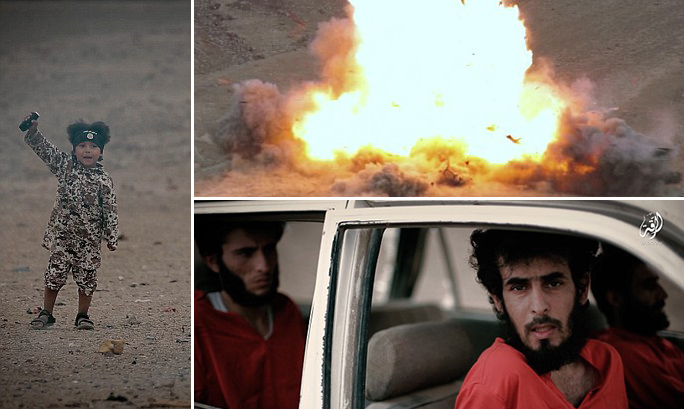
Translate »
Skip to toolbar