Daily Archives: June 19, 2017

Iran: The Deep State Endures by Lawrence A. Franklin

  • Western governments need to accept the harsh reality that the Islamic Republic of Iran remains a revolutionary regime. The IRGC has responsibility over all ballistic missile programs and research and development. The West also needs to internalize that all decisions over ballistic missiles and associated delivery systems, the pursuit of a nuclear weapons capability, export of the revolution, aggressive support of the Shi’a ascendancy in the Gulf and militant acts of inhumanity towards their own people are made by the deep state.

  • In short, the Iranian regime is much more Islamic than a Republic. The regime’s most reviled and inveterate enemies remain Israel and the United States.
  • Those Iranians opposed to the existing order have been broken physically and psychologically by a combination of regime cruelty and lack of support from the world’s democracies.

Despite the voluminous and biased reporting about the conclusions that should be drawn from Iran’s recent Majles (Consultative Assembly) elections, the results signify next to nothing.[1] Hundreds of candidates are disqualified from running by the Council of Guardians (COG) if they are judged to be opposed to the current Islamic regime, or on grounds of “moral turpitude” and other reasons that would be irrelevant in a true democracy. When given the limited choice from a thoroughly vetted set of pro-regime candidates, all of whom favor Islamic rule, the people will always vote for the more “liberal” of the alternatives. This is hardly surprising in a country where the existing martial, theocratic order remains highly unpopular.

Whatever the balance in the Majles between hardliners and those members who may be a bit more flexible on some economic and social issues, it matters little. There will always be a significant number of deputies who are former IRGC (Islamic Revolutionary Guard Corps) men, and who will hector a President’s cabinet members and political allies about decisions which run afoul of “deep state” institutions.[2]
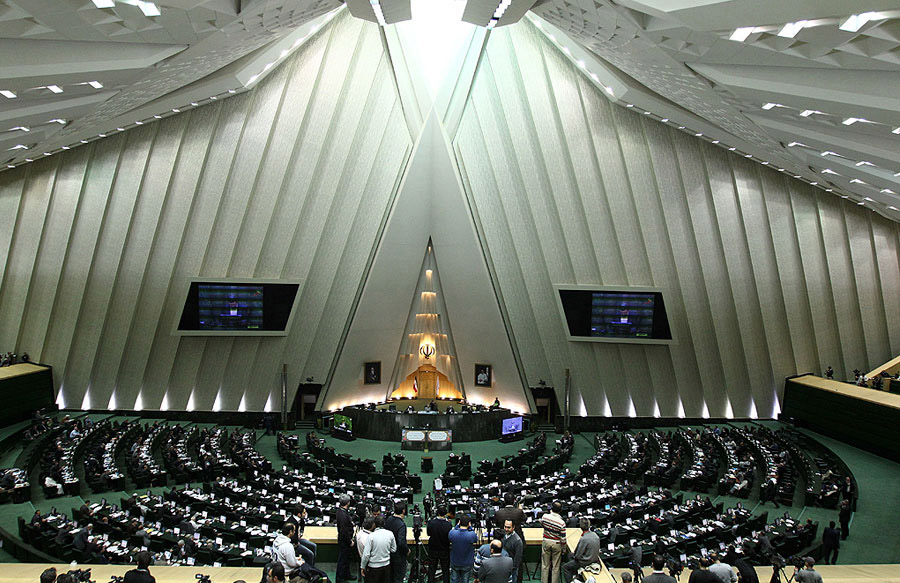
Iran’s Majles (Consultative Assembly). Image source: Mahdi Sigari/Wikimedia Commons

The political superstructure of Iran’s government is much like that of the former Soviet Union. The office of the President, the Majles, and the Civil/Criminal Court System have little real decision-making power in the Islamic Republic. They are more for show, for the people to let off steam, and for foreign observers who might imagine that from there, the seeds of democracy might take root.

Similar to all of the illusions and wishful thinking of the past, the Rouhani era will not usher in an Iran which will conduct itself like a conventional member of the nation-state system. The aforementioned superstructure institutions will remain superficial. Indeed, they serve as screen for the deep state institutions, which will not evolve. The unelected leaders of Iran’s deep state institutions are even more powerful today. No election has resulted in diminution of their power. These substructure institutions — the Council of Guardians, the Assembly of Experts, the Ministry of Information and Security (MOIS), the IRGC’s Intelligence Bureau, the Special Courts, and the Office of the Supreme Leader — remain largely insulated from external pressure and domestic transitory moods.

Western governments need to accept the harsh reality that the Islamic Republic of Iran remains a revolutionary regime. The IRGC has responsibility over all ballistic missile programs and research and development. The West also needs to internalize that all decisions over ballistic missiles[3] and associated delivery systems, the pursuit of a nuclear weapons capability, export of the revolution,[4] aggressive support of the Shi’a ascendancy in the Gulf[5] and militant acts of inhumanity towards their own people are made by the deep state.

In short, the regime remains much more Islamic than a Republic. The regime’s most reviled and inveterate enemies remain Israel and the United States.

Moreover, those Iranians opposed to the existing order have been broken physically and psychologically by a combination of regime cruelty and lack of support from the world’s democracies.[6] The people, though sullen, appear resigned to their fate. The dispirited state of the populace has proven advantageous for the ruling clique of the regime’s Praetorian Guard, the IRGC, the politically reactionary mullahs, and the economy’s kleptocrat-bureaucrats to rule with virtual impunity.

Dr. Lawrence A. Franklin was the Iran Desk Officer for Secretary of Defense Rumsfeld. He also served on active duty with the U.S. Army and as a Colonel in the Air Force Reserve, where he was a Military Attaché at the U.S. Embassy in Israel.


[1] A Majles in Islamic governments is more of a consultative assembly rather than a legislative body. It is more of a sounding board for various political constituencies. In fact, the original meaning of the term referred to a Council of Tribes. “The Oxford Dictionary of Islam” by John Esposito, 2003, p. 187. In Iran, it is the Council of Guardians which (Shuraya-e-Negahban) decides whether any bill passed by the Majles is theologically compatible with the Koran and Islam. See “Who Rules Iran” by Wilfried Buchta, Konrad Adenauer Stiftung, 2000, p. 59.A slightly different version of this institution is the Loya Jirga in Afghanistan.

[2] “Who Rules Iran: The structure of Power in the Islamic Republic” by Wilfried Buchta. See Chapter III: “The Internal Political Struggle (1997-2000). All of Iran’s previous six Presidents before Hassan Rouhani were victims of tense vocal challenges to Presidential and/or Cabinet level decisions. This was particularly true during President Khatami’s two terms (1997-2005).

[3] See Michael Eisenstadt’s Chapter on “Iran’s Military Dimension” in “Iran Under Khatami,” The Washington Institute for Near East Policy, 1998.

[4] “Islam and Revolution” by Imam Khomeini. Mizan Press: Berkeley, California, 1981. Imam Khomeini outlined in detail in his speeches and writings the Islamic Republic’s worldwide mission to establish Allah’s Kingdom on earth.

[5] Iran has dispatched thousands of troops, military advisers, militia warriors and spies to assist Shi’a causes in Syria, Yemen, Iraq, and Bahrain.

[6] See the HBO Film “For Neda” which focuses on the millions of protesters challenging the presidential election of Mahmoud Ahmadinejad to a second term in 2009. The film quotes the regime as claiming that the President had received 63% of the vote. During the student led protests in 1999 and the widespread national demonstrations after the fraudulent re-election of Ahmadinejad in 2009, the world’s democracies amounted to muted vocal support.

Iran: Poets Face 99 Lashes and Prison by Amir Taheri

  • “She writes something but means something else.” — Tehran Islamic Prosecutor.The irony in all this is that Ekhtesari is not a political poet. In fact, she has written that those who try to use poetry for politics betray both.

  • The sentencing was made easier thanks to a recent lecture by “Supreme Guide” Ayatollah Ali Khamenei, laying down the rules of what he believes “good Islamic poets” should observe when writing poetry.


  • The poet Sa’id Sultanpour was abducted on the day of his wedding and shot dead in a Tehran prison. Rahman Hatefi-Monfared had his veins cut and was left to bleed to death in the notorious Evin Prison.

  • “I hope to see the day when no one is sent to jail in this land for writing poems.” — Mehdi Mussavi, convicted poet.

Does a seminar on reforming the meter and rhyme schemes of Persian poetry violate “Islamic values” and threaten the foundations of the Islamic Republic of Iran?

That is the view of the Islamic Court in Tehran, which last month sentenced two poets, Fateme Ekhtesari and Mehdi Mussavi, to nine and 11.5 years in prison respectively, plus 99 lashes of the cane for each in public.

One of the two, Mrs. Fateme Ekhtesari, was sentenced to 11.5 years for “undermining the security of the Islamic state” by composing and reciting in public a number of “poems full of ambiguity and capable of being read in deviant and dangerous ways.”

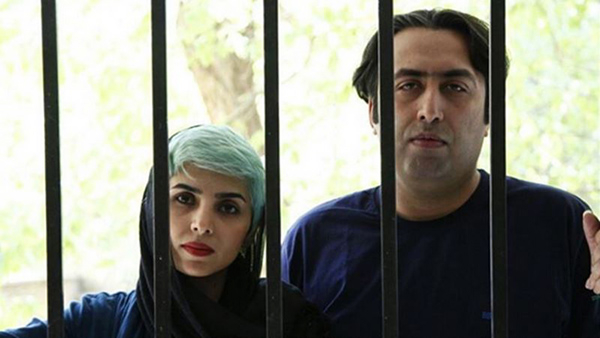
The Islamic Court in Tehran sentenced two poets, Fateme Ekhtesari (left) and Mehdi Mussavi (right), to nine and 11.5 years in prison respectively, plus 99 lashes. Ekhtesari was charged with reciting “poems full of ambiguity and capable of being read in deviant and dangerous ways.” Mussavi was charged with “insulting sacred values of the Islamicummah.”

Ekhtesari is a surrealist poet whose verse could, and indeed is intended to, be read in many different ways. One of her diwans (collections of verse), for example, is called “Crying on the Shoulder of An Egg”. Another comes under the title “A Feminist Discourse Before Baking Potatoes.”

Feminism is a strong theme with Ekhtesari, who insists that, as God created both men and women from the same “red mud” mentioned in the Koran, there is no reason to prevent the latter from enjoying any freedoms available to the former.

The Tehran Islamic Prosecutor, however, insisted that Ekhtesari’s “ambiguous poems” were meant to pass “dangerous political messages that could encourage people to distance themselves from the True Faith.”

“She writes something but means something else,” the prosecutor claimed. “Her trick is to avoid saying anything in a straightforward way, creating space for all manner of dangerous thinking.”

The prosecutor based part of his case on the claim that what matters in Islam is “zikr,” that is to say, a constant remembrance of God by repeating, if necessary in silence and to oneself, the formula “There is no God but Allah”. Those who abandon “zikr” for its opposite — which is “fikr“, that is to say, thinking — move away from the Path of Faith.

The irony in all this is that Ekhtesari is not a political poet. In fact, she has written that those who try to use poetry to advance political ideals betray both.

As editor of the monthly literary magazine Only One Tomorrow, Ekhtesari offered space to writers and poets across the ideological spectrum, including some Khomeinists. Her magazine was shut down soon after Hassan Rouhani became president.

However, as a poet, Ekhtesari cannot but be affected by the ambient social and political order in her homeland. She cannot turn her face the other way when she sees ugliness, oppression and terror — themes that force their way into some of her poems.

Ekhtesari is also an original theoretician of poetic modes. Her collection of essays entitled “Linguistic Tricks in Postmodern Sonnet” is both intriguing and instructive.

Ekhtesari’s fellow convict-cum-poet is Mehdi Mussavi, who received a six-year sentence. Mussavi is the founder and principal animator of a poetry workshop in Tehran where Ekhtesari has often spoken and recited her poems. The workshop is supposedly dedicated to developing a new form that Mussavi calls “postmodern ghazal.” The classic form of Persian sonnet,ghazal, has been the subject of numerous attempts at modernization, notably by Simin Behbahani, one of Iran’s greatest contemporary poetesses.

Like Behbahani, Mussavi argues that, having experimented with modern forms, including European-style prose-poetry, for almost a century, Persian poets need to return to traditional forms, albeit with changes to reflect modern realities.

Mussavi rejects the argument of the older generation poets such as Ahmad Shamlou, who claimed that the traditional ghazal is so beholden to the musicality of its meter and rhyme schemes that it cannot relay any meaning in a powerful way.

According to Mussavi, once the Persian poet has learned to play by the traditional rules, he could invent virtually countless meters and rhymes capable of expressing any sentiment.

Literary opponents of Mussavi’s theories, especially on the left, argue that he, like Behbahani and other reformers of the ghazal before them, suffers from a sense of insecurity in a changing world where the Iran they knew is being remolded into something repulsive in the name of Islam.

The Islamic Court, however, charged Mussavi with propagating “immoral images” in his poetry and thus “insulting sacred values of the Islamic ummah.”

Equally painful is the Islamic Court’s decision to impose a blanket ban on the publication and recital of any poems by Ekhtesari and Mussavi. Under an edict issued by the Islamic Guidance Ministry in 2003, people like Ekhtesari and Mussavi, who are found guilty of “insulting Islam” and thus put on the official index, become “non-persons” — even their names and pictures are banned.

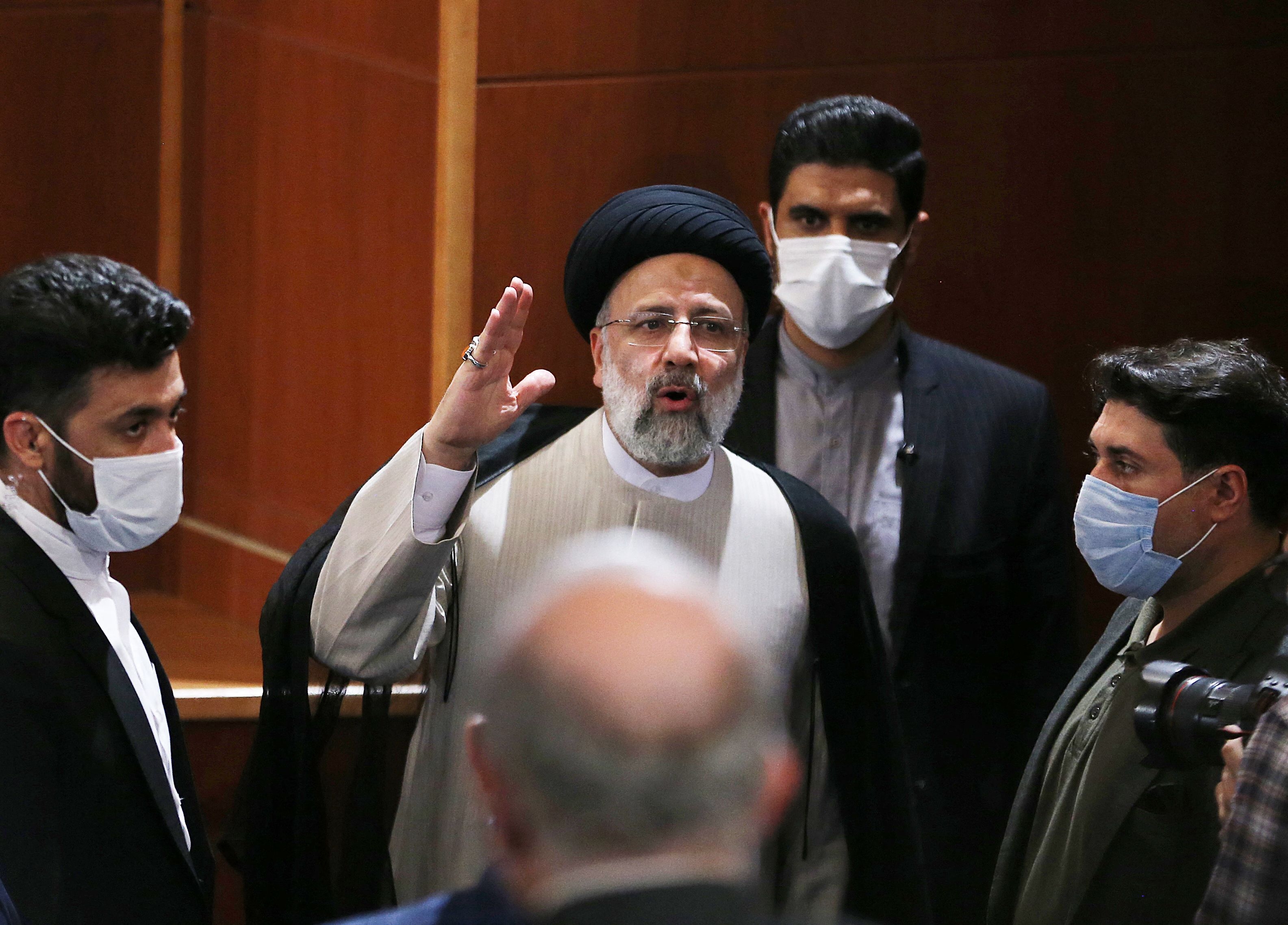
Both Ekhtesari and Mussavi had spent several months in prison two years ago, but were released after the Islamic Prosecutor Ayatollah Ra’isi failed to prove any political crime.

That is why this time, the prosecutor focused on a claim that the poets had attacked “the sacred tenets of the faith”.

The sentencing was made easier thanks to a recent lecture by “Supreme Guide” Ayatollah Ali Khamenei laying down the rules of what he believes “good Islamic poets” should observe when writing poetry.

However, as exiled poet Yadallah Roya’i notes, one could write an advertising text or a police report on demand, but not poetry. “Even the poet cannot order himself to write poetry,” Roya’i noted.” The poet is like a tree, shedding its leaves and flowers so that there is room for future leaves and flowers.”

Iran is one of the few countries in the world where poetry has always been regarded as the highest form of literary creation. In Iranian cities, streets and parks were more often named after poets than conquerors or empire-builders or, until the mullahs seized power, Islamic saints and/or theologians. If an Iranian home has at least one book, it is likely to be a collection of poems.

And yet, with the seizure of power by mullahs in 1979, Iran has experienced one of the most dangerous phases in its long history, as far as poets — and intellectuals in general — are concerned.

Another irony is that both the founder of the regime, the late Ayatollah Ruhollah Khomeini, and his successor as “Supreme Guide” Ali Khamenei, cast themselves as amateur poets. Khomeini banned publication of his own divans while he was alive, believing that appearing as a poet might soften the dour persona he was building as leader of a revolution that could execute 4000 people on a weekend.

Since his death, however, hundreds of his poems, most of them traditional-style sonnets (ghazals) have been published by the foundation bearing his name. Ali Khamenei does not publish his poems, but organizes private readings with a few dozen “appreciators” once or twice a year and is reportedly “in seventh heaven” when his entourage quote one of his verses.

Ekhtesari and Mussavi have been sent to jail, not killed. Other poets have not been so lucky.

Hashem Shaabani was hanged on the eve of President Rouhani’s visit to Ahvaz in 2014. Shaabani was not the first Iranian poet to be murdered by the mullahs. The left-wing poet Sa’id Sultanpour was abducted on the day of his wedding on Khomeini’s orders, and shot dead in a Tehran prison. Rahman Hatefi-Monfared, writing under the pen-name of Heydar Mehregan, had his veins cut and was left to bleed to death in the notorious Evin Prison. Under President Hashemi Rafsanjani, a plan to kill a busload of Iranian poets on their way to a festival in Armenia failed at the last minute. Nevertheless, Rafsanjani succeeded in eliminating more than a dozen writers and poets. The worst spate of killings happened under President Khatami, when more than 80 intellectuals, including the poets Mohammad Mokhtari and Mohammad-Ja’far Pouyandeh, were murdered by the Islamic regime’s security agents.

Let’s give the final word to Mussavi: ” I hope to see the day when no one is sent to jail in this land for writing poems.” Inshallah!

Iran: Nuclear Deal Going, Going, Gone? by Lawrence A. Franklin

  • Iranian military commanders, security chiefs and conservative media outlets are coming close to questioning the competence and loyalty of those in the Iranian regime who favor the JCPOA.


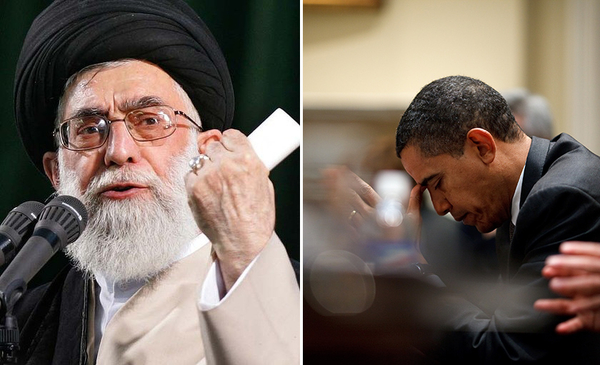
  • The surreal irony, of course, is that President Obama keeps assuring the world — as recently as last week again, when he met with Israel’s PM Benjamin Netanyahu — that he is “preventing” Iran from getting nuclear weapons, while the truth is that his “deal” — if the Iranians ever sign it — not only green-lights Iran’s nuclear program, but in fact finances it.

Iran’s hardliners are pressing their attack on the Joint Comprehensive Plan of Action (JCPOA), which has not yet been approved by Iran. Iran’s opponents of the JCPOA have succeeded in halting any steps toward implementation of Tehran’s responsibilities under the July14 settlement reached in Vienna by the five permanent members of the UN Security Council — the US, the UK, France, China and Russia, plus Germany (the so-called P5+1). But who appointedthem?

While some reports indicated that Iran was beginning to take off the production line some of the uranium-enrichment centrifuges in the Natanz and Fordow facilities, contradictory reports suggested that any such action was halted due to pressure from Iran’s hardliners, and that dismantling the centrifuges had not been authorized by Iran’s Supreme Leader, Ayatollah Ali Khamenei, and was therefore premature. Another report suggested that only a small number of outdated centrifuges had been decommissioned.

However, a stern letter of warning was dispatched to President Hassan Rouhani from 20 key members of Iran’s Majlis [Islamic Consultative Assembly], many of whom have close ties to the Islamic Revolutionary Guard Corps (IRGC), informing him to cease any dismantling activity.[1]

In addition, Iranian military commanders, security chiefs and conservative media outlets are coming close to questioning the competence and loyalty of those in the Iranian regime who favor the JCPOA.[2] These personal assaults have implied that some officials are trying to whitewash the reputation of the United States in order to improve relations with the “Great Satan.”[3] The targets of those criticisms appear to be Foreign Minister Mohammad Javad Zarif as well as President Rouhani.

The Iranian military’s Deputy Chief of the General Staff, Major General Gholam Ali Rashid, said that there are two types of officials that favor the JCPOA, and that their goal is “embellishing America’s despicable image — the “simple-minded, which includes some government officials as well as spiteful, traitorous, infiltrators.”

General Rashid’s comments dovetailed with other cautionary statements — by the Chairman of the Basij [a volunteer militia], Professor Sohrab Salahi[4] and Majlis deputy Ali Reza Zakani — warning against allowing the JCPOA to serve as a channel to increase foreign influence in the Islamic Republic.[5]

President Rouhani, in an attempt to reassert his authority on the issue, has criticized the conservative newspaper Keyhan, edited by Hossein Shariatmadari, who has often been associated with expressing the will of Ayatollah Khamenei. On 8 November, Rouhani indirectlycriticized Keyhan for its threatening article that equated support for the JCPOA as helping America to increase its influence inside the Islamic Republic. The hardliners, however, quicklystruck back against Rouhani in the person of Tehran’s interim Friday prayer leader, Hojjat ol Eslam Sedighi.

Rouhani also attempted to burnish his image by meeting publicly with a senior Shia theologian, Grand Ayatollah Lotfollah Safi Golapayegani, and eliciting from him a statement of tentative support for the airing of all opinions on the JCPOA.[6]

It seems that the hardliners are gaining the upper hand by piling new requirements on the shoulders of the P5+1 nations, possibly in order to extinguish the JCPOA altogether. Conservatives are also claiming that any new sanctions imposed in response to Iran’s human rights violations or foreign policy operations will void the JCPOA altogether.

It also appears that President Rouhani and his political allies are losing ground amid the Iranian hardliners’ attack on the JCPOA arrangement and the prospects of a possible opening to the West. Rouhani has attempted to appease the hardliners by now demanding that President Obama personally apologize for America’s hostile behavior towards Iran.

The surreal irony, of course, is that Obama keeps assuring the world — as recently as last week again, when he met with Israel’s Prime Minister Benjamin Netanyahu — that he is “preventing” Iran from getting nuclear weapons, while the truth is that his “deal” — if the Iranians ever sign it — not only green-lights Iran’s nuclear program, but in fact finances it.

Dr. Lawrence A. Franklin was the Iran Desk Officer for Secretary of Defense Rumsfeld. He also served on active duty with the U.S. Army and as a Colonel in the Air Force Reserve, where he was a Military Attaché at the U.S. Embassy in Israel.

Iran: Ayatollah Khamenei Plans Next Supreme Leader by Majid Rafizadeh

  • ince Khamenei took power in 1989, he has shown no deviation from Khomeini’s revolutionary ideologies. Opposing the United States, “the Great Satan,” and the rejection of Israel’s existence are two of the most critical pillars of Iran’s revolutionary ideals — what defines the raison d’être of the Iranian regime, as well as what shapes Khamenei’s ideological and foreign policy.

  • Other revolutionary core values that Khamenei desires the next supreme leader to hold include supporting Palestinian and Lebanese armed groups against Israel, maintaining Iran’s nuclear program, and being the supreme leader of the entire Islamic world — not only the leader of the Shiites. Khamenei’s official website refers to him as “the Supreme Leader of Muslims,” not the Supreme Leader of “Iran.”

Iran’s Supreme Leader, Ayatollah Ali Khamenei, in the past did not seem to wish to discuss topics linked to his successor — — the next Supreme Leader. Nevertheless, recently the trend has altered. Khamenei has begun dictating his policies, preferences, and priorities in what kind of Supreme Leader he would rather the Iranian regime have, and who, after his death, the Assembly of Experts ought to choose.

In a recent meeting, the 76-year-old Ayatollah Khamenei met with some members of the Assembly of Experts, and pointed out that “a supreme leader has to be a revolutionary” and he advised that members not to “be bashful” in selecting the next Supreme Leader.

Iran’s constitution yields the Supreme Leader the greatest authority in the country. The Supreme Leader is the single most crucial figure, the highest-ranking political and religious authority in Iran. He directly or indirectly controls the three branches of the government; the judiciary, the legislature and the executive branch.

But what does a “revolutionary” exactly mean to Khamenei? From Khamenei’s perspective, a revolutionary supreme leader would be someone who forcefully pursues the ideological principles of Ayatollah Ruhollah Khomeini, the founder of the Islamic Republic, and the core ideals of Iran’s 1979 Revolution.

Since Khamenei took power in 1989, he has shown no deviation from Khomeini’s revolutionary ideologies. Opposing the United States, “the Great Satan,” and the rejection of Israel’s existence are two of the most critical pillars of Iran’s revolutionary ideals — what defines the raison d’être of the Iranian regime, as well as what shapes Khamenei’s ideological and foreign policy.

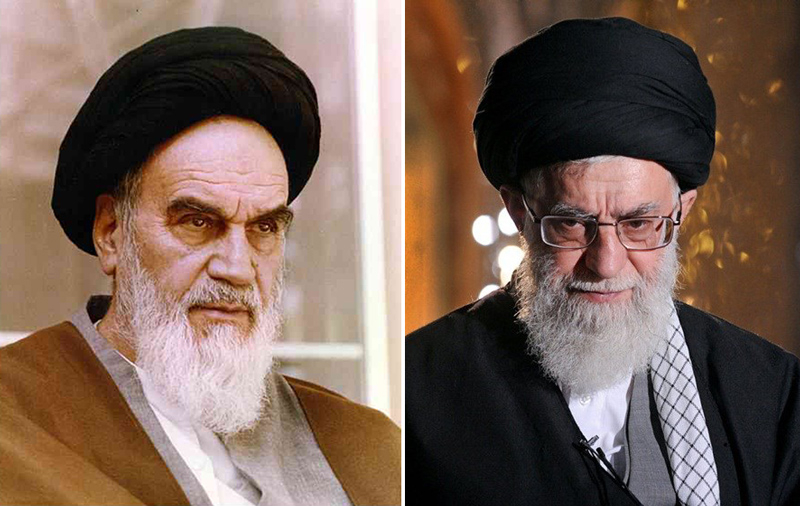
Who’s next? Ayatollah Ruhollah Khomeini (left) founded the Islamic Republic of Iran in 1979. He hand-picked Ayatollah Ali Khamenei (right) as his successor for Supreme Leader. Now Khamenei seems to be setting the stage to choose his own successor.

Khamenei believes that Iran would lose its Islamic character, its legitimacy, its appeal among its supporters and the essence of its revolution, as well as endanger the survival of its theocratic political establishment. if it were to shift its stance and its policies towards the U.S. and Israel.

Khamenei is the second longest-ruling autocrat in the region. For him, his adherence to these revolutionary ideals are the real reasons behind his success in ruling for more than two decades. In addition, he sees that these are the underlying factors that made his regime immune from powerful opposition, popular uprisings and revolutions such as those in other countries in the region.

Other revolutionary core values that Khamenei desires the next supreme leader to hold include supporting Palestinian and Lebanese armed groups against Israel, maintaining Iran’s nuclear program, and being the vanguard of Islam and the supreme leader of the entire Islamic world — not only the leader of the Shiites. Khamenei’s official website refers to him as “the Supreme Leader of Muslims,” not the Supreme Leader of “Iran.”

Iran’s domestic and foreign policy is anchored in the three pillars of preserving the revolutionary ideology, national interests (regarding economic, strategic and geopolitical spheres) and Iranian nationalism. Khamenei is a firm advocate of prioritizing ideological norms over the other two backbones of the regime.

Khamenei is playing the same game that was played when he was chosen as the Supreme Leader. In this video, one can see how the former president and founder of the Iranian regime, Akbar Rafsanjani, and Ayatollah Khomeini chose Khamenei as the next Supreme Leader.

Unlike what the mainstream media depicts, the Assembly of Experts will not play a crucial role in determining who will be the successor to Khamenei. The Assembly of Experts is a ceremonial political body, with 86 members, who are said to determine the country’s next supreme leader.

It is important to point out that the Assembly of Experts is mainly a rubber-stamp organization; its 86 members were already vetted by the subjective decisions of the hardline political body; the Council of Guardians. The twelve members of the Council of Guardians are appointed directly by the Supreme Leader (six members), and indirectly (nominated by the head of the judiciary and appointed by the Supreme Leader).

The Islamic Revolutionary Guard Corps (IRGC), a hardline branch of the military that was once the child of Iran’s Islamic revolution and has since been transformed into the “Big Brother” of the Iranian regime, is another extremist organization that is acting hand-in-hand with Khamenei to choose the next Supreme Leader behind closed doors.

Khamenei’s efforts to direct the decision of the Assembly of Experts does not reflect the notion that he is concerned that this political body might elect a disqualified person as the next Supreme Leader.

Instead, Khamenei’s latest remarks highlight the notion that he and the senior cadre of the IRGC are setting the stage to elevate their favorite choice for the next Supreme Leader of the Iranian regime.

Dr. Majid Rafizadeh, an Iranian-American political scientist and Harvard University scholar, is president of the International American Council. He can be reached at Dr.rafizadeh@post.harvard.edu or followed at @Dr_Rafizadeh

Iran-Backed Rebels Use Hospitals as Human Shields by Con Coughlin

  • Investigators found that at the time of the attack, Houthi rebels were occupying the hospital, making it a legitimate target.

  • “While the West urges the Saudi-led coalition to use all means possible to avoid civilian casualties, we must also be aware of the tactics the Iranian-backed rebels are using as part of a deliberate policy to discredit the coalition war effort.” — Senior Western official.

Iranian-backed Houthi rebels are using hospitals as military command posts, thereby deliberately putting the lives of innocent civilians at risk, according to a new report into Yemen’s long-running civil war.

Hostilities in the Yemeni conflict resumed at the weekend following the collapse of peace talks in Kuwait. The talks came after Houthi fighters, who are backed by Iran’s Islamic Revolutionary Guards, rejected a U.N.-sponsored peace plan and announced the establishment of a 10-member governing body to run the country.

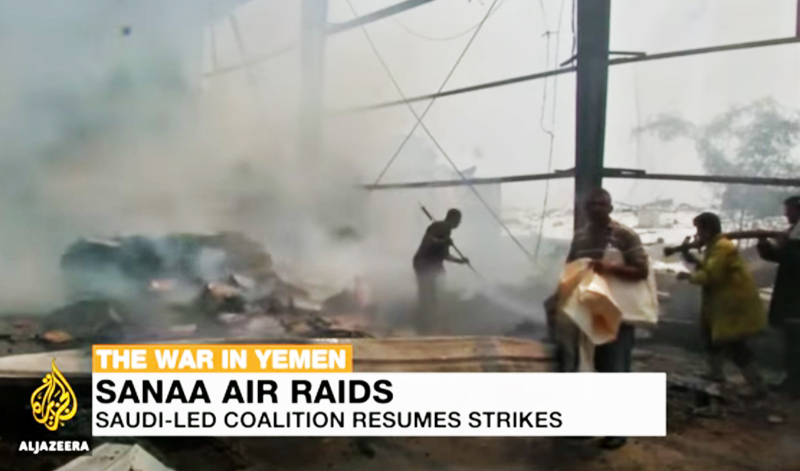
Within hours of the peace talks ending, the Saudi-led military coalition, which is backed by both the U.S. and Britain, had resumed air strikes against Houthi rebel positions in the Yemeni capital, Sana’a. Initial reports said that at least 21 people, the majority of them civilians, had been killed, including a number of workers in a potato chip factory in Sana’a. In addition, the international airport at Sana’a was shut down by the airstrikes after Saudi coalition officials notified airlines that incoming flights would be barred for 72 hours.

A factory in Sana’a, Yemen, burns after an airstrike on August 9, 2016. (Image source: Al Jazeera video screenshot)

It is the first time in five months that Sana’a has been bombed by warplanes from the coalition, which also includes the United Arab Emirates, Bahrain, Egypt, Sudan and other Middle East countries.

Human rights groups, which have repeatedly raised concerns about the high number of civilian casualties, will be particularly concerned by the resumption of hostilities. The U.S.-backed Saudi coalition is seeking to restore the democratically-elected government of President Abdrabbuh Mansour Hadi, who was forced to flee Sana’a in February by Houthi rebels. The Houthis are being supported by elite units from Iran’s Islamic Revolutionary Guards Corps (IRGC). More than 6,000 people have been killed in the civil war, including around 3,000 civilians.

Both sides in the conflict have been accused of causing unnecessary civilian casualties, with the Saudis, who have suffered significant casualties of their own, being singled out for particular censure over the way they have conducted coalition air strikes.

But an investigation conducted by coalition officials into claims that Saudi warplanes have directly targeted civilians found that the air strikes had been justified, because the Iranian-backed rebels had been using civilian institutions, such as hospitals, as command posts to launch attacks against coalition forces and their allies.

A report issued earlier this week by the coalition’s Joint Incidents Assessment Team (JIAT) refuted earlier claims by the French-based charity, Doctors Without Borders, that the Saudi coalition had deliberately caused civilian deaths by bombing Haiden Hospital in Yemen’s Saada province. Instead, investigators found that at the time of the attack, Houthi rebels were occupying the hospital, making it a legitimate target.

In all, JIAT investigated eight high-profile bombings where the UN or humanitarian organisations have accused the coalition of killing civilians or bombing hospitals and humanitarian structures. In each case, it concluded that all “safety procedures implemented by coalition forces adhered to international humanitarian law.”

The revelation that Iranian-backed Houthi rebels are deliberately using civilian institutions for their war effort inevitably will draw comparisons with the tactics used by other radical Islamist groups such Hamas, which regularly uses institutions such as hospitals to launch attacks against Israel.

“It is clear that the tactics used by the Houthis, where they are using places like hospitals for their military campaign, has contributed significantly to the heavy civilian death toll,” said a senior Western official. “While the West urges the Saudi-led coalition to use all means possible to avoid civilian casualties, we must also be aware of the tactics the Iranian-backed rebels are using as part of a deliberate policy to discredit the coalition war effort.”

Con Coughlin is the defence and foreign affairs editor of London’s Daily Telegraph.

Translate »
Skip to toolbar