
Europe’s Jew-Hate with a Vengeance

Europe’s Jew-Hate with a Vengeance

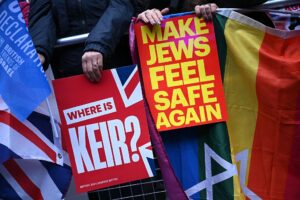
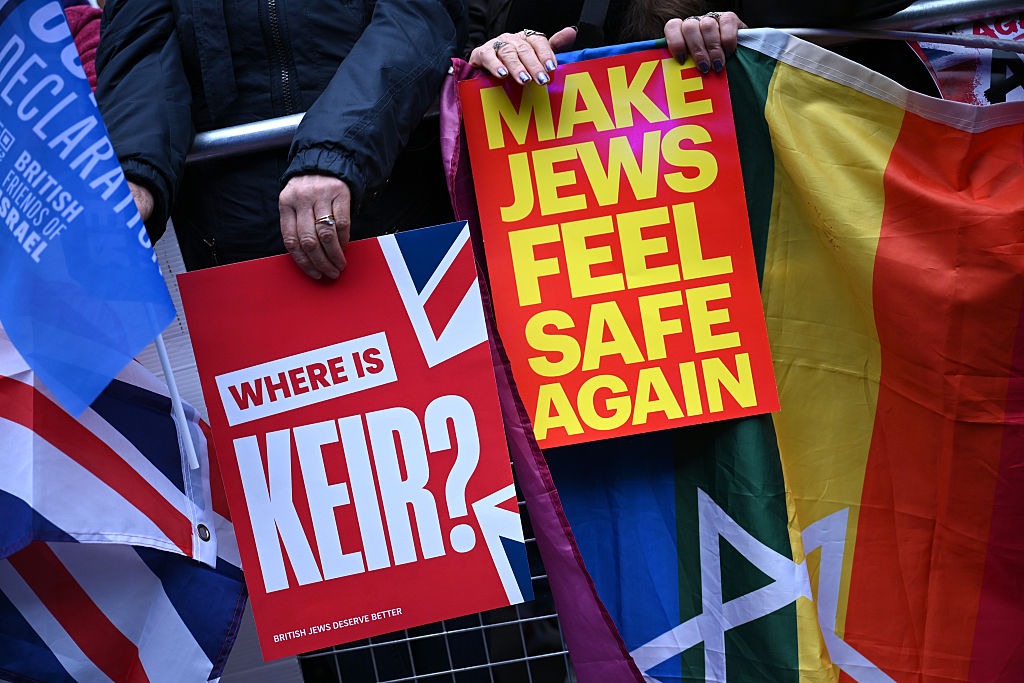
[M]any in the West who sympathize with Islamic terrorists were, within hours, trying to justify Hamas’s atrocities by blaming Israel. The allegations against Israel were that it was denying supposed rights of More »

Ijuru rikomeje kwibasira Kayumba Nyamwasa!!!

Ijuru rikomeje kwibasira Kayumba Nyamwasa!!!

Ibiro ntaramakuru bikomeje kwibasira Kayumba Nyamwasa bivuga ko atari umuntu mwiza mu gihe yararimo yifuza kuba ya kwandikira Umwami Kigeli Ndoli akaba n’umucamanza uca imanza zitabera z’Uhoraho Uwiteka Imana Nyiringabo. Bikomeza bivuga More »

abanyamadini banze kwemera ubutabera bw’Uwiteka Nyiringabo, none covid19 pandemic iragarutse!!!

abanyamadini banze kwemera ubutabera bw’Uwiteka Nyiringabo, none covid19 pandemic iragarutse!!!

Uwiteka Imana Nyiringabo yabwiye abanyamadini ngo bafunge insengero zabo baranga, none batumye covid19 yongera kugaruka. Amakuru avuga ko covid19 pandemic ubu yamaze kugera mu bihugu bigera 23 harimo US, UK, Canada, Australia More »

Iran: Complete Regime Change for Permanent Peace

Iran: Complete Regime Change for Permanent Peace

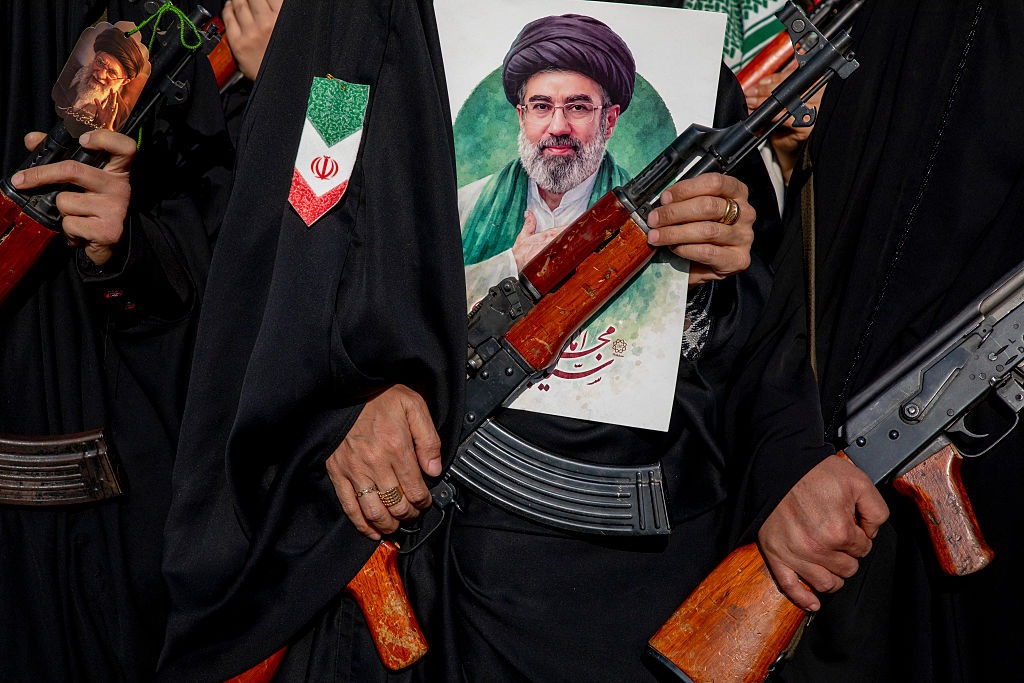
The enduring barbarity of the clerical regime’s attempts to subjugate the Iranian people to its will demonstrates why the Trump administration’s decision to launch fresh military action was justified. It also exposes More »

Fusion Energy: Why America Needs to Own Its Technology

Fusion Energy: Why America Needs to Own Its Technology

For decades, fusion energy has been the great scientific pursuit — clean, limitless power drawn from the same physics that powers the sun. Enormous progress has been made in the technology required More »


Turkey’s Growing Influence over Islam in Austria by Soeren Kern

  • The Berlin-based expert on Turkey, Ralph Ghadban, warns that the Islam being preached in Turkish-controlled mosques in Europe is a “Sharia Islam with strong Turkish-nationalist overtones” that calls for a “strict separation from Western individualistic values.”

  • In February 2016, the University of Vienna published study which found that Islamic kindergartens in the capital are dominated by “intellectual Salafists and political Islamists” who are contributing to the “theologically-motivated isolation” of Muslim pupils. The report calls into question claims by the IGGiÖ that anti-Western textbooks have been removed from Austrian schools.
  • Muslim students now outnumber Roman Catholic students at middle and secondary schools in Vienna, according to official statistics, which show that Muslim students are also on the verge of overtaking Catholics in Viennese elementary schools. The data confirms a massive demographic and religious shift in Austria, traditionally a Roman Catholic country.

The selection of an ethnic Turk to lead the Islamic Religious Community in Austria (Islamischen Glaubensgemeinschaft in Österreich, IGGiÖ), the primary representative of Muslims in the country, is being challenged by Muslim groups opposed to Turkey’s growing influence over the practice of Islam in Austria.

Ibrahim Olgun, a 28-year-old Austrian-born Islamic theologian with ties to the Turkish state, was quietly named on June 19 to replace 62-yer-old Fuat Sanac, who stepped down after serving as IGGiÖ president for five years.

Sanac, also a Turk, was reviled by Turkish authorities for helping the Austrian government draft a new Islam Law (Islamgesetz) that aims to promote an “Islam with an Austrian character.” The law, which was promulgated in February 2015, seeks to reduce outside meddling by prohibiting foreign funding for mosques, imams and Muslim organizations in Austria. It also stresses that Austrian law must take precedence over Islamic Sharia law for Muslims living in the country.

Observers worry that Olgun — a member of the Turkey-financed Turkish-Islamic Union for Cultural and Social Cooperation in Austria (ATIB), an influential group that has vowed to challenge the Islam Law at Austria’s Constitutional Court — will use his new position both to undermine the Islam Law and to increase further Turkey’s influence over Muslims in Austria.

At least eight Austrian Muslim groups (representing Albanian, Arab, Bosnian and Sufi Muslims) are challenging Olgun, who was selected by the IGGiÖ’s Shura Council (Schurarat), a rules committee (Shura is an Arabic word for consultation) whose five members all happen to be ethnic Turks.

IGGiÖ statutes require a person to be at least 35 years old to head the group, but the Shura Council secretly annulled that stipulation last December, according to Hassan Mousa, head of the Arab Religious Community in Austria (Arabischen Kultusgemeinde in Österreich). He said that Olgun’s selection was “undemocratic” and “illegal” and added that his ties to ATIB would shift IGGiÖ’s balance of power further in Turkey’s direction.

ATIB, an umbrella group that operates more than 60 mosques in Austria, is directly managed by the religious affairs attaché at the Turkish embassy in Vienna, and the imams of these mosques are Turkish civil servants. ATIB and its German counterpart, the Turkish-Islamic Union for Religious Affairs (DITIB), are financed by the Turkish government’s Directorate for Religious Affairs, known in Turkish as Diyanet.

According to the Berlin-based expert on Turkey, Ralph Ghadban, the primary mission of ATIB and DITIB is to “install the Turkish government’s official version of Islam” in Austria and Germany. He says the two groups are the “extended arms” of Turkish President Recep Tayyip Erdogan, who uses them to promote Turkish nationalism as an antidote to integration among the Turkish diaspora.

Ghadban warns that the Islam being preached in Turkish-controlled mosques in Europe is a “Sharia Islam with strong Turkish-nationalist overtones” that calls for a “strict separation from Western individualistic values.” He also says that DITIB has been strengthening its ties to Milli Görüs (Turkish for “National Vision”), an influential Islamist movement strongly opposed to Muslim integration into European society.

Olgun, who studied Islamic theology at the University of Ankara, has vowed to represent all Muslims in Turkey:

“I myself have experienced what it is like to grow up in Austria and to question my own identity. What is religion and what is tradition? It is worthwhile to reflect on it and then do theological research. Today I feel at home as a Muslim in Austria, but I also do not forget my roots. Therefore I will build bridges.”

Olgun insists that he will not be Erdogan’s puppet and will not allow himself to be influenced by ATIB. Until recently, however, Olgun was ATIB’s point man for “interreligious dialogue,” a key method of spreading Islam in the West by portraying it as a religion of peace and tolerance.

In Austria, ATIB directly competes with the Vienna-based, Saudi-funded King Abdullah bin Abdulaziz International Centre for Interreligious and Intercultural Dialogue, which, according to critics, is a permanent “propaganda center” in central Europe from which to spread the conservative Wahhabi sect of Islam.

Olgun also was an “inspector for Islamic religious instruction” (Fachinspektor für islamischen Religionsunterricht) for the IGGiÖ in Vienna, where he worked to ensure that Muslim children are being taught a version of Islam that presumably complies with standards established by the Turkish government.

The selection of 28-year-old Ibrahim Olgun (left) as the new leader of the Islamic Religious Community in Austria has been criticized by other local Muslim leaders as “undemocratic” and “illegal.” They believe Olgun will work to increase Turkey’s influence over Muslims in Austria. At right, the Saudi-funded King Abdullah bin Abdulaziz International Centre for Interreligious and Intercultural Dialogue in Vienna, which critics say spreads fundamentalist Wahhabi Islam.

The IGGiÖ, which represents more than 250 Muslim associations across Austria, supplies state-funded Islamic religious education at Austrian public and private schools.

In 2014, the IGGiÖ introduced new taxpayer-funded textbooks for the formal teaching of Islam in all public elementary schools across the country. According to the IGGiÖ, the new textbooks — called “Islam Hour” (Islamstunde) — are based on “secure and recognized sources of Islam” aimed at “embedding Islam into the lives of students.”

Unlike previous versions of the books, which were criticized for being “overly martial in tone” and for not being “sufficiently oriented toward European values,” the new books have been developed based a “completely new didactic model for competency-based education.”

In February 2016, however, the University of Vienna published study which found that Islamic kindergartens in the capital are dominated by “intellectual Salafists and political Islamists” who are contributing to the “theologically-motivated isolation” of Muslim pupils. The report calls into question claims by the IGGiÖ that anti-Western textbooks have been removed from Austrian schools: “In many of their publications the Muslim Brotherhood and Milli Görüs reject the Western way of life as an inferior worldview.”

Olgun rejects the criticism levelled against him: “They say that I am too young, that I am the extended arm of the Turkish state. That is not true. I was born in Austria. I grew up here and am an Austrian citizen. I am not a Turkish civil servant.”

Olgun’s supporters say it is time for a “generational change” at the IGGiÖ because Austria’s Muslim community is young and growing fast. The Muslim population in Austria now exceeds 500,000 (or roughly 6% of the total population), up from an estimated 150,000 (or 2%) in 1990. The Muslim population is expected to reach 800,000 (or 9.5%) by 2030, according to recent estimates.

Muslim students now outnumber Roman Catholic students at middle and secondary schools in Vienna, according to official statistics, which show that Muslim students are also on the verge of overtaking Catholics in Viennese elementary schools. The data confirms a massive demographic and religious shift in Austria, traditionally a Roman Catholic country.

Soeren Kern is a Senior Fellow at the New York-based Gatestone Institute. He is also Senior Fellow for European Politics at the Madrid-based Grupo de Estudios Estratégicos / Strategic Studies Group. Follow him on Facebook and on Twitter. His first book, Global Fire, will be out in 2016.

Turkey’s Grisly Dances with the Islamic State by Burak Bekdil

  • If a “mere” 11.3% of Turks thought so generously of the Islamic State, it meant that there were nearly nine million Turks sympathetic to jihadists. Only 5% of that would mean an army of nearly 450,000.


  • Apparently, the people of Turkey did not “rise up and fight against these atheists [Kurds], these Crusaders and these traitors.” So they had to be killed by jihadists in suicide-bombing attacks. IS promised to attack, and it did.

  • 450,000 minus two (suicide-bombers) leaves behind too big a number. Turkish cities are unsafe.

  • Davutoglu cannot admit that jihadists alone had simply murdered people en masse in a twin bomb attack.

On October 10, Turkey woke up to the worst single terror attack in its history. The twin suicide-bomb attack in Ankara killed 97 and injured nearly 250 people, with more than 60 of the wounded being treated in intensive care. As of October 14, no one had claimed responsibility, but all indications pointed to the Islamic State (ISIS, or IS) — the same jihadists Turkey’s Islamist government once helped logistically, in the hope that they would facilitate Syrian President Bashar al-Assad’s downfall and the establishment of an Islamist regime there.

In fact, the attack in front of the main train station in downtown Ankara looked like a bigger-scale version of a July 20 attack in Suruc, a small town on Turkey’s border with Syria. A Turkish-Kurdish suicide-bomber with ties to the Islamic State murdered 33 people at a pro-Kurdish meeting in Suruc, and paved the way for a spiral of violence that has since claimed hundreds of lives. Actually, since most of the deaths resulted mostly from Turkish-Kurdish clashes, the attacks may have claimed thousands: Kurdish militants’ casualties remain unknown. Since July 20, more than 150 Turkish police and military officers have been killed.

One of the two perpetrators of the Ankara bombings now is believed to be the brother of the Suruc bomber. The second suspect also has alleged ties with jihadist groups.

On October 10, thousands of pro-peace activists from different NGOs — most of them pro-Kurdish, secular, leftist and opponents of the AKP government — had gathered in front of Ankara’s main railway station, to protest the wave of violence sparked by the Islamic State suicide-bombing in Suruc in July. They had no way of knowing that two other jihadists would turn their “peace rally” into a bloodbath. The usual police body searches for weapons or bombs — carried out routinely before every public rally — were omitted this time. Interior Minister Selami Altinok admitted that the body searches were not done, but refused to acceptallegations of negligence.

The October 10 Ankara suicide-bombings targeted peaceful pro-Kurdish demonstrators. Pictured above, one of the bombs explodes in the background.

The murder of nearly 100 people in a terror attack is shocking wherever in the world it happens, or whoever commits it. But the Ankara attack was hardly a total surprise. This author has mentioned at least a few times the findings of an August 2014 poll, which found that 11.3% of Turks did not view the Islamic State as a terrorist organization. Eleven percent is in no way a marginal figure: If a “mere” 11.3% of Turks thought so generously of ISIS, it meant that there were nearly nine million Turks sympathetic to jihadists. And only 5% of that would mean an army of nearly 450,000. The two suicide-bombers on October 10 were most likely just a two of that big bunch of 450,000 or so sleepers inside Turkey.

Shocking? Not really. In August, the Turkish Justice Ministry revealed that there were only 126 people in Turkish prisons on charges of being a member of IS. “Hence the unnerving threat of IS attacks on Turkish cities, most probably by the group’s “sleeper cells” inside Turkey,” anarticle in this journal warned. IS had recently released a video promising to “conquer” Istanbul by the armies of the Caliph:

“Soon, Turkey’s east will be dominated by the atheist PKK [Kurdish militants], and the West will be dominated by the Crusaders. They will kill children, rape women, and enslave you. O people of Turkey; before [it is] too late, you should rise up and fight against these atheists, these Crusaders and these traitors. You should also repent. You should condemn democracy, secularism, human-made laws, tomb-worshipping and other devils.”

Apparently, the people of Turkey did not “rise up and fight against these atheists, these Crusaders and these traitors.” So they had to be killed by jihadists in suicide-bombing attacks. IS promised to attack, and it did.

450,000 minus two (suicide-bombers) leaves behind too big a number. Turkish cities are unsafe. Turkey’s Islamist leaders look appalled to have been attacked by their one-time comrades. They should not. They wanted to dance with the devil in order to “Islamize” the failed state of Syria. The dance has ended up in carnage. It had to.

Turkey’s Islamist leaders once hoped that they would triumphantly visit Damascus when it would be Sunni Islamist, not Shia and secular. Instead, their former jihadist friends hit them right in the heart of their capital. But Ankara does not learn.

Prime Minister Ahmet Davutoglu, instead of calling a spade a spade, mentioned three other organizations as potential culprits for the attack. In addition to the Islamic State, he said, other suspects were the PKK, the Revolutionary People’s Liberation Party-Front (DHKP-C) and the Marxist-Leninist Communist Party (MLKP).

These Kurdish and extreme left organizations mentioned by Davutoglu are big enemies of jihadists, not friends with whom to jointly organize a terror attack. Most victims were sympathizers of the Kurdish and leftist groups. Yet four days after the Ankara bomb attack, after the police had already identified the two suicide-bombers as Turkish sleepers linked with the Islamic State, Davutoglu still said that the attackers were linked with both IS jihadists and Kurdish militants.

Davutoglu cannot admit that jihadists alone simply murdered people en masse in twin bomb attacks.

The Ankara bombing was a bad ending of one part of the Turkish Islamists’ willing dance with the devil. The dance is not over yet.

Burak Bekdil, based in Ankara, is a Turkish columnist for the Hürriyet Daily and a Fellow at the Middle East Forum.

Turkey’s Fake War on Jihadis by Burak Bekdil

  • Last year, a Turkish pollster found that one in every five Turks thought that the Charlie Hebdo attack in Paris was the natural response to men who insulted Prophet Mohammed.


  • “Infidels who were enemies of Islam thought they buried Islam in the depths of history when they abolished the caliphate on March 3, 1924 … Some 92 years after … we are shouting out that we will re-establish the caliphate, here, right next to the parliament.” — Mahmut Kar, media bureau chief for Hizb ut-Tahrir Turkey.
  • At a March meeting with top U.S. officials, King Abdullah of Jordan accused Turkey of exporting terrorists to Europe. He said: “The fact that terrorists are going to Europe is part of Turkish policy and Turkey keeps on getting a slap on the hand, but they are let off the hook.”
  • And Turkey is the country its Western allies believe will help them fight jihadists? Lots of luck!

In theory, Turkey is part of the international coalition that fights the Islamic State (IS). Since it joined the fight last year, it has arrested scores of IS militants, made some efforts to seal its porous border with Syria and tagged IS as a terrorist organization. Turkish police have raided homes of suspected IS operatives. More recently, Turkey’s Interior Ministry updated its list of “wanted terrorists” to include 23 IS militants, and offered rewards of more than 42 million Turkish liras (more than $14 million) for any information leading to the suspects’ capture. But this is only part of the story.

On March 24, a Turkish court released seven members of IS, including the commander of the jihadists’ operations on Turkish soil. A total of 96 suspects are on trial, including the seven men who were detained but released. All are free now, although the indictment against them claims that they

“engaged in the activities of the terrorist organization called DAESH [Arabic acronym of IS]. The suspects had sent persons to the conflict zones; they applied pressure, force, violence and threats by using the name of the terrorist organization, and they had provided members and logistic support for the group.”

The release of terror suspects came in sharp contrast with another court decision that ruled for a trial, but while under detention, for four academics who had signed a petition calling for peace in Turkey’s Kurdish dispute. Unlike the IS militants, the academics remain behind bars.

The Turkish government, which controls the judiciary almost in its entirety, relies on Islamist grassroots supporters of various flavors — from Islamists and ‘lite jihadists’ to radicals.

Last year the Turkish pollster MetroPOLL found that one in every five Turks thought that the Charlie Hebdo attack in Paris was the natural response to people who insulted Prophet Mohammed [only 16.4% of Turks thought of the incident as an attack on freedom of expression]. Among the ruling Justice and Development Party’s (AKP) voters, the rate of approval of the attack was 26.4%; and only 6.2% viewed it as an attack on free speech. Only 17.8% of AKP voters thought the attack was the work of radical Islamists. Three-quarters of AKP voters thought Muslims were aggrieved by the attack; while as few as 15.4% thought the victims were the cartoonists who were murdered. Two-thirds of AKP voters thought attacks on Islam by Christian Crusaders were continuing.

The fact that key IS suspects are now free because the government may fear looking mean to its Islamist supporters only partly explains the appalling judicial rulings on jihadists and academics. “The suspects may be holding the Turkish government hostage … What if they threatened the authorities that they would reveal the government support for their organization in the past? You normally don’t walk free over such serious legal allegations,” observes one western diplomat in Ankara.

Russia has been claiming that Turkey keeps supporting the Islamic State through trading the jihadists’ oil, their main source of income. A new report claims that total supplies to terrorists in Syria last year was 2,500 tons of ammonium nitrate; 456 tons of potassium nitrate; 75 tons of aluminum powder; sodium nitrate; glycerine; and nitric acid. The report stated:

“In order to pass through the border controls unimpeded, effectively with the complicity of the Turkish authorities, products are processed for companies that are purportedly registered in Jordan and Iraq … Registration and processing of the cargo are organized at customs posts in the [Turkish] cities of Antalya, Gaziantep and Mersin. Once the necessary procedures have been carried out, the goods pass unhindered through the border crossings at Cilvegozu and Oncupinar.”

Turkey keeps playing a fake war on jihadist terrorists. At a March meeting with top U.S. officials, King Abdullah of Jordan accused Turkey of exporting terrorists to Europe. He said: “The fact that terrorists are going to Europe is part of Turkish policy and Turkey keeps on getting a slap on the hand, but they are let off the hook.”

In fact, the Turkish government’s secret love affair with various Islamist groups is not always so secret. In March, thousands of supporters of Hizb ut-Tahrir, a global Islamist group, gathered at a public sports hall in Ankara — courtesy of the Turkish government — to discuss the re-establishment of the Islamic caliphate. In his speech, Mahmut Kar, the media bureau chief of Hizb-ut Tahrir Turkey said:

“Infidels who were enemies of Islam thought they buried Islam in the depths of history when they abolished the caliphate on March 3, 1924 … We are hopeful, enthusiastic and happy. Some 92 years after … we are shouting out that we will re-establish the caliphate, here, right next to the parliament.”

(Hizb ut-Tahrir, viewed by Russia and Kazakhstan as a terrorist group, defines itself as a political organization aiming to “lead the ummah” to the re-establishment of the caliphate and rule with sharia law.)

Guess what else Turkey is doing while pretending to be fighting jihadists? Apparently, President Recep Tayyip Erdogan’s declared political ambition to “raise devout generations” seems to have geared up. Turkey’s Religious Affairs General Directorate (Diyanet), the ultimate official religious authority in the country, recently issued comic books to the nation’s children telling them how marvelous it is to become an Islamic martyr.

Turkey’s Religious Affairs General Directorate (Diyanet), the ultimate official religious authority in the country, recently issued comic books to the nation’s children telling them how marvelous it is to become an Islamic martyr.

One comic strip is a dialogue between a father and his son. “How marvelous it is to become a martyr,” the father says. Unconvinced, the son asks: “Would anyone want to become a martyr?” And the father replies: “Yes, one would. Who doesn’t want to win heaven?”

And this is the country its Western allies believe will help them fight jihadists? Lots of luck!

Burak Bekdil, based in Ankara, is a Turkish columnist for the Hürriyet Daily and a Fellow at the Middle East Forum.

© 2016 Gatestone Institute. All rights reserved. No part of the Gatestone website or any of its contents may be reproduced, copied or modified, without the prior written consent of Gatestone Institute.

Comment on this item

Name
Email Address
Title of Comments
Comments:

Note: Gatestone Institute greatly appreciates your comments. The editors reserve the right, however, not to publish comments containing: incitement to violence, profanity, or any broad-brush slurring of any race, ethnic group or religion. Gatestone also reserves the right to edit comments for length, clarity and grammar. All thoughtful suggestions and analyses will be gratefully considered. Commenters’ email addresses will not be displayed publicly. Gatestone regrets that, because of the increasingly great volume of traffic, we are not able to publish them all.

AddThis Sharing
321

Turkey’s Exhausting Zigzagging Between East and West by Burak Bekdil

  • “What is the moral of the story? Until a few weeks ago, the West was comfortably day-dreaming that, despite his foibles, Erdogan was a staunch U.S. ally and an eager EU candidate. After all, had he not, only recently, downed a Russian jet? Then, suddenly, what do we see? Putin and Erdogan kissing and making up …” — Fuad Kavur, London.

Turkey has been a republic since 1923, a multi-party democracy since 1946, and a member of NATO since 1952. In 1987, it added another powerful anchor into the Western bay where it wanted it to remain docked: It applied for full membership in the European Union (EU). This imperfect journey toward the West was dramatically replaced by a directionless cruise, with sharp zigzags between the East and West, after President Recep Tayyip Erdogan’s Islamist AKP party came to power in 2002. Zigzagging remains the main Turkish policy feature even at this day.

Until the summer of 2015 Turkey was widely known as the “jihad highway,” because of its systematic tolerance for jihadists crossing through Turkey into neighboring Syria to fight Erdogan’s regional nemesis, Syrian President Bashar al-Assad. Turkey supported various jihadist groups in the hope that they would help Ankara unseat Assad. Then, under pressure from its NATO allies, it decided to join the U.S.-led, international campaign to fight the Islamic State of Iraq and Syria (ISIS) in Syria. Feeling betrayed, ISIS started to blow up Turkish cities.

At the end of 2015, Turkey risked tensions with Russia in order to advance its pro-Sunni Islamist agenda in Syria. Russia, together with Iran, provided the lifeline Assad needed to stay in power while Turkey stepped up its anti-Assad campaign. In November, Turkey once again zigzagged toward the West when it shot down a Russian military aircraft, citing the violation of its airspace along its border with Syria. Turkey also threatened to shoot down any Russian aircraft that might violate its airspace again. It was the first time in modern history that a NATO ally had shot down a Soviet or Russian military airplane.

An angry Vladimir Putin, Russia’s president, imposed punishing economic sanctions, which cost the Turkish economy billions of dollars. Turkey started zigzagging again. In July 2016, Erdogan apologized for downing the Russian plane, and in August he went to Russia to shake hands for normalization. Once again, Russia is trendy for the Turks, and the West looks passé.

In July 2016, Erdogan apologized for downing the Russian plane, and in August he went to Russia to shake hands for normalization. Once again, Russia is trendy for the Turks, and the West looks passé. Pictured: Russian President Vladimir Putin with Turkey’s then Prime Minister Erdogan, meeting in Istanbul on December 3, 2012. (Image source: kremlin.ru)

Erdogan and his men are now accusing NATO and, in particular, the United States, of roles in the failed July 15 coup, which they claim is linked to a reclusive, U.S.-based Islamic scholar, Fethullah Gulen. According to Turkish Defense Minister Fikri Isik, NATO should sit down and think where it went wrong in response to the coup attempt in Turkey. According to Turkey’s justice minister, Bekir Bozdag, the United States would be sacrificing its alliance with Turkey to “a terrorist” (Gulen) if it refuses to extradite him.

Turkey’s newfound love affair with Russia will inevitably have repercussions in Syria, and that pleases Iran. “Not only will Turkey have to ‘digest’ that [Russian-Iranian-Syrian] line, it will have to join it, entering into a pact with Putin and the ayatollahs. Clearly, this is where Erdogan has decided is the best place to pledge his allegiance,” wrote Meira Svirsky at The Clarion Project. There are already signs.

Turkish Foreign Minister Mevlut Cavusoglu said that Turkey and Russia have similar views on the need for a ceasefire in Syria, the provision of humanitarian aid, and a political solution to end the crisis. That must have caused shy smiles in Moscow: the Turkish John Wayne on his knees begging to work on Syria only months after he threatened to shoot down any Russian aircraft and kick the Russians out of Syria. Now Turkey is calling on Russia to team up and carry out joint military operations in a bid to crush ISIS in Syria.

After the last Turkish zigzag, Turkey and Russia found where they converge: Putin accuses the West of violating agreements by expanding NATO to Russia’s borders and fomenting unrest in nearby Georgia and Ukraine, while in Turkey, the pro-Erdogan media accuses the U.S. of orchestrating the coup. There are more alarming signals from Ankara. Cavusoglu, the foreign minister, said that Turkey may look outside NATO for defense cooperation.

Fuad Kavur, a prominent London-based film director and producer, described the Turkish zigzag in a private letter (quoted with permission):

“Erdogan’s recent manoeuvrings remind me of how Hitler hoodwinked the West. Until four days before he invaded Poland, the West, ever sleepwalking, were utterly convinced Hitler was going to attack USSR, because he had come to power on an anti-Communist ticket. The West had a rude awakening only when, on 23 August 1939, Von Ribbentrop signed the Non-Aggression Pact with Molotov; and on Sept. 1, Hitler took half of Poland. Few days later, Stalin took the other half.

“What is the moral of the story? Until a few weeks ago, the West was comfortably day-dreaming that, despite his foibles, Erdogan was a staunch U.S. ally and an eager EU candidate. After all, had he not, only recently, downed a Russian jet? Then, suddenly, what do we see? Putin and Erdogan kissing and making up … It is a matter of ‘my enemy’s enemy…'”

From the beginning, Russia was too big for Turkey to bite. A few billion dollars of trade losses and friendly reminders from Western allies that Turkey should keep up to better democratic standards were sufficient to get Ankara kneel down — and perform another act of zigzagging. This, in all probability, will not be the last such act.

Burak Bekdil, based in Ankara, is a Turkish columnist for the Hürriyet Daily and a Fellow at the Middle East Forum.

Turkey’s Dangerous Moves in Iraq by Burak Bekdil

  • Turkey’s primary concern is not to drive ISIS out of Mosul but to make it a “Sunni-controlled city” after ISIS has been pushed out. And this ambition jeopardizes the planned assault on ISIS.Turkey’s pretext is that its troops are in Iraq to “fight ISIS.” That does not convince anyone.

In a span of five years Turkey has had serious political and military tensions with several countries in its vicinity: Israel, Syria, Russia, Jordan, Egypt, Cyprus and Greece. Most recently, Iraq has also joined the club of hostilities surrounding Turkey.

Despite the Iraqi government’s vehement requests that Turkey withdraw its troops in Iraq, Ankara shrugs it off and says it will maintain its military presence in the neighboring country for “Iraq’s stability.” What a nice neighborly gesture! Behind the Turkish indifference lies sectarian concerns and ambitions.

On October 1, Turkey’s parliament extended the mandate of Turkish troops deployed in Iraqi territory by one more year. The troops are stationed near Bashiqa in northern Iraq — as unwanted guests. That sparked a row with Baghdad and may further complicate the cold sectarian war between the Sunnis in the region, supported by Turkey, Saudi Arabia and Qatar, and their Shiite enemies, supported by Iran and the Shiite-controlled government in Baghdad.

(Image source: TRTWorld video screenshot)

Iraqi Prime Minister Haider al-Abadi renewed the call for the withdrawal of Turkish soldiers from his country and warned that Turkey’s military adventurism could trigger another war in the Middle East. He said: “We do not want to enter into a military confrontation with Turkey … The Turkish insistence on [its] presence inside Iraqi territories has no justification.”

The Iraqi parliament said in a statement: “The Iraqi government must consider Turkish troops as hostile occupying forces.”

Baghdad has also requested an emergency meeting of the United Nations Security Council (UNSC) to discuss the issue. The UNSC should “shoulder its responsibility and adopt a resolution to end to the Turkish troops’ violation of Iraq’s sovereignty,” said Ahmad Jamal, spokesman for the Iraqi Foreign Ministry.

The Turkish move does not annoy only Iraq, but also its Western allies. Col. John Dorrian, the spokesman for the US-led coalition of 65 countries that fight the Islamic State (ISIS), said that Turkish troops in Iraq are not acting as part of the alliance. Dorrian said that Turkey is operating “on its own” in Iraq. He added that the coalition position is that every unit “should be here with the coordination or and with the permission of the government of Iraq.”

By October 9, things started to get more annoying. Iraq’s Ambassador to Turkey, Hisham Alawi, said:

“If we do not reach some result, the Iraqi government will be forced to consider other options, and by doing so, Iraq would be practicing its right to defend its sovereignty and Iraq’s interests.”

Ankara remains defiant. Prime Minister Binali Yildirim said that Turkish troops would remain in Iraq. Turkey’s pretext is that its troops are in Iraq to “fight ISIS.” That does not convince anyone. Turkey’s intention is largely sectarian (read: pro-Sunni) and Yildirim admitted that in a not-so-subtle way when he said that the Turkish troops were in Iraq also “to make sure that no change to the region’s ‘demographic structure’ is imposed by force.”

Turkey fears that the aftermath of a planned assault on Mosul, Iraq’s second largest city and ISIS’s Iraqi stronghold, could see a heavy Shiite and Kurdish dominance in the Mosul area. Turkish Foreign Minister Mevlut Cavusoglu said: “Involving Shiite militias in the operation [against IS] will not bring peace to Mosul. On the contrary, it will increase problems.” Unsurprisingly Turkey’s pro-Sunni Islamists want Sunni dominance in a foreign country. This is not the first time they passionately do so.

The problem is that Turkey’s sectarian ambitions come at a time when the coalition is preparing a heavy offensive on ISIS-controlled Mosul. Turkey’s primary concern is not to drive ISIS out of Mosul but to make it a “Sunni-controlled city” after ISIS has been pushed out. And this ambition jeopardizes the planned assault on ISIS.

Iraqis think that the offensive to retake Mosul from ISIS is unlikely to begin as long as Turkish troops remain in Iraq. “I think that as long as these Turkish troops remain around Mosul, the operation to control the city will not start, or there must be a new agreement for the Turkish force not to take part in the offensive,” said Iraqi lawmaker Abdelaziz Hasan, also a member of the defense and security committee at the Iraqi parliament.

Turkey’s sectarian ambitions in neighboring Syria have ended up in total failure and bloodshed. Now Ankara wants to try another sectarian adventure in another neighboring and near-failed state, under the pretext of “bringing stability.” Yildirim said that Turkey “bears responsibility for stability in Iraq.” That is simply funny. You cannot bring stability to a country that looks more like a battleground of multiple religious wars than a country with just a few hundred troops.

Burak Bekdil, based in Ankara, is a Turkish columnist for the Hürriyet Daily and a Fellow at the Middle East Forum.

Translate »
Skip to toolbar