Category Archives: Uncategorized

Ukraine: Prezida Obama asaba iperereza ku ihanurwa ry’indege ya Malaysia Umukuru w’Amerika, Barack Obama yavuze ko ibimenyetso bigaragaza ko indege ya Malaysia Airlines yaguye mu burasirazuba bwa Ukraine, yarashwe n’igisasu cya misile kirasiwe mu gace kag

Ukraine: Prezida Obama asaba iperereza ku ihanurwa ry’indege ya Malaysia
Umukuru w’Amerika, Barack Obama yavuze ko ibimenyetso bigaragaza ko indege ya Malaysia Airlines yaguye mu burasirazuba bwa Ukraine, yarashwe n’igisasu cya misile kirasiwe mu gace kagenzurwa n’impirimbanyi zegamiye k’Uburusiya.


Prezida Obama yavuze ko ari agahomeramunwa kandi ko izo mpirimbanyi zabonye inkunga y’Uburusiya irimo intwaro zihanura indege.

Umukuru w’Amerika yasabye ko imirwano ihita ihagarara, kugirango habe iperereza mpuzamahanga.

Abantu hafi 300, abarenga icya kabiri bakomoka mu Buhorandi, bapfiriye mu ndege yavaga Amsterdam yerekeza I Kuala Lumpur igwa mu burasirazuba bwa Ukraine, hafi y’umupaka w’U Burusiya. Ibisigazwa byayo binyanyagiye ku mbuga iri mu gace kagenzurwa n’abarwanyi bashyigikiwe n’u Burusiya.

Umuryango wo gutabarana mu bihugu by’u Burayi OSCE wavuze ko abarwanyi bari bemeye ko abashinzwe iperereza bahagera ntankomyi.

Impirimbanyi zishyigikiye Uburusiya ziravuga ko zizemerera abapererezi mpuzamahanga kuza gukora iperereza.

Umuyobozi mukuru w’urwego rw’umutekano muri Ukraine atangaza ko ibiganiro byo kuri telefoni byagaragaje ko abarwanya ubutegetsi aribo bakoze icyo gitero, ariko bo bakabihakana.


Ukraine: Leta yigaruriye ikibuga cy’indege


Umushikiranganji w’ubutegetsi bw’igihugu wa Ukraine, Arsen Avakov, yavuze ko ingabo z’igihugu cye zongeye kwigarurira ikibuga cy’indege cyo mu mujyi wa Donetsk kandi ko abantu bose baguye mu mirwano ari impirimbanyi zishyigikiye Uburusiya.

Izo nyeshyamba zari zafashe icyo kibuga cy’indege ejo kuwa mbere maze igisirikare cy’igihugu gikoresha za kajugujugu mu guhashya icyo gitero.


Ariko umunyamakuru wa BBC yavuze ko izo nyeshyamba zikigenzura imihanda igana ku kibuga cy’indege kandi ko hari amasasu acyumvikana.


UK: What British Muslims Really Think by Soeren Kern

  • The 615-page survey found that more than 100,000 British Muslims sympathize with suicide bombers and people who commit other terrorist acts. Moreover, only one in three British Muslims (34%) would contact the police if they believed that somebody close to them had become involved with jihadists.

  • “[W]e have to adopt a far more muscular approach to integration than ever, replacing the failed policy of multiculturalism… Britain’s liberal Muslims are crying out for this challenge to be confronted. … There is a life-and-death struggle for the soul of British Islam — and this is not a battle that the rest of us can afford to sit out. We need to take sides… We have ‘understood’ too much, and challenged too little — and in doing so are in danger of sacrificing a generation of young British people to values that are antithetical to the beliefs of most of us, including many Muslims.” — Trevor Phillips, former head of Britain’s Equality and Human Rights Commission.
  • The survey does show that 88% of British Muslims believe Britain is a good place for Muslims to live. According to Philips, this is because the tolerance they enjoy in Britain allows them to do whatever they want.

Many British Muslims do not share the values of their non-Muslim compatriots, and say they want to lead separate lives under Islamic Sharia law, according to the findings of a new survey.

The poll — which shows that a significant part of the British Muslim community is becoming a separate “nation within a nation” — has reignited the long-running debate about the failure of 30 years of British multiculturalism and the need for stronger measures to promote Muslim integration.

The survey was conducted by ICM Research for the Channel 4 documentary, “What British Muslims Really Think,” which aired on April 13.

The 615-page survey found that more than 100,000 British Muslims sympathize with suicide bombers and people who commit other terrorist acts. Moreover, only one in three British Muslims (34%) would contact the police if they believed that somebody close to them had become involved with jihadists.

In addition, 23% of British Muslims said Islamic Sharia law should replace British law in areas with large Muslim populations.

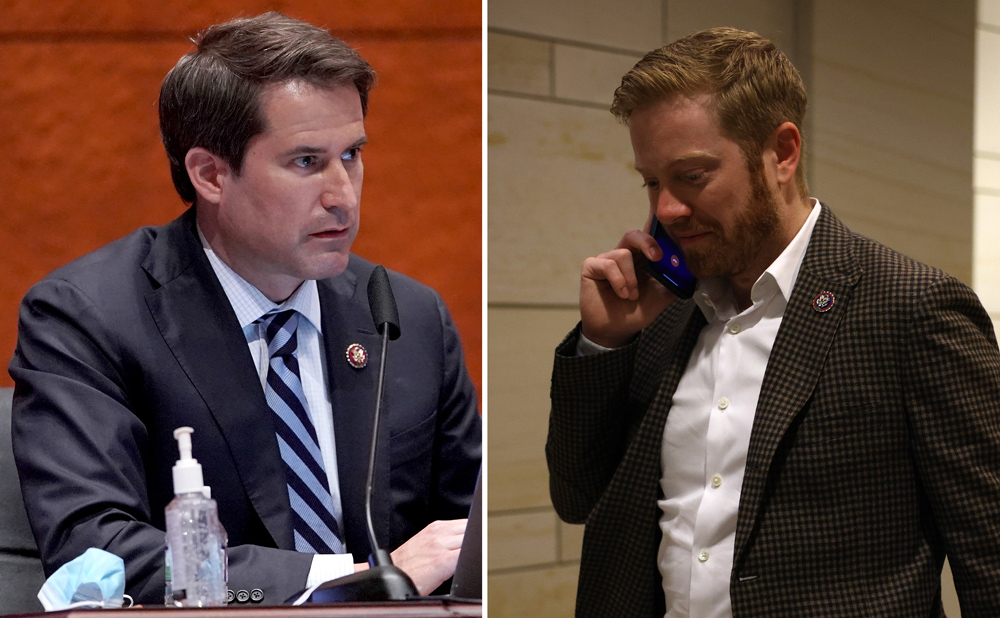
On social issues, 52% of the Muslims surveyed said they believe homosexuality should be illegal, compared to 22% of non-Muslim Britons. Nearly half believe it is unacceptable for a gay or lesbian to teach their children. At the same time, almost a third (31%) of British Muslims think polygamy should be legalized. Among 18-to-24-year-olds, 35% think it is acceptable to have more than one wife.
Thirty-nine percent of Muslims surveyed believe women should always obey their husbands, compared to 5% for non-Muslims. One in three British Muslims refuse completely to condemn the stoning of women accused of adultery.

The poll also found that a fifth of British Muslims have not entered the home of a non-Muslim in the past year.

Of the British Muslims surveyed, 35% believe Jewish people have too much power in the UK, compared to 8% of non-Muslims.

In an essay for the Sunday Times, Trevor Phillips, the host of the documentary and a former head of Britain’s Equality and Human Rights Commission, warned of a growing “chasm” between Muslims and non-Muslims in Britain that “isn’t going to disappear any time soon.”

Phillips wrote that the poll reveals “the unacknowledged creation of a nation within the nation, with its own geography, its own values and its own very separate future.” He added: “I thought Europe’s Muslims would gradually blend into the landscape. I should have known better.”

Phillips was referring to his rather ignominious role in commissioning the 1997 report, “Islamophobia: A Challenge for Us All.” Also known as the Runnymede Report, the document popularized the term “Islamophobia” in Britain and had a singular role in silencing criticism of mass immigration from the Muslim world. Twenty years later, Phillips now concedes that he has had a change of heart.

In an essay for the Daily Mail, Phillips, wrote:

“There is a life-and-death struggle for the soul of British Islam — and this is not a battle that the rest of us can afford to sit out. We need to take sides.

“Four per cent — the equivalent of more than 100,000 British Muslims — told the researchers that they had sympathy for people who take part in suicide bombing to fight injustice. Asked if they knew that someone was involved with supporting terrorism in Syria, just one in three would report it to the police.

“There is one truly terrifying finding. Muslims who have separatist views about how they want to live in Britain are far more likely to support terrorism than those who do not. And there are far too many of the former for us to feel that we can gradually defeat the threat.

“Liberal-minded Muslims have been saying for some time that our live-and-let-live attitudes have allowed a climate to grow in which extremist ideas have flourished within Britain’s Muslim communities. Our politicians have tried to reassure us that only a tiny minority hold dangerous views.

“All the while, girls are shipped off to have their genitals mutilated, young women and men are being pressured into marriages they do not want, and teenagers are being seduced into donning suicide vests or becoming jihadi brides.

“We have ‘understood’ too much, and challenged too little — and in doing so are in danger of sacrificing a generation of young British people to values that are antithetical to the beliefs of most of us, including many Muslims.

“In my view, we have to adopt a far more muscular approach to integration than ever, replacing the failed policy of multiculturalism.”

Philips added:

“Muslims want to be part of Britain — but many do not accept the values and behaviors that make Britain what it is; they believe that Islam offers a better future. And a small number feel that these sincerely held beliefs justify attempts to destroy our democracy.

“Britain’s liberal Muslims are crying out for this challenge to be confronted. The complacency we’ve displayed so far is leaving them to fight alone, and putting our society in danger. We cannot continue to sit on the fence in the hope that the problem will go away.”

The survey does show that 88% of British Muslims believe Britain is a good place for Muslims to live. According to Philips, this is because the tolerance they enjoy in the UK allows them to do whatever they want.

Some British Muslims have rejected the conclusions of the survey, which they say uses a flawed methodology because it was conducted in areas where Muslims make up more than 20% of the population, compared to 5.5% overall. They say the survey results are skewed because they are indicative of Muslims in these areas and not of British Muslims as a whole.

In an interview with CNN, however, ICM Director Martin Boon said that more than half of all British Muslims live in areas that are more than 20% Muslim and that the survey findings are sound. “In my view, this is the most rigorous survey of Muslims outside of the largest and most expensive surveys conducted by the UK government,” Boon said.

The president of the British Polling Council, John Curtice, told CNN that ICM had followed standard methods of polling ethnic minorities in the UK.

Unlike many other surveys of Muslim opinion, which have usually been conducted by telephone or online, ICM used face-to-face, in-home research to question a representative sample of 1,081 Muslims across Britain.

The Muslim population of Britain surpassed 3.5 million in 2015 to become around 5.5% of the overall population of 64 million, according to figures extrapolated from a recent study on the growth of the Muslim population in Europe. In real terms, Britain has the third-largest Muslim population in the European Union, after France, then Germany.

In a statement, the Muslim Council of Britain (which is linked to the Muslim Brotherhood) claimed the poll lacks “academic rigor” and warned it would “do nothing but harden attitudes on all sides.” It continued:

“Many British Muslims will find it bemusing that commentators and the media have constantly tried and failed to paint a picture of British Muslims at odds with the rest of the country. The way this poll has been formulated and presented in this climate of fear against Muslims is most unfortunate.”

In an opinion article for the Guardian, Miqdaad Versi, the assistant secretary general of the Muslim Council of Britain, argued that Philips “lacks nuance” and has a “distorted interpretation of the UK’s diverse Muslim communities.” He wrote:

“Discussions and proposals to promote integration and cohesion are always welcome. But the starting point should not be that Muslims are the problem, not quite British enough, and must be civilized into a pre-existing notion of Britishness.”

By contrast, Sir Gerald Howarth, Tory MP for Aldershot, said:

“Three cheers for Trevor Phillips. I think he is absolutely right. There’s an element in the Muslim community which reject our values, while enjoying our tolerance.

“We are a tolerant nation because we are routed in the Christian faith, which is a tolerant religion. As our own religious observance declines, a vacuum is being created into which the hardline Islamist community is stepping.

“We have been a very complacent society.”

Allison Pearson, a columnist for the Daily Telegraph, called for an immediate ban on all Sharia courts in Britain and called on the government to ensure that all citizens are subject to British law. She summed up the British predicament:

“This is serious. Unless we succeed, the live-and-let-live attitude which makes Britain such a great place could end up being its death warrant.”

Soeren Kern is a Senior Fellow at the New York-based Gatestone Institute. He is also Senior Fellow for European Politics at the Madrid-based Grupo de Estudios Estratégicos / Strategic Studies Group. Follow him on Facebook and on Twitter. His first book, Global Fire, will be out in 2016.
UK: War on Free Speech at the National Union of Students by Douglas Murray

  • It is interesting to consider what would happen were anyone to demand the same standards of these campaigners against free speech as they demand of others. The people who make such claims rarely if ever exercise the same civic hygiene they demand of everybody else.

  • If it furthered their political and other goals then Malia Bouattia and the National Union of Students (NUS) would most likely be currently calling for arrests and prosecutions for incitement, “hate speech” and more. Of course, nobody could be so ill-mannered as to play this political game back at them. But if they were to, they would certainly find far greater evidence of cause and effect than Bouattia and her colleagues have produced to date in their war on free speech.
  • It could be said that Bouattia engaged in “hate speech” as well as “racist speech” when she said the words she did. It could further be claimed that what Bouattia said in fact constituted “incitement” and an “open invitation to violence”. It could be argued that the words which came out of her lips led directly to a Palestinian man thinking that a British student could be killed on a tram in Jerusalem in a legitimate act of “resistance” against a representative of a “Zionist outpost.”

The great effort of the present-day censors on campuses across the West is to make speech synonymous with action. Campaigners against free expression claim that words not only “wound” people but actually “kill”. They claim that people associated with any group being criticised are not only suffering a verbal “assault” but an actual “physical” assault. Those who campaign against any and all criticism of Islamists, for instance, not only claim that the attacks are “Islamophobic” and target “all Muslims”. They also claim that such words cause violence — including violence against any and all Muslims.

One of the notable things about their objection is that the people who make such claims rarely if ever exercise the same civic hygiene they demand of everybody else. It is interesting to consider what would happen were anyone to demand the same standards of these campaigners as they demand of others.

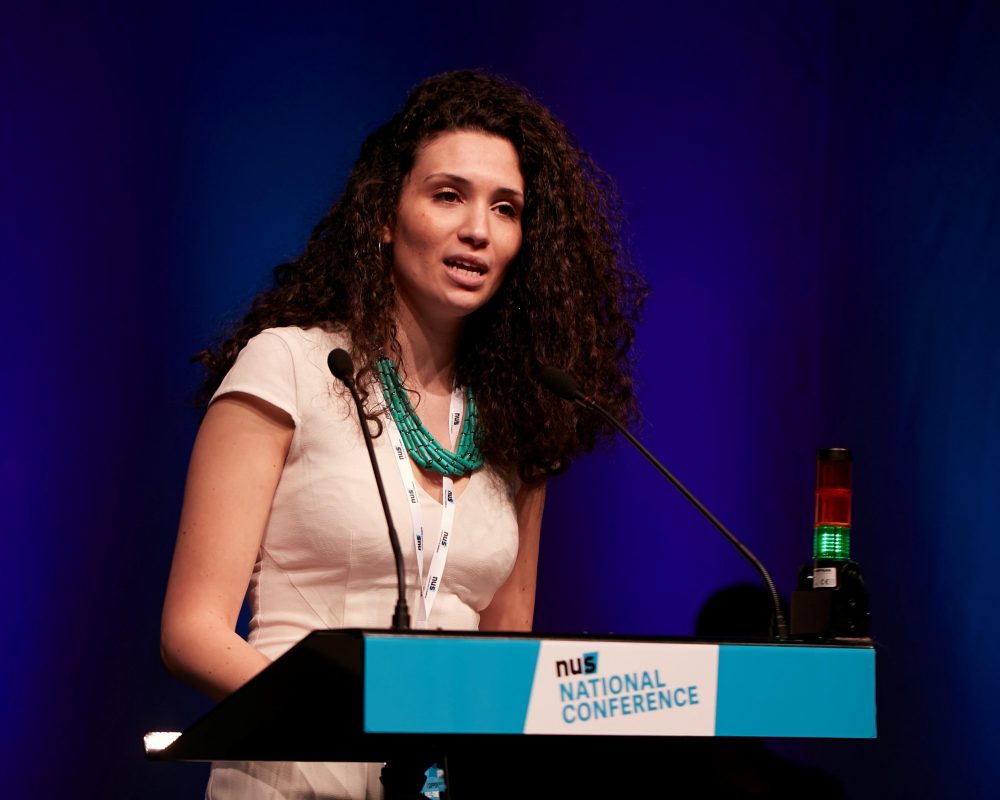
Consider the case of one Malia Bouattia. This is the young woman who is currently president of the National Union of Students (NUS) in Britain. The NUS has long been a campaigning organisation less interested in standing up for the rights and welfare of students as a whole than campaigning for the sort of issues that preoccupy a portion of the hard-left in Britain, at the forefront of which is anti-Zionism. Since her election as NUS president last year, a number of British universities have sought to disaffiliate from the organization in apparent recognition that it has taken an especially virulent turn.

Before she became NUS president, Bouattia had a particular track-record for a type of militant anti-Zionism which can only endear a person to people like the NUS. In a speech recorded in 2014 at a conference on “Gaza and the Palestinian Revolution”, Bouattia railed against “Mainstream Zionist-led media outlets” in which, she said, “resistance is resented as an act of terrorism.” Three years earlier — in 2011 — Bouattia referred to the University of Birmingham as “something of a Zionist outpost in British higher education.”

A House of Commons Home Affairs Select Committee which looked into Bouattia’s track-record last year concluded that:

“The current president of the National Union of Students, Malia Bouattia, does not appear to take sufficiently seriously the issue of anti-Semitism on campus, and has responded to Jewish students’ concerns about her previous language with defensiveness and an apparent unwillingness to listen to their concerns.

“There is of course no reason why an individual who has campaigned for the rights of Palestinian people – a cause widely supported on university campuses – should not serve as president of the NUS.

“But Ms Bouattia’s choice of language (and ongoing defence of that language) suggests a worrying disregard for her duty to represent all sections of the student population and promote balanced and respectful debate. Referring to Birmingham University as a ‘Zionist outpost’ (and similar comments) smacks of outright racism, which is unacceptable, and even more so from a public figure such as the president of the NUS.”

Malia Bouattia, the president of the UK National Union of Students, refers to acts of terrorism against Israelis as “resistance”. (Image source: NUS press office)

Now let us move from the realm of speech into the realm of action.

Last week, a British woman was travelling on a tram in Jerusalem. With no warning, she was suddenly repeatedly stabbed in the chest by a 57-year-old Palestinian man who was detained at the scene. The Israeli authorities immediately described it as a terrorist incident — yet another in the long line of attacks which have been described as a “stabbing intifada,” in which some radical Palestinians follow the advice of radical Palestinian clerics and assault Israelis with whatever weapons they can get their hands on, including cars and trucks.

The murdered woman was subsequently identified as 20-year-old Hannah Bladon. She was a student at the University of Birmingham taking part in an exchange with the Hebrew University of Jerusalem. She had been taking classes in Bible studies, archaeology and Hebrew. In a statement, her family back in Britain expressed themselves to be “devastated” at her murder, adding that she was “the most caring, sensitive and compassionate daughter you could ever wish for.” She was also “a talented musician, part of a serving team at her local church and a member of her local archaeological group.”

Even without making as close a link between words and actions as some campaigners currently do, it is worth considering this:

Miss Bladon attended a university described as a “Zionist outpost” by the person elected by the NUS to represent her interests, as well as those of all other students. Miss Bladon was in a city and in a country where that same woman — Malia Bouattia — has claimed that what is called “terrorism” is in fact “resistance”. By such lights, Hannah Bladon (from a “Zionist outpost”) was killed in an act of “resistance”. That at any rate is the logical conclusion to draw from the statements of Malia Bouattia.

If anyone were to operate by the standards that some students presently do, then this link could be made further. It could be said that Malia Bouattia engaged in “hate speech” as well as “racist speech” when she said the words she did. It could further be claimed that what Bouattia said in fact constituted “incitement” and an “open invitation to violence”. It could be argued that the words that came out of her lips led directly to a Palestinian man thinking that a British student could be killed on a tram in Jerusalem in a legitimate act of “resistance” against a representative of a “Zionist outpost.”

That is the game which Malia Bouattia and her colleagues in the NUS would engage in if the target were any other, the victim anyone else and the location of the slaughter anywhere but Israel. If it furthered their political and other goals then Bouattia and the NUS would most likely be currently calling for arrests and prosecutions for incitement, “hate speech” and more. Of course, nobody could be so ill-mannered as to play this political game back at them. But if they were to, they would certainly find far greater evidence of cause and effect than Bouattia and her colleagues have produced to date in their war on free speech. If the NUS and others are really concerned about hate speech, they should look to their own president, and think about Jerusalem.

Douglas Murray, British author, commentator and public affairs analyst, is based in London, England.

UK: Two Systems of Justice by Douglas Murray

  • Tommy Robinson has not been — as Choudary was — at the heart of a nexus of terrorists and terrorist-supporters going back years. He has not been on friendly terms with numerous people who have beheaded civilians and carried out suicide bombings.

  • Robinson is in an exceptionally unfortunate position. He is not a radical Islamist and nor is he from any discernible minority. He is a white working-class man who, it appears, can thus not only be harassed by certain authorities with impunity, but can find few if any defenders of his rights among the vast panoply of people in our societies who are only too keen to defend the rights of Islamists.
  • Civil liberties groups such as “Liberty,” which are so stringent in protecting the rights of Islamist groups such as “Cage,” are silent on the case of Tommy Robinson.

So farewell, then, Anjem Choudary. For two and half years at least. On September 6, the radical cleric was sentenced by a British judge to five and a half years in prison for encouraging people to join the Islamic State. If he behaves himself in prison he could be out in half that time, although whenever he emerges, it is unlikely that it will be as a reformed character. But the law has taken its course and in a rule-bound society has responded in the way that a rule-bound society ought to behave — by the following due process. So it is useful to compare the experience of Anjem Choudary and the way in which the state has responded to him with the way in which it has responded to another person.

It is now seven years ago that a young British man from Luton going by the name of Tommy Robinson formed the English Defence League (EDL). He did so after he and other residents of the town of Luton were appalled by a group of radical Muslims who protested a home-coming parade for British troops. There is some interesting symmetry here in that the Islamists present in Luton that day were members of Anjem Choudary’s group, al-Muhajiroun. Robinson and other residents of Luton were not only taken aback by the behaviour of the radicals but by the behaviour of the police who protected the radicals from the increasingly angry local residents.

Whatever its legitimate grievances when it began, the EDL did undoubtedly cause trouble. Protests often descended into thuggery, partly because of some bad people attracted to it and partly because “anti-fascist” counter-demonstrators often ensured that EDL protests became violent by starting fights with them. But through most of the time that Robinson led the EDL, there did appear to be — confirmed by third-party observers including independent journalists — a sincere and concerted effort to keep genuinely problematic elements out of the organisation. To those who said that Robinson and his friends had no right to organise protests, there are two responses. The first is that they had as much right to be there as anyone else. And second, that the problems they were objecting to (hate-preachers, grooming-gangs and so on) are real issues, which the state has increasingly realised are such in the years that followed.

In 2013 Robinson left the group he started, and in the years since, has engaged in a range of activities, including authoring a book. The book chronicles, among other things, a campaign by the state of harassment, which began from the moment Robinson formed the EDL. His own house and those of his nearest relatives were repeatedly raided by police, and computers and other materials taken away for examination. Any fair reading of the book — whose details have again been broadly confirmed by the few journalists who have been interested in the case — suggests that there was a very clear and concerted effort to find something — anything — on Robinson to get him locked up.

In the end the police did find something — a mortgage fraud matter — for which Robinson was eventually tried and found guilty. In 2014, he was imprisoned for eighteen months. Even after his release, the effort to find something on Robinson continued. His movements were restricted. His ability to speak and congregate was restricted. He was repeatedly threatened with a return to prison for alleged breaches of bail conditions. On one occasion, the nature of the charge was a brawl Robinson had been involved with in prison, with a Muslim prisoner who was allegedly in the act of attacking Robinson — who had repeatedly been placed in prison wings where there were large numbers of Muslim inmates.

Since his release, as before, Robinson has been repeatedly assaulted in the streets, including by Luton Muslims who have faced no subsequent charges for their attacks, even when caught on camera. In February of this year, he was hospitalised after being assaulted upon leaving a nightclub in Essex.

Then, this August, as he and his family were attending a football game in Cambridge, they were once again the subject of police harassment. While sitting in a pub with his wife and young children, they were ejected from the pub by Cambridgeshire police. The police did this despite the volunteered insistence of the management of the pub that the family had been doing nothing wrong and were causing no trouble. Police escorted Robinson and his family from the premises, and on the video footage of the incident you can easily hear the sound of Robinson’s young children crying.

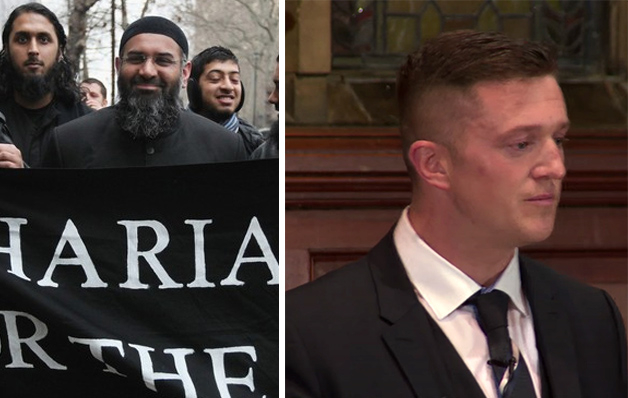
Unlike Anjem Choudary (left), who was at the heart of a nexus of terrorists and terrorist-supporters, Tommy Robinson (right) is a white working-class man who can not only be harassed by police and other authorities with impunity, but can find few if any defenders of his rights among the vast panoply of people in our societies who are only too keen to defend the rights of Islamists.

There will be those who think that such harassment of Robinson is correct — that in order to keep the peace it is necessary to keep an eye on anybody who may have any effect to the contrary. But if that is true, it is curious that such measures were not routinely used on Anjem Choudary in all his years living freely in the community. It would be interesting to know if there are any records of Choudary and his family being harassed by police or removed from establishments while the hate-preacher was on whatever down-time he used to have. Or whether the British police ever routinely raid and search the houses of radical Islamists in the hope of finding errors in their VAT returns and the like.

But of course the very comparison is unfair and in many ways lazy, because Tommy Robinson has not been — as Choudary was — at the heart of a nexus of terrorists and terrorist-supporters going back years. He has not been on friendly terms with numerous people who have beheaded civilians and carried out suicide bombings. There are not any occasions, of which the author is aware, on which Robinson has called for violence or the breaking of the law in the name of his political views. But in the eyes of the law, much of the media and a certain number of people in the country Robinson is in an exceptionally unfortunate position. He is not a radical Islamist and nor is he from any discernible minority. He is a white working-class man who, it appears, can thus not only be harassed by certain authorities with impunity, but can find few if any defenders of his rights among the vast panoply of people in our societies who are only too keen to defend the rights of Islamists.

Civil liberties groups such as “Liberty'” which are so stringent in protecting the rights of Islamist groups such as “Cage,” are silent on the case of Tommy Robinson. To consider why this is so is to see to the heart of a problem that Britain has been going through in recent years and which seems destined to continue for many years to come.

Douglas Murray, British author, commentator and public affairs analyst, is based in London, England.

Translate »
Skip to toolbar