

Even if Chinese technological theft is less frequent in Europe than in the United States —there is far less technology to steal from Europe than from the US — it is nevertheless all too present.
The practice follows what the current director of the CIA, John Ratcliffe, long ago called the business model of the Chinese Communist Party (CCP): “Rob, Replicate, Replace.” They steal the technology and know-how for a product, copy it, then flood it back into the marketplace at a far lower price, thereby putting the product’s original manufacturers out of business. When the CCP believes its hold on the market share has been consolidated into something resembling a monopoly, the prices go back up.
Watch out! The same will be true for computer chips.
Currently, the German car industry is being potentially demolished with this practice by Chinese electric vehicles. Only US President Donald J. Trump is saving America’s car industry by banning Chinese vehicles as well as by offering financial incentives to anyone planning to manufacture cars — or just about anything else — in the US.
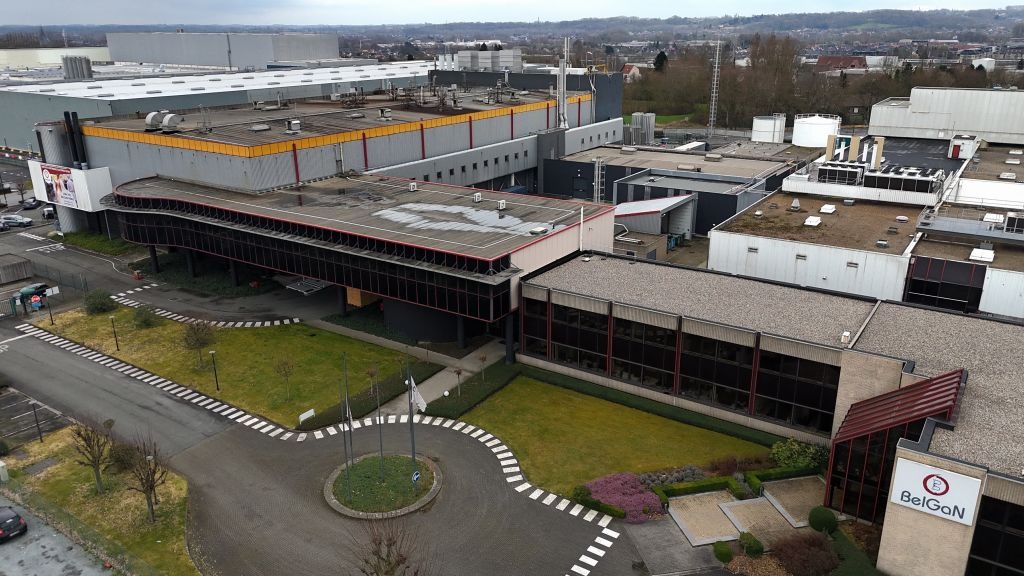
In Belgium, for instance, BelGaN, a flagship Belgian semiconductor company, was bought by the Chinese regime, robbed of its intellectual property, technology and know-how for the benefit of a “mirror company” in China, and then eliminated in Belgium.
GaN technology makes it possible to produce electronic components that are smaller, more energy-efficient and capable of operating at higher frequencies than comparable silicon-based devices. Its applications are numerous: electric vehicles, chargers, solar-power systems, data centers, aerospace and space systems, and military applications such as radar and electronic warfare.
The real “suspect” in the entire affair is, and always has been, the CCP, whose economic development model rests on one simple principle: the constant, systematic and unrelenting theft of Western intellectual property. How much of that is on us for letting them?
[W]hen the Flemish government realized that a Flemish company had become Chinese, it stopped subsidizing it.
BelGaN was declared bankrupt on July 31, 2024, and more than 400 employees lost their jobs.
As part of the bankruptcy proceedings, BelGaN’s assets were divided into approximately 1,800 auction lots — individual machines or groups of equipment and other factory assets — and sold online by court-appointed liquidators to raise money for creditors. The auction generated approximately €23 million, with Chinese companies acquiring roughly one-third of the assets, including about €8.5 million worth of high-tech equipment.
The Federal Prosecutor’s Office and the Federal Judicial Police of East Flanders are now investigating the matter as part of the bankruptcy case. H.L. was arrested on May 10, 2026, at Zaventem Airport as he was preparing to board a flight to Beijing.
The charges against H.L. are serious: espionage, participation in a criminal organization, misuse of corporate assets, unlawful disclosure of trade secrets and bankruptcy-related offenses. The prosecutor’s office states that there are serious, precise and consistent indications of unlawful transfers abroad of specialized intellectual property and trade secrets relating to the production of GaN chips.
Alan Zhou, BelGaN’s last CEO and a Chinese national, is currently being sought by Belgian authorities.
Even if Chinese technological theft is less frequent in Europe than in the United States —there is far less technology to steal from Europe than from the US — it is nevertheless all too present.
The practice follows what the current director of the CIA, John Ratcliffe, long ago called the business model of the Chinese Communist Party (CCP): “Rob, Replicate, Replace.” They steal the technology and know-how for a product, copy it, then flood it back into the marketplace at a far lower price, thereby putting the product’s original manufacturers out of business. When the CCP believes its hold on the market share has been consolidated into something resembling a monopoly, the prices go back up.
Watch out! The same will be true for computer chips.
Currently, the German car industry is being potentially demolished with this practice by Chinese electric vehicles. Only US President Donald J. Trump is saving America’s car industry by banning Chinese vehicles as well as by offering financial incentives to anyone planning to manufacture cars — or just about anything else — in the US.
In Belgium, for instance, BelGaN, a flagship Belgian semiconductor company, was bought by the Chinese regime, robbed of its intellectual property, technology and know-how for the benefit of a “mirror company” in China, and then eliminated in Belgium.
The BelGaN site in Oudenaarde, East Flanders, dates back to 1983, when it operated under the name Mietec and was regarded as one of the flagships of Flanders’ “third industrial revolution.” It subsequently came under AMI Semiconductor and then ON Semiconductor (ONSEMI). In 2021-2022, ONSEMI, Belgium’s last industrial-scale chip manufacturing facility, was sold to BelGaN for approximately $13.6 million.
BelGaN Group BV, incorporated on September 30, 2021, was a joint venture between Rockley Management (HK) Ltd and Wuxi Group Ltd, two companies registered in China. That should have set off alarm bells among the Belgian authorities, notoriously among the most naïve and credulous in Europe.
Belgium, however, did not bring an interfederal foreign-investment screening mechanism into force until July 1, 2023. Meanwhile, the acquisition of the plant had been completed in February 2022. Today, semiconductors are explicitly listed among the strategic technologies subject to screening… a bit late.
Rockley Management (HK) Limited forms part of a technological and financial network long active between the United Kingdom and China. The Hong Kong company is linked to brothers Andrew and Robert Rickman, central figures in the Rockley Group, based in Oxford and also established in Shanghai. The group developed several semiconductor investments in China, notably through a Rockley China Fund and stakes in Chinese technology companies. Andrew Rickman was also appointed an honorary professor at the Shanghai Institute of Microsystem and Information Technology, which comes under the Chinese Academy of Sciences. Rockley Management was therefore not an isolated Hong Kong vehicle but part of a technology-investment network already deeply connected to the Chinese ecosystem.
Alan Zhou (also known as Alan Zhen Zhou or Zhou Zhen) an experienced industry executive, was appointed CEO of BelGaN. The stated goal was to transform its plant into a foundry for 6- and 8-inch gallium nitride (GaN) semiconductor wafers, create a “GaN Valley” in Belgium and align the company with the European Chips Act.
GaN technology makes it possible to produce electronic components that are smaller, more energy-efficient and capable of operating at higher frequencies than comparable silicon-based devices. Its applications are numerous: electric vehicles, chargers, solar-power systems, data centers, aerospace and space systems, and military applications such as radar and electronic warfare.
Approximately 400 to 440 employees were retained.
Creation of a “Mirror Company” in China
A few months after BelGaN was acquired, a new Chinese company called Fuzhou GaGu Semiconductor Co. (福州镓谷半导体有限公司) — also known as Gankool, GaNkool and Gancool — was created in the Fuzhou development zone, Fujian Province. It produces exactly the same GaN technology, under the same conditions, using the same machines and processes. Fuzhou GaGu Semiconductor is financed by a purely Chinese investment fund, “partnering,” as all businesses are required to do, with the Chinese government.
The timing is important. On February 8, 2022, ONSEMI finalized the sale of its Oudenaarde plant to BelGaN Group BV. On July 20, 2022, Fuzhou GaGu Semiconductor was incorporated in Fuzhou.
This timing demonstrates the existence of an overall plan from the very first Chinese move toward BelGaN. One does not improvise a semiconductor company, its model, methods and technology, in a matter of months. The timing also reveals the Chinese regime’s feeling of impunity when confronted with naïve Belgium, or most likely anyone else who complies.
The Principal Suspect: H.L.
H.L., whom several public sources have identified as probably the GaN specialist Hu Liang (梁琥), is a 52-year-old Belgian-Chinese national residing in Leuven. Around August 2022, H.L. took up a senior research position at BelGaN.
Before joining BelGaN H.L. had previously worked at the Belgian nonprofit research and development organization Imec (“the chip lab of the world“), where he headed its epitaxy activities – the process of placing crystalline layers of foundation on which to build semiconductor devices. Chinese publications simultaneously present him as general manager, CTO and chief scientist of Fuzhou GaGu Semiconductor. The Belgian federal prosecutor’s office and most Belgian media outlets continue to identify him only by the initials H.L.
In March 2023, H.L. was presented as a director of Fuzhou GaGu Semiconductor at a conference in China, alongside Alan Zhou. His LinkedIn profile mentioned only BelGaN.
There was still no reaction from the Belgian authorities, even though all the elements of the “transfer” were plainly in place.
When one speaks of the principal suspect, what must obviously be understood is the linchpin of the totalitarian Chinese Communist regime. The West needs to be reminded, relentlessly, that there is no Chinese government, only the Chinese Communist Party. Likewise, every Chinese company is merely one of the estimated 100 million faces of the CCP, whose members make up roughly 7% of China’s population. The real “suspect” in the entire affair is, and always has been, the CCP, whose economic development model rests on one simple principle: the constant, systematic and unrelenting theft of Western intellectual property. How much of that is on us for letting them?
Financial Difficulties, Bankruptcy and Sale of Assets
In 2023, BelGaN recorded a net loss of €8.3 million on revenue of €55 million. Meanwhile, the company was unable to raise enough financing for its planned conversion from conventional silicon-chip production to GaN manufacturing, which required substantial new capital investment.
The Flemish government examined the company’s Chinese links – a review that likely contributed to the decision not to provide rescue subsidies. Put differently, when the Flemish government realized that a Flemish company had become Chinese, it stopped subsidizing it.
BelGaN was declared bankrupt on July 31, 2024, and more than 400 employees lost their jobs.
As part of the bankruptcy proceedings, BelGaN’s assets were divided into approximately 1,800 auction lots — individual machines or groups of equipment and other factory assets — and sold online by court-appointed liquidators to raise money for creditors. The auction generated approximately €23 million, with Chinese companies acquiring roughly one-third of the assets, including about €8.5 million worth of high-tech equipment. Other buyers came from Germany, the United States and elsewhere. Some of the machinery bound for China required export licenses because of potentially military or defense-related applications.
Investigation, Arrest and Charges
The Federal Prosecutor’s Office and the Federal Judicial Police of East Flanders are now investigating the matter as part of the bankruptcy case. H.L. was arrested on May 10, 2026, at Zaventem Airport as he was preparing to board a flight to Beijing. He remains in pretrial detention at Oudenaarde Prison.
The charges against H.L. are serious: espionage, participation in a criminal organization, misuse of corporate assets, unlawful disclosure of trade secrets and bankruptcy-related offenses. The prosecutor’s office states that there are serious, precise and consistent indications of unlawful transfers abroad of specialized intellectual property and trade secrets relating to the production of GaN chips.
Alan Zhou, BelGaN’s last CEO and a Chinese national, is currently being sought by Belgian authorities. According to Belgian media, Zhou played a decisive role in transferring BelGaN’s intellectual property, technology and know-how to Fuzhou GaGu Semiconductor. This is plausible, to say the least, given that he was the CEO of BelGaN from its inception until its bankruptcy.
H.L.’s lawyer, Dimitri de Beco, denies all the allegations against his client and stresses the presumption of innocence. He argues that, even if the facts were established, they would not amount to espionage but possibly instead to the unlawful disclosure of trade secrets.
Technological and Strategic Stakes
Belgium’s State Security Service, in its “Intelligence Report 2025,” describes a Chinese strategy using “mirror companies” that it calls “copy to China”:
“Chinese firms invest in Belgian companies, research centres or spin-offs – preferably small entities developing promising technologies but facing funding challenges – to gain access to specific technologies. They then establish a ‘copy to China’ company in China to produce the same technology on a larger scale. The original parent company is subsequently sold, ideally at a profit.”
The investigation is ongoing. No conviction has been handed down to date.
egretnewseditor@gmail.com