

Is the AI Investment Boom About to Break? Large infrastructure booms have often developed in this uneven way. Railways, electricity and telecommunications networks all passed through phases of enthusiasm, overbuilding, financial stress and consolidation. The failures were real, but the underlying networks continued to expand.
China has been investing heavily for years in nuclear fusion technology — a resource the United States would do well urgently to adopt as a 21st-century “Manhattan Project” if it wants to make sure that China does not ultimately win the AI race for global preeminence. Nuclear fusion energy produces a massive supply of clean, inexpensive energy, and the United States is blessed with three large bodies of water around it for an unlimited supply. Without significant government investment in developing nuclear fusion, by relying only on private firms to supply their own electricity and nuclear fission reactors, the West seriously risks being left behind. The sooner the US government prioritizes developing nuclear fusion, the sooner it will be commercially available — preferably before China dominates the market first.
These other solutions are slow and costly. A committed rush is needed toward developing the energy of the future: fusion.
Now take a break and ask yourself how many times you’ve used AI today, and the tools that themselves use AI. The question no longer makes sense: AI is everywhere, permanent; it has already expanded the possibilities of our world. Corrections will come, capital will be reallocated, and some business models will fail; that is the ordinary price of progress. What will not reverse is the deeper shift already under way: the permanent embedding of advanced computation into the productive core of life.
Warnings about an artificial-intelligence crash have become increasingly common. Financing is becoming harder to obtain, the argument runs, and companies are questioning whether AI projects produce enough value, whether electricity supplies are sufficient, and if cheaper Chinese systems could undermine the revenues of American technology leaders. Put together, these pressures are said to threaten the vast investments now rolling out in data center construction, AI chip and memory manufacturing, and power generation.
Some of these concerns are real. There seem to be four separate main questions: Can the projects still be financed? Do businesses still want the technology? Can enough electricity be supplied? And will low-cost competitors destroy the economics of the market?
1. Financing: tighter credit is not the same as no credit
Private credit means lending provided by investment funds and other non-bank institutions rather than by traditional banks or public bond markets, which have helped finance some data centers and other large projects. When investors in those funds become more cautious, lending slows and borrowing costs rise.
That slowdown matters, but it does not follow that AI investment stops. The largest buyers of computing infrastructure include Amazon, Microsoft, Google and Meta. These companies are often called “hyperscalers” because they operate enormous cloud-computing networks and data centers. They generate substantial cash, issue corporate bonds and borrow from major banks. Private credit is one source of money for the sector, but not its only source.
For example, in 2025, Amazon generated $139.5 billion in operating cash flow and spent $128.3 billion in cash capital expenditure, mainly on technology infrastructure. It finished the year with approximately $123 billion in cash, cash equivalents, and marketable securities. Amazon also received $25 billion from short- and long-term debt issuance during the year.
Private credit is significant, but it is not the whole corporate financing market. The US Federal Reserve estimated that private-credit loans stood at approximately $1.4 trillion in the second half of 2025. That represented about 10% of total debt owed by US nonfinancial corporations.
A period of tighter financing therefore changes who can build, how quickly projects proceed, and what return investors demand. Weaker developers are forced to delay or cancel plans. Stronger companies pay more, use their own cash and spread construction over a longer period. That is a repricing of risk: investors seeing greater uncertainty demand better terms.
Large infrastructure booms have often developed in this uneven way. Railways, electricity and telecommunications networks all passed through phases of enthusiasm, overbuilding, financial stress and consolidation. The failures were real, but the underlying networks continued to expand.
2. Business demand: experimentation is becoming more selective
Companies have spent heavily on AI pilots: small-scale tests designed to discover whether a system can improve a real business task. Many of these tests have been disappointments. Costs were higher than expected, employees did not always adopt the tools, and some firms lacked the clean, well-organized data needed to make the systems useful.
These growing pains do not mean that businesses have rejected AI. They mean that they are becoming more selective. In the first stage of a new technology, companies often buy quickly because they fear being left behind. In the second stage, they compare results, cancel weak projects and concentrate money on the applications that work. This process can look like a retreat even when long-term adoption is continuing.
In a January 2025 Deloitte survey, more than two-thirds of respondents expected 30% or fewer of their generative AI experiments to be fully scaled during the following three to six months. At the same time, 74% said their most advanced initiative was meeting or exceeding return on investment (ROI) expectations.
A separate 2025 Deloitte survey of 1,854 executives in Europe and the Middle East found that a typical AI use case generally took two to four years to produce satisfactory ROI. Only 6% reported achieving payback in under one year, compared with an expected payback period of approximately seven to twelve months for conventional technology investments.
When electric power was being developed, for instance, early factories often replaced a single steam engine with a single electric motor but kept the old factory layout. Productivity improved only modestly. Larger gains came later, when factories were redesigned around smaller motors placed throughout the building. The technology created its full value only after organizations changed the way they worked (see Paul A. David, The Dynamo and the Computer: An Historical Perspective on the Modern Productivity Paradox, American Economic Review, May 1990, Vol. 80, No. 2, pp. 355–361.)
AI shall probably follow a similar path. A chatbot added to an unchanged process may save little time. A redesigned process in which AI sorts documents, prepares a first draft, checks records and passes unusual cases to a human may produce much larger gains. The important question is therefore not whether every early experiment succeeds, but whether companies continue to find tasks worth redesigning around the technology.
3. Electricity: a serious constraint, but not a fixed wall
AI systems run in data centers filled with specialized computer chips. These facilities require large amounts of electricity, cooling equipment and, in many cases, water. In regions where the power grid is already congested, a new data center may wait years for a connection. This is one of the strongest arguments against unlimited short-term growth.
The International Energy Agency estimates that data centers consumed approximately 485 terawatt-hours of electricity in 2025, after demand increased by 17% in a single year. Electricity use by AI-focused data centers grew even faster—by approximately 50%. The IEA expects total data center consumption to reach about 950 TWh by 2030, roughly double the 2025 level and equivalent to approximately 3% of global electricity demand.
The pressure is much greater in the United States. Lawrence Berkeley National Laboratory’s June 2026 update estimates that data centers could account for 11.8% of total US electricity consumption by 2030 in its central estimate. Its scenario range is 9.5% to 15.3%.
Based on a location-specific analysis of announced projects, the IEA estimates that grid constraints could delay approximately 20% of the global data-center capacity planned for construction by 2030. Several jurisdictions have already restricted or paused new connections while system operators process connection backlogs
Yet an electricity shortage is not an absolute ban. It is a constraint that changes prices and behavior. Technology companies are signing long-term contracts with power producers, building facilities near available generation, improving cooling systems and designing chips that perform more calculations for each unit of electricity.
China has been investing heavily for years in nuclear fusion technology — a resource the United States would do well urgently to adopt as a 21st-century “Manhattan Project” if it wants to make sure that China does not ultimately win the AI race for global preeminence. Nuclear fusion energy produces a massive supply of clean, inexpensive energy, and the United States is blessed with three large bodies of water around it for an unlimited supply. Without significant government investment in developing nuclear fusion, by relying only on private firms to supply their own electricity and nuclear fission reactors, the West seriously risks being left behind. The sooner the US government prioritizes developing nuclear fusion, the sooner it will be commercially available — preferably before China dominates the market first.
Some companies are also rolling out small modular fission reactors. These are nuclear reactors designed to be factory-manufactured in small, identical units, unlike traditional nuclear power plants custom-constructed on-site. Many designs still face regulatory and commercial obstacles.
The practical response in the short term, unfortunately, looks as if it will be less dramatic: more power plants, stronger transmission lines, better storage, improved efficiency and a shift of some computing work to places and times where electricity is available. These other solutions are slow and costly. A committed rush is needed toward developing the energy of the future: fusion.
4. Low-cost and open models: competition changes the market
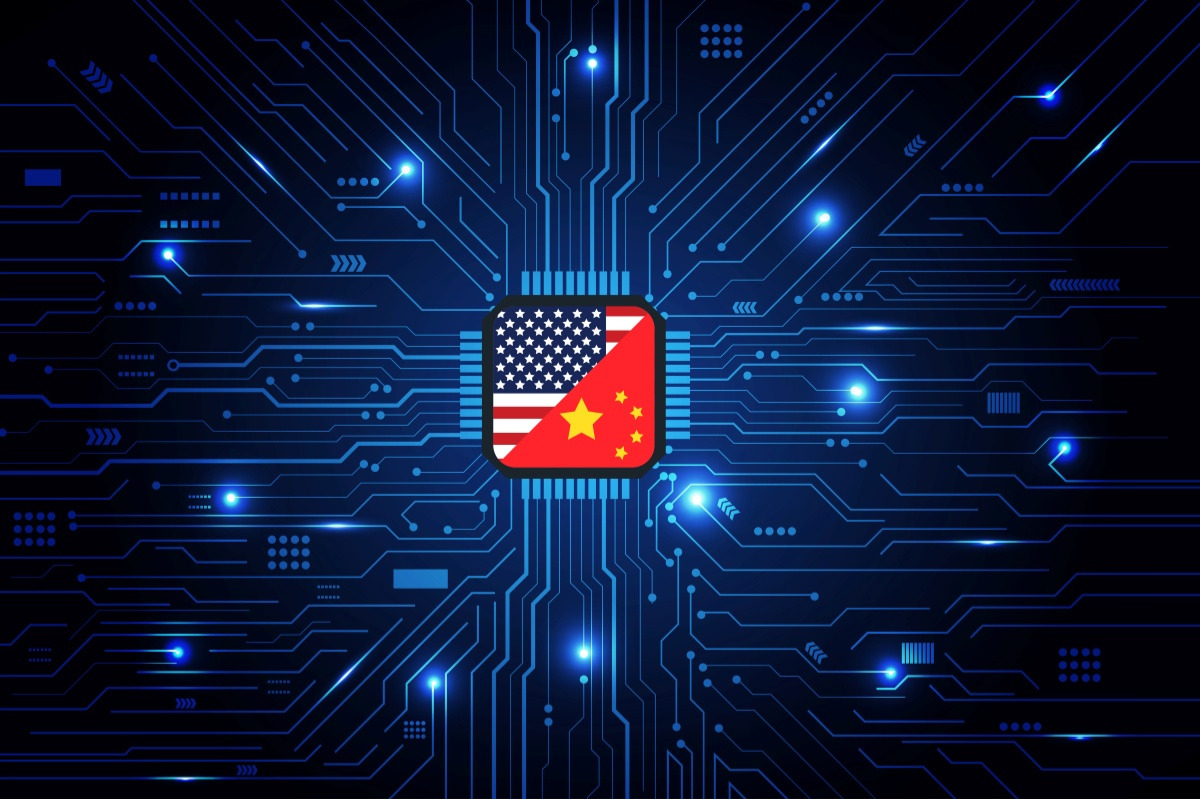
The final concern is competition from cheaper AI systems, such as those developed in China, which acquires most of its technological knowledge through theft. The West, especially the United States, urgently needs to discontinue making its innovations and capital available to China if it wants to remain the world’s preeminent superpower. Some of these systems are open models — AI systems whose technical components, such as their software code or weighting parameters, are made available for others to inspect, modify or run themselves. The exact degree of openness varies from one model to another.
These systems clearly reduce the price of common AI tasks and put pressure on companies that charge high prices for general-purpose services. They also reduce the revenue earned from basic applications such as summarizing text, drafting routine messages or answering standard questions.
Cheaper and open models are already changing the economics of the AI market. Stanford’s AI Index estimates that the cost of querying a model performing at approximately GPT-3.5 level fell from $20 per million tokens in November 2022 to $0.07 by October 2024 — a decline of more than 280 times (In AI, a token is a small unit of text that a model reads or generates.) Price competition has continued. In July 2026, China’s DeepSeek charged $0.14 per million input tokens and $0.28 per million output tokens for its V4 Flash model. OpenAI’s frontier GPT-5.6 Sol model was listed at $5 and $30 respectively. The models are not directly equivalent, but the difference illustrates the pressure that inexpensive competitors place on premium prices for routine AI services.
The capability gap has also narrowed. According to Stanford’s 2026 AI Index, Chinese and American models traded positions near the top of performance rankings during 2025. DeepSeek-R1 briefly matched the leading American model in February 2025, and by March 2026 the best American model led the best Chinese model by only 2.7 percent. Competition is consequently shifting away from nationality and toward cost, reliability and performance on particular tasks.
Cheaper models, however, do not remove all value from more advanced systems. A frontier model , at or near the highest current level of capability, still retains advantages in difficult reasoning, reliability, security, specialized business support and integration with large organizations. Companies in healthcare, finance, defense, or other regulated industries pay more for audit trails, data protection and contractual guarantees.
A real-life example is Morgan Stanley Wealth Management. Rather than using the cheapest available chatbot, the financial services company worked with OpenAI to develop an internal GPT-4 assistant for its financial advisers. The system searches Morgan Stanley’s approved knowledge base and provides answers with links to the original source documents. Morgan Stanley also introduced daily testing to detect unreliable or non-compliant answers, kept its proprietary information subject to zero-data-retention arrangements, and required advisers to review AI-generated material before using it with clients. The technology was also integrated into existing business systems: its meeting assistant can produce client notes and draft follow-up messages that are transferred into the company’s customer-relationship-management system.
For Morgan Stanley, the value of the advanced system therefore lies not simply in its ability to generate text. A cheaper model might also summarize an investment report, but an inaccurate, insecure or untraceable answer could expose the company to regulatory penalties, financial losses and damage to client trust. The company is consequently willing to pay more for reliability, source traceability, data protection, human oversight and integration with its internal systems. This illustrates why organizations in finance, healthcare, defense, and other regulated industries may continue purchasing premium AI services even when much cheaper models are available.
Computing has repeatedly gone through this pattern. A technical layer becomes cheaper and more widely available, while value moves to another layer: specialized software, trusted services, proprietary data, distribution or integration. Competition can reduce profit margins without reducing total demand for computing.
What the critics get right
None of this means that every AI company is safe or that every data center will earn an acceptable return. AI chips quickly become obsolete. A data center built around today’s equipment may face a much more efficient rival within a few years. Depreciation — the accounting process by which the cost of an asset is spread over its useful life — may therefore underestimate how quickly some equipment loses economic value.
Demand can also grow while profits remain disappointing. Airlines, telecommunications firms and car manufacturers have all served large markets without consistently earning exceptional returns. AI could become essential to the economy while many investors still lose money.
A correction, as in other sectors, is therefore likely in parts of the industry. It will eliminate weak projects and force stronger companies to improve. What is less convincing is the claim that such a correction would reverse the broader adoption of AI.
A better conclusion
The debate is often framed too simply: cornucopia or bust. Companies with strong finances will continue investing when weaker borrowers cannot. Higher electricity prices encourage efficiency and new power supply. Cheaper models expand access and create new uses, as they reduce prices. More demanding customers push suppliers to prove that their products create measurable value.
The next phase of AI will be less euphoric and more selective. Capital will move away from fashionable projects and towards systems that save time, reduce errors, increase output or create products that customers will pay for. Some business models will fail. Some investors will suffer heavy losses. All of this is not only consistent with the history of the adoption of new technologies by a capitalist system, but it is also, quite frankly, healthy.
The emergence of cheap AI from China is obviously questionable, when one recognizes that the theft of intellectual property remains the Chinese economic model, and that any Chinese “enterprise” is never more than one of the thousand sides of the Chinese Communist Party.
Now take a break and ask yourself how many times you’ve used AI today, and the tools that themselves use AI. The question no longer makes sense: AI is everywhere, permanent; it has already expanded the possibilities of our world. Corrections will come, capital will be reallocated, and some business models will fail; that is the ordinary price of progress. What will not reverse is the deeper shift already under way: the permanent embedding of advanced computation into the productive core of life. To mistake the inevitable turbulence of a build-out phase for the end of the cycle is to stare at the finger while Elon Musk is pointing at Mars.
egretnewseditor@gmail.com