Yearly Archives: 2017

Palestinians: “We Are Proud of You. You Killed Jews!” by Bassam Tawil

  • Musbah Abu Sbeih is now the latest “hero” of many Palestinians and not only his family. He is being hailed as a “brave” man and a “hero” because he woke up in the morning, grabbed an M-16 assault rifle and set out on a mission to kill as many Jews as possible.

  • These calls have come not only from Hamas and Islamic Jihad extremists, but also from “moderate” leaders such as Palestinian Authority President Mahmoud Abbas and his Fatah faction.
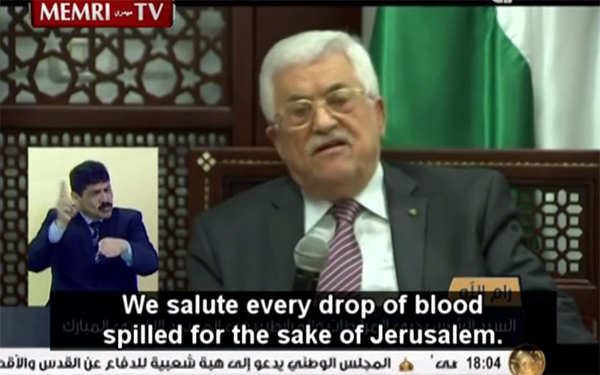
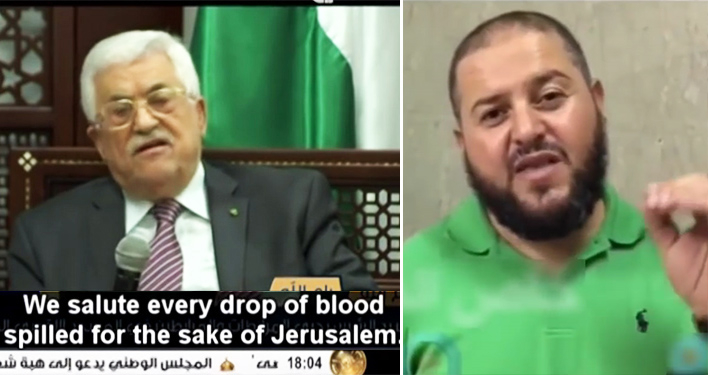
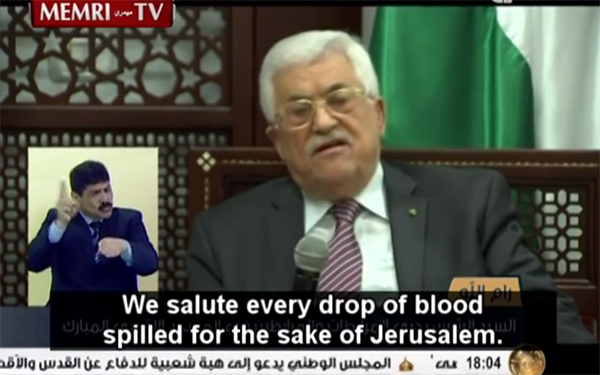
  • “We bless every drop of blood that has been spilled for Jerusalem, which is clean and pure blood, blood spilled for Allah, Allah willing. Every martyr will reach Paradise and everyone wounded will be rewarded by Allah.” – Mahmoud Abbas, Palestinian leader.
  • As holders of Israeli ID cards, they were even entitled to drive cars with Israeli plates, which is what Abu Sbeih took advantage of to carry out his attack in Jerusalem. His family owns at least two homes in the city and are considered middle-class. Still, this did not stop Abu Sbeih from setting out on his deadly mission. And it did not stop his family members from celebrating the attack.
  • This is the inevitable result — as in the Spanish Inquisition, the French Revolution, the Turkish Genocide of the Armenians, Rwanda, Darfur, or Nazi Germany — of the poisoning of a people.

The family of Musbah Abu Sbeih say they are “very proud” of what their 40-year-old son did. So are many Palestinians representing all walks of life in Palestinian society. Members of his family, including his parents and daughter, have appeared on too may TV stations to keep track of to commend Abu Sbeih. They have even gone out onto the streets to hand out sweets in jubilation over the terror attack that he carried out in Jerusalem this week, which resulted in the death of a 60-year-old grandmother and a 29-year-old police officer.

Abu Sbeih is now the latest “hero” of many Palestinians, and not only by his family. He is being hailed as a “brave” man and a “hero” because he woke up in the morning, grabbed an M-16 assault rifle and set out to kill as many Jews as possible. His mission was “successful”: he managed to shoot and kill two Jews before he himself was eliminated by policemen.

In a video that he left behind, Abu Sbeih claimed that he carried out the terror attack in response to visits to the Temple Mount by Jews. He claimed (falsely) that these visits were part of an Israeli scheme to destroy the Al-Aqsa Mosque on the Temple Mount.

This is the same false claim that was originally made by Hitler’s friend, the Mufti of Jerusalem at the time, Haj Amin al-Husseini, to pretend there was a good excuse to attack the Jews; it is, as we see, still trotted out from time to time to “justify” killing Jews.

For the record, it is a lie — like Palestinian claims that Israel is poisoning wells and water, which Palestinian Authority (PA) President Mahmoud Abbas was later, for lack of evidence, forced to retract.

Like many other Palestinians who have carried out, or attempted to carry out, terror attacks over the past year, Abu Sbeih was in fact simply heeding his leaders’ call to stop Jews from “desecrating with their filthy feet” the Al-Aqsa Mosque. These calls have been coming for months not only from Hamas and Islamic jihad extremists, but also from “moderate” leaders such as Mahmoud Abbas and his Fatah faction.

These are the Palestinian leaders that European leaders appear to adore. These leaders in Europe, especially the French, keep prodding Israel to negotiate with groups that openly say they want no Israel at all, and that at best are uninterested in the truth — whether about Israelis or Palestinians.

These European leaders would like Israel to keep pretending that the people with whom they are negotiating are actually acting in good faith. They seem to be trying to offer up to the Arabs, Muslims and the Organization of Islamic Cooperation (OIC), the destruction of Israel — physical, diplomatic, economic, whatever they can get — most likely as a bribe to stop Muslims from terrorizing them. They will soon find out, however, that nothing they offer will be seen as adequate. The Europeans will soon find out, as the Persians, Turks, Greeks, North Africans and Eastern Europeans all did, that anything short of submission will just be pocketed as a down-payment on a far bigger mark.

These European leaders are happy to make us in the region, Muslims, Christians and Jews, live under a brutal Islamic dictatorship so long as — in their woozy fantasy — they will not have to. They are in for a shock.

Anyhow, in September 2015, Abbas used the very words from 1924 of Haj Amin al-Husseini, days before the current wave of stabbing, vehicular and shooting attacks began.

Since then, incitement over Jews’ visits to the Temple Mount has been feeding what many Palestinians call the “Al-Quds Intifada.” Abbas has promised that those who die while defending the Al-Aqsa Mosque will go straight to Heaven:

“We bless every drop of blood that has been spilled for Jerusalem, which is clean and pure blood, blood spilled for Allah, Allah willing. Every martyr will reach Paradise and everyone wounded will be rewarded by Allah.”

To repeat: Abbas made this statement two weeks before the Palestinians unleashed a new wave of anti-Israel terrorism. We know, then, what spurred these attacks. They are the direct result of ongoing indoctrination and incitement against Israel that is being waged by Palestinians representing almost all Palestinian institutions and parties in the West Bank and Gaza Strip. Abbas’s words have clearly not fallen on deaf ears. This week’s terror attack, which was carried out by Abu Sbeih, shows that the “Al-Quds Intifada” is anything but dying out. On the contrary, there is increased fear that the terror campaign may escalate from the use of knives, vehicles and stones to pistols and rifles.

Musbah Abu Sbeih (right) is the latest “hero” of many Palestinians, because he murdered two Jews this week, acting on the incitement of Palestinian Authority President Mahmoud Abbas (left).

Why is this scenario not far-fetched? Not only because of the motivation of the assailants, but also because of what appears to be widespread popular support among Palestinians for any attack on Israelis. Not a single Palestinian official has dared to come out against the Jerusalem terror attack. And no ordinary Palestinian has dared to question the damage the attacks cause to the Palestinian public, especially those who are directly affected by Israeli retaliatory measures, such as travel restrictions.

Far from crying out against such butchery, many Palestinians have been heaping praise on the assailant.

Abu Sbeih, who as a permanent resident of Jerusalem carried an Israeli ID card and thus enjoyed all rights and privileges granted to Israeli citizens (with the exception of voting in general elections), did not come from an impoverished family at all. Unlike his fellow Palestinians in the West Bank and Gaza Strip, he had free access to Israel and could go anywhere and anytime he wanted to, any place in Israel.

He and his family were able to wake up in the morning and drive to the Tel Aviv beach or eat in any restaurant in Israel without having to pass through Israeli checkpoints. As holders of Israeli ID cards, they were even entitled to drive cars with Israeli plates, which is what Abu Sbeih took advantage of to carry out his attack in Jerusalem. His family owns at least two homes in the city and are considered middle-class. Still, this did not stop Abu Sbeih from setting out on his deadly mission. Nor has it stopped his family members from celebrating the attack.

The first to express her “joy” and “pride” over the death of two Jews was Abu Sbeih’s 15-year-old daughter, Eman. “Thank God, we are very happy and proud of my father,” she said in an interview with a local Palestinian television station.

As in previous cases, some Palestinians, including the sister of Abu Sbeih, handed out sweets to “well-wishers” as a way of expressing their joy over the terror attack. Hours after the attack, dozens of Palestinians gathered outside the family house, chanting slogans praising the assailant as a “hero” and calling on Hamas and other Palestinian groups to step up their attacks against Israel. Such scenes are familiar in the Palestinian arena and are reminiscent of those that used to take place following the wave of suicide bombings against Israelis during the Second Intifada.

Several Palestinian factions lauded Abu Sbeih, calling for stepped up “armed operations against the Zionist enemy.” Hamas leader Khaled Mashaal, who together with his family lives in the comfort of Qatar, was quick to phone the assailant’s family and “congratulate” them on the “martyrdom” of their son. “Our people and nation are proud of their heroism and courage displayed by your son, who sacrificed his life for the sake of Allah,” Mashaal told Abu Sbeih’s parents. He stressed that their son was a role model for Palestinians of his generation.

It was not clear whether the Hamas leader was making the phone call from his suite in one of Qatar’s five-star hotels, or from his private gym.

Thus, for Hamas and many other Palestinians, a man who kills two Jews is the desired role model for young Palestinians. Accordingly, Abu Sbeih’s supporters have taken to social media to praise him and urge Palestinians to follow suit. Because he managed to kill two Jews, Abu Sbeih is now being hailed on Twitter and Facebook as the “Lion of Al-Aqsa.” As they see it, his was a noble act, an effort to save the mosque from being “defiled” with the “filthy feet” of Jews.

Support for Abu Sbeih seems to cross all Palestinian political factions. Even many belonging to President Abbas’s Fatah faction came to the Abu Sbeih home in a show of solidarity with them. Fatah has also declared Abu Sbeih a “martyr.” A Palestinian who goes to meet with a Jew is strongly condemned and accused of seeking “normalization” with the enemy. But a Palestinian who carries a knife or rifle and sets out to kill Jews gains the stars of a “martyr” and wins nearly universal Palestinian praise. This is the current mindset in Palestinian society, the fruit of decades of Palestinian incitement and delegitimization of Israel. This is the inevitable result — as in the Spanish Inquisition, the French Revolution, the Turkish Genocide of the Armenians, Rwanda, Darfur, or Nazi Germany — of the poisoning of a people.

Bassam Tawil is a scholar based in the Middle East.
Palestinians, not Israelis, Need the Gospel of Peace by Jagdish N. Singh

  • Palestinian leaders, including the Palestinian Authority, have done a lot to whip up this violence and little to stop it. They may refer to peace and co-existence on some diplomatic occasions, but they preach and practice non-stop hatred and violence against Israel and the Jews.


  • It would have been more helpful if President Mukherjee had stressed his gospel of peace in the Palestinian territories, not Israel. Ever since its creation in 1948, Israel has believed in peaceful co-existence with Palestine. The successive offers of peace from Jerusalem have always supported this policy.

  • In contrast, not only has the Palestinian leadership never believed in peaceful co-existence, but it has constantly indulged in racist incitement, and often violence, to try to eliminate Israel.

After a reception at the presidential palace in Israel in Mid-October, India’s President, Pranab Mukherjee, said: “We are distressed at the recent violence [in the region]. India condemns all forms of terrorism. We have always advocated a peaceful resolution of all disputes.” Later, the President told Israel’s Leader of the Opposition, Isaac Herzog, “Violence is not a solution to any crisis. Violence achieves nothing but more violence. We in India believe in a principle of live and let live.” What great new ideas!

Why, though, did President Mukherjee say so only in Israel? Apparently, he remained completely silent on the issue of terrorism when he visited the Palestinian Authority (PA) a day or two earlier. In Ramallah, he just reasserted India’s position that New Delhi remained committed to the Palestinian cause, and supported a peaceful solution of the Israeli-Palestinian conflict.

It would have been more helpful if President Mukherjee had stressed his gospel of peace in the Palestinian territories, not Israel. Ever since its creation in 1948, Israel has believed in peaceful co-existence with Palestine. The successive offers of peace from Jerusalem have always supported this policy. During President Mukherjee’s visit to Israel, its Prime Minister, Benjamin Netanyahu, said, “Israel wants peace, I want peace. I am interested in launching negotiations immediately, without preconditions. In order for this to happen, the terror incidents will have to stop and the Palestinians will have to recognize the State of Israel.”

In contrast, not only has the Palestinian leadership never believed in peaceful co-existence, but it has constantly indulged in racist incitement, and often violence, to try to eliminate Israel. It was, in fact, to stem this violence that Israel was forced to build a defensive barrier, to successfully forestall more attacks.

The Palestinian leadership, including the Palestinian Authority, may refer to peace and co-existence on some diplomatic occasions, but they preach and practice non-stop hatred and violence against Israelis and Jews. Palestinian leaders have done a lot to whip up this violence but little to stop it. They have, instead, been saying things that would worsen the situation. On September 16, Palestinian Authority President Mahmoud Abbas, said, “Every drop of blood spilled in Jerusalem is pure, every shaheed [martyr] will reach Paradise, and every injured person will be rewarded by God.”

Palestinian Authority President Mahmoud Abbas, speaking on PA television, September 16, 2015.

On October 13, during a speech broadcast live on Palestinian television, Abbas accused Israelof “attacking holy places.” He said Israel’s “rejection” of peace and continued building of Jewish West Bank settlements were to blame for the current wave of violence. Palestinians “will not agree to the continuation of the situation on our lands…” Al-Aqsa [on the Temple Mount that is sacred also to Jews, as the location of the two destroyed Jewish Temples] is our right as Palestinians and as Muslims and no one else has a right there.” The Palestinians would not agree to any change in the status quo in Al-Aqsa Mosque on the Temple Mount, but the Israelis had never suggested one.

In his recent speech before the United Nations General Assembly, Abbas fraudulently said:

“As long as Israel refuses to commit to the agreements (the 1993 Oslo Accords) signed with us, which render us an authority without real powers, and as long as Israel refuses to cease settlement activities and to release of the fourth group of Palestinian prisoners in accordance with our agreements, they leave us no choice but to insist that we will not remain the only ones committed to the implementation of these agreements, while Israel continuously violates them.” During the same speech, Abbas accused Israel of exacerbating tensions on the Temple Mount, citing “extremist Israeli group incursions on the Al-Aqsa mosque.”

The Palestinian leadership may refer to peace and co-existence on some diplomatic occasions, but they preach and practice non-stop hatred and violence against the Israelis and the Jews.

The misguided Palestinians, inspired by ISIS and armed with knives and firebombs, are following them. They are on a killing spree.

On October 15, 2015, Palestinian rioters in the West Bank city of Nablus set fire — again — to a holy site, Joseph’s Tomb. The tomb is believed by Jews to house the remains of Joseph, the son of the biblical patriarch Jacob. This tomb had also been previously set ablaze and ransacked in 2000. As the conflict in the region turns from bad to worse, the terrorist outfit Hamas is declaring yet another “day of rage” against Israel.

According to a recent report, the recent spate of Palestinian terror attacks throughout Israel, especially in Jerusalem, has also been the work of Hamas and the Islamic Movement in Israel. Hamas is stoking the violence in the West Bank, while trying to keeping a lid on the violence in Gaza.

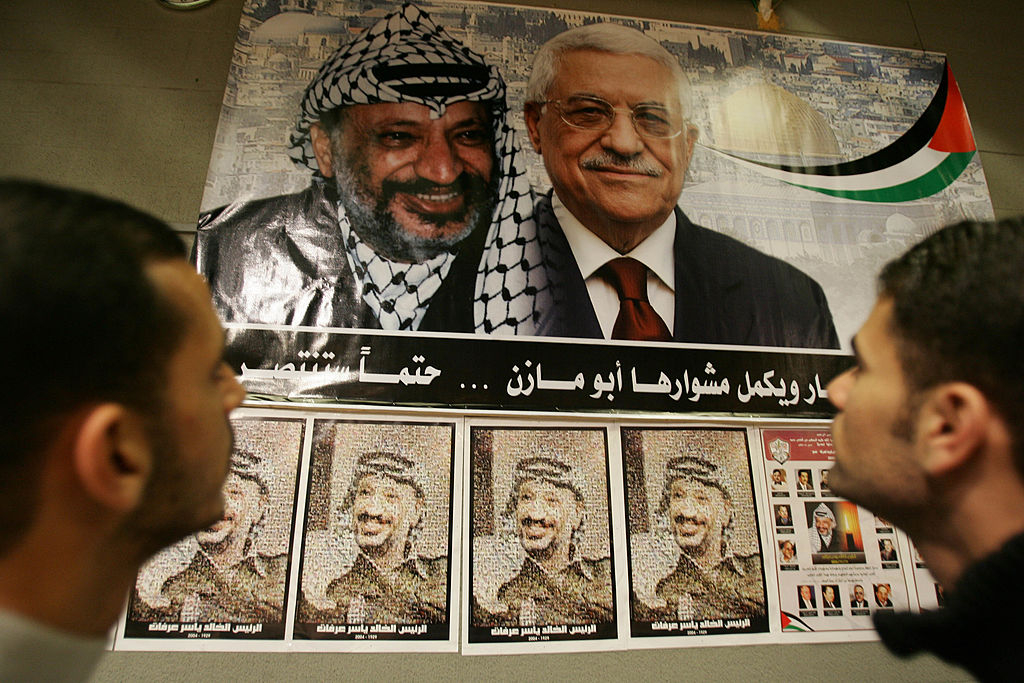
The report quotes Israel’s internal security agency, the Shin Bet, as saying that Palestinian Authority chief Abbas is not actively encouraging terrorism. He is “even instructing his security forces to prevent terror attacks as much as possible.” However, members of the Abbas-led Fatah party — including so-called moderates — have been actively supporting terrorists. Senior PA and PLO officials “are part of the incitement campaign,” according to the Shin Bet. Abbas’s own Fatah party has been glorifying the violence and praising those who carry out the violence against the Israelis. Fatah has also been distributing leaflets honoring terrorists that include photos of Abbas as well as the late Palestinian leader Yasser Arafat.

Palestinians’ Real Tragedy: Failed Leadership by Khaled Abu Toameh

  • Under the regimes of the Palestinian Authority (PA) and Hamas, Palestinians are free to criticize Israel and incite against it. But when it comes to criticizing the leaders of the PA and Hamas, the rules of the game are different. Such criticism is considered a “crime” and those responsible often find themselves behind bars or subjected to other forms of punishment.

  • This, of course, is not what the majority of Palestinians were expecting from their leaders. After the signing of the Oslo Accords and the establishment of the PA more than 20 years ago, Palestinians were hoping to see democracy and freedom of speech. However, the PA has proven to be not much different than most of the Arab dictatorships, where democracy and freedom of expression and the media are non-existent.
  • Given the current state of the Palestinians, it is hard to see how they could ever make any progress towards establishing a successful state with law and order and respect for public freedoms and democracy.

The Palestinian Authority (PA) in the West Bank and Hamas in the Gaza Strip may be at war with each other, but the two rival parties seem to be in agreement over one issue: silencing and intimidating their critics. Of course, this does not come as a surprise to those who are familiar with the undemocratic nature of the PA and Hamas.

Under the regimes of the PA and Hamas, Palestinians are free to criticize Israel and incite against it. But when it comes to criticizing the leaders of the PA and Hamas, the rules of the game are different. Such criticism is considered a “crime” and those responsible often find themselves behind bars or subjected to other forms of punishment.

This, of course, is not what the majority of Palestinians were expecting from their leaders. After the signing of the Oslo Accords and the establishment of the PA more than 20 years ago, Palestinians were hoping to see democracy and freedom of speech. However, the PA, first under Yasser Arafat and later under Mahmoud Abbas, has proven to be not much different than most of the Arab dictatorships, where democracy and freedom of expression and the media are non-existent.

The Palestinian Authority, first under Yasser Arafat and later under Mahmoud Abbas, has proven to be not much different than most of the Arab dictatorships, where democracy and freedom of expression and the media are non-existent. (Photo by Abid Katib/Getty Images)

If Palestinians had in the past to deal with only one regime (the PA) that does not honor freedom of expression, in the last 10 years they have fallen victim to another repressive government (Hamas) that rules the Gaza Strip with an iron fist and suppresses any form of freedom of expression and targets anyone who dares to speak out.

The Palestinians in PA’s West Bank-controlled territories and Hamas’s Gaza Strip can only look at their neighbors in Israel and envy them for the democracy, free media and rule of law. Hardly a day passes without the Palestinians being reminded by both the PA and Hamas that they are still far from achieving their dream of enjoying democracy and freedom of expression. A free media is something that Palestinians can only continue to dream about.

The Palestinian media in the West Bank serves as a mouthpiece for the PA and its leaders. Even privately-owned television and radio stations in the West Bank have long learned that they must toe the line or face punitive measures and feel the heavy hand of the PA security forces. This is why Palestinian media outlets and journalists in the West Bank refrain from reporting about any story that may reflect negatively on Abbas or any of his cronies. In the world of the media, it is called self-censorship.

In the Gaza Strip, the situation is not any better. In fact, it is hard to talk about the existence of a media under Hamas. Hamas and its security forces maintain a tight grip on local media outlets and journalists are subjected to tight restrictions. Criticism of Hamas is almost unheard of and could land those responsible in prison.

In the absence of a free and independent media in the West Bank and Gaza Strip, some writers, journalists and political activists have resorted to social media to air their views and share their grievances with their fellow Palestinians and the outside world. But the PA and Hamas have discovered the power of Facebook and Twitter, and have taken the battle against their critics to these two platforms.

Posting critical or controversial postings on social media is considered a serious offense under the PA and Hamas. The leaders of the PA and Hamas accuse those who dare to criticize them on Facebook of “extending their tongues” and “insulting” representatives of the Palestinians.

In the past few years, dozens of Palestinian journalists, bloggers, academics and political activists have been imprisoned or summoned for interrogation by the PA and Hamas over their Facebook postings. International human rights organizations and advocates of free speech and media around the world prefer to look the other way in the face of these human rights violations by the PA and Hamas. Moreover, “pro-Palestinian” groups and individuals in the West do not seem to care about the sad state of affairs of the Palestinians under the PA and Hamas. The only “wrongdoing” and “evil” they see is on the Israeli side. By ignoring the plight of the suppressed Palestinians, these “pro-Palestinian” activists and groups are actually aiding the PA and Hamas in their efforts to silence the voices of dissent and criticism.

The absence of international criticism allows the PA and Hamas to continue their policy of silencing and intimidating Palestinians who dare to speak out against the lack of freedom of expression and democracy in the West Bank and Gaza Strip.

Recently, for example, Hamas arrested two Palestinians in the Gaza Strip who posted critical remarks on Facebook: Abdallah Abu Sharekh and Shukri Abu Oun.

Abu Sharekh, a prominent writer, was arrested shortly after he posted a comment on Facebook criticizing senior Hamas official Salah Bardaweel. “You are ruling the Gaza Strip with an iron fist and fire,” Abu Sharekh wrote. “The state of oppression (in the Gaza Strip) is intolerable. You (Hamas) have taken the Gaza Strip back to the Middle Ages.”

Abu Sharekh’s criticism came in response to the electricity crisis in the Gaza Strip. Thousands of families in the Gaza Strip spend most of the day without electricity as a result of the power struggle between Hamas and the Palestinian Authority. Last month, the PA announced that it would stop paying Israel for the fuel supplied to the power plants in the Gaza Strip. The PA’s move is designed to punish Hamas. But Abu Sharekh and other Palestinians in the Gaza Strip hold Hamas responsible for the crisis. They argue that Hamas’ corruption, specifically the embezzlement of Qatari funds intended to purchase fuel for the power plants, is the main reason behind the crisis. Abu Sharekh, in his Facebook comment, pointed out that Hamas leaders have installed private generators that supply their homes with electricity even during the power outages.

In an unprecedented and bold move, Abu Sharekh’s clan issued a statement condemning Hamas for arresting their son for expressing his opinion:

“We hold Hamas fully responsible for the safety and health of our son and call for an end to the persecution of him and his likes… We reject and condemn any action that constitutes an assault on the right of our sons to express their political views, notwithstanding the excuses.”

Abu Oun was arrested for posting similar criticism of Hamas on Facebook. Earlier, Hamas also arrested journalists Nasr Abu Foul, Ahmed Qdeih and Hazem Madi on charges of publishing “fake news” and “spreading rumors.” Their real crime: posting critical comments about Hamas on social media. Later, Hamas also arrested political activists Mohammed al-Tuli and Amer Balousheh for the same reason.

Another Palestinian journalist from the Gaza Strip who has fallen victim to Hamas’s crackdown on freedom of expression is Fuad Jaradeh, a correspondent with Palestine TV. Hamas security officers arrested Jaradeh after raiding his home in the Tel al-Hawa suburb of Gaza City and confiscating his laptop and mobile phone. His family says he was arrested only because of his critical postings on Facebook against Hamas.

What is funny and sad is that the Palestinian Authority, which has been criticizing Hamas’s crackdown on freedom of expression in the Gaza Strip, has long been resorting to similar measures against its critics in the West Bank.

The latest victim of the PA’s suppression of public freedoms is Nassar Jaradat, a 23-year-old political activist who was arrested earlier this week for criticizing senior Palestinian official Jibril Rajoub. PA security forces arrested Jaradat after he posted a comment on Facebook in which he criticized Rajoub for acknowledging Jews’ right to the Western Wall in Jerusalem. A PA court has since ordered Jaradat, an engineering student, remanded into custody for 15 days on charges of “insulting” a top Palestinian official.

Last year, the PA demonstrated that it does not hesitate to arrest even one of its own if he dares to criticize Palestinian leaders. Osama Mansour, a senior PA security official, was arrested and later fired because he criticized Mahmoud Abbas for attending the funeral of former Israeli President Shimon Peres.

Such arrests have become commonplace under the PA in the West Bank. Almost every week, Palestinians hear of another journalist or blogger or activist who has been arrested or summoned for interrogation by the PA security forces for nothing more than posting remarks critical of the government on social media.

Palestinians were hoping to achieve an independent state of their own. In the end, however, they got two separate states — one in the West Bank and the second in the Gaza Strip — as a result of the power struggle between the Palestinian Authority and Hamas. But the real tragedy for the Palestinians is that neither the PA nor Hamas values human rights or public freedoms. The real tragedy of the Palestinians over the past few decades has been failed leadership — whether it is the secular PLO or the Islamist Hamas.

Given the current state of the Palestinians, it is hard to see how they could ever make any progress towards establishing a successful state with law and order and respect for public freedoms and democracy.

Khaled Abu Toameh, an award-winning journalist, is based in Jerusalem.

Palestinians’ Real Enemies: Arabs by Khaled Abu Toameh

  • The Arab heads of state and monarchs do not like to be reminded of how badly they treat Palestinians and subject them to discriminatory and apartheid laws.

  • It is not comfortable or safe to be a Palestinian in an Arab country. Scenes of lawlessness and anarchy inside Palestinian refugee camps in the West Bank have also driven many residents to move to nearby cities and villages. Most refugees in the West Bank no longer live inside UNRWA-run camps.
  • Let us end where we began: with the Palestinian (non)leadership. What has it done to help its people in the Arab countries? Nothing. No Palestinian leader will urge an emergency session of the UN Security Council to expose the ethnic cleansing and killing of Palestinians in Arab countries. No Palestinian leader will demand that the international media and human rights organizations investigate the atrocities perpetrated by Arabs on their Palestinian brethren. We are sure to see more such criminal silence when Abbas meets with the president of the United States.

Palestinians living in refugee camps in the Arab world are facing ethnic cleansing, displacement, and death — but their leaders in the West Bank and Gaza Strip are too busy tearing each other to pieces to notice or even, apparently, care much.

Between the Palestinian Authority (PA) and Hamas, it looks as if they are competing for the worst leadership, not the best. Clearly, neither regime gives a damn about the plight of their people in the Arab world.

PA President Mahmoud Abbas, who is scheduled to visit Washington in the coming weeks for his first meeting with US President Donald Trump, spends most of his time abroad. There is hardly a country in the world that he has not visited since he assumed office in January 2005.

Hamas, for its part, is too occupied with hunting down Palestinians suspected of “collaboration” with Israel, and arming its members as massively as possible for war with Israel, to spend much time on the well-being of the two million people living under its thumb in the Gaza Strip. Hamas does have resources: its money is otherwise designated, however, to digging attack tunnels into Israel and smuggling weapons into the Gaza Strip.

The globetrotting Abbas, treated to red-carpet receptions wherever he shows up, has no time to attend to his miserable people in the Arab countries. Abbas devotes more than 90 percent of his speeches to denunciations of Israel, uttering barely a word about the atrocities committed against his people in Syria, Lebanon, Libya and Iraq. The 82-year-old PA president is, as always, fully preoccupied with political survival.

Abbas’s real enemies are his critics, such as estranged Fatah leader Mohammed Dahlan, and Hamas. Abbas is currently focused on undermining Dahlan and preventing Hamas from taking control of the West Bank. In the past few years, Abbas has also demonstrated an obsession with isolating and delegitimizing Israel in the international arena. For him, this mission is more sacred than saving the lives of Palestinians.

Notably, neither Abbas’s Palestinian Authority nor Hamas dares to criticize Arab countries for their mistreatment of Palestinians. In this, they are nothing if not savvy: critics in Arab states pay an extremely nasty price for forthrightness.

Consider for a moment the agenda of the recent Arab League summit in Jordan. This monumental meeting was conspicuously silent on the plight of Palestinians in Arab lands. The Arab heads of state and monarchs do not like to be reminded of how badly they treat Palestinians and subject them to discriminatory and apartheid laws. Beneath the public Arab support for the Palestinians rests a ruthless policy of oppression that is largely ignored by Palestinian leaders, the international community and mainstream Western media.

This apathy has turned Palestinians in the Arab countries into easy prey.

The Yarmouk refugee camp near Damascus, which once housed nearly one million Palestinians, stands almost empty after six years of Syria’s civil war. Most of the camp’s houses have been damaged or destroyed in the fighting between the Syrian army, Palestinian factions, ISIS terrorists and Syrian opposition groups. More than 3,400 Palestinians have been killed in Syria since the beginning of the civil war. Thousands of Palestinians are believed to be held in various Syrian government prisons. Another 80,000 have fled Syria to neighboring countries.

In nearby Lebanon, the conditions of Palestinians are no better. Palestinian refugee camps in Lebanon, home to nearly half a million people, were long ago turned into ghettos surrounded by the Lebanese security forces. In recent years, the camps have become battlefields for rival Palestinian gangs and other terrorists, many of whom are affiliated with al-Qaeda and ISIS.

About 10 years ago, the Nahr al-Bared refugee camp in northern Lebanon was shelled by the Lebanese army; most of its houses were destroyed. Tens of thousands of Palestinians were forced to flee the camp; hundreds were killed and wounded after a Palestinian terror leader, Shaker al-Absi, and his men launched a series of deadly attacks on Lebanese targets, and the Lebanese army assaulted the camp. Before they were attacked by the Lebanese army, Al-Absi and his men had barricaded themselves inside the camp, using civilians as human shields.

The scenario of Nahr al-Bared is now repeating itself in another Palestinian refugee camp in Lebanon: Ain al-Hilweh. As in the previous instance, a terror leader, Belal Bader, has found shelter inside Ain al-Hilweh, home to more than 50,000 Palestinians. Like al-Absi, Bader is affiliated with radical Islamic groups such as al-Qaeda and ISIS. Bader’s presence in the camp has triggered a gang war with other Palestinian factions, resulting in heavy fighting between the warring gangs inside Ain al-Hilweh. In the past week, at least eight Palestinians have been killed and 40 wounded.

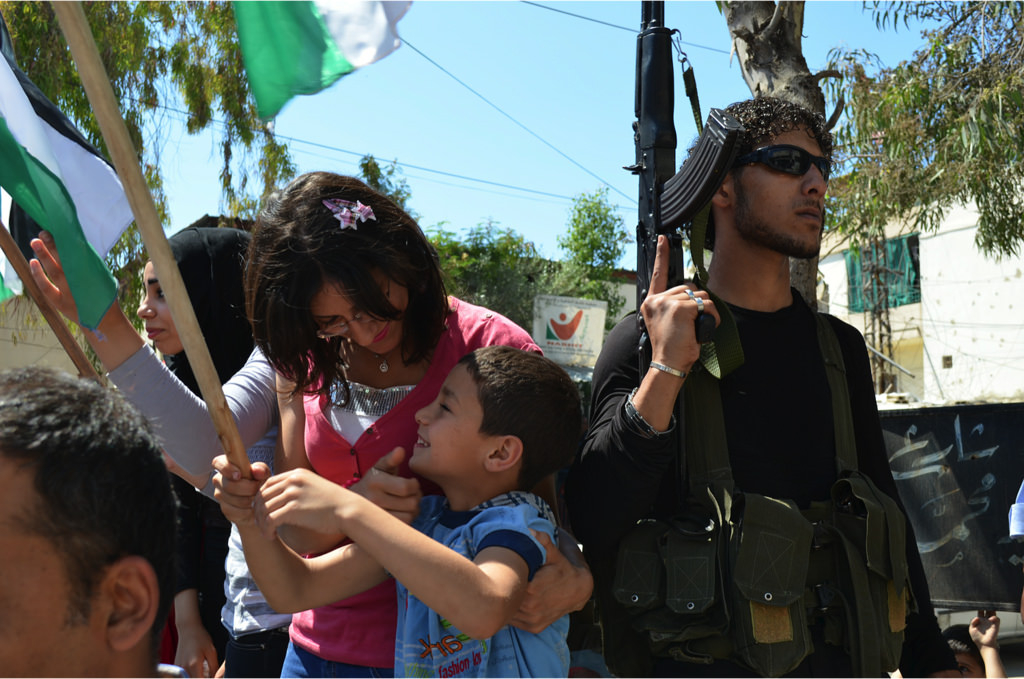
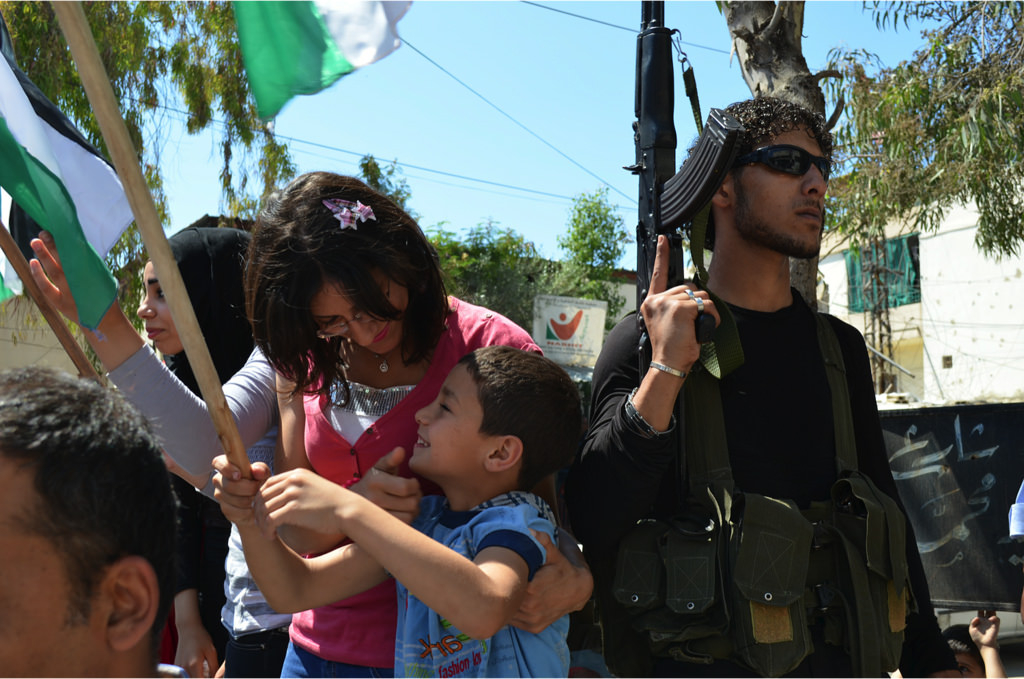
A street celebration in Lebanon’s Ain al-Hilweh camp, July 2015. (Image source: Geneva Call/Flickr)

Residents of the camp now fear that they could meet the same fate as their fellow Palestinians in Nahr al-Bared.

The Lebanese army, however, has still not intervened to stop the bloodletting. For Lebanese security forces, Palestinian refugee camps in Lebanon remain “no-go zone.” All that is left for the Lebanese authorities to do, in the hope of preventing the violence from spilling outside the camps, is besiege the camps and impose restrictions on the movement of Palestinians.

The fears of the residents of Ain al-Hilweh are not unjustified. The Lebanese government is facing growing pressure to enter Palestinian camps and disarm the gangs that have been operating there over the course of many years.

By and large, in recent years, the Palestinians who used to live in Syria, Iraq and Libya have left these countries as a result of the civil wars, and oppression by the governments and various militias. It is not comfortable or safe to be a Palestinian in an Arab country. Scenes of lawlessness and anarchy inside Palestinian refugee camps in the West Bank have also driven many residents to move to nearby cities and villages. Most refugees in the West Bank no longer live inside UNRWA-run camps.

Let us end where we began: with the Palestinian (non)leadership. What has it done to help its people in the Arab countries? Nothing. No Palestinian leader will urge an emergency session of the UN Security Council to expose the ethnic cleansing and killing of Palestinians in Arab countries. No Palestinian leader will demand that the international media and human rights organizations investigate the atrocities perpetrated by Arabs on their Palestinian brethren. We are sure to see more such criminal silence when Abbas meets with the president of the United States.

Khaled Abu Toameh, an award-winning journalist, is based in Jerusalem.

Palestinians’ Fort of Torture by Khaled Abu Toameh

  • Because it is not Israelis who are perpetrating the abuse, the reports are ho-hum to these journalists.Hamas is an extremist Islamist movement that does not consider itself obliged to abide by international laws and treaties concerning basic human rights. Indeed, the concept of human rights simply does not exist under Hamas in the Gaza Strip, where public freedoms, including freedom of speech and of the press, are non-existent.

  • In 2013, two Palestinian detainees reportedly died of torture in the Jericho Central Prison.A London-based human rights organization reported 3,175 cases of human rights violations, including arbitrary detentions, by the Palestinian Authority (PA) security forces in the West Bank during 2016. Hundreds of those detained include university students and lecturers, as well as schoolteachers. During the same year, the PA security forces also detained 27 Palestinian journalists.
  • Unfortunately for them, they are not going on hunger strikes in an Israeli prison, where such actions garner the immediate interest of the mainstream media.
  • Many are willing to tell their stories. But who is willing to listen? Not Western governments, human rights organizations and journalists. Most of them seek evil in Israel, and Israel alone.

As Palestinian Authority (PA) President Mahmoud Abbas and his cronies occupied themselves in the past two weeks issuing warnings to President Trump against moving the US embassy from Tel Aviv to Jerusalem, reports resurfaced concerning the brutal conditions and human rights violations in a Palestinian prison in the West Bank.

These reports, however, were buried, along with the abuse, in favor of attention to rhetoric directed against the Trump Administration. Anything uttered by Abbas and senior PA officials regarding the possible transfer of the US embassy to Jerusalem made it to the headlines of major newspapers and TV networks around the world.

At one point, it actually appeared as if the mainstream media in the West was interested in highlighting and inflating these statements in a bid to pressure Trump into abandoning the idea of moving the embassy to Jerusalem. Western journalists ran to provide platforms for any Palestinian official interested in threatening the Trump Administration.

The threats included warnings that the transfer of the embassy to Jerusalem would “destroy the peace process,” “jeopardize regional and international security” and “plunge the entire region into anarchy and violence.” Some Palestinian officials went so far as to state that such a move would be considered an “assault on all Palestinians, Arabs and Muslims.” They also threatened to “revoke” Palestinian recognition of Israel’s right to exist.

Regrettably, as Palestinian officials from across the political spectrum joined forces to broadcast sensational headlines in the mainstream media around the world, the reports about torture of Palestinian detainees in a PA prison failed to attract the interest of the many journalists covering the Israeli-Palestinian conflict.

The torture that takes place in PA-controlled prisons and detention centers is not new.

Over the past few years, Palestinians have become accustomed to hearing horror stories about what is happening within the walls of these structures. Yet, because it is not Israelis who are perpetrating the abuse, the reports are ho-hum to these journalists.

A Palestinian who points a finger at Israel is guaranteed a sympathetic ear among journalists. When a Palestinian complains of torture at the hands of Palestinian interrogators or security officers, it is seen as just more of the same. Worse: It is seen as “Oh those Arabs, what can anyone expect from them?”

Ironically, it is the Hamas and Palestinian Authority media outlets that publish such reports. The two sides regularly report about the abuse of human rights and torture in each other’s prisons and detention centers as part of the smear campaign they have been waging against each other for the past decade.

Hamas-affiliated media outlets are teeming with reports documenting cases of torture in PA detention facilities in the West Bank. Similarly, PA media organizations are always happy to hear from any Palestinian who is prepared to recount his or her ordeal in a Hamas prison in the Gaza Strip.

The bottom line: both Hamas and the PA, according to testimonies and reports, are practicing torture in their prisons. Neither cares a fig for the rights of detainees and prisoners, and both scoff at the values of international human rights. But because human rights organizations, lawyers and relatives are so often denied access to the Palestinian prisoners and detainees held by Hamas and the PA, they cannot get any first-hand information from the prisoners themselves. They are people — being tortured in prison!

All of this makes perfect sense, of course: Hamas is an extremist Islamist movement that does not consider itself obliged to abide by international laws and treaties concerning basic human rights. Indeed, the concept of human rights simply does not exist under Hamas in the Gaza Strip, where public freedoms, including free speech and media, are non-existent.

Then how does the Western-funded PA, which has long attempted to join international bodies such as the United Nations, explain its systemic barbarity?

For years, the PA has been acting as an “independent state” that is recognized by more than 100 countries. As such, foreign governments, especially American and European taxpayers, are entitled, or rather obliged, to hold the PA accountable for human rights violations and demand transparency and accountability. This right derives from the fact that the PA is asking to become part of the international community by winning recognition for a Palestinian state. Unless, of course, the international community is willing to welcome yet another Arab state that tramples upon human rights, and practices torture in its prisons.

The most recent evidence of torture in the West Bank was disclosed in a report by a Hamas-affiliated online website. The report sheds light on some of the torture methods employed by PA interrogators and offers a unique insight into the conditions detainees are held under. The report refers specifically to the notorious Jericho Central Prison, which is controlled by various security branches of the PA.

Entitled “Jericho Prison — A Fort of Torture?” the report describes conditions inside the prison as similar to those sensational films aired on TV screens to draw the attention of viewers.

A Palestinian who was recently released from the Jericho Central Prison is quoted as saying that anyone who arrives at the facility is first blindfolded and his hands tied behind his back before he is severely beaten by five to 10 security officers. One of the most common forms of torture in the PA prison, he recounted, is called the “shabah” position, where a prisoner’s hands are shackled and he is hung from the ceiling for several hours. During this time, the detainee is beaten on all parts of his body. If the detainee tries to move or change his position, the beating gets worse. Sometimes, the “shabah” takes place inside the prison lavatories.

Another infamous form of torture in the Jericho Central Prison is the “falaka,” where the victims are whipped on their bare feet. According to the testimony of another former detainee, who is identified only as Abu Majd, he was subjected to the “falaka” with a plastic hose for several hours each session. Sometimes, one of the “interrogators” would also slap him on the face while he was being whipped on his bare feet.

Abu Majd reported that he was also subjected to another well-known form of torture, where he would be asked to “climb” a non-existent ladder on a wall. Because there is no ladder and the detainee cannot “climb” it, he is punished with more beatings.

Other former detainees recounted sleep deprivation, solitary confinement and being locked up in a small closet with powerful air-conditioning as common practices of torture in the same prison. This is in addition to verbal abuse, of course, and forcing detainees to sleep on the floor without mattresses or blankets.

In 2013, two Palestinian detainees reportedly died from torture in the Jericho Central Prison five days apart from each other. They were identified as Arafat Jaradat and Ayman Samarah.

Earlier this month, the father of Ahmed Salhab, who was recently detained by PA security forces and taken to the Jericho prison, complained that his son’s health was seriously harmed as a result of torture. The father said that his son was suffering from acute pain after being hit on the head by his interrogators.

Detainees in Palestinian prisons have reportedly gone on hunger strikes to protest their incarceration and torture. Unfortunately for them, they are not going on hunger strikes in an Israeli prison, where such actions garner the immediate interest of the mainstream media.

A London-based human rights organization reported 3,175 cases of human rights violations, including arbitrary detentions, by the PA security forces in the West Bank during 2016. According to the report, hundreds of those detained include university students and lecturers, as well as schoolteachers.

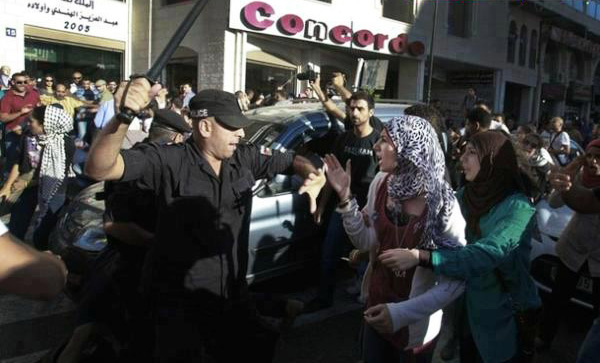
A Palestinian Authority policeman attacks protestors. (Image source: “Palestinians for Dignity” Facebook Page)

During the same year, the PA security forces also detained 27 Palestinian journalists, the report revealed.

PA political and security officials dismiss these reports as Hamas-orchestrated “propaganda.” But one does not need wait for Hamas to tell the world about torture and human rights abuses at the hands of PA security officers. Among the thousands of Palestinians who have experienced incarceration in PA prisons and detention facilities during the past two decades, many are willing to tell their stories. But who is willing to listen?

Not Western governments, human rights organizations and journalists. Most of them seek evil in Israel, and Israeli alone. Yet such a policy aids and abets the emergence of yet another Arab dictatorship in the Middle East. For now, the residents of Jericho will continue to hear the screams of the tortured detainees in their city. The rest of the world will close its eyes and ears and continue to pretend that all is rosy in the land of Abbas.

Khaled Abu Toameh, an award-winning journalist, is based in Jerusalem.

Translate »
Skip to toolbar