Monthly Archives: June 2017

Will Iran Walk Away from Nuclear Deal? by Lawrence A. Franklin

  • The world powers are now experiencing what it means to negotiate with Persian theocrats. All is negotiable; nothing is ever finally decided. Words never commit one to action.

  • Iran demands right to implement a phased plan of centrifuge expansion to 150,000 over a period of 15 years.

  • Iran demands that no sanctions are to be leveled against it because of alleged support for terrorism or human rights violations.

  • Iran demands that it must be free to explore all future advances in nuclear enrichment technology.


The world powers are now experiencing what it means to negotiate with Persian theocrats. All is negotiable; nothing is ever finally decided. Words never commit one to action. Changing circumstances vitiate the substance of any prior commitment, leaving the door open to additional demands. Although the Islamic Republic insists that it be recognized as a normal member of the international community, it will continue to behave as if it is not bound by global norms.

Despite Iran’s apparent acceptance of the Joint Comprehensive Plan of Action (JCPOA}, known as the “Iran Deal,” after the document’s submission to the relevant state bureaucracies, these institutions have agreed to it only on a conditional basis. The JCPOA was approved by Iran’s Consultative Assembly (Majlis), the Council of Guardians, the Supreme National Security Council and by the Office of the Leader. These seeming approvals can tempt those who desire the implementation of the nuclear deal to assume falsely that the bellicose rhetoric of Iran’s leaders and the continued opposition to the JCPOA are just face-saving turns of phrase.

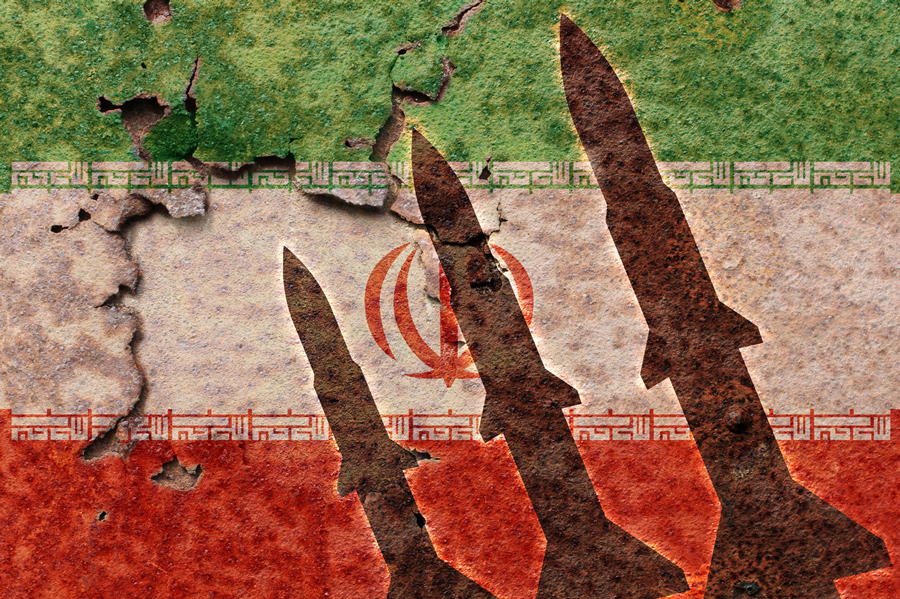
This same shallow mode of thinking assumes that last week’s launch of an experimental ballistic missile by Iran was a bone thrown in the direction of hardliners who oppose the nuclear deal. Iran’s leaders seem to have calculated that the missile test would not invite a reassessment by the P5+1 signatories, despite the fact that the launch was a clear violation of the JCPOA. Iran’s leaders were proven correct: both Russia and China refused to condemn the missile test at the United Nations.

The publication of the letter of October 21 by Iran’s Supreme Leader, Ayatollah Khamenei, to Iran’s President, Hassan Rouhani, leaves little doubt that Iran is now demanding fundamental changes to the JCPOA. The conditions spelled out by the Leader will derail the timetable for the document’s implementation probably beyond President Obama’s term of office. In part, Tehran most likely wants to embarrass the U.S. and President Obama personally by denying him a legacy-related political victory, just as Tehran apparently wants to embarrass them by arresting yet another American hostage two weeks ago, American-Iranian business executive, Siamak Namazi. The hostage count of Americans now imprisoned in Iran is now five: Namazi,Washington Post journalist Jason Rezaian, Pastor Saeed Abedini, former U.S. Marine Amir Hekmati and Robert Levinson.

Khamenei’s letter indicates that he will not approve implementation of the JCPOA unless the following conditions are met:

  1. The U.S. and European nations must draft a letter promising to end all possibility of “sanctions snapback.”
  2. The West must lift — not “suspend” — all sanctions immediately and permanently.
  3. The International Atomic Energy Association (IAEA) must issue an irreversible declaration ending any future investigation into alleged military dimensions of Iran’s nuclear programs.
  4. Iran will postpone any renovations at its heavy water (plutonium) reactor at Arak until the signatories of the JCPOA produce an alternative usage plan.
  5. Iran will not begin shipping out of country any of its enriched uranium unless the signatories agree to deliver uranium to Iran (albeit at a lower level of enrichment).
  6. Iran demands right to implement a phased plan of centrifuge expansion to 150,000 over a period of 15 years.
  7. No sanctions are to be leveled against Iran because of alleged support for terrorism or human rights violations.
  8. Iran must be free to explore all future advances in nuclear enrichment technology.

Iran’s leadership seems to have decided it will be able to endure a modified version of its “resistance economy,” and that widening fissures among the P5+1 signatories of the JCPOA can be exploited to end its isolation. Rouhani, with Khamenei’s endorsement, evidently calculates that Iran’s economy will improve with or without the nuclear deal. Since taking office, Rouhani’s cabinet has attempted to institute economic reforms designed to make Iran less vulnerable to sanctions. Rouhani, for instance, has dispensed with former President Ahmadinejad’s populist polices of extensive cash grants and subsidies to provinces in rural Iran. Additionally, Rouhani has re-empowered the Budget Control Office, which had been politically sidelined by Ahmadinejad. Rouhani has also reduced somewhat the galloping inflation of the Ahmadinejad era, which had reached about 30% [1] by appointing professionally qualified fiscal officers to monitor adherence to the government’s five-year plan. He also has sought to reduce corruption by discontinuing the practice of appointing unqualified cronies from the Basij militia and Islamic Revolutionary Guards Corps (IRGC) — a practice routine in Ahmadinejad’s administrations.[2] Under his presidency, however, executions have skyrocketed to a degree that Amnesty International called “staggering,” especially in view of trials it calls “blatantly unfair.” In just the first months of 2015, accord to Amnesty International, nearly 700 people have been put to death.

The proponents of this so-called “resistance economy” in Iran seem to believe the country will be aided by increased trade with Russia and China and investment from other countries — including West European ones — that no longer feel bound by the U.S.-orchestrated sanctions regime. One prominent Iranian-born economist estimates that sanctions account for only about one-fifth of the downturn in Iran’s economy during the last few years.[3] A more significant factor in the economy’s downturn may be the continued decline in the price of oil, which accounts for the largest share of Iran’s exports and hard currency earnings. Perhaps the change felt most keenly by the individual Iranian citizen has been the impact of the plummeting decline in the purchasing power of the Rial, which lost about 80% against the dollar in the last years of the Ahmadinejad presidency.[4]

It is probably safe to assume that the Western negotiators of the JCPOA have been introduced to the Middle East bazaar method of negotiation: After an agreement has been concluded, it becomes a basis for further demands.

If Iran succeeds in garnering the benefits of even partial relief of sanctions, and if it attracts additional foreign investment as well as increased international commerce, it will ignore the JCPOA altogether. The only improbable question is: Will Iran walk away before or after picking up its $150 billion?

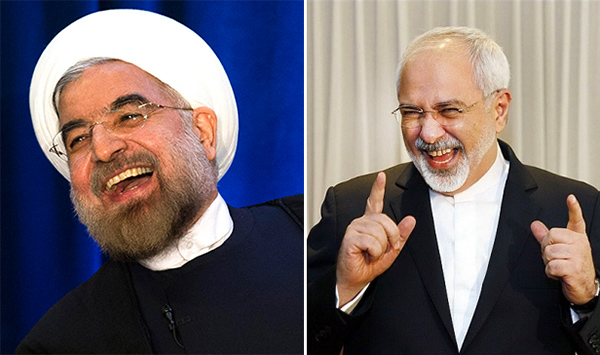
Western negotiators of the Iran deal, who sat across the table from Iranian Foreign Minister Javad Zarif (right), have been introduced to the Middle East bazaar method of negotiation: After an agreement has been concluded, it becomes a basis for further demands. Iranian President Hassan Rouhani (left) evidently calculates that Iran’s economy will improve with or without the nuclear deal.

Dr. Lawrence A. Franklin was the Iran Desk Officer for Secretary of Defense Rumsfeld. He also served on active duty with the U.S. Army and as a Colonel in the Air Force Reserve, where he was a Military Attaché at the U.S. Embassy in Israel.

Will Europe Refuse to Kneel like the Heroic French Priest? by Giulio Meotti

  • Go around Europe these days: you will find not a single rally to protest the murder of Father Jacques Hamel. The day an 85-year-old priest was killed in a French church, nobody said “We are all Catholics”.Even Pope Francis, in front of the most important anti-Christian event on Europe’s soil since the Second World War, stood silent and said that Islamists look “for money”. The entire Vatican clergy refused to say the word “Islam”.

  • Ritually, after each massacre, Europe’s media and politicians repeat the story of “intelligence failures” — a fig leaf to avoid mentioning Islam and its project of the conquest of Europe. It is the conventional code of conduct after any Islamist attack.
  • Europe looks condemned to a permanent state of siege. But what if, one day, after more bloodshed and attacks in Europe, Europe’s governments begin negotiating, with the mainstream Islamic organizations, the terms of submission of democracies to Islamic sharia law? Cartoons about Mohammed have already disappeared from the European media, and the scapegoating of Israel and the Jews started long time ago. After the attack at the church, the French media decided even to stop publishing photos of the terrorists. This is the brave response to jihad by our mainstream media

Imagine the scene: the morning Catholic mass in the northern French town of Saint-Étienne-du-Rouvray, an almost empty church, three parishioners, two nuns and a very old priest. Knife-wielding ISIS terrorists interrupt the service and slit the throat of Father Jacques Hamel. This heartbreaking scene illuminates the state of Christianity in Europe.
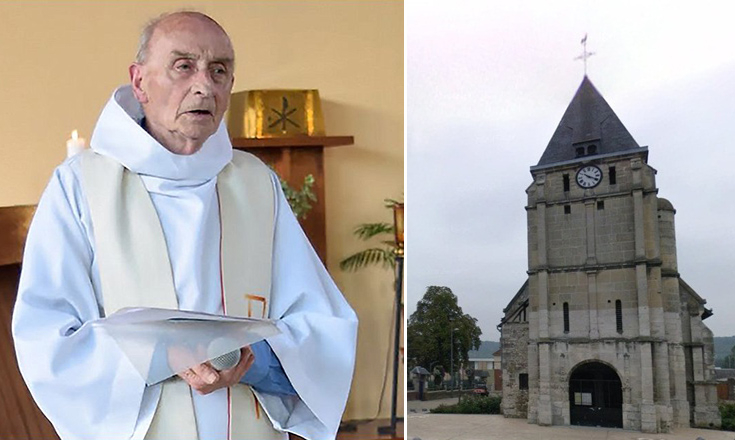
Father Jacques Hamel was murdered this week, in the church of Saint-Étienne-du-Rouvray, by Islamic jihadists.

It happened before. In 1996 seven French monks were slaughtered in Algeria. In 2006, a priest was beheaded in Iraq. In 2016, this horrible Islamic ritual took place in the heart of European Christianity: the Normandy town where Father Hamel was murdered is the location of the trial of Joan of Arc, the heroine of French Christianity.

France had been repeatedly warned: Europe’s Christians will meet the same fate of their Eastern brethren. But France refused to protect either Europe’s Christians or Eastern ones. When, a year ago, the rector of the Great Mosque of Paris, Dalil Boubakeur, suggested transforming empty French churches (like that one in Saint-Étienne-du-Rouvray) into mosques, only a few French intellectuals, led by Alain Finkielkraut and Pascal Bruckner, signed the appeal entitled, “Do not touch my church” (“Touche pas à mon église“) in defense of France’s Christian heritage. Laurent Joffrin, director of the daily newspaper Libération, led a left-wing campaign against the appeal, describing the signers as “decrepit and fascist“.

For years, French socialist mayors have approved, in fact, the demolition of churches or their conversion into mosques (the same goal as ISIS but by different, “peaceful” means). Except in the Saint-Germain-des-Prés quarter of Paris, and in some beautiful areas such as the Avignon Festival, France is experiencing a dramatic crisis of identity.

While the appeal to save France’s churches was being demonized or ignored, the same fate was suffered by endangered Eastern Christian being exterminated by ISIS. “It is no longer possible to ignore this ethnic and cultural cleansing”, reads an appeal signed by the usual combative “Islamophobic” intellectuals, such as Elisabeth Badinter, Jacques Julliard and Michel Onfray. In March, the newspaper Le Figaro accused the government of Manuel Valls of abandoning the Christians threatened with death by ISIS by refusing to grant them visas.

Go around Europe these days: you will find not a single rally to protest the killing of Father Hamel. In January 2015, after the murderous attack on Charlie Hebdo, the French took to the streets to say “Je suis Charlie”. After July 26, 2016, the day an 85-year-old priest was murdered in a church, nobody said “We are all Catholics”. Even Pope Francis, in the face of the most important anti-Christian event on Europe’s soil since the Second World War, stood silent and said that Islamists look “for money“. The entire Vatican clergy refused to write or say the word “Islam”.

Truth is coming from very few writers. “Religions overcome other religions; police can help little if one is not afraid of death.” With these words, six months after the massacre at the magazine Charlie Hebdo, the writer Michel Houellebecq spoke with the Revue des Deux Mondes. Our elite should read it after every massacre before filling up pages on “intelligence failures.”

It is not as if one more French gendarmerie vehicle could have stopped the Islamist who slaughtered 84 people in Nice. Perhaps. Maybe. But that is not the point. Ritually, after each massacre, Europe’s media and politicians repeat the story of “intelligence failures”. In the case of the attack in Saint-Étienne-du-Rouvray, the story is about a terrorist who was placed under surveillance.

The “intelligence failure” theory is a fig leaf to avoid mentioning Islam and its project of the conquest of Europe. It is the conventional code of conduct after any Islamist attack. Then they add: “Retaliation” creates a spiral of violence; you have to work for peace and show good intentions. Then, in two or three weeks, comes the fatal “we deserve it”. For what? For having a religion different from them?

We always hear the same voices, as in some great game of dissimulation and collective disorientation in which no one even knows which enemy to beat. But, after all, is it not much more comforting to talk about “intelligence” instead of the Islamists who try, by terror and sharia, to force the submission of us poor Europeans?

Europe looks condemned to a permanent state of siege. But what if, one day, after more bloodshed and attacks in Europe, Europe’s governments begin negotiating, with the mainstream Islamic organizations, the terms of submission of democracies to Islamic sharia law? Cartoons about Mohammed and the “crime” of blasphemy have already disappeared from the European media, and the scapegoating of Israel and the Jews started long time ago.

After the attack at the church, the French media decided even to stop publishing photos of the terrorists. This is the brave response to jihad by our mainstream media, who also showed lethal signs of cowardice during the Charlie Hebdo crisis.

The only hope today comes from an 85-year-old French priest, who was murdered by Islamists after a simple, noble gesture: he refused to kneel in front of them. Will humiliated and indolent Europe do the same?

Giulio Meotti, Cultural Editor for Il Foglio, is an Italian journalist and author.
Will Democracies Combat Terror? by Jagdish N. Singh

  • Many extremist Islamic groups are still shielded by states such as Pakistan, Saudi Arabia, Turkey and Iran. These countries have so far not severed their links, overt or covert, with these outfits.

  • The United States and other members of the free world need to take corrective measures not only against terrorist groups but also against the states that sponsor them.
  • Washington, in its relationship with Tehran and Islamabad, among others, is on the wrong track. Its approach towards a rogue Iran is not likely to “bring it in from the cold,” but to embolden it even further in its various terror activities the world over.

Sadly, major world powers, including the United Nations, have not appeared serious about fighting terrorism or the Islamic State (ISIS, IS) or similar terrorist groups.

UN Security Council Resolution 2170 (August 15, 2014) called on member-states to take “national measures to prevent fighters from traveling from their soil to join the IS and deny it any arms or financial support. The resolution also “expressed readiness to consider putting on the sanctions list those who facilitated the recruitment and travel of foreign fighters.”

The continued growth of the Islamic State, however, shows that the UN’s member states have done little to fight it. According to an intelligence estimate more than 20,000 fighters have arrived in Syria and Iraq to fight for the IS. Of these, about a quarter hail from North America, Australia and Europe. Clearly, such a movement of IS fighters would not have been possible if the member states had been conscientious about implementing the UN resolution.

Sadly, the conduct of the UN Security Council does not seem any different today. Of late, four of the five permanent members of the Security Council — the United States, France, Russia and Britain — have been bombing IS locations, but the major powers seem to have divergent objectives in their war on ISIS.

Washington’s policy in the Middle East has been among the major reasons for the rise of the Islamic State. But today it is not clear what the United States wants, except for the next president to clean up the mess being made by this one.

Beijing, for its part, continues to back Syrian President Bashar As

Wilders’s Trial: “Unnecessarily Offensive” by Robbie Travers

  • Geert Wilders is now on trial for having national security views that the prosecution have deemed unacceptable to air in public.To suggest that Dutch citizens, whose safety Wilders was elected to protect — it is his job; it is why he was elected — should not publicly given his best advice, would to countermanding his official duty.

  • Is it racist to note these problems? Statistical data are usually not racist; they simply express the factual reality of a situation.The freedom to speak and to question without fear of retribution is fundamentally what separates democratic governments from totalitarian ones. Sunshiny, politically correct views do not need protecting. The reason for free speech is to protect the less-than-enchanting views.
  • It is fundamental for the health of our society that Wilders and others be able to speak and be heard freely. To protect us and to protect the humanist values of freedom brought to us by Erasmus and the Enlightenment, it is crucial that the Dutch court grant Wilders a full acquittal.

As his trial continues in the Netherlands, Geert Wilders, if found culpable, faces a fine for his comments, purportedly “racist“, on Moroccans.

The prosecution alleges that his comments unfairly “targeted a specific race, which is considered a crime.”

Never mind that Moroccans are not a race or even a religion; they are citizens of a country — apparently, making comments on trends that are prominent within minorities, or advice on how to keep a country secure, is now criminal. Statements might sometimes be unpleasant to hear, but to express these views should not be “criminal.”

Look at the comments of the lead prosecutor, Wouter Bos, who said, “Freedom of expression is not absolute, it is paired with obligations and responsibilities.” This is worrying. To suggest that an individual should have the obligation not to “uncessarily offend,” is to make every individual responsible for the thoughts of every other, theoretical individual who might be offended by one’s words — or even, as we see now all too often, just claim to be offended for malicious purposes.

Bos added that Wilders has “the responsibility not to set groups of people against each other.” Is this really what Wilders was trying to do? The opposite would seem to be true: Wilders was not calling for racial tension; in his view, he is seeking to alleviate it, his solution being less immigration from Morocco. So far, objectively, immigrants from Morocco seem to have had a significant effect on the increase in crime syndicates, drugs- and human-trafficking, and a notably lopsided change in the composition of the prison population in the Netherlands.

Is it racist to note these problems? Statistical data are usually not racist; they simply express the factual reality of a situation.

With this in mind, perhaps then the struggle Wilders faces could be better described as: Geert Wilders is now on trial for having national security views that the prosecution have deemed unacceptable to air in public.

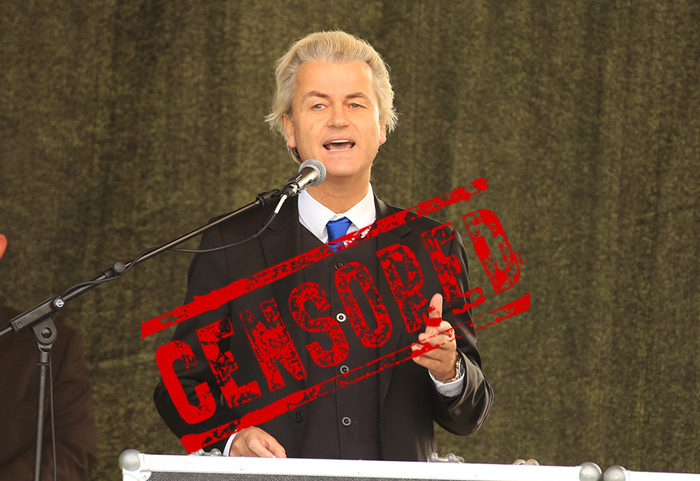
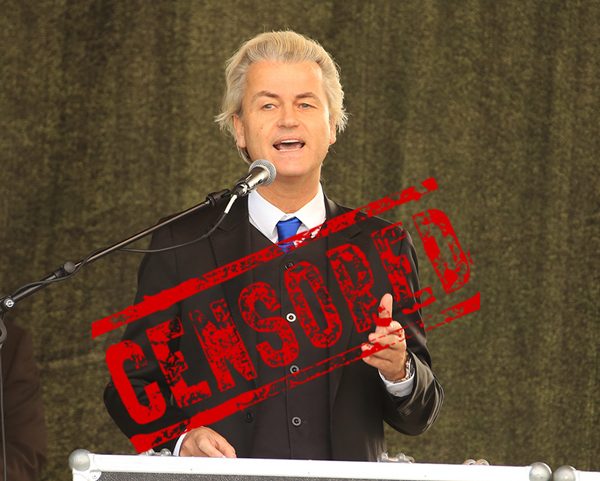
Dutch MP Geert Wilders is now on trial for having national security views that the prosecution have deemed unacceptable to air in public. (Source of Wilders photo: Flickr/Metropolico)

The latest development in this process is that the prosecution have demanded that Wilders be punished with a €5,000 fine, in order for him to atone for his alleged transgression against Moroccans.

To suggest that Dutch citizens, whose safety Wilders was elected to protect — it is his job; it is why he was elected — should not publicly be given his best advice, would to countermand his official duty. If, heaven forbid, there were to be adverse circumstances in the Netherlands, as seen all too often in France, Denmark, Germany and Belgium, and Wilders had failed to warn his countrymen, why could he not, conversely, risk being charged with reckless endangerment?

Saying that the Netherlands should have fewer Moroccans is apparently considered “unnecessarily offensive.”

Perhaps the problem for the long-term survival of Europe is that in modern politics, too many individuals are seeking to base legislation on protecting people from being offended, instead of basing legislation on what is best for the national and cultural security of a country. While no-one might wish others to be offended, sometimes offending others is necessary, even a duty.

When Wilders criticises Islam and its associated practices and legal codes, no doubt he offends many conservative Muslims. Does this mean his criticism should not have been expressed? (No.)

When Wilders criticises the European Union, he no doubt offends Eurocrats in Brussels. Does this mean his criticism should not have been expressed? (No.)

So when Wilders criticises immigration from Moroccan and suggests there should be less of it, he may well have offended Moroccans. Does this mean his criticism shouldn’t have been expressed? (No.)

Sometimes, causing offence and allowing individuals critically to engage with a viewpoint with which they disagree is a crucial part of our dialogue as a society. Individuals sometimes need to be presented with uncomfortable truths.

Whether one agrees with Wilders’s view or not, it should be comforting that an individual is allowed to question fundamental building blocks for the future health of our Western values and communal well-being.

The freedom to speak and to question without fear of retribution is, in fact, fundamentally what separates democratic governments from totalitarian ones.

If one wants individuals to be able to counter views they perceive to be “racist” or in some other way prejudiced, they first need to be able to hear them to counter them.

In condemning Wilders, we are not only robbing Wilders of his right to free expression, we are also robbing individuals of a right to listen to him.

In a democratic society, individuals should have the right to hear Wilders, and then, based on his arguments, to draw their own conclusions. Too many countries, based on originally well-intended laws that repress free speech, have already fallen into the trap of “the truth is no defense.”

Is the implication, then, that half-truths, distortions and lies are an acceptable defense? In closing the door to “truth” in Europe and Canada, our fragile Western democracies are opening the door to authoritarian governance. Farewell, democracy.

There are other reasons why all Dutch citizens or other individuals should be terrified of this.

For Wilders, as a Member of Parliament, the demand of the prosecutors in this case for a fine of €5,000 may not — on the surface — destroy his life. But this fine would not include the crushing court costs Wilders has had to incur, even if he is acquitted. What happens when ordinary members of the Dutch public are summoned before a court — possibly for even greater penalties and with greater court costs — for expressing views that prosecutors claim are “unnecessarily offensive”?

Wilders, as a private citizen with possibly a moderate income, has had to go up against the virtually unlimited exchequer of the entire Dutch government. People’s resources are not inexhaustible. This is the nightmare that great protectors of freedom such as Franz Kafka or George Orwell have written about.

What happens if Geert Wilders, who is a politician, is only among the first of those who might be prosecuted for speaking out? Other individuals who might also want “fewer Moroccans” may not be able to afford endless court costs and a fine of €5,000 — or whatever the judgement might be on December 9. Are we really asking the citizens of the Netherlands, and much the free world, as we have already seen too often — to go through life weighing whether expressing a view will come with a crippling economic cost?

Surely if there is a conviction this will be only the beginning. Will anyone ever feel free again to express opinions that might be found — by someone, anyone, who knows — “unnecessarily offensive”? Probably not.

What, by the way, does “necessarily offensive” consist of? Will lawyers become rich as person after person is hauled into court to decide, case by case, how necessary is “necessary”?

Is this really what the free world wants: societies that claim to protect the rights of the individual but then instead prosecute them? Sunshiny, politically correct views do not need protecting. The reason for freedom of speech is to protect the less-than-enchanting views. Without any contrarians, how would society have developed?

If this court rules against Wilders, will every politician thereafter who makes a statement that someone deems “unnecessarily offensive” be summoned before a court? At the other end of the political spectrum, three Dutch Labour Party politicians were noted to have insulted Moroccans far more corrosively than Wilders ever did — even likening them to dirt and excrement. Those Labour politicians were never prosecuted. Gee, could this be a double standard we are seeing? Wilders’s judges refused to dismiss his trial on the grounds that it was, as Wilders maintained, politically motivated; but what looks suspiciously like a selective prosecution seems to bear him out. Will the Dutch prosecutors, in fairness, proceed to try these even-more-insulting politicians from the political left?

Repeated trials and appeals only lead, as in a totalitarian government, to no-one being able to afford maintaining his freedom by due process.

That thought leads to the major politically incorrect elephant in this room:

Is it possible that there are people who are exploiting the West’s open but expensive legal process precisely to shut down freedom of speech and political views they find inconvenient for themselves? Is that the whole secret point behind the prosecution: to smother speech and smother thought?

European nations seem to be rapidly approaching a path of political censorship, to prevent views being expressed that their leaders deem unacceptable. The result? These views only grow in prominence. Across Europe, as Brexit, Wilders, Le Pen, and other “politically incorrect” tributaries that leaders are trying to restrict, are surging in popularity.

Ideas cannot be killed by stopping individuals from hearing them; people only seem to want to hear more about what they sense is being hidden from them.

You do not have to like Geert Wilders or even agree with him; it is, however, fundamental for the health of our civilization that he and others be able to speak and be heard freely.

To protect us and to protect the humanist values of freedom brought to us by Erasmus and the Enlightenment, it is crucial that the Dutch court grant Wilders a full acquittal.

Robbie Travers, a political commentator and consultant, is Executive Director of Agora, former media manager at the Human Security Centre, and a law student at the University of Edinburgh.

Wilders’ Plan: Time for Liberation

Pim Fortuyn, the hero of Rotterdam, the man who shook the country awake, once said, “Do not aim for what is possible, but what is imaginable.” He wanted to make clear that for us, the Dutch, nothing is impossible.


Pim Fortuyn was right. Nothing is impossible for us. We are Dutch.Look at our country. We have single-handedly created this unique and beautiful land. We are the only people in the world living in a country which for the largest part we created ourselves. A great achievement.

We not only created our own land, but we also explored the world. We have sailed all the seas. We founded New York and discovered Australia. Sometimes, it seems like we have forgotten it all. Forgotten what we are capable of. What we are capable of when we put our mind to it. And maybe that is our problem. We must dare to think big again. Because where there is a will, there is a way.

And yes, I know. Many things are bothering us. There is also much to be angry about, and rightfully so. This government has destroyed our country with its austerity policies and has allowed our country to be colonized by Islam. But let’s start aiming for the imaginable. Let us liberate our country.

Four years ago, Mark Rutte won the election with a campaign based on false promises. With lies and deceit. No more money to the Greeks, 1,000 euros for every Dutch citizen, a strict immigration policy. And the Labour Party was his enemy, as everyone remembers. He recently apologized, but he didn’t draw his conclusions. On the contrary, he apologized but continues destroying and giving away our country. Perhaps, he will even govern with Labour again for another four years. No one can still believe what he says. And my question to you is: do you want a prime minister like that for the next four years?

At the moment, you are living in the land of Mark Rutte. And for many, that is no longer a pleasant land. Just walk out your front door and look around. Chances are that thugs are hanging around at the entrance of your local convenience store. That you get spit on and robbed there. That your daughters, your wives, and your parents get harassed and no longer dare to go out at night. That you are becoming a stranger in your own country. That must change. Because this is our country. And it is being taken away from you. And I will take it back for you.

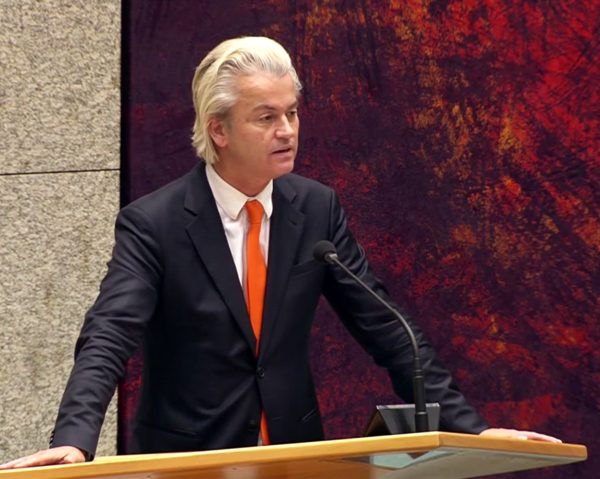
Geert Wilders is pictured speaking in the Netherlands Parliament, in September 2015. (Image source: RTL Nieuws video screenshot)

A politician like me, who speaks the truth about a huge problem many Dutch are confronted with every day — yes, I am talking about the terror of Islam and the Moroccan problem — is dragged to court. Facing trial, while imams can preach all the hatred they want and the political elites keep silent. They call themselves leaders, but they do not lead; they mislead.

Mark Rutte’s plan can be summarized in one word: Dereliction of duty.

My plan for the Netherlands is called Liberation. And liberation begins with stating the facts.

The facts: Six out of every ten inmates in the Netherlands are immigrants, and of all prisoners, more than 10% are of Moroccan origin. Moroccan youths are nearly five times more often suspected of a crime than native youths. The Netherlands has become a continuous live broadcast of Opsporing Verzocht [“Wanted Criminals”, a Dutch television program]. A politician who keeps silent about this is worthless. I refuse to do that.

And I will not keep silent about Islam either. Never, ever. Because silence is dangerous. Last July, Nobel Prize winner and Holocaust survivor Elie Wiesel passed away. I met him a few years ago in New York. He gave the world a wise lesson: “When someone says they want to kill you, believe them.” Islam says it wants to kill us. The Koran leaves no doubt about that.

Seven out of ten Dutch Muslims believe that religious rules are more important than Dutch secular laws. And more than one in ten Muslims in the Netherlands find it acceptable to use violence in name of Islam. That is more than 100,000 people. Many refuse to integrate and show no respect for Dutch authority in areas such as Maassluis or Poelenburg. They give us the middle finger. Islamic hooligans parade with Islamic State flags through the streets in The Hague and occupy bridges with Turkish flags in Rotterdam. This is our country, but their flags are waving.

Look at their flags. And look at our flag. There is no Koran verse and no crescent on our flag, but red, white and blue stripes. The red of our identity, the white of our freedom and the blue of the truth. This is the time that from house to house, from street to street and from municipality to municipality, we must raise our flag. Everywhere. With pride. Because this is our country, our Netherlands! And it cries for liberation.

When I come to power, I will protect our beautiful country. And this is only possible if we de-Islamize. I want to make it the core of my policy. Because I refuse to let this wonderful country of ours perish and I choose our culture and the freedom of our people.

Our values are not Islamic, but are based on the Judeo-Christian and humanist civilization. We have the right and freedom to choose how we want to live our lives, and to never give away this right. Twelve years ago, Theo van Gogh was murdered. He gave his life for the freedom that lies at the heart of our Dutch identity. And that identity must defend itself. We must not allow those who want to destroy our freedom to abuse freedom in order to take ours away. We must stop being naive and defend ourselves. Because this is our country.

The Dutch are fully aware of the fact that while there are moderate Muslims, there is no moderate Islam. Two out of three Dutch people say that the Islamic culture does not belong to the Netherlands. Three-quarters of the Dutch people believe that politicians underestimate the problem of the rising numbers of Muslims in our country. More than three-quarters believe that Islam is not an enrichment for the Netherlands. Those people are right. But nobody listens to them. Only I do.

Mark Rutte spoke about stubborn optimism, but the Netherlands do not need laughing donkeys. It needs heroes with firm realism. We cannot afford to underestimate the seriousness of the threat. Because the threat is existential: the survival of our country is at stake. Potential terrorists are already among us in great numbers and are coming to Europe on a daily basis, also with the influx of asylum seekers. They walk free here. It is a dereliction of duty to do nothing about it and to leave our borders open to tens of thousands mainly Islamic fortune-seekers from the Middle East and Africa.

We must also liberate ourselves from the Europhiles in Brussels who wipe the floor with our identity, our sovereignty and our prosperity. We are no longer in control of our own borders, our own money, our own democracy. If we decide in a referendum that we do not want something, like the association agreement with Ukraine, then they force it down our throats anyways. Because the will of the people is not relevant to the elite. They are laughing at us.

Everything belonging to our culture is being taken away from us. Even Zwarte Piet (Black Pete) is not allowed anymore. The elite wants to abolish the word “allochtoon” (foreigner), but it is the native people who are losing their country. I refuse to let that happen. This is our country, our culture, our identity. The Netherlands, this beautiful country, this great nation, this beacon of freedom, it is ours and will remain ours! This is the time to withstand tyranny.

Today, I appeal to all the Dutch. To everyone who enjoys our hard-won freedoms, to everyone who wants to safeguard the prosperity and wealth of this great country for their children and grandchildren: let us show the world that we are Dutch. Stand up — democratically and non-violently — against the elites who are giving away your country. The task that lays ahead of us is immense. But the courage to reclaim our country is so, too. There are many good things to be preserved and there are many things that have to be rebuilt.

This is the time for clear language: Dutch money for the Dutch people! Not a penny to Africa, Turkey, Greece or Brussels anymore. If we do that, so much will become possible. Imagine it! Then we will be able to reduce taxes for everyone, so the purchasing power can rise significantly and the economy can get a tremendous boost. We will be able give our elderly a decent old day. We will be able to can lower the retirement age to 65 again, and no pensions will have to be cut.

I also want to keep our nursing homes open and employ thousands of extra nurses. In my Netherlands, we remedy the terrible degradation of healthcare under Rutte II and there will be many nurses taking care of our elderly with dedication, love and respect, day and night. In my Netherlands, we abolish deductibles in healthcare. It is intolerable that Dutch people are avoiding healthcare because they cannot afford it, while asylum seekers, who on average have 1,000 euros more healthcare costs a year, get everything for free. This injustice fills me with disgust.

We will be able to spend more on the police and the army, so they have more resources to keep our country safe and free and to protect our property and borders. We must close our borders to asylum seekers and immigrants from Islamic countries, no longer allow jihadists from Syria return, and denaturalize and expel criminals with dual citizenship. We must liberate our country.

I also want to introduce direct democracy in the Netherlands with binding referendums. Our political system is still that of the 20th century, ruled by the same arrogant political elites with their false promises and hypocritical apologies. If the mess created by Mark Rutte has taught us one thing, it is this: the people should be able to pull the emergency brake when the political elites violate their will. And not just once every four years.

The past decades, millions of Dutch people have seen how their country was hijacked before their very eyes. It did not take a genius to know that this would end badly. The constant transferring of sovereignty to the EU, the euro that does more harm than good, the endless waste of money spent on the Greeks, the dangers of Islam, the open borders and mass immigration, the growing threat of terrorism, the tsunami of asylum seekers, the tax increases, and last but not least, the budget cuts in healthcare for the elderly and the disabled that have crushed the weakest in our society.

Unfortunately, those who warned have been proven right. But there is hope. Together we can take care of that. When a nation awakes and starts moving, everything is possible. I am not saying that the task will be easy. But it can be done, and it must be done. Because we have no choice. A strong and sovereign country where hard work is rewarded and the weak are protected, where terrorists cannot just cross the border at Hazeldonk [main border crossing with Belgium], where women can walk the streets in skirts without being harassed or sexually assaulted, where care is affordable and pensions are decent, where all citizens — including Jews, homosexuals, women, and critics of Islam — are safe. Where patriotism is not an insult but a badge of honor. Where Islam is shown the door.

This beautiful country, our country, is not lost. In fact, the best years lay ahead of us. If we make the right choices. And say goodbye to those who look away from the problems and give away the Netherlands. It is time for liberation! Let us reclaim our country together.
Starting on March 15, 2017!

Translate »
Skip to toolbar