Monthly Archives: June 2017

What Is the Muslim Brotherhood? by Thomas Quiggin

  • A variety of groups ascribe to the Islamist objective of imposing their politicized beliefs on others. Included in these are ISIS, al-Qaeda and Hizb ut-Tahrir. However, the largest and best organized of all the Islamist groups is the Muslim Brotherhood. It is the well-spring from which the Islamist ideology flows.

  • The founder of the Muslim Brotherhood, Hassan al-Banna, stated that “It is in the nature of Islam to dominate, not to be dominated, to impose its law on all nations and to extend its power to the entire planet.”
  • A bill, introduced by Senator Ted Cruz, to have the Muslim Brotherhood designated as a terrorist group would have far-reaching impact, and be the single greatest blow stuck against Islamist extremism in the USA.
  • The Muslim Brotherhood operating in the U.S. made it clear that “their work in America is a kind of grand jihad in eliminating and destroying the Western civilization from within and ‘sabotaging’ its miserable house by their hands and the hands of the believers so that it is eliminated and God’s religion is made victorious over all other religions.”
  • The North Atlantic Islamic Trust, according to former FBI Agent Robert Stauffer, “served as a financial holding company for Muslim Brotherhood-related groups.” This money was wired into the U.S. from countries such as Saudi Arabia, Kuwait, Afghanistan, Egypt, Malaysia and Libya.

Muslims living in the United States likely have little to fear from the Trump Administration and the 115th Congress. By contrast, Islamists living in the United States have grounds to be worried.

A bill introduced by Senator Ted Cruz to have the Muslim Brotherhood designated as a terrorist group could have far-reaching implications, many of which have received little public attention. The bill, if acted upon, would be the single greatest blow stuck against Islamist extremism in the USA. It would also have far reaching impact in Canada and elsewhere.

Islamists are those who have the desire to “impose any interpretation of Islam over society by law.” A variety of groups ascribe to the Islamist objective of imposing their politicized beliefs on others. Included in these are ISIS, al-Qaeda and Hizb ut-Tahrir. However, the largest and best organized of all the Islamist groups is the Muslim Brotherhood. They are the well-spring from which the Islamist ideology flows. The founder of the Muslim Brotherhood, Hassan al-Banna, stated that “It is in the nature of Islam to dominate, not to be dominated, to impose its law on all nations and to extend its power to the entire planet.”

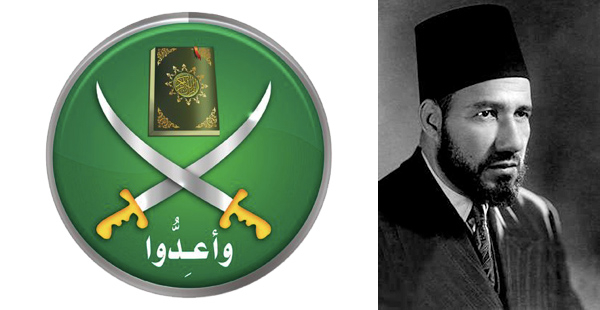
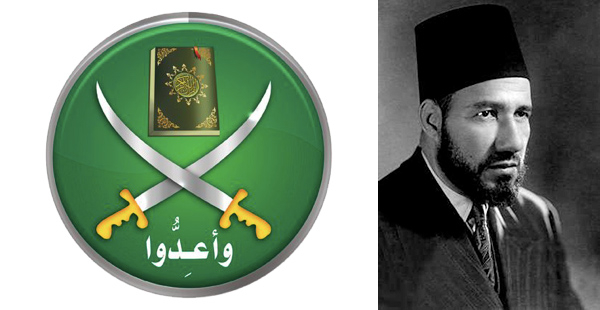
The emblem of the Muslim Brotherhood, and its founder, Hassan al-Banna.

The Muslim Brotherhood operating in the United States made it clear that:

“their work in America is a kind of grand jihad in eliminating and destroying the Western civilization from within and ‘sabotaging’ its miserable house by their hands and the hands of the believers so that it is eliminated and God’s religion is made victorious over all other religions.”

The producer of the memorandum from which this statement is derived was Mohamed Akram (A.K.A. Mohammad Akram Al-Adlouni). He is now the Secretary General of al-Quds International, the international think tank of the Muslim Brotherhood.

Today, according to a 2015 report, Mohammed Akram Adlouni is the General Secretary of the Al Quds International Foundation, a Special Designated Global Terrorist entity, accused by the U.S. Treasury Department of financing Hamas. The Treasury Department notes:

“Hamas’s leadership runs all of the foundation’s affairs through Hamas members who serve on the Board of Trustees, the Board of Directors, and other administrative committees. All documents, plans, budgets, and projects of Al-Quds are drafted by Hamas officials. Several senior Hamas officials, including Specially Designated Global Terrorists Musa Abu-Marzuq and Usama Hamdan, served on Al-Quds’ Board of Trustees. Representatives at an Al-Quds conference were told to consider themselves unofficial ambassadors for Hamas in their respective countries.”

The chairman of the board of trustees of the Al Quds International Foundation is identified as Qatar-based Yusuf al-Qaradawi, the spiritual leadership figure of the Muslim Brotherhood. Qaradawi is the subject of an Interpol Red Notice.

The Senate Bill – S.68

Senate Bill S.68, would not only have the effect of designating the Muslim Brotherhood as a terrorist entity, but it would also list three Muslim Brotherhood front groups: The Council for American Islamic Relations (CAIR), the Islamic Society of North America (ISNA) and the North American Islamic Trust (NAIT).

CAIR has already been identified as a Muslim Brotherhood front organization, founded to advance the cause of Hamas, and it was listed as a terrorist entity by the United Arab Emirates in 2014. CAIR functions as the public relations and legal arm of the Muslim Brotherhood and it regularly launches lawsuits against those who speak out against extremist Islam. Its designation as a terrorist group would severely damage the interests of the Muslim Brotherhood and Hamas.

ISNA was the first of the major Muslim Brotherhood groups formed out of the Muslim Student Association (MSA), itself formed by Muslim Brotherhood adherents. Its loss would undermine the Muslim Brotherhood on multiple levels.

The Major Impact

The most important issue in Bill S.68 may be the inclusion of the NAIT – the North American Islamic Trust. Formed in 1973, it can fairly described as a waqf, which is the Islamic finance equal to a trust or endowment fund.

The property and cash holdings of the NAIT have never been made completely clear. CAIR itself stated that the NAIT holds the title of some 27% of the 1200 mosques in the USA. The NAIT website states that it “holds the title of approximately 300 properties.” This means that the Muslim Brotherhood controls a large number of mosques and other properties in the U.S. where the message of the Brotherhood is spread.

Former FBI Agent Robert Stauffer led a 1980s investigation into the NAIT, including its role in the ideological takeover of moderate mosques. At that time, he assessed that the ISNA received millions of dollars from the NAIT, which he says “served as a financial holding company for Muslim Brotherhood-related groups.” This money was wired into the U.S. from countries such as Saudi Arabia, Kuwait, Afghanistan, Egypt, Malaysia and Libya.

Like CAIR and ISNA, NAIT would have its assets frozen if it is designated as a terrorist group. This would include property such as real estate, as well as cash and other assets held in bank accounts. The responsibility for this would mainly fall to the Department of the Treasury, the Justice Department and the integrated inter-agency strategy known as National Money Laundering Strategy (NMLS).

In addition to stripping the Muslim Brotherhood of its assets, Bill S.68 would also have the effect of silencing the extremist voice of the Muslim Brotherhood in the U.S., along with its extensive network of collaborators. The financial inflow from other countries would be stopped (think Saudi Arabia, Qatar and Turkey), while funding to Muslim Brotherhood front groups in other countries would be halted as well (think Canada).

This bill would be a most helpful first step in countering what seems to be on the part of many a purposeful global jihad.

Tom Quiggin, a court qualified expert on terrorism and practical intelligence, is based in Canada.

What Is Canada Doing Celebrating Hijab Day? by Shabnam Assadollahi

  • The outrage is that Hijab Solidarity Day will be taking place under the auspices of the City of Ottawa, the capital of Canada. It is not the role of a democratic government to celebrate religious symbols or to help religions proselytize.

  • The government’s acceptance of an Ottawa Hijab Solidarity Day amounts to accepting a radical legal system that is completely contrary to Canada’s democratic values, and crosses the line that separates Church and State. Endorsing the hijab is endorsing the first step of an extremist ideology that leads to and condones honor killings, female genital mutilation (FGM) and the oppression of women.
  • In 2007, Aqsa Parvez, a 16-year-old Pakistani Muslim living in Toronto, was strangled to death by her father. Her crime was that, as a free woman in Canada, she chose not to wear a hijab. In another case in Canada, in 2012, four Muslim women were murdered by their own family for refusing to wear a hijab and preferring Western clothing.

This Thursday, February 25, 2016, the city of Ottawa will be holding a public event celebrating the hijab, Islam’s physical repression of women.

The City for All Women Initiative (CAWI) organization, backed by the City Council of Ottawa, is hosting the Ottawa Hijab Solidarity Day celebration, also called “Walking with Our Muslims Sisters,” at City Hall. According to CAWI, the main purpose of this event is to encourage non-Muslim women to wear a hijab to understand life as a Muslim woman.

The outrage is that such an event will be taking place under the auspices of the City of Ottawa, the capital of Canada. Under Islamic Shari’a law, the hijab is an expression of the suppression of women and is used as a tool to persecute women by their male counterparts.

For many secular and former Muslim women, the hijab is anything but a symbol of freedom. The hijab serves as a physical daily reminder that they, women, are second-class citizens in the eyes of Islam.

Proponents of the hijab threw me into an Iranian prison for 18 months when I was 16, for protesting Islamic extremism. My family and I were forced to flee; we finally found refuge in Canada.

I have since worked to expose the truth about the Shari’a-guided regime of Iran, as well as advocating for the emancipation of minorities and women.

While critics of CAWI’s event, including myself, have been wrongfully characterized as “Islamophobes,” this could not be further from the truth. A woman in Canada has the right to wear what she chooses — but why celebrate the hijab, any more than the crucifix or a skullcap? It is not the place of government to do that.

In Iran, where I was born, women are slowly beginning to stand up against the regime’s Shari’a-minded repression. One group, My Stealthy Freedom, describes itself as “an online social movement where Iranian women share photos of themselves without wearing the hijab.”

The fact that Muslim women in Iran go to such dangerous lengths, risking arrest and even death, to take a stand against their own religion’s oppression is in itself a significant act.

Forcing women to wear a hijab is not unique to Iran. In Afghanistan and some parts of Saudi Arabia, women face beatings, fines and even worse outcomes for showing their hair. In 2002, in Saudi Arabia, “religious police stopped schoolgirls from leaving a blazing building because they were not wearing correct Islamic dress… the headscarves and abayas (black robes) required by the kingdom’s strict interpretation of Islam.” Fifteen girls died in the fire and more than 50 others were injured.

In a practice inaugurated by Muslims, purdah, women are shut away from society, literally imprisoned by their own families.

While one may assume that the persecution of Muslim women by Muslims does not take place within Canada’s borders, facts state otherwise. In 2007, Aqsa Parvez, a 16-year-old Pakistani Muslim living in Toronto, was strangled to death by her father. Her crime was that, as a free woman in Canada, she chose not to wear a hijab.

In another case in Canada, in 2012, Afghan-born Mohammad Shafia, his wife and their son were found guilty for the honor killing of the Shafia’s three daughters – Zainab, 19, Sahar, 17, and Geeti, 13 — as well as Mohammad’s second wife, Rona Mohammad Amir, 50. All four women were murdered by their own family for refusing to wear a hijab and preferring Western clothing.

In 2007, Aqsa Parvez, a 16-year-old Pakistani Muslim living in Toronto, was strangled to death by her father. Her crime was that, as a free woman in Canada, she chose not to wear a hijab.

The government’s acceptance of an Ottawa Hijab Day amounts to accepting a radical legal system that is completely contrary to Canada’s democratic values, and crosses the line that separates Church and State. Endorsing the wearing of the hijab is endorsing the first step of an extremist ideology that leads to and condones honor killings, female genital mutilation (FGM) and the oppression of women.

When this author wrote an open letter written to Ottawa Mayor Jim Watson, by way of response, his spokesman told the Ottawa Sun that the mayor will not intervene “in this difference of opinion between this individual and the event organizers” since the event “conforms with relevant policies… It is not my role to tell people what they should wear.” And it is not the role of a democratic government to celebrate religious symbols or to help religions proselytize.

Perhaps the Ottawa government would like to hold celebrations for “Ottawa Crucifix Solidarity Day,” “Ottawa Kippah Day” and “Ottawa Parsi Turban Day”?

The City of Ottawa, the capital of Canada seriously needs to reconsider its support for CAWI’s event.

Shabnam Assadollahi, who had to flee from Iran for protesting Islamic extremism, is a human rights activist based in Canada.

What is a Killer Imam Doing in Public Libraries in Canada? by Saied Shoaaib

  • How is it possible that books that advocate violence and extremism meet the “selection criteria” of the Ottawa Public Library, but those that speak out against violence and extremism do not?

  • The presence of these Islamic books, and these books alone, in Canada’s public libraries, without any others to contradict them, gives them legitimacy. They are seen to represent a certain form of Islam that the government of Canada and the City of Ottawa recognize.
  • This indicates that there is official support for the extremist and terrorist version of Islam, and at the same time no support for a humanist interpretation of Islam.
  • This surah [4:74] also indicates that if you are a Muslim living in a non-Muslim country, then you are in a state of war against your host country. If you are a Muslim living in a non-Muslim country, then you are living with the enemy.
  • If we are to reject this danger, it is important that libraries and other institutions have books that reject these Islamist views and confront their hatred, extremism and violence.

The Muslim Brotherhood classifies as one of their great intellectual leaders Imam Mohammed al-Ghazali (1917-1996). He famously decreed that the assassination of the Egyptian Muslim thinker, Farag Foda, was acceptable. In the views of al-Ghazali, Farag Foda was an apostate for defending secular values and human rights. Moreover, al-Ghazali went into an Egyptian court and defended the assassins: “Anyone who openly resisted the full imposition of Islamic law,” he said, “was an apostate who should be killed either by the government or by devout individuals.” He added: “There is no penalty in Islam to kill the apostate by yourself when the government fails to do so.”

In public libraries across Canada (and elsewhere), the books of Imam al-Ghazali are available, along with others that incite hatred, violence and terror, by authors such as Yusuf al-Qaradawi and Imam Nawawi. There is not a single Arabic language book in a library that I have visited in Ottawa that attacks or criticizes terrorism and violence and hatred.

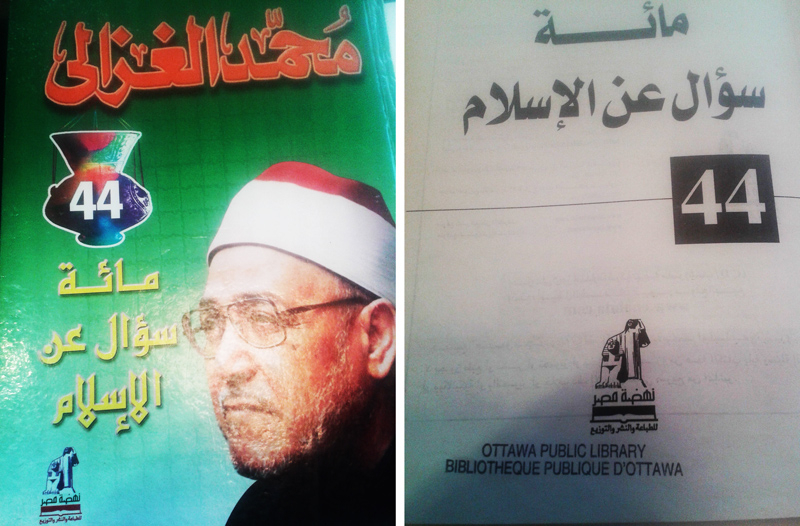
A copy of One Hundred Questions in Islam by Dr. Muhammad al-Ghazali, found in the Ottawa Public Library. The image at right shows the inside cover of the book, with the Ottawa Public Library Stamp.

The Significance

The Ottawa Public Library apparently prefers Arabic-language books of this extremist nature and rejects those that advocate resistance to extremism or advocates in favour of a modernist Islam.

As an experiment, I donated two books to the Ottawa Public Library. One book was titled The Demise of the State of Brotherhood, released in Egypt in January 2013. At that time, the Muslim Brotherhood was the ruling party (FJP) in Egypt. This book addresses the seriousness of the political and religious project of the Muslim Brotherhood and how it worked to establish a religious and theocratic authoritarian state. This government in Egypt was, for the Muslim Brotherhood, a part of the larger effort to restore the Islamic caliphate project around the world.

The second book was entitled, The Sins of the Muslim Brotherhood in Egypt. It was released in 2010 and documented a dialogue conducted by the author with the former Muslim Brotherhood General Guide Mohammed Mahdi Akef (2006). It was in this dialogue that General Guide Akef made his famous statement “I don’t give a damn about Egypt and these people in Egypt.” Akef made it clear that his views on the Muslim Brotherhood and its project of recreating a caliphate took precedence over the needs and views of the people of Egypt. The book was threatened with legal action.

Several months after donating the two books to the Ottawa Public Library, there was no response. After inquiring further, they then told me that the books were not acceptable as they did not meet their “selection criteria.” The exact statement from library employee was:

“I have contacted my colleagues at the acquisitions department about the books you donated to the library in the past. They no longer have them, which means that when they received them they didn’t pass our selection criteria.”

How is it possible that books that advocate violence and extremism meet the selection criteria of the Ottawa Public Library, but those that speak out against violence and extremism do not? Those who donated the other books appear to have been Islamists: they donated books that advocate the terrorist discourse. Yet the library selection committee approves of them.

Can Such Books Create Extremism and Terrorism?

The answer in the Islamist case is: Yes. Many books are available in bookstores and libraries which incite violence, such as Mein Kampf by Adolf Hitler, or books that promote the colonial period of the West. There are also non-Islamic religious books that incite hatred, but these no longer seem to lead others to kill.

Many governments and individuals have apologized for these past crimes. Germany, for example has apologized for the crimes of the Holocaust against the Jews (but not Austria, Hitler’s birthplace); the Spanish government has apologized for the expulsion of Muslims from Andalusia, even though they are the descendants of the invading Arabs. (N.B. The Ottawa Public Library does have copies of Mein Kampf available, but it also has books on the Holocaust and a variety of history books on Word War Two.)

With modern extremist Islam, the situation is different. Its past, along with its ideas and bloody history, remain active today and act as an engine to drive reality. The prevailing Islamist culture has not gotten beyond its past: it does not spread a humanist interpretation of Islam or of the texts that are often used to spread hatred, extremism and terrorism. Today’s Islamist Muslims have not apologized for the crimes their ancestors, committed when they invaded much of the rest of the world and formed colonial empires. The opposite is true: they seem very proud of this colonial era and frequently refer to the high-water marks of the empires as the “Golden Age of Islam.

ISIS, for example, wants directly to apply what is in the ancient texts and religious history: to restore the face of Islamist colonial empire. They literally apply the texts that incite violence, directly, without any modern re-interpretation. ISIS is the daughter of the traditional Islamic culture that is now found across the Sunni world.

The presence of these Islamic books, and these books alone, in Canada’s public libraries, without any others to contradict them, gives them legitimacy. They are seen to represent a certain form of Islam that the government of Canada and the City of Ottawa recognize.

This indicates that there is official support for the extremist and terrorist version of Islam, and at the same time no support for a humanist interpretation of Islam.

Unfortunately, it seems that Canada and the West fight “terrorism” everywhere, but they do not close the factories of extremism and terrorism in their own countries. This view seems to exist not only in public libraries but also in the libraries of many of the mosques, the speeches of many imams, many Islamic schools and in other institutions controlled by the Islamists.[1]

Do the Ghazali Books Support Terrorism?

The Ottawa Public Library has, as noted above, many books by Muhammad al-Ghazali. His ideas are close to those of the Muslim Brotherhood and a lesson in how Muslim extremist and terrorist beliefs are created. Ghazaii, for instance, argues that a place can be considered a “home of peace” [Dar al Islam] when it is ruled by Muslims and the law of Allah and his messenger are applied to all. A place can be considered a “home of war” [Dar al Harb] if the place is inhabited by unbelievers of Islam or those who object to it.[2]

Ghazali also cites the Qur’an specifically saying:

“Let those fight in the cause of God who sell the life of this world for the hereafter. To him who fights in the cause of God, whether he is slain or victorious, soon we shall give him a great reward.” — Surah 4:74

This surah means that those who kill infidels, whether victorious or not, will get a great reward in Jana (paradise). This surah also indicates that if you are a Muslim living in a non-Muslim country, then you are in a state of war against your host country. If you are a Muslim living in a non-Muslim country, then you are living with the enemy.

Hatred of Canada and the West

Ghazali — apparently forgetting that the Muslims invaded Persia, the Christian Byzantine Empire in Turkey, all of North Africa and the Middle East, Greece, Spain and most of eastern Europe — claims that global colonization (by the West) is rooted on an ongoing deep hatred of Islam, and an enormous desire to destroy it. After weakening the Ottoman Turkish caliphate and having carved up its territory, the West gave it a fatal blow in the wake of the First World War, and wiped out the official presence of Islam in the international field. Ghazali writes on page 221 of One Hundred Questions About Islam that the laws that came out of Western colonialism were created to dominate the Islamic nation militarily and defeat it politically. He characterizes these laws as distorting the face of Islam, and having the goal of destroying the foundations of Islam.

So, a Muslim living in Canada who is exposed to these teachings is led to believe that he or she should hate their new home country. They are led to believe that they belong to another entity (an Islamist caliphate) and that it is their duty to build this caliphate on the ruins of Western civilization.

Most of the Arabic-language books on Islam in the West incite extremism and terrorism. If we are to reject this danger, it is important that libraries and other institutions have books that reject these Islamist views and confront their hatred, extremism and violence.

Saied Shoaaib is a Muslim scholar based in Canada. He can be reached at: saiedshoaaib@gmail.com

What France and Europe Might Learn by Bassam Tawil

  • By constantly endorsing pro-Palestinian and anti-Israeli policies, France has obviously been seeking to appease Islamic countries. France seems convinced that such policies will keep Muslim terrorists from targeting French nationals and interests. The French are now in grave danger of mistakenly believing that the November 13 attacks occurred because France did not appease the Muslim terrorists enough.

  • When the terrorists see that pressure works — increasing the pressure should work even more!


  • The French and Europeans would do well to understand that there is no difference between a young Palestinian who takes a knife and sets out to murder Jews, and an Islamic State terrorist who murders dozens of innocent people in Paris.

  • The reason Muslim extremists want to destroy Israel is not because of the settlements or checkpoints it is because they believe that Jews have no right to be in the Middle East whatsoever. And they want to destroy Europe because they believe that Christians — and everyone — have no right to be anything other than Muslim.

  • The terrorists attacking Jews also seek to destroy France, Germany, Britain and, of course, the United States. These countries need to be reminded that the Islamist terrorists’ ultimate goal is to force all non-Muslims to submit to Islam or face death.

Earlier this year, France was one of eight countries that supported a Palestinian resolution at the United Nations Security Council, calling for a full Israeli withdrawal to the pre-1967 lines by the end of 2017.

This vote means that France supports the establishment of an independent Palestinian state, likely to be ruled by the same type of people who on Friday carried out the most grisly terror attacks in France since World War II.

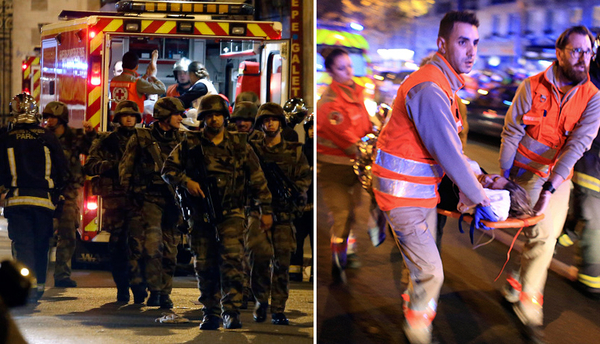
Scenes from Friday’s grisly terror attacks in Paris.

Today, every Palestinian child knows that in the best case, a future Palestinian state will be run by Hamas or Islamic Jihad, and in the worst case by the Islamic State and its affiliates. Has it occurred to anyone in Europe that the Palestinian people might not want to live under the rule of any of the groups, any more than Europeans would?

France and the rest of the EU countries have long been working against their own interests in the Middle East. By constantly endorsing pro-Palestinian and anti-Israeli policies, France has obviously been seeking to appease the Arab and Islamic countries. France seems convinced that such policies will keep Muslim terrorists from targeting French nationals and interests. That is probably why the French have made the catastrophic mistake of believing that the policy of appeasement toward Arabs and Muslims would persuade the Islamist terrorists to stay away from France. The French are now in grave danger of mistakenly believing that the November 13 attacks occurred because France did not appease the Muslim terrorists enough.

Sadly, the two earlier terrorist attacks that took place in Paris this year — against the Charlie Hebdo satirical newspaper and the HyperCacher Jewish supermarket — failed to convince the French that the policy of appeasement towards Arabs and Muslims is not only worthless, but also dangerous.

Instead of learning from these previous mistakes and embarking on a new policy toward the Israeli-Palestinian conflict in general and extremist Islam in particular, the French continued with their strategy of appeasement even after the Charlie Hebdo and the HyperCacher supermarket attacks.

Most recently, France voiced its backing for EU plans to label products from Israeli settlements, doubtless thinking that such a move would make the Muslim terrorists happy with the French. But, as last Friday’s terrorist attacks showed, the Islamic State and its supporters are not particularly impressed by anti-Israel moves.

Muslim terrorists do not care about the settlements. For them, that is a trivial issue compared to their chief goal and dream: truthfully, to kill all infidels and establish an Islamic empire. The Muslim terrorists who have been murdering Jews in Israel and other parts of the world also seek to kill anyone they perceive as being friends of Western values in general. These include, above all, Christians — either those unfortunate enough still to be living in the Middle East, but also those living in France and other Western countries.

The reason Muslim extremists want to destroy Israel is not because of the settlements or checkpoints. They want to destroy Israel because they believe that Jews have no right to be in the Middle East whatsoever. And they want to destroy Europe because they believe that Christians — and everyone — have no right to be anything other than Muslim. That is also why Muslims seem not particularly interested in the EU’s decision to label products from Israeli settlements. It is worth noting that the decision to label Israeli goods was not even an Arab or Islamic initiative.

The EU’s decision to boycott products from Israeli settlements has sent entirely the wrong message to the enemies of Israel and the enemies of Western values. These enemies of the West see the decision to label products as just the first step toward labeling all of Israel as an “illegal settlement.” It is no surprise that the first to celebrate the decision were Hamas and Islamic Jihad.

What France and other Western countries do not understand is that concessions and gestures are being misinterpreted by the terrorists as signs of weakness, which just invite more violence. When the terrorists see that pressure works, increasing the pressure should work even more!

The European boycotts are seen by the people here as nothing but cynical and heartless — attempts to court a thieving leadership at the expense of the people. The boycotts are seen here as nothing but keeping the Palestinian people in the grip of its corrupt leadership and prompting us to take another look at the extremists — the only choice offered up.

What the Europeans might have learned is that the assaults in Paris are what all of us here — Muslims, Christians and Jews — have been living with for decades.

During the past 22 years, all Israel’s territorial concessions and goodwill gestures have resulted only in increased terrorism against Israel, including us Arabs. Many Palestinians incorrectly saw the Israeli withdrawal from the Gaza Strip in 2005 only as a retreat and a sign of weakness. If shooting at Jews made them leave Gaza — as it appeared — keep shooting at Jews. The result was that Hamas took credit for driving the Jews out of the Gaza Strip with rockets and suicide bombings, and quickly rose to power.

In the same manner, each time Israel has released Palestinian prisoners (including dozens with blood on their hands) as a gesture to Palestinian Authority President Mahmoud Abbas or U.S Secretary of State John Kerry, the Palestinians regarded the gesture as having their demands met. So the next step is to increase the violence and demand more. The Palestinians saw Israel’s withdrawal from southern Lebanon and Gaza, and the release of Palestinian prisoners, not as a sign that Israel was interested in peace and calm, but as a reward for terrorism.

Two months ago, France took another step in appeasing the Arabs and Muslims. This time, the French voted in favor of raising a Palestinian flag at the UN headquarters. “This flag is a powerful symbol, a glimmer of hope for the Palestinians,” UN French Ambassador Francois Delattre said. Again, the French apparently thought that the vote would satisfy the Arabs and Muslims and persuade the terrorists that France was on their side in the fight against Israel.

France’s — and Europe’s — flawed policy toward the Israeli-Palestinian conflict did not start in the past year or two. Four years ago, France voted in favor of granting the Palestinians full membership of the UN’s Educational Scientific and Cultural Organization (UNESCO). Last month, the Palestinian Authority leadership unsuccessfully tried to use UNESCO to pass aresolution declaring the Western Wall a holy site for Muslims only. The resolution was changed at the last minute into one just condemning Israel, but instead of opposing the resolution, an embarrassed France chose to abstain. UNESCO, however, did vote that two ancient Jewish heritage sites symbolic of the Biblical era, Rachel’s Tomb and the Cave of the Patriarchs, would henceforth be known as Muslim heritage sites. The same week, another Biblical site, Joseph’s Tomb, was set on fire (for the second time; the first was in 2000) by people whose government, the Palestinian Authority, had agreed to protect it.

For the past few weeks, Palestinians have been waging a new wave of terrorism against Israelis. This time, the Palestinians are using rifles, knives, stones and cars to murder as many Jews as possible. But we still have not heard any real condemnation — from France, Europe or anyone — of the Palestinian terrorism.

We have also not heard France or other EU countries demand that President Mahmoud Abbas condemn the terrorist attacks against Israelis. Most French media outlets and journalists have even refused to refer to the Palestinian assailants as terrorists — despite many of the terrorists being affiliated two Palestinian groups that share the same ideology as Islamic State: Hamas and Islamic Jihad.

By failing to condemn the terrorist attacks against Israelis and name the perpetrators for what they are — ruthless murderers and terrorists — France and Western countries are once again sending the wrong message to the Islamists: that killing Jews is not an act of terrorism.

What these countries do not realize is that the terrorists who are attacking Jews also seek to destroy France, Germany, Britain and, of course, the “Big Satan” (the United States). These countries need to be reminded every day that the Islamist terrorists’ ultimate goal is to force all non-Muslims to submit to Islam or face death. Sometimes, the terrorists do not even have the patience to offer this choice to the “infidels,” and just kill them while they are watching a concert or a soccer match.

It now remains to be seen whether the French will wake up and realize that radical Islam is at war with the “unbelievers” and all those who refuse to accept the dictates of Islamic State and other Muslim extremists. This is a war that Israel has been fighting now for more than two decades, but, sadly, with little support — and most often with venomous obstruction — from countries in Europe, including France.

The French and Europeans would do well to understand that there is no difference between a young Palestinian who takes a knife and sets out to murder Jews, and an Islamic State terrorist who murders dozens of innocent people in Paris. Once the French and other Europeans understand this reality, it will be far easier for them to engage in the battle against Islamic terrorism.

Bassam Tawil is a scholar based on the Middle East.

What Does It Mean to Be French? by Yves Mamou

  • Criticism of Islam, usually brought by white, “far right” French people, is certainly taboo. But hate speech against “kuffars” is also a public issue, brought by many French Muslims who often, it seems, introduce themselves as permanent “victims.”

  • Because many regard their ethnic groups as permanent victims, they may well see themselves as belonging to a community of victims, to be exonerated from individual responsibility for whatever they say or do.
  • A large part of the youths from the suburbs, most of whom are from Arab or African descent, seem to be divorced from the traditional perception of what it means to be French in France.
  • Like Black M or Benzema, many, it seems, do not want to be part of France as individuals, but as members of a group that, they claim, is always discriminated against: Arabs or Muslims. In a certain way, a silent secession is taking place in France — an ethnic and religious secession.

There is a “French Question” question today about identity that the French have in common with the Germans and British: What does it mean to be French?

Two recent controversies illustrate the way the question of French identity has become a topic of public interest.

The first is connected to the commemoration of the centenary of the Battle of Verdun (in the First World War); the second is connected to France’s national soccer team.

Verdun, in 2016, remains the symbol of a bygone era, when European countries were fighting one another. In Verdun, more than 700,000 French and German soldiers were killed. Today, for the Germans and the French, Verdun has become the symbol of reconciliation between two nations and a justification for constructing a new political area, the European Union.

The basic reason for setting up the EU was to have no more wars among Europeans. This special 2016 commemoration of the Battle of Verdun was also a political message to Great Britain: Europe needs you, stay with us, do not “Brexit” (Britain exiting the EU).

But the French government, less than one year away from a presidential election, added a third message to this commemoration: The socialist president, François Hollande, dreamed of closing this day of silence, remembrance and speeches for peace with a huge party for the young. At the end of the centenary, the rap singer Black M (M for “Mesrine”, a famous outlaw of the eighties) was supposed to brighten the podium at Verdun.

As soon as the presence of Black M was known, disturbing information surfaced in the social media networks: especially “right wing” ones. Black M is certainly a “people’s artist,” popular among the young, especially in the suburbs — but he sings with a French rap group, Sexion d’Assaut, whose name is almost exactly the same as the French translation (“Section d’Assaut“) of Sturmabteilung, Hitler’s pre-1934 Nazi militia (better known as “the SA”).

In one song, Sorry, Black M calls France a nation of “kuffars,” a pejorative Arabic term for “unbelievers and infidels.” In another song, It Humbled, Black M sings: “I think it’s high time the fags died. Cut off their d**ks.” In yet another song, Black M tells the young people to “get a Smith and Wesson” and “shoot the school.” And in a very recent song, Black M sings about “the Yids who have a lot of fun going shopping.”

The choice of Black M to perform at the Verdun commemoration sparked a controversy. Marine Le Pen, Leader of the Front National (FN), the populist anti-mass-migration party, declared that Black M “has no place in an official commemoration of a battle in which so many French families have been wounded.”

Florian Philippot, a vice president on the FN and an advisor to Le Pen, said the choice of the rap singer was like “spitting on a war memorial.”

Many people from the “left” were also uneasy with the choice of Black M. Elisabeth Levy, the editor of the news magazine, Causeur, said, “This idea of inviting Black M to Verdun was shocking far beyond the right and the extreme right: all my friends from the left are against it. They think the idea is totally insane.”

In a classic scenario, the political “left” has counterattacked by denouncing the “racism” of the “far right” party. The association SOS Racisme wrote: “In this controversy, yesterday the danger was in black. Tomorrow it will be Arabic. The day after tomorrow it will be a Muslim, and in one of the following days, a Roma.”

The mayor of Verdun defended himself by saying that the choice of Black M had been imposed by “the state” and that everybody understood that it had been the choice of the president himself.

The final blow for the concert came fast: the French state commission for centennial commemorations decided not to pay its share of €67,000 out of a total budget for the concert of €150,000.

The following day, the city announced that the concert had been cancelled. The mayor blamed “racism” and “hate.”

Minister of Culture Audrey Azoulay denounced the move:An unbridled voice, in the name of a nauseating and uninhibited moral order, caused the cancellation of a concert.”

Immediately after the Verdun Controversy, the Benzema controversy erupted. At the end of May, it became official that Karim Benzema, a French soccer star of Algerian descent, would not be part of the national soccer team in the UEFA Euro 2016 championship. For most of the population in France, the reason for this exclusion lies in a sex-tape extortion scandal in which Benzema is apparently involved, targeting his colleague, Mathieu Valbuena. But on May 26, Eric Cantona, the former star of the Manchester United soccer team, in an interview with The Guardian, accused the French team’s coach, Didier Deschamps, of having “left out French players on racial grounds.”

“Benzema is a great player. Ben Arfa is a great player. But Deschamps, he has a really French name. Maybe he is the only one in France to have a truly French name. Nobody in his family mixed with anybody, you know. Like the Mormons in America.

“So I’m not surprised he [Deschamps] used the situation of Benzema not to take him. Especially after Valls [France’s Prime Minister] said he should not play for France. And Ben Arfa is maybe the best player in France today. But they have the same origin. I am allowed to think about that.”

The interviewer from The Guardian repeated the question. Was Cantona “really suggesting that Deschamps had been guilty of discriminating against Benzema?”

Cantona replied:

“Maybe no, but maybe yes. Why not? One thing is for sure — Benzema and Ben Arfa are two of the best players in France and will not play in the European Championship. And for sure Benzema and Ben Arfa are of north African origin. So, the debate is open.”

A lawyer for Deschamps said he would sue Cantona for his comments.

On May 30, Jamel Debbouze, a very popular comedian and humorist, wrote in France Football,

“Two important guests are missing. How can we not include these two extraordinary soccer players?… These boys [Benzema and Ben Arfa] represent so much, especially in the suburbs. It is so disappointing having no representatives ‘of ours’ in France’s soccer team….”

By “ours,” Debbouze means the Arab and Muslim youths of the suburbs.

Benzema himself rushed through the open door. On June 1, he declared, in the Spanish sports newspaper Marca, that he did not believe Deschamps is a racist, but that France’s coach had “bowed to the pressure of a racist part of France.” Benzema added that the political arena in France, where the anti-immigrant Front National has been gaining ground during the past five years, played against him.

This controversy targeted French audiences, but reverberated throughout Europe. British and Spanish newspapers were involved — both countries that have large Muslim communities and where soccer is popular.

In France, a poll published on June 6 by Le Parisien revealed that 95% of the population think that Benzema was not included in France’s national team because of his “personal behavior.” Only 4% think his absence was due to “his [ethnic] origins.” The mere 1% expressing “no opinion” signifies the public importance of soccer in France. When it is question of soccer, everybody is concerned.

Two recent controversies, one involving the French rap singer Black M (left) and the other involving French soccer star Karim Benzema (right), illustrate the way the question of French identity has become a topic of public interest.

Much may be inferred from these controversies.

  • Issues relating to ethnic Arabs and Islam situation are now daily controversies in France.
  • Criticism of Islam, usually brought by white, “far right” French people, is certainly taboo. But hate speech against “kuffars” is also a public issue, brought by many French Muslims who often, it seems, introduce themselves as permanent “victims.” Black M and Benzema are examples of Arabs or Muslims who do not want to be judged on their individual acts (anti-French and homophobic songs, for Black M) or illegal behavior (the sex-tape extortion scandal, for Benzema), but only on the grounds of the minority group to which they belong. And because many regard their ethnic groups as permanent victims, they may well see themselves as belonging to a community of victims, to be exonerated from individual responsibility for whatever they say or do.
  • A large part of the “left” apparently thinks the same way.
  • A large part of the youths from the suburbs, most of whom are from Arab or African descent, seem to be divorced from the traditional perception of what it means to be French in France. Like Black M or Benzema, many, it seems, do not want to be part of France as individuals, but as members of a group that, they claim, is always discriminated against: Arabs or Muslims. In a certain way, a silent secession is taking place in France — an ethnic and religious secession.
  • The polls reveal a growing fear of Islam in France. And the more the anti-Islamist sentiment grows among the non-Muslims, the more French Muslims feel victimized and discriminated against. Black M might possibly not even think that in his songs he is spreading “hate speech.” He appears instead to think that he has been the victim of native French “hate speech.”
  • There is a new division in French politics: a struggle between so-called racists and antiracists is replacing the traditional contest between right and left.

What good can come from this situation? We shall find out.

Yves Mamou, based in France, worked for two decades as a journalist for Le Monde.

Translate »
Skip to toolbar