Daily Archives: June 19, 2017

Palestinians: Have The Donors Finally Woken Up? by Khaled Abu Toameh

  • The striking teachers are exposing the Palestinian Authority (PA) as playing Western donors for suckers.
  • No one, in fact, knows how many Palestinians are on the Palestinian payroll.

  • Donors might not be aware, for instance, that they are paying over 50,000 employees from the Gaza Strip to not work. This has been the case since 20007, when Hamas seized control over the Gaza Strip. In response, the PA ordered all its employees to boycott Hamas and promised to pay them full salaries for sitting at home.
  • The Palestinian committee has been tasked to avoid scandal and ensure that donors do not get to the bottom of the case.

Western donors want to see a list of the names of Palestinians who are on the payroll of the Palestinian Authority (PA), and the PA is not happy about it.

What is driving this demand? Thousands of Palestinian school teachers in the West Bank are striking for better conditions. The Palestinian leadership, in response, has ordered a security crackdown on the strikers.

To justify the crackdown, PA officials have claimed that the strike was organized by Hamas as part of a conspiracy to embarrass and undermine the regime of Palestinian President Mahmoud Abbas.

What is really happening is that the teachers are blowing the whistle on PA corruption. They have accused the PA Ministry of Education of wasting donors’ funds and deceiving them by inflating the number of teachers. They claim that the list of employees (about 56,000) ostensibly hired by the ministry contains many fictitious names. These include teachers and administrative workers of the ministry.

The teachers also accuse the PA of lying to the donors about their salaries. The information provided by the PA to donors claimed that the PA pays higher salaries to the teachers than the teachers actually receive.

In other words, the striking teachers are exposing the PA as playing Western donors for suckers.

The PA’s Finance Ministry has yet to publish the general budget for the years 2015 and 2016. The last time the budget appeared on the ministry’s official website was in 2014. The striking teachers and other Palestinians say there is something fishy about the Finance Ministry’s failure to make public the annual budget for 2015 and 2016. They call this a lack of transparency.

According to various sources, the donors’ request took PA Prime Minister Rami Hamdallah by surprise. He has referred the request to the office of Mahmoud Abbas and is now awaiting the president’s personal intervention in the developing scandal.

One report revealed that the PA leadership has formed a secret legal committee, headed by Palestinian official Karim Shehadeh, to prepare a reply to the donors about the discrepancy in the salaries. The committee has been tasked to avoid scandal and ensure that donors do not get to the bottom of the case.

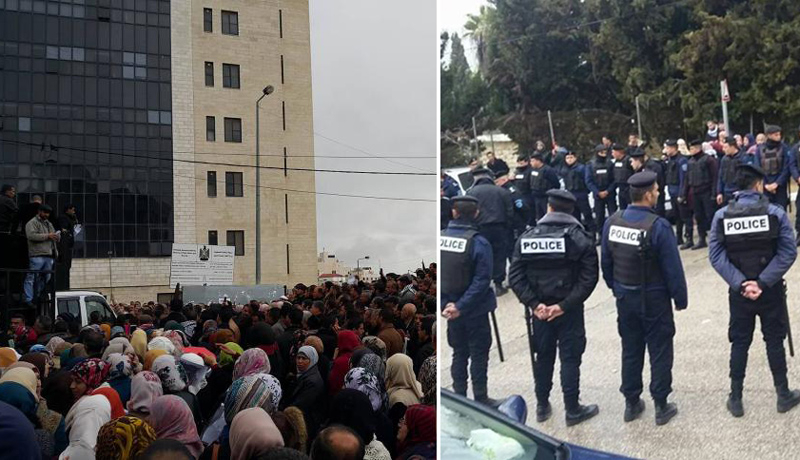
The donors’ request explains the hysterical response of the PA leadership to the ongoing teachers’ strike in the West Bank. In the past few weeks, PA security forces have rounded up dozens of striking teachers and imposed a reign of intimidation against others. When the teachers planned to hold a protest rally in Ramallah last week, the PA deployed hundreds of policemen and set up checkpoints in various parts of the West Bank in a bid to foil the protest and terrify the teachers.
Left: Striking Palestinian teachers protest in Ramallah last week. Right: Palestinian Authority policemen deploy in the street to intimidate the teachers.

In a typical game of smoke and mirrors, the Palestinian government this week denied that the donor countries demanded to inspect the payroll records. Yet Palestinian sources in Ramallah insisted that the reports were true. According to the sources, this marks a watershed in donors’ demand for accountability from the PA leadership.

Striking teachers is only one of the PA headaches. The donors’ demand for a full report on the names of PA public employees is bad news for Abbas. No one, in fact, knows how many Palestinians are on the PA payroll. Some figures estimate the number of employees at over 160,000, while others have put the figure at 250,000.

According to one study, the Palestinians have one policeman for every 52 people, compared to one teacher for each 72. Since its founding more than two decades ago, the PA has established ten different security services that employ more than 70,000 people.

Some Palestinians have charged that these numbers have been vastly inflated by using names of the deceased, those who live abroad and some who do not even exist. In the main, these salaries are covered by donor governments such as the US and EU, who for years have failed to check the lists of the public employees or verify the sums.

Moreover, donors might not be aware that they are paying over 50,000 employees from the Gaza Strip to not work. This has been the case since 20007, when Hamas seized control over the Gaza Strip. In response, the Palestinian Authority ordered all its employees to boycott Hamas and promised to pay them full salaries for sitting at home.

If the donors are indeed demanding the report, it could mark the dawn of a new era — one in which the PA leadership is called on the carpet for its financial shenanigans. Of course, President Abbas and his friends might still find a way to blame Israel. This tactic has worked wonders in the past.

Thus, the jury is still out on whether the donors will show themselves to be the suckers the PA is hoping for, or if the Palestinians will finally begin to be held accountable for their behavior.

Khaled Abu Toameh, an award-winning journalist, is based in Jerusalem.
Palestinians: Fatah Prepares for War with Israel by Khaled Abu Toameh

  • “We have pledged to prepare an army of fighters by devoting our full abilities and energies to consolidate the option of armed struggle as the only means to liberate Palestine.” — The armed wing of Fatah, Aqsa Martyrs Brigades, Martyr Nidal Al-Amoudi Division.

  • The international community continues to perceive Fatah as the “moderate” Palestinian party with whom Israel should make peace. Yet Fatah is far from a single united bloc; many groups within the faction continue to seek the “liberation of Palestine” through armed struggle. Moreover, neither Abbas nor any of his senior Fatah loyalists have repudiated the war-set Fatah militias. Crucially, many of these Fatah militiamen continue to receive salaries from the Palestinian Authority.
  • These Fatah gunmen who are preparing for war with Israel are indirectly receiving their salaries from Western donors, including the US and many EU countries, who fund the Palestinian Authority.
  • These groups believe that they represent the real Fatah, the one that never recognized Israel’s right to exist and holds on to armed struggle as the only way to “liberate Palestine.” They are not breakaway groups. That is why they continue to operate under the name of Fatah.
  • Fatah is a two-faced hydra; one face tells the English-speaking international community what it wants to hear, namely, that it supports a two-state solution and seeks a peaceful settlement to the conflict with Israel, while the other tells the truth: it is committed to an armed struggle and the “liberation of Palestine,” and is even preparing for war with Israel.

Some 300 members of the Palestinian Fatah faction, headed by Palestinian Authority (PA) President Mahmoud Abbas, have begun receiving “military training” in the Gaza Strip in preparation for war with Israel.

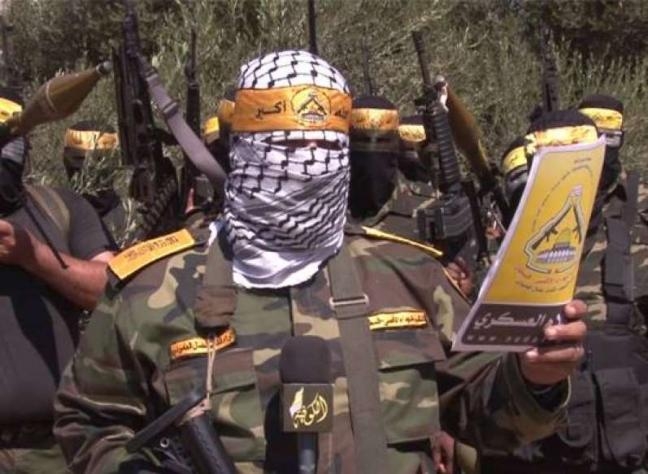
The armed wing of Fatah, Aqsa Martyrs Brigades – The Martyr Nidal Al-Amoudi Division, announced that its members have been enrolled in a new military academy for training “fighters” in the Gaza Strip. The academy, inaugurated recently in the Gaza Strip, would train the “fighters” on various fighting methods “in the context of a program for preparing for any future battle” with the “Zionist enemy.”

The Nidal Academy was named for Nidal Al-Amoudi, a top Fatah militant killed by the Israel Defense Forces on January 13, 2008, after he carried out a series of armed attacks against Israeli civilians and soldiers during the Second Intifada. “The academy has been named after the commander Nidal Al-Amoudi (Abu Hussein) to fulfill his dream of qualifying the fighters militarily, morally, religiously and revolutionarily,” explained a statement released by the Fatah armed group. Noting that some 300 “fighters” have already joined the academy, the group said that they have begun undergoing training in various methods of warfare.

“We have pledged to prepare an army of fighters by devoting our full abilities and energies to consolidate the option of armed struggle as the only means to liberate Palestine,” the group declared.

The Martyr Nidal Al-Amoudi Division is one of several Fatah-affiliated militias that continue to operate in the Gaza Strip despite Hamas’s violent takeover of the area in the summer of 2007. These groups pose no threat to the Hamas regime, which is why they are allowed to operate freely in different parts of the Gaza Strip. The groups’ explicit policy is to prepare for war with Israel and launch terror attacks against Israelis. Hamas, however, which expelled their leaders from the Gaza Strip and continues to persecute dozens of Fatah activists in the Gaza Strip, is not on their hit list.

The Fatah-affiliated militia inauguration of its own “military” academy in the Gaza Strip is a novel move. In recent years, Fatah armed groups have posted videos of their men undergoing military training orchards and fields, far from the watchful eyes of their rivals in Hamas. Now it seems that Hamas has nothing to fear from the Fatah militants, as Israel is the sole target.

Thus instead of training their men to retake the Gaza Strip and liberate it from the oppressive regime of Hamas, the Fatah “fighters” are busy preparing for war with Israel or fighting among themselves. Indeed, it appears that the Fatah armed groups are actually competing with Hamas for the title of “Most Prepared to Destroy Israel.” Like Hamas, they wish to win the hearts and minds of Palestinians in the Gaza Strip by showing that they too support the “armed struggle” against Israel and seek to “liberate Palestine.”

Fortunately for Hamas, the Fatah militias are rather preoccupied with internecine struggles. This leaves precious little time to think about ways of improving their people’s lives.

Today, at least five other Fatah armed groups function in the Gaza Strip: The Abu Rish Brigades, the Jihad Jibril Brigades, the Abdel Qader Husseini Brigades, the Aqsa Martyrs Brigades and the Fatah Sukkur (Hawks). Some of these groups have in the past claimed responsibility for firing rockets at Israel. And there is not much harmony or love between these Fatah groups, whose members regard each other as rivals and political foes rather than comrades and colleagues.

Sources in the Gaza Strip point out that many of the members of these groups are former Palestinian Authority policemen who lost their jobs after the Hamas takeover of the Gaza Strip. As such, many of them remain on the payroll of the Palestinian Authority, despite the fact that they are more than willing to lambast Mahmoud Abbas and his policies. In other words, these Fatah gunmen who are preparing for war with Israel are indirectly receiving their salaries from Western donors, including the US and many EU countries, who fund the Palestinian Authority.

The Martyr Nidal Al-Amoudi Division recently launched a scathing attack on Abbas for attending the funeral of former Israeli President Shimon Peres in Jerusalem. Masked members of the group posted a video on social media in which they strongly condemned Abbas for attending the funeral, saying they are opposed to any form of “normalization” with Israel. They demanded that Abbas apologize to the Palestinians and Fatah, adding that the “armed struggle was the only way to “liberate Palestine.”

Members of Fatah’s Martyr Nidal Al-Amoudi Division read a statement condemning Palestinian Authority President Mahmoud Abbas for attending the funeral of former Israeli President Shimon Peres.

More recently, the same group “welcomed” the shooting attack that was carried out in Jerusalem by Musbah Abu Sbeih and in which two Israelis were killed — a 60-year-old grandmother and a 29-year-old police officer. “This heroic operation is a clear message that the armed struggle is a deeply-rooted doctrine among Palestinians,” the group stated. “The operation is a natural response to the crimes of the occupation.”

Make no mistake. These groups believe that they represent the real Fatah, the one that never recognized Israel’s right to exist and holds on to armed struggle as the only way to “liberate Palestine.” They are not breakaway groups. That is why they continue to operate under the name of Fatah. In their view, they are following the principles of their former leader, Yasser Arafat, who launched Fatah as a “national liberation movement” and never truly abandoned the option of an armed struggle against Israel. It is Abbas and his colleagues in Fatah, they say, who have deviated from Fatah’s doctrine and true goals.

The power play among Fatah militias in the Gaza Strip reflects the wider division among Fatah’s political leaders. According to Palestinian sources, Fatah leaders in the Gaza Strip have truly become disassociated from the faction’s leadership in the West Bank. Abbas’s aides blame exiled Fatah strongman Mohammed Dahlan for the schism, claiming that he provides dissenting Fatah officials with money, in an attempt to undermine the Palestinian president, who is also head of Fatah. Abbas recently summoned Fatah leaders from the Gaza Strip to an emergency meeting in Ramallah to discuss Dahlan’s growing influence in the Gaza Strip and the rifts in Fatah. The move came after thousands of Fatah members who are loyal to Dahlan staged a large demonstration in the Gaza Strip against Abbas. During the protest, they burned and trampled on pictures of Abbas.

Such developments in Fatah are notable for a specific reason: by and large, the international community continues to perceive Fatah as the “moderate” Palestinian party with whom Israel should make peace. Yet Fatah is far from a single united bloc; many groups within the faction, in their own words, continue to seek the “liberation of Palestine” through armed struggle. Moreover, neither Abbas nor any of his senior Fatah loyalists in the West Bank have repudiated the war-set Fatah militias. Crucially, many of these Fatah militiamen continue to receive salaries from the Palestinian Authority.

Fatah is, in fact, a two-faced hydra; one face tells the English-speaking international community what it wants to hear, namely, that it supports a two-state solution and seeks a peaceful settlement to the conflict with Israel, while the other tells the truth: it is committed to an armed struggle and the “liberation of Palestine” and is even preparing for war with Israel. Worth noting as well is that some of these Fatah militias also continue to operate in some parts of those territories controlled by Abbas’s security forces in the West Bank. And like their cohorts in the Gaza Strip, they too receive salaries from the Palestinian Authority.

Abbas has lost the Gaza Strip not only to Hamas, but also to his own erstwhile Fatah supporters, who are marching in a totally different direction from the Fatah leadership in the West Bank. The dispute between Fatah and Hamas, which has effectively split the Palestinians into two entities, one in the West Bank and the other in the Gaza Strip, is one reason Palestinians are farther than ever from achieving an independent Palestinian state. The infighting in Fatah and the gulf separating its leaders is another. Abbas’s claim to sole Fatah leadership is hardly credible to even the most credulous of Abbas backers: thousands of his “fighters” are preparing for war with Israel.

Khaled Abu Toameh, an award-winning journalist, is based in Jerusalem.

Palestinians: Embattled, Weak Abbas Comes to White House by Khaled Abu Toameh

  • The joke among Palestinians is that were it not for Israel is sitting smack in the middle, the two warring Palestinian states [the West Bank and the Gaza Strip] would be dispatching rockets and suicide bombers at each other.

  • Abbas is well aware that the Palestinian house is on fire. Instead of working to extinguish the blaze, however, Abbas spends his time spreading the lie that peace in our time is possible, if only Israel would succumb to his demands.
  • The story of Gaza — which went straight to Hamas after Israel handed it to Abbas — is not a tale Abbas likes to tell. The same scenario is likely to be repeated in the West Bank if Israel makes a similar move.

This week, Palestinian Authority (PA) President Mahmoud Abbas and US President Donald Trump will sit down together to talk. This is the first such meeting since the US presidential election, and it comes at a time when the Palestinian scene is characterized by mounting internal tensions, fighting and divisiveness. The disarray among the Palestinians, where everyone seems to be fighting everyone else, casts serious doubt on Abbas’s ability to lead the Palestinians towards a better future. The chaos also raises the question whether Abbas has the authority to speak on behalf of a majority of Palestinians, let alone sign a peace agreement with Israel that would be acceptable to enough of his people.

Abbas, however, seems rather oblivious to the state of bedlam among the Palestinians, and appears determined to forge ahead despite the radical instability he is facing.

He is travelling to Washington to tell Trump that he and his PA leadership seek a “just and comprehensive” peace with Israel through the creation of a Palestinian state in the West Bank, Gaza Strip and East Jerusalem.

In the meeting, Abbas is likely to repeat his long-standing charges that Israel continues to “sabotage” any prospect for peace with the Palestinians.

Abbas is not likely to mention the mayhem that the PA leadership is facing at home. Nor is the fact that the Palestinians are as far as ever from achieving their goal of statehood likely to be a preeminent subject. Why bother discussing inconvenient truths, such as the deep divisions among the Palestinians and failure to hold presidential and parliamentary elections, when you can point the finger of blame at Israel?

Abbas’s trip to Washington coincides with a peak of tension between his PA and Hamas, the Islamic movement that rules the Gaza Strip. The rivalry between Hamas and Abbas’s PA, which climaxed in 2007 when the Islamic movement violently took over the Gaza Strip from Abbas loyalists, has created a reality where the Palestinians are divided, physically, into two separate entities.

Since 2007, the reality on the ground is that the Palestinians already have two small states: one in the Gaza Strip and another in the West Bank. These two states have since been at war with each other. The joke among Palestinians is that were it not for Israel is sitting smack in the middle, the two warring Palestinian states would be dispatching rockets and suicide bombers at each other.

This war, which is currently a war of venomous words between the PA and Hamas, has left many Palestinians wondering whether their leaders will ever be able to move beyond their personal animosities and bring the people closer to achieving statehood. Many attempts by Arab countries, including Saudi Arabia, Egypt, Qatar and Yemen, to resolve the dispute between Hamas and the PA have failed. Neither side appears to be willing to make any concessions that would pave the way for national reconciliation in the Palestinian arena.

For the past several weeks, thousands of Palestinians have taken to Gaza’s streets to denounce Abbas as a traitor and Zionist agent. It is worth noting that the protesters are not only supporters of Hamas, but also include many disgruntled PA employees who are protesting Abbas’s decision to slash their salaries by 30%.

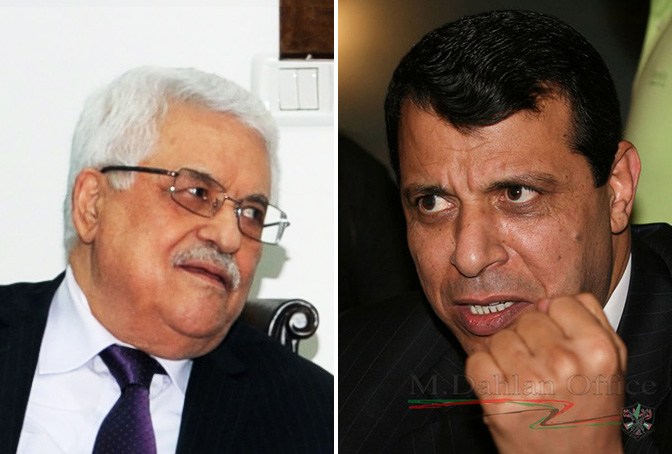
Abbas suspects that these employees, who are affiliated with his Fatah faction, have switched their loyalty to his arch-rival, Mohamed Dahlan, the ousted Fatah leader who has been publicly calling for the removal of Abbas from power.

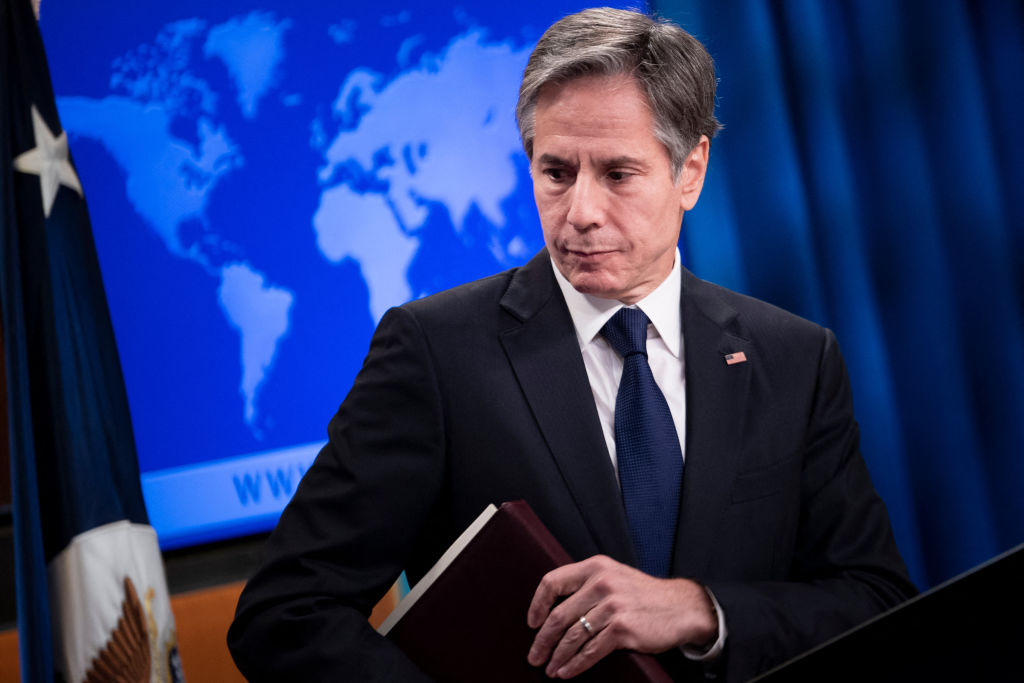
Palestinian Authority (PA) President Mahmoud Abbas (left) recently decided to slash by 30% the salaries of PA employees in Gaza. Abbas suspects that these employees, who are affiliated with his Fatah faction, have switched their loyalty to his arch-rival, Mohamed Dahlan (right). (Image sources: U.S. State Dept., M. Dahlan Office)

Hardly a day passes in the Gaza Strip that demonstrators do not burn photos of Abbas and his prime minister, Rami Hamdallah (who is also based in the West Bank).

Yet, it is not only money that is bringing the Palestinian population to the streets. Hamas and many Palestinians hold Abbas responsible for the ongoing electricity crisis in the Gaza Strip, which has left tens of thousands of families without power for up to 20 hours a day.

Last week Abbas’s government told Israel that it will stop paying for electricity that Israel supplies to Gaza. Palestinians say Abbas is planning more punitive measures against the Strip in the near future. His goal is to drive desperate Palestinians there to revolt against Hamas. In the meantime, however, it seems that Abbas’s measures are boomeranging, and Gazans are, for now, hurling their fury at him and the PA government.

Abbas’s plate is quite full in the Gaza Strip. Alongside Hamas, he has thousands of Dahlan loyalists to deal with. Then there are several other Palestinian groups, such as Islamic Jihad, that have long been challenging Abbas and his autocratic rule. Recently, the leaders of these groups stepped up their harsh criticism of Abbas, with some calling for his “execution” in a public square.

“Why does Abbas take the donors’ money that is intended for the Gaza Strip? asked Marwan Abu Ras, a senior Hamas official. In the view of Abu Ras, Abbas has reached the “highest degrees of treason” and must face a popular and legal trial. “He must be hanged in the public square in front of his people because he is the biggest traitor the Palestinian cause has ever had,” the Hamas official declared.

Another top Hamas official, Mahmoud Zahar, said that Abbas has long lost his legitimacy and was no longer the president of the Palestinians. He accused Abbas and his senior aides of laying their hands on Arab and Western funds and using them for their personal interests. “Abbas is committing crimes against humanity in the Gaza Strip,” Zahar charged. “Abbas cut off the electricity to the Gaza Strip and salaries to the (PA) employees. He is involved in a conspiracy to liquidate the Palestinian cause.”

How Abbas would fare if he ever returned to Gaza is anyone’s guess. Since 2007, Abbas has not been able to even go back to his private house in Gaza. In light of Hamas’s daily threats to kill him, it is unlikely that the 82-year-old Abbas will ever see the Gaza Strip from the inside again.

Abbas’s senior aides, meanwhile, are not sitting silent in the face of the Hamas threats. One of his top advisors, Mahmoud Habbash, last week called on Palestinians to revolt against Hamas. Habbash also stated that it would be fine to destroy and burn the Gaza Strip in order to get rid of Hamas.

The threats against Abbas are coming not only from Hamas, but also from Dahlan and other senior Fatah officials in the Gaza Strip, who think of themselves as sacrificial victims in the war between Abbas and Hamas. The Gaza Strip, then, hosts not only a Fatah-Hamas war, but also a war within Fatah. And tensions between all these parties are only headed toward escalation.

Adding to his problems stemming from the Gaza Strip, Abbas has his hands full inside PA-controlled territories in the West Bank. A hunger strike organized by jailed Fatah leader Marwan Barghouti is seen as directed not only against Israel, but above all against Abbas and the PA leadership. Barghouti, who is serving five life terms in prison for his role in terrorist attacks, has been imprisoned for 15 years. He and his fellow inmates are convinced that Abbas is not interested in their release, which accounts for why he is not doing much to help their cause. Abbas, it is said, fears Barghouti’s popularity, and prefers him in Israeli prison over having him at large.

The hunger strike has triggered a wave of protests in the West Bank not only against Israel, but also against Abbas and his PA government. Abbas is also facing enmity for cracking down on public freedoms, lack of economic reforms and his continued security coordination with Israel.

Is it any surprise, then, that Abbas prefers to spend his time outside Ramallah and the PA-controlled territories? He rarely visits Jenin, Hebron or Nablus, but Jordan, Egypt and the Gulf states are a second home to him.

Abbas is well aware that the Palestinian house is on fire. Instead of working to extinguish the blaze, however, Abbas spends his time spreading the lie that peace in our time is possible, if only Israel would succumb to his demands.

The story of Gaza — which went straight to Hamas after Israel handed it to Abbas — is not a tale Abbas likes to tell. The same scenario is likely to be repeated in the West Bank if Israel makes a similar move. It remains to be seen whether Trump and the new administration are aware of the extreme anarchy reining among the Palestinians, and act accordingly. Will the world see past Abbas’s lies this time?

Khaled Abu Toameh, an award-winning journalist, is based in Jerusalem.
Palestinians: Crocodile Tears and Terrorism by Bassam Tawil

  • This apparent repudiation of terrorism is a startling development for Abbas. The only catch is that when it comes to Israel, Abbas takes quite the opposite line.


  • For the past two years, Palestinians have been waging a new type of “intifada” against Israel — one that consists of knife and car-ramming attacks, similar to the ones carried out in Britain, France and Germany. This wave of attacks, which began in September 2015, has claimed the lives of 49 people and injured more than 700. Since then, Palestinians have carried out more than 177 stabbings, 144 shootings and 58 vehicular attacks.
  • Adding to the hypocrisy, Abbas and his PA leadership often point an accusing finger at Israel for killing the terrorists. Instead of condemning the perpetrators, Abbas and the Palestinians regularly accuse Israel of carrying out “extra-judicial killings” of the terrorists. In other words, Palestinian leaders save their condemnation for Israeli soldiers and policemen for defending themselves and firing at those who come to stab them with knives and axes or try to run them over with their cars. How would the British or French governments react if someone condemned them for killing the terrorists on the streets of Paris and London?

Who says that Palestinian Authority President Mahmoud Abbas does not condemn terror attacks against civilians?

As it turns out, he and his Palestinian Authority (PA) do indeed condemn terrorism — when it is directed against anyone but an Israeli. Israeli blood, it seems, is different.

Abbas led the international outcry after the June 3 London Bridge terror attack that left seven people dead and 48 injured.

A brief statement issued by Abbas’s office read:

“The President of the State of Palestine, Mahmoud Abbas, on Sunday condemned the terror attack in the British capital of London. His Excellency (Abbas) offered his deep condolences to Britain – its queen, government and people, and to the families of the victims of the terror assault. He affirmed his permanent rejection of all forms of terrorism.”

This statement is in line with others Abbas has made recently. Just two weeks ago, Abbas, during a joint press conference with visiting U.S. President Donald Trump in Bethlehem, condemned the May 23 terror attack in the British city of Manchester, the deadliest attack in the United Kingdom since July 7, 2005, in which 23 people were killed and 119 were injured, 23 critically.

Abbas described the terror attack as a “heinous crime” and said that the Palestinians were prepared to work with the U.S. as “partners in the war on terrorism in our region and the world.”

Two days later, Abbas was among the first leaders to condemn a terror attack that killed 28 Coptic Christians in central Egypt. Once again, Abbas said that he and the Palestinians stood with Egypt and its president, Abdel Fattah al-Sisi, in the war against terrorism.

This verbal charade has been going on for some time.

Last April, Abbas was quick to condemn the terrorist attack that took place on the Saint Petersburg Metro, in Russia, in which 15 people were killed and 45 injured. Abbas, in a letter to Russian President Vladimir Putin, said that he and the Palestinians support Russia in its war against terrorism.

Abbas also ran to condemn the wave of terrorist attacks that has hit Belgium, France and Germany in the past two years. This apparent repudiation of terrorism is a startling development for Abbas. The only catch is that when it comes to Israel, Abbas takes quite the opposite line.

For the past two years, Palestinians have been waging a new type of “intifada” against Israel — one that consists of knife and car-ramming attacks, similar to the ones carried out in Britain, France and Germany. This wave of attacks, which began in September 2015, has claimed the lives of 49 people and injured more than 700. Since then, Palestinians have carried out more than 177 stabbings, 144 shootings and 58 vehicular attacks.

This wave of terrorism is the direct result of incitement by various Palestinian groups and leaders, including Abbas himself.

Days before the violence erupted, Abbas stated:

“Every drop of blood that has been spilled in Jerusalem is holy blood as long as it is for Allah. Every martyr (Shahid) will reach paradise, and everyone wounded will be rewarded, Allah willing. The Al-Aqsa Mosque is ours, and they [Jews] have no right to defile it with their filthy feet. We will not allow them to [defile it], and we will do everything in our power to protect Jerusalem.”

A few days later, Palestinians heeded Abbas’s call by launching the newest wave of terrorist attacks against Israelis. These deadly attacks continue until this day. Abbas’s remarks served as a catalyst for the new “intifada”, one that is precisely parallel to the attacks we are witnessing on the streets of Paris, London and Berlin.

Yet Abbas, the world’s newest renouncer of terror, has chosen to refrain from rescinding his explicit call for Palestinians to butcher Jews in order to prevent them from “defiling” the Aqsa Mosque. Needless to say, Jews have neither desecrated nor caused any harm to the mosque. All they have been doing, as is permitted, is visiting the outdoor Temple Mount compound as tourists. Never have any of these Jews set foot inside the Aqsa Mosque.

But Abbas and the Palestinians have been exploiting Jewish visits to the Temple Mount to incite against Israel, thus triggering the current wave of stabbings and vehicular attacks.

Not only has Abbas failed to withdraw his deadly appeal to Palestinians to engage in terrorism, he has also refused to condemn the attacks that have claimed the lives of scores of Israelis and wounded hundreds of others.

So, here is the take-home: Abbas is against terrorist attacks anywhere in the world. Except in Israel, perpetrated by his own people and prompted by him.

Adding to the hypocrisy, Abbas and his PA leadership often point an accusing finger at Israel for killing the terrorists who are carrying out attacks. Instead of condemning the perpetrators, Abbas and the Palestinians regularly accuse Israel of carrying out “extra-judicial killings” of the terrorists. In other words, Palestinian leaders save their condemnation for Israeli soldiers and policemen, for defending themselves and firing at those who come to stab them with knives and axes or try to run them over with their cars.

How would the British or French governments react if someone condemned them for killing the terrorists on the streets of Paris and London?

Has anyone in the West noticed Abbas’s double standards in dealing with terrorism against civilians?

But Abbas not only stays silent when his own people mow down Israelis: he names streets and squares after such “heroes.” Moreover, he rewards them and their families financially, with the help of American and European taxpayer money.

Perhaps it is time for Westerners to realize that there is no difference between a terrorist who sets out to kill Jews and a terrorist who kills British, French and German nationals. In fact, it has become clear that the terrorists in Europe have copied the tactics of the Palestinians in carrying out stabbings and vehicular and suicide-bombing attacks.

Abbas’s crocodile tears are intended to disguise tears of joy that terrorism is alive and well — certainly when it comes to the Israeli blood that his own people spill in the name of Allah.

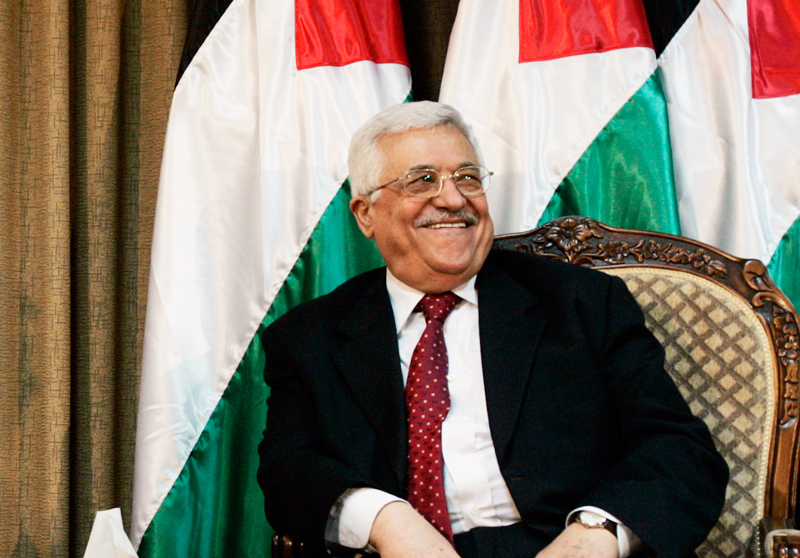
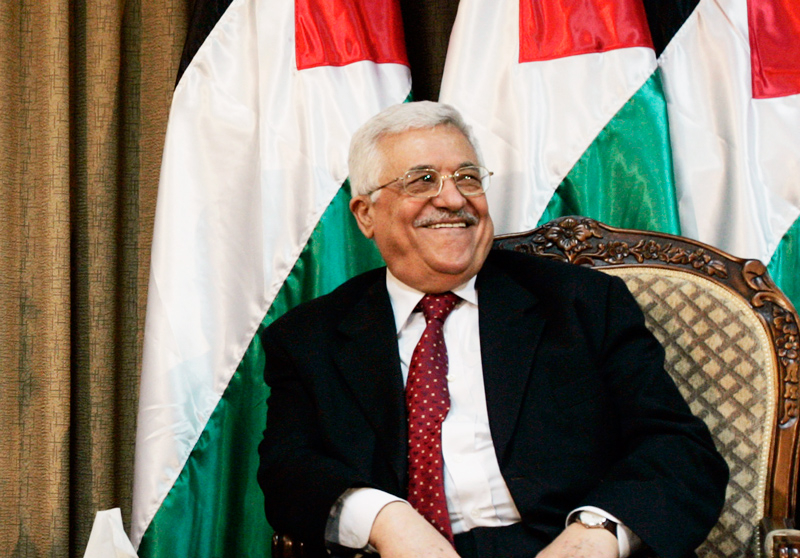
Who says that Palestinian Authority President Mahmoud Abbas does not condemn terror attacks against civilians? He is against terrorist attacks anywhere in the world — except in Israel, perpetrated by his own people and prompted by him. Abbas’s crocodile tears are intended to disguise tears of joy that terrorism is alive and well. (Image source: Muhammed Muheisen-Pool/Getty Images)

Bassam Tawil is a Muslim based in the Middle East.

Palestinians: Bad News for Israel-Haters by Khaled Abu Toameh

  • Sheikh Abdullah Tamimi and his colleagues do not believe in boycotts and divestment. They are convinced that real peace can be achieved through dialogue between Palestinians and all Israelis — not just those who are affiliated with the left-wing. The Israeli left-wing, they contend, does not have a monopoly over peace-making.

  • For Tamimi, real peace begins between the people and through economic cooperation and improving the living conditions of the Palestinians. This, he explains, is more important than the talk about the establishment of a Palestinian state, which he believes, under the current circumstances, is not a realistic option. This notion goes against the ideas of the advocates of “anti-normalization” and others in the West obviously acting against the true interests of the Palestinians by promoting boycott and divestment against Israel.
  • Venal leadership has always been the main tragedy of the Palestinians. But it has created a vacuum that provides an opportunity for Palestinians such as Tamimi to search for other alternatives. This, of course, comes as bad news for those who hate Israel and keep hoping to destroy it. Now the question is, who will triumph: Palestinians and their Jewish neighbors in the West Bank who wish to live in peace, or the anti-Palestinian, anti-Israel, “anti-normalization” activists who seek to derail a true peace at any cost?

By all accounts, Sheikh Abdullah Tamimi, who hails from an influential clan in Hebron, is an extraordinarily courageous and unique Palestinian. His bravery lies not in rescuing a child from a burning house, and his singularity lies not in donating his salary to an orphanage.

Tamimi’s courage and exceptionality showed up in a different sphere: he recently spoke at a seminar organized by Jewish residents of the settlement of Efrat, in Gush Etzion (south of Jerusalem). The seminar was held under the title, “Relations between Jews and Arabs in Gush Etzion.” The event was attended by another courageous Palestinian, Khaled Abu Awwad, General Manager of the Israeli-Palestinian Bereaved Families Forum, a grassroots organization that promotes reconciliation as an alternative to hatred and revenge.

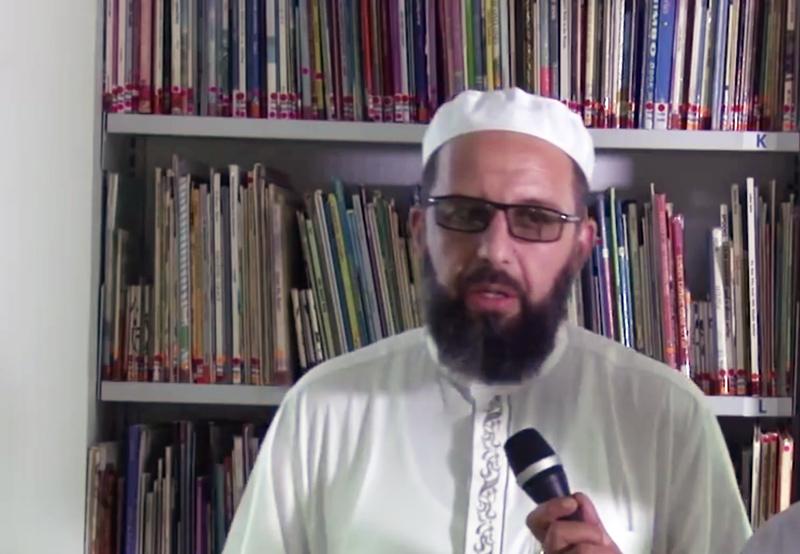
Sheikh Abdullah Tamimi (left) speaks at a seminar on relations between Jews and Arabs in the Gush Etzion area, on August 2, 2016.

Thanks to this courageous move, Tamimi has now been “disowned” by his clan. This is one of the most humiliating forms of punishment in tribal systems: the individual loses the support and protection of the clan and is boycotted socially — weddings and funerals become very lonely affairs. Moreover, Tamimi is being labelled as a “traitor” and a “collaborator” with Israel.

Tamimi did indeed participate in the seminar. But that is not all. He took with him several Palestinians from the town of Yatta in the Hebron area and the Jelazoun refugee camp near Ramallah.

Encounters between Jewish settlers and Palestinians are not unheard of. Thousands of Palestinians work in most of the settlements and many others maintain close relations with settlers and do business with them on a daily basis. These Palestinians could not care less about the anti-Israel boycott movement or the “anti-normalization” groups operating in the West Bank.

For them, the need to earn their families’ bread far outweighs the voices calling for boycotts and divestment. These ordinary Palestinians strive to get on with their lives without the fear of boycott activists’ threats.

Tamimi and his colleagues do not believe in boycotts and divestment. They are convinced that real peace can be achieved through dialogue between Palestinians and all Israelis — not just those who are affiliated with the left-wing. The Israeli left-wing, they contend, does not have a monopoly over peace-making.

For Tamimi, real peace begins between the people and through economic cooperation and improving the living conditions of the Palestinians. This, he explains, is more important than the talk about the establishment of a Palestinian state, which he believes, under the current circumstances, is not a realistic option.

In his speech at the seminar, Tamimi pointed out that peace and calm do not always come from “peaceniks” and leftists.

“In our work, we search for the right-wing in Israel, the hardliners in Israeli society and the settlers to sit and talk with them,” he said. “There are many things that they need to know about Islam and the Quran. This dialogue should be the basis for any future solutions.”

Insisting that the Israeli-Palestinian conflict is political, and not religious, Tamimi told his Jewish audience that many Palestinian groups that claim to represent Islam are not authentic representatives of Islam. “They are using Islam as a bridge to achieve their goals, but in reality they do not represent Islam,” he stressed. Tamimi was clearly referring to Hamas and other radical Palestinian Islamist groups, although he did not mention them by name.

Tamimi disclosed that he is currently in touch with thirteen leading Islamic clerics in the West Bank and Gaza Strip, to address the daily humanitarian needs of the Palestinian population and bring it to the public’s attention. “The humanitarian needs of the people are at the top of our list of priorities,” he said. “We do not want bloodshed. We have needs that we are demanding with all available methods.” He believes that both Israelis and Palestinians should invest in dialogue, especially between religious leaders from both sides, to talk about shared interests. “We need to sit together and understand each other,” he added. “This will help the leaders make decisions. We want both peoples to live a dignified life.”

Tamimi’s is not a lone voice in the desert. He represents an increasing number of Palestinians who have lost confidence in their leaders’ ability to improve their living conditions and achieve peace and stability in the region. These Palestinians support the idea of “economic peace” between the two peoples — a notion that goes against the ideas of the advocates of “anti-normalization” and others in the West obviously acting against the true interests of the Palestinians by promoting boycott and divestment against Israel.

Ironically, while those hoping to destroy Israel are campaigning for boycotts and other economic harm to it, a growing number of Palestinians are marching in the opposite direction.

Tamimi is not just another ordinary Palestinian. Besides being an Islamic cleric, he also belongs to one of the largest Palestinian clans in Hebron. In these days of unrelenting incitement and indoctrination by Hamas and the Palestinian Authority (PA), it is refreshing to see and hear an Islamic cleric stand up and utter words of true peace. The only Islamic clerics we have seen in recent years are those who preach hate against Israel, Jews and “infidels.”

Yet, of course, Tamimi’s bold stance does not come without a price. Shortly after the news of the seminar and Tamimi’s remarks were broadcast on Israel’s Channel 10 TV, a man who claimed to be the leader (mukhtar) of the Tamimi clan issued a statement strongly condemning the “corrupt” cleric for meeting with Jewish settlers.

The man, Hijazi Tamimi, wrote on Facebook that, as the leader of the Hebron clan, he did not authorize any of his family members to meet with settlers:

“As long as I am alive, I will not permit any member of my clan to meet with settlers, no matter what the circumstances. On behalf of myself and the Tamimi clan, we announce our decision to disown the above-mentioned [Abdullah Tamimi], condemn what was mentioned in the TV report and question his credibility. Anyone who wants to discuss political matters should go to the elected president of the Palestinian people, Mahmoud Abbas.”

What the clan leader neglected to note was that the “elected” president is now in the 11th year of his four-year term in office. He also forgot to mention that not all Palestinians agree with the policies of Mahmoud Abbas and his Palestinian Authority, and consider boycotts and divestment harmful to the interests of their people. Abbas’s repeated rejection of offers to return to the negotiating table, or hold a summit with Israeli Prime Minister Benjamin Netanyahu without pre-conditions, was also not noted.

Other members of the clan joined the attack on Abdullah Tamimi and called for punishing him for meeting with settlers. “Who is this guy who claims to be a sheikh?” asked Qassem Tamimi. “This is Rabbi Abdullah. He is not one of us and he has no connection to our clan.”

Tamimi is a rare voice of sanity among Palestinian Islamic clerics, most of whom are busy spewing hate towards Israel and Jews from mosques and media outlets.

But Abdullah Tamimi’s message reflects the growing discontent with the way Palestinian leaders are handling the affairs of their people. Last week, Palestinians received yet another reminder of the malfeasance of the Palestinian Authority and Hamas governments, with the decision to suspend local elections scheduled for October 8. The decision, taken by the Palestinian High Court, came as no surprise to many Palestinians. It followed weeks of mutual accusations and tensions between the two rival parties, with each side targeting each other’s candidates by arresting them, harassing them or disqualifying their lists.

An article published here in July questioned the Palestinians’ ability to hold fair and free elections, especially in light of the ongoing tensions between Abbas’s Fatah faction and Hamas, and internal squabbling within Fatah. The article also noted that Abbas was embarking on a gigantic gamble by authorizing the local elections.

The Palestinian Authority and Hamas have once again failed their people; they are not even capable of ensuring a free and fair election. Venal leadership has always been the main tragedy of the Palestinians. But it has created a vacuum that provides an opportunity for Palestinians such as Tamimi to search for other alternatives. This, of course, comes as bad news for those who hate Israel and keep hoping to destroy it with boycotts, stabbings, car-rammings and the like. Now the question is, who will triumph: Palestinians and their Jewish neighbors in the West Bank who wish to live in peace, or the anti-Palestinian, anti-Israel, “anti-normalization” activists who seek to derail a true peace at any cost?

Khaled Abu Toameh, an award-winning journalist, is based in Jerusalem.
Translate »
Skip to toolbar