

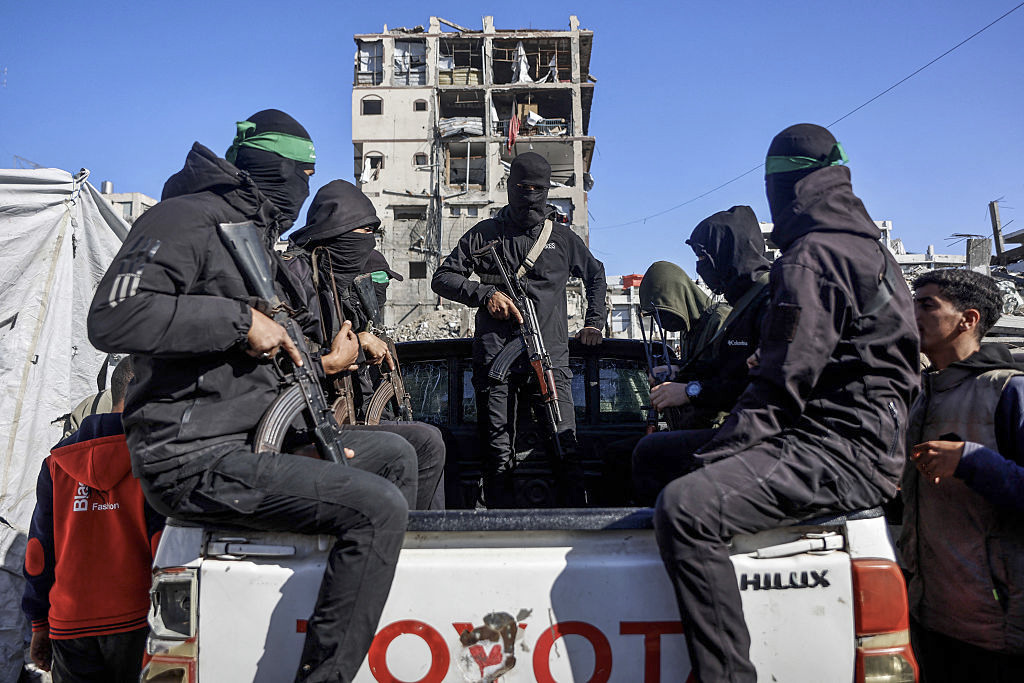
The message was clearly directed at the entire Palestinian population of the Gaza Strip: Hamas is still in charge, and anyone who challenges its authority, or threatens its interests, risks paying with his life.
The terrorist group demands… submission to its ideology and its armed struggle against Israel.
In Hamas’s political vocabulary, a “collaborator” is not necessarily someone who has committed a crime. The accusation can become a powerful weapon against anyone suspected of helping Israel, opposing the group’s terror activities, or challenging its control.
The UN found that Hamas-affiliated forces had used arbitrary and summary punishments to eliminate opposition and maintain control.
Palestinians are not only suffering from the consequences of the war, triggered by the Hamas-led October 7 massacre in Israel. They are also suffering under the rule of a terrorist group that uses violence against its own population to preserve its power.
The latest executions also expose the ever-widening gap between the international community’s stated objectives for Gaza and the reality on the ground.
The objective is to make the fear of being accused of collaboration part of everyday life.
Where is the Board of Peace that was established to help bring stability and a different future to the Gaza Strip? Where are the international governments and organizations that have repeatedly promised to help build a new Gaza?
The Gaza Strip cannot be rebuilt into a peaceful society while an armed organization continues to operate its own security apparatus, arrest people, interrogate and torture them, and execute them in public.
The issue is… whether the group is prepared to relinquish its political, military, and security control. The latest executions continue to suggest that it has no intention of doing so.
Proposals that focus on reconstruction, humanitarian assistance, and economic development without first addressing Hamas’s continued control are therefore increasingly unlikely to produce lasting results.
International condemnations of extrajudicial executions are welcome, but statements alone are not enough. Governments and international organizations that claim to care about Palestinian human rights must make the complete elimination of Hamas an essential condition of any political arrangement for the future of the Gaza Strip.
More than three years after the October 7, 2023 massacre in Israel, the Iran-backed terrorist group, Hamas, is still ruling parts of the Gaza Strip through intimidation, violence, and fear.
The latest evidence came on November 22, when the terrorist group’s security apparatus announced that it had executed Palestinians accused of collaborating with Israel.
The executions, carried out by firing squad in a public square in Khan Younis, were announced by Al-Haris, a platform affiliated with Hamas’s so-called “Resistance Security” apparatus. According to the announcement, the men were accused of providing Israeli intelligence with information that led to the killing of several Palestinians, including Hamas terrorists.
The details of the accusations, the identities of those executed, and the evidence presented against them have not been independently established. There is also no indication that the accused were afforded a fair judicial process.
The message Hamas wanted to convey was unambiguous. Al-Haris said the public executions were intended to send a warning to anyone considering cooperating with Israel, declaring that “justice will prevail and retribution is inevitable.” The statement also praised the families of the executed men for rejecting what Hamas calls “treason” and supporting the implementation of the death sentences.
The message was clearly directed at the entire Palestinian population of the Gaza Strip: Hamas is still in charge, and anyone who challenges its authority, or threatens its interests, risks paying with his life.
This is what life under Hamas means. The terrorist group does not merely demand political loyalty. It demands submission to its ideology and its armed struggle against Israel.
In Hamas’s political vocabulary, a “collaborator” is not necessarily someone who has committed a crime. The accusation can become a powerful weapon against anyone suspected of helping Israel, opposing the group’s terror activities, or challenging its control.
Hamas has repeatedly used accusations of treason against its Palestinian political opponents. In the past, Hamas and its supporters have portrayed Palestinian Authority President Mahmoud Abbas and other Fatah leaders as traitors because of their support for negotiations and security coordination with Israel.
A distinction needs to be made between genuine espionage and political opposition. A Palestinian who states that continued warfare is destroying his people’s future, who calls for an end to terrorism, or who advocates peaceful coexistence with Israel should not have to fear being branded a traitor.
Hamas’s latest executions, however, reinforce the climate of intimidation in which such voices operate.
The execution of alleged collaborators is not an isolated incident. In July 2026, the United Nations Human Rights Office condemned the execution of another Palestinian accused of collaborating with Israel, warning that it appeared to constitute a summary and extrajudicial killing.
Amnesty International has also documented executions and unlawful killings by Hamas-affiliated forces. In August 2026, the organization called on Hamas to end extrajudicial executions, reporting that it had documented nine executions and one unlawful killing by Hamas-affiliated forces, most of them in the aftermath of the October 2025 ceasefire with Israel.
A UN Commission of Inquiry similarly documented hundreds of cases of executions and severe physical violence against Palestinians in Gaza during 2024-2025. The UN found that Hamas-affiliated forces had used arbitrary and summary punishments to eliminate opposition and maintain control.
These findings expose a reality that is frequently missing from international discussions about Gaza: Palestinians are not only suffering from the consequences of the war, triggered by the Hamas-led October 7 massacre in Israel. They are also suffering under the rule of a terrorist group that uses violence against its own population to preserve its power.
The Al-Haris platform called on parents, intellectuals, preachers, teachers, and media professionals to participate in educating Palestinians against cooperating or establishing ties with Israel. Hamas, in other words, is seeking to mobilize the entire social environment against anyone suspected of having links with Israel. The objective is to make the fear of being accused of collaboration part of everyday life.
The latest executions also expose the ever-widening gap between the international community’s stated objectives for Gaza and the reality on the ground.
Where is the Board of Peace that was established to help bring stability and a different future to the Gaza Strip? Where are the international governments and organizations that have repeatedly promised to help build a new Gaza?
The Gaza Strip cannot be rebuilt into a peaceful society while an armed organization continues to operate its own security apparatus, arrest people, interrogate and torture them, and execute them in public.
The issue is not simply whether Hamas has lost some of its military capabilities during the war with Israel. It is whether the group is prepared to relinquish its political, military, and security control. The latest executions continue to suggest that it has no intention of doing so.
Proposals that focus on reconstruction, humanitarian assistance, and economic development without first addressing Hamas’s continued control are therefore increasingly unlikely to produce lasting results.
There can be no meaningful reform while Hamas and other terrorist organizations retain their weapons and security institutions. There can be no genuine freedom of expression while Palestinians fear being accused of treason for opposing terrorism. There can be no lasting stability while a terrorist organization continues to treat its own population as subjects who must obey or face punishment.
International condemnations of extrajudicial executions are welcome, but statements alone are not enough. Governments and international organizations that claim to care about Palestinian human rights must make the complete elimination of Hamas an essential condition of any political arrangement for the future of the Gaza Strip.
egretnewseditor@gmail.com