

Whatever the number [of nuclear weapons], everyone agrees that the Chinese regime is rapidly building its arsenal. [The risks] are especially real because China has almost certainly detonated fissile material secretly—and then sought to deceive the international community.
Beijing says it stopped testing nuclear weapons in 1996, but it has almost certainly been conducting secret detonations.
“After consultations with Director [John] Ratcliffe and his team, they have confirmed to me that the CIA assesses that both Russia and China have conducted super-critical nuclear weapons tests in excess of the U.S. zero-yield standard.” — US Senator Tom Cotton, Chair of the Senate Intelligence Committee, X, November 3, 2025.
Until China comes clean on its detonations of fissile material, there is no point in talking. Beijing is brazenly lying and therefore refusing to engage with America in good faith.
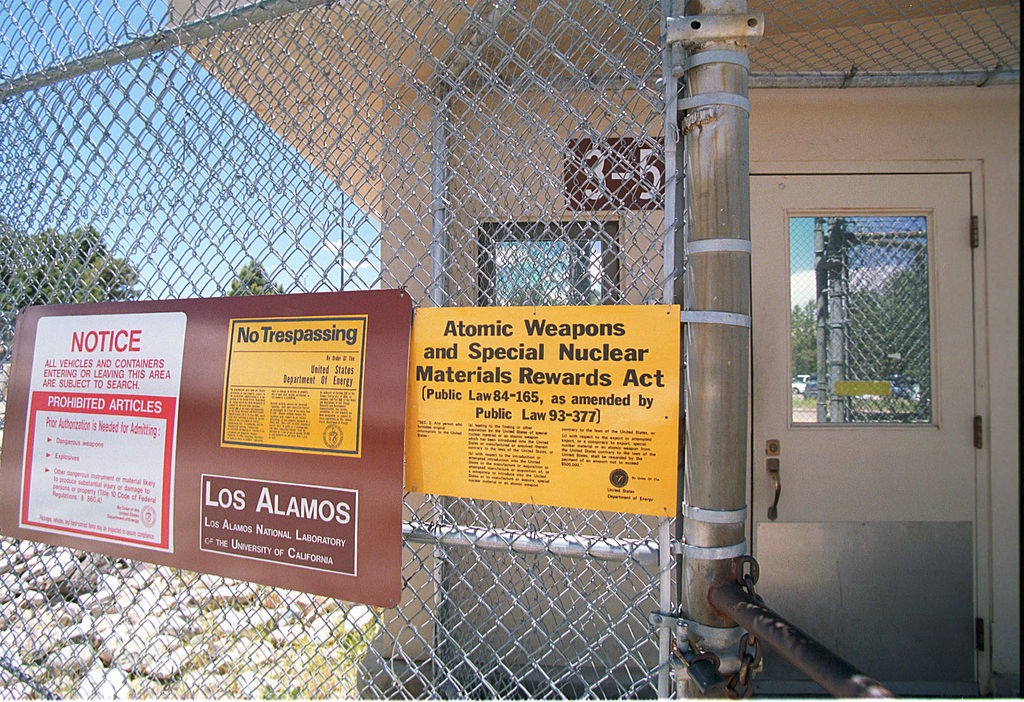
China’s officials this year proposed to the Trump administration reciprocal visits to nuclear sites.
Specifically, the Chinese discussed visits to U.S. Department of Energy national labs. The U.S., a source told CNN, “would be open to discussing visits to nuclear testing sites.”
Unfortunately, China’s initiative looks suspect, and talks should not proceed until Beijing is ready to engage the United States meaningfully.
Washington has already begun “informal and preliminary” discussions with Beijing. President Donald Trump and Xi Jinping reportedly did not discuss the visits during their talks in Washington last month, but “further lower-level discussions” are expected before the two leaders meet again next month on the sidelines of the Asia-Pacific Economic Cooperation summit in China’s Shenzhen.
China’s proposal raised hopes in American policy circles for a broader agreement with Beijing about these weapons. As CNN reported, “The concept of allowing nuclear site visits could move the needle on the U.S. efforts to engage China on issues related to strategic stability and potentially serve as a building block for a trilateral agreement.”
A “trilateral agreement” — a deal among the U.S., China, and Russia — was a goal of the first Trump administration and remains a goal to this day. Trump on October 19 publicly said a meeting among the three countries would be “a very positive thing for the world.” He also hinted that such a meeting would occur next month in China.
China, at least up to this year, has also refused to discuss transparency measures and has never publicly confirmed the number of its weapons.
Beijing’s secrecy has forced others to guess the size of its arsenal. The Pentagon in a November 2022 report forecast that China would quadruple nukes from about 400 then to 1,500 by 2035.
The 2035 estimate looks far too low. Whatever the number, everyone agrees that the Chinese regime is rapidly building its arsenal. As Adm. Charles Richard, then commander of U.S. Strategic Command, said in 2021, “We are witnessing a strategic breakout by China.”
“I don’t think I’ve seen anything more disturbing in my career than the Chinese ongoing expansion of their nuclear force,” said then Secretary of the Air Force Frank Kendall in House testimony in March 2023.
“China is expanding its nuclear arsenal faster than any other country,” the Stockholm International Peace Research Institute reported this June.
The Chinese regime appears no longer content with a “minimal deterrent” — an arsenal only big enough to prevent an attack. With its rapid build-up, it is developing a “war-fighting” capability. With such a capability, threats to launch first strikes would be credible and Beijing would be able to intimidate adversaries. The ability to annihilate the United States could convince Washington not to defend, for instance, Taiwan. China has made these threats both in the last century and this one.
Is an agreement with China a good idea? “There is a near total lack of transparency in China’s nuclear forces,” noted Peter Huessy of the National Institute for Deterrence Studies and the Gold Institute for International Strategy in comments to Gatestone this month. “If the Trump administration can make progress here, that will help America’s security.”
Almost everybody would also like to see progress with China limiting nukes. “This is a very dangerous time, and there are very few guardrails in place on the U.S.-China nuclear relationship,” Paul Dean, a former acting assistant secretary of state overseeing arms control, told CNN. “We don’t need to wait for a crisis to start reducing nuclear risks.”
As Dean, now at the Nuclear Threat Initiative, said, “the risks are very real right now.”
They are especially real because China has almost certainly detonated fissile material secretly— and then sought to deceive the international community.
Beijing says it stopped testing nuclear weapons in 1996, but it has almost certainly been conducting secret detonations.
“Commercial surveillance satellites between 2020 and 2024 observed China dramatically expanding its nuclear weapons testing site at Lop Nur, to include the apparent drilling of new tunnels for the testing of nuclear devices underground,” Richard Fisher of the International Assessment and Strategy Center told this author in late 2025. “In addition to preparing to resume underground nuclear testing, it is also very likely that China has proceeded with ‘sub critical’ nuclear testing and the testing of components of nuclear weapons that included fissile material that produced very low-yield explosions.”
Fisher is not the only analyst who thinks the Chinese have been surreptitiously setting off nuclear devices. Huessy also assesses that both Russia and China have been conducting tests with fissile material for decades.
The U.S. intelligence community concurs. “After consultations with Director Ratcliffe and his team, they have confirmed to me that the CIA assesses that both Russia and China have conducted super-critical nuclear weapons tests in excess of the U.S. zero-yield standard,” Tom Cotton, chair of the Senate Intelligence Committee, stated in comments posted on X in November 2025.
Christopher Yeaw, U.S. assistant secretary of state for Arms Control and Nonproliferation, in a speech in June stated that there was “undeniable evidence” of Chinese yield-producing tests and that China has been “obfuscating nuclear explosions.” He said that perhaps in the future China will be testing fissile material in the 100-kiloton range. The Trump administration reports that China detonated fissile material on June 22, 2020 at Lop Nor.
The U.S. charges that China used the “decoupling” technique — detonating a device in an underground chamber instead of solid rock — to disguise and muffle an explosion of fissile material. The U.S. National Nuclear Security Administration conducted a decoupling test to mimic the Chinese effort.
There is concern that, in light of the Chinese deception, Beijing’s proposed reciprocal visits are little more than a public relations ploy.
As CNN reported, “skeptics noted that the Chinese may have floated the idea in an effort to create a positive atmosphere or to appear serious on the topic of nuclear arsenals.” The skeptics include U.S. officials.
Until China comes clean on its detonations of fissile material, there is no point in talking. Beijing is brazenly lying and therefore refusing to engage with America in good faith.
egretnewseditor@gmail.com