

Boko Haram still seeks to impose strict sharia law across Nigeria and routinely targets Christians. — Morning Star News, April 2, 2026, Nigeria. The ADF’s [Allied Democratic Forces] “purpose is to gain a foothold in the nation, establish Sharia law in areas it controls, and kill non-Muslims.” — International Christian Concern, March 13, 2026, Democratic Republic of Congo.
“Only Muslims are the real living human beings; all non-Muslims are corpses … whoever is not a Muslim is equivalent to a dead body.” — Musa Baluku, leader of the ADF, International Christian Concern, March 13, 2026, Democratic Republic of Congo.
On March 26, police in Lahore’s Sadhoki Kahna Nau area, tortured to death 42-year-old Christian Iftikhar Masih while in custody. Police arrested Iftikhar on fabricated kidnapping charges, demanded a 200,000 Pakistani rupee ($720) bribe for his release, and later claimed he committed suicide by hanging. — Morning Star News, April 7, 2026, Pakistan.
“‘Abraham,’ a member of the Coptic community… said the main goal of these kidnappings ‘is to reduce the Christian population and promote Islam by pretending that the woman chose Islam on her own free will…. They end up as Muslim wives by force.’ He is not aware of any prosecutions against the kidnappers. ‘Authorities are complicit, because they often do very little or nothing.'” — International Christian Concern, March 18, 2026, Egypt.
On March 25, Pakistan’s Federal Constitutional Court ruled that 13-year-old Christian girl Maria Shahbaz must remain with the Muslim man who abducted and forcibly converted her. Despite her parent’s testimony, the court declared Maria was of “mature age,” accepted her conversion to Islam as genuine, and ruled that her marriage is valid under Islamic law. Maria’s father, Shahbaz Masih, told the court she was only 12 or 13 when taken and presented documents to prove her age. The judges rejected the documents, claiming her appearance suggested she was older. The court stated that in Islam, conversion requires only a declaration of faith. — International Christian Concern, April 6, 2026, Pakistan.
“Nearly 400 million Christians worldwide face persecution or violence…” — Archbishop Ettore Balestrero, Permanent Observer of the Holy See to the United Nations, March 3, 2026.
“Msgr. Balestrero also warned that persecution does not always take the overt and bloody form of murder, attacks, or physical violence. There are also ‘more subtle and often silent forms of persecution,’ such as gradual marginalization or exclusion from social and professional life, ‘even in traditionally Christian countries…. through which legal norms and administrative practices restrict or, in effect, nullify the legally recognized rights of the predominantly Christian population, even in some parts of Europe….’ The oppression of Christians does not stem solely from violent mobs or extremist groups, but also from institutional mechanisms that undermine, in practice, the very rights that are officially declared protected.” — fsspx.news, March 10, 2026.
The following are among the murders and abuses Muslims inflicted on Christians throughout the month of March 2026.
The Muslim Slaughter of Christians
Nigeria: According to a March 17 report, suspected Fulani herdsmen attacked Dorowa Maitozo village in Kaduna State. The Muslim bandits killed Rev. Joshua Ajiya, pastor of the Evangelical Reformed Church of Christ, who had served the congregation for only two months. Dozens of other Christians were kidnapped in the nighttime attack.
On March 11, suspected Fulani terrorists attacked Oyatedo village in Kwara State. They killed John Omoniyi Ajise, brother of a prominent pastor, and abducted his wife and four other Christians.
On March 29, armed gunmen attacked the predominantly Christian Angwan Rukuba area (Gari Ya Waye community) in Jos, Plateau State, Nigeria.
The attackers shot indiscriminately, killing at least 28 people, including men, women, and children. Survivor Samson Glabe said: “Armed gunmen invaded the area at about 8 p.m. and shot indiscriminately at anyone they sighted.” Gospel singer Arin Izere added: “Within seconds… we heard gunshots, they were shooting at anyone in sight. Many have been killed.” The attack occurred in a densely populated Christian area of Jos.
On Palm Sunday, March 30, armed Fulani militia and Boko Haram-linked gunmen carried out coordinated attacks on Christian communities in Plateau and Kaduna states. In Ungwan Rukuba, Jos North LGA (Plateau State), gunmen killed at least 30 Christians. Additional attacks in nearby areas of Plateau State killed at least 10 more. In Kagarko County, Kaduna State, Fulani opened fire indiscriminately inside the celebratory hall and killed 13 Christians. Community leader Musa Adamu said:
“The attackers, who we know to be Fulani herdsmen, invaded our community in large numbers. They were armed with deadly weapons which they used in shooting indiscriminately at our people inside the hall where the wedding reception was held; 13 community members who are Christians were killed.”
Several others were injured. The attacks occurred during Holy Week, continuing a pattern of targeting Christians in the region.
Late at night on March 30, Boko Haram terrorists attacked Kautikari, a predominantly Christian village in Chibok County, where they killed at least 10 Christians. Survivor Hauwa Williams cried: “Chibok is bleeding, we’re crying. We need help. For how long are we going to suffer this persecution?”
One resident, Rejoice Pindar, said: “Every day, innocent people in Kautikari… are being killed in Boko Haram attacks.”
Another, Elizabeth Bassey, said: “God, please show us mercy. Your children are being killed every day and night, and houses are being burnt to ashes.”
Boko Haram still seeks to impose strict sharia law across Nigeria and routinely targets Christians.
Democratic Republic of Congo: According to a March 13 report, “Christians are being attacked, murdered, and abducted … every week, and the violence appears to be worse than ever.”
“Between July 1, 2024, and July 1, 2025… nearly 400 Christians were murdered in the DRC… rebel militias have gained vast influence over the Christian-majority nation due to extremist Islamist ideologies…. Two prominent terrorist organizations are responsible for the deaths of hundreds of Christians in 2025 alone: the Allied Democratic Forces (ADF) and the M23 rebel group.”
The ADF’s “purpose is to gain a foothold in the nation, establish Sharia law in areas it controls, and kill non-Muslims.” It also “imposes religious constraints: studying the Quran and converting to Islam are compulsory, with violent retribution for noncompliance.”
The leader of the ADF, Musa Baluku, stated:
“Only Muslims are the real living human beings; all non-Muslims are corpses … whoever is not a Muslim is equivalent to a dead body.”
According to the report, “the ADF claims it has killed more than 700 Christians since Christmas 2024…. The terrorists are abducting and killing civilians with alarming frequency, and abusing women and girls as sexual slaves.” Women are also subjected to forced “marriages” to ADF jihadists. Those who resist are killed. The group targets hospitals, Christian churches, and work sites for killings and abductions. More examples:
“On Nov. 15, ADF militants attacked a medical center in Byambwe and killed 18 patients as they lay in their hospital beds. After looting hospital supplies, they set the facility, along with nearby homes, on fire, killing an additional two individuals…. On Aug. 13, ADF fighters stole robes from a Christian church and posed as members of the clergy. The fighters infiltrated the area of Mayi Moya, where they deceived locals into believing they were Christ followers until they began abducting citizens. Eight individuals were taken.”
Pakistan: On March 4, 2026, Muslims tortured to death 21-year-old Christian farmworker Marcus Masih at a cattle farm owned by Muhammad Mohsin Kharal and Muhammad Basharat Kharal. Afterwards, Basharat called the victim’s brother, Dilshad Masih, saying his sibling had committed suicide by hanging himself from the ceiling of a cattle shed. “Two relatives and I immediately,” Dilshad said, “went to their village, where we saw Marcus’s body hanging from the ceiling. They told us they had no idea why he would take his own life.” Continues the brother:
“When the body was returned to us, we saw severe bruises and burn marks. That is when we realized Marcus had been tortured…. We were in deep shock and grief and did not question them…. The police have assured us they will arrest the accused… But influential people often evade accountability. We are poor Christians. We can only hope for justice.”
Asher Adeel, a Sargodha-based human rights advocate, adds:
“The visible injuries suggest severe torture. If the allegations are true, the accused not only killed him but attempted to disguise the crime as suicide and coerced the family into signing blank papers.”
Such cases are common, says the report, especially
“in rural Pakistan, where impoverished Christians often work in low-paid, informal sectors under influential landowners…. In May, Christian laborer Kashif Masih was tortured to death by a group of Muslims, including a former police officer, over an unproven theft allegation…. Similarly, in March 2025, Christian factory worker Waqas Masih was severely injured after a Muslim coworker slit his throat over accusations of blasphemy. The attacker claimed that Masih had touched an Islamic textbook ‘with unclean hands’… In February 2025, Christian laborer Wasif George was abducted by Muslim landowners, humiliated and paraded on a donkey after being accused of stealing wood. Images and videos of the assault circulated widely on social media, prompting condemnation but limited legal accountability. On June 6, 2024, 18-year-old Catholic worker Waqas Salamat died after being tortured by his Muslim employer and others for allegedly leaving his job without permission. His family said he was subjected to hours of electric shocks, resulting in fatal injuries.”
Separately, on March 26, police in Lahore’s Sadhoki Kahna Nau area, tortured to death 42-year-old Christian Iftikhar Masih while in custody. Police arrested Iftikhar on fabricated kidnapping charges, demanded a 200,000 Pakistani rupee ($720) bribe for his release, and later claimed he committed suicide by hanging. His brother, Riyasat Masih, said:
“There were marks on several parts of his body. The police refused to acknowledge any wrongdoing and continued to insist it was suicide…. The allegation appears to have been fabricated to extort money” from vulnerable religious minorities.
Finally, according to a March 3 report, Haider Ali, a Muslim man, shot dead his co-worker, 29-year-old Christian sanitary worker Naveed Masih, inside the Punjab Assembly building while he was on duty. Naveed was lured to the third-floor office under the pretext of cleaning where he was murdered. Last reported, motive was unknown. Naveed leaves behind his pregnant wife and young daughter.
Muslim Abduction, Rape, and Forced Conversion of Christian Girls
Egypt: A March 18 report on the plight of Christian women in Egypt extensively quotes from the work of Coptic Solidarity, including by quoting its Director of Advocacy, Lindsay Rodriguez, who said, “The problem is persistent and significant, but undercounted.”
According to the report,
“Victims are often ‘targeted due to being perceived as more vulnerable,’ Rodriguez said. Such vulnerability could be due to family financial troubles or mental or physical health issues.
“One recent such case involved a 17-year-old Coptic girl with intellectual impairment who, after her kidnapping, appeared on video in Islamic dress with a woman in the background prompting her to denounce her Christian family as infidels.
“Rodriguez said that deception, grooming, and social media manipulation are the most common kidnapping methods….
“It is also common practice that, following the abduction, accomplices will take pictures of the girl engaged in coerced sexual activity. Such photos are kept as evidence of the girl’s ‘misbehavior’ to blackmail her into changing her religion. In this way, she will come to the Islamic faith.
“In some cases, official documents are changed as soon as the day after the kidnapping to show that the girl has officially ‘converted’ to Islam.
“‘These videos of women claiming to have converted of their own free will and married for love while wearing a head covering have no validity,’ Rodriguez said. ‘It’s an extremely inept and poor attempt to legitimize coerced actions.’
“‘Abraham,’ a member of the Coptic community who now lives abroad but often goes back to Egypt, said the main goal of these kidnappings ‘is to reduce the Christian population and promote Islam by pretending that the woman chose Islam on her own free will.’
“‘They end up as Muslim wives by force,’ Abraham said of the kidnapping victims. He is not aware of any prosecutions against the kidnappers. ‘Authorities are complicit, because they often do very little or nothing,’ he added.”
Pakistan: On March 25, Pakistan’s Federal Constitutional Court ruled that 13-year-old Christian girl Maria Shahbaz must remain with the Muslim man who abducted and forcibly converted her. Despite her parent’s testimony, the court declared Maria was of “mature age,” accepted her conversion to Islam as genuine, and ruled that her marriage is valid under Islamic law. Maria’s father, Shahbaz Masih, told the court she was only 12 or 13 when taken and presented documents to prove her age. The judges rejected the documents, claiming her appearance suggested she was older. The court stated that in Islam, conversion requires only a declaration of faith. Maria was abducted from her home in July 2025, at which point she was forced to convert, and married against her will.
Muslim Attacks on Christian Churches
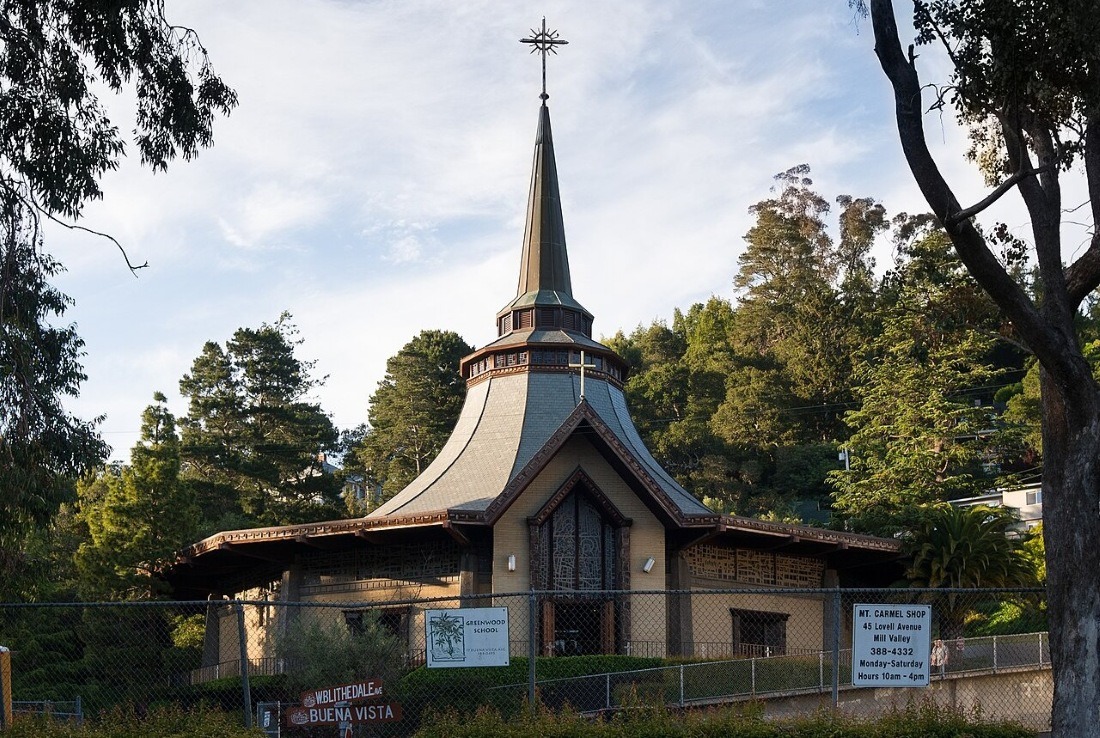
United States: On March 24, Suhail Khojah Siddiqi of Newark, California, broke into Our Lady of Mount Carmel Catholic Church in Mill Valley and vandalized it. He smashed a century-old statue of Jesus and knocked a portrait of Mary face-down on the floor. When police arrived, they found Siddiqi sitting inside the church “apparently reading the Quran.”
He was arrested on suspicion of burglary, vandalism of a place of worship, and hate crime.
Central African Republic: According to a March 2 report, unknown persons set fire to the Apostolic Church in PK4, Bangui, around 8:30 p.m. The blaze completely destroyed the building, cables, equipment, and other materials. The church was in a neighborhood with no electricity that night. Muslim groups (especially ex-Séléka factions with jihadist ties) have repeatedly attacked Christian communities and churches in Bangui and elsewhere in the Central African Republic.
Indonesia: On March 1, dozens of Muslims backed by police and a sub-district official in Kulim Jaya village, forced a halt to roof repairs on the Batak Protestant Christian Church. At least 20 Muslims forcefully entered the church building while repairs were underway. They demanded that the church first obtain prior approval from local Muslims before any repairs could proceed. A video shows one Muslim opponent saying they were not forbidding worship but that without permission for repairs, residents would oppose the church. A Christian woman replied: “We’re repairing the roof because our church is leaking. If it’s not repaired, where will we worship?”
Church Pastor Faber Manurung stated: “The church’s planks were rotten and crumbling, the roof leaking, and it was completely unsuitable and uncomfortable for worship.” The church is officially registered with the Indonesian Ministry of Religious Affairs and has had all legal documents since its construction in 1995. Residents have blocked renovation attempts since 2010. The Central Leadership Council of the Indonesian Christian Youth Movement condemned the action:
“We regret that these actions lead to coercion and intimidation of church members who are simply exercising their right to worship according to their religious beliefs.”
Separately, on March 20, the Interfaith Harmony Forum in Medan, North Sumatra, delayed recommending a building permit for Christ the Answer Tabernacle Pentecostal Church, prolonging the congregation’s nine-year battle for legitimacy. A prominent writer in Surabaya explained the deeper issue:
“Islam considers itself the most perfect religion, and to achieve this ideal, it develops jihad that strives to create a homogeneous reality and deny heterogeneity. However, homogeneity is impossible. Thus, Muslims only strive to serve the utopian dogma without recognizing the inevitability of heterogeneity.”
The church has faced repeated community resistance despite owning the land since 2017 and submitting all required documents.
General Muslim Persecution of Christians
Speaking in Geneva on March 3, Archbishop Ettore Balestrero, permanent observer of the Holy See to the United Nations, said in Geneva that “Nearly 400 million Christians worldwide face persecution or violence, making them the most persecuted religious community in the world” — roughly one in seven Christians. “Almost 5,000 Christians were killed for their faith in 2025,” which equates to an average of 13 deaths per day. He stated that Christians face “physical violence, subjugation, false detention, the expropriation of their property, enslavement, forced exile, and even murder because of their religious beliefs.” The archbishop noted that in Europe alone, 760 anti-Christian hate crimes were recorded in 2024, and the Observatory on Intolerance and Discrimination against Christians in Europe documented 2,211 violent incidents affecting Christians that year. Balestrero further emphasized that “those who died played the dual role of being martyrs for their faith… and victims of outrageous human rights violations.”
“Msgr. Balestrero also warned that persecution does not always take the overt and bloody form of murder, attacks, or physical violence. There are also ‘more subtle and often silent forms of persecution,’ such as gradual marginalization or exclusion from social and professional life, ‘even in traditionally Christian countries.'”
“[T]his more subtle persecution manifests itself through less visible restrictions and limitations, ‘through which legal norms and administrative practices restrict or, in effect, nullify the legally recognized rights of the predominantly Christian population, even in some parts of Europe.'”
“This denunciation underscores that the oppression of Christians does not stem solely from violent mobs or extremist groups, but also from institutional mechanisms that undermine, in practice, the very rights that are officially declared protected.”
Uganda: On March 11, Muslim husband Mukiibi Rajabu stormed into a Bible study at Christ the King Church and severely beat his wife, Hajati Kyakuwa Kamiyati (45), a recent Christian convert. Mukiibi attacked her with a stick and knife while Christians were singing praise songs. He inflicted multiple serious wounds, including a cut on her face, a fractured hand, and a suspected spinal cord injury. She was left bleeding and unconscious. The attack occurred after Rajabu learned that his wife — who had made the Islamic pilgrimage to Mecca the previous year — had converted to Christianity two months earlier and was secretly attending church while he was away working as a truck driver. From her hospital bed, the wife said:
“When I gave my life to Jesus, I was told to keep going to church so I could learn how to live as a new believer.”
Pakistan: According to a March 3 report, Muslim employer Muhammad Boota converted a 14-year-old Christian boy, Jamil Masih, to Islam after employing him for over three years at his cattle farm without paying wages. When Jamil’s mother, Nazia Bibi, rushed to the farm after hearing of the conversion attempt, the boy initially denied it and returned home with her. Within half an hour, Muhammad arrived with several men. While Nazia spoke with Muhammad, the men drove away with Jamil. Later that evening, news spread that Jamil had converted to Islam. When family members demanded his return, Muhammad refused, declaring: “He has been converted to Islam. He is ours now, not yours.” Nazia Bibi said through tears:
“Muhammad Boota has hidden my son somewhere. I know Jamil is with him…. We did not know that our son would be converted to Islam.”
The family filed a complaint, but police took no immediate action. This case once again highlights the extreme vulnerability of poor Christian minors working for Muslim employers in rural Pakistan, where forced conversions of children are a recurring pattern. At 14 years old, Jamil is legally a minor and cannot consent to such a life-changing decision without parental involvement. Nazia Bibi’s final plea:
“Please help me bring my child back to me.”
Separately, according to a March 19 report, on an unspecified date in 2026, authorities failed to correct the religious identity of a Christian family in the national database despite a court order. Naseem Bibi and her four children remain officially registered as Muslims because of an error linked to the records of her late husband, who was listed as “Muhammad Iqbal Sohail” on his death certificate. Bibi said:
“After my husband passed away in August 2016, we were shocked to see that his religion was recorded as Islam… We pleaded that we are practicing Christians and want our identity to reflect that.”
In October 2023, a court ordered the National Database and Registration Authority to correct the records. “They removed ‘Muhammad’ from my sons’ names,” said Bibi, “but our religion is still recorded as Islam.” The family faced social pressure and threats of being treated as apostates. They were forced to leave their home in Haveli Lakha and move to Lahore. The error has also caused job losses and livelihood problems.
Nigeria: According to a March 13 report, Fulani Christians explicitly reject any link to and denounce the violence committed by Fulani Muslims against Christians. Rev. Buba Aliyu, chairman of the Fulani Christian Association of Nigeria (FCAN), said:
“The Fulani Christian Association of Nigeria is a fellowship of Fulani believers in Christ. We are not part of Miyetti Allah, and we do not support violence. Our faith teaches us peace and respect for human life.”
Because Christian Fulani are seen as apostates from Islam, they themselves are under attack, said Aliyu. The significance of these revelations—that there is a distinct community of Fulani Christians who condemn the killings and themselves suffer for converting from Islam—directly undermines claims that the violence is merely “farmer-herder clashes” with no religious dimension. Instead, it points to Islam as the key factor driving some Fulani—Muslims—to target Christians, as Christian Fulani do not participate in these attacks and are themselves threatened by extremists for leaving Islam.
Separately, on March 5, Rev. Ezekiel Dachomo, regional chairman of the Church of Christ in Nations in Plateau State’s Barkin Ladi, declared he will not flee despite ongoing death threats from Islamic extremists:
“I’ve been offered asylum in Australia, Austria and other countries, but I said no. I’m going nowhere. I stand with them [persecuted Christians].”
The threats intensified after Dachomo spoke at a funeral for slain Christians:
“I respect Allah, I respect the people of Allah, but when I see dead bodies killed by the followers of Allah, what do you want me to say? I challenge Allah because his followers are killing my people. I would be stupid and cowardly to kill someone because he insults Jesus; Jesus is a supernatural being, He can defend himself.”
Discussing Muslim reactions to Dachomo’s observations, Markus Malum, a religious freedom advocate, said:
“We note with dismay the attacks and threats on Rev. Ezekiel Dachomo by Muslim leaders and groups over a statement he made while conducting yet another mass burial for Christians killed in Barkin Ladi recently. It will be recalled that some Christians were slaughtered by Islamic extremists who reportedly shouted ‘Allahu Akbar,’ meaning Allah is the greatest, while attacking Christians in Barkin Ladi area of Plateau state.”
Evangelist Peter Otene said:
“What if Rev. Ezekiel Dachomo never existed in a time like this, what would have been the fate of many Christians, especially those in northern Nigeria who daily face pressure, intimidation and persecution for their faith? In moments when many chose silence, his voice chose courage; in seasons when fear tried to dominate, he decided to stand for the faith….Whether people agree with him or not, one thing is clear: when a generation is under pressure, God raises a voice that cannot be ignored. The real question is not just about Rev. Ezekiel Dachom, it is that if voices like his disappear, who will stand for the faith tomorrow?”
Nigeria recorded 3,490 Christian deaths for faith-related reasons from Oct. 2024 to Sept. 2025 — 72% of the global total.
Raymond Ibrahim, author of Defenders of the West, Sword and Scimitar, Crucified Again, and The Al Qaeda Reader, is the Distinguished Senior Shillman Fellow at the Gatestone Institute and the Judith Rosen Friedman Fellow at the Middle East Forum.
About this Series
While not all, or even most, Muslims are involved, persecution of Christians by extremists is growing. The report posits that such persecution is not random but rather systematic, and takes place irrespective of language, ethnicity, or location. It includes incidents that take place during, or are reported on, any given month.
egretnewseditor@gmail.com