

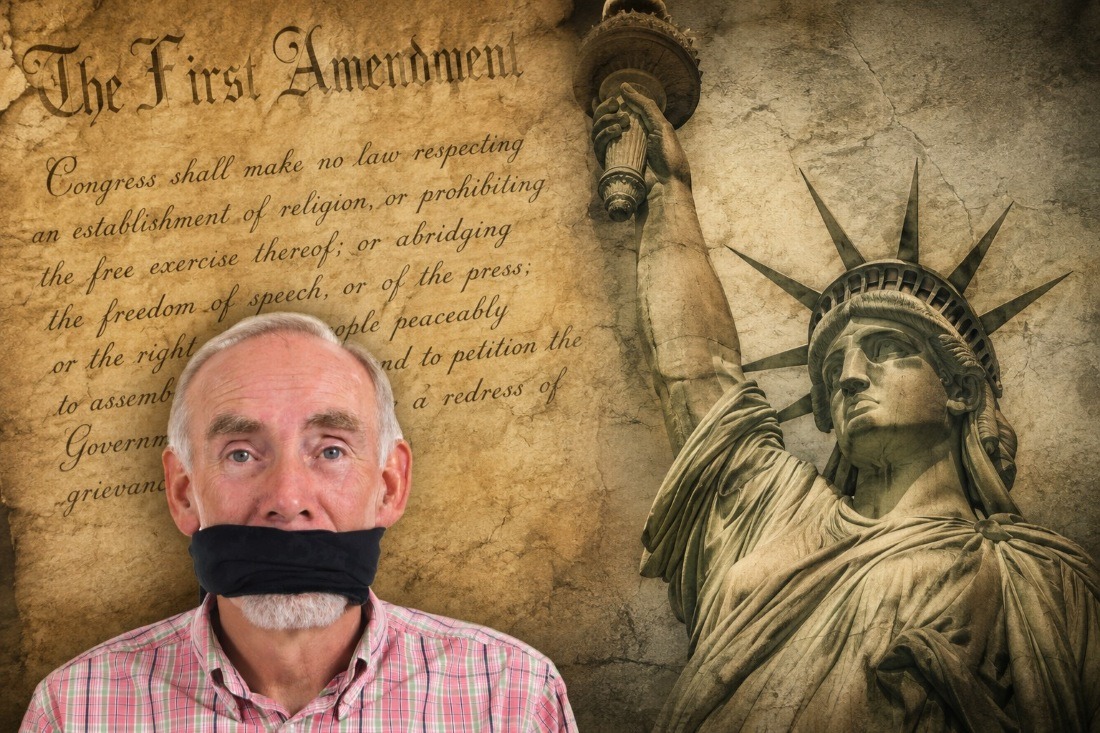
Certain opinions are no longer treated as debatable; they are treated as evidence of bigotry or harm. Institutions that once managed disagreement now police belief, and dissent is answered not with argument but with consequences a person can feel: a lost job, a withdrawn invitation, a name circulated as a warning to others.
Nowhere has the shift been more thorough than in higher education. University offices created to enforce civil rights law grew into administrative empires devoted to reshaping thought and policing dissent. Many universities began requiring faculty candidates to submit “diversity statements” that worked as political litmus tests, obliging applicants to affirm theories about systemic oppression and then pledge to advance them.
Employees were pressured to affirm contested propositions, among them that all white people benefit from and are complicit in racism, or that colorblindness is itself a form of bias, rather than simply to treat colleagues fairly. Several brands then paid a commercial price when customers concluded they had been recast as targets to be re-educated.
Some school districts “socially transitioned” children without telling their parents, then labeled the objecting parents extremists. When states legislated to protect minors and preserve single-sex spaces such as restrooms and changing rooms, the answer from activist organizations was frequently accusations of bigotry rather than arguing with evidence.
When institutions decide that disagreement itself constitutes harm, fact-finding becomes secondary to control of the narrative.
The American constitutional order rests on the opposite assumption. The Founding Founders did not believe any faction held a monopoly on truth and morality or a right to compel agreement. They protected speech because they knew the powerful would always be tempted to silence inconvenient views in the name of progress or safety, and always claimed to be for the listener’s own good. The First Amendment exists to shield the opinions that the elites and the powerful dislike, not the ones they already share. It reflects a sober estimate of human nature and the appetites of institutional power.
Enforced virtue has never produced better people. It produces people who have learned to keep their real thoughts to themselves until the moment they no longer have to.
The urge to treat political disagreement as moral failure did not originate in American universities or human resources departments. It is an impulse older than the Spanish Inquisition, and it always arrives wearing the robes of a higher cause.
During the French Revolution, Maximilien Robespierre argued that the new republic required citizens whose private convictions aligned with revolutionary virtue. Those who fell short were not considered fellow citizens holding different opinions. They were enemies of the people, to be corrected or removed. He built the machinery to enforce that view, and for a year the Reign of Terror sent thousands to the guillotine on suspicion of insufficient zeal. Then the premise turned on him. On July 27, 1794, the same Convention Robespierre had threatened the day before shouted him down and decreed his arrest; the next evening, he and 21 of his closest associates met the same guillotine, without trial, before a cheering crowd.
The experiment proved a durable lesson: once a faction claims the exclusive right to define truth and the power to enforce it, the result is not a better society but fear, purges, and eventual backlash against the enforcers themselves.
The same impulse now operates inside the United States under gentler branding. Diversity, equity, inclusion, anti-racism, and transgender affirmation have replaced the older revolutionary vocabulary, but the structure is identical. Certain opinions are no longer treated as debatable; they are treated as evidence of bigotry or harm. Institutions that once managed disagreement now police belief, and dissent is answered not with argument but with consequences a person can feel: a lost job, a withdrawn invitation, a name circulated as a warning to others.
Consider what happened to Dr. Jay Bhattacharya, a Stanford professor of medicine who argued that prolonged COVID-19 lockdowns would harm children and that protection should focus on the elderly. Internal records later released as “the Twitter files” showed that the social media platform had quietly placed him on a “Trends Blacklist” that throttled the reach of his posts. He had used no abusive language. His offense was holding a scientific position that Twitter, under pressure from the US federal government, had decided fell outside permissible debate.
Nowhere has the shift been more thorough than in higher education. University offices created to enforce civil rights law grew into administrative empires devoted to reshaping thought and policing dissent. Many universities began requiring faculty candidates to submit “diversity statements” that worked as political litmus tests, obliging applicants to affirm theories about systemic oppression and then pledge to advance them. Eventually, some states, such as Florida and Texas, moved to ban these requirements at public institutions precisely because they operated as loyalty oaths. When Texas’s law took effect, the University of Texas at Austin dismissed roughly 60 staff and shuttered the offices that had administered them.
The 2023 congressional hearings on antisemitism at American universities exposed the double standard in real time. Asked directly whether “calling for the genocide of Jews” violated their codes of conduct, the presidents of Harvard, MIT, and the University of Pennsylvania each answered that “the answer depended on the context.” The equivocation was not accidental. It revealed institutions that had spent years expanding the definition of “harm” to shield favored groups while struggling to name an actual call for mass murder. Within days, Liz Magill resigned from Penn, and the storm over Harvard’s Claudine Gay had begun.
Corporate America, in 2020, absorbed the same demands. Following the death of George Floyd, major companies pledged billions to “racial equity” programs and training that often recast ordinary workplace friction as evidence of systemic racism. Employees were pressured to affirm contested propositions, among them that all white people benefit from and are complicit in racism, or that colorblindness is itself a form of bias, rather than simply to treat colleagues fairly. Several brands then paid a commercial price when customers concluded they had been recast as targets to be re-educated. Anheuser-Busch learned this most expensively: after Bud Light created a commemorative beer can for transgender influencer Dylan Mulvaney, a boycott took hold, the brand lost its decades-long crown as America’s best-selling beer, and the parent company’s North American revenue fell by roughly $1.4 billion over the year. The big-box retailer Target absorbed a similar blow over LGBT pride merchandise marketed to children.
The same pattern reached the institutions that supply information. During the COVID-19 pandemic, legitimate questions about lockdowns, school closures, and vaccine policy were frequently reframed as moral rather than empirical disputes. The Great Barrington Declaration, signed by epidemiologists from Harvard, Oxford, and Stanford and eventually by tens of thousands more medical professionals, was denounced and quietly suppressed. Later data on learning loss, heaviest among poor and minority children, and on the mental health toll of prolonged closures suggested that those inconvenient opinions had not been wrong, merely unwelcome.
Enforcement has been equally aggressive on transgenderism. American medical organizations continued to push an “affirmation-only” model for minors even as Europe moved the other way. Britain’s Cass Review found “remarkably weak” evidence that puberty blockers relieve gender dysphoria and led the UK National Health Service to halt their routine use, with Sweden and Finland restricting such treatment to research settings. Gender transition in the US, meanwhile, exploded, driven largely by adolescent girls with no childhood history of gender dysphoria, and detransitioners began suing the medical practitioners and institutions that had rushed them.
Some school districts “socially transitioned” children without telling their parents, then labeled the objecting parents extremists. When states legislated to protect minors and preserve single-sex spaces such as restrooms and changing rooms, the answer from activist organizations was frequently accusations of bigotry rather than arguing with evidence.
When institutions decide that disagreement itself constitutes harm, fact-finding becomes secondary to control of the narrative.
This approach carries predictable costs. When institutions punish dissent and reward conformity, they bleed competence and public trust. Over the past decade, public opinion polls by Gallup have recorded falling confidence across most major institutions, from the media to large corporations to the US Congress, with higher education suffering the steepest decline of all, from a 57% majority in 2015 to a record low of 36%. Parents have organized at school boards. States have cut funding for diversity bureaucracies. These reactions are routinely filed under “polarization” or “backlash.” They can equally be described as citizens noticing that certain institutions decided ordinary Americans required re-education, and are beginning to say no.
The American constitutional order rests on the opposite assumption. The Founding Founders did not believe any faction held a monopoly on truth and morality or a right to compel agreement. They protected speech because they knew the powerful would always be tempted to silence inconvenient views in the name of progress or safety, and always claimed to be for the listener’s own good. The First Amendment exists to shield the opinions that the elites and the powerful dislike, not the ones they already share. It reflects a sober estimate of human nature and the appetites of institutional power.
A dictatorship of virtue eventually consumes its own promises. It guarantees fairness and cohesion but delivers resentment, cynicism and decay. America is watching the process unfold across its campuses, corporations, newsrooms and government agencies. The question is not whether citizens will keep noticing the contradictions and their costs; they already have. It is whether the institutions that embraced this model will adapt before they spend the last of their legitimacy. History is not encouraging. Enforced virtue has never produced better people. It produces people who have learned to keep their real thoughts to themselves until the moment they no longer have to.
egretnewseditor@gmail.com