

The steady advance of Islamic terrorist control over territory in the Sahel could soon threaten the sovereignty of West African states on the continent’s Atlantic Coast — just across the ocean from Latin America and the United States. It is past time for the US to take action to protect not only the vast natural resources in the area, but also to stop even more of Africa from being swallowed up by this expanding jihadist takeover.
The widened scope and quickened pace of the Islamic State’s military operations in the Sahel region — just below North Africa, roughly from Senegal to Sudan — threatens to alter the strategic orientation of the African continent. Efforts at countering terrorist operations in the Sahel, such as they were, have evidently failed. As all roads to Mali’s capital of Bamoko are now blocked, that country might be the first state to “go under.”
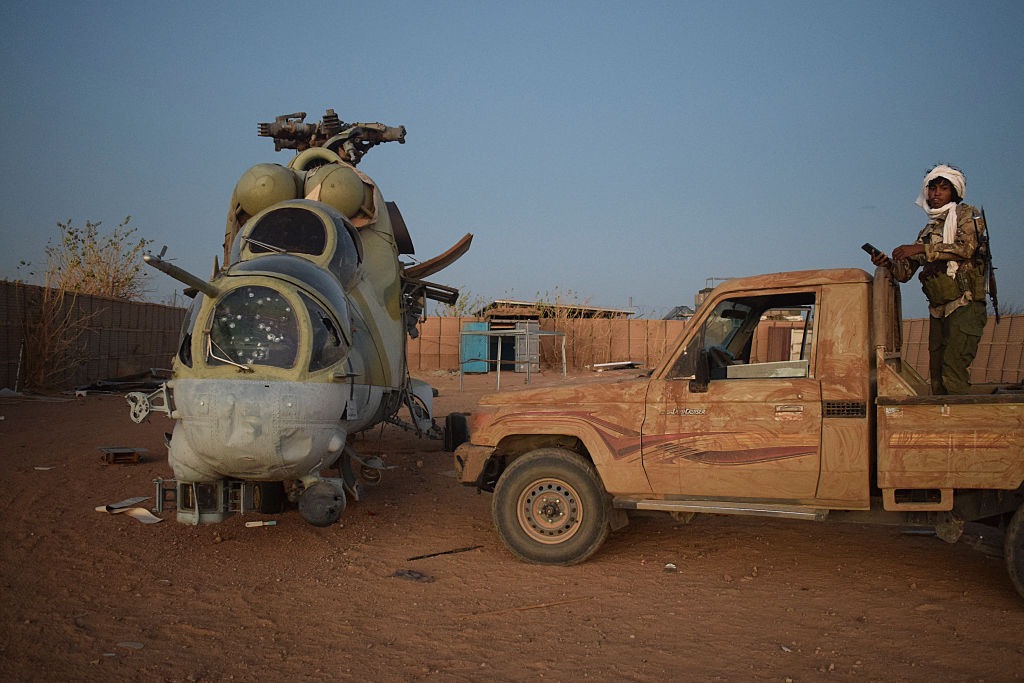
On April 25, during a coordinated attack on several Malian cities, Muslim terrorists killed the country’s Minister of Defense. The terrorists then drove the Malian Army and its allied Russian mercenaries out of the country’s north.
The military juntas ruling Mali, Burkina Faso and Niger have proven themselves as ineffective at combatting Islamic terrorist operations as the democracies that they overthrew. The increasing terrorist assaults across the Sahel and the jihadists’s determined efforts to take over Mali, Burkina Faso, and Niger have eroded the sovereignty of these states.
The combat successes of the jihadists in the Sahel in March 2022 precipitated their elevation to the status of “Islamic State Sahel Province” within the hierarchy of the IS, and several other factors have facilitated the growth of the jihadist advance in the Sahel.
The cooling of the once global counterterrorist crusade — following an apparent shift in focus by the world’s great power rivalries, as well as fewer resources directed against the terrorist problem — left a vacuum that was adroitly filled by jihadist groups, which has reduced the pressure on Islamic State and Al Qaeda regional affiliates.
Another situation that might have impacted negatively upon the Sahel’s overall security is the monumental migratory flow of Africans from sub-Saharan countries who pass through the Sahel to the Mediterranean, and the consequent stress this puts on the Sahel economies.
A third force eroding state sovereignty of Sahel countries is warfare waged by Al Qaeda terrorist affiliates that are rivals of the Islamic State, such as the Jama’at Nusrat al-Islam wal Muslimin (JNIM). JNIM also coordinates attacks with the Malian anti-government militia known as the Azawad Liberation Front.
Jihadist violence has become ubiquitous in the Sahel, and recently expanded to include fighting between Islamic State and Al Qaeda. On April 2, a notable clash between these two rival terrorist networks occurred in western Niger.
The Sahel now appears to be the epicenter of global terrorist violence. Sahel’s terrorist groups might also be acquiring confidence that they can achieve permanent and more ambitious goals in the near future.
Islamic State units have also been exploiting the deteriorating security situation in the Sahel and in Nigeria’s northeastern states, which are already governed under Islamic sharia law. Islamic State probably feels buoyed by its easy success in recent battles with the Nigerian Army.
On April 25, Al Qaeda terrorists conducted simultaneous attacks against several Malian urban areas. Their success might well tempt jihadist fighters to move into major urban areas in northern Nigeria and elsewhere in the Sahel.
An additional worrisome trend indicates that terrorist violence is moving westward to Africa’s Atlantic coast.
State control increasingly is being eroded in the Sahel region, despite multilateral efforts to sustain the sovereignty of several states in the Sahel, such as the Multi-National Joint Task Force (MNJTF) consisting of Chad, Nigeria, Benin, Cameroon, and, until last year, Niger. The MNJTF had made significant strides in halting the advance of the Al Qaeda-affiliated Boko Haram terrorist group, particularly in Chad, but recently the overall scorecard is less conclusive.
The MNJTF is sustained mostly by the continent-wide Organization of the African Union (OAU). While the MNJTF originally planned to field a 10,000-member OAU army, insufficient air cover, poor communications, and logistical problems have reduced the organization’s effectiveness.
Another multinational group — the “G5 Sahel” of Mauritania, Burkina Faso, Chad, Mali, and Niger — proved ineffective after its 2014 launch. Beset by bureaucratic problems, military coups, and lack of adequate commitment by member states, it dissolved in December 2023.
France, the former colonial “mother country” of several Sahel states, has also made a valiant effort to contain the region’s Islamist threat. Acting on behalf of a Malian request for military support, France in 2013 dispatched troops to northern Mali in “Operation Serval.”
After substantial success, France, along with UN political support, launched “Operation Barkhane” in 2014 to combat Islamist terrorist activity in the Sahel region. The mission ended in 2022, however, when, following military coups, three Sahelian states asked the French to leave. Later, these same three states invited assistance from Russian mercenaries, which has not resulted in any permanent progress on the battlefield.
With the advance of Islamic terrorist control over ever wider swaths of the Sahel, in recent years, US Special Forces teams have been operating in Niger. On October 4, 2017, this deployment resulted in the killing of four US soldiers and a score of Nigerien soldiers in an ambush staged by “Islamic State in the Greater Sahara.” More recently, US national security priorities elsewhere seem to have resulted in a diminution of American military involvement in the Sahel.
The steady advance of Islamic terrorist control over territory in the Sahel could soon threaten the sovereignty of West African states on the continent’s Atlantic Coast — just across the ocean from Latin America and the United States.
It is past time for the US to take action to protect not only the vast natural resources in the area, but also to stop even more of Africa from being swallowed up by this expanding jihadist takeover.
egretnewseditor@gmail.com