

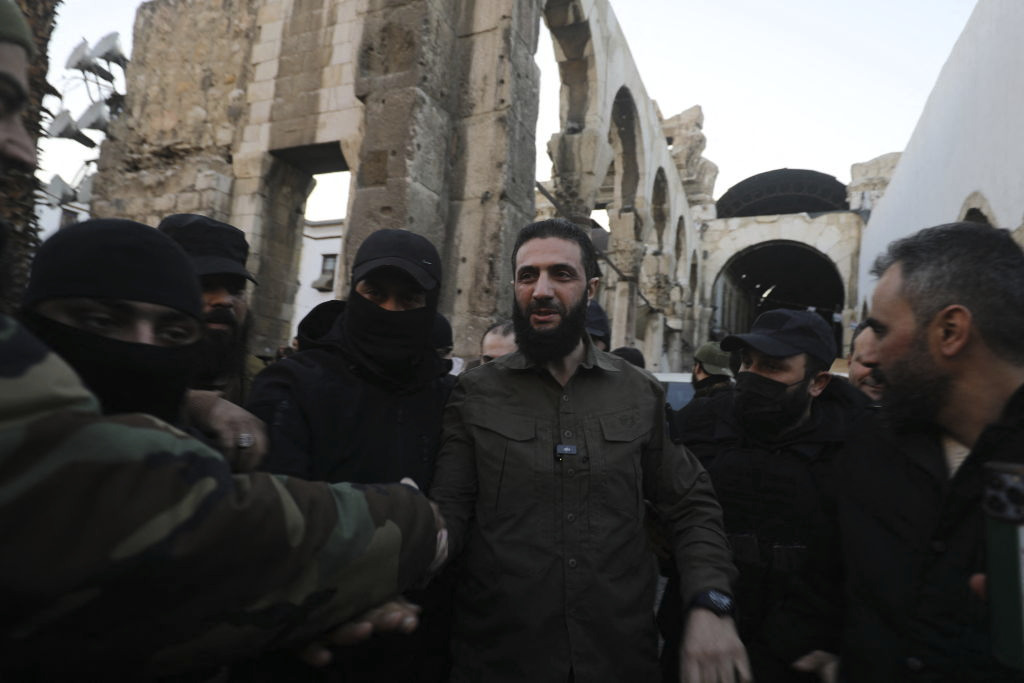
Al-Sharaa, it appears, is directing most of the state’s resources, foreign aid included, toward a large standing army and new weapons systems, while concealing the scale of the effort.
Western governments and al-Sharaa do not attach the same meaning to the word “stability.”
Middle Eastern alignments rarely outlive the enemy that produced them… Iran and its militias spent years fighting the insurgency that carried him to power. None of that says what a stronger Syrian state will do in ten years.
In September 2025, al-Sharaa told reporters that a security deal with Israel, modeled on the 1974 disengagement agreement, was a “necessity.”
A year after he declared this supposed “necessity,” al-Sharaa announced at the UN that the Golan Heights “will remain Syrian” – possibly so that Syrians will once again be able to shoot down at Israeli farmers on the plain below. Al-Sharaa added the complaint that “Israel is launching attacks against Syria. There have been 500 air strikes, more than 1,200 incursions, and 300 detentions. This is at odds with the orientation we’re seeing at global level.”
Al-Sharaa, however, forgot to mention why. Ever since al-Sharaa overthrew the Assad regime, Christians, Druze, Alawites and other minorities have been victims of attacks that are reportedly “genocidal” – all while al-Sharaa’s plan for the radical Islamization of Syria surges ahead.
The Trump administration’s removal of Syria from the list of state sponsors of terrorism seems to have been based on wishes rather than any kind of facts on the ground. Perhaps the administration still hopes — although, after its run-in with Iran, it really should have learned better — that rewarding good behavior before it takes place will somehow magically cause it to spring into being simply does not work. Gifts in good faith, especially to supposedly former terrorists, can simply get pocketed in expectation of the next ones.
At this point, al-Sharaa’s demand [that Golan Heights “will remain Syrian”] is tantamount to expecting the United States to return its southwest to Mexico.
Israel, evidently motivated by survival, treats its northern frontier as a question of capabilities rather than of declared intentions….
The wager is that investment and honors will pull al-Sharaa toward moderation. It may pay off, but its beneficiary, al-Sharaa, is using part of the proceeds to build an armed power of his own.
Israeli security sources concede that a chance to lock in border arrangements was missed when al-Sharaa was weak and newly installed, and now assess that a confrontation is a matter of time.
A channel to Damascus has bought Washington influence that isolation never could, but it should not buy amnesia: al-Sharaa’s past is documented, his diplomacy is real, and the army now taking shape belongs to the same man.
Whether Ahmed al-Sharaa has changed since the world knew him as al-Jolani will occupy biographers. Israel’s planners have stopped asking. They are counting his brigades.
Ahmed al-Sharaa inherited a country in ruins. War halved the size of Syria’s economy and left nine people out of ten below the poverty line. According to serious Israeli sources, the priority in Damascus has little to do with reconstruction.
Al-Sharaa, it appears, is directing most of the state’s resources, foreign aid included, toward a large standing army and new weapons systems, while concealing the scale of the effort. His forces are not yet rated as capable, but they have held brigade-level exercises, are being organized into brigades with divisions to follow, and are seeking air defenses able to restrict the Israeli Air Force. This is the army Israel gutted in December 2024, when 480 strikes in two days destroyed an estimated 80 percent of Assad’s strategic arsenal. It is being rebuilt with money meant to rebuild the country.
Al-Sharaa has spent two years trying to persuade the world that he is no longer Abu Mohammad al-Jolani. He joined al-Qaeda in Iraq after America’s 2003 invasion, spent five years in the American prison at Camp Bucca, and returned to Syria in 2011 to found the Nusra Front. The United States designated him a global terrorist in May 2013, and put a $10 million bounty on him, which was lifted only in December 2024.
He broke with al-Qaeda in 2016 and recast himself as a nationalist. After Damascus fell on December 8, 2024, the military fatigues gave way to suits. In May 2025, President Donald Trump met him in Riyadh the day after announcing the lifting of sanctions, and in November he became the first Syrian president ever received at the White House, where Syria joined the coalition against the Islamic State.
The gamble had a rationale: isolation threatened to turn a wrecked state into another permanent failure. Saudi Arabia and Turkey lobbied for lifting sanctions, and Europe saw a path to stabilizing the country and sending Syrian refugees home. In May 2025, the European Union lifted its economic sanctions. In December 2025, the US Congress repealed the Caesar Act, and on August 24, 2026, Washington removed Syria from its list of state sponsors of terrorism, a designation it had carried since 1979. Germany, which reopened its Damascus embassy in March 2025 and hosted al-Sharaa in Berlin a year later, now leads the European aid effort.
Western governments and al-Sharaa do not attach the same meaning to the word “stability.” Europe needs a Syria calm enough to justify sending back refugees. Saudi Arabia and the United Arab Emirates want Damascus locked out of Iran’s orbit, and Washington wants a partner against the Islamic State. Al-Sharaa needs all of them, and Israeli assessments hold that he is using them for something larger: restoring Syria as a regional military power.
His planning is apparently aimed at the moment, once his buildup is complete and the American presence in Iraq has thinned, when he can strike Hezbollah in Lebanon and the pro-Iranian militias in Iraq. Those targets are Israel’s enemies too, but that does not make the army taking shape in Damascus an Israeli asset. As one security official put it:
“Ahmed al-Sharaa wants to build Syria under his leadership into a regional power that will look in every direction. The moment he decides to, he will also direct military force against Israel.”
Middle Eastern alignments rarely outlive the enemy that produced them. Al-Sharaa’s hostility toward Iran and Hezbollah follows from his own history: Iran and its militias spent years fighting the insurgency that carried him to power. None of that says what a stronger Syrian state will do in ten years.
In September 2025, al-Sharaa told reporters that a security deal with Israel, modeled on the 1974 disengagement agreement, was a “necessity.”
A year after he declared this supposed “necessity,” al-Sharaa announced at the UN that the Golan Heights “will remain Syrian” – possibly so that Syrians will once again be able to shoot down at Israeli farmers on the plain below. Al-Sharaa added the complaint that “Israel is launching attacks against Syria. There have been 500 air strikes, more than 1,200 incursions, and 300 detentions. This is at odds with the orientation we’re seeing at global level.”
Al-Sharaa, however, forgot to mention why. Ever since al-Sharaa overthrew the Assad regime, Christians, Druze, Alawites and other minorities have been victims of attacks that are reportedly “genocidal” – all while al-Sharaa’s plan for the radical Islamization of Syria surges ahead.
The Trump administration’s removal of Syria from the list of state sponsors of terrorism seems to have been based on wishes rather than any kind of facts on the ground. Perhaps the administration still hopes — although, after its run-in with Iran, it really should have learned better — that rewarding good behavior before it takes place will somehow magically cause it to spring into being simply does not work. Gifts in good faith, especially to supposedly former terrorists, can simply get pocketed in expectation of the next ones.
Israeli Foreign Minister Israel Katz immediately replied to al-Sharaa, “The Golan under Israeli sovereignty is an integral part of the State of Israel forever.”
At this point, al-Sharaa’s demand is tantamount to expecting the United States to return its southwest to Mexico.
Israel, evidently motivated by survival, treats its northern frontier as a question of capabilities rather than of declared intentions: the red lines it carried into the American-mediated talks that resumed in August after a six-month freeze include: a demilitarized Syrian Golan, no Turkish military activity in Syria and no strategic weapons systems in Syrian hands.
Al-Sharaa has not simply exchanged one patron for another. Turkey made his rise possible and, under an August 2025 training agreement, is to supply weapons systems to the new army, yet Israeli officials do not expect him to hand Syrian bases to Recep Tayyip Erdogan, even if that is what Erdogan expects. When Israel bombed the Abu al-Duhur air base on August 18 to forestall a Turkish deployment, the American envoy called the strike an “unnecessary escalation,” while Israeli sources judged that it had spared al-Sharaa a choice he preferred not to make.
Russia has not left either. In August, Russia and Syria agreed to convert Russia’s military bases in Syria, Tartus and Hmeimim, into joint training centers with Russian forces remaining, and in September a Russian convoy docked at Tartus for the first resupply under the deal.
Saudi Arabia and the United Arab Emirates have their own reasons for courting al-Sharaa. Assad’s fall shattered the corridor Iran spent decades building through Iraq, Syria and Lebanon. Gulf money can make the loss permanent. Saudi Arabia and Qatar paid off Syria’s World Bank arrears in April 2025; a Saudi delegation signed $6.4 billion in agreements that July, and DP World took a 30-year, $800 million concession on the port of Tartus. The wager is that investment and honors will pull al-Sharaa toward moderation. It may pay off, but its beneficiary, al-Sharaa, is using part of the proceeds to build an armed power of his own.
Israel now faces a problem less simple than Assad, who was hostile but familiar and dependent on Iran and Russia.
Israeli security sources concede that a chance to lock in border arrangements was missed when al-Sharaa was weak and newly installed, and now assess that a confrontation is a matter of time.
The communication cell agreed in Paris in January still exists. Mossad chief Roman Gofman met with Syrian Foreign Minister Asaad al-Shaibani in Amman in August. The Israeli defense establishment is intensifying intelligence collection on Syrian forces and preparing for a broad operation should the buildup threaten Israel’s freedom of action.
A channel to Damascus has bought Washington influence that isolation never could, but it should not buy amnesia: al-Sharaa’s past is documented, his diplomacy is real, and the army now taking shape belongs to the same man.
Whether Ahmed al-Sharaa has changed since the world knew him as al-Jolani will occupy biographers. Israel’s planners have stopped asking. They are counting his brigades.
egretnewseditor@gmail.com


