

After acknowledging the October 7 massacre, these Western governments still insist that the answer is to accelerate the creation of a Palestinian state next to Israel. This is a political fantasy. As the British journalist Jonathan Sacerdoti shrewdly asks, “What if the Palestinians do not want two states, and never have?”
The planned boycott only demonstrates how disconnected these governments are from the human and economic realities on the ground.
While politicians in European capitals lecture Israelis and Palestinians about coexistence, Israelis and Palestinians are already practicing it in countless workplaces.
There are Jewish-owned factories, supermarkets, restaurants, wineries, and other businesses in the West Bank, where Palestinians and Israelis work together. These workplaces may not constitute a political peace agreement, but they represent something that boycott campaigns destroy: normal human contact and economic cooperation.
Boycotts are not a substitute for peace negotiations. They are certainly not a substitute for Palestinian recognition of Israel.
Whatever one’s position on settlements, it is difficult to see how depriving Palestinians of jobs advances Palestinian prosperity or Israeli-Palestinian reconciliation.
Extremist Palestinians do not regard Israel as a country next to which to they want their own state, They regard all of Israel as one big settlement — to be permanently uprooted and replaced as soon as possible.
These extremists are no different from the jihadists in Europe who rape, mow down, and behead the citizens of the very countries now demanding that Israel tolerate the same terrorists that they so naively accept.
Hamas, Palestinian Islamic Jihad and other Islamist terror organizations do not seek more Israeli-Palestinian economic cooperation. They seek confrontation, separation, and ultimately the elimination of infidels in the very countries now working to empower them.
For decades, Western governments have repeated the phrase as if saying it often enough will make it happen — or even make it a good idea.
Hamas transformed Gaza into a heavily armed Islamist war machine…
The question Western leaders should be asking is not: “How can we establish a Palestinian state?” The questions they should be asking are: What kind of Palestinian state would be established, who would control it, what would its security forces look like, what would its relationship with Hamas and Palestinian Islamic Jihad be, and what guarantees would prevent it from becoming another armed base for attacks against Israel?
Any territory in which terrorist groups are not totally disarmed will simply be a launching pad from which to continue attacking Israel.
This goal is probably why countries that would like to see Israel eliminated — apart from those in Europe — such as Turkey, Qatar, Pakistan and Saudi Arabia, are eager to be part of a Board of Peace. They would be placed right on Israel’s border to wait a few months until President Donald Trump is gone.
Western governments would not tolerate an Islamist terrorist organization establishing a heavily armed state or quasi-state entity on their own borders. Why should Israel?
Would the British accept an Islamist army operating immediately outside London? Would France accept a terrorist organization armed and financed by jihadist-run sovereign wealth funds establishing itself on the outskirts of Paris?
If Western governments genuinely want to help the Palestinians, they should stop treating a Palestinian state as the ultimate objective and start talking about the importance of freedom of speech and of the press, separation of mosque and state, a serious education system that could prepare youths for lucrative jobs, businesses that could see growth, a judiciary that delivers equal justice under the law, and a government that is actually accountable to the public and responsive to the productive lives of its citizens — not a regime promoting murder, martyrdom and death.
Conditions should also include the Palestinian recognition of Israel’s right to exist, the abandonment of terrorism and jihadist ideology, the dismantling and disarming of all terrorist organizations, an end to incitement against Israel and Jews in schools and mosques, serious reform of the Palestinian Authority education system, transparent and accountable government, and an end to corruption and the misuse of international aid.
Above all, Palestinian leaders must demonstrate that they want to build a society rather than destroy another one.
Palestinians should not be encouraged to believe that terrorism is a shortcut to statehood. Otherwise, the message of October 7 becomes dangerously clear, for the West as well: murder Jews, Christians and other infidels, kidnap them, rape them, and massacre them — and eventually the international community will reward them with a state.
The foreign ministers of 12 Western countries have apparently decided that the best way to promote peace between Israelis and Palestinians is to punish businesses operating in Jewish communities in the West Bank.
One can only wonder what planet these ministers are living on.
On September 8, Canada, France, Iceland, Denmark, Finland, Norway, Poland, Portugal, Sweden, Ireland, and the United Kingdom issued a joint statement declaring that they intend to introduce, or support, restrictions on trade in goods produced in Jewish settlements.
The ministers said that “Israel’s actions in the West Bank are undermining the possibility of a two-State solution” and that “the two-state solution must be protected, and we will take action.”
They also condemned the Hamas-led October 7, 2023 attack on Israel and described it as “the worst antisemitic massacre since the Holocaust.”
Then comes the extraordinary part. After acknowledging the October 7 massacre, these Western governments still insist that the answer is to accelerate the creation of a Palestinian state next to Israel.
This is a political fantasy. As the British journalist Jonathan Sacerdoti shrewdly asks, “What if the Palestinians do not want two states, and never have?”
The planned boycott only demonstrates how disconnected these governments are from the human and economic realities on the ground.
According to the Palestinian Central Bureau of Statistics, about 20,400 Palestinians from the West Bank were working in Jewish settlements in the fourth quarter of 2025 — an increase from 16,000 in the previous quarter.
Palestinian workers employed in Israel and West Bank Jewish settlements earned an average daily wage of 256.90 shekels (about $85) in that quarter.
These are Palestinian men and women supporting families. Most are happy to be employed by Israelis because they get higher salaries and more labor rights than they do working for Palestinian businesses.
A boycott of Jewish-owned businesses in West Bank settlements is therefore not some painless diplomatic gesture aimed exclusively at “settlers.” It affects Palestinian employees whose livelihoods depend on those businesses.
The hypocrisy is even more striking because Palestinians and Israelis work together in many places throughout the West Bank.
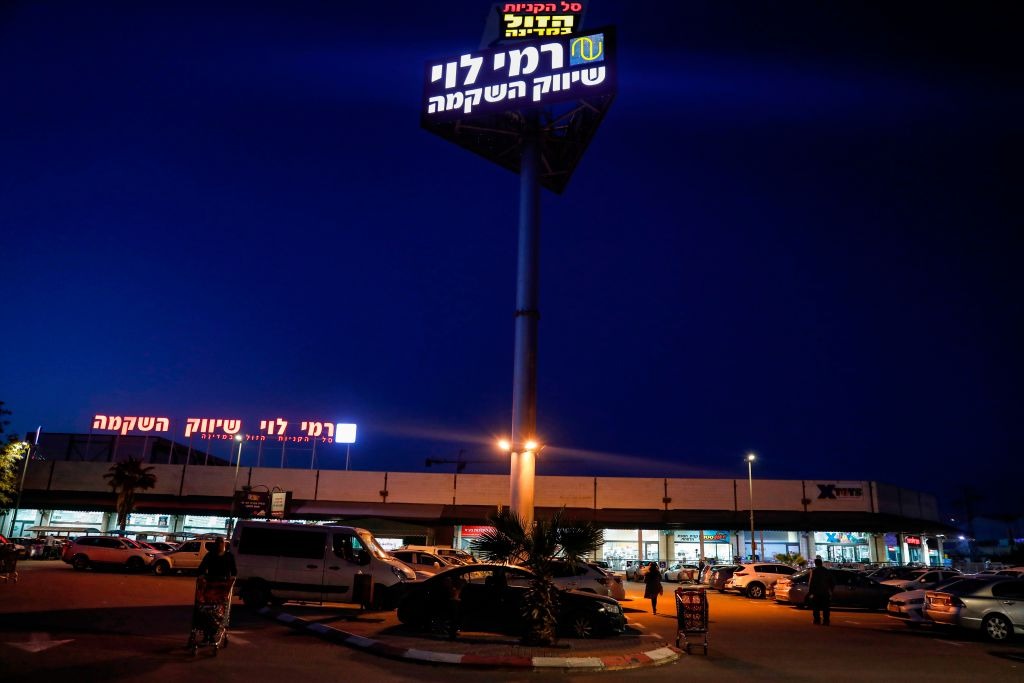
Take the Israeli supermarket chain Rami Levy. Its stores have long employed Palestinians and Israeli Arabs alongside Jewish Israelis. The company has described a policy of employing Palestinians and Israeli Arab workers and treating its workers equally. It is estimated that approximately half of the chain’s roughly 4,000 employees were Palestinians and Israeli Arabs.
“I believe in true coexistence,” said the owner, Rami Levy. “All our employees at our stores are hired without distinction on the basis of religion, race, or nationality, in an equal fashion.”
This successful acceptance and mutual respect is what the boycott campaign conveniently ignores.
While politicians in European capitals lecture Israelis and Palestinians about coexistence, Israelis and Palestinians are already practicing it in countless workplaces.
There are Jewish-owned factories, supermarkets, restaurants, wineries, and other businesses in the West Bank where Palestinians and Israelis work together. These workplaces may not constitute a political peace agreement, but they represent something that boycott campaigns destroy: normal human contact and economic cooperation.
Boycotts are not a substitute for peace negotiations. They are certainly not a substitute for Palestinian recognition of Israel.
Previous experience has apparently taught Western governments nothing,
When SodaStream moved its factory from Ma’aleh Adumim to southern Israel amid intense pressure from the Boycott, Divestment and Sanctions (BDS) movement, roughly 500 Palestinian workers lost their jobs.
Whatever one’s position on settlements, it is difficult to see how depriving Palestinians of jobs advances Palestinian prosperity or Israeli-Palestinian reconciliation.
The opposite is true.
Extremist Palestinians do not regard Israel as a country next to which to they want their own state, They regard all of Israel as one big settlement — to be permanently uprooted and replaced as soon as possible.
Boycotts encourage separation. They tell Israelis and Palestinians that cooperation is something shameful rather than something to be encouraged. They also serve the agenda of jihadists and extremists who oppose any normalization between Arabs and Jews.
These extremists are no different from the jihadists in Europe who rape, mow down, and behead the citizens of the very countries now demanding that Israel tolerate the same terrorists that they so naively accept.
Hamas, Palestinian Islamic Jihad and other Islamist terror organizations do not seek more Israeli-Palestinian economic cooperation. They seek confrontation, separation, and ultimately the elimination of infidels in the very countries now working to empower them.
Why would Western governments adopt policies that make it harder for Palestinians and Israelis to work together?
The statement from the 12 Western countries is even more disconnected from reality when it comes to the so-called two-state solution. For decades, Western governments have repeated the phrase as if saying it often enough will make it happen — or even make it a good idea.
October 7 should have changed the conversation. Hamas did not merely launch another round of fighting. It crossed an internationally recognized boundary from Gaza into Israel and carried out a massacre in which they murdered 1,200 Israelis and foreign nationals, kidnapped 251 as hostages, and subjected thousands to horrific acts of violence, torture and rape.
Hamas had independently governed the Gaza Strip since 2007, one year after Israel withdrew from Gaza, expelling thousands of Jewish residents, and leaving it to Palestinians to govern.
Hamas transformed Gaza into a heavily armed Islamist war machine with 350 miles of underground terror tunnels and command centers in hospitals.
The result was October 7, 2023.
Many Western governments nevertheless appear to think that the Palestinians should again be given territory in which a hostile jihadist organization with a genocidal charter could establish itself to build another war machine.
The question Western leaders should be asking is not: “How can we establish a Palestinian state?” The questions they should be asking are: What kind of Palestinian state would be established, who would control it, what would its security forces look like, what would its relationship with Hamas and Palestinian Islamic Jihad be, and what guarantees would prevent it from becoming another armed base for attacks against Israel?
These are questions written in blood on October 7.
A Palestinian state cannot be established without fundamental changes in the entire Palestinian political culture, which currently exists solely to glorify terrorism, violence and slaughtering Jews — and later Christians, by the way.
Any territory in which terrorist groups are not totally disarmed will simply be a launching pad from which to continue attacking Israel.
This goal is probably why countries that would like to see Israel eliminated — apart from those in Europe — such as Turkey, Qatar, Pakistan and Saudi Arabia, are eager to be part of a Board of Peace. They would be placed right on Israel’s border to wait a few months until President Donald Trump is gone.
Israel’s tiny, vulnerable size — it is smaller than Djibouti — makes the danger particularly serious. A Palestinian state in the mountainous West Bank would overlook Israel’s densely populated coastal plain and sit immediately adjacent to Jerusalem and Israel’s major population centers.
Western governments would not tolerate an Islamist terrorist organization establishing a heavily armed state or quasi-state entity on their own borders. Why should Israel?
Would the British accept an Islamist army operating immediately outside London? Would France accept a terrorist organization armed and financed by jihadist-run sovereign wealth funds establishing itself on the outskirts of Paris? Would Canada tolerate a hostile Iranian proxy controlling territory on its border? If they would, they should not.
Israelis, however, are repeatedly told that they must accommodate this risk.
If Western governments genuinely want to help the Palestinians, they should stop treating a Palestinian state as the ultimate objective and start talking about the importance of freedom of speech and of the press, separation of mosque and state, a serious education system that could prepare youths for lucrative jobs, businesses that could see growth, a judiciary that delivers equal justice under the law, and a government that is actually accountable to the public and responsive to the productive lives of its citizens — not a regime promoting murder, martyrdom and death.
Conditions should also include the Palestinian recognition of Israel’s right to exist, the abandonment of terrorism and jihadist ideology, the dismantling and disarming of all terrorist organizations, an end to incitement against Israel and Jews in schools and mosques, serious reform of the Palestinian Authority education system, transparent and accountable government, and an end to corruption and the misuse of international aid.
Above all, Palestinian leaders must demonstrate that they want to build a society rather than destroy another one.
Palestinians should not be encouraged to believe that terrorism is a shortcut to statehood. Otherwise, the message of October 7 becomes dangerously clear, for the West as well: murder Jews, Christians and other infidels, kidnap them, rape them, and massacre them — and eventually the international community will reward them with a state.
egretnewseditor@gmail.com


