

Western governments and donors will undoubtedly welcome the announcement [of presidential elections] as a sign that Abbas is finally responding to long-standing demands for reform. They should not. Holding elections for the sake of holding elections is not reform. Elections alone do not create democracy, end corruption, or establish accountability.
Elections by themselves, as Natan Sharansky and Ron Dermer emphasize in A Case for Democracy, do not signify a democracy. There first need to be functioning institutions of democracy — freedom of speech, freedom of the press, separation of religion and state, freedom from religion, an independent judiciary, separation of powers, equal justice under the law, due process, and so on — and then, at the end of these processes that actually embody democracy, after they are up and running, an election can be held that represents a democracy. Otherwise, as can be seen in Russia, Iran and other dictatorships, elections are not signs of reform, at all but just choreographed burlesques.
The Palestinians desperately need transparent institutions, an independent judiciary, a free press, functioning checks and balances, and leaders who answer to the public rather than rule indefinitely by presidential decree.
None of that exists under the Palestinian Authority in the West Bank or Hamas in the Gaza Strip.
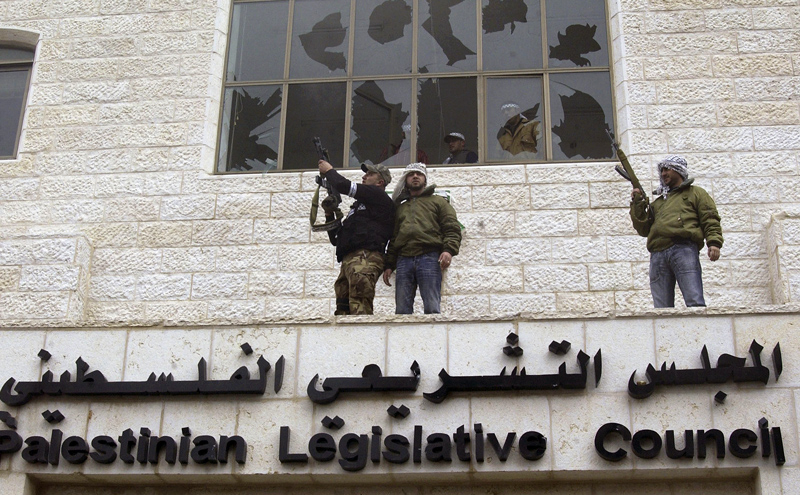
The Palestinian parliament, known as the Palestinian Legislative Council (PLC), has been effectively defunct since Hamas violently seized control of the Gaza Strip in 2007, and Abbas formally dissolved it in 2018.
“[T]he clearest evidence of the slide to authoritarianism has been the decision taken by the party that lost the 2006 elections, Fatah, to dissolve the PLC in 2018. The inevitable outcome of the suspension of the PLC meetings has been the transfer of its legislative and oversight functions to the executive authority represented by the president.
Since 2007, President Abbas issued more laws by decree than those ever issued by the PLC during its entire life since the first election in 1996. Most of these laws were not urgent, as required by the Basic Law, and many of them violated the terms of that law. In the absence of a parliament, the president gave himself the power to rule by decree without accountability or oversight.” — Palestinian Center for Policy and Survey Research (PCPSR), January 2021.
The latest poll conducted by the PCPSR found that 80% of Palestinians want [PA President Mahmoud Abbas] to leave office.
If Abbas and the Fatah leadership determine which candidates may participate, the outcome will be largely predetermined before the first ballot is cast.
Fatah remains firmly under the control of the same leadership, the same political culture, and the same patronage networks. Some names changed, but the system remained unchanged. Same old politics, decorated with a few new faces, including Abbas’s son, Yasser.
For ordinary Palestinians, the choice remains essentially between Fatah and Hamas. There is no viable third force capable of competing nationally, and both movements have spent years suppressing independent political voices.
Public opinion surveys over the past two years have repeatedly shown that Hamas… enjoys greater support than Mahmoud Abbas’s Fatah faction.
Under these circumstances, new elections could once again hand victory to Hamas. Such an outcome would strengthen an Iran-backed terrorist group that openly seeks Israel’s destruction, rejects peace, and continues to advocate armed jihad (holy war).
Democracy cannot exist when the ruling faction controls the rules, the institutions, and the political playing field.
Power is concentrated in a small inner circle. There is no functioning parliament. There is no meaningful separation of powers. There is little room for genuine public debate. Journalists operate under constant pressure and fear. Political appointments often depend more on personal loyalty than merit.
The question is not whether Palestinians should vote. The question is whether the conditions for free and meaningful elections exist. As long as Hamas remains an armed terrorist group with substantial public support, and as long as Fatah continues to monopolize Palestinian political life, elections are more likely to reproduce the current crisis than resolve it.
Palestinians need institutional reform. They need independent courts. They need financial transparency. They need anti-corruption mechanisms. They need genuine freedom of expression. They need political pluralism. They need peaceful transfers of power.
Only after these foundations are established can elections produce meaningful change. Otherwise, elections merely provide democratic decoration for an undemocratic system.
Western governments should therefore resist the temptation to celebrate Abbas’s latest decree as evidence of reform and democratic progress. His decree should be viewed for what it most likely is: another political maneuver designed to preserve international legitimacy and secure continued Western financial support, rather than a sincere effort to bring democracy to the Palestinian people.
Palestinian Authority President Mahmoud Abbas has once again announced legislative and presidential elections, presenting the move as evidence of democratic renewal. According to a presidential decree issued on July 9, legislative elections are scheduled for November 28, 2026, while presidential elections are to follow during the first quarter of 2027. The decree calls on Palestinians in the West Bank, Gaza Strip and Jerusalem to participate in “free and direct” elections aimed at strengthening democracy.
Western governments and donors will undoubtedly welcome the announcement as a sign that Abbas is finally responding to long-standing demands for reform. They should not.
Holding elections for the sake of holding elections is not reform. Elections alone do not create democracy, end corruption, or establish accountability.
Elections by themselves, as Natan Sharansky and Ron Dermer emphasize in The Case for Democracy, do not signify a democracy. There first need to be functioning institutions of democracy — freedom of speech, freedom of the press, separation of religion and state, freedom from religion, an independent judiciary, separation of powers, equal justice under the law, due process, and so on — and then, at the end of these processes that actually embody democracy, after they are up and running, an election can be held that represents a democracy. Otherwise, as seen in Russia, Venezuela, Iran and other dictatorships, elections are not signs of reform at all, but just choreographed burlesques.
The Palestinians desperately need transparent institutions, an independent judiciary, a free press, functioning checks and balances, and leaders who answer to the public rather than rule indefinitely by presidential decree.
None of that exists under the Palestinian Authority (PA) in the West Bank or under Hamas in the Gaza Strip.
Abbas, now 91, is serving the twenty-first year of what was supposed to be a four-year presidential term, after being elected in January 2005. The Palestinian parliament, known as the Palestinian Legislative Council (PLC), has been effectively defunct since Hamas violently seized control of the Gaza Strip in 2007, and Abbas formally dissolved it in 2018.
Since then, Abbas has governed without a functioning parliament, without meaningful oversight, and without genuine public accountability.
According to the Palestinian Center for Policy and Survey Research (PCPSR):
“The suspension of the activities of the Palestinian Legislative Council (PLC) in the West Bank in 2007, in the immediate aftermath of the Hamas violent takeover of the Gaza Strip, has been one of the most damaging governance measures taken by the PA since its creation. “But the clearest evidence of the slide to authoritarianism has been the decision taken by the party that lost the 2006 elections, Fatah, to dissolve the PLC in 2018. The inevitable outcome of the suspension of the PLC meetings has been the transfer of its legislative and oversight functions to the executive authority represented by the president.
Since 2007, President Abbas issued more laws by decree than those ever issued by the PLC during its entire life since the first election in 1996. Most of these laws were not urgent, as required by the Basic Law, and many of them violated the terms of that law. In the absence of a parliament, the president gave himself the power to rule by decree without accountability or oversight.
Without a parliament able to defend its members, the president gave himself the power to annul the immunity of the PLC members, to suspend the payment of their salaries, to send them to court, and to close their offices ending eventually in his decision in December 2018 to dissolve the entire PLC utilizing for that mission the services of a body he created for that purpose, the constitutional court.”
This is not democracy.
The latest election announcement also deserves skepticism because it is not the first time Abbas has made such promises. In 2021, he announced legislative and presidential elections, only to cancel them at the last minute, blaming Israel’s refusal to allow voting in Jerusalem.
This explanation was always unconvincing. According to the Palestinian Central Elections Commission back then, 150,000 eligible voters from east Jerusalem suburbs “can vote in the upcoming elections without Israeli obstructions since they do not require Israeli approval.” Abbas used the Jerusalem issue as an excuse to call off the elections because he was afraid that his Fatah faction and loyalists would not win.
The reality is that Abbas has never been eager to test his popularity at the ballot box.
If Abbas truly enjoyed broad public support, he would have little reason to fear elections. The reality is that for years, Palestinian public opinion surveys have consistently shown that most Palestinians want him to resign. The latest poll conducted by the PCPSR found that 80% of Palestinians want him to leave office.
Such findings explain why many Palestinians view Abbas’s latest election announcement with deep skepticism.
Even if elections are eventually held, another fundamental question remains unanswered: who will be allowed to run?
If Abbas and the Fatah leadership decide which candidates may participate, the outcome will be largely predetermined before the first ballot is cast.
Recent internal Fatah elections offer little reason for optimism. Elections for Fatah’s Central Committee and Revolutionary Council introduced several younger faces, yet they produced no meaningful political transformation. Fatah remains firmly under the control of the same leadership, the same political culture, and the same patronage networks. Some names changed, but the system remained unchanged. Same old politics, decorated with a few new faces, including Abbas’s son, Yasser.
The broader Palestinian political landscape is equally bleak.
For ordinary Palestinians, the choice remains essentially between Fatah and Hamas. There is no viable third force capable of competing nationally, and both movements have spent years suppressing independent political voices.
This is perhaps the greatest tragedy of Palestinian politics.
For decades, both Fatah and Hamas have systematically prevented the emergence of alternative leadership. Independent candidates, reformists, liberals, and pragmatic figures have found little political space to organize or compete. Both factions have monopolized Palestinian political life while accusing each other of authoritarianism, even as each exercises authoritarian control over the territories it governs.
The result is a political monopoly that has suffocated Palestinian society.
Both Fatah and Hamas bear responsibility for widespread human rights abuses, political repression, arbitrary arrests of opponents, media intimidation, and corruption. Both have repeatedly placed factional interests above the welfare of their own people.
Instead of building democratic institutions, they have built systems designed to preserve their own power.
Many Westerners continue to believe that elections automatically produce moderation and legitimacy. The Palestinian, Russian, Venezuelan and Iranian experiences demonstrate otherwise.
The 2006 parliamentary election brought Hamas to power through the ballot box. Instead of strengthening democracy, the outcome triggered violent conflict between Hamas and Fatah, culminating in Hamas’s bloody takeover of the Gaza Strip a year later. Since then, Palestinians have lived under two rival authoritarian administrations.
There is another compelling reason why rushing into Palestinian elections would be a grave mistake. Hamas, after nearly three years of a devastating war in the Gaza Strip and the immense suffering it has brought upon the Palestinians, continues to enjoy significant support among many Palestinians, especially in the West Bank.
Public opinion surveys over the past two years have repeatedly shown that Hamas remains one of the most popular political forces in Palestinian society and, in many cases, enjoys greater support than Abbas’s Fatah faction.
Under these circumstances, new elections could once again hand victory to Hamas. Such a result would strengthen an Iran-backed terrorist group that openly seeks Israel’s destruction, rejects peace, and continues to advocate armed jihad (holy war).
Repeating the same experiment while expecting different results would be idiotic. Allowing an armed organization to compete in elections without first requiring it to disarm and renounce violence would repeat one of the gravest mistakes made in 2006.
Equally dangerous would be allowing Fatah to manipulate the electoral process by deciding who may or may not compete.
Democracy cannot exist when the ruling faction controls the rules, the institutions, and the political playing field.
The deeper problem is that the Palestinian Authority continues to function less like a democratic government than a centralized political machine dominated by Abbas and his closest loyalists.
Power is concentrated in a small inner circle. There is no functioning parliament. There is no meaningful separation of powers. There is little room for genuine public debate. Journalists operate under constant pressure and fear. Political appointments often depend more on personal loyalty than merit.
The Palestinian political system has become increasingly personalized, with major decisions resting almost exclusively in the hands of Abbas and a narrow leadership elite.
This is precisely why many Palestinians no longer believe elections alone can solve their political crisis. The question is not whether Palestinians should vote. The question is whether the conditions for free and meaningful elections exist. As long as Hamas remains an armed terrorist group with substantial public support, and as long as Fatah continues to monopolize Palestinian political life, elections are more likely to reproduce the current crisis than resolve it.
Palestinians need institutional reform. They need independent courts. They need financial transparency. They need anti-corruption mechanisms. They need genuine freedom of expression. They need political pluralism. They need peaceful transfers of power.
Only after these foundations are established can elections produce meaningful change. Otherwise, elections merely provide democratic decoration for an undemocratic system.
It is also difficult to ignore the timing of Abbas’s latest announcement. The PA has faced growing international pressure to demonstrate reform as Western governments continue financing it and discussing a larger role for it in governing post-war Gaza. Announcing elections helps project an image of modernization and democratic renewal precisely when international donors are demanding evidence of political change.
Yet appearances should not be confused with reality.
If Abbas genuinely believed in democracy, he could have stepped aside years ago and allowed a new generation of Palestinian leaders to emerge. Instead, he has remained in office for more than two decades while repeatedly postponing elections and concentrating power in his own hands.
Western governments should therefore resist the temptation to celebrate Abbas’s latest decree as evidence of reform and democratic progress. His decree should be viewed for what it most likely is: another political maneuver designed to preserve international legitimacy and secure continued Western financial support, rather than a sincere effort to bring democracy to the Palestinian people.
egretnewseditor@gmail.com


