Taking into account the devastation [the Middle East] war has caused, not only in Iran but also in Israel and the GCC countries, not to mention its global impact, talk of devising a new plan to bring peace and stability to the region sounds like adding insult to injury. Great powers have been talking of a plan for the Middle East since 1919.
NATO nations face three major problems, none of which is on the agenda in Ankara.
The first is that most members are experiencing what amounts to a cultural civil war accompanied with a general de-sacralization of political authority.
The second problem is that NATO’s war machine, including all those giant aircraft carriers and heavy bombers, was meant for classical wars that may have become part of history.
The third problem is that the new form of war favors inexpensive materiel, such as drones, theater missiles and rockets, while the military industry in NATO nations is geared to producing costly warplanes, cruise missiles and, of course, aircraft carriers and their equally costly bridesmaids.
In Ankara, the key word will be “cheese” as TV cameras record yet another photo-op.
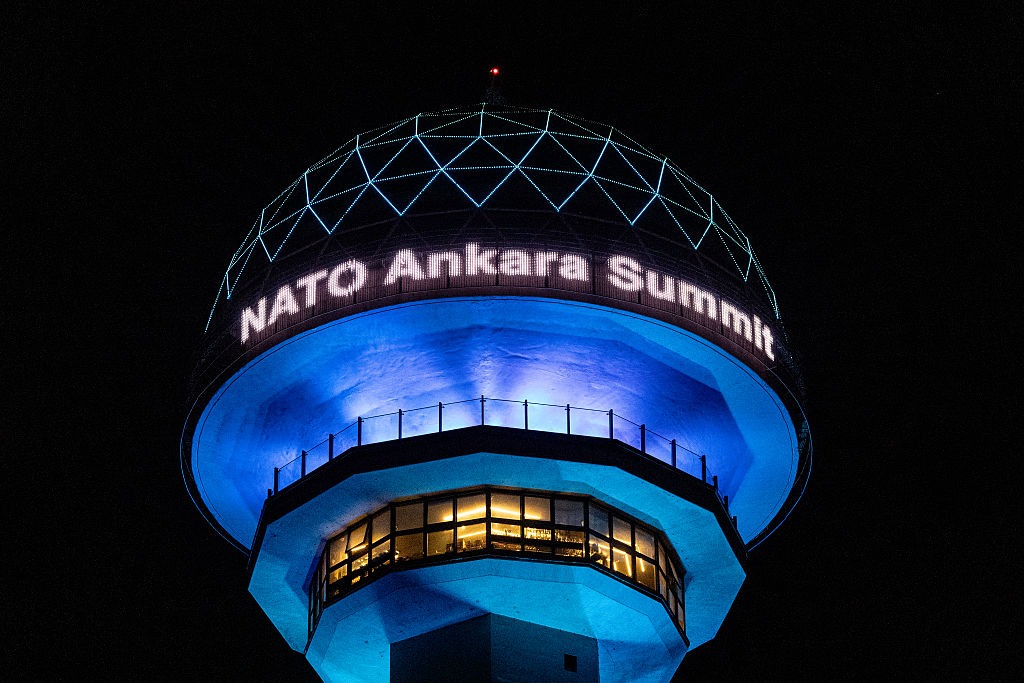
Having led ceremonies marking the 250th anniversary of the United States’ independence on July 4, President Donald Trump will be heading to Ankara, Turkey, for the 36th summit of the North Atlantic Treaty Organization (NATO), which some fear could be the stormiest the 75-year-old beast has seen.
Signs are that Trump is still unhappy with the alliance, which he thinks has been ripping the US off for decades. Nevertheless, Secretary-General Mark Rutte is making the rounds in TV studios, assuring everyone that the US president will come to Ankara in a calmer mood.
“This summit will be about delivering on promises made,” Rutte says. By this he means promises by almost all members to increase defense spending to between 4 and 5 percent of their GDP, something that Trump demanded as soon as he entered the White House.
But what does delivering à la Rutte mean? In fact, it means fixing a putative date for reaching the desired percentage. In the case of Germany, NATO’s richest European member, it will be 2029, while Canada is looking even further down the line. As far as France is concerned, a question hangs over the promise if only because no one knows who will be in the Elysée Palace next year while at least one main contender, the hard-left leader Jean-Luc Mélenchon, talks of leaving the alliance and discarding France’s nuclear deterrence. Another leading contender, the hard-right National Rally leader Marine Le Pen, has always maintained some ambiguity on the subject by quoting Charles De Gaulle about an independent defense policy.
It seems that only Poland and Italy remain fully committed to promises made, while political turmoil puts a question mark in front of Great Britain’s promises.
Even then, NATO’s problems are not caused by a shortage of money. The alliance’s military expenditure is still higher than the international average.
And as far as one can work out, no case has been made to show that larger expenditure alone will save this old and tired relic of the Cold War.
By any measure, Rutte is the best secretary-general NATO could have at this juncture. He has been crafty enough to develop what diplomats call the “Rutte method” in handling Trump. Short of hanging a Trump logo over NATO’s headquarters in Brussels, he has done everything to persuade the MAGA leader to moderate his tongue-lashing of NATO allies, travel to Turkey, and remain in the game for two days.
Thus, the Ankara summit is likely to be a success, as was the G7 in Evian, France, where Trump stayed and listened, albeit with thinly disguised boredom, for two days. But when we say success, we mean success as a series of photo-ops; the G7 produced nothing to cheer about because it wasn’t designed to do so.
The same may happen in Ankara.
Three items top the agenda in Ankara: Ukraine, military production and the Middle East.
On Ukraine, the alliance is unlikely, because unwilling, to do more than it is doing now. This is a war that could continue for another decade or at least until the end of Vladimir Putin’s career. Russia cannot win because it lacks the economic, demographic and political wherewithal. Putin’s claim that he is fighting “Nazis” doesn’t make him a Stalin. Nor does that make his oligarchic federation a new version of the USSR ready to sacrifice 20 million men.
If fully backed by NATO, Ukraine could win. But what would that win mean? A shattered country would regain control of some more scorched earth.
On military production, NATO members are already divided, with Germany, France, Britain, Italy and Canada trying to get the lion’s share for their own industries. Even Poland, the Baltic republics, Sweden and Finland are seeking their separate niches if and when there is a golden shower.
Including the Middle East on the agenda may be nothing more than an attempt to paste over the cracks caused by the current war against Iran when the US failed to secure even moral support from its NATO allies.
Taking into account the devastation this war has caused, not only in Iran but also in Israel and the GCC countries, not to mention its global impact, talk of devising a new plan to bring peace and stability to the region sounds like adding insult to injury. Great powers have been talking of a plan for the Middle East since 1919.
Right now, Turkey, the host of the summit, is musing about the end of the post-World War I treaties of Lausanne and Montreux to regain at least a droit-de-regard in parts of Iraq, Syria and what was once Palestine.
NATO nations face three major problems, none of which is on the agenda in Ankara.
The first is that most members are experiencing what amounts to a cultural civil war accompanied with a general de-sacralization of political authority.
Bipartisanship on defense and foreign policies has broken down, as most governments don’t even talk with their opposition. In Turkey, the government is even trying to appoint the leader of the main opposition party. In Britain, Nigel Farage, leader of the ultra-right party, regards the current Labour government as a passing nightmare.
A divided society cannot win a war even when it enjoys overwhelming superiority in terms of men and materiel. The current war against Iran is just one example of how the absence of national unity in the US, not to mention disunity in NATO, forced Trump to scale back his early ambitions.
The second problem is that NATO’s war machine, including all those giant aircraft carriers and heavy bombers, was meant for classical wars that may have become part of history.
Asymmetric war allows a much weaker adversary with a cottage-industry version of hardware to hang on as long as possible and raise the cost for the stronger side.
In the current conflict with Iran, the US deployed a third of its aircraft carrier fleet, but to avoid a “big disaster” caused by mosquito speedboats, seldom used them.
The third problem is that the new form of war favors inexpensive materiel, such as drones, theater missiles and rockets, while the military industry in NATO nations is geared to producing costly warplanes, cruise missiles and, of course, aircraft carriers and their equally costly bridesmaids.
In Ankara, the key word will be “cheese” as TV cameras record yet another photo-
egretnewseditor@gmail.com