[Iran] continues to execute opponents, confiscate the assets of critics, organize mass arrests across the nation, and funnel funds to proxies in the region. The only change that has happened is that in the past few days it has raised a claim to the exclusive ownership of the Strait of Hormuz. The Majlis of which Ghalibaf is speaker has passed at least three laws forbidding any negotiations with the American “Great Satan”.
The Majlis also put a $50 million price on the US president’s head.
What we have so far is a 60-day extension of a shaky ceasefire with a list of desiderata to haggle over.
Will the projected 60-days of talks produce anything resembling peace and stability in the region as many pray for? The outright answer I could give is a firm no.
Gorbachev and Deng could achieve a change of course because the USSR and the People’s Republic of China had a deeply-rooted party structure plus highly centralized armed forces.
Neither of those two conditions exists in the Islamic Republic of Iran, which is a hodgepodge of political, economic and military baronies pulling in different directions while regarding the maintenance of the status quo as essential for their survival. Imagine a kaleidoscope that if turned this way or that produces different visuals and colors but remains fundamentally the same.
The tactic Tehran will use is clear: drag out the talks until we see the back of Trump and Netanyahu, as we did with six other US presidents and as many Israeli premiers.
If it actually happens, the 60-day stint may establish a roadmap pointing to several desired goals. The next phase would be labeled “confidence building easers” followed by a third named “modalities of implementation” — in other words, a roadmap to lead Steve Witkoff and Jared Kushner up the garden path.
By the time you are reading this column US President Donald J Trump and his Iranian counterpart Masoud Pezeshkian have electronically initialed from a distance of 6,000 kilometers a memorandum of understanding (MOU) to halt the latest episode of a war that started between the two nations 47 years ago.
Trump has already upgraded the MOU, the text of which wasn’t revealed, by claiming that it will bring peace to the whole region.
He has also talked of a $300 billion reconstruction fund to revive Iran’s decaying economy and, in the process, line the pockets of mullahs and jackboots still in power in Tehran seen by him in a glowing light.
Receiving UAE President Sheikh Mohammed bin Zayed Al Nahyan at the G7 summit in Evian, France, Trump had this to say about what is left of the leadership in Tehran:
“The current Iranian leadership are very rational people. They are nice to deal with; they are strong and smart people. They are not radicalized, and they are looking to help their country.”
Always anxious to stick the Trump logo on everything he touches he also said: “I hereby authorize the toll-free opening of Strait of Hormuz” — as if it was he who had it closed in the first place.
Worldwide reaction to the “deal” has been affected by the pathological Trumpophobia that has afflicted politicians and pundits longing to see their bête-noire humiliated.
“Trump caved in!” and “The mullahs won!” are some of the clichés bandied around.
However, a closer look at what is happening may reveal a different picture. To start with it was, perhaps, the “current Iranian leadership” that caved in.
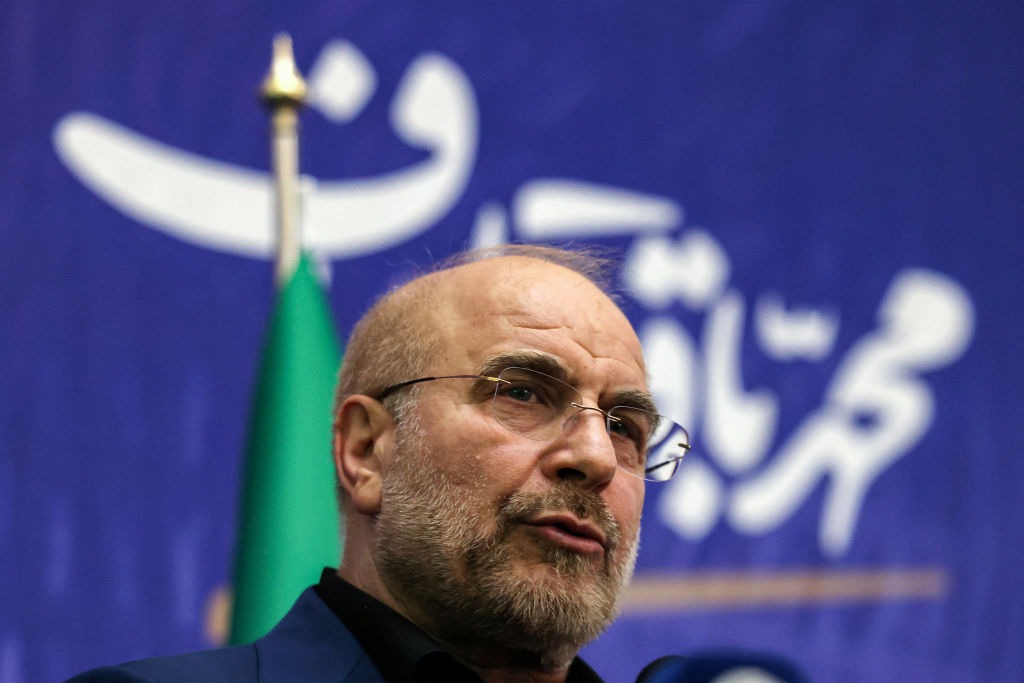
The pretense that there is a new leadership in Tehran is misleading because the men that Trump praises are the same as before the war started. Brigadier General Mohammad Bagher Ghalibaf is speaker of the Majlis and Masoud Pezeshkian is the president. Abbas Araghchi is foreign minister and remains with all his staff unchanged.
Only three members of the High Council of National Security have changed. The military chiefs killed by Israel and US in “targeted assassinations” have been replaced by their understudies.
The new “Supreme Guide” Mojtaba Khamenei, whose existence remains a matter of debate, is the favorite son of the previous one, Ali Khamenei.
The regime’s overall policies haven’t changed either. It continues to execute opponents, confiscate the assets of critics, organize mass arrests across the nation, and funnel funds to proxies in the region.
The only change that has happened is that in the past few days it has raised a claim to the exclusive ownership of the Strait of Hormuz.
This is how Deputy Foreign Minister Abdul-Majid Takht-e-Ravanchi, put it last Tuesday: “The Strait of Hormuz shall remain under Islamic Republic’s exclusive sovereignty forever!” This makes nonsense of recent talks about joint-sovereignty with the Sultanate of Oman.
But how did the “current leadership” cave in?
The Majlis of which Ghalibaf is speaker has passed at least three laws forbidding any negotiations with the American “Great Satan”. An older law passed by the same Majlis demands that Trump and several officials in his first administration be put on trial for “targeted assassination” of IRGC General Qassem Soleimani.
The Majlis also put a $50 million price on the US president’s head.
To see the “current leadership” not only negotiate but even agree on anything with the regime’s designated “enemy number one” isn’t a sign of Trump caving in.
And since it was never clear what Trump really wanted when he started bombing Iran, it is hard to declare him either victor or vanquished. Moreover, despite Trump trumpeting about “peace” what is on offer isn’t a peace treaty; nor even a truce to put a sine die (date undetermined) end to fighting. During the Evian G7 summit the president kept saying he would resume bombing if Iran didn’t do what it was supposed to do.
What we have so far is a 60-day extension of a shaky ceasefire with a list of desiderata to haggle over.
Nevertheless, the rigmarole concocted by Trump is welcome. It allows the US to extricate itself from a risky adventure with no clear goal. It also halts further damage to Iran’s economy, infrastructure and cultural heritage, not to mention human, mostly civilian, losses.
Will the projected 60-days of talks produce anything resembling peace and stability in the region as many pray for? The outright answer I could give is a firm no. The Khomeinist regime is an anachronistic oddity in a region trying to distance itself from ideological shenanigans and strive after economic and social development.
Of course, some may hope that what Trump sees as a “new leadership” in Tehran will produce either a Mikhail Gorbachev or a Deng Xiaoping to guide Iran into a different path.
Right now, however, I see that as a vain hope. Gorbachev and Deng could achieve a change of course because the USSR and the People’s Republic of China had a deeply-rooted party structure plus highly centralized armed forces.
Neither of those two conditions exists in the Islamic Republic of Iran, which is a hodgepodge of political, economic and military baronies pulling in different directions while regarding the maintenance of the status quo as essential for their survival. Imagine a kaleidoscope that if turned this way or that produces different visuals and colors but remains fundamentally the same.
The Khomeinist regime has figures that sound like Swedish social democrats when talking to CNN but remain at heart as committed to “inventing the new humanity” as Pol Pot was in his day. You also have figures who regard killing Americans as a meritorious religious act but send their children to the United States for education.
The tactic Tehran will use is clear: drag out the talks until we see the back of Trump and Netanyahu, as we did with six other US presidents and as many Israeli premiers.
If it actually happens, the 60-day stint may establish a roadmap pointing to several desired goals. The next phase would be labeled “confidence building easers” followed by a third named “modalities of implementation” — in other words, a roadmap to lead Steve Witkoff and Jared Kushner up the garden path.
No, so far at least Trump hasn’t caved in.
He has simply been business savvy enough to smell a stinking deal and given himself time to think why and how he was dragged into it and what to do next, which could include the option of letting them stew in their juice.
egretnewseditor@gmail.com