In 2009, the October surprise worked in the opposite direction. A coalition of pro-American Islamic politicians and clerics fomented a popular uprising in Tehran in the hope that incoming Democrat President Barack Obama would offer a helping hand, as Carter had done in February 1979 against the Shah.
To their disappointment, Obama expressed no sympathy for the protesters, who were savagely crushed by the regime. In fact, with a nod and a wink, he indicated sympathy with the mullahs…
The mullahs continued to seize American hostages across the region and organized the Hezbollah terrorist attack on a US Marines barracks in Lebanon that killed 241 Marines, the single biggest American military loss since World War II.
Would Trump be gullible enough to trust a turbaned Pinocchio, who sold a bill of goods to seven US presidents over almost half a century?
The key reason for US failures in Iran is the assumption that one is dealing with a normal nation-state rather than a vehicle for an ideology. As a result, the US and others dealing with Iran have fallen into the trap of half measures: half-serious diplomacy, half-imposed sanctions and now half-forceful war on a big scale.
They threatened “maximum pressure” but stopped before bones started to creak. They boasted about regime change but signed with an unchanged regime.
“October surprise” is a shibboleth that denotes a foreign intervention affecting the result of an American election that is always held in November.
It was popularized by Gary Sick, a CIA analyst who served as an adviser on Iranian affairs in the Carter administration in the late 1970s, and who penned a 1991 book on his theory that Carter lost the presidential election in November 1980 after the regime in Tehran delayed the release of American diplomats held captive because of a secret deal with the Republican Party, in exchange for promises made by Ronald Reagan’s election team.
No one has produced evidence that such a secret deal existed.
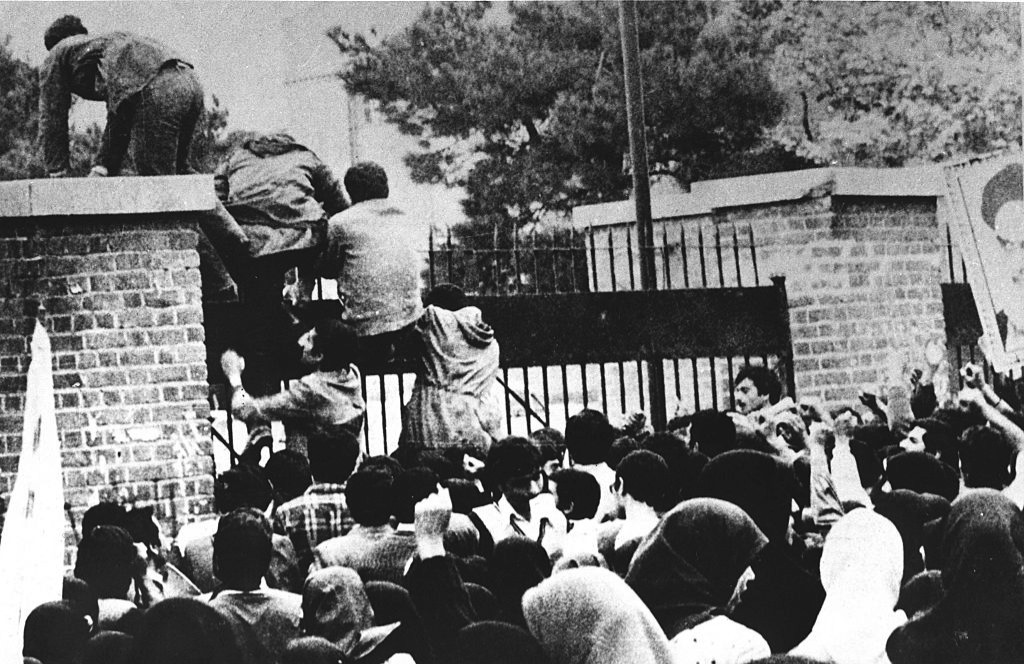
But the fact is that hostages were not released until the day President Reagan started his term of office. The delay was suspicious because President Carter had negotiated the release of hostages with Iranian mullahs by acceding to all their demands, notably a promise never to prosecute hostage-takers or their puppeteers.
My guess is that Ayatollah Ruhollah Khomeini delayed the release he had signed on as a vengeful Parthian shot at the hapless Carter rather than as part of a secret deal with the Reagan camp.
Nevertheless, the phrase has outlasted Sick, Carter, Reagan and Khomeini, and has been recirculated half a dozen times.
In 2009, the October surprise worked in the opposite direction. A coalition of pro-American Islamic politicians and clerics fomented a popular uprising in Tehran in the hope that incoming Democrat President Barack Obama would offer a helping hand, as Carter had done in February 1979 against the Shah.
To their disappointment, Obama expressed no sympathy for the protesters, who were savagely crushed by the regime. In fact, with a nod and a wink, he indicated sympathy with the mullahs, whom he saw as champions of nations hurt by the American big bad wolf.
In the past week or so, the cliché has been bandied around with reference to the coming midterm US elections.
One theory is that the truncated Khomeinist clique in Tehran might pull a rabbit out of their turbans to make sure President Donald Trump gets a thrashing at the polls. That surprise could take the form of a new round of attacks on Iran’s neighbors to push oil prices even higher.
An opposite theory is that the clique may decide to sing from the hymn sheet written by Trump to placate him with another fictitious “great victory” like the one he chalked up over Greenland.
In his address to the UN General Assembly, Trump once again threatened to annihilate Iran, but later claimed that that US officials had a “very good” three-hour meeting with Iranian leaders and that another one was scheduled in the “very near future”.
Another theory, advocated by military historian Victor Davis Hanson, is that Trump may decide to do something bigger than he has already done to Iran to force its rulers into unconditional surrender, thus ensuring a Republican victory on November 3.
In a more optimistic scenario, Hanson says the October surprise might come in the form of a nationwide uprising in Iran to install a new governing team keen on making peace with the US.
Another “surprise” talked about by Hanson is an invasion of Iran’s western provinces by armed Kurdish insurgents based in Iraq. Such an event could shake the Iranian military and expose its inability to protect the national territory. And that could be the opening shot in a popular revolt.
The problem with all October surprise theories is that they stop at the point that an election has ended without bothering about what happens next. The original October surprise may have helped Reagan win the presidency. But what good did that do for Iran?
What followed was 12 years of hostility by two Republican presidents, Reagan and George H. W. Bush that included the first military clash between Iran and the US in April 1988 and the sinking of half of Iran’s navy and over $1.3 billion in damage done to Iranian offshore oil and gas installations. Three months later, the US shot down an Iranian passenger plane, causing the death of 290 people.
The Americans didn’t reap any benefits either.
The mullahs continued to seize American hostages across the region and organized the Hezbollah terrorist attack on a US Marines barracks in Lebanon that killed 241 Marines, the single biggest American military loss since World War II.
Let’s return to the present.
Suppose the mullahs do something to make Republicans lose the midterm elections. In that case, what incentive would Trump have to seek a settlement and enter history as an appeaser? And who could make sure the victorious Democrats would revive Obama’s pro-mullah strategy? Also how could anyone be sure Democrats get veto-proof majorities in Congress to chain a wounded Trump?
At the other end of the spectrum, suppose Tehran does a pirouette to please Trump and help him. Would Trump be gullible enough to trust a turbaned Pinocchio, who sold a bill of goods to seven US presidents over almost half a century?
The best October surprise would be for the US to acknowledge that a confusing and costly strategy is unlikely to work. Iran under the current regime indeed cannot stop acting as a source of instability and an exporter of ideology and terror.
The key reason for US failures in Iran is the assumption that one is dealing with a normal nation-state rather than a vehicle for an ideology. As a result, the US and others dealing with Iran have fallen into the trap of half measures: half-serious diplomacy, half-imposed sanctions and now half-forceful war on a big scale.
They promised to lift sanctions but never really did so. They promised to build confidence through diplomacy but stopped halfway. They threatened “maximum pressure” but stopped before bones started to creak. They boasted about regime change but signed with an unchanged regime.
On Tehran’s side, we have heard boasts about imposing a new world order in alliance with China and Russia and establishing Iran as an “Islamist superpower.” All the while, however, rival factions have pursued the dream of making a sweetheart deal with the “Great Satan” by hook or crook — mostly the latter.
The only October surprise may turn out to be no surprise.
egretnewseditor@gmail.com