Azaiza revealed details about how journalists operated under Hamas rule. He described an environment in which journalists were pressured to suppress criticism of Hamas and, in some cases, to stop filming when Palestinians expressed anger toward the terrorist group.
These are not allegations coming from an Israeli government official or a pro-Israel advocacy organization. They are admissions by a Palestinian journalist who became internationally famous for documenting the war.
When Palestinians blamed Israel, the cameras kept rolling. When Palestinians blamed Hamas, the cameras were turned off.
He acknowledged that stepping outside this framework exposes journalists to intense backlash, including organized online campaigns, accusations of treason, and physical intimidation inside Gaza.
He openly acknowledged that initially he struggled with whether to publish material showing Palestinians criticizing Hamas. He said he had never seen a Gaza journalist publish such material. He also disclosed that he grew up supporting Hamas and that Hamas’s ideology and the culture of “resistance” were part of his childhood environment.
This is a remarkable admission. It helps explain why the outside world has heard relatively little from Gaza about Hamas’s responsibility for the suffering of Palestinians under its rule. It also raises an obvious question: How much of the story coming out of Gaza has been shaped not only by what journalists saw but also by what they believed they were permitted to show?
Azaiza’s account should therefore prompt media organizations that used his work – and the work of other Gaza-based journalists as well as journalists covering other terrorist entities and their sponsors – to examine their own reporting practices. Who supplied the information? Who was present when it was gathered? What material was not published? Were journalists pressured? Were interviews conducted freely? Were Palestinians allowed to criticize Hamas on camera? Most importantly, did international media organizations independently verify claims coming from a territory controlled by a terrorist organization?
Azaiza’s interview is ultimately a warning about the dangers of accepting any side’s narrative without scrutiny…. It should be a wake-up call.
The question is no longer simply what the cameras show. It is also what they do not show.
For more than two decades, the international community has been hearing that Palestinian journalists in the Gaza Strip are providing the world with an unfiltered account of what is happening there.
A recent interview with Palestinian journalist and photographer Motaz Azaiza should make anyone who has accepted that claim without question think again.
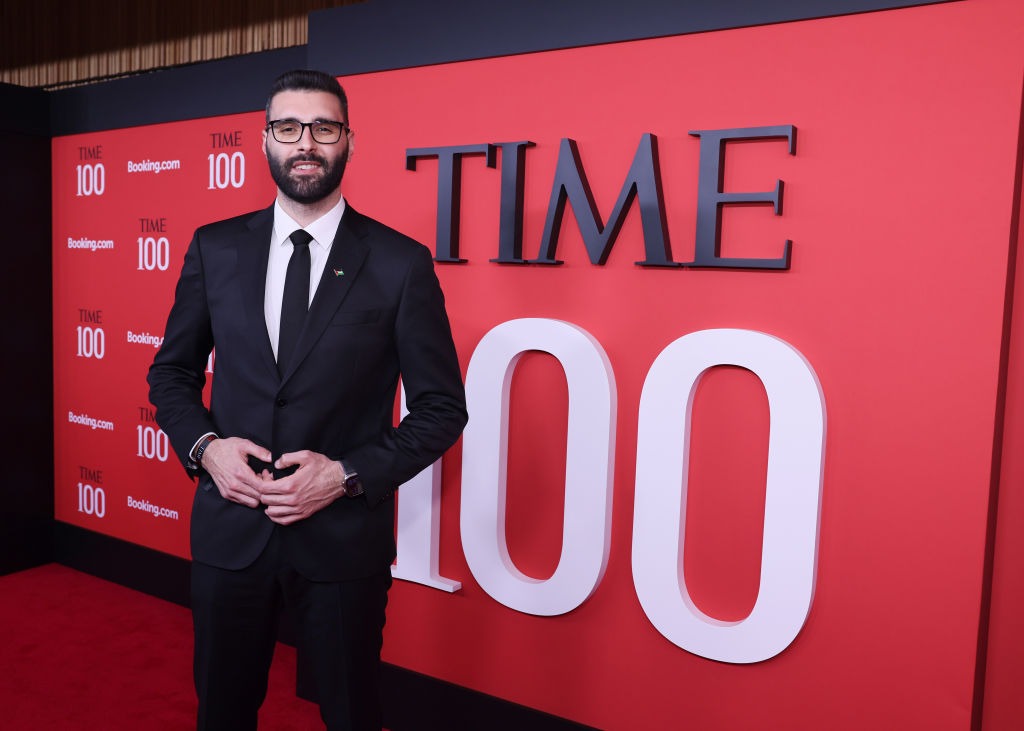
Azaiza is hardly an obscure figure. His images from Gaza reached millions of people around the world. He was named one of TIME magazine’s “100 Most Influential People,” received international awards, and became one of the most recognizable Palestinian voices documenting the Gaza war.
That is what makes his recent revelations so important.
Azaiza revealed details about how journalists operated under Hamas rule. He described an environment in which journalists were pressured to suppress criticism of Hamas and, in some cases, to stop filming when Palestinians expressed anger toward the terrorist group.
These are not allegations coming from an Israeli government official or a pro-Israel advocacy organization. They are admissions by a Palestinian journalist who became internationally famous for documenting the war.
Azaiza described a WhatsApp group called “SMART” that was managed by a Hamas-affiliated media official connected to the Rafah border crossing between the Gaza Strip and Egypt. Such structures ensure that content circulated among press workers aligns with approved messaging before reaching wider audiences.
Perhaps even more revealing was his description of what happened when Palestinians themselves criticized Hamas. Azaiza described a scene in which people emerging from an ambulance shouted criticism at Hamas (“May God take revenge on Hamas”), and onlookers or Hamas members actively forced him to turn off his camera.
What does that mean?
When Palestinians blamed Israel, the cameras kept rolling. When Palestinians blamed Hamas, the cameras were turned off.
Azaiza said that Hamas enforces a selective narrative – claiming victory or ownership over military acts while deflecting internal blame or civilian grievances – making it difficult for independent media to show the raw, unfiltered reality on the ground. He acknowledged that stepping outside this framework exposes journalists to intense backlash, including organized online campaigns, accusations of treason, and physical intimidation inside Gaza.
International audiences have often been told that the images coming out of the Gaza Strip represented an unfiltered record of Palestinian suffering.
Azaiza’s account, however, suggests that the picture was considerably more complicated: journalists were operating inside a political environment in which criticism of Hamas could carry consequences.
He openly acknowledged that initially he struggled with whether to publish material showing Palestinians criticizing Hamas. He said he had never seen a Gaza journalist publish such material. He also disclosed that he grew up supporting Hamas and that Hamas’s ideology and the culture of “resistance” were part of his childhood environment.
This is a remarkable admission. It helps explain why the outside world has heard relatively little from Gaza about Hamas’s responsibility for the suffering of Palestinians under its rule. It also raises an obvious question: How much of the story coming out of Gaza has been shaped not only by what journalists saw but also by what they believed they were permitted to show?
Journalism conducted under intimidation cannot automatically be treated as independent journalism. The distinction is especially important because foreign news organizations have frequently depended on Gaza-based journalists, photographers, translators, and “fixers” for information that they could not obtain themselves.
If the Palestinian journalists are operating under pressure from Hamas, the implications extend far beyond Palestinian media. The influence can reach international media organizations that use their material.
A foreign correspondent or editor sitting in a newsroom thousands of miles from Gaza may believe he or she is receiving a credible eyewitness account from an independent local journalist. If the local journalist is subject to Hamas pressure, self-censorship or organized monitoring, the foreign outlet may unknowingly become dependent on a narrative that has already been filtered.
This is how an Islamist terrorist group can influence the international information environment without having to control every foreign newspaper or television station.
Azaiza’s revelations are also significant because of what he said about the Hamas-led October 7, 2023 massacre in Israel. He said that he filmed Israeli hostages being beaten by Palestinian crowds after they were kidnapped to the Gaza Strip. He said he chose not to publish the footage because he feared that publication could allow Israel to identify the people involved.
This raises an uncomfortable question for the international media: How much footage from October 7 and its aftermath was never published because Palestinian journalists feared the consequences of showing what happened? Furthermore, it raises an even broader question about the distinction between documenting history and protecting a political narrative.
Azaiza’s account should therefore prompt media organizations that used his work – and the work of other Gaza-based journalists as well as journalists covering other terrorist entities and their sponsors – to examine their own reporting practices. Who supplied the information? Who was present when it was gathered? What material was not published? Were journalists pressured? Were interviews conducted freely? Were Palestinians allowed to criticize Hamas on camera? Most importantly, did international media organizations independently verify claims coming from a territory controlled by a terrorist organization?
These questions matter not only because of the Gaza war but also because of the credibility of journalism itself. Azaiza’s account offers a possible explanation for one of the most striking features of the coverage from Gaza: the extraordinary visibility of Palestinian suffering accompanied by comparatively little visibility of Palestinian anger toward Hamas.
Azaiza’s interview is ultimately a warning about the dangers of accepting any side’s narrative without scrutiny. He is telling us that there was another reality behind the camera – a reality in which criticism of Hamas could disappear from the screen, journalists could face intimidation, and a Hamas-linked network could help manage the narrative. That should not be dismissed as a minor footnote. It should be a wake-up call.
Palestinian political analyst Ahmed Fouad Alkhatib commented on September 18:
“Motaz Azaiza, a Gazan journalist evacuated during the war and someone who has personally attacked me, is finally saying the blunt truth. Gaza‑based ‘journalists,’ whether tied to Al-Jazeera, Hamas, foreign outlets, or social media, systematically self‑censored and hid anti‑Hamas sentiments inside the Strip. Their mission was to maintain a narrative centered solely on Israel and to erase any dissent, criticism of Hamas, or diversity in Palestinian views. Azaiza describes how he struggled with supposed ‘journalists’ who shut off their cameras whenever Gazans condemned Hamas or tried to hold it responsible for the catastrophe it brought upon them, from October 7 to the ruinous ‘resistance’ mythology that followed. So to anyone repeating the line that Gaza had ‘more journalists killed than WWII and Vietnam combined,’ think carefully about who and what you are calling a journalist in territory fully controlled by a violent extremist organization responsible for severe harm and repression.”
Azaiza’s interview proves something important: that the process by which information emerged from Gaza was not as independent as many people assumed. The situation has not changed, because most Gazans continue to live under Hamas rule. The question is no longer simply what the cameras show. It is also what they do not show.
egretnewseditor@gmail.com