What, then, must accompany economic pressure? First, the military option must remain explicitly on the table — and be exercised, preferably before the regime uses President Donald Trump’s ceasefires to organize attacks that are even more lethal.
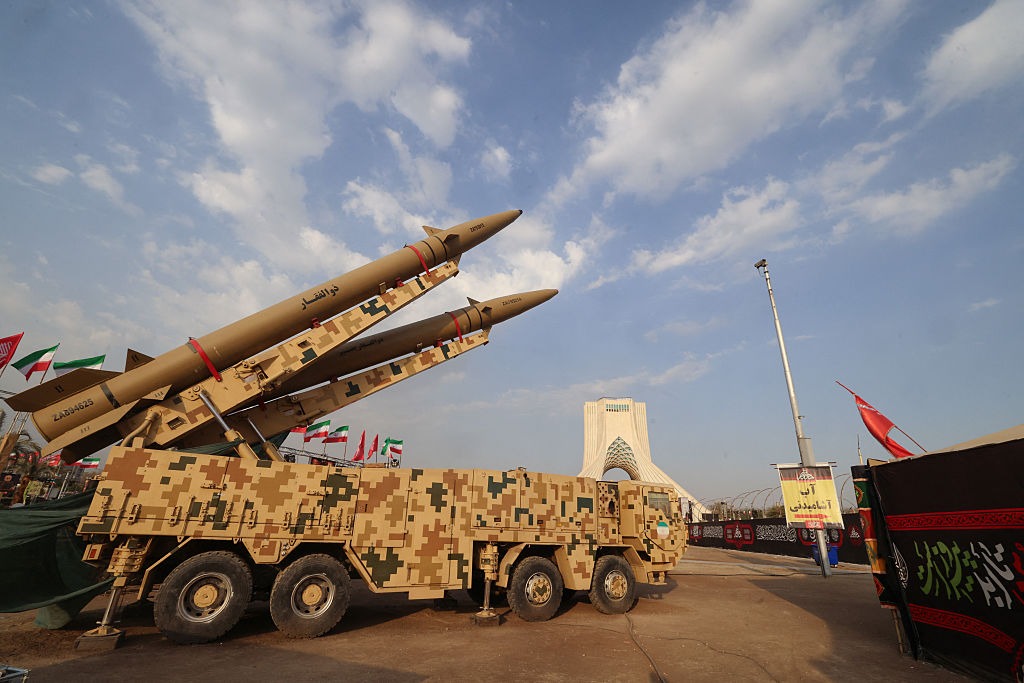
Recent reports indicate that Iran has been rapidly restoring its ballistic missile production and infrastructure after earlier strikes. Satellite imagery and intelligence assessments show reopened underground facilities, repaired access roads, and renewed manufacturing at a pace that has surprised observers.
Economic measures must be paired with persistently removing the regime’s ability to rebuild its war machine. The Trump administration, as distasteful as they might find the task, must urgently see to it that the regime is changed.
Only adding military strikes to economic strangulation — and arming and training dissidents among the Iranian people — will create regime change. Anything less just leaves the threat intact — louder, more entrenched and more dangerous for the region and the United States sooner than you think.
The main focus in confronting Iran’s regime and its sponsorship of terrorism has shifted toward economic sanctions and a naval blockade of Iranian ports. This pressure, driving oil exports to multi-year lows and squeezing the regime’s primary source of hard currency, constrains the resources available for ballistic missiles, proxies, and internal repression. Yet it is a dangerous delusion to believe that sanctions and blockade by themselves will change the regime’s fundamentalist and Islamist ideology or force a fundamental shift in its behavior.
The Iranian regime’s only objective is to stay in power beyond the Trump Administration.
Iran’s ruling elite lives in relative comfort, insulated by corruption and control of state resources. They divert public wealth into personal and institutional networks — real estate, front companies, and overseas holdings — while ordinary Iranians bear the brunt of inflation, shortages, and mismanagement.
From the regime’s perspective, surviving two more years of intense pressure under the current administration is tolerable. Once the political window shifts, they plan to ramp up oil production, impose and exploit control over key waterways, and make more money by extracting fees from commercial ships transiting the Strait of Hormuz and leverage from regional trade.
They are prepared to accept lower revenues now in exchange for preserving the system that guarantees their power and making more revenues later. Black-market channels, overland routes through neighboring countries, ship-to-ship transfers, and sophisticated evasion networks have repeatedly allowed them to generate enough revenue to keep their core institutions functioning.
Even the most severe economic measures, therefore, leave the regime with sufficient resources to endure. Iran’s oil exports may fall to historic lows, but the black market and alternative trade corridors still provide survival. While sanctions are essential — they degrade capabilities and raise costs — they are hardly decisive against theocratic totalitarian rulers who prioritize regime continuity over public welfare and everything else, and who think in generational time-frames.
What, then, must accompany economic pressure? First, the military option must remain explicitly on the table — and be exercised, preferably before the regime uses President Donald Trump’s ceasefires to organize attacks that are even more lethal.
Recent reports indicate that Iran has been rapidly restoring its ballistic missile production and infrastructure after earlier strikes. Satellite imagery and intelligence assessments show reopened underground facilities, repaired access roads, and renewed manufacturing at a pace that has surprised observers. Anywhere that Iran reconstructs missile plants, launch sites, or related military infrastructure, those facilities should be taken out. Continuous degradation of its ability to produce and field weapons is required; otherwise, the economic squeeze merely buys the regime time to rearm.
Senator Rick Scott (R-FL) captured the logic in a recent appearance on NewsNation’s “The Hill”:
“I think he’s going to have to. I mean, here’s a president that doesn’t like war. None of us do. Here’s a president that doesn’t want to put troops in harm’s way. None of us do. And so, he’s given diplomacy a chance. Iran has walked away from it… at some point, he will not have a choice but to do more to destroy their ability to produce weapons. But they are not going to have a useful weapon while President Trump’s president.”
Economic measures must be paired with persistently removing the regime’s ability to rebuild its war machine. The Trump administration, as distasteful as they might find the task, must urgently see to it that the regime is changed.
An Iranian leadership that threatens the United States and Israel cannot be allowed to stay. After the death of the previous Supreme Leader, a new hard-line figure — Mojtaba Khamenei — was elevated. The current Supreme Leader and his surrounding circle are more stridently anti-American and anti-Israel than their predecessors. Any threats against U.S. citizens or soldiers emanating from Iran should be met with decisive military action. The personal survival of senior regime figures should not be guaranteed. The regime has shown no interest in diplomacy apart from using it to buy time for reconstituting its military capabilities. Iran continues missile activity and regional provocations while using talks as opportunities to rearm.
Iran’s Islamist regime will not abandon anti-Americanism or anti-Semitism because oil revenues temporarily decline. It is playing a two-year game of endurance and sanctions evasion to reassert its leverage over the region and beyond. Sanctions and blockade must be accompanied by sustained military denial of weapons reconstitution and by willingness to target Iran’s leadership, or offer individuals to leave for a country of their choice, which carries the enormous risk of their regrouping abroad.
Only adding military strikes to economic strangulation — and arming and training dissidents among the Iranian people — will create regime change. Anything less just leaves the threat intact — louder, more entrenched and more dangerous for the region and the United States sooner than you think.
egretnewseditor@gmail.com